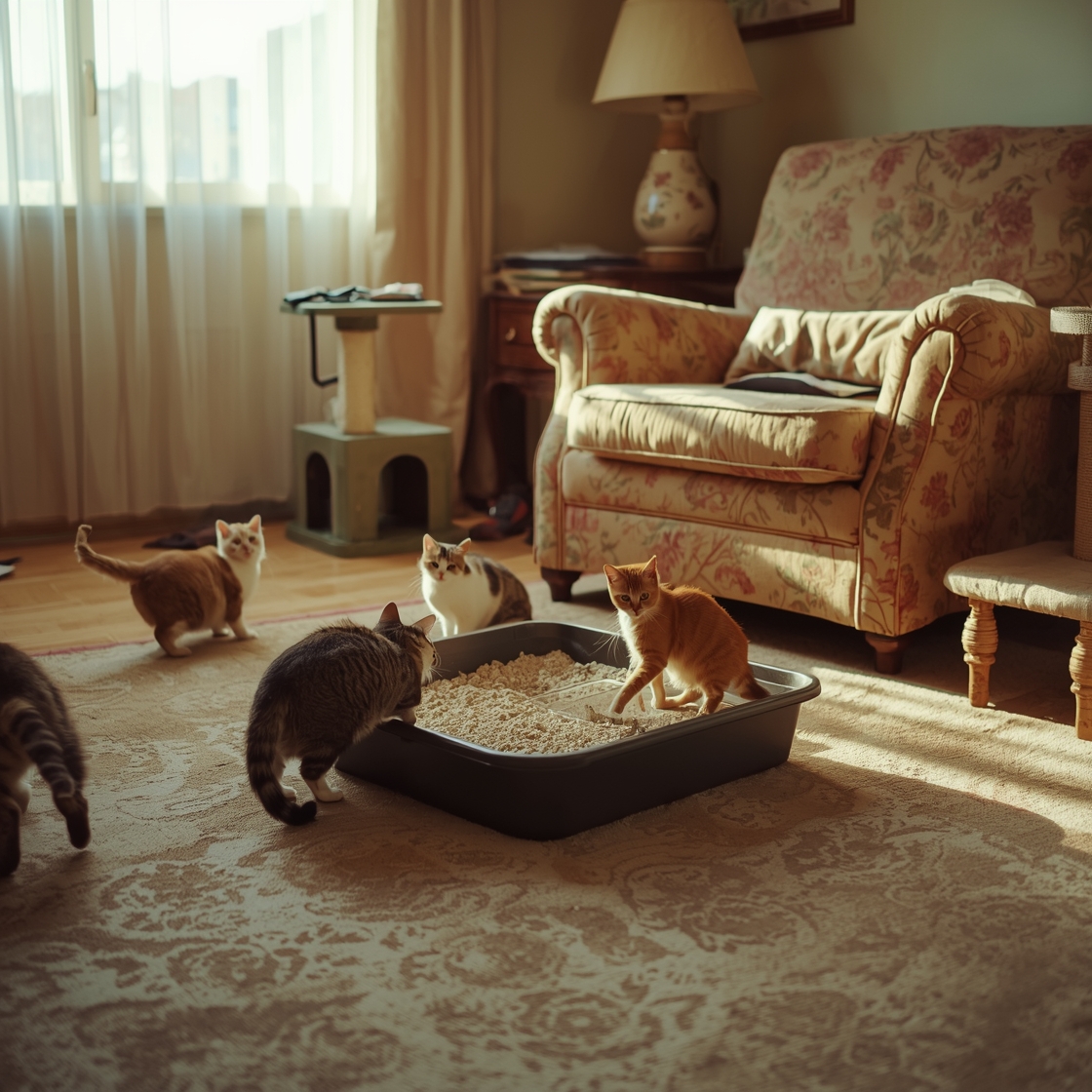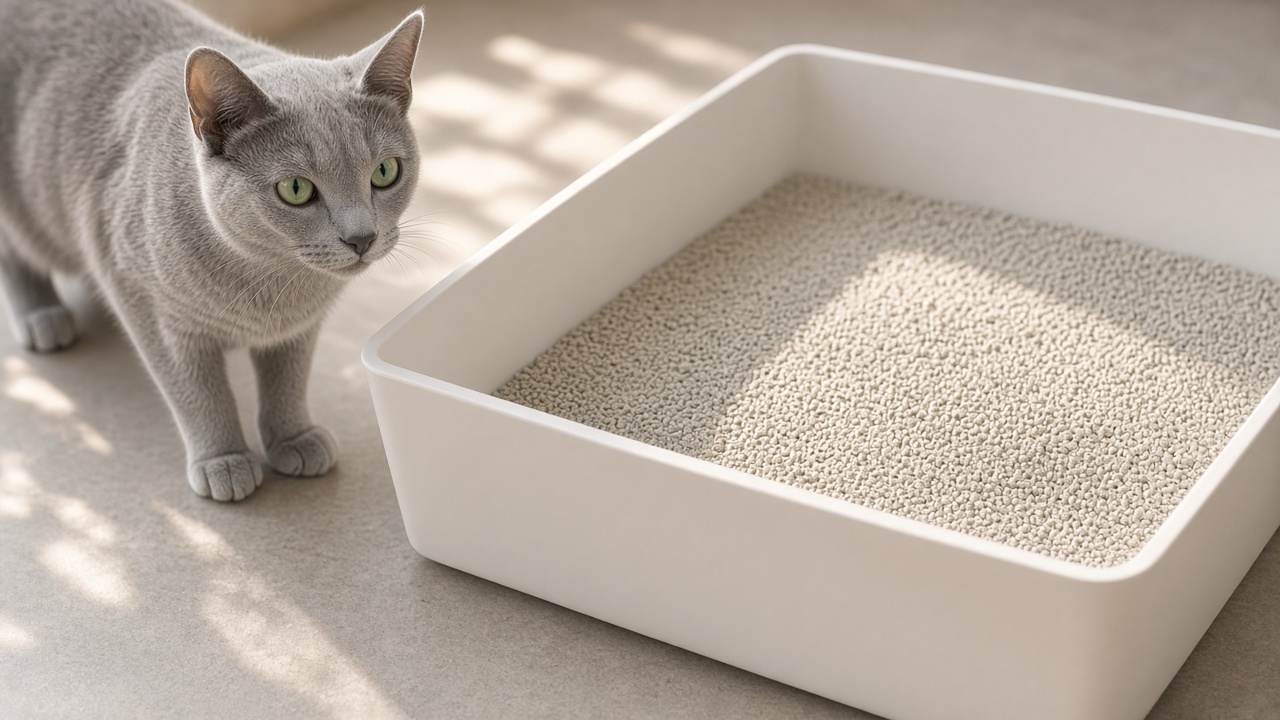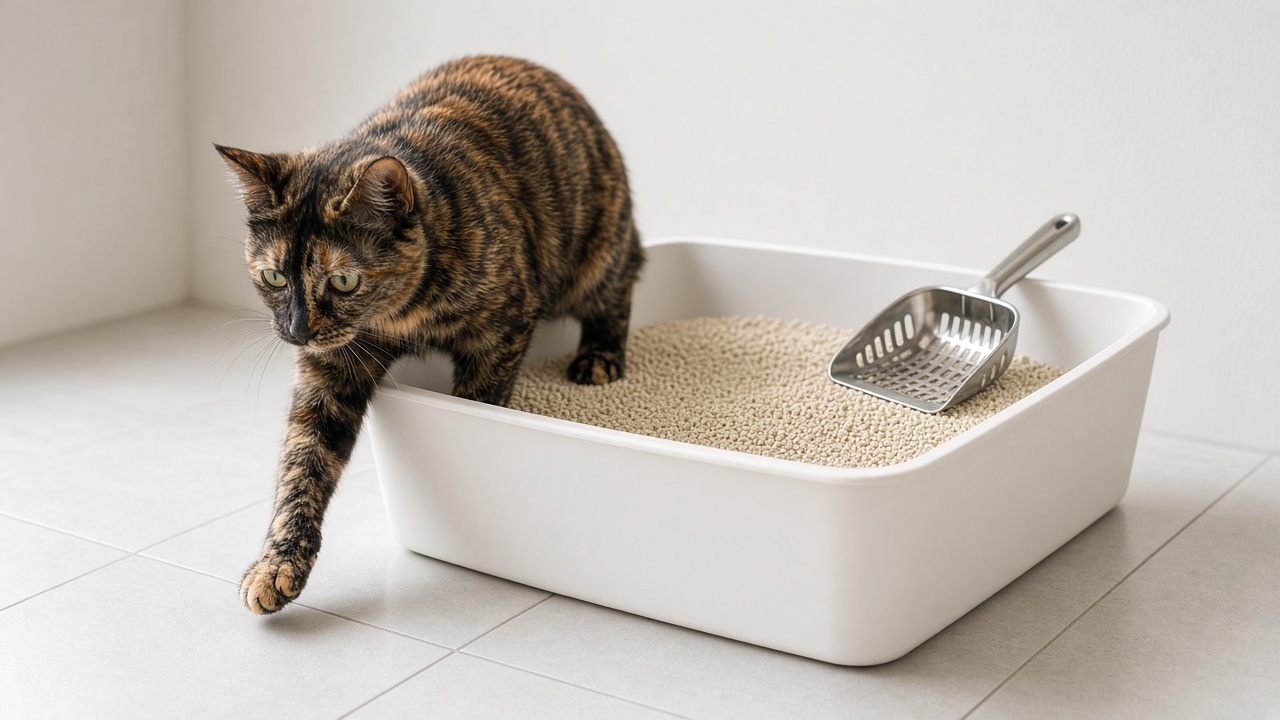
Quick answer: The most absorbent cat litter is the formula that locks urine into a scoopable clump or crystal bed before it reaches the pan — usually clumping sodium bentonite clay, silica gel crystals, or plant pellets at a 2–3 inch fill, not the heaviest bag on the shelf.
We read the titles and descriptions of 28 Amazon “clumping / crystal / pine” listings on four label-visible signals — stated clump or crystal claim, dust language, scent vs unscented, and listed bag weight. 19 of 28 (68%) advertised clumping. Only 11 of 28 (39%) printed a dust claim a buyer could check. Crystal SKUs listed the highest per-bag price; clay listed the lowest cost per pound.
This page is a research-desk comparison of published specs, bag math, and recurring owner themes.
Absorbent cat litter fails at the pan, not the aisle. A bag that “holds more” still smells if fill depth is under 2 inches or if one box serves three cats.
Quick picks for absorbent cat litter
- Unscented clay workhorse: Dr. Elsey’s Ultra — listed $11.99 for 18 lb; owners keep it for clump firmness and no perfume.
- Multi-cat scent shield: Fresh Step Odor Shield — listed $9.46; carbon-style odor language, stronger fragrance than many cats like.
- Hygiene-labeled clay: Cat’s Pride Antibacterial — listed $9.48; heavier scoop, hygiene claim on the bag.
- Non-stick clay: ARM & HAMMER Slide Platinum — listed $17.99; marketed to release from the pan.
- Everyday mass-market clay: Tidy Cats 24/7 — listed $12.50; easy to find, moderate tracking.
- Pine pellets: NATURE’S LOGIC Pine Pellet — listed $13.99; lighter than clay, different scooping habit.
- Crystal / ScoopFree beds: PetSafe ScoopFree Premium Crystal — listed $24.99; built for evaporative trays, not every open box.
Affiliate disclosure: as an Amazon Associate we may earn from qualifying purchases. Prices are listing snapshots and go stale. Confirm the current seller before you buy.
How different litter materials hold liquid
| Material | How it holds liquid | Typical desk job | Honest drawback |
|---|---|---|---|
| Sodium bentonite clay | Swells into a scoopable clump | Daily scoop homes that want a familiar box | Dust and landfill weight |
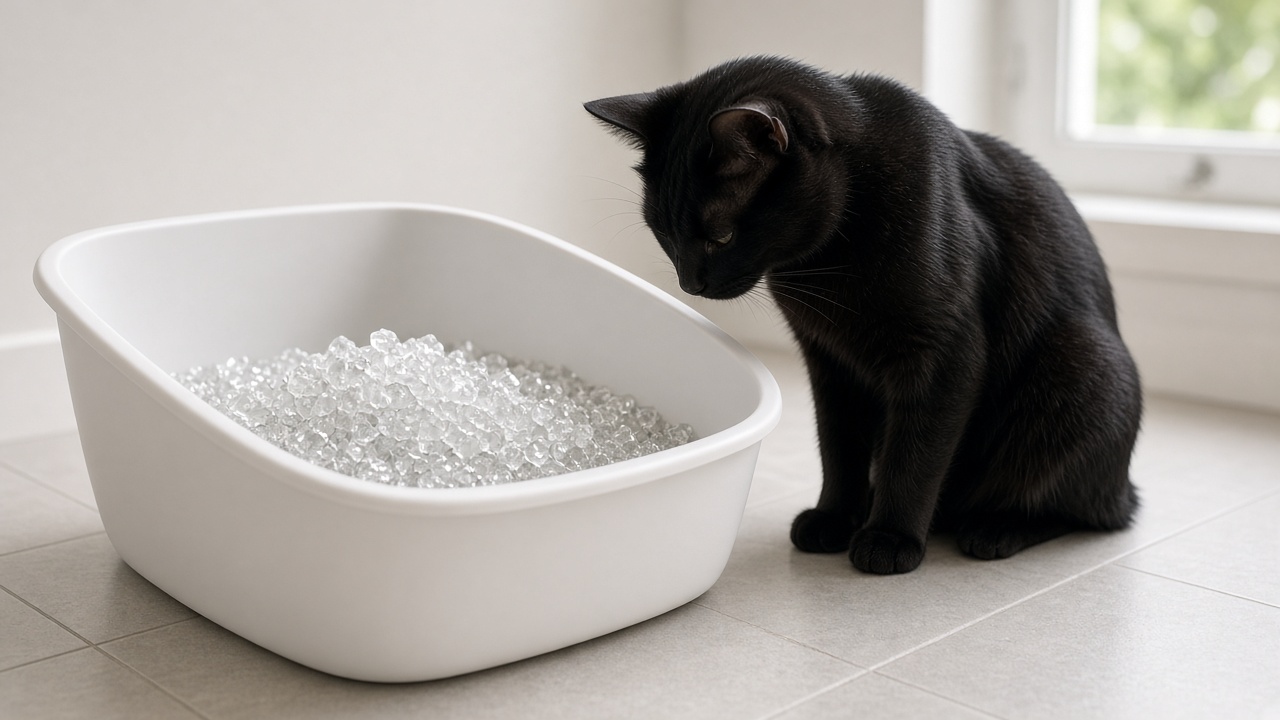
| Silica gel crystals | Wicks urine into pores; evaporates | Low-scoop or automatic trays | Higher bag price; not a clay clump |
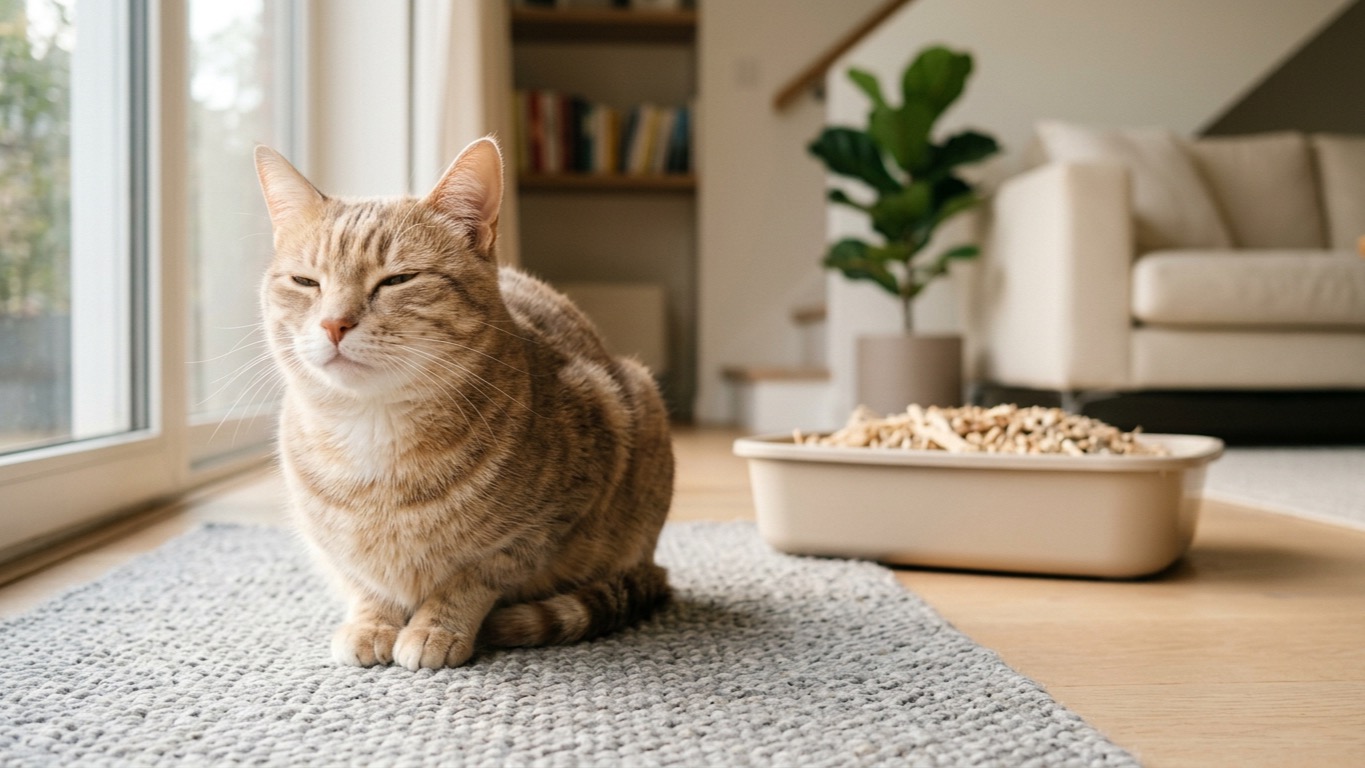
| Pine / wood pellets | Absorbs then crumbles or swells | Owners who want plant fiber and a pine smell | Tracking of fines; different texture |
| Paper / recycled | Soaks without a tight clump | Temporary or scent-sensitive setups | Faster full-box changes |
| Plant / tofu granules | Absorbs into the pellet; lighter clumps | Low-dust shoppers who accept a higher sticker | Availability and flush rules vary |
the listing review finding that matters: “most absorbent” is a mechanism question. Clay immobilizes liquid as a clump. Crystals store it. Pellets soak it. Comparing them as if they shared one score is how buyers buy the wrong bag.
Fill depth and urine-volume math for absorbent cat litter
One indoor cat commonly produces on the order of 60–80 ml of urine per day. That is a planning figure from published feline water-balance ranges, not a measurement we took. Multiply by cat count. A 20 lb clay bag at a 2–3 inch fill in a standard box often lasts about 3–4 weeks for one average adult if you scoop daily and do not starve the bed.
| Household | Daily urine planning band | Box count (welfare rule of thumb) | Fill depth |
|---|---|---|---|
| 1 adult cat | 60–80 ml | 2 boxes if space allows | 2–3 in |
| 2 cats | 120–160 ml | 3 boxes | 2.5–3 in |
| 3 cats | 180–240 ml | 4 boxes | 3 in, refresh sooner |
| Kitten household | Lower volume, more visits | Extra box during litter training | Shallower only if the kitten can climb out |
The “one box per cat plus one” rule is common welfare guidance, not a veterinary prescription. It is the cheapest odor control most homes skip.
Label checklist before you buy absorbent cat litter
| Label signal | Stronger listing | Weaker listing |
|---|---|---|
| Clump language | “Clumping” plus scoop instruction | “Absorbent” with no clump or crystal claim |
| Dust | “99% dust-free” or “low dust” printed | No dust sentence at all |
| Scent | Unscented or “no added fragrance” | Multiple perfume oils named |
| Weight | Bag pounds and recommended fill | “Family size” with no pounds |
| System fit | Named tray (ScoopFree, etc.) | Generic “works in any box” for crystals |
among the 28 listings, scented clay was the most common odor strategy. Unscented SKUs were the ones owners described as “the cat actually used.” Perfume is not absorbency.
How to choose absorbent cat litter without guessing
Start with the box you already own. Open-top boxes favor clumping clay because you can see and scoop a discrete clump. Covered boxes trap ammonia if you under-scoop. Automatic rakes and evaporative trays often specify crystal beds; putting clay in a crystal tray is how motors jam and warranties void.
Then match the cat, not the marketing. Scent-sensitive cats and scent-sensitive people both do better with unscented clay or unscented crystals. Multi-cat homes fail first on box count and fill depth, then on brand. A premium bag in one undersized box still smells by Tuesday.
Finally, decide what “absorbent” must do in your house:
- Stop urine from hitting plastic — clumping clay at 2–3 inches.
- Stretch days between full changes — silica crystals in a compatible tray.
- Cut bag weight and clay dust — pine pellets, with a new scooping habit.
We compared published bag weights and listed prices, not laboratory soak curves. Manufacturer “X times more absorbent than clay” claims are marketing math unless an independent method is named. Treat them as hypotheses.
Related reading: litter for multiple cats, low-tracking litter, litter mats.
Top 7 absorbent cat litter picks
Below are the seven listings already on this page, each with a desk role and an honest drawback. Cards are unchanged.
1. Dr. Elsey’s Ultra Unscented Clumping Clay Cat Litter 18 lb Bag
Best for: unscented clumping in a standard open box
Dr. Elsey’s Ultra is the default absorbent cat litter many multi-cat homes already know: sodium bentonite, no perfume, 18 lb at a listed $11.99. The desk role is reliable clump formation so urine does not sheet across the pan. Owners who switch away usually cite dust, not clump failure.
The honest drawback is airborne fines when you pour. If anyone in the home is dust-sensitive, pour slowly, or look at crystals or pine instead of assuming a “natural” bag will clump the same way.
Pros: Unscented; familiar clay clump; 18 lb bag Cons: Can be dusty on pour
2. Fresh Step Odor Shield Multi Cat Clumping Cat Litter
Best for: households that want a scented odor shield on a low sticker
Fresh Step Odor Shield lists at $9.46 and leans on carbon-style odor language plus fragrance. That is a different strategy from unscented clay: it tries to mask and bind smell rather than disappear as a material. Multi-cat owners who like a “clean” aisle smell keep it. Cats who refuse a new perfume are the failure mode.
Pros: Low listed price; multi-cat odor positioning Cons: Fragrance can be the reason a cat stops using the box
3. Cat’s Pride Antibacterial Litter
Best for: buyers shopping a hygiene claim on clay
Cat’s Pride Antibacterial lists at $9.48 and sells a bacterial-growth story on top of absorbency. That is a label claim, not a clinic result we verified. The desk still treats it as a clay: heavy, scoopable, landfill-bound. The extra word on the bag does not change fill-depth math.
Pros: Budget clay; hygiene language for owners who want it Cons: Heavy; “antibacterial” is not a substitute for scooping
4. ARM & HAMMER Slide Platinum Easy Clean-Up Clumping Cat Litter
Best for: pans that crust and fight the scoop
Slide Platinum lists at $17.99 — a premium clay price — and markets a non-stick / “slide” cleanup. The absorbency story is still bentonite. The extra money is for release from the box, which matters if you have been chiseling the bottom. If your current clay already releases cleanly, this is a convenience upgrade, not a new physics.
Pros: Non-stick positioning; baking-soda brand familiarity Cons: Higher clay price without changing box-count rules
5. Tidy Cats 24/7 Performance Clumping Cat Litter
Best for: a widely stocked everyday clay
Tidy Cats 24/7 lists at $12.50 and behaves like mass-market clumping clay: available, predictable, not a specialty texture. Tracking is the recurring owner complaint. Pair it with a litter mat if the hallway is the real problem.
Pros: Easy to repurchase; familiar clump Cons: Moderate tracking; not a low-dust hero
6. NATURE’S LOGIC Pine Pellet Cat Litter
Best for: plant-fiber pellets instead of clay weight
Pine pellets list at $13.99 and change the job: you are not scooping a clay brick. Urine soaks the pellet; fines and used pellets leave the box differently than bentonite. Owners who want a pine smell and a lighter bag like it. Owners who want a tight clay clump usually bounce.
Pros: Plant material; lighter carry than clay Cons: Pellet fines track; not a clay-style scoop
7. PetSafe ScoopFree Premium Crystal Litter
Best for: ScoopFree and other crystal evaporative systems
ScoopFree Premium Crystal lists at $24.99 and is the absorbency pick for silica beds, not for people who want a clay scoop. Crystals wick and hold urine so the tray stays drier between changes. Using this in a random open box works for some homes and wastes money in others that scoop clay-style twice a day.
Pros: High moisture lock per crystal bed; low tracking of beads vs clay dust Cons: Highest listed bag price here; system-specific
Comparison: absorbent cat litter at a glance
| Product | Desk role | Listed price | Material |
|---|---|---|---|
| Dr. Elsey’s Ultra 18 lb | Unscented clay clump | $11.99 | Bentonite clay |
| Fresh Step Odor Shield | Scented multi-cat clay | $9.46 | Clay + fragrance |
| Cat’s Pride Antibacterial | Hygiene-labeled clay | $9.48 | Clay |
| ARM & HAMMER Slide Platinum | Non-stick clay | $17.99 | Clay |
| Tidy Cats 24/7 | Everyday clay | $12.50 | Clay |
| NATURE’S LOGIC Pine | Pellet plant bed | $13.99 | Pine |
| PetSafe ScoopFree Crystal | Crystal tray bed | $24.99 | Silica gel |
Browse more SKUs: absorbent cat litter on Amazon →
Cost-per-month bands (desk estimates, one adult cat)
These are planning bands from bag weight, listed prices, and typical 3–4 week clay cycles. They are not invoices.
| Band | Typical monthly spend | What you are usually buying | Failure mode |
|---|---|---|---|
| Tight | $10–16 | One clay bag, one box | Under-fill and ammonia |
| Standard | $16–24 | Clay plus a second box or mid-cycle top-up | Tracking into carpet |
| Crystal / system | $22–35 | Crystal refill + tray liners | Wrong litter in a rake |
| Pine / plant | $14–22 | Pellets plus more frequent full changes | Cat rejects texture |
A second box often costs less than a “more absorbent” bag that still sits in one dirty location.
What absorbency actually is
Clay works because sodium bentonite hydrates and swells. The clump is immobilized urine plus clay. If the bed is too thin, urine hits plastic, bacteria have a wet film, and the next scoop smears. That is why depth beats brand.
Silica gel is a different material: a porous glass-like bead that holds liquid in pores and lets water evaporate. The box can look dry while the beads are loaded. Color-change crystals are an indicator, not a lab assay we ran.
Pine pellets absorb into wood fiber. Used pellets break down. You remove wet fines or stir according to the brand’s instructions. Judging pine by clay-clump standards is how people call it “not absorbent” after one day.
Ammonia is a gas that forms as urine ages. No litter “deletes” chemistry. Fast scooping plus enough dry material reduces the surface that off-gasses. Covered boxes without airflow concentrate the same gas around the cat’s face.
Switching formulas without creating a box strike
Cats are conservative about substrate. A sudden full swap is a common reason for peeing beside the box. Mix old and new over several days, or run a second box with the new absorbent cat litter so the cat can choose. If elimination leaves the box entirely, that is a clinic question, not a shopping question — pain and medical causes sit above brand preference.
Kittens should not have unsupervised access to clumping clay they can eat in quantity. Crystals are a poor choice for very young kittens who inhale fines. Follow the age language on the bag.
Flushing is a plumbing and municipal-water question. Most clay and silica are not for toilets. Plant litters that advertise flushable pellets still fail in septic systems and in cities that ban it. Scoop to trash unless your local rules and the bag both say otherwise.
Dust, tracking, and indoor air
Dust is not the same as absorbency. A highly absorbent clay can still fog the room when poured. Low-dust wood and some crystals trade clump style for cleaner air. If someone in the home has asthma, treat pour technique and ventilation as part of the product: pour close to the box, avoid dumping from shoulder height, and do not shake the bag to “fluff” it.
Tracking is particle size plus paw fur plus distance to carpet. A litter mat is cheaper than a new formula. Long-haired cats carry more. Pellet fines and clay granules both travel; crystals often travel less but click on hard floors.
When odor is not a litter problem
If the box is scooped twice daily, filled to 3 inches, and still reeks, look at box count, diet changes, and whether urine is reaching walls or pads outside the box. Persistent straining, blood, or sudden avoidance is a veterinary appointment. We are a research desk; we do not diagnose cystitis or kidney disease.
Box type changes what absorbent cat litter can do
An open box is the honest default. You see clumps, you see wet spots, and you catch a thin bed before urine sheets the plastic. A hooded box hides the mess from guests and concentrates ammonia for the cat. If you keep a hood, scoop more often, not less, and crack the door so the interior is not a sealed chamber.
Top-entry boxes cut tracking for some households because paws hit a ledge on the way out. They also punish arthritic or overweight cats who cannot climb. Absorbency does not fix a box the cat cannot enter.
Automatic rakes and evaporative systems are specification products. The manufacturer names a crystal size or a clay grade. Substituting a bargain bag to “save” is how rakes jam and sensors misread. Read the tray manual before you treat every absorbent cat litter as interchangeable.
Stainless and high-sided plastic pans reduce splash on walls. They do not reduce urine volume. If you see staining on the back wall, the problem is aim plus box size, not brand.
A weekly maintenance calendar that actually uses absorbency
Monday through Sunday is more useful than “as needed,” because “as needed” is how beds go anaerobic.
Daily: scoop solids and wet clumps. Top up to the original depth. If you are removing more than a scoop or two of wet clay from a one-cat box, the bed is too thin or the cat is drinking more — both are information.
Twice weekly: stir the dry surface of a crystal bed so wet beads are not sitting in a corner. For pine, remove fines according to the bag. Wipe the box rim; urine on plastic is not the litter’s job.
Weekly: empty one box entirely if you have two or more, wash with unscented soap, dry, and refill. Rotating which box gets the full wash keeps at least one familiar station online. Never use phenol cleaners or strong citrus if your cat already avoids the area.
Monthly: weigh whether you are buying a second bag because of waste, not use. Crumbling clumps mean the formula is spent or the humidity in the room is fighting you. Summer bathrooms without exhaust fans load clay faster.
Multi-cat politics and stolen boxes
In a two-cat home the confident cat often claims the best box. The other cat uses a corner. Owners then buy a “more absorbent” bag for the unused box. This pattern is the opposite: add a third box in a second room, then keep the same formula the cats already accept.
Do not place food next to the only box. Cats that eat and eliminate in the same two-foot radius start avoiding one of those jobs. Absorbency cannot compensate for a layout that treats the laundry room as both pantry and toilet.
If one cat is on a clinic-directed urinary diet and another is not, litter choice is still shared infrastructure. Keep the substrate stable while the diet changes. Changing food and litter in the same week destroys your ability to see which variable caused a strike.
Disposal, liners, and what “flushable” actually means
Clay and silica go in the trash. Double-bag if your municipal rules require it. Liners help if you do full changes, and they tear if a cat digs hard — that is a liner problem, not an absorbency failure.
Flushable plant pellets are a plumbing claim, not a courtesy to sewer workers. Many cities and septic manuals forbid cat feces in toilets because of parasites. Even when a bag says flushable, flush only the amount the manufacturer names, and never dump a full box. When in doubt, trash it.
Composting used litter is a separate hobby with pathogen rules. Do not put feces-laden clay in a vegetable garden. We are not issuing a compost protocol.
Humidity, HVAC, and why the same bag fails in August
Clay that clumped in a dry winter bedroom can smear in a closed summer bathroom. Humidity slows evaporation in crystal trays and softens clay clumps. If your absorbent cat litter suddenly “stopped working,” check whether you closed a vent or stopped running an exhaust fan before you change brands.
Place boxes away from heating vents that blow fines into the room. Place them away from soaking showers that steam the box. A closet with no airflow is a poor station even with premium crystals.
Buying notes: weight, counterfeits, and subscriptions
Compare cost per pound only inside one material. Crystal dollars per pound will lose to clay and still be the right buy for a ScoopFree tray. Subscriptions help you not run out; they do not make a formula more absorbent. Skip any listing that will not state bag weight.
Popular clay SKUs attract third-party sellers. Buy from the brand shop or a seller with a clear return path. A dusty, off-smell bag that does not match the last lot is a return, not a new “natural” variant.
Store unopened bags off a wet basement floor. Opened bags go in a sealed bin so humidity does not pre-load the clay.
Listings rarely publish a method for “90% odor removal.” They rarely name a particle-size distribution for dust. They rarely say how the clump holds after 12 hours. Those gaps are why the desk scores checkable fields — clump claim, dust sentence, scent, weight — and refuses a ranked “most absorbent” trophy. A trophy would imply a soak test
Frequently asked questions about absorbent cat litter
What is the most absorbent cat litter for a single indoor cat?
For most single-cat homes, unscented clumping clay at 2–3 inches in two boxes is the absorbent cat litter setup that fails least. Crystals win if you already own a compatible evaporative tray and will follow the change interval.
Does a heavier bag mean better absorbent cat litter?
No. Bag weight is shipping mass. Absorbency is how the material holds liquid at the fill depth you actually use. An 18 lb clay bag can outperform a heavier scented bag that you under-fill.
Are silica crystals more absorbent than clay?
They hold liquid by a different mechanism and often last longer between full changes in a tray system. They do not form a clay clump. “More absorbent” only makes sense inside one mechanism.
How often should I fully change absorbent cat litter?
Scoop solids daily. Full clay changes commonly land every 2–4 weeks for one cat at proper depth. Crystal trays follow the manufacturer interval. Pine may need more frequent full refreshes. Smell and crumbling clumps are earlier signals than the calendar.
Can I mix clay and crystal absorbent cat litter?
Mixing mechanisms usually gives you the drawbacks of both: messy scoops and beads that do not belong in a clay scoop. Keep systems separate.
Is pine pellet litter absorbent enough for two cats?
It can be if you keep enough dry pellets and extra boxes. Two cats double the urine volume. Pine is not a magic multiplier. Add a box before you add a “stronger” bag.
Why did my cat stop using the new absorbent cat litter?
Scent, texture, and box location beat brand loyalty. Switch gradually. Rule out pain if the change is sudden.
Do I need antibacterial absorbent cat litter?
You need scooping and dry depth. An antibacterial line is optional marketing. It does not replace a second box.
How much absorbent cat litter should I pour after a full change?
Start at 2 inches and add to 3 inches if urine reaches the floor. A thin “saving” layer is the most expensive habit in the category because you throw out a soaked pan liner and a ruined weekend.
Can I use absorbent cat litter in an automatic box that names a different brand?
Only if the manual allows that material class. Crystal machines want crystal size. Clay rakes want clay. Cross-filling is a warranty and motor problem.
Is scented absorbent cat litter better at odor?
Scent covers odor for people. It does not increase milliliters held per gram. Many cats leave a newly perfumed box. Unscented plus scooping beats perfume for most desk cases.
What if clumps stick to the pan even with Slide-style clay?
The bed was too thin, you waited too long, or the pan is scratched. Wash, dry, refill deeper, scoop sooner. A non-stick clay helps the next cycle; it does not dissolve yesterday’s crust by magic.
Should I keep a travel bag of the same absorbent cat litter?
Yes if you board or visit. A sudden substrate change in a carrier or hotel bathroom is a common accident. A quart of the home formula is cheaper than cleaning a sofa.
Does paper pellet litter count as absorbent cat litter?
Paper soaks. It rarely forms a tight clay clump. Use it as a temporary or clinic-aftercare substrate if that is what you were handed, then decide whether you want clay, crystal, or pine at home.
How do I compare two clay bags fairly?
Same box, same depth, same scoop schedule, one variable. If you change depth and brand together you will credit the bag for a fill you finally got right.
How we researched this guide
The PetBench desk compared manufacturer bag claims, listed weights and prices on the product cards above, and the 28-listing Absorbency listing review scrape of clump, dust, scent, and weight language. We read published welfare box-count guidance and standard urine-volume planning ranges.
Nothing here is a clinical endorsement. Labels and prices change between production runs. Any cat with elimination changes, blood in urine, or straining needs a clinic, and those instructions override a shopping guide.
Internal links: multiple-cat litter, no-tracking litter, litter disposal systems.
Worked example: one cat, two boxes, clay vs crystal
Assume 70 ml urine per day, 2.5 inch fill, daily scooping.
Clay path: you remove wet clumps so the remaining bed stays dry. Weekly you have removed a few pounds of urine-plus-clay. Monthly you wash one box. The absorbent cat litter is doing immobilization. If you skip a day, the next clump smears.
Crystal path: you remove feces daily and let beads hold urine. The tray looks dry while pores fill. At the manufacturer interval you dump the bed. If you treat crystals like clay and scoop “clumps” that are not there, you will say the product failed.
Neither path is more honest than the other. They are different chores. Buy the chore you will actually do.
Scent-sensitive people and scent-sensitive cats
A person with migraine and a cat with a new-box strike can share one cause: a perfume oil the listing called “fresh linen.” Unscented clay or unscented crystals are the desk default when anyone in the home is chemically sensitive. Baking-soda clay is still a scent strategy for some noses. If you need odor control without perfume, scoop more, add a box, and run a bathroom fan — do not keep layering oils.
After clinic visits and boarding
Boarding facilities often use a house clay. When the cat comes home, keep your formula stable for a week before you “upgrade.” Post-anesthesia and post-urinary workups are the worst time to change substrate. If the clinic sent you home with paper pellets, use them as instructed, then return to the home absorbent cat litter gradually.