Quick answer: A high meow asks for food, warmth, or you. A purr or trill is social; a hiss means back off. Use play or scheduled meals for attention cries, and call a clinic if a new sound arrives with illness signs.
Kittens meow to a caregiver when cold or hungry, purr at the nest, and use trills as friendly contact calls. This page is a research-desk decode of those household voices, not a lab log: we did not record kittens, score audio files, or keep a sound diary.
The sound-first rule we used
We used one selection rule. A sound entered this article only if a household kitten commonly makes it before adulthood.
Our research team analyzed published behavior pages from International Cat Care and the ASPCA. Comparing published specs from Cat Dancer Products, KONG, PetSafe, and Catit set the toy attributes.
We added one currently sold toy per sound-driven need: play-meows, food-meows, and hunt-chirps. We left out breed-show scoring, diagnosis lists, and adult-only mating catalogs, except where the ASPCA ties yowling to heat.
What a kitten meow is asking for
The ASPCA treats the meow as a kitten-to-caregiver signal. Its Meowing and Yowling page says kittens meow to tell a mother they are cold or hungry.
That same ASPCA page says adult cats do not meow at each other. They keep meowing at people because the sound works.
International Cat Care groups cat voices into three forms on its Cat Communication page, first published 28 November 2024 and updated 26 September 2025. Those forms are murmuring sounds, meowing or vowel sounds, and hostile sounds.
International Cat Care says kittens use a high-pitched meow when they are hungry. It also says adult cats rarely meow at other cats. People then shape the meow by answering it.
Read the scene before you answer. A short meow at the doorway often tracks the ASPCA greeting case. A meow at an empty bowl tracks the food case.
A meow at a closed door tracks the in-or-out case. The ASPCA says that shift from outdoor access to indoor-only life can take weeks or even months.
Do not treat every meow as a demand. The ASPCA says to check litter, water, and access first. Only then treat the cry as a request for extra attention.
If the meow is a play ask, answer with a wand, not a scold. The KONG Cat Teaser Friendship is a 40-inch teaser.
KONG lists its packed size as 2 × 40 × 1.25 inches and its weight as 0.06 pounds. KONG fills the dangling letters with its Premium North American Catnip.
KONG lists the mix as 50 percent polyester, 25 percent PVC, 20 percent polypropylene, 4 percent polyethylene, and 1 percent catnip. The wand rattles and crinkles, which gives a play-meowing kitten a prey cue you control.
KONG’s own warning is supervised use only. Put the wand away when the session ends.
A lighter wand also fits this need. Cat Dancer Products lists the original Cat Dancer at 3 inches by 2 inches by 6 inches and 0.6 ounces.
Cat Dancer Products describes spring steel wire and rolled cardboard. The company says the toy has been home-tested by over 8 million cats and is made in its Wisconsin factory.
Use either wand when the kitten is already vocal and bouncing. Stop when the body goes still or the ears flatten.
Purrs, trills, and other closed-mouth murmurs
International Cat Care puts purrs and trills in the murmuring group. Those sounds form with the mouth closed.
The same page says kittens may purr while nursing as a sign of contentment. The mother may purr to reassure the litter.
That nest purr is not a proof of perfect health later. International Cat Care says adult purring also appears in greeting and during allogrooming.
A tense kitten with a tucked tail is not asking for more handling. International Cat Care treats a tail tucked between the back legs as anxious or fearful.
The friendly tail is easier to miss. International Cat Care describes the tail-up pose as a vertical tail held at a right angle to the ground. Pair that pose with a closed-mouth murmur and you likely have a greeting.
The trill, or chirrup, sits in the same murmur family. International Cat Care writes it as a friendly greeting call, and mothers use chirrups as a contact call to kittens.
International Cat Care even gives a spoken shape: “ppprrrrrrp.” If your kitten answers you with that rolled sound, treat it as contact, not distress.
Do not buy a toy to “make” a purr. A purr is a body sound. Toys belong to the meow-and-chirp problems, not the murmur itself.
Chirps, chatter, and the hunt window
A chirp at the window is not the same as a nest trill. International Cat Care keeps mother-kitten chirrups in the murmur group. The hunt stare is visual first.
International Cat Care lists visual signaling as one of four communication channels. The four channels are visual, tactile, vocal, and olfactory.
International Cat Care says tense, highly alert cats fan the whiskers forward. Give that kitten a legal chase, not a scold at the glass.
The Catit Senses Play Circuit, SKU 43154 on Catit’s Senses Circuits page, is an enclosed track with a ball.
Catit lists the Play Circuit box as 1 straight part, 4 flat curved parts, 2 end parts, and 1 circuit ball. That is eight track pieces plus the ball.
Catit puts a small bell in the circuit ball. The company says the bell can come out if you want a quieter run.
That rattle is the sound cue for a kitten who already chirps at moving prey. Catit’s Super Circuit, on the same page, uses 12 circuit parts for a longer path.
Catit says the tracks use BPA-free materials and an easy-click system. An enclosed ball is safer than a string left on the floor.
Hisses, growls, and other open-mouth warnings
International Cat Care’s third vocal form is the hostile set. Those sounds are made with the mouth held open.
The page lists growls, yowls, snarls, hisses, spits, shrieks, and wails. It treats them as offensive or defensive hostility.
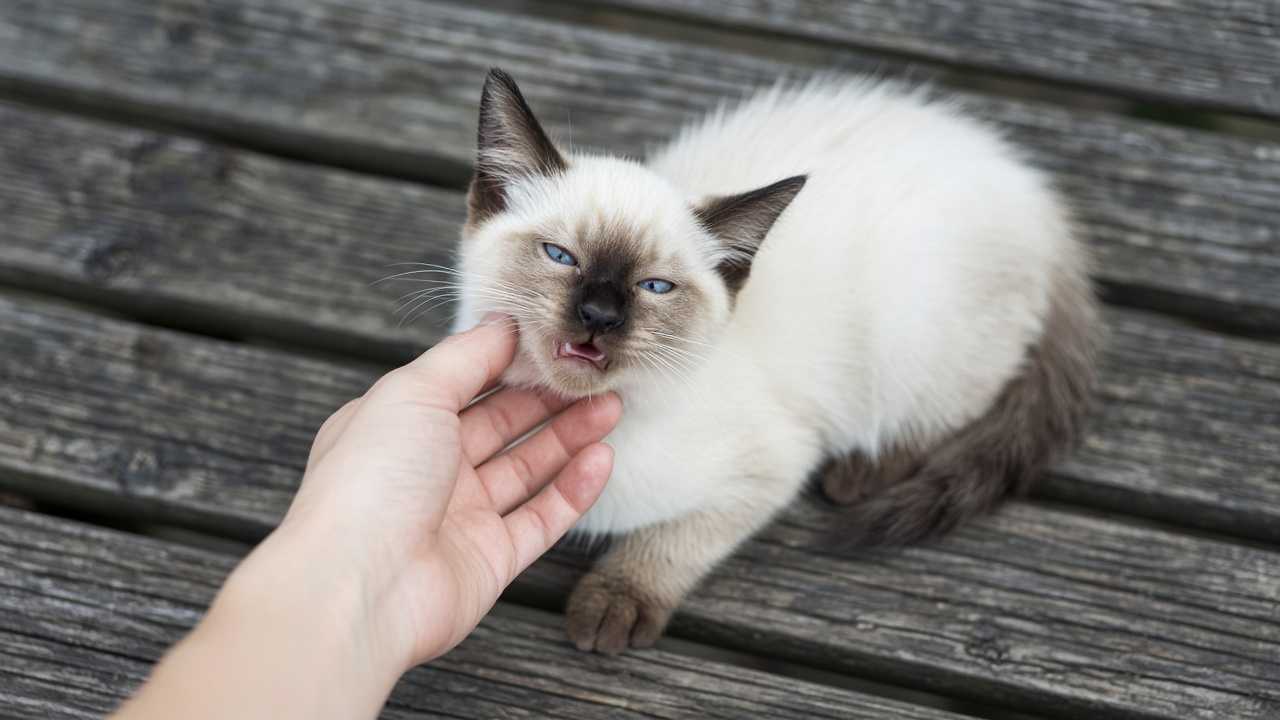
A kitten hiss is a stop sign. Back up. Do not push a face into that mouth.
Pair the sound with the body. International Cat Care describes a puffed, bushy tail and an arched, sideways stance as a stay-away display.
International Cat Care says a tail held out and moving slowly side to side may signal frustration. End the game if that sweep starts.
Do not answer a hiss with a wand. If hissing starts during handling, stop and offer an exit path.
When extra meowing needs a different response
Some extra noise is social. The ASPCA says greeting meows at the door may not change. That cat is saying hello.
Some extra noise is a schedule problem. The ASPCA says cats learn to meow in the kitchen and at dawn. It tells caregivers not to feed on the cry.
Set meal times instead. The ASPCA also mentions an automatic feeder so the cat watches the feeder, not the bedroom door.
A rolling meal toy can carry that same idea for a weaned kitten on dry food. PetSafe lists the SlimCat Interactive Feeder as a ball that holds 2/3 cup of dry food or treats.
PetSafe says the openings are adjustable. The ball is BPA-free plastic and top-rack dishwasher safe.
Fill it at the meal you already planned, not at every cry. Comparing published specs, that 2/3-cup well is the whole listed meal size.
Breed and hormones also change volume. The ASPCA names the Siamese as a breed prone to extra meowing and yowling.
The ASPCA says an unspayed female in heat meows a lot for four to ten days. If she is not bred, she comes into heat every 18 to 24 days.
That cycle runs through the breeding season. The ASPCA places that season at roughly February through September in the Northern Hemisphere.
Indoor cats may cycle all year. An intact male may pace and yowl if he detects a female in heat.
The ASPCA’s stated path for that pattern is neutering, not a new toy.
The ASPCA says a cat who meows a lot should be checked by a veterinarian. It names thirst, hunger, restlessness, and irritability as medical drivers.
The same ASPCA page flags older cats. It cites overactive thyroid and kidney disease as later-life causes of extra meowing.
A sudden new night wail in a young kitten still deserves a clinic call if eating or energy drops. The ASPCA tells caregivers not to hit or scold for noise, because those acts can create fear.
Match a toy to the sound, not a scoreboard
This table is an attribute grid, not a ranking. Our research team compared maker pages only. We did not run in-home trials.
Pick the row that matches the sound you just heard. A play-meow wants a wand you put away. A food-meow wants a scheduled meal tool.
| Product | Maker-listed size or capacity | Sound or motion cue | Play mode | Material note from the maker |
|---|---|---|---|---|
| Cat Dancer | 3 × 2 × 6 in; 0.6 oz | spring-steel cardboard lure | interactive wand | steel and cardboard; made in Wisconsin |
| KONG Cat Teaser Friendship | 2 × 40 × 1.25 in; 0.06 lb | crinkle plus rattle beads | supervised wand | 50% polyester, 1% catnip |
| PetSafe SlimCat Interactive Feeder | 2/3 cup dry food | food leaves adjustable holes | solo meal play | BPA-free plastic; dishwasher-safe |
| Catit Senses Play Circuit | 8 track pieces plus 1 ball | bell inside the orange ball | enclosed chase | BPA-free tracks; SKU 43154 |
Use the Cat Dancer for a light lure; Cat Dancer Products lists 0.6 ounces. Use the KONG Cat Teaser Friendship when you want the listed 40-inch reach away from kitten teeth.
Use the PetSafe SlimCat Interactive Feeder when the ASPCA food-meow pattern is the daily problem. The listed 2/3-cup well is a meal, not a handful of extras.
Use the Catit Senses Play Circuit when the kitten already chirps at moving targets. None of these toys treats pain, heat, or illness, so a sudden new sound still belongs at a clinic.
FAQ
Why does my kitten meow more at people than at other cats?
The ASPCA says kittens meow at a mother for cold and hunger, then stop using that call with other cats. Adult cats keep the meow for people because people answer it. International Cat Care makes the same split and says people help the meow take many forms.
Is a purr always a happy sound?
International Cat Care places purring in the closed-mouth murmur group and ties nest purring to nursing contentment. It also says later purring appears in greeting and allogrooming. A rumble with a tucked tail is not an invite.
What is the difference between a trill and a hiss?
International Cat Care files the trill, or chirrup, with friendly murmurs. It files the hiss with open-mouth hostile sounds. Answer a trill with a word or a short play, and answer a hiss by stepping back.
How long can heat-related yowling last?
The ASPCA says an unspayed female in heat typically meows a lot for four to ten days. If she is not bred, heat returns every 18 to 24 days. In the Northern Hemisphere, that pattern runs roughly February through September.
Should I feed my kitten every time it cries?
The ASPCA says no, if the cry is a learned food ask. Feed at set times so begging stops working. A PetSafe SlimCat Interactive Feeder holds a listed 2/3 cup of dry food and opens as the kitten rolls it.
Which toy fits a kitten that chirps at the window?
A contained chase toy fits that hunt stare better than a snack. Catit lists the Senses Play Circuit with 1 straight part, 4 flat curves, 2 ends, and 1 ball. The ball’s bell adds a sound the kitten can track.
When is extra meowing a clinic issue, not a toy issue?
The ASPCA says a cat who meows a lot should be checked by a veterinarian. It lists disease-driven hunger, thirst, restlessness, and irritability. A kitten with a new wail plus poor appetite or hiding needs a clinic, not a longer wand.