Quick answer: Book a same-week medical exam before you change litter or punish the cat. Then add a second, larger, open box in a quiet spot and scoop it every day. Pain and a refused box cause most stool accidents.
Your cat poops outside the box from pain, box aversion, or a preferred spot, not revenge.
This page is a research-desk briefing on published house-soiling guidance, and we did not examine your cat, collect stool samples, or rank litter boxes.
Our selection rule is simple. We cover indoor cats that already used a box and then left stool outside it. We omit first-time kitten training, outdoor toileting, and urine-only spray as the main complaint.
Why stool lands outside the box
Cornell University’s Feline Health Center calls house soiling the most common behavior problem cat owners report.
The ASPCA’s litter-box page states that at least 10% of all cats develop elimination problems.
Some cats stop using the box for stool only. Others still urinate in the box and leave feces elsewhere.
The 2014 AAFP and ISFM house-soiling guidelines give a visit count. The average cat eliminates about three to five times a day.
A box that is too small, too dirty, or too hard to reach fails that many visits.
Those same guidelines cite the National Council on Pet Population Study and Policy. That cited figure is that shelters in the United States euthanize 72% of relinquished cats.
The guidelines add that house-soiling is a major reason owners surrender cats.
Cornell’s page groups causes into three buckets. Those buckets are medical problems, litter-box aversion, and a preference for another site.
Cornell states that cats lack the cognition for tit-for-tat punishment.
Rule out pain before you change the setup
A sudden change in stool location is a medical clue first.
Cornell’s house-soiling page says any condition that changes urination or defecation can drive box refusal.
Digestive-tract disease can make defecation painful. It can also raise urgency and lower control.
Cornell’s page also names kidney disease. It names thyroid disease. It names diabetes mellitus.
Those three conditions make cats drink more and urinate more. A wetter box then becomes a place the cat refuses for stool too.
Age-related mobility loss can keep a cat from climbing into a high-sided box. Cognitive decline can keep a cat from finding the box in time.
The 2014 AAFP and ISFM guidelines give a stone figure. About 20% of cats with feline lower urinary tract disease have cystic calculi.
The ASPCA’s litter-box page describes negative box association. A cat that felt pain in the box may keep avoiding it after the illness ends.
Book the exam in the same week the accidents start. Do not wait to “see if it stops.”
Box size, count, and litter depth
Cornell’s house-soiling page says to provide as many boxes as there are cats, plus one.
The ASPCA’s litter-box page uses the same count. For three cats it states a minimum of four boxes.
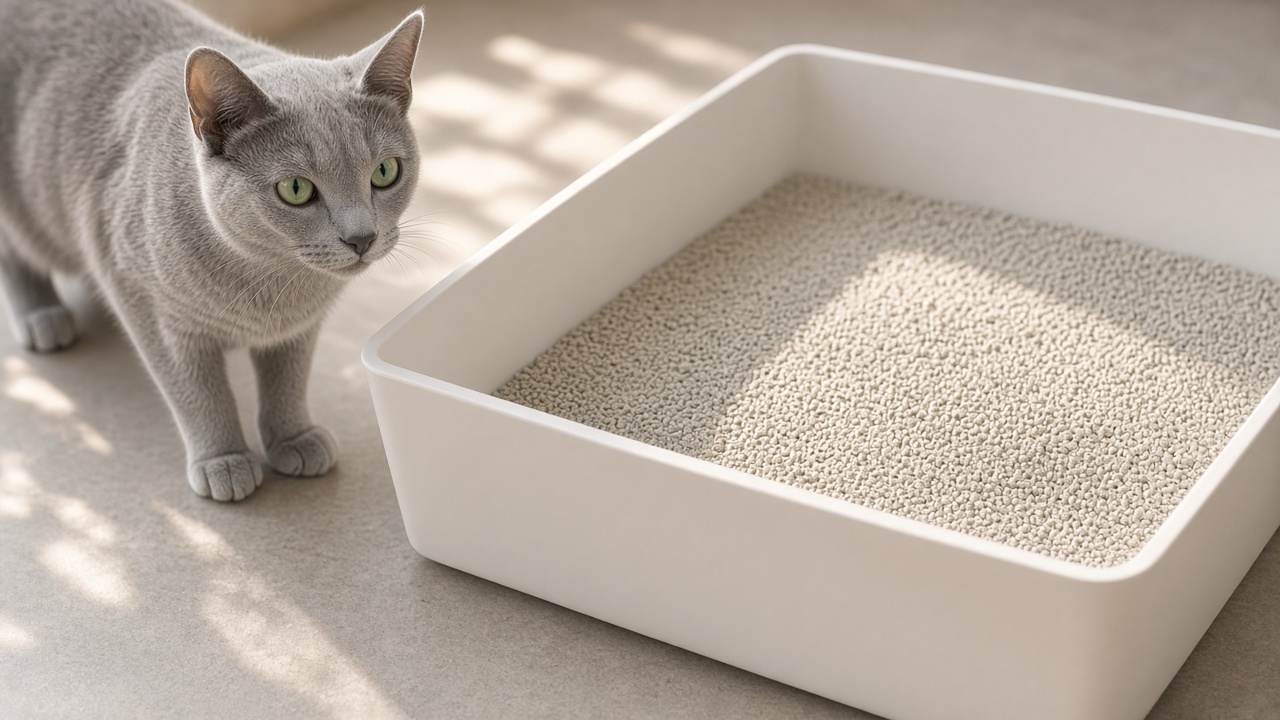
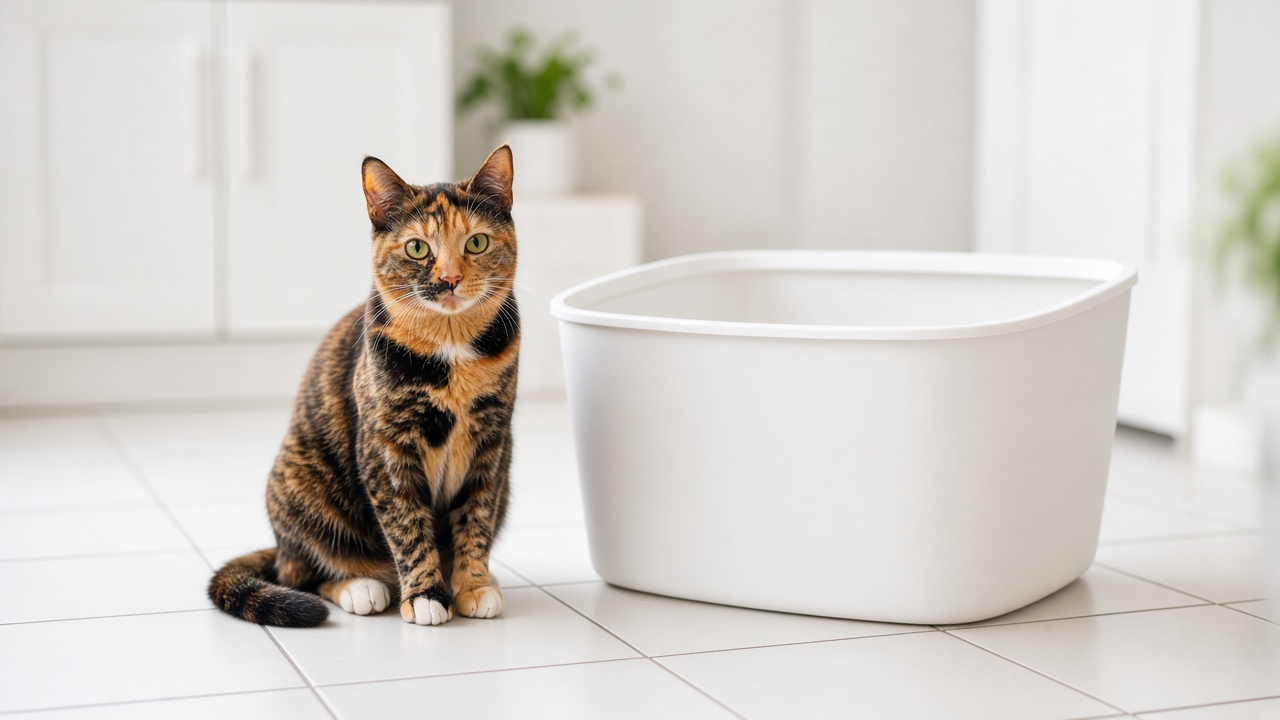
The 2014 AAFP and ISFM guidelines set a size rule. Use a rectangular box 1.5 times the cat’s length from nose to tail base.
In one study those guidelines cite, adult cats preferred a 34 by 15 inch box (86 by 39 cm).
Most store boxes fall short of that length. Large cats need even more floor.
See our guide to a litter box for large cats.
The guidelines show a hardware-store concrete mixing tray as one large option. That example measures 24 by 36 by 8 inches.
The ASPCA’s litter-box page sets a depth band. Most cats like one to two inches of litter, not three to four inches.
The 2014 AAFP and ISFM guidelines recommend fine, unscented, clumping litter. Use a depth of at least 1.25 inches (3 cm).
The same guidelines say to remove waste at least once a day. Wash the box every one to four weeks with soap and hot water only.
A 2023 paper in the Journal of Feline Medicine and Surgery surveyed 3,106 Italian cats. The authors reported house-soiling in 16.74% of that sample.
Among those house-soiling cats, fecal house-soiling alone was 24.90%. Scooping less than once a day raised the odds versus scooping twice a day.
Location, lids, furniture, and automatic boxes
The ASPCA’s litter-box page says cats want a quiet spot. They do not want a dead-end corner.
Keep boxes off the laundry-room path. Keep them away from food bowls.
The 2014 AAFP and ISFM guidelines add a floor rule. Put at least one box on each level of a multilevel home.
They also say cats treat adjacent boxes as one large box. Place openings at right angles, not face to face.
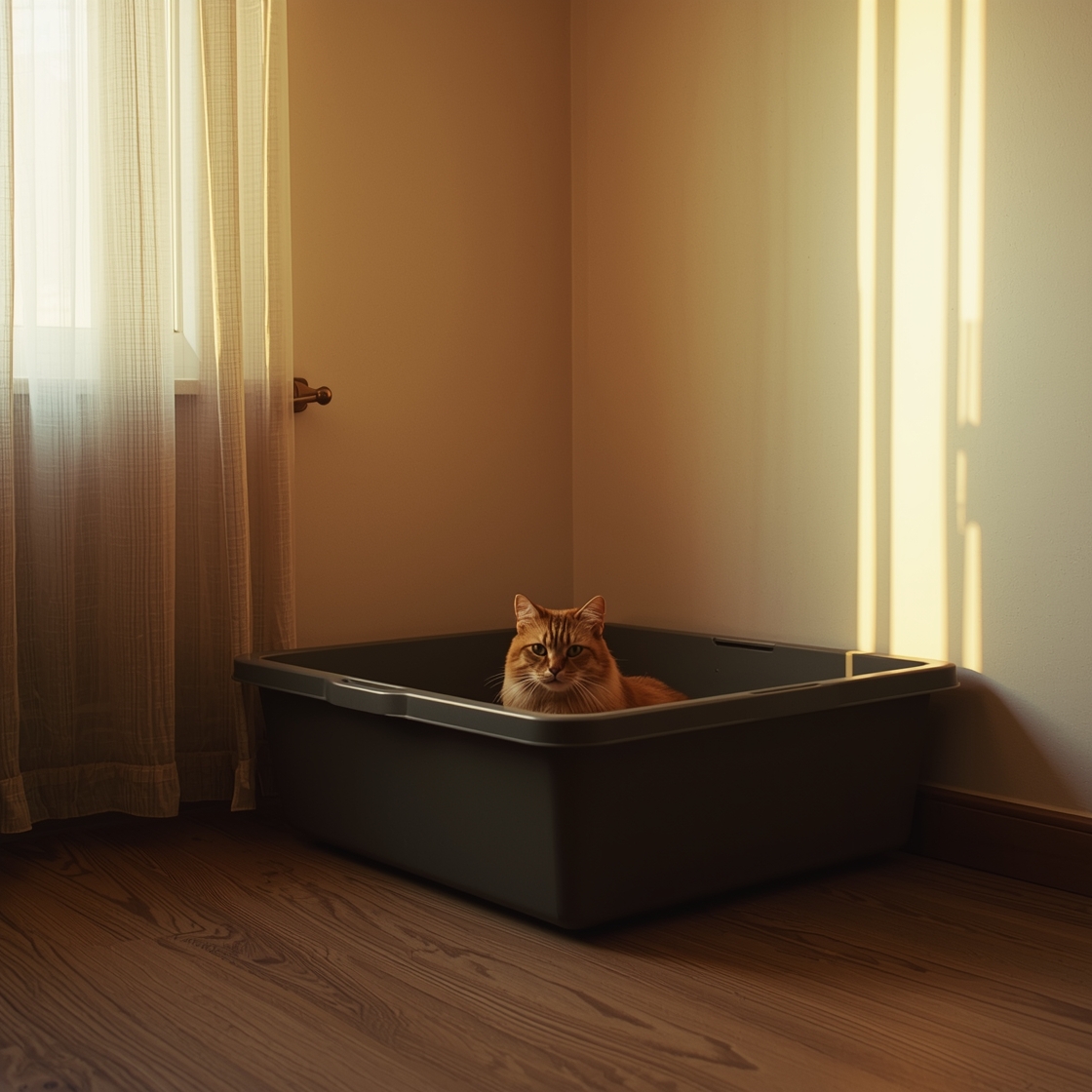
Those guidelines report a split preference. Cats divide evenly between large covered boxes and open boxes.
They still favor open boxes for easier scooping and less trapped odor.
Cornell’s page notes that covers hold odor in. Humans like lids. Many cats do not.
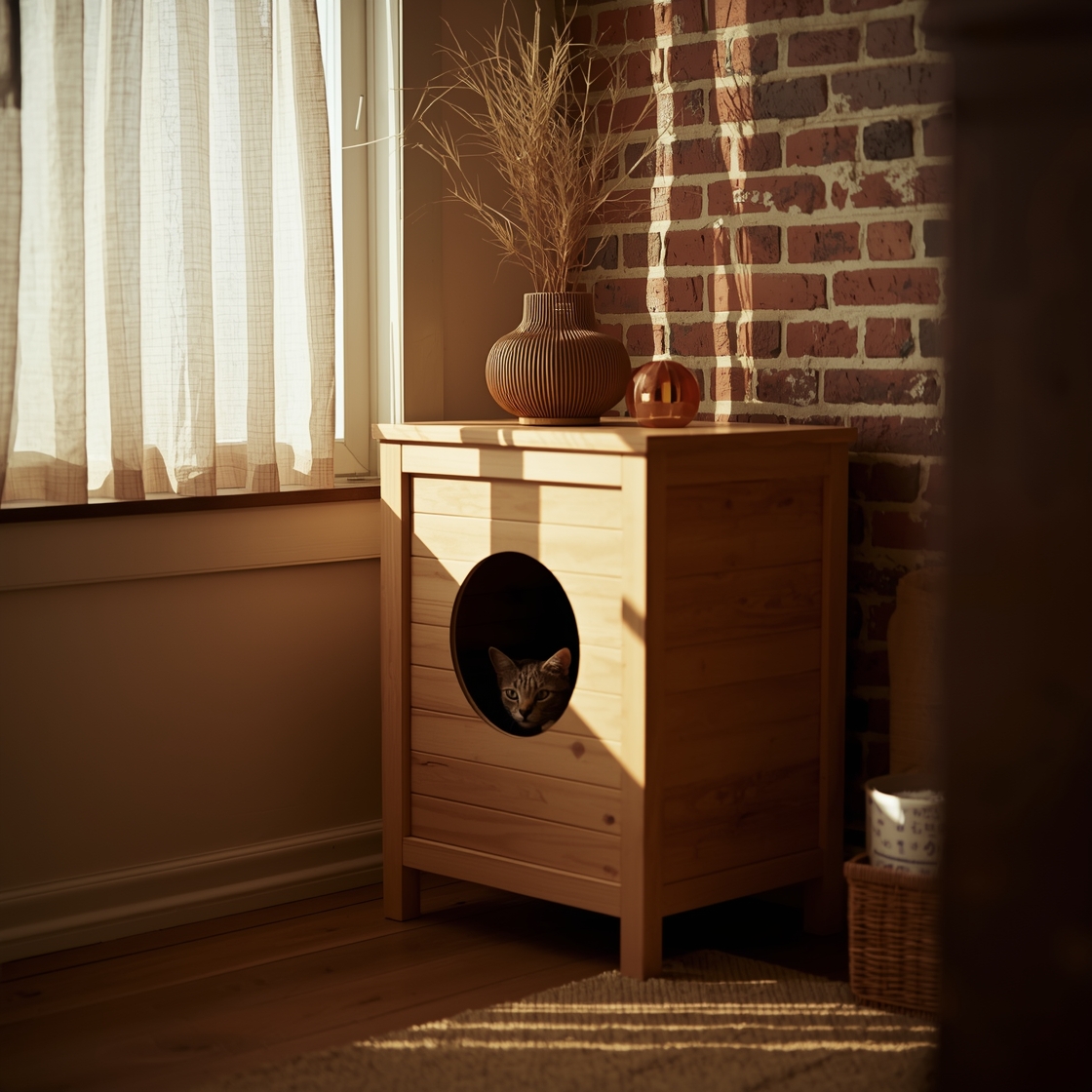
A litter-box enclosure can hide a box from people. It can also trap smell and block escape routes.
If stool appears after you add a cabinet, remove the door or switch to an open tray.
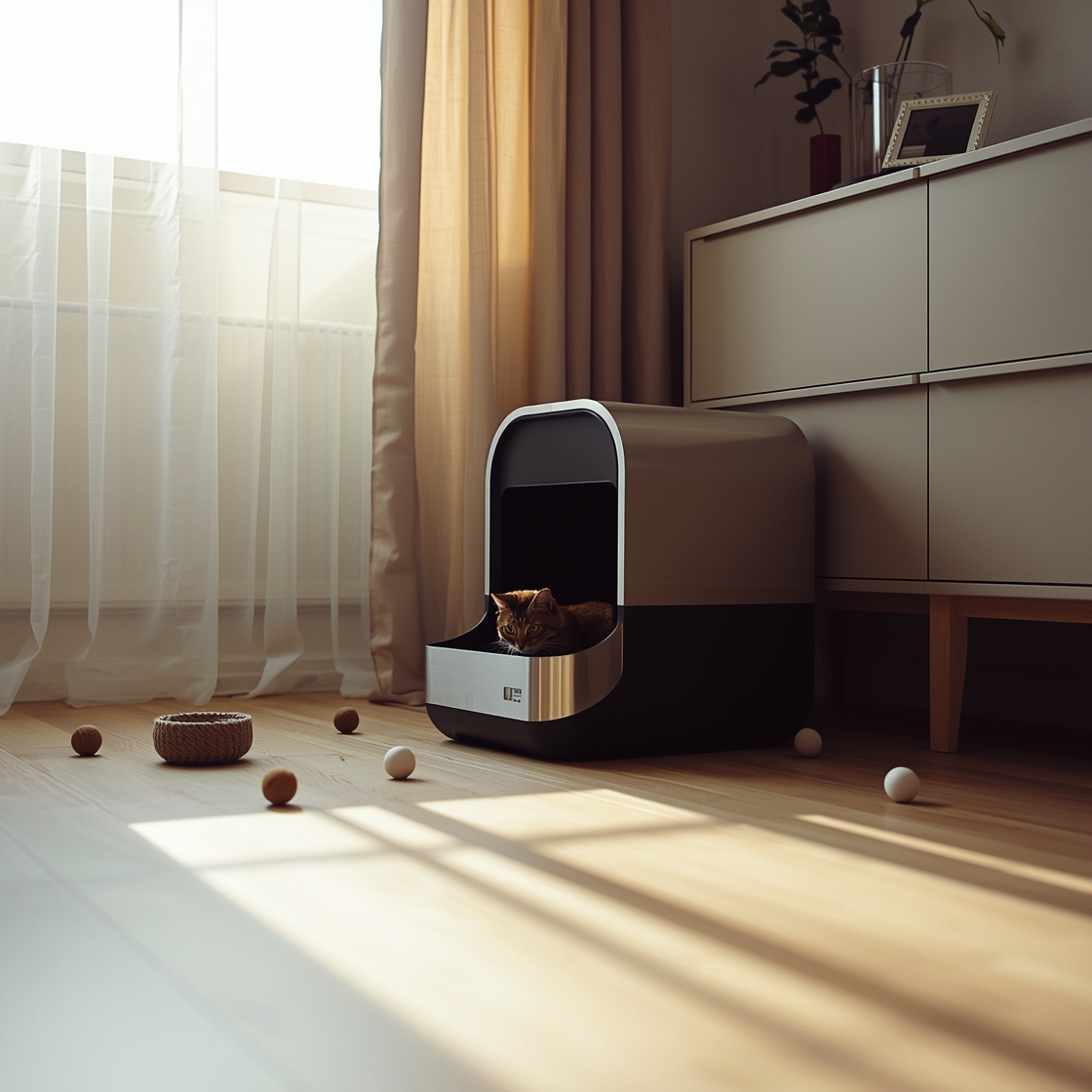
An automatic litter box can keep the bed cleaner. Motion and noise can also scare some cats.
The ASPCA’s litter-box page says many cats accept self-cleaning boxes. If accidents start, it says to try a traditional box.
Whisker’s product page for Litter-Robot 4 lists a starting price of $699. It lists a 22 by 27 inch footprint and a 15.75 by 15.75 inch entryway.
Our research team analyzed those published specs against the AAFP and ISFM size rule. The 22-inch side is shorter than the 34-inch length those guidelines cite.
Whisker’s page also states the unit is designed for cats from 3 to 25 pounds. It states the waste drawer can go up to 8 days between empties in a one-cat home.
The cycle delay on that page runs from 3 minutes to 30 minutes after use. A longer delay can help a cat that startles when the globe turns.
Keep a large open box in another room while any automatic unit is new.
Other cats, stress, and stool near the box
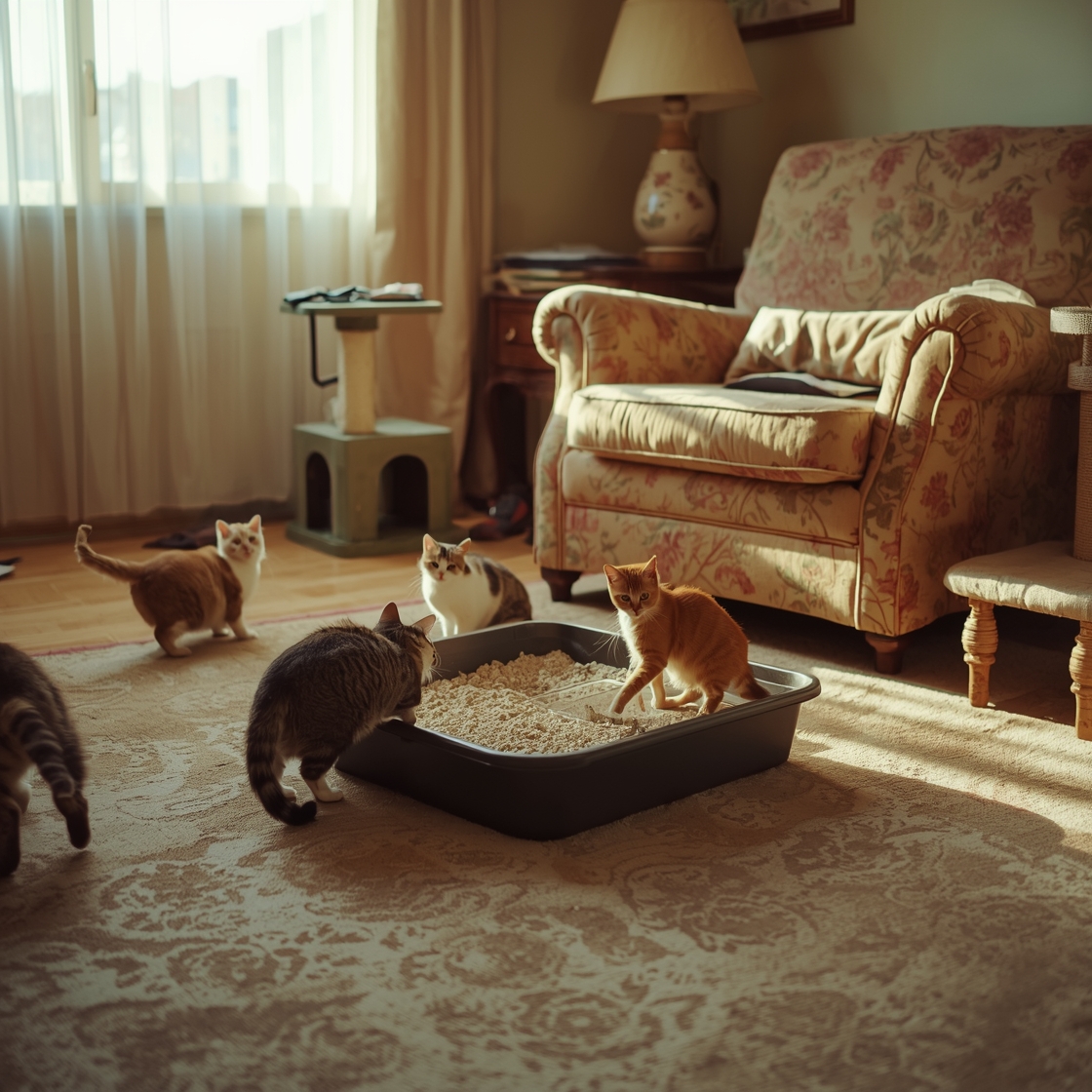
Stool just outside the box often means the cat reached the station. The cat then refused the surface.
The ASPCA’s litter-box page lists common refusals. A box that is too small, too dirty, hooded, or lined can all fail.
Conflict with another cat can also block the entrance. The 2014 AAFP and ISFM guidelines describe a “despot” cat that monopolizes the box.
A 2023 Journal of Feline Medicine and Surgery survey measured group size. Cats living with four or more cats were almost twice as likely to house-soil as cats living alone.
That study also split stool cases by health. Cats with gastrointestinal or musculoskeletal disease were more than twice as likely to defecate outside the box as healthy cats.
Cornell’s house-soiling page states two spray rates. It states that 10% of neutered males and 5% of neutered females still spray.
It also states a household threshold. In homes with more than seven cats, at least one cat is likely to spray.
The ASPCA’s urine-marking page estimates a share of outdoor-box cases. About 30% of those cats are marking, not refusing the box.
Marking is usually small urine on vertical surfaces. Stool on a rug in a squat is toileting, not a spray.
Still, the social stress that drives marking can also drive stool accidents.
Cornell’s page says a cat with a surface preference usually sticks with that texture. Soft carpet and clothing are common.
If stool is always on fabric, add a softer, finer litter. If stool is always on hard floors, try a thinner litter layer over a smooth insert.
How to clean the spot and reset the room
Cornell’s house-soiling page says cats will re-soil marked spots. Clean soon and neutralize odor. Do not only mask it.
The ASPCA’s litter-box page says to use an enzymatic cleanser made for pet waste. Do not use ammonia-based cleaners.
Urine contains ammonia. An ammonia cleaner can pull the cat back to the same patch.
The 2014 AAFP and ISFM guidelines also say to avoid ammonia-based products. They say to wash boxes with soap and hot water only.
If you cannot tell which cat left the stool, Cornell’s page describes a simple marker. Feed one cat small pieces of a brightly colored non-toxic child’s crayon.
Use pieces about twice the size of a sesame seed. Those pieces show up in feces.
If the cat prefers a new room, Cornell’s page says to place a box on that spot. After the cat uses it, move the box a few inches a day.
The 2014 AAFP and ISFM guidelines add a wait. Leave a newly used box in place for at least two weeks before that slow move.
Stop the move if the cat quits the box. Slide it back to the last spot that worked. Then try again, slower.
Place food bowls on old accident sites. Cats rarely toilet where they eat.
What not to do
Do not rub the cat’s face in feces. Cornell’s page says this does not work. Cats are not disgusted by their own waste.
Do not scream, hit, or drag the cat to the box. Cornell states that punishment raises anxiety and can worsen house soiling.
The ASPCA’s litter-box page warns against isolation as the only fix. Do not confine a cat in a small room with a box for days and change nothing else.
Do not switch litter brands overnight. Cornell’s page says to mix a small amount of new litter into the old if you must change.
FAQ
Why does my cat poop next to the litter box?
The cat reached the station and then rejected the box, the litter, or the hood. The ASPCA’s litter-box page lists a dirty box, a small box, a liner, and a lid as common triggers. Scoop daily and add a larger open box beside the old one.
Can constipation make a cat poop outside the box?
Yes. Cornell’s house-soiling page says digestive-tract problems can make defecation painful and urgent. A cat may then pair the box with pain and choose a rug. A same-week medical exam comes before any litter swap.
How many litter boxes do two cats need?
Cornell’s page and the ASPCA’s litter-box page both use one box per cat plus one extra. Two cats need three boxes. Put them in separate rooms, not in a row.
Should I buy a covered box or an automatic box?
The 2014 AAFP and ISFM guidelines say cats split evenly on large covered versus open boxes. They still prefer open boxes for cleaning. Whisker’s Litter-Robot 4 page lists a 15.75-inch entry and a 3-to-30-minute cycle delay. Keep a plain open box until you know the cat will enter the new unit.
Will punishment stop the accidents?
No. Cornell’s house-soiling page states that hitting, kicking, or screaming is ineffective. The anxiety can make house soiling worse. Clean the spot and fix the box or the medical issue instead.
How do I know which cat is leaving stool?
Cornell’s page says you can separate the cats. You can also feed one cat crayon pieces about twice the size of a sesame seed. The color shows in that cat’s feces. Do this only with a non-toxic child’s crayon.
How soon should I move a box off an accident spot?
The 2014 AAFP and ISFM guidelines say to leave a newly used box in place for at least two weeks. Then move it several inches a day. Stop if the cat quits the box, and slide it back to the last good spot.