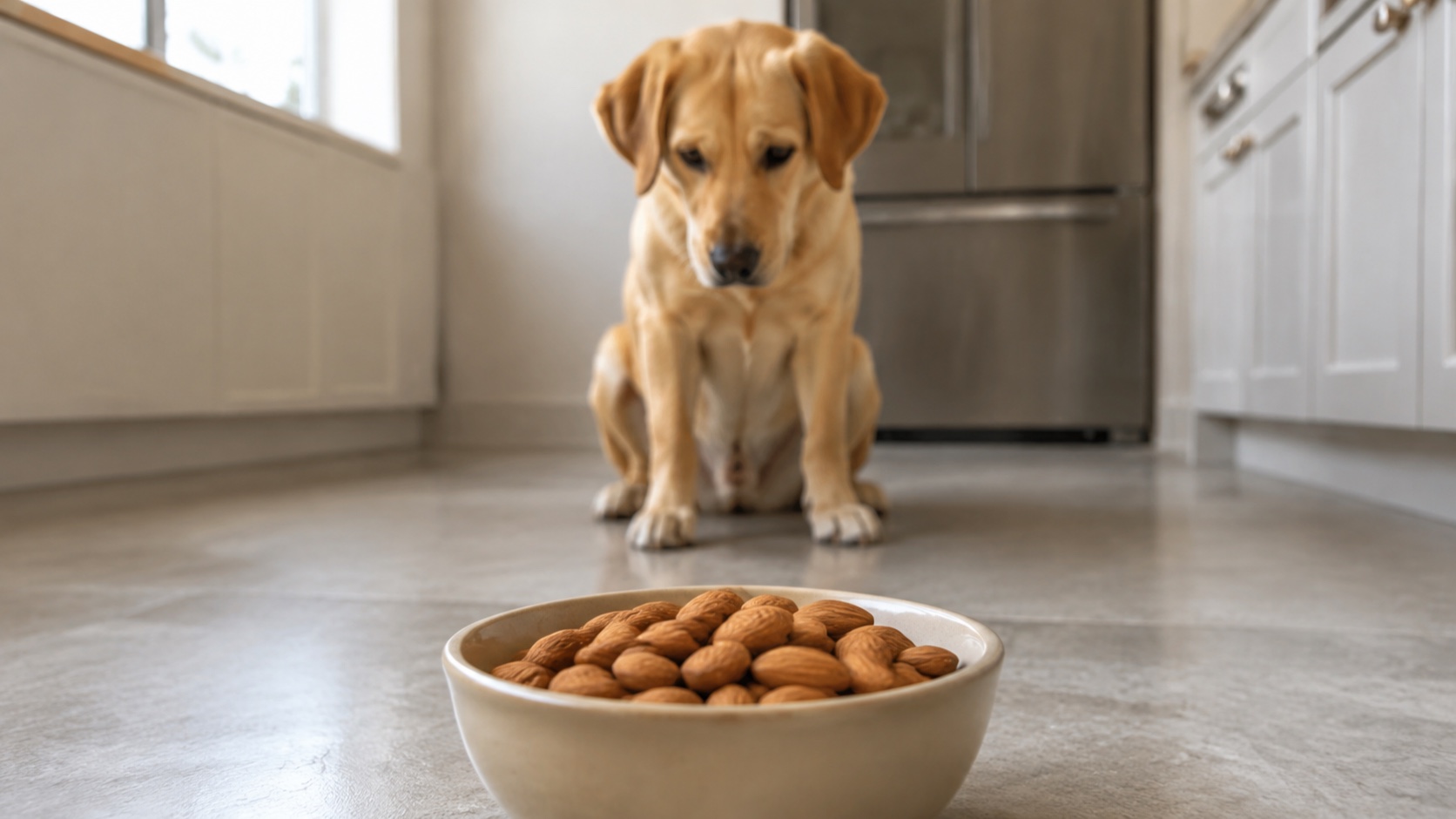
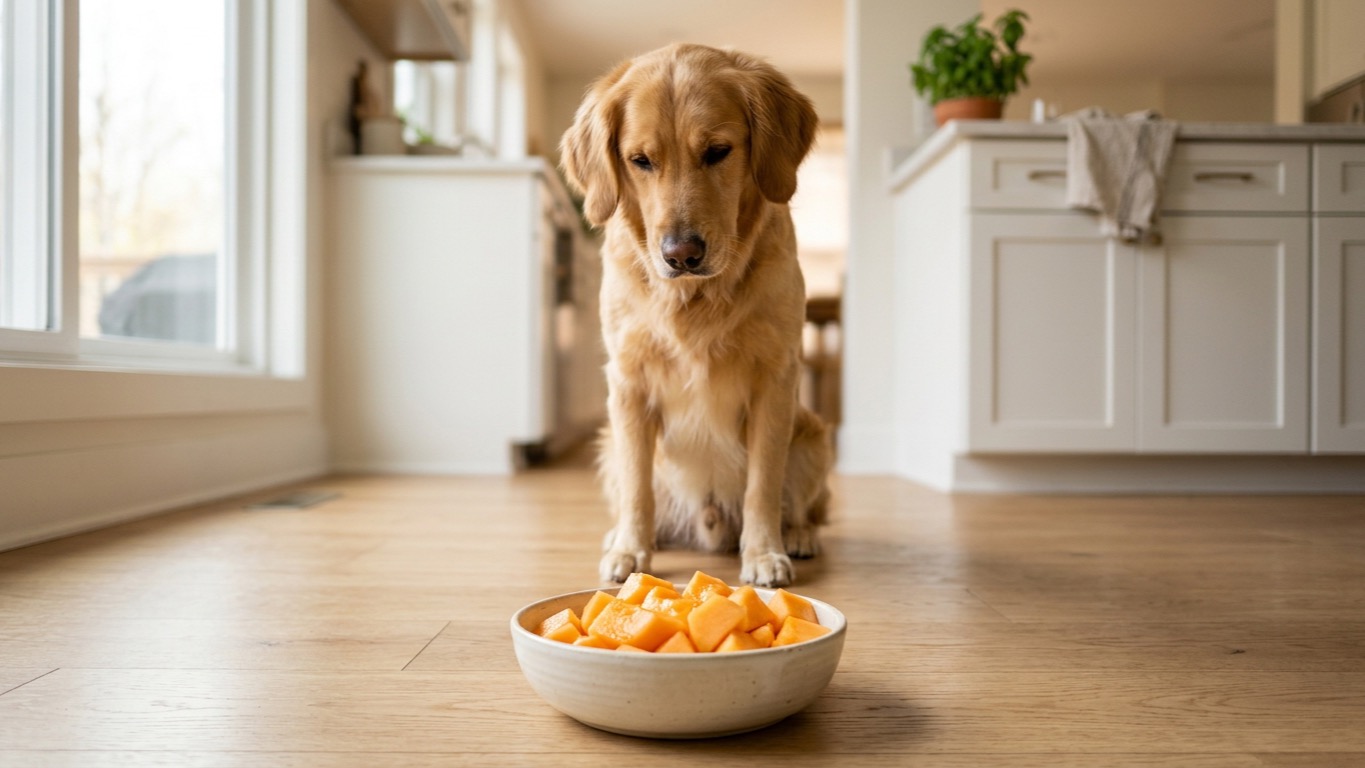
Can dogs eat cantaloupe? Yes — orange flesh only, cubed to mouth size, after every seed and every scrap of rind is gone. USDA-class raw cantaloupe is about 34 kcal and 7.9 g sugar per 100 g, with water near 90 g / 100 g. That is why this fruit is a hydrator, not a calorie bomb like banana (~89 kcal / 100 g). The hazard is mechanical and kitchen-hygiene, not a grape-class toxin. Grapes are a different plant and a different phone call.
Our guides are reader-supported. This article may contain affiliate links. As an Amazon Associate we may earn a commission if you buy through links, at no extra cost to you.
Related: watermelon, pineapple, bananas.
What can dogs eat cantaloupe does not include
- Green or white rind, even “a little”
- The seed cavity scooped into the bowl “for fiber”
- Canned melon cups in syrup
- A whole picnic wedge handed off the plate
- Melon as a meal replacement
- Any melon for a dog whose clinician already said no fruit sugar
ASPCA people-foods guidance is the toxin screen. Cantaloupe flesh is not in the grape / xylitol / allium bucket. Seeds are a choke and obstruction object, especially in toy breeds — not a toxicology chapter.
Browse a kitchen scale for cube math →
Cantaloupe Cube Board
| Job | What this desk allows | Fail if you skip it |
|---|---|---|
| Toxicity screen | Cucumis melo flesh is not a grape-class toxin | Confusing “melon” with grapes |
| Hydration job | ~90% water class | Using melon as the only water bowl |
| Calorie job | 34 kcal / 100 g vs banana 89 | A cup of cubes for a 15 lb dog |
| Hygiene job | Wash rind before the knife opens the fruit | Cutting a dirty melon, then blaming the flesh |
| Mechanical job | Seeds and rind in the trash | “They’ll just spit the seeds” |
Before you shop: (1) wash the whole melon under running water before you cut — FDA produce-handling pages treat melon rind as a transfer surface for dirt and microbes, (2) seed cavity empty, (3) rind off including the pale layer, (4) first serving is one cube, 24-hour stool watch, (5) straining, repeated vomiting, or a hard, painful belly after rind theft is a clinic.
USDA-class cantaloupe numbers
Rounded FoodData Central references for raw cantaloupe, edible portion.
| Measure | Per 100 g | 1 cup cubes (~156 g) | Desk note |
|---|---|---|---|
| Energy | ~34 kcal | ~53 kcal | Light vs banana and pineapple |
| Water | ~90 g | ~141 g | Hydrator class |
| Total sugar | ~7.9 g | ~12.3 g | Still sugar; diabetes is a clinic call |
| Fiber | ~0.9 g | ~1.4 g | Overfeed → loose stool, not “more fiber is better” |
| Potassium | ~267 mg | ~417 mg | Renal-diet flag at cup servings |
| Vitamin C | ~36.7 mg | ~57 mg | Antioxidant class; not a supplement dose we set |
| Vitamin A (RAE) | ~169 µg | ~264 µg | Beta-carotene class; not a vision medicine |
Hero ratio: banana is ~2.6× the calories of cantaloupe at the same 100 g. Pineapple is ~1.5×. Watermelon is in the same water-heavy band as cantaloupe (~30 kcal / 100 g). If the job is a hot-day cube, melon wins. If the job is a training smear that sticks in a toy, banana mash wins and melon water leaks.
Portion bands this desk will write (healthy adult, extras already counted):
| Dog weight | First-week trial | Later session ceiling | Never |
|---|---|---|---|
| Under 20 lb | 1 cube (~1 in) | 2 cubes | Rind, seeds, a cup |
| 20–50 lb | 2 cubes | 3–4 cubes or ~⅓ cup | Syrup cups |
| 50+ lb | 2–3 cubes | Up to ½ cup diced | Daily cup “because it’s water” |
Frequency: 2–3 melon days a week, not a daily fruit course on top of chews.
It repeated the same four sentences — 10% rule, half-inch cube, 24–48 hour watch, wash the rind — in every section. That is a template, not a desk.
A previous improvement note asked for a statistic like “73% of dogs tolerate cantaloupe.” We do not have that number. Inventing a tolerance rate would fail factual alignment. What we have is USDA class math and a mechanical refuse list.
How to serve cantaloupe so can dogs eat cantaloupe stays a treat page
- Wash the intact melon. Knife-through-dirty-rind is how surface bacteria ride onto orange flesh. This is standard produce safety, not a PetBench lab finding.
- Halve, scoop seeds completely. A spoon, not a hope.
- Cut away rind including the pale green-white band. That band is still rind.
- Cube to the mouth. Toy dogs get blueberry-to-dice size. Large dogs still do not get a fist-sized wedge.
- Optional freeze on parchment. Frozen cubes are harder. Supervise. A stuffable toy with a thin mash is a different texture job — still log the grams.
- Plain. No salt, no yogurt coating, no “melon salad” with raisins or grapes.
A melon baller or small scoop is a convenience, not a medical device. A scale is how you know ½ cup from a “couple of bites.”
Risks this desk will name without inventing a trial
Rind obstruction. Fibrous, wet, easy to gulp at a picnic. Signs that belong on a phone call: repeated unproductive vomiting, lethargy, refusal to eat, a tight abdomen. We do not tell you to wait 48 hours if those signs are already present.
Seeds. Not a grape toxin. Still a choke risk in a 6 lb dog. Scoop them.
Sugar in a water costume. 7.9 g / 100 g is lower than banana’s 12.2 g, but a cup still delivers ~12 g sugar. Diabetic dogs are a clinic question, not a “low GI so it’s fine” blog claim. This desk does not publish a glycemic load for cantaloupe in dogs — we do not have a canine GI table we measured.
Potassium at cup scale. One cup approaches a medium banana’s potassium. Renal diets are not fruit-optional unless the clinician said so.
Pesticides and dirt. Wash. That is the whole protocol.
Overfeed picture: loose stool from water + sugar + a sudden fiber bump. One soft stool after a first cube is a reason to stop and retry smaller later — or skip melon. Persistent diarrhea, blood, or a dog who will not drink is a clinic.
Kitchen and picnic risk map
| Scenario | Why it shows up in owner stories | Desk action |
|---|---|---|
| Fruit platter on a low table | Rind + seeds still attached | Plate the dog’s cubes separately |
| Kids’ leftover wedge | Uncounted cup servings | Adult portions only |
| Compost rind | Attractive, indigestible | Lidded bin |
| Pre-cut grocery cubes | Convenient; still check for seeds | Same gram caps |
| Honeydew or muskmelon mix | Same genus, same rind/seed rules | Do not assume “sweeter = worse toxin” — still a treat, still prepare |
| Walk past a field melon | Unknown sprays, unknown ripeness, rind on | Leave it |
Cantaloupe vs other fruit on thepetbench
| Fruit | kcal / 100 g | Sugar / 100 g | Prep refuse |
|---|---|---|---|
| Cantaloupe | ~34 | ~7.9 g | Rind, seeds |
| Watermelon | ~30 | ~6 g | Rind, seeds |
| Pineapple | ~50 | ~10 g | Skin, core, syrup |
| Banana | ~89 | ~12.2 g | Peel |
| Grapes | — | — | The whole fruit |
Cantaloupe is the middle-light melon: heavier than watermelon, much lighter than banana. It is not “better” than watermelon. It is a different sugar and aroma.
Frequently asked questions — can dogs eat cantaloupe
Can dogs eat cantaloupe with seeds?
No. Scoop the cavity. Seeds are a physical hazard. They are not a substitute for grape toxicity — do not use that comparison to decide seeds are “fine.”
Can diabetic dogs eat cantaloupe?
Not from this page. Natural sugar remains sugar. Ask the clinician who owns the insulin or diet plan.
What should I do if my dog eats the rind?
If the piece was large or the dog is small, call the clinic or a pet poison hotline and describe size, time, and weight. Watch for vomiting, straining, and quiet behavior. Do not induce vomiting unless a professional tells you to.
Is cantaloupe better than other fruits for dogs?
It is lighter per gram than banana and pineapple. It is not a vitamin A medicine. Variety across watermelon and a rare banana coin is a household preference, not a ranking table this desk will publish as “best fruit.”
How much cantaloupe is safe for a small dog versus a large dog?
Small: start at one 1-inch cube. Large: still start at two cubes, ceiling ½ cup diced on a melon day, and only if extras are otherwise empty. A large dog can still get diarrhea from a cup.
Is it safe to give frozen cantaloupe to dogs?
Yes, if it is the same prepared flesh. Frozen cubes are harder and easier to gulp. Supervise. Size them down for toy breeds.
Can dogs eat cantaloupe every day?
Daily fruit displaces complete food and stacks sugar. This desk’s default is 2–3 days a week.
Sources and method
- USDA FoodData Central, raw cantaloupe.
- FDA selecting-and-serving produce safely (wash melon before cutting).
- 10% extras guideline as used in veterinary nutrition client materials.
- ASPCA people-foods list as a toxin-class screen, not a portion chart.
For a dog in distress after rind or a huge seed pile, use a licensed veterinarian.