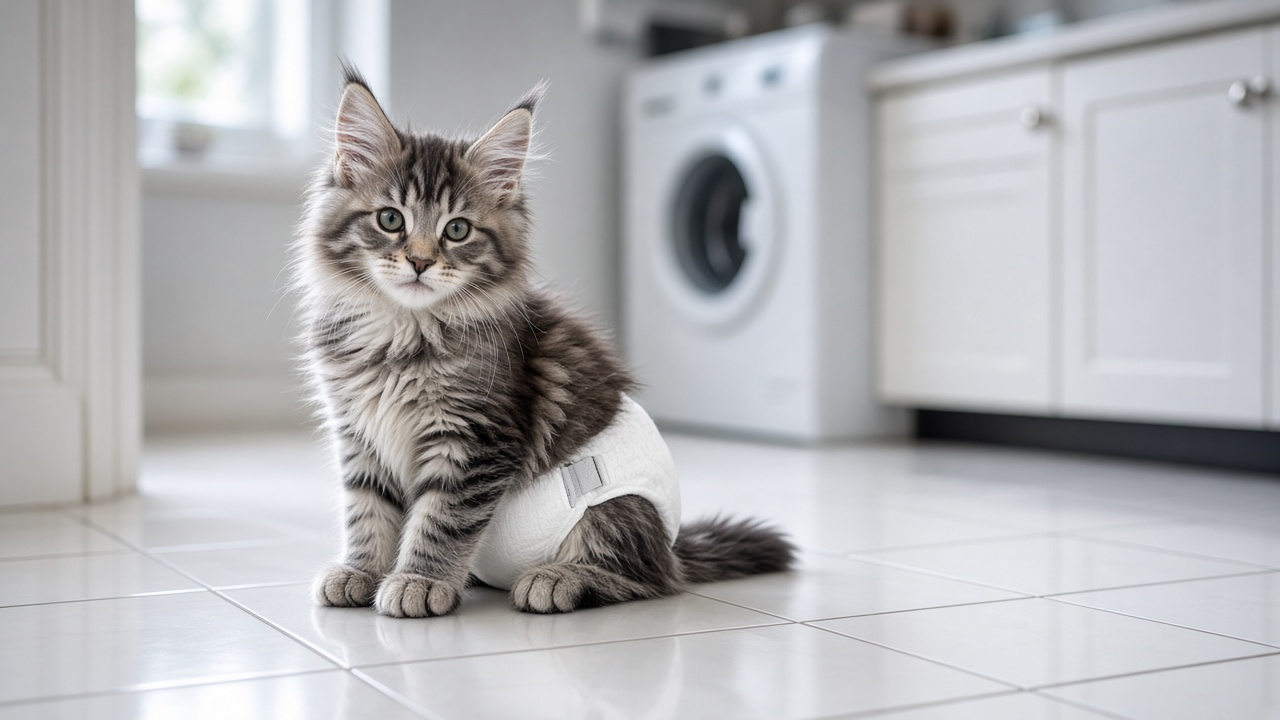
Quick answer: Warm a newborn kitten before any milk. Use commercial kitten milk replacer, not cow’s milk. Let the kitten sleep in a nest it can leave if the heat is too high.
A newborn kitten needs 89.5–93°F nest heat in week one and commercial milk every 3–4 hours once warm.
This page is a research-desk brief on published neonatal numbers and current maker specs. We did not raise a litter, sit clinic shifts, or run a feeding trial.
The 14-Day Nest Rule
Our selection rule is simple. We cover only the first 14 days, when a kitten still needs outside heat, bottle milk, and sleep between feeds.
We include only SKUs a caregiver can buy now for nest heat or milk. We left out weaning foods, adult treats, outdoor colony kits, and unmatched SKUs.
Our research team compared published specs. We did not time a nest with a probe or watch a litter overnight.
What a newborn kitten can and cannot do
A newborn kitten cannot hold a steady body temperature. Susan Little’s 2013 “Playing Mum” paper in the Journal of Feline Medicine and Surgery says self-warming stays poor past 4 weeks.
That paper lists a typical birth weight of 100 g and a target gain of 10–15 g per day. The Merck Veterinary Manual allows a brief loss of up to 10% of birth weight on day 1.
Little’s paper lists a heart rate of 220–260 beats per minute in the first 2 weeks. A cold kitten’s heart rate can fall. That is one reason warmth comes before milk.
International Cat Care, updated 26 September 2025, says kittens eat or sleep about 90% of the time for 2 weeks. Quiet sleep after a feed is a good sign. Constant crying is not.
Eyes stay closed at birth. International Cat Care says they usually open within 1–2 weeks. Do not pry them open.
Warmth first: nest air, humidity, and heat sources
Do not feed a cold kitten. Little’s paper says a rectal temperature under 35°C (95°F) must be raised slowly before milk.
Cold guts do not move food. Aspiration risk rises.
The same paper sets nest air at 32–34°C (89.5–93°F) in week 1. Week 2 drops to 27–29°C (81–84°F).
Week 3 is 24–27°C (75–81°F). Weeks 4–12 sit at 24°C (75°F).
International Cat Care publishes a cooler start: 29.4–32.2°C (85–90°F) with no queen present. It then lists 26.7°C (80°F) by days 7–10.
By the end of month one it lists 22.2°C (72°F). Those two published ranges do not match.
We report both. We do not pick a winner. Place a thermometer at kitten level.
Little’s paper asks for humidity of 55–60%. The Merck Veterinary Manual lists 55%–65%.
Dry air dries the mouth and nose. Damp bedding chills the kitten.
Heat must sit on one side of the box. The kitten needs a cooler escape path.
Little’s paper calls circulating hot-water blankets and towel-wrapped bottles useful. It does not recommend heating pads. It says they heat unevenly and may burn.
Lenric C21’s SnuggleSafe Microwave Heatpad is a 9-inch (21 cm) disc. The maker’s shop page says one heat can last up to 10 hours.
The instruction sheet says a 900–1,000 watt oven needs 5 minutes, plus 1 rest minute. It lists a surface near 65°C (149°F). Never place an uncovered disc on the kitten.
Do not use it with an unconscious animal. Wrap it. Leave an off-heat zone.
K&H Pet Products lists the Thermo-Kitty Mat at 6 watts and 12.5 by 25 inches. The empty surface stays about 15°F above room air. The occupied surface is listed at about 102°F.
K&H warns against confined use with young kittens that cannot leave the pad. That warning matches Little’s burn concern.
The Merck Veterinary Manual prefers an overhead lamp set far enough to avoid burns. It also flags pad-burn risk for neonates that cannot crawl away.
Feeding: commercial milk, volume, and the clock
Cow’s milk and goat’s milk are the wrong mix. International Cat Care says their protein and fat are too low for kittens.
Hartz’s kitten-milk page makes the same cow’s-milk point. Use a commercial kitten milk replacer.
If a queen is present and willing, let the kitten nurse. PetAg’s KMR powder page says kittens should get the queen’s milk for at least 2 days when possible. PetAg also states KMR does not contain colostrum.
Warm the milk. Little’s paper says 35–38°C (95–100°F) in a water bath. International Cat Care lists 35–37.8°C (95–100°F).
Test a drop on your inner wrist. Do not microwave the bottle.
PetAg’s KMR Kitten Milk Replacer Powder mixes at 1 part powder to 2 parts warm water. Do not use a blender. Do not mix more than a kitten can finish in 24 hours.
The maker’s newborn-to-6-week line is 30 mL of mixed KMR per 115 g per day. Split that volume into equal feeds on a 3–4 hour clock.
The dry can lists 40.0% minimum crude protein and 28.0% crude fat. Mixed energy is listed as 12.4 kcal per tablespoon at a 1:2 mix. Dry powder is listed at 4,494 kcal/kg.
PetAg’s KMR Kitten Milk Replacer Liquid is ready to pour. It lists the same 30 mL per 115 g daily volume and the same 3–4 hour clock.
Opened liquid must be refrigerated and discarded after 72 hours. The label lists 7.00% minimum crude protein and 13.04 kcal per tablespoon.
Nutri-Vet’s Milk Replacer with Opti-Gut mixes 1 tablespoon powder to 2 tablespoons water at 100°–105°F. It lists 2 tablespoons of solution per 4 oz of body weight per day.
Unused mix is discarded after 24 hours. The label says the product is for supplemental or intermittent feeding only.
Our research team lined up those three daily-volume lines. PetAg powder, PetAg liquid, and Nutri-Vet all land on about 30 mL per 115 g per day. That match is from the maker pages, not a trial.
International Cat Care splits weeks 0–2 into 10 feeds in 24 hours, at 2–2.5 hour gaps. That clock is tighter than PetAg’s 3–4 hour line.
Use the tighter clock for a weak kitten. Follow the maker’s milliliter math for the day’s total.
Little’s paper says feeds every 2–4 hours in week 1, then every 4–6 hours until weaning. Do not force milk. Feed the kitten belly-down, never on its back.
AAFCO’s Cat Food Nutrient Profiles set a 30.0% minimum crude protein, dry-matter basis, for growth and reproduction. PetAg states KMR powder meets those profiles for complete and balanced nutrition.
Liquid KMR is listed for all life stages. Those are label claims. We did not assay the cans.
Sleep in the nest
A warm, fed newborn should sleep. Little’s paper says kittens up to 3 weeks spend most of their time asleep when they are well. Littermates sleep in a pile until about 4–6 weeks.
Waking should be short. It should be for milk, cleanup, and a return to the nest.
Keep the box small, quiet, and dim. Soft, dry bedding holds heat. Swap wet cloth at once.
Do not stack toys in the nest. A newborn cannot climb out of a tangle.
If the kitten cries and sweeps its head side to side, check heat and hunger first. Little’s paper treats that search motion as a stress sign. Persistent crying, restlessness, or floppy tone needs a clinic visit.
Gear we compared from maker pages
The table below is an attribute sheet. It is not a ranking.
Prices are omitted on purpose.
| Product | Form | Maker-listed mix or heat rule | Maker-listed daily volume or run time | Listed size, power, or protein |
|---|---|---|---|---|
| PetAg KMR Kitten Milk Replacer Powder | Powder | 1 part powder to 2 parts warm water | 30 mL per 115 g body weight per day; every 3–4 hours | Crude protein min 40.0%; 12.4 kcal/tbsp mixed |
| PetAg KMR Kitten Milk Replacer Liquid | Ready liquid | Shake; warm; do not microwave | 30 mL per 115 g per day; discard 72 hours after opening | Crude protein min 7.00%; 13.04 kcal/tbsp |
| Nutri-Vet Milk Replacer with Opti-Gut for Kittens | Powder | 1 tbsp powder to 2 tbsp water at 100°–105°F | 2 tbsp (1 oz) solution per 4 oz body weight per day | Maker label: supplemental or intermittent feeding only |
| SnuggleSafe Microwave Heatpad | Microwave disc | 5 minutes at 900–1,000 watts; plus 1 rest minute | Maker lists warmth up to 10 hours | 9-inch (21 cm) disc; surface near 149°F after heat |
| K&H Thermo-Kitty Mat | Plug-in mat | Empty surface about 15°F above room air | Occupied surface listed at about 102°F | 6 watts; 12.5 × 25 inches; indoor use |
Use a kitten-sized nurser, not a spoon or dropper. Little’s paper flags spoons and eye droppers for aspiration risk.
PetAg’s KMR liquid page recommends a nurser bottle.
Weight, waste, and warning signs
Weigh the kitten on a gram scale at the same time each day. Little’s paper asks for weights every 12 hours in the first 2 weeks, then daily until weaning.
The Merck Veterinary Manual asks for daily weights for 2 weeks, then every 3 days until 1 month.
A healthy kitten should add 10–15 g a day on Little’s line. Merck lists 50–100 g per week.
International Cat Care says birth weight should double in 7–10 days. Flat weight for more than a day is a problem.
Kittens under 3 weeks cannot pee or poop on their own. Little’s paper and International Cat Care both say the caregiver must rub the anogenital area after each feed.
Use a soft, warm, damp cloth. Stop when the kitten can go on a low litter tray, near 3–4 weeks.
Stool on milk replacer should be pasty yellow to light brown, per Little. Watery stool, blood, or no stool after several stimulated tries needs clinical help.
Do not wait out a kitten that will not suck, feels cold after slow warming, or fades between feeds. High-risk windows in Little’s paper are birth, the first 2 weeks, and weaning.
FAQ
Can I give a newborn kitten cow’s milk?
No. International Cat Care says cow’s milk and goat’s milk are too low in protein and fat. Hartz’s page agrees on cow’s milk, so buy a commercial kitten milk replacer.
How often should I feed a newborn kitten?
PetAg lists every 3–4 hours for KMR powder and liquid. International Cat Care lists 10 feeds in 24 hours for weeks 0–2. Little’s week-1 clock is every 2–4 hours.
What nest temperature does a newborn kitten need?
Little’s paper lists 89.5–93°F in week 1, then a step-down each week. International Cat Care lists 85–90°F at the start. Put a thermometer in the nest and leave a cooler side.
Why must I warm the kitten before milk?
Little’s paper says a rectal temperature under 95°F stalls the gut and raises aspiration risk. The Merck Veterinary Manual says hypothermia also hurts immunity and nursing. Warm first, then feed.
How much weight should a newborn kitten gain?
Little’s paper targets 10–15 g per day. The Merck Veterinary Manual lists 50–100 g per week. International Cat Care says birth weight should double in 7–10 days.
Is an electric heating pad safe in the nest?
Little’s paper does not recommend heating pads. It cites uneven heat and burns. K&H’s Thermo-Kitty Mat page warns against confined use with young kittens that cannot leave the pad.
When should I get clinical help?
Get help if the kitten stays under 95°F, will not suck, or loses weight after day 1. Also get help for watery stool or crying that does not settle after heat and a feed. Little’s paper says excessive crying or floppy tone should be checked promptly.