Quick answer: Offer a small plate of plain cooked chicken, scrambled egg, or drained water-packed tuna. Skip milk, onions, garlic, and seasoned leftovers. Buy complete cat food as soon as a store opens.
Cooked unseasoned chicken or drained water-packed tuna can feed a stray cat for 24 hours. This briefing covers same-day household proteins; we did not run feeding trials, visit colonies, or write a homemade complete diet.
How we chose what belongs here. We include only unseasoned animal-protein foods a U.S. grocery shopper can serve the same day. We also include currently sold water-packed cans whose maker labels list protein and sodium.
We leave out homemade vitamin recipes, milk, raw meat, seasoned leftovers, and plant-only plates.
The 24-Hour Meat Plate
Cats are obligate carnivores. They need animal tissue for protein and for taurine.
The National Academies pamphlet Your Cat’s Nutritional Needs states that taurine is a dietary essential for cats. Plants hold little or none of it.
Household food cannot replace a complete cat food for weeks. The U.S. Food and Drug Administration defines a “complete and balanced” claim. That claim must meet an AAFCO nutrient profile or an AAFCO feeding trial.
The 24-Hour Meat Plate is our own stopgap rule. Serve one unseasoned animal protein and water.
Stop after one calendar day unless a store is still closed.
That rule is falsifiable. If a healthy adult cat cannot keep down plain cooked chicken or drained tuna for a day, the plate failed. Then the cat needs a clinic, not a second recipe.
The Association of American Feed Control Officials sets adult cat food at a 26.0 percent crude-protein minimum. That figure is on a dry-matter basis. The Merck Veterinary Manual also lists that AAFCO floor as 65 grams of protein per 1,000 kilocalories.
A leftover chicken breast is not a formulated diet. It can still keep an empty stomach from staying empty until morning.
Safe proteins already in most kitchens
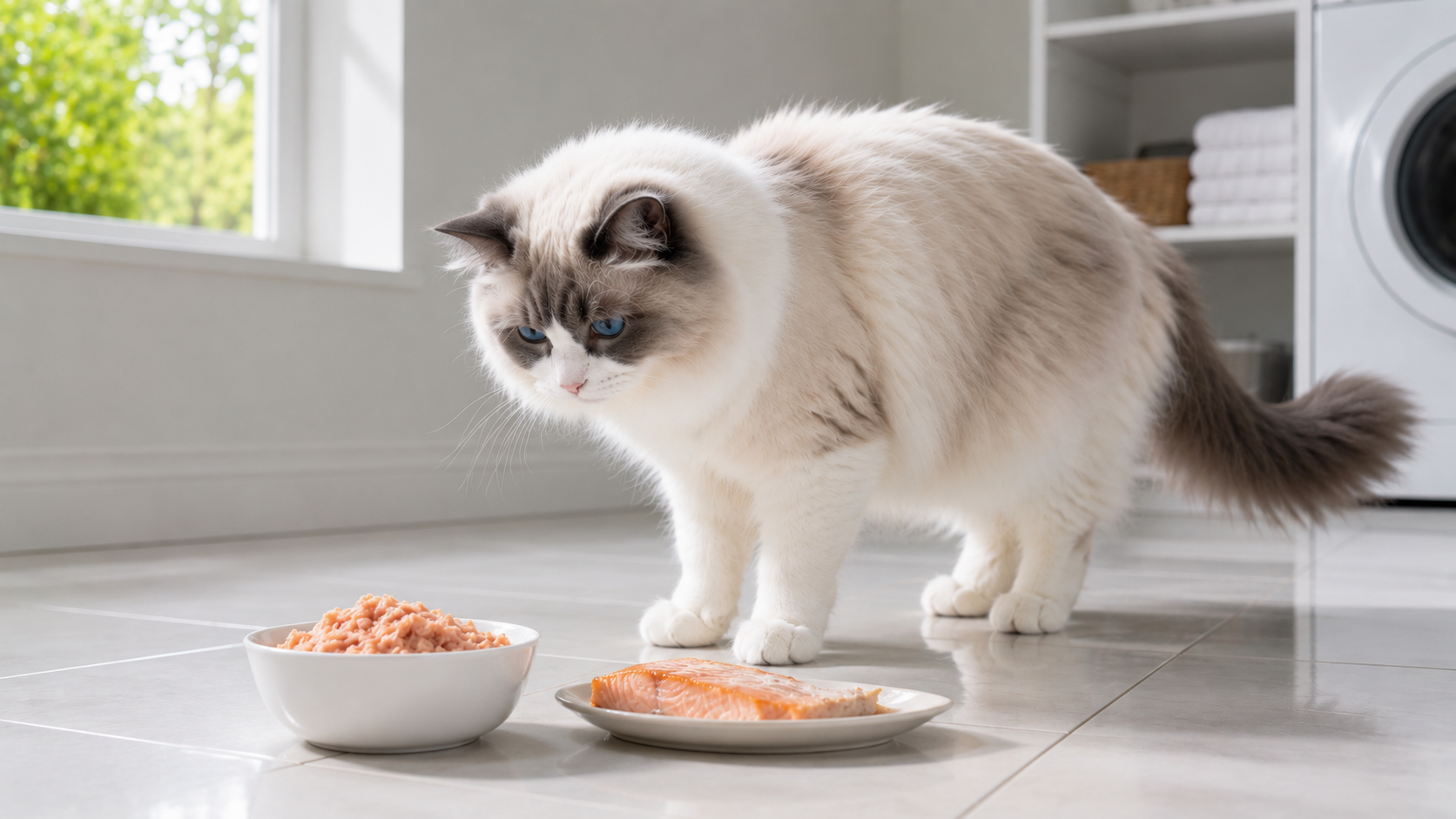
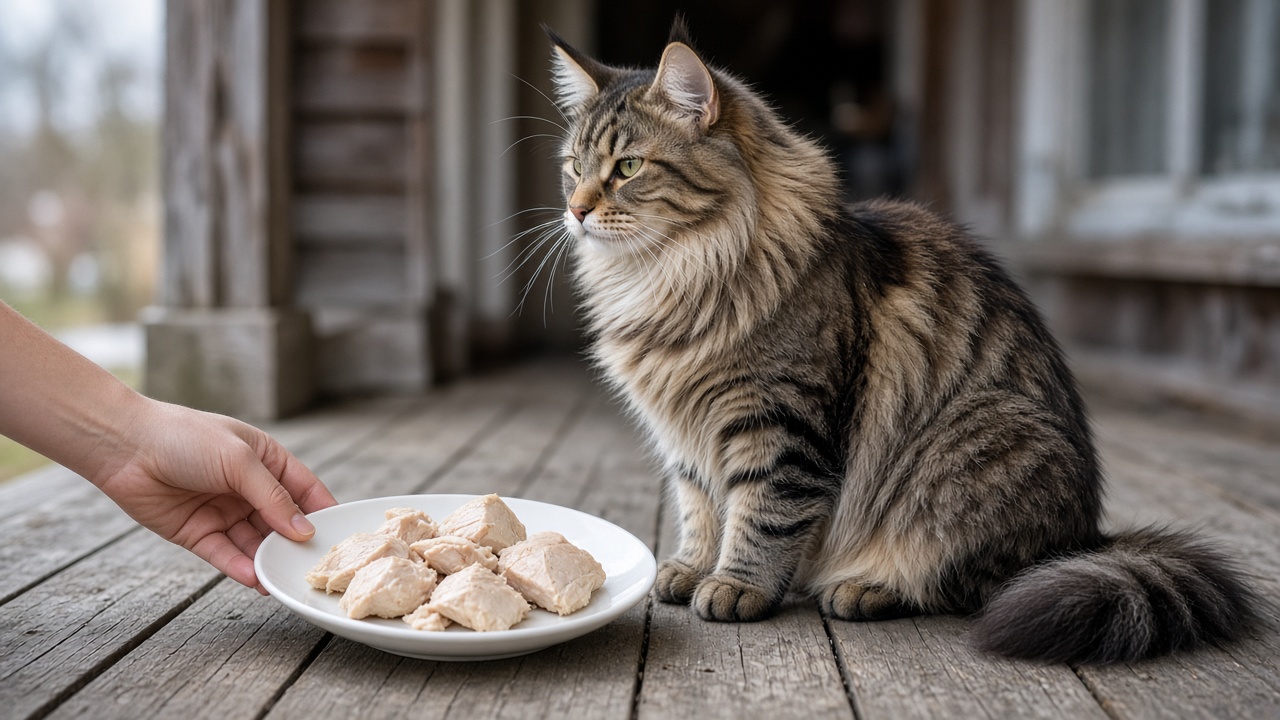
Cooked, unseasoned chicken or turkey is the first choice. Pull the meat off the bone and cut it small. Serve it warm, not hot.
Skip the skin if it is greasy. Fatty leftovers can upset a gut that has been empty for days.
A scrambled egg works when there is no meat. Cook it through in a dry pan.
The ASPCA warns that raw eggs can carry Salmonella and E. coli. Raw eggs also contain an enzyme that can interfere with vitamin absorption.
Do not add milk, cheese, butter, or oil. The ASPCA notes that many pets lack enough lactase to handle dairy. Diarrhea is a common result.
Water-packed tuna or salmon is the pantry option. Drain it well.
Do not serve tuna packed in oil. Do not serve pouches with garlic, chili, or smoke flavor.
Offer fresh water in a shallow bowl. A stray that has been eating dry scraps may drink more than you expect.
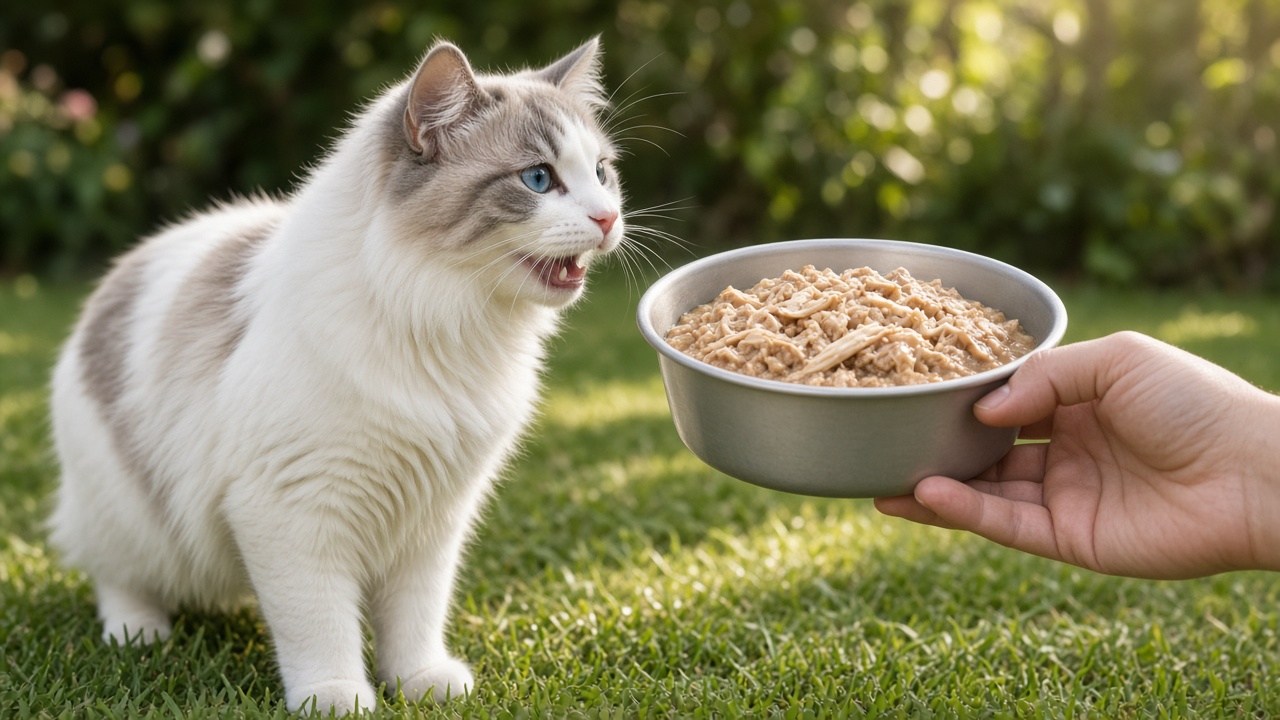
Start with one or two tablespoons, then wait 20 minutes. If the cat keeps the food down, offer more. A starved cat that gorges can vomit.
Grocery cans our research team compared
Comparing published specs, we reviewed five water-packed proteins still sold in U.S. stores. We used each maker’s own label for protein, calories, and sodium. We did not open cans or run taste trials.
The table is an attribute list, not a ranking. Drain every can. Serve a spoonful, not the whole can, on the first pass.
| Product | Labeled serving | Protein | Calories | Sodium | Pack liquid |
|---|---|---|---|---|---|
| Chicken of the Sea Chunk Light Tuna in Water | 1 drained 5 oz can (113 g) | 23 g | 100 | 360 mg | Water, vegetable broth, salt |
| StarKist Chunk Light Tuna in Water | 1 drained 5 oz can (113 g) | 20 g | 90 | 360 mg | Water-packed |
| Bumble Bee Chunk Light Tuna in Water | 1 drained 5 oz can (113 g) | 23 g | 110 | 360 mg | Water, vegetable broth, sea salt |
| Swanson White Premium Chunk Chicken Breast in Water | 3 oz drained (85 g) | 15 g | 80 | 340 mg | Water, salt, starches |
| Chicken of the Sea Wild Caught Alaskan Pink Salmon in Spring Water Packet | 1 packet (70 g / 2.5 oz) | 15 g | 70 | 220 mg | Spring water, vegetable broth, salt |
Across the three 5-ounce tuna cans, each maker lists 360 milligrams of sodium per drained can. That is the tightest cluster on the labels we read.
Chicken of the Sea’s 2.5-ounce salmon packet lists 220 milligrams of sodium. That is 140 milligrams below those tuna cans.
Swanson’s chicken lists 340 milligrams in a 3-ounce drained serving. The same Swanson page calls the meat 98 percent fat free.
StarKist lists 180 milligrams of EPA and DHA omega-3s in its 5-ounce water-packed can. Bumble Bee lists 220 milligrams of EPA plus DHA per 5-ounce serving. Those fats do not make the can a complete diet.
The FDA says canned pet food is typically 75 to 78 percent moisture. These human cans are not pet food. They still arrive wet, which is easier for a thirsty stray to chew.
Rinse the meat under water if the label lists broth or salt. Pat it dry. Serve a small pile, then watch.
Foods that stay off the plate
The FDA lists onions and garlic as hazards for pets. The same page also lists chocolate, grapes, raisins, alcohol, caffeine, xylitol, and salt. That page states that acetaminophen is fatal to cats.
The Merck Veterinary Manual reports toxicosis in cats after less than a teaspoon of cooked onions. The same review cites 5 grams of raw onion per kilogram of body weight. Garlic is 3 to 5 times more toxic than onion.
Do not feed leftover pizza, soup, or rotisserie chicken with spice rub. Onion powder hides in many sauces.
Do not feed cooked bones. The FDA warns that bones can lodge in the esophagus, stomach, or intestines.
Do not feed raw meat as a shortcut. The ASPCA flags Salmonella and E. coli in raw meat and raw eggs. A stray’s immune system is not a lab.
Do not pour cow’s milk. Lactose is not a kindness.
Do not offer bread, rice, or cereal as the meal. Those foods fill the bowl and miss the amino acids a cat must eat.
Chocolate and coffee are out. The ASPCA ties their risk to methylxanthines. Darker chocolate carries more of those compounds.
If you think the cat already ate onion, garlic, or a people painkiller, call a clinic. The FDA lists the ASPCA Animal Poison Control Center at 888-426-4435. It also lists Pet Poison Helpline at 855-764-7661.
How much to put down for one day
The National Academies pamphlet lists a daily allowance for a 9-pound adult cat. That allowance is 12.5 grams of protein and 5.5 grams of fat. A lean 10-pound domestic cat is listed at 280 Calories a day.
A drained StarKist 5-ounce can lists 90 Calories. That can is a bridge meal, not a full energy day.
A Swanson 3-ounce serving lists 80 Calories. You may need more than one small serving across the day.
Split the food. Morning, afternoon, and evening plates beat one dump.
For a first estimate by body size, use our cat feeding chart by weight. Those amounts assume complete cat food, not tuna. Scale down the first household serving.
Kittens need more energy per pound. The same National Academies pamphlet says unweaned kittens need 20 to 25 Calories per 100 grams of body weight. It also says mother’s milk is no longer enough from 2.5 to 4 weeks of age.
A lone kitten on a doorstep is not a 24-hour tuna project. Get that kitten to a shelter or clinic the same day.
A very thin adult should still start small. Vomiting after a huge plate wastes the only food you have.
Leave water down even if the cat walks away from the meat.
When the store opens
The 24-Hour Meat Plate ends when you can buy cat food. Look for an AAFCO nutritional adequacy statement on the label. The FDA says AAFCO first published Cat Food Nutrient Profiles in 1992 and last updated them in 2016.
The AAFCO Cat Food Nutrient Profiles set taurine at 0.10 percent for extruded food. Canned food is set at 0.20 percent on a dry-matter basis. Household chicken does not list taurine.
That gap is why the plate has a clock.
Any complete wet food is better than a second day of tuna. The cat may later live indoors. Our guide to the best dry cat food for indoor cats covers that longer diet.
If chicken leftovers made the cat itch or vomit, switch proteins. Our best cat food without chicken guide is for that handoff.
Do not mix a sudden rich food with dairy “to help it go down.” Keep the first commercial meal simple. Offer water.
If you cannot reach a grocery store, call a shelter. Many keep spare cans.
Feeding a free-roaming cat is not the same as owning one. Note local rules. Ask a rescue about trap-neuter-return if the cat is unowned.
Water, weather, and a cat that will not eat
Set the bowl where the cat already sits. A porch corner beats an open driveway.
In heat, throw out uneaten meat after an hour. In cold, warm the meat in your hands. Do not microwave it to boiling.
A cat that sniffs and leaves may be injured, not picky. Look for discharge, limping, or labored breath.
Do not force food into a closed mouth. Aspiration is worse than a skipped hour.
If the cat has collapse, blood, or open wounds, skip the kitchen. Go to a clinic or a humane agency.
Our research team analyzed labels and public nutrient profiles. We did not examine this cat. A desk briefing cannot see a hidden injury.
FAQ
Can I feed a stray cat canned tuna every day?
No. Tuna is a one-day bridge, not a complete diet. AAFCO complete foods must hit listed nutrients, including taurine at 0.10 percent in extruded food or 0.20 percent in canned food.
Is milk okay if I have no meat?
No; the ASPCA says pets often lack enough lactase to digest milk. The result is gut upset, not comfort. Offer water and an egg or drained tuna instead.
How small should the first serving be?
Start with one or two tablespoons of chopped meat, then wait. If the cat does not vomit, offer more. The National Academies lists 280 Calories a day for a lean 10-pound cat; a first plate should stay far below that.
Can I feed leftover rotisserie chicken?
Only if you strip the spice, skin, and bone. Many store birds are rubbed with onion or garlic. The Merck Veterinary Manual ties less than a teaspoon of cooked onion to feline toxicosis.
When in doubt, cook a plain piece yourself.
What if the only can I have is tuna in oil?
Drain it hard, then rinse the meat under water and pat it dry. Oil-packed fish is heavier than the water-packed cans in our table. Use it once, then buy a water-packed can or real cat food.
Should I leave dry kibble out if a neighbor later donates some?
Yes, once you have complete cat food. Dry food holds longer outdoors than meat. If the cat stays indoors, shift to a measured indoor diet.
What should I do if the cat already ate onion or a people pill?
Call a clinic or a poison line. The FDA lists acetaminophen as fatal to cats. It also lists ASPCA Animal Poison Control at 888-426-4435.
Note what was eaten and about how much.