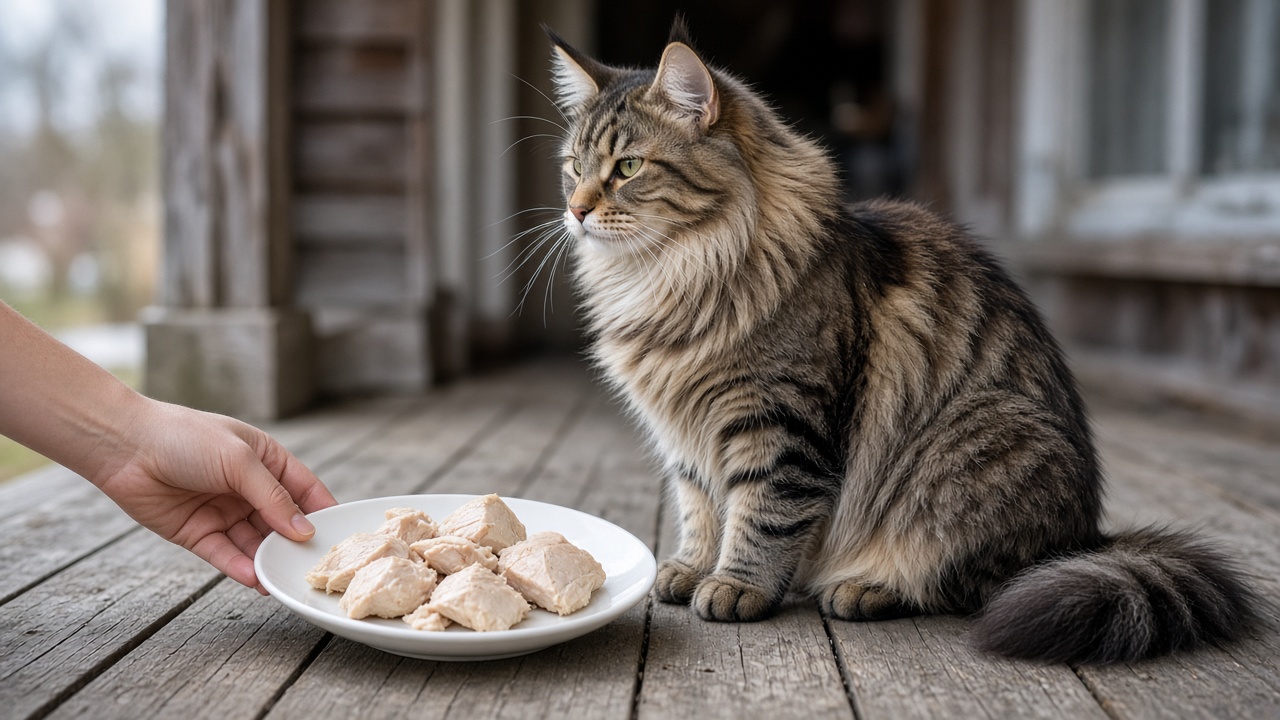
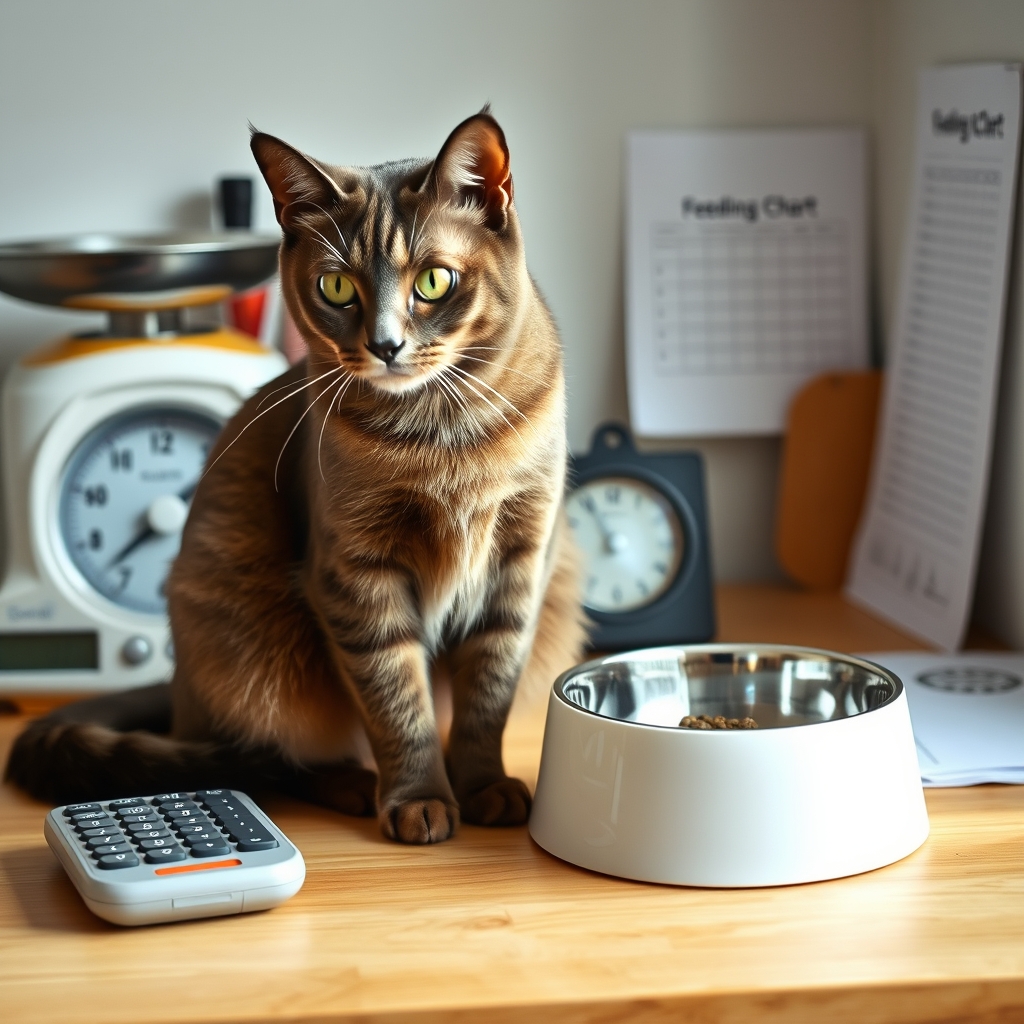
Quick answer: Feed about one 3-ounce can of complete wet food for every 3½ pounds of adult body weight each day. A 10-pound cat usually gets about three cans. Split that daily total into two or three meals.
A 10-pound adult cat needs about three 3-ounce cans of complete wet food daily.
This page is a label-based can guide;
What this guide covers, and what it leaves out
We only convert complete wet-food labels into daily cans by the cat’s current body weight.
Our selection rule is the Complete-Can Weight Rule. A feeding plan enters this article only if all four points are true:
- The cat is an adult, not a growing kitten.
- Wet food is the only diet, not a topper on kibble.
- The can is labeled complete and balanced for adult maintenance.
- The maker states a daily amount by body weight, or a calorie count we can divide.
We left these cases out of the can chart:
- Homemade or raw recipes with no printed calorie line
- Dry-only bowls and treat pouches sold as snacks
- Prescription kidney diets used as a clinic dose schedule
- Multi-cat free feeding from one shared bowl
Those limits keep the math honest for one adult cat. A wet puppy food chart does not apply here, because dogs and cats need different calories per pound.
Start with calories, then convert to cans
A typical 10-pound adult cat needs about 290 calories a day, then divide by the calories on the can.
Hill’s feeding page states that healthy adult cats often weigh around 10 pounds. The same Hill’s page says a 10-pound adult with average activity needs about 290 calories a day.
Cans are not equal, so our research team compared two published labels:
Purina’s page for Fancy Feast Classic Paté Tender Beef & Liver lists 98 calories per 3-ounce can, and 1,157 calories per kilogram.
- Hill’s page for Science Diet Adult Healthy Cuisine Seared Tuna & Carrot Medley lists 71 calories per 2.8-ounce (79-gram) can, and 899 calories per kilogram.
Do this conversion in this order:
- Weigh the cat on a home scale, or use the last clinic weight.
- Read the calorie line on the exact can you buy.
- Divide the daily calorie target by the calories per can.
- Round to the nearest quarter can for the whole day, not per meal.
- Split that daily total across two or three meals.
AAFCO’s label page says feeding directions must state how much food to give per weight of the animal per unit of time. AAFCO also requires a “Calorie Content” line in kilocalories per kilogram and per familiar unit, such as one can.
If the can has no calorie line, do not guess the number. Switch to a product that prints calories per can.
Daily wet-food amounts by body weight
Use one 3-ounce can per 3½ pounds of adult weight, and then check the calorie line on your exact can.
Purina’s wet-food article gives this starting rule: feed an average adult one 3-ounce can per 3 to 3½ pounds daily. Purina’s Fancy Feast Classic Paté Tender Beef & Liver page repeats the tighter figure of one can per 3½ pounds.
Using that 3½-pound rule, the daily can count is:
- 7 pounds: 2 cans
- 8 pounds: about 2¼ cans
- 10 pounds: about 3 cans
- 12 pounds: about 3½ cans
- 14 pounds: 4 cans
Hill’s tuna stew page prints its own chart for 2.8-ounce cans:
- 8 pounds (3.6 kg): 3 cans
- 10 pounds (4.5 kg): 3½ cans
- 12 pounds (5.4 kg): 4 cans
- 14 pounds (6.4 kg): 4½ cans
- 16 pounds (7.3 kg): 5 cans
Those two charts are not the same food, and they are not the same can size.
Our research team multiplied the published calories for a 10-pound cat:
- Three Fancy Feast 3-ounce cans at 98 calories each equal 294 calories.
- That total sits 4 calories above Hill’s 290-calorie example for a 10-pound cat.
- Hill’s 10-pound tuna chart is 3½ cans at 71 calories, or about 249 calories.
- That total sits about 41 calories below the same 290-calorie example.
Use the label on the can in your fridge. Do not mix one brand’s can count with another brand’s calories.
Pet Bench Adult-Can Chart
This table is our comparison of those published figures. It is the page’s summary schema for the daily total, not a rank list.
Publishers should mark this page in JSON-LD as HowTo plus FAQPage schema, using the table and the FAQ answers below.
| Adult weight | 3-oz cans at Purina’s 3½-lb rule | Calories if each can is 98 | Hill’s 2.8-oz tuna cans | Calories if each can is 71 |
|---|---|---|---|---|
| 8 lb | 2¼ | 221 | 3 | 213 |
| 10 lb | 3 | 294 | 3½ | 249 |
| 12 lb | 3½ | 343 | 4 | 284 |
| 14 lb | 4 | 392 | 4½ | 320 |
Start with the column that matches your can size. Then watch the waist, not the table, for two weeks.
How to split meals, store leftovers, and use a feeder
Split the daily total into two or three meals, and do not leave wet food out for more than one hour.
Hill’s feeding page notes that two or three smaller meals work well for most healthy adult cats. Purina’s wet-food article says you can serve wet food at any time of day.
Follow these handling rules from Purina’s article:
- Do not leave canned food out more than 30 to 60 minutes.
- Refrigerate a partial can in a sealed container for up to 3 days.
- Unopened cans keep up to 2 years in the pantry; check the maker’s date.
- After chilling, set the portion out about 15 minutes so it is not ice-cold.
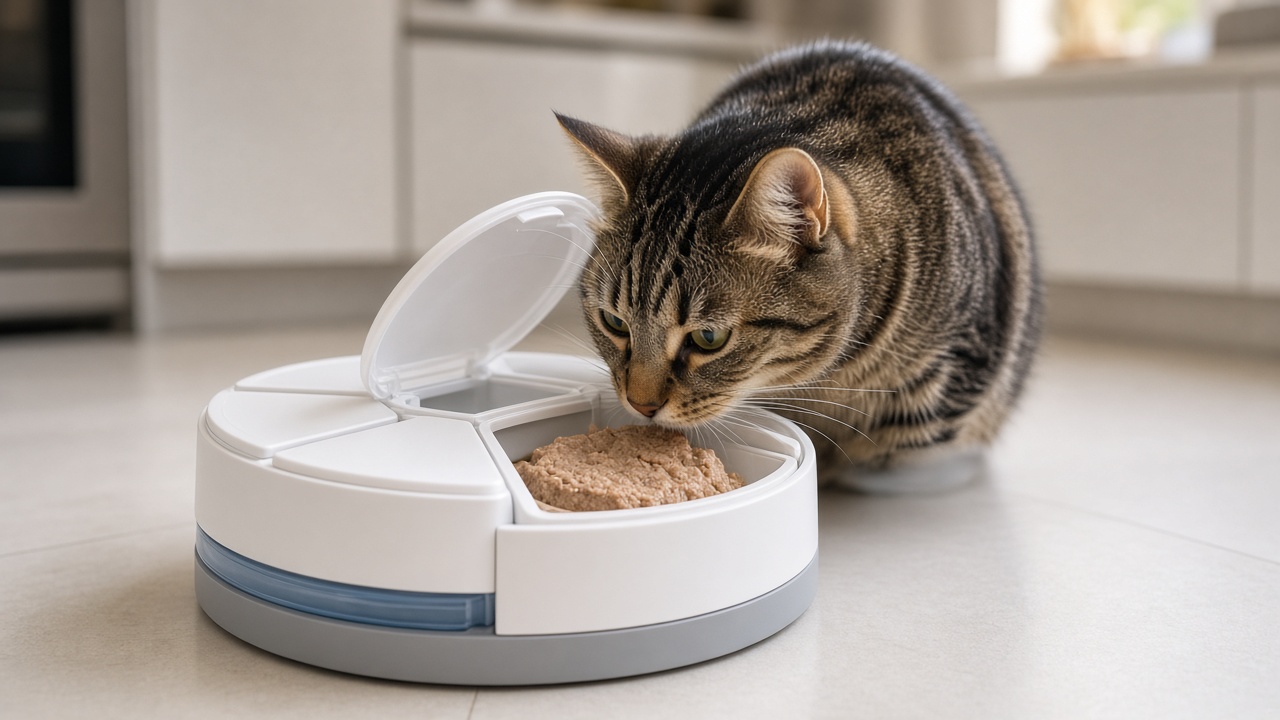
If you work long days, a wet-food automatic feeder can hold timed portions. The feeder only splits the same daily cans. It does not raise the calorie total.
A simple day for a 10-pound cat on 3-ounce cans looks like this:
- Morning: 1½ cans
- Evening: 1½ cans
- Or three meals of 1 can each
Cover and chill any uneaten half-can right after the meal.
Treats, mixed bowls, and weekly weight checks
Keep treats at or under 10 percent of daily calories, and weigh the cat each week rather than guessing from the scoop.
Hill’s feeding page says about 90 percent of daily calories should come from complete food. The same page caps treats at 10 percent of the day’s calories.
For a 290-calorie day, that split is:
- Food: about 261 calories
- Treats: 29 calories or less
If you add dry kibble, cut wet food by the same number of calories. Purina’s wet-food article says you must reduce the can amount when kibble is also in the bowl.
The Association for Pet Obesity Prevention’s 2025 opinion survey shows why the scale matters more than the scoop:
- Only 3 percent of cat owners said they weigh food.
- 43 percent of cat owners described their cat as above ideal weight, up from 33 percent in 2024.
- 53 percent of cat owners said they tried to help a cat lose weight.
- Only 19 percent of those cats were reported to reach a healthy target weight.
That 2025 APOP cycle covered 265 screened respondents across 45 states, including 174 pet owners and 84 veterinary professionals. APOP states these figures are opinions, not a clinic body-condition census.
Weigh the cat once a week on the same scale and at the same time of day.
If weight rises for two weeks, cut the daily total by about one-quarter can. If weight falls and the ribs feel sharp, add one-quarter can. Hold the new amount for two more weeks before you change it again.
When this can chart does not apply
Kittens, nursing queens, and cats on kidney diets need a different plan than this adult can chart.
Hill’s feeding page says cats reach adulthood by their first birthday. The same page groups ages 1 to 3 as a still-active junior stage, and ages 3 to 7 as a prime maintenance stage.
Do not use the adult can counts above for these groups:
- Kittens still growing: Purina’s article says kittens need a kitten formula and a different daily amount.
- Pregnant or nursing cats: Purina’s article says their nutrient needs differ from adult maintenance, so skip this chart.
- Older cats with kidney disease: they often need a different food, not only a smaller scoop. See our notes on wet food for senior kidney health.
- Cats on a clinic weight-loss diet: ask the clinic for a calorie target before you cut cans.
Hill’s tuna stew page says to mix a new food in over a 7-day period. Increase the new can a little each day, and decrease the old can at the same time.
AAFCO’s label page lists 44 required nutrient specifications in the AAFCO Cat Food Nutrient Profiles. A complete adult can must meet that profile, or pass an AAFCO feeding protocol.
AAFCO’s example of a “lite” claim is a dry dog food cap of 3,100 kilocalories per kilogram. Wet cat foods use their own printed calorie lines, so read the can you hold.
If the label says “intermittent or supplemental feeding only,” it is not a full diet. Do not use that product as the only food in this chart.
FAQ
How many 3-ounce cans should a 10-pound cat eat per day?
About three cans, if wet food is the only diet. Purina’s article uses one 3-ounce can per 3 to 3½ pounds, and ten pounds divided by 3½ is about three cans. Confirm the calorie line on the can you bought. Purina’s Fancy Feast Classic Paté Tender Beef & Liver page lists 98 calories per can, so three cans are 294 calories.
How many calories does a 10-pound adult cat need?
Hill’s feeding page uses about 290 calories a day for a 10-pound adult with average activity. That figure is a start point, not a lock for every cat. Indoor cats that nap most of the day may need less, and active cats may need more. Recheck the plan with a weekly weigh-in on the same scale.
Can I feed only wet food, with no kibble?
Yes, if the can is complete and balanced for adult maintenance. Purina’s article says wet food can be the regular diet, not only a treat. Check the nutritional adequacy statement on the back of the can. AAFCO’s label page says that statement is the key match between the product and the cat’s life stage.
What if I also feed dry food?
Cut the wet amount by the calories in the kibble. Purina’s article says mixed feeding requires a smaller can total than a wet-only plan. Keep the combined calories near the daily target, such as Hill’s 290-calorie example for a 10-pound cat.
How long can wet food sit in the bowl?
Purina’s article says canned food should not sit out more than 30 to 60 minutes. After that window, throw the leftover food away. A leftover partial can can go in a sealed container in the fridge for up to 3 days. Warm that chilled portion for about 15 minutes before the next meal.
Should I weigh the food or just count cans?
Weigh the food when you can, because can marks vary by brand. APOP’s 2025 survey found that only 3 percent of cat owners weigh food, and most people guess or use a cup. If you have no scale, count cans with the 3½-pound rule, then use weekly body weight to correct.
Why did my cat gain weight on the label amount?
Label amounts are averages for a typical adult, not a promise for your cat. APOP’s 2025 survey found that 43 percent of cat owners already saw their cat as above ideal weight. Treats above Hill’s 10 percent cap add up fast, and extra kibble does too. Drop one-quarter can for two weeks and weigh again; if weight still rises, ask a clinic for a calorie target.