Quick answer: Book a clinic exam if head shaking lasts more than a day or comes with odor, discharge, or pain. Do not pour leftover drops into a swollen canal. Dry only the outer ear after a swim once a professional has confirmed the eardrum is intact.
An itchy, wet, or infected ear canal is the usual reason a dog shakes its head. This page is a research briefing on seven canal-level causes. We did not examine live dogs, culture ear swabs, or run our own clinic trial.
Our research team analyzed published clinic datasets and compared maker specs. We did not rank products. We did not invent prices.
We used a Canal-First Screen. A cause entered only if Merck’s Veterinary Manual or a named clinic dataset lists head shaking as a sign. A rinse entered only if the maker’s current U.S. page names the species and a use case.
We left out prescription-only otic drugs. We also left out human ear drops and mite products labeled only for cats.
What a head shake is actually doing
A shake is a reflex. The dog is trying to move something that itches or hurts inside a long, L-shaped canal.
Merck’s Veterinary Manual names otitis externa as the most common disorder of that canal. Otitis externa means inflammation of the canal lining.
Head shaking sits on Merck’s sign list next to odor, redness, swelling, scratching, and discharge. One or both ears can be involved.
A shake is not a diagnosis. It is a flag that the canal environment has changed.
Ear infection is the most common clinic-recorded driver
Bacterial or yeast overgrowth is the first cause to rule in or out. Normal ears already hold small numbers of microbes. Merck’s Veterinary Manual notes those microbes can overgrow when the canal stays wet, waxy, or inflamed.
Our research team analyzed two large published caseloads.
Canine Medicine and Genetics used the Royal Veterinary College VetCompass program. It sampled 22,333 dogs from 905,554 animals under U.K. primary care in 2016. Those records came from 784 clinics.
The paper found otitis externa in 1,631 dogs. That is a one-year period prevalence of 7.30 percent.
Today’s Veterinary Practice used 2013 records from more than 850 hospitals. The census covered 2,281,562 dogs. It reported otitis externa in 14.4 percent of canine visits, or 328,613 dogs.
Giant dogs at or above 90 pounds were diagnosed at 19.5 percent. Dogs under 20 pounds were diagnosed at 12 percent.
Those two rates can both be true. One is a one-year U.K. period prevalence. The other is a U.S. visit-based hospital census.
Breed and ear shape move the odds. VetCompass reported a 28.81 percent one-year prevalence in Basset Hounds. Chihuahuas sat at 1.26 percent.
Against erect-eared breeds, pendulous ears had 1.76 times the odds. V-shaped drop ears had 1.84 times the odds.
Basset Hounds also had 5.87 times the odds versus crossbred dogs.
Cases in that 2016 sample had a median age of 4.72 years. Median adult bodyweight was 17.00 kilograms.
A 2023 review in the Journal of the American Veterinary Medical Association is dated 5 April 2023. It stated that all recurrent ear infections in dogs are secondary. A short course of drops often fails if the primary trigger stays in place.
Merck’s Veterinary Manual says bacterial or yeast cases usually need repeated checkups. Those visits continue until no infection shows, often 2 to 4 weeks. Long-term cases can take months.
Do not treat a smelly, painful canal with a leftover bottle. A ruptured eardrum changes what is safe to put in the ear.
Ear mites hit young dogs more than old ones
Ear mites are the second cause. They live on the canal surface and leave dark debris.
Today’s Veterinary Practice reported ear mites in 0.25 percent of dogs under 3 years in that 2013 hospital census. The rate fell to 0.01 percent in dogs 3 years and older.
Puppies and newly adopted dogs still deserve a mite check when they shake and scratch.
Merck’s Veterinary Manual says a dark discharge often points to yeast or parasites. It can also appear with bacterial or mixed infections. A swab under a microscope is what separates those stories.
A clinic can confirm eggs, larvae, or adults before anyone treats.
Allergies can make the canal the only obvious site
Allergies are the third cause. Food reactions and environmental allergies both inflame canal skin.
Merck’s Veterinary Manual summarizes a 28-paper review. It reports food allergy in 1 to 2 percent of dogs receiving any veterinary care. The share rises to 9 to 40 percent among itchy dogs.
The Association of American Feed Control Officials does not publish an allergy rate. It does define what is on the bag. AAFCO lists ingredients from most to least by weight.
AAFCO defines poultry meal as a dry rendered product. The source is clean flesh and skin, with or without bone. Feathers, heads, feet, and entrails are excluded.
If a food trial is on the table, start with the label. Read what chicken meal in dog food actually means. AAFCO also requires meat and bone meal to contain a minimum of 4 percent phosphorus.
Calcium in that ingredient may not exceed 2.2 times the actual phosphorus level.
Head shaking can arrive with gut signs. If the same week includes vomiting of whole kibble, read our note on why a dog throws up undigested food. Both problems can share a food trigger.
A food trial is a clinic-directed process. It is not a weekend protein swap.
Water, wax, and things that do not belong
Trapped water is the fourth cause. Swimming, bathing, and humid air leave the canal warm and wet. Yeast and bacteria like that climate.
Wax and debris are the fifth cause. Extra wax traps moisture and blocks air. Overcleaning can strip protective oils and make the next flare more likely.
Foreign bodies are the sixth cause. Grass awns and foxtails can lodge in the canal after a field walk. One-sided shaking after outdoor play is a classic pattern.
Merck’s Veterinary Manual lists objects stuck in the canal as a direct cause of otitis externa. It also warns against cotton swabs. Swabs push debris deeper.
Do not go fishing with tweezers in a dark canal. A clinic has an otoscope and can sedate a painful ear.
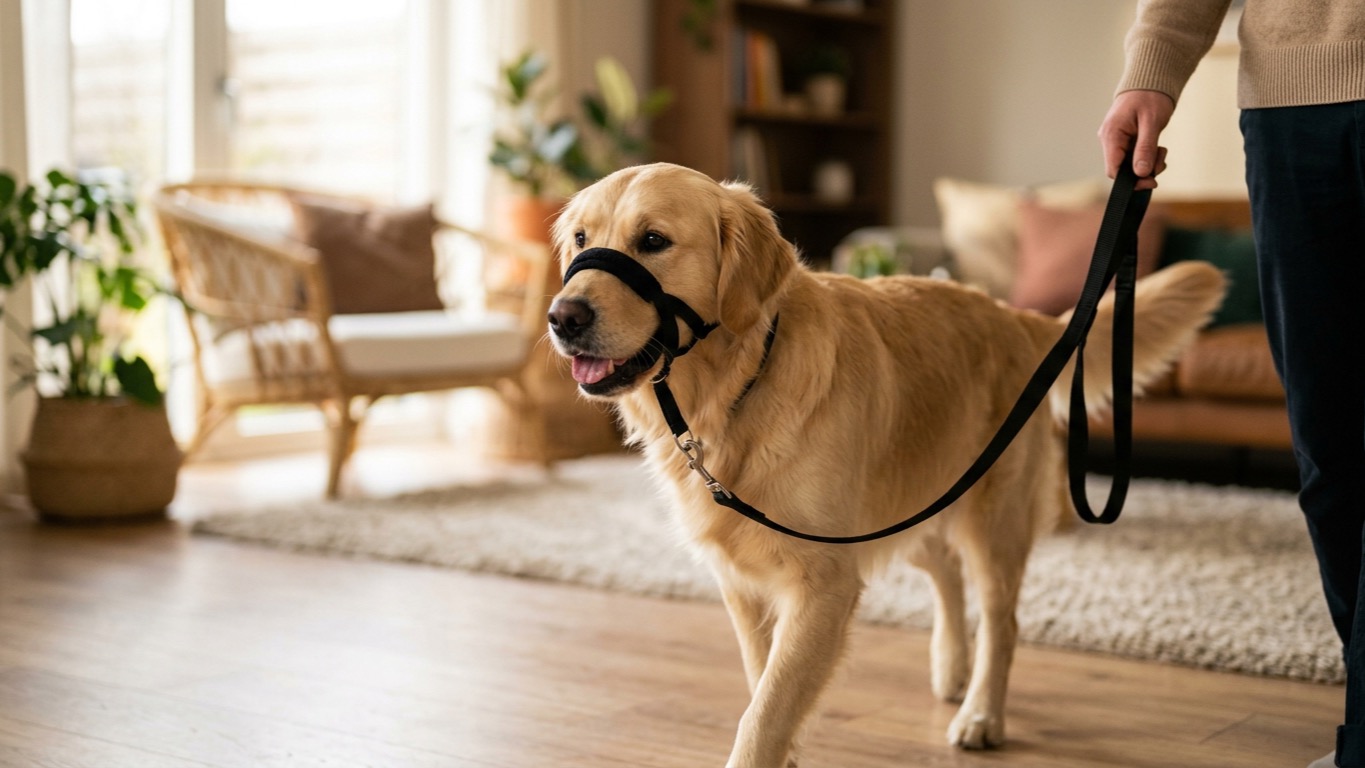
After a bath or a dryer session, some owners use dog head protection gear. The goal is a drier, quieter canal. Gear does not treat infection and does not replace an exam if odor or pain is already present.
An aural hematoma is the seventh cause—and often a result
An aural hematoma is a blood-filled swelling in the ear flap. Violent shaking or scratching can rupture a vessel. The flap then balloons.
Today’s Veterinary Practice reported aural hematomas in 0.07 percent of dogs under 3 years in the 2013 census. The rate rose to 0.41 percent in dogs 3 years and older.
The swollen flap is painful. It also keeps the dog shaking. That loop makes a hematoma both a later cause and a result.
A hematoma is not a home-drain project. The flap needs a clinic plan. The canal still needs a cause.
When a rinse belongs, and when it does not
A rinse is maintenance for an intact, non-painful canal. It is not a substitute for cytology.
Merck’s Veterinary Manual tells owners to avoid irritating home mixes, including vinegar. Even products that are fine in a healthy ear can sting an inflamed one. Treatment must continue until the infection is fully cleared.
Comparing published specs, five currently sold rinses met the Canal-First Screen. None of these pages is a treatment protocol. None of them replaces a clinic visit when the ear is red, painful, or draining.
| Product | Maker | Listed size | Stated use on the maker page | Key listed features | Species or age on the maker page |
|---|---|---|---|---|---|
| EPIOTIC Advanced Ear Cleanser | Virbac | 4 oz and 8 oz bottles | Routine cleansing; also before ear treatments | Salicylic acid; listed for frequent use; glycotechnology sugars | Dogs, cats, puppies, and kittens |
| ZYMOX Enzymatic Ear Cleanser | Pet King Brands | 4 oz bottle and 1 gallon jug | Once or twice weekly, and after swimming | LP3 enzyme system; for non-infected dirty ears | Dogs and cats of all ages |
| Ear Relief Wash | Vet’s Best | Daily or as-needed use; bottle volume not listed on the current product page | Daily or as needed; also after bathing or swimming | Alcohol-free; yucca, aloe, chamomile, tea tree oil, clove oil, echinacea | Dogs |
| OxyMed Enzymatic Ear Cleaner | TropiClean | 4 oz | Two to three times weekly | 8-enzyme blend; paraben-free and dye-free | Dogs and cats |
| OticBliss Ear Cleaning Flush | Vetnique | 4 oz and 8 oz | As often as needed | Salicylic acid; chloroxylenol; aloe | Dogs and cats; maker FAQ says dogs 12 weeks and older |
Virbac lists EPIOTIC Advanced in 4-ounce and 8-ounce bottles. The page covers dogs, cats, puppies, and kittens. Pet King Brands lists ZYMOX Enzymatic Ear Cleanser in a 4-ounce bottle and a 1-gallon jug.
That ZYMOX page directs once-or-twice-weekly use on non-infected ears. Vet’s Best allows daily or as-needed use. Its FAQ says the wash has no antimicrobial ingredients.
TropiClean’s 4-ounce OxyMed Enzymatic Ear Cleaner lists an 8-enzyme blend. It states a two-to-three-times-weekly schedule. Vetnique lists OticBliss Ear Cleaning Flush in 4-ounce and 8-ounce bottles.
Vetnique’s FAQ limits that flush to dogs 12 weeks and older.
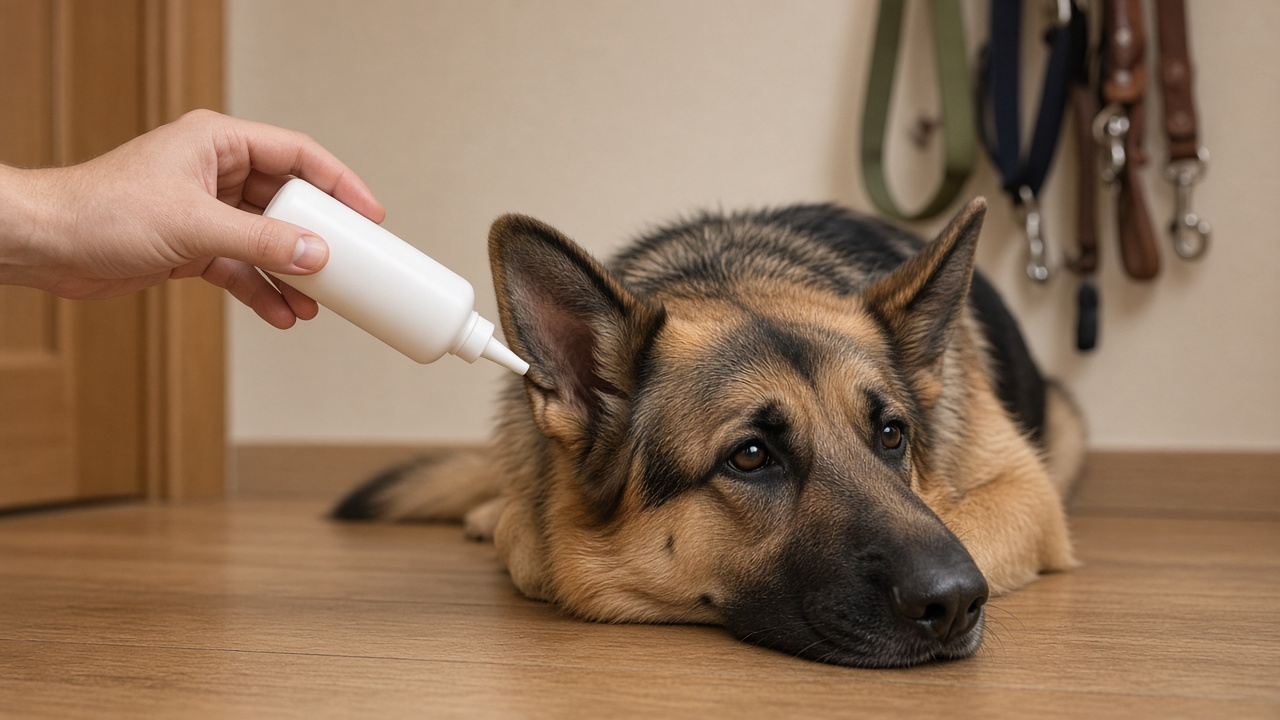
Use a rinse only after someone has confirmed the eardrum is intact. Fill the canal, then massage the base. Wipe what comes out.
Do not push cotton swabs down the L-bend. If the ear is already painful, stop. Pain plus shake plus odor is a clinic day, not a product day.
FAQ
Why is my dog shaking his head but the ear looks clean?
A clean flap does not prove a clean canal. The L-bend hides wax, mites, and grass awns. Merck’s Veterinary Manual notes that an otoscope exam may need sedation if the ear is painful or blocked.
Book that exam if the shake lasts more than a day.
Can allergies cause head shaking with no other itch?
Yes. Recurrent canal inflammation can be the first obvious sign of a food or environmental allergy. Merck’s Veterinary Manual cites food allergy in 1 to 2 percent of dogs in general care.
The share is 9 to 40 percent among itchy dogs. A rinse will not finish that work.
How long does an ear infection usually take to clear?
Merck’s Veterinary Manual says bacterial and yeast cases often need 2 to 4 weeks of rechecks. Rechecks continue until no infection shows. Chronic cases can take months.
Some dogs need lifelong control of the primary trigger. Stopping drops when the smell fades is a common reason flares return.
Should I use leftover ear drops from the last flare?
No. A 2023 Journal of the American Veterinary Medical Association review stated that recurrent infections are secondary. The organism and the eardrum can change between flares, and old drops can be the wrong drug.
Is head shaking after a bath an emergency?
Not by itself. Water in the canal is a common trigger. Dry the outer ear and watch for odor, redness, or a tilt.
If shaking persists into the next day, go in. Go in sooner if your dog cries when the flap is touched.
When is a swollen ear flap urgent?
A ballooned flap is likely an aural hematoma. Today’s Veterinary Practice recorded that lesion in 0.41 percent of dogs 3 years and older in its 2013 hospital census. The flap needs a clinic plan.
The canal still needs a cause.
Do floppy ears guarantee an infection?
No. VetCompass found pendulous ears at 1.76 times the odds versus erect ears, not a 100 percent rate. Chihuahuas in that sample sat at 1.26 percent, while Basset Hounds sat at 28.81 percent.
Shape raises risk. It does not write the diagnosis.