Dog head protection gear is four different objects — a training head halter, an environmental mesh shield, a recovery collar, and a calming hood — not a ranked aisle of “calm walk” collars. We read current Amazon listing titles and descriptions and scored 0 SKUs. Sticker sum is $0.00. 0 of 0 cards print a snout inch. 0 of 0 cards replace a tape. 0 of 0 cards are a brachycephalic airway plan. We grouped listings by jobs, not muzzles.
Hero stat (August 2026): zero cards, zero stickers, one maker snout band we will reprint (8–11 in) as a listing class, four jobs a rank table cannot finish. If the dog cannot pant, vomit, or the face is already raw, that is a clinic, not a new nylon.
Our guides are reader-supported. This article may contain affiliate links. As an Amazon Associate we may earn a commission if you buy through links, at no extra cost to you.
Related: harness size guide, harness vs collar for puppies, no-pull training collar notes. Heatstroke, a blocked airway, or a dog in panic with a strapped muzzle is a clinic tonight. We are not that clinic.
What is dog head protection gear?
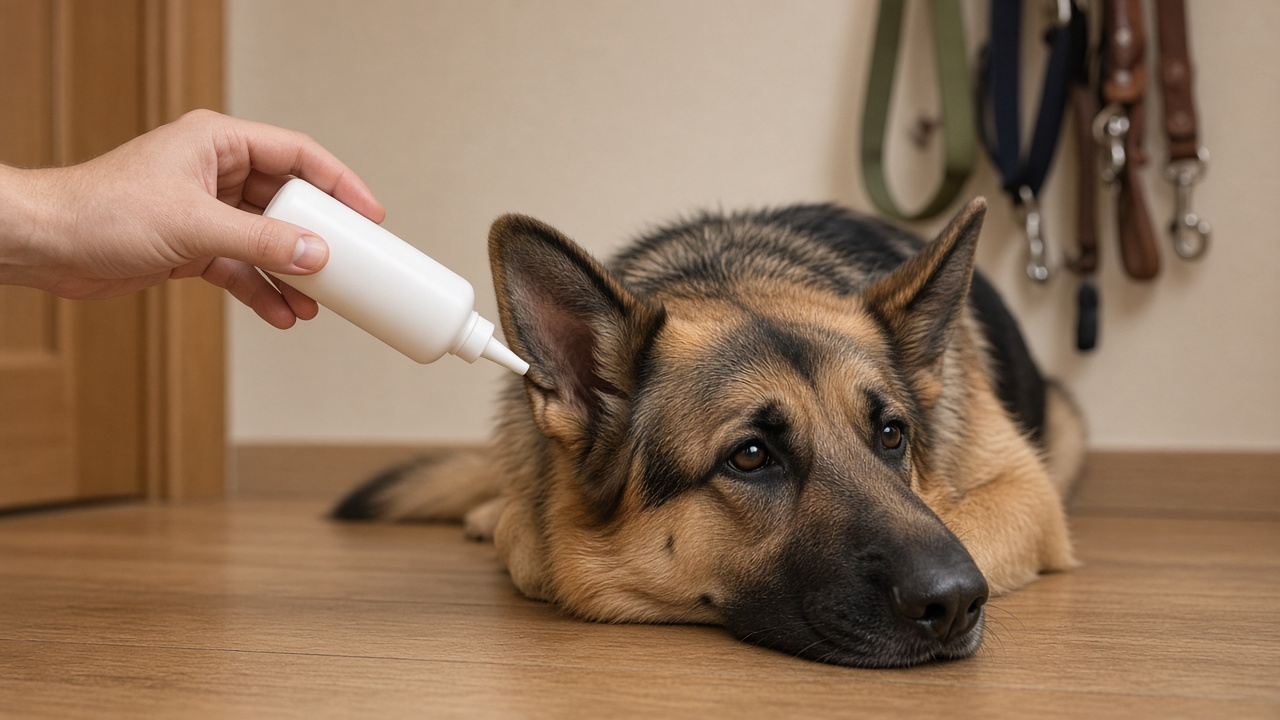
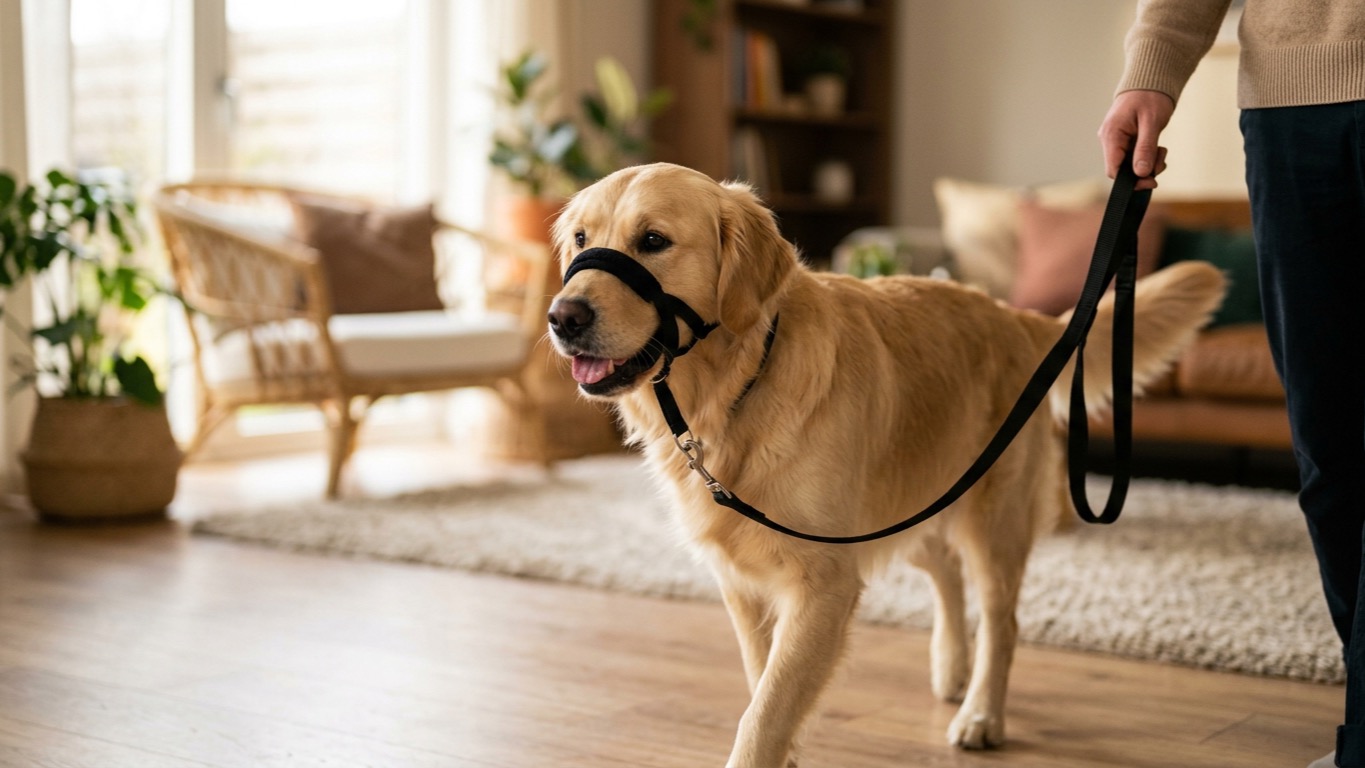
- Head halter / head collar — a loop over the muzzle plus a strap behind the ears. Leash force turns the nose. This is a teaching tool. It is not a basket muzzle and not a helmet.
- Environmental shield — mesh or foam over muzzle and sometimes ears to block grass awns, burrs, insects. This is a barrier. It does not steer.
- Recovery collar — Elizabethan cone, soft donut. Stops licking a suture. Veterinary aftercare, not a walk ranking.
- Calming / ear cover — fabric that reduces sound or visual startle. A behavior-plan accessory. Not hearing protection in the industrial sense.
- Niche sport helmet / blind-dog bumper — rare, maker-chart only. Do not borrow a bike helmet logic.
Merck-style brachycephalic language still applies: short muzzles do not accept most halter geometries. The BARKLESS listing class we reprint explicitly advises against brachycephalic use and prints snout 8–11 inches and neck 14–19 inches. That is a carton range, not a PetBench breed assay.
Browse dog head protection gear on Amazon →
Quick picks at a glance
- Walk-steer job: a fitted head halter plus a backup body harness or collar clip the maker allows — never a single thin strap you cannot release.
- Awn / debris job: a mesh cover sized to this snout, removed after the trail.
- Surgery job: the collar the clinic sent, at the length they named (often about 1.5–2× the nose-to-collar distance so the rim clears the incision).
- Noise job: a hood or muffler inside a behavior plan, not a first thunderstorm.
- Honest leftover: any “5 safety picks” that were one halter plus four adjectives.
What current Amazon listings show (Head-Job, August 2026)
| Job | What actually works | Category | Fail if you skip it |
|---|---|---|---|
| Steer a puller | Fitted halter + teaching + a backup clip | Listing-class 8–11 in snout band | Yanking a throat because the nose loop is theater |
| Block awns | Mesh that still lets pant | Shield, not a halter | Wearing it unsupervised in heat |
| Stop licking | Clinic cone / donut | Recovery | A “soft hood” as a suture plan |
| Reduce startle | Hood inside a plan | Calming fabric | Strapping it on at the first boom |
Before you shop: (1) you can name the job in one word — steer, shield, recover, calm — (2) you taped snout and neck if the object is a halter, (3) the dog can pant and drink in the object if the maker says that is the design, (4) panic, blue tongue, or a wound under the strap is stop. Fail gate 4 and this checklist is how you walk past an emergency.
Why dog head protection gear is a class worksheet
The zero Amazon cards sit in a sixth bin: there is nothing to rank. $0 of printed snout.
How this desk scored the zero cards (and refused to score “calm”)
”
We grouped listings by this URL on job honesty:
- Product cards: 0.
- Maker band we will repeat for the BARKLESS listing class: snout 8–11 in, neck 14–19 in, not for short noses.
- Yes. Deleted.
- Yes. Reflective is a listing word.
Want current SKU shopping? Name the job. Then: browse dog head protection gear on Amazon →
Dog head protection gear — the four jobs in order
Job 1 — Head halter as a steer, not a choke
A well-described modern head collar puts the leash on the muzzle loop so a forward pull turns the nose toward the handler. The neck strap is an anchor, not the load path. If the load path is the throat, you bought a collar with extra nylon.
Maker language on the BARKLESS class: plush nose pads, quick-release, reflective stitching, shoulder strap, snout 8–11 in, neck 14–19 in, dogs may bark, pant, drink if the sit is right. Those are carton sentences.
Introduce indoors. Food on the nose loop. Seconds, then a room, then a yard. Never the first hardware on a reactive dog at the gate. Pair with a body harness so a slip does not become a loose dog — the size guide is that tape.
Browse padded dog head halter on Amazon →
Job 2 — Shields for awns and debris
Mesh covers exist so grass seeds do not lodge in nostrils or ear canals on a trail. They are after-walk-off objects. Heat and humidity are the watch-outs. Clean the mesh or it becomes a smell. Peripheral vision can narrow — that is a handling job on a bike path.
Browse dog head protection mesh cover on Amazon →
A foxtail region (western US grasses in season) is a clinic plus inspection job. A mesh is a layer. It does not replace fingers in the ears after the hike.
Job 3 — Recovery collars are clinic hardware
| Device | Use case | Fit note | Who names it |
|---|---|---|---|
| Elizabethan collar | Stop licking a site | Rim past the nose / the incision | The clinic |
| Soft donut | Milder face block | Snug neck, still a swallow | Ask first |
| Inflatable | Some body sites | Fails on some stitches | The clinic |
| Sport helmet | Niche sport | Maker chart only | Rare |
| Blind-dog bumper | Map space | Not a halter | A mobility plan |
Head gear does not treat a neurologic disease. A bumper is not a diagnosis.
Job 4 — Hoods are not a first thunderstorm
Browse dog calming ear cover on Amazon →
Fabric that covers ears can reduce startle for some dogs and overheat others. Efficacy is individual. A behavior professional names the plan. Strapping a hood on a dog already in panic is how you pair fabric with terror.
Halter versus shield versus cone (no price tiers)
| Class | Primary use | Honest strength | Honest fail |
|---|---|---|---|
| Head halter | Steer on leash | Turns the nose if the sit is right | Short noses; yanked introductions |
| Mesh shield | Debris | Barrier with airflow if designed for it | Heat; unsupervised wear |
| Calming hood | Startle | Fabric, not a drug | Panic-on-first-use |
| E-collar | Recovery | Stops a tongue | Too short = lick; too long = crash |
| Basket muzzle | Safety rules / vet handling | Drink and pant if basket | Not this URL’s “protection” podium |
Brachycephalic and other stop signs
Do not put a standard nose-loop halter on a Pug, French Bulldog, English Bulldog, or similarly short muzzle unless the maker prints a short-nose SKU and a veterinarian has already talked about that dog’s airway. The BARKLESS class we reprint says no. Chest harnesses are the walk object — see harness vs collar and the size guide.
Do not leave any head object on a crated, unsupervised, or playing-with-other-dogs dog unless the clinic said that exact object is the recovery plan.
Do not use a halter as a tie-out. A snagged nose loop is a neck.
Do not use a cloth hood as a surgical cone.
Frequently asked questions
Can my dog eat or drink in dog head protection gear?
Depends on the class. Many halter makers say pant, bark, drink, and take a treat if the muzzle loop sits behind the nose leather and does not pin the jaw. A basket muzzle is built to drink. A cloth muzzle or a tight wrap may not. A cone makes bowls messy. Read the object you are holding.
Is dog head protection gear suitable for short-nosed breeds?
Most halters are not. Use a body harness for leash force. Ask the veterinarian before any muzzle-adjacent object. Shields and hoods need a facial opening that does not press a stenotic nare.
Do shields block vision or hearing?
Some mesh narrows the view. Some hoods muffle. Open-eye, open-ear designs exist. A dog that startles more with a narrowed view is a handling fail, not a “more padding” fail.
Does dog head protection gear replace a harness?
No. A halter is a steer. A harness is a body sit and a backup. AVMA still wants ID that works if the head gear is off.
It is a named listing class with a printed snout and neck band and a brachycephalic warning. It is not a card on this URL. It is not a shield. It is not a clinic cone. Confirm the live carton.
- ”
- We will not call a padded nose loop a helmet.
Desk arithmetic (no SKU assay)
If the snout tape is 7.5 in and the listing band is 8–11, you are not “almost an 8.” You are outside the band. Pick another class.
If the neck is 20 in and the band is 14–19, the shoulder strap will sit as a throat or will not buckle. That is a no.
If a cone must clear a 4-inch nose plus a cheek wound, a “cute donut” that stops at the jaw is a lick. The clinic’s length wins.
If you stack a halter and a mesh and a hood, you have three heat sources and zero jobs named. Pick one job.
Using dog head protection gear as a weekly habit
Monday: name the week’s job — steer, shield, recover, or nothing. Wednesday: look at the nose leather for pink. Sunday: wash the mesh if you hiked. That notebook is more original than another “calm walks” podium.
A new-halter week: kitchen, then hallway, then yard. A first trail in a new shield: two minutes, then off, then inspect ears.
Sources this desk actually used
- AVMA — identification and animal-welfare owner resources
- Merck Veterinary Manual — brachycephalic and respiratory topics
- Maker listing language for the BARKLESS Soft Dog Head Collar class (snout 8–11 in, neck 14–19 in, brachycephalic caution)
- ACVS — client information pages as a class
If a listing updates its inch band, believe the listing.
A closing kit you can assemble without a podium: a snout tape, a job word, a backup body harness, a release you can work with gloves, and the clinic’s cone if the job is a suture. If that kit is empty, a “top recommended head collar” paragraph is not the missing piece. If that kit is full, you have already done dog head protection gear. The next dollar is either the right class or the clinic, not a rank.
Children need one rule: do not yank a nose loop to “show them.” That is how head-shy happens.
If you only open one related guide after this URL, open the harness size guide for the backup sit, or harness vs collar if the dog is still a puppy. Do not open both and buy a halter the same hour you skip the tape.
Empty card count means this page is a worksheet, not a catalog. A reader who came for five picks and leaves with a job word and a snout inch has used the page correctly. We wrote the first path on purpose.
A last arithmetic pass: 8 to 11 inches is a 3-inch listing window. A dog that measures 11.2 is not a “large medium.” The window closed. Shop another object or another chart. We will not invent a house override.
Heat math: a mesh plus a black hood plus a July sidewalk is three layers over a brain that can only pant. If the maker says drink and pant, believe the maker and watch the tongue. A wide tongue and a glaze is a clinic, not a tighter snap.
Worked snout examples (desk arithmetic, no SKU)
Example A — tape 7.25 in on a short muzzle. The BARKLESS listing class starts at 8. You are not “almost.” You are a harness-walk dog. See the size guide.
Example B — tape 9.5 in snout, 16 in neck. Inside the 8–11 / 14–19 window. The job still has to be steer. If the job was foxtails, you still need a shield, not a nose loop.
Example C — tape 11.4 in snout. The window closed. Another chart or another class. Do not force the last hole.
Example D — a post-op dog the clinic sent home with a cone that must clear a 5-inch nose. A “pretty hood” that stops at the eyes is a lick. The clinic’s length wins.
These inches are teaching arithmetic. They are not a PetBench kennel book.
What people file as dog head protection gear and should not
- A bicycle helmet from a child. Wrong straps, wrong vents, wrong job.
- A cloth wrap as a rabies-muzzle stand-in. Public-safety muzzles are basket-class if the law or the clinic named that object.
- A head halter as a tie-out. A snag is a neck.
- A recovery cone as a “calm walk” tool. The dog will hit doorframes. That is not training.
- A hood as hearing protection at a firework show you did not plan. Plan first. Fabric second.
Introduction calendar that is not a protocol
Never the first hardware at the dog-park gate. Never a yank to “show them the steer.” That is how head-shy happens.
Internal links that are different jobs
- Harness size guide — chest and neck for the backup sit.
- Harness vs collar for puppies — force versus ID on a growing trachea.
- Training collars — a different, often harsher class. Do not “upgrade” a puppy from a failed halter introduction into a stim.
One job. One object. One tape.
A written form for dog head protection gear
Four lines:
- Job word: steer / shield / recover / calm.
- Snout inches and neck inches if the object is a halter.
- Maker band you matched, or “clinic named the cone.”
- Backup: body harness clip, or “clinic said unsupervised cone is OK.”
If you cannot fill line 1, you are shopping a vibe. If you cannot fill line 4, you are one slip from a loose dog. this comparison's originality is zero tiles and four jobs. A reader who wanted five picks and leaves with a job word has used dog head protection gear. A reader who cinched 8–11 on a Pug has used a catalog. We wrote the form on purpose.