Quick answer: Watch whether the sneezing is sudden and one-sided, a reverse-sneeze snort, or paired with fever and lethargy. Clear smoke and dust first. Call a clinic the same day if you see blood, one-sided discharge, or a dog that cannot settle.
Frequent extra sneezing in dogs usually comes from irritants, reverse sneezing, inhaled debris, or infection, not one mystery disease. This page is a research-desk explainer of published cause patterns and household product specs; we did not swab noses, clock sneeze bouts, or run a clinic trial.
Our Home-Sort Rule decides what belongs here. We cover causes a reader can sort by timing, nostril, and room air. We leave out tumor staging, dental surgery plans, and prescription drug protocols.
Reverse sneezing is not the same reflex
Ordinary sneezes blast air out the nose. Reverse sneezing pulls air in with a honk or snort.
The dog often stands still. The neck stretches. The bout can look like choking, then it stops.
Reverse sneezing is still a sneeze-like event. It isn’t proof of pneumonia. It also isn’t proof that nothing is wrong if it repeats all day.
Triggers include leash pull, fast eating, excitement, and dusty air. Brief, rare bouts in a bright dog can wait for a scheduled visit.
Call sooner if the honk comes with blue gums, collapse, or a dog that cannot recover between bouts.
Sudden one-sided sneezing often means something is in the nose
A dog that was fine on the trail and then sneezes violently is a different case. Grass awns and seed heads can lodge in one nasal passage.
Watch for pawing at one side of the face. Watch for discharge from only one nostril. Blood after a burst of sneezes is a same-day reason to go in.
Foxtails have backward barbs. Sneezing may not spit them out. Delay can let the piece travel deeper.
Do not flush a household cleaner up the nose. Do not fish with tweezers in a struggling dog.
Dogs that shred foam or chew shoes can also inhale crumbs. Those crumbs act like any other foreign body.
Room air, smoke, and dry noses
Many extra sneezes start in the living room, not on a kennel floor. Perfume, aerosol cleaners, fireplace smoke, and stirred dust all hit the same wet lining.
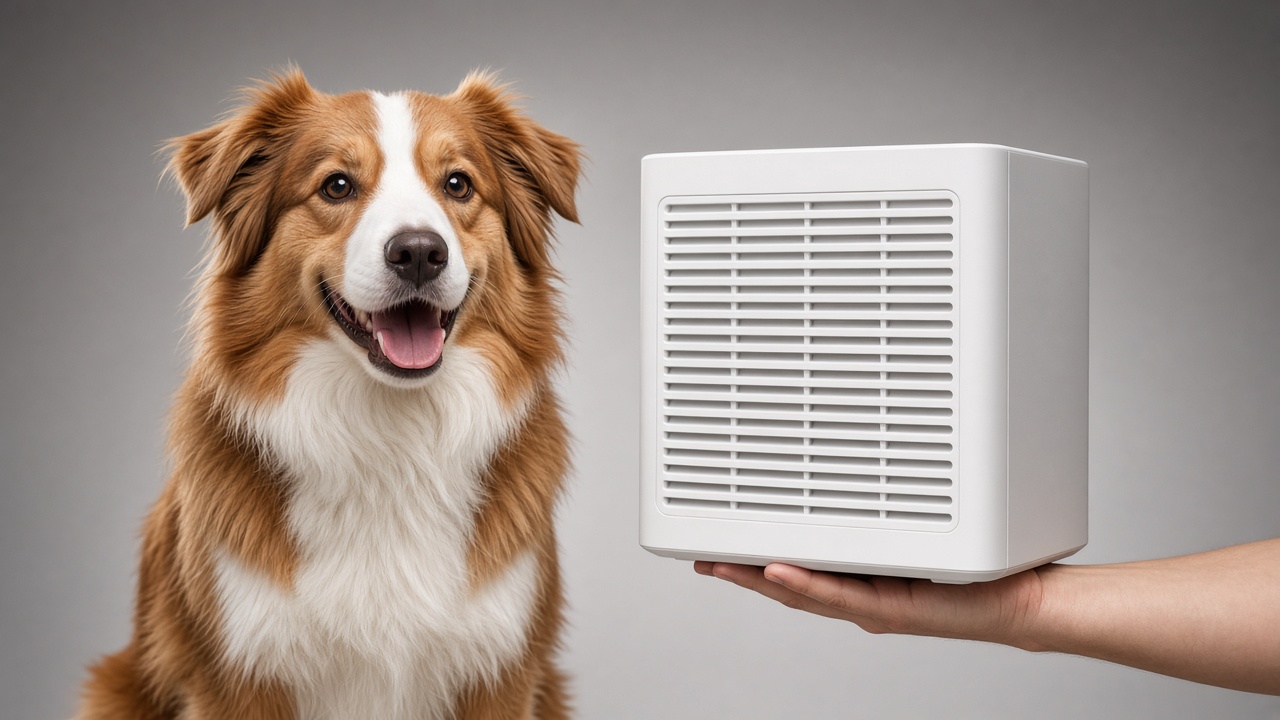
Comparing published specs, our research team analyzed room machines that list particle and moisture numbers. They do not treat infection. They change the air a dog sleeps in.
Levoit lists the Core 300-P at a CADR of 143 CFM. The same page rates 1,066 square feet at one air change per hour, or 222 square feet at 4.8 changes.
The unit is 8.7 by 8.7 by 14.2 inches and draws 56 W. Listed noise is 24 to 54.5 dB.
Coway lists the Airmega 200M at CADR 246 for smoke, 249 for dust, and 277 for pollen. Coverage is 361 square feet at 4.8 air changes per hour, or 1,748 square feet at one change.
The chassis is 16.8 by 18.3 by 9.6 inches, weighs 12.3 pounds, and draws 82 W. Coway lists HEPA life at 12 months and the deodorization filter at 6 months.
Dry winter air can crack nasal lining and add sneeze bursts. Levoit lists the Classic 300S humidifier with a 6-liter tank and up to 60 hours on low mist.
The same Levoit page claims 505 square feet of coverage and 26 W of draw. Empty and clean any tank on the maker’s schedule so you don’t blow stale water.
Infection numbers from papers, not rumor
Kennel cough is a cluster of germs, not one bug. Frontiers in Veterinary Science published an August 2025 paper on 50 CIRDC-suspect dogs from six U.S. states. Samples ran from December 2023 through February 2024.
Coughing showed up in 78% of those cases. Nasal or ocular discharge showed up in 30%. Sneezing showed up in 22%.
Pathogens were found in 64% of samples. Mycoplasma canis led the count at 20 dogs.
That split matters. A cough-heavy dog after boarding is a different sort than a sneeze-only dog after a dusty vacuum.
A 2023 Pathogens paper from the Athens Veterinary Diagnostic Laboratory reviewed 459 southeastern respiratory submissions from 2018 to 2022. Bacterial agents appeared in 58% of cases. Viral agents appeared in 34%.
Mycoplasma canis was found in 24% (110 of 459). Canine parainfluenza virus was found in 16%. Bordetella bronchiseptica was found in 10%.
Canine influenza virus was found in 2%. No pathogen was found in 45% of those cases.
The Merck Veterinary Manual describes canine influenza in two strains, H3N8 and H3N2. H3N8 was first identified in the United States in 2004. An H3N2 outbreak was identified in Chicago in 2015.
The same Merck page says the incubation period is 1 to 5 days. About 20% of infected dogs stay silent but can still shed virus.
About 80% of exposed dogs develop a mild infection. The cough can last 1 to 3 weeks. Severe cases can reach 104°F to 106°F.
The listed mortality range is 1% to 5%. Merck says dogs should be treated as contagious for up to 4 weeks after exposure.
The virus can persist in the environment for 1 to 2 days. Isolation guidance on that page is a minimum of 20 feet from other animals.
Sneezing plus vomit of whole kibble is a second problem. See our page on throwing up undigested food.
Mites, teeth, and food are the smaller piles
The Merck Veterinary Manual lists canine nasal mites, Pneumonyssoides caninum, as a cause of sneezing, nasal discharge, and nosebleeds. The mites live in the nasal passages and sinuses.
One report on that page said dogs older than 3 years were affected more often.
Merck states that no drugs are currently approved for that mite. The same page reports treatment effective in more than 85% of cases when mites are the real target.
Residual sneezing after treatment often means a second nasal disease is still present.
Tooth-root infections and oronasal fistulas can drain into one nasal passage. That pattern is chronic and one-sided. It isn’t a weekend dust problem.
Food is a weaker sneeze driver than inhaled dust. Skin and stool changes are the more common food-allergy signs.
If you already changed kibble, don’t blame one protein word. Our page on chicken meal in dog food explains the term.
Household products that change air or coat load
The table below is an attribute comparison, not a ranking. Our research team analyzed maker pages only. We did not run home trials.
We included products that change particles, humidity, loose coat, nasal-area skin moisture, or daily oral support. We excluded vaccines, human tablets, and any drug that needs a prescription.
Innovacyn lists Vetericyn Plus Antimicrobial Hydrogel at 0.010% hypochlorous acid. The maker says it is safe around the nose and to repeat 3 to 4 times daily.
Bottle sizes on that page are 3 oz, 8 oz, and 16 oz. This is skin and wound moisture, not a sinus drug.
Zesty Paws lists Allergy & Immune Bites at 200 mg bovine colostrum, 170 mg EpiCor Pets, and 100 mg astragalus root. A 6-strain blend is listed at 500 million CFU per chew.
The 50-chew bag is listed at $0.50 per chew on the maker page. These chews support seasonal comfort. They do not pull a grass awn.
FURminator lists the Dog L Long Hair Undercoat deShedding Tool as cutting loose shed hair up to 90% with regular use. The same page says to work 10 to 20 minutes, 1 to 2 times a week. Less coat in the rug means less dust back in the nose.
| Product | Job in the home | Listed numeric spec | Size, power, or pack | Maker interval |
|---|---|---|---|---|
| Levoit Core 300-P | Particle load in room air | CADR 143 CFM; 1,066 ft² at 1 ACH | 8.7 × 8.7 × 14.2 in; 56 W | 3-stage filter; 24–54.5 dB |
| Coway Airmega 200M | Particle load in room air | CADR 246 smoke / 249 dust / 277 pollen | 16.8 × 18.3 × 9.6 in; 82 W; 12.3 lb | HEPA 12 months; deodorization 6 months |
| Levoit Classic 300S | Dry-air moisture | 6 L tank; up to 60 hours on low | 26 W; 505 ft² coverage claim | Empty and clean on the label schedule |
| Vetericyn Plus Antimicrobial Hydrogel | Moist barrier on irritated skin | 0.010% hypochlorous acid | 3 oz, 8 oz, or 16 oz | Repeat 3–4 times daily |
| Zesty Paws Allergy & Immune Bites | Daily oral support chew | 200 mg colostrum; 170 mg EpiCor Pets | 50, 90, 180, or 270 chews | 500 million CFU, 6-strain blend |
| FURminator Undercoat deShedding Tool, Dog L Long Hair | Loose undercoat in the house | Up to 90% loose shed hair | Sized for large, long-haired dogs | 10–20 minutes, 1–2 times weekly |
Match the machine to the room you actually use. A 222-square-foot sleep room fits the Levoit Core 300-P’s 4.8-change figure. A larger open room is closer to Coway’s 361-square-foot, 4.8-change figure.
When same-day clinic care is the next step
Go in the same day for one-sided blood, one-sided pus, or a dog that cannot settle after a sneeze storm. Go in for fever, refusal to eat, or breathing that looks hard at rest.
Go in after a grass-awn hike if the sneezing started on the way home. Don’t wait overnight to see if “it’s just allergies.”
A clinic can look in the nose, take swabs, or image teeth. Those are medical acts. This desk does not perform them.
Keep a two-line log for the visit. Note when it started, which nostril, and what the dog did in the hour before the first burst.
FAQ
Why is my dog sneezing so much all of a sudden?
Sudden clusters after outdoor sniffing often mean a seed, dust puff, or spray, not a new chronic disease. Infection after boarding usually adds cough, discharge, or a dull attitude. One-sided blood or pus is not a wait-and-see pattern.
Is reverse sneezing dangerous?
A short honking bout that ends, with pink gums, is usually a nasopharynx spasm. Danger signs are blue gums, fainting, or bouts that stack without a normal pause. Frequent daily reverse sneezes still deserve a scheduled exam.
Can allergies make a dog sneeze without itchy skin?
Yes, inhaled pollen, dander, and smoke can hit the nose first. Many allergic dogs also scratch, but isolated sneezing can still be air, not food. Change the room air before you change the bag of kibble.
When is sneezing an emergency?
Treat it as urgent when you see nosebleeds, one-sided discharge, facial swelling, or open-mouth effort at rest. Treat it as urgent after a foxtail-country walk if the sneezing will not stop. A bright dog with two dusty sneezes is not that case.
Can I give my dog a leftover human allergy pill?
Don’t guess a human dose. This desk did not review human-tablet labels for dogs, and we don’t publish a home milligram chart. Ask the clinic that has the dog’s weight and other drugs on file.
Why does my dog sneeze after walks in tall grass?
Tall grass sheds awns and seed heads into a working nose. The sneezing is the dog’s attempt to eject the piece. If only one nostril runs or bleeds, assume the piece is still there.
Do air purifiers stop infectious sneezing?
They lower dust, smoke, and dander in a listed room size. They do not kill a virus already on the nasal lining. Use them for irritants, not for fever or a boarding cough.