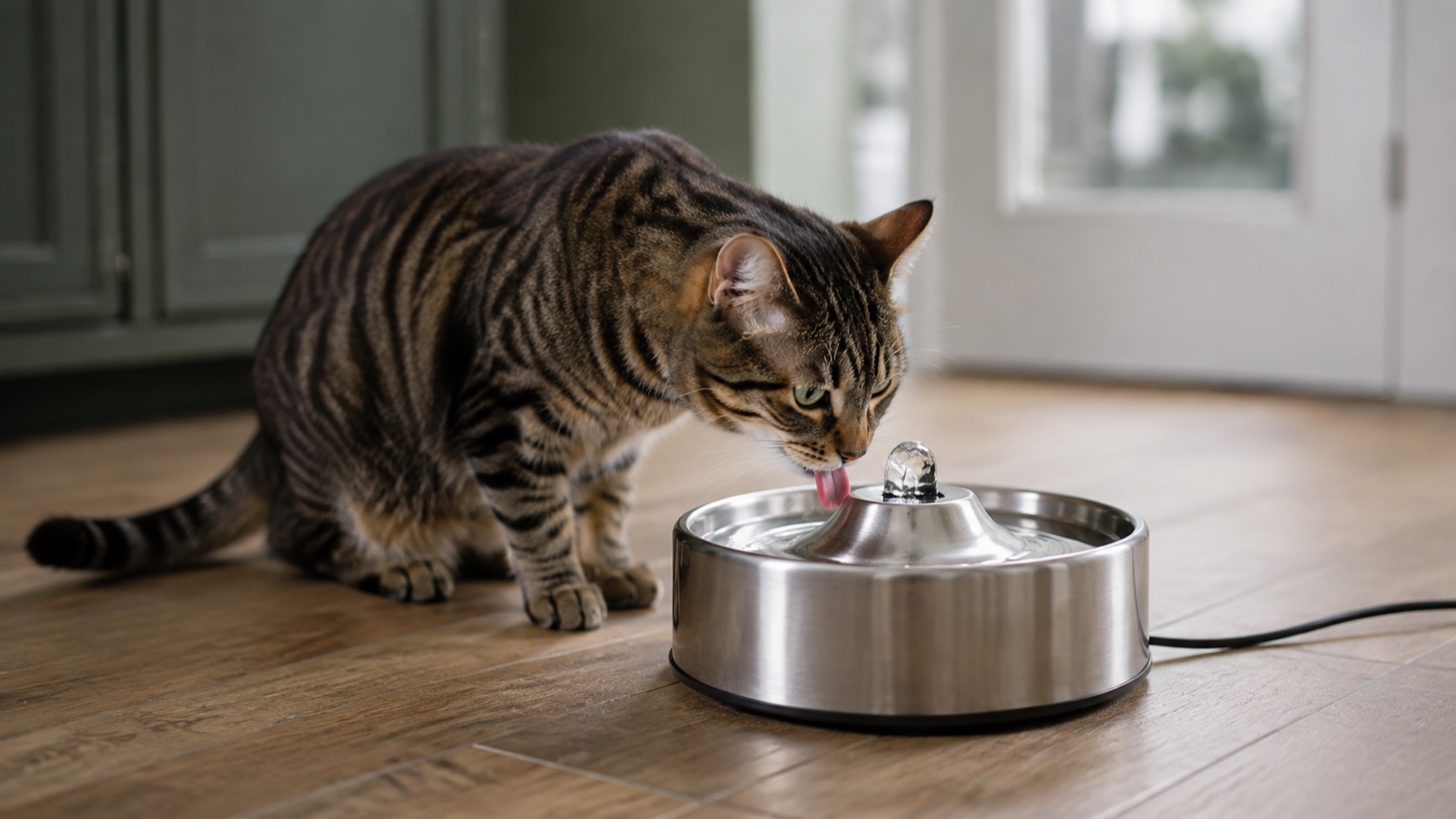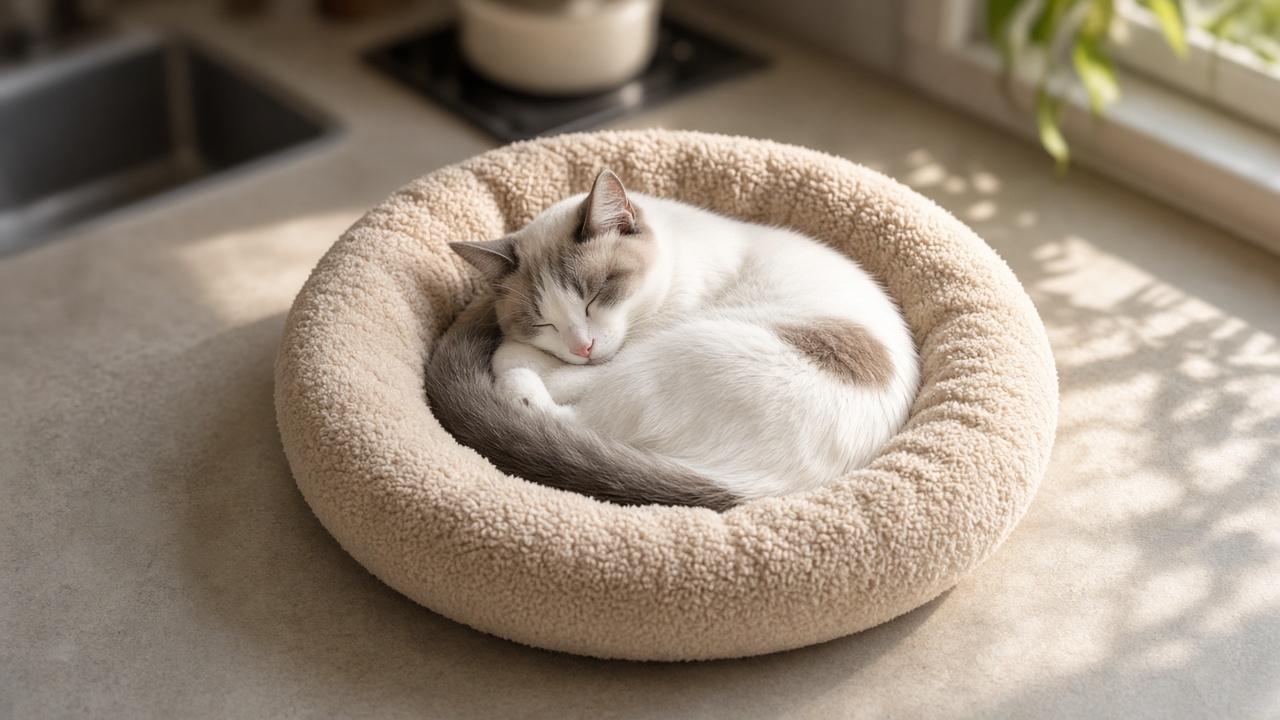
Quick answer: Match the bed to the pose you already see. A loaf is light rest, while a side sprawl or belly-up means the cat feels safe.
A loaf is alert rest, a tight curl saves heat, and a belly-up pose means the cat has dropped its guard.
This page is a research-desk pose map; we did not film household cats, run a sleep lab, or convene a clinic panel.
The Eight-Pose Map we used
A pose made this page only if a Cornell sleep-stage note or a maker-listed bed form could back it.
That is our selection rule, so breed personality charts and unbacked poses stayed out.
Our research team analyzed Cornell CatWatch sleep-stage notes, then compared published specs on four beds still sold.
International Cat Care states that cats may sleep for two-thirds of the day, then stay highly aware when awake.
That split is the key, because most “sleeping” you see is a watchful pause, not a collapse.
The eight poses on this map are:
- Loaf
- Sphinx
- Tight curl
- Face cover
- Side sprawl
- Belly-up
- Superman stretch
- Hide or perch
We did not rank those poses; we mapped each one to a rest stage or a bed shape.
Alert rest: the loaf and the sphinx
The loaf and the sphinx are light rest with an exit plan, not a sign of deep trust.
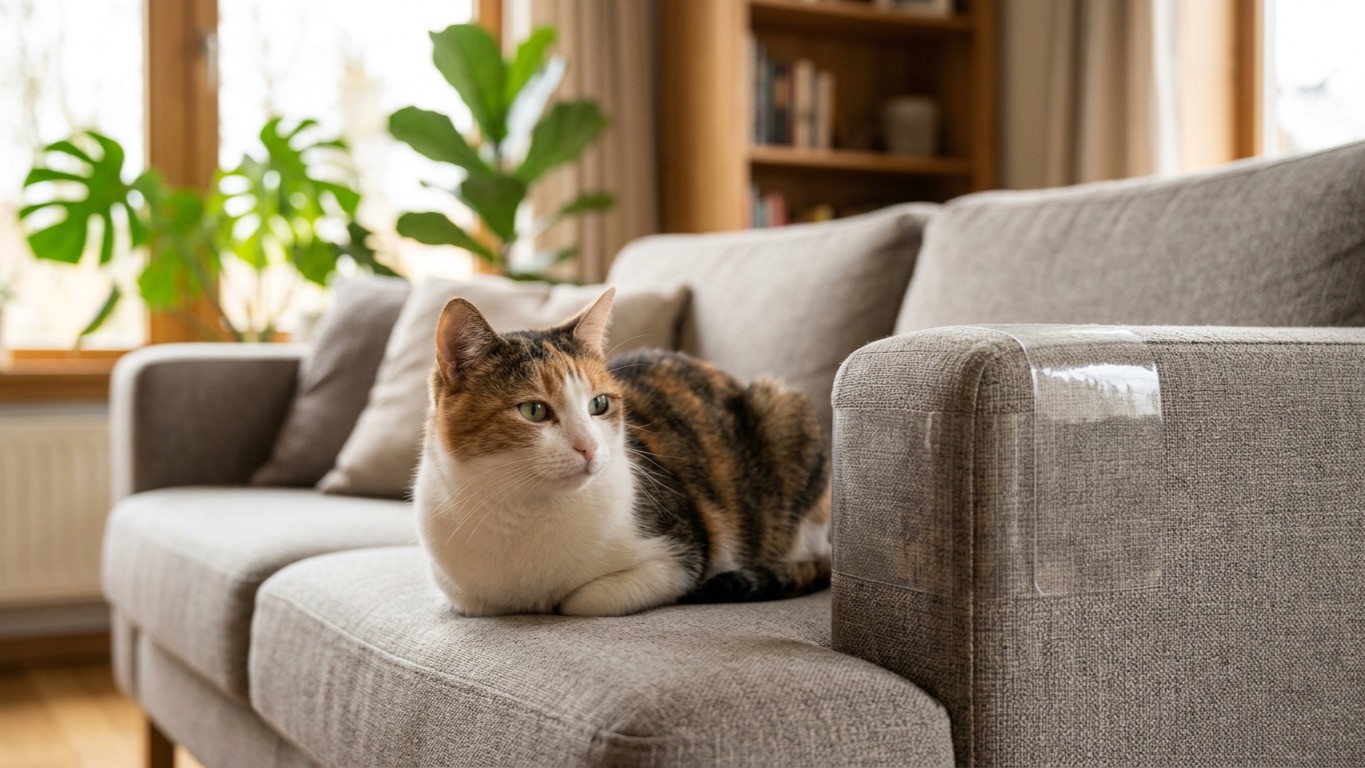
The loaf looks like a bread loaf, with paws tucked, the tail close, and the head up.
This is rest with an exit, so the cat can stand in one motion.
CatWatch Newsletter quotes Katherine Houpt of Cornell University College of Veterinary Medicine on the sphinx. Paws sit under the chest, and the head stays erect and faces forward.
Those Cornell notes put light sleep at up to a half-hour, with the body still comparatively unrelaxed. The cat can spring if the room changes, so this is a pause, not a collapse.
A loaf and a sphinx are cousins, because both keep the belly covered and the spine ready.
Do not read either pose as deep trust; read them as a pause with an exit.
If the loaf lasts most of the day, look at the room first. Those Cornell notes say indoor cats sleep more when they have less to do.
Heat savers: the tight curl and the face cover
A tight curl and a face cover shrink the surface that loses heat and cut light.
The tight curl, or crescent, tucks the nose toward the tail and hides the belly.
The same Cornell page says some cats slumber 16 hours a day, and in hot weather that figure can reach 18 hours.
A tight curl in a cool room is a heat move, while a tight curl in a warm room can still be habit.
The face-cover pose adds a paw over the eyes, so light and whisker traffic both drop.
Those Cornell notes put deep-sleep bouts at about ten minutes, when the body goes limp and paws or the face may twitch.
A curl can sit in either stage, so watch the head; an upright head is still light rest.
A dropped head with twitchy paws is deeper, and that is the ten-minute bout, not the half-hour loaf.
Kittens hold this nest logic longer, and Houpt’s notes say the adult pattern is pretty well set by three months of age.
Until then they sleep most hours, so a new, tight, hidden curl in a senior is a change, not a cute default.
Deep rest: the side sprawl and belly-up
A side sprawl or belly-up pose means the body has gone limp in a room the cat rates as safe.
The side sprawl drops the cat onto one flank, with the legs extended and the belly half open.
This is the pose those Cornell notes tie to lying flat in deep sleep, when the body is relaxed.
The belly-up pose goes further, with the belly facing the ceiling and the paws falling open.
Wild cats do not offer that target in a risky place, so a house cat does it when the territory feels owned.
Belly-up is a safety readout, and it is not a request for a belly rub.
A sudden grab can still trigger a kick, because trust in the room is not a request for hands.
If a shy cat starts using a side sprawl in the open, the room has changed. If a bold cat drops belly-up and then starts loafing in closets, the room has changed the other way.
International Cat Care says cats run and hide when they feel in danger. A new hide after a bold belly-up week is a flag worth noting.
Stretch, hide, and perch
A Superman stretch cools the belly, while a hide or perch buys cover or height.
The Superman pose, or sploot, flattens the belly to the floor, with forelegs forward and hind legs trailing.
This is a cooling stretch as much as a rest pose, so tile, wood, and a thin pad all help.
A hidden pose uses a box, a closet, or a hooded cave. International Cat Care treats hiding as a normal danger response, not drama.
Do not drag a hidden cat out for photos, and offer a second exit if more than one pet shares the room.
A perch pose uses a shelf, a tree hammock, or a fridge top, because height lets the cat see the floor without joining it.
That same page says cats use all three dimensions of a house, so floor-only beds leave that climb need unmet.
For a wood-frame perch, see our modern cat tree picks, and look for a printed load number.
A new dog can steal the floor loaf zone, so give the cat a high, unused perch before the dog arrives. Our rescue-dog introduction guide covers that split.
A dusk walk on a safe cat harness matches dawn-and-dusk activity, and night rest often settles after that outlet.
Hours, naps, and a sudden change
Hour totals vary by source, and a sudden change from your cat’s baseline is the clinic cue.
Houpt, speaking on that Cornell CatWatch page, says the typical house cat spends 40 percent of its life asleep. That is about 10 hours a day on her count.
The same notes say cats usually have two major sleep periods at night, while daytime rest is a string of shorter naps.
Ten hours can be Houpt’s typical tally, while sixteen hours can be a high, idle day. The useful check is your cat’s own baseline, since a sudden jump or drop matters more than the textbook range.
Put the published hour figures side by side:
- International Cat Care: two-thirds of the day
- Cornell CatWatch page: 16 hours, or 18 hours in hot weather
- Houpt’s Cornell count: 40 percent of a life, or about 10 hours a day
Houpt’s notes flag other abrupt shifts, and sleeping much less with extra activity can track with hyperthyroidism.
A new hide-spot plus a new tight curl is worth a clinic visit, and so is a cat that stops using a favorite perch.
The same Cornell page also links extra sleep to kidney disease, cancer, and other illness. One pose on one Tuesday is not a case file.
A week of new hours plus a new hide is the real cue, so watch the week, not the snapshot.
Beds matched to the pose, not the catalog photo
Buy the bed form that matches the pose you already see, and skip any form that fights that pose.
Match the form this way:
- A curl cat needs a raised rim
- A hide cat needs a hood or cave
- A loaf or Superman cat needs a flat pad or a cool floor
- A perch cat needs height
Keep a familiar scent on the fabric, and in a multi-cat home use one bed per cat, plus one extra.
Comparing published specs, four current models cover those forms.
| Model | Pose it fits | Maker-listed size | Heat method | Care note |
|---|---|---|---|---|
| K&H Pet Products Thermo-Kitty Bed, Large | Tight curl in a cup | 20 in diameter, 6 in walls | 4-watt removable heater | Removable cover; wash gentle, cold |
| Best Friends by Sheri Calming Donut Bed in Lux Fur | Tight curl | 23 by 23 by 7 in | Faux-fur nest, no cord | Machine wash and dry |
| Tuft & Paw Kip Cat Bed, Wide | Open curl | 22 in diameter by 4 in high | Sculpted foam nest | Spot clean only |
| Catit Vesper Treehouse Large | Perch plus hideaway | 28.3 by 22.6 by 64.1 in | None listed | Removable memory-foam cushions |
K&H Pet Products lists the Large Thermo-Kitty Bed at 20 inches across. The Small is 16 inches across, and both use 6-inch foam walls.
The maker lists a 4-watt removable heater. When empty, the surface sits about 10 to 15 degrees above room air, and in use the page lists about 102°F.
The cord on that K&H page is 5.5 feet long. The cover and cushion wash on a gentle cold cycle, then line dry or use a no-heat dryer.
Best Friends by Sheri lists the Calming Donut Bed in Lux Fur at 23 by 23 by 7 inches. The maker rates it for pets up to 25 pounds.
Tuft & Paw lists the Kip Cat Bed Wide at 22 inches by 4 inches. Small is 16 inches by 4 inches, for cats under 12 pounds.
Wide is for cats over 12 pounds, and the maker says spot-clean only, so do not machine-wash the Kip.
Catit lists the Vesper Treehouse Large at 28.3 by 22.6 by 64.1 inches. It is a 5-level tree with a hideaway, a hammock, and memory-foam cushions.
None of the four models is a flat pad, so a Superman cat may skip the cup and use a cool floor.
Place the donut or heated cup in a quiet corner, and place the tree away from the litter path.
Do not stack every bed in one room, and wash covers only when they are soiled, because cats return to their own scent.
FAQ
Why does my cat sleep on its back?
A belly-up pose means the cat rates the room as safe, and the belly is exposed on purpose.
It is not an invitation to poke the belly, because a sudden hand can still startle a deep sleeper.
Is the loaf a deep-sleep pose?
No. The loaf keeps paws tucked and the head ready.
Those Cornell notes tie the sphinx to light sleep of up to a half-hour. Deep sleep is the limp, flat, or fully curled form.
How many hours should an adult cat sleep?
International Cat Care puts the figure at two-thirds of the day. The Cornell CatWatch page cites 16 hours, and 18 hours in hot weather.
Houpt’s Cornell tally is about 10 hours, or 40 percent of a life, so use your cat’s usual week as the baseline.
Why does my cat sleep in a box or cave?
A hidden pose is a safe-place move. International Cat Care says cats run and hide when they feel in danger.
Boxes cut noise, light, and traffic. Offer a hooded bed or a tree hideaway if the box is a carton you keep tossing.
When should a sleep change send me to the clinic?
Go when hours, hide-spots, or poses flip in a short window.
The Cornell page flags extra sleep with kidney disease and other illness, and it also flags less sleep plus extra activity with hyperthyroidism.
Do I need one bed for each pose?
You need more than one form, not one bed per hour.
A curl cat plus a perch cat need two shapes, so match the form to the pose you already see.
Why does my cat sleep on my head or chest?
That spot is warm, high, and scented like you, and it is a trust-plus-heat choice.
If the habit starts after a new pet arrives, add a high unused bed, because the cat should not have to bid for your face.