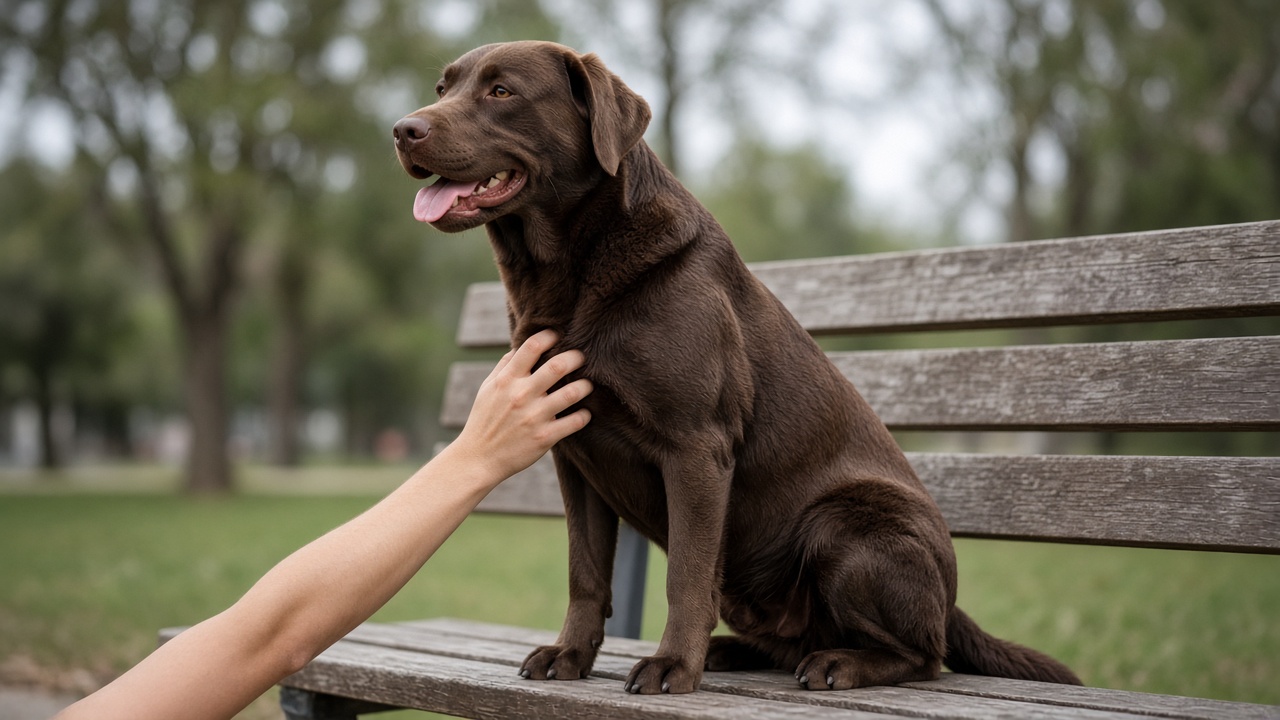
Quick answer: Many dogs enjoy short, invited contact on the chest or shoulder. Start only after the dog approaches, then pause and continue only if the dog leans in. Freeze, lip-lick, or a turn away means stop.
Most dogs like chest or shoulder petting and show stress when a stranger starts at the head. This page is a research-desk briefing on household petting of adult pet dogs. We did not run handling trials, film a kennel cohort, or score heart rates in a lab.
Our research team analyzed published handling studies and current maker specs. The selection rule was simple. We covered household petting of adult pet dogs plus currently sold tools that land on chest, shoulder, or coat.
We left out clinic restraint, working-stock handling, and puppy-only protocols. We left out products we could not confirm on a current maker page.
What “like” looks like on a real dog
A wag is not a yes. Dogs use the whole body. Soft eyes, a loose mouth, and weight toward your hand are the useful signs.
Siniscalchi and colleagues wrote in Animals in 2018 that dogs have lived with people for at least 30,000 years. They also noted that people start contact more often, and hold it longer, than dogs do with other dogs.
A dog can stand still and still want you to stop. Stillness is not consent.
Kuhne, Hößler, and Struwe measured 28 privately owned dogs for the Journal of Veterinary Behavior in 2014. The dogs’ mean age was 4.78 years, with a standard deviation of 2.64.
Each dog met nine physical contacts, including a chest stroke and a held forepaw.
The team reported an increased vagal tone when dogs were petted at the chest. Petting and holding around the head raised a heart-rate-variability measure called SDNN.
Appeasement gestures showed up most during the paw and muzzle sequences. Chest contact tracked with a calmer cardiac profile. Head, paw, and muzzle contact tracked with stress signals.
The same Animals review cited Kuhne’s earlier work. Familiar handlers drew more appeasement than strangers. Familiarity does not erase a bad spot.
Watch for lip-licks, a tucked tail, whale eye, and a freeze. Those are stop cues. A lean-in or a nudge is a continue cue.
Where a hand is usually welcome
Start low and to the side. The chest wall, the shoulder, and the underside of the chin are the usual welcome zones.
The Animals review stated that dogs often dislike touch on the hind legs, paws, and head. The same paper said dogs tend to tolerate the chest sides and the area under the chin.
The American Kennel Club tells strangers to keep pats on the side, neck, back, or chest. The Club also tells people not to reach over the head.
A belly flop is not a request. Many dogs roll to create space. If the dog stays loose, use a brief chest stroke.
The base of the tail can be a favorite for some household dogs. It is a poor first move on a dog you do not know.
Skip the muzzle, ears, tail shaft, and feet until the dog offers them. Those spots were flashpoints in the 2014 sequences. Reach in from the side.
A hand that comes over the skull looks like a grab. Many dogs flinch before they decide if they know you.
How to run a chest-first consent check
We call the method the Chest-First Consent Check. It is a three-stop loop, not a personality test.
Stop one is the ask. For an unfamiliar dog, the American Kennel Club says to ask the owner first. Then wait, and let the dog close the last two feet.
Turn your body a quarter turn. Look with peripheral vision. The Club notes that a head-on stare reads as a threat.
Hold a loose fist at your side if the dog wants a sniff. Do not jab the fist at the nose. Dogs already have your scent.
Stop two is the sample. If the dog stays close, place a flat hand on the side of the chest or the shoulder. Count three slow strokes, then take the hand away.
Stop three is the vote. If the dog steps in or leans, you may offer another short set. If the dog looks away or leaves, the session is over.
Keep sessions short on purpose. The Animals review noted that dog-to-dog tactile contact is usually brief. People stretch it.
Use one hand. Two-handed hugs pin the dog. The 2014 paper treated holding as a different event from a free chest stroke.
Speak in a low, even voice. Fast baby talk raises arousal.
Children should stay standing if the dog is unknown. The American Kennel Club notes that kneeling puts a face at bite height. The Club teaches kids the “Be a Tree” still pose for a loose dog.
When petting should not start
Do not start if the dog is eating, chewing a bone, or caring for puppies. Those are resource moments. A kind hand still lands as a raid.
Do not start if the dog is asleep or just waking. A groggy dog can startle. Startle plus a face over the crate is a bad mix.
Do not start if the dog is on a tight leash and cannot leave. A dog that cannot walk away has no vote. Step back and give slack first.
Do not start if the body is stiff or the tail is pinned. Those are already answers. Wait for a loose body.
Do not start during a storm, a fireworks night, or a crowded doorway. Some dogs then want distance, not more hands. A snug wrap is a different tool from petting.
ThunderShirt’s product page lists seven sizes, from XXS under 8 pounds to XXL over 110 pounds. The Large size is listed for dogs of 41 to 64 pounds. The maker says the vest goes on in three steps.
ThunderShirt’s page states that 80 percent of users see improvement in their dog’s anxiety. That figure is the company’s own user report. It is not a lab result from our desk.
A wrap can lower pacing so a later chest stroke is possible. It is not a license to crowd the dog. For vest options and fit notes, see our guide to dog anxiety vests.
Skip full-body “good boy” thumps. Hard pats on the ribs feel like slaps to many dogs.
Tools that change how touch feels
Hands are not the only contact dogs get. Rubber nubs, steel edges, and polymer teeth change pressure and duration.
Our research team compared published specs for six currently sold tools. We picked them because each can land on the chest or coat. We did not rank them.
| Product | Contact type | Maker-listed size or spec | Coat or use note from the maker |
|---|---|---|---|
| ThunderShirt for Dogs | Torso wrap | 7 sizes; Large listed as 41–64 lb | Machine-washable; maker cites 80% user-reported improvement |
| HandsOn Animal Gloves | Nodule-covered palms | 5 sizes, Junior through X-Large; sold as a pair | Nitrile, PVC, and nylon; no latex rubber |
| KONG ZoomGroom Boysenberry | Rubber curry | Large listed for 30–65 lb; 3/4-inch fingers | 100% TPE; 2.75 × 4.75 × 1.75 in |
| FURminator Undercoat deShedding Tool Medium Dog Short Hair | Stainless steel edge | Medium listed for dogs 25–50 lb | Maker lists up to 90% loose-hair reduction with regular use |
| Tangle Teezer De-shedding Dog Grooming Brush | Two-tier polymer teeth | Sold in Large and Small | Maker says it can be used on wet or dry hair |
| Andis 7-1/2" Steel Comb | Dual-tooth steel comb | Item 68550; 7-1/2 in length | Coarse and fine spacing for detangling and finishing |
HandsOn’s FAQ states the gloves ship as a pair. They are nitrile, PVC, and nylon, with no latex rubber. HandsOn’s homepage lists a 30-day return window and a one-year guarantee.
Sizes run Junior, Small, Medium, Large, and X-Large. A glove can feel more like petting than a rake. For thick double coats, see our guide to pet grooming gloves.
KONG lists the ZoomGroom Boysenberry as SKU ZG2. The Large size is listed for dogs between 30 and 65 pounds. The maker lists 3/4-inch rubber fingers and a 100% TPE body.
The listed tool size is 2.75 by 4.75 by 1.75 inches, and the listed weight is 0.26 pounds. KONG’s instructions say to brush in a gentle circular motion on the coat, not the face.
FURminator’s page for the Medium Dog Short Hair tool lists dogs of 25 to 50 pounds. The maker claims a reduction of loose hair of up to 90 percent with regular use. The same page says to work 1 to 2 times a week for 10 to 20 minutes each session.
That session length is long for a dog that already dislikes handling. Split it into two or three short passes on the chest and sides. FURminator tells owners to check for sores first and to stop if irritation appears.
Tangle Teezer sells the De-shedding Dog Grooming Brush in Large and Small. The maker describes patented two-tiered teeth. Longer teeth reach the undercoat, and shorter teeth pick up loose hair.
The page says the brush can be used on wet or dry hair.
Andis lists the 7-1/2" Steel Comb as item 68550, with coarse and fine spacing. Use a comb only after the dog has already accepted a hand on the shoulder.
If you are choosing between a brush and a comb, start with our brush versus comb comparison. Then run the Chest-First Consent Check.
Grooming contact is not the same as a hello
A hello should last seconds. Grooming can last minutes. Those are different jobs.
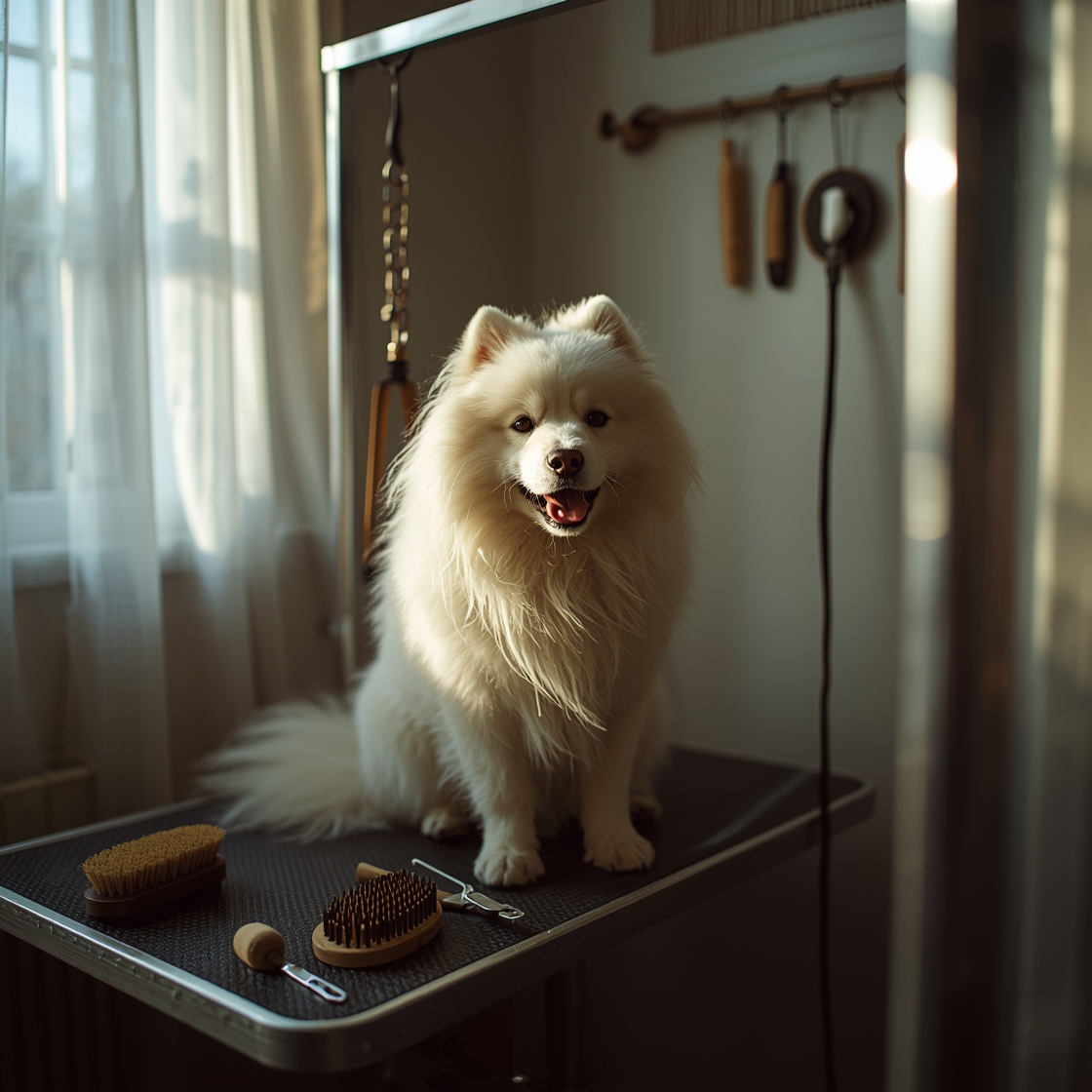
Keep hello petting on the chest and shoulder. Save tools for a planned session on a dry, comfortable surface. FURminator tells owners to pick a spot the dog already finds safe.
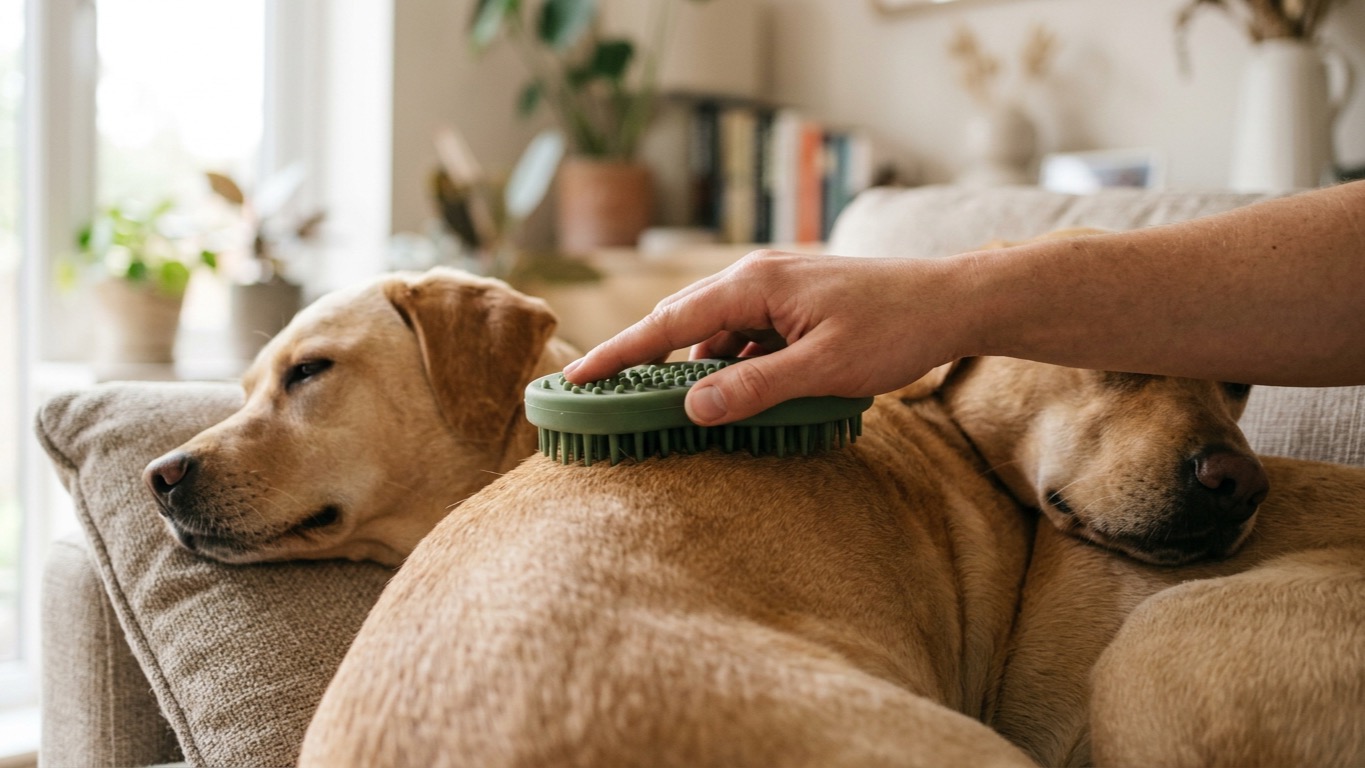
Start grooming with the softest contact that still moves hair. For many dogs that is a rubber curry or a glove. Steel edges come later.
Work with the lie of the coat. Short strokes beat long rakes. Lift the tool often, then pause to see if the dog re-engages.
Watch the hind end. A dog that likes a chest rub can still hate a tool near the tail. Change spots if the tail tucks.
Keep children out of the first grooming passes. Extra hands raise arousal.
If the dog leaves, let the dog leave. Chasing with a brush teaches the dog that leaving fails.
End on a moment the dog chose. A last chest stroke the dog leaned into beats one extra pass.
FAQ
Do all dogs like to be petted?
No. Many household dogs enjoy short, invited contact, while some merely tolerate it. Pain, age, and past handling all change the answer.
Where do most dogs like to be petted?
The usual welcome zones are the side of the chest, the shoulder, and under the chin. The Animals review reported better tolerance there than on the head, paws, or hind legs. The American Kennel Club gives the same map for strangers.
Is it okay to pet a dog on the head?
Not as a first move. Head contact was a stress-heavy condition in the 2014 Journal of Veterinary Behavior sample of 28 dogs. The American Kennel Club also tells people to avoid reaching over the head.
How long should I pet a dog?
Keep a first pass to a few seconds, then pause. Dogs’ own tactile greetings tend to be short, per the Animals review. If the dog leans back in, offer another short set.
Why does my dog walk away when I pet them?
Walking away is a clear vote. The contact lasted too long, started in a sore spot, or arrived when the dog wanted rest. Kuhne’s work, as summarized in Animals, found plenty of appeasement even with familiar handlers.
Can a grooming glove or brush replace hand petting?
It can stand in for some coat work. It cannot replace the consent check. A tool that the dog leaves is the same “no” as a hand the dog leaves.
Should I pet a dog that is sleeping or eating?
No. Wait until the dog is up, oriented, and free to leave. Start the Chest-First Consent Check only after the dog chooses to approach.