Quick answer: Dog hiccups are brief diaphragm spasms, often after gulping food, water, or air. Let a short bout pass. Call a clinic if one hour of nonstop hiccups, many bouts in a day, or extra signs like vomiting or hard breathing appear.
Most isolated dog hiccups after a gulp of food or air stop in minutes, not in a continuous hour. This page is a research briefing on everyday hiccups and meal-speed tools. We did not examine clinic patients, time live hiccup bouts, or run a feeding trial.
How we chose what belongs here
Our selection rule is the Listed-Number Rule. A product enters this briefing only if its maker page publishes a capacity in cups or a hard size in inches or centimeters, and states a job that slows gulping.
We left out hiccup drops, herbal mixes, and bowls that only raise height. Those pages did not give a usable capacity or a slow-feed maze.
Our research team analyzed published specs. We compared those numbers. We did not watch dogs eat in a lab.
What a dog hiccup actually is
A hiccup is a sudden squeeze of the diaphragm. That muscle sits between the chest and the belly. When it snaps shut, air stops for a beat.
The glottis closes and you hear a short “hic.” The jerk is involuntary. The belly often hops, and some dogs gulp with each spasm.
A typical home bout is short. It often starts after a meal, a drink, a play burst, or a cold startle. Puppies show it more than older dogs.
Hiccups are common and a weak signal on their own. Clinic papers rarely list them as a main finding.
The Journal of the American Veterinary Medical Association reported a 223-dog marijuana-toxicity series from January 2017 through July 2021. Hiccups appeared in 1 of 223 dogs, or 0.4 percent. Ataxia appeared in 197 of 223 dogs, or 88.3 percent.
That gap matters. A lone hiccup after breakfast does not match that emergency picture.
A hiccup plus wobbliness or sudden urine leaks is a different story. The same AVMA journal paper listed vomiting in 58 of 223 dogs, or 26 percent. Only 22 of 223 dogs, or 9.86 percent, were hospitalized.
Survival was 100 percent. Median age was 1 year. Those figures are countable clinic signs, not a home-hiccup survey.
Everyday triggers: air, meals, and excitement
Swallowed air is the usual spark. Fast eating packs air with kibble. Fast drinking does the same with water.
The stomach swells, taps the diaphragm, and the muscle misfires. Excitement works through breath, not food. A dog that pants hard after a greeting takes in extra air.
Stress can do the same. So can a sudden chill. Puppies stack several of these at once.
They race the bowl, bounce, then nap and still hiccup. Many owners see daily bouts in the first months. Frequency usually falls as the dog grows.
Cold water after a hot run can add a short bout. The change is physical, not a diagnosis by itself.
Overeating can irritate the same zone. If your dog also brings food back up, read our briefing on why a dog throws up undigested food. Gulping and regurgitation often travel together.
A food switch can change gulp speed. Kibble shape and fat level change how fast a dog finishes a cup. If you are reading labels, start with what chicken meal is in dog food.
Texture is a feeding fact. It is not a hiccup cure.
The Association of American Feed Control Officials says feeding directions on a complete and balanced food must state how much food to give per weight of the animal per unit of time. Split that daily amount. Do not guess a new pile at each sitting.
The Hour-and-Partner check
We use a simple three-part check. It is a watch rule, not a diagnosis.
Clock: time this bout. A short run that fades is the usual pattern. A bout that stays continuous past one hour is the first red flag.
Calendar: count bouts today. Several separate spells in one day, for several days, is the second flag. One spell after dinner is not.
Partner signs: look beside the hiccup. Vomiting, retching, cough, wheeze, hard swallowing, drool, pain, skipped meals, or limp energy change the meaning. Those signs, not the “hic,” decide the clinic call.
Do not try human tricks. Do not scare the dog, pinch the tongue, or force a breath hold. Those moves add stress, and stress can worsen panting.
A slow sip of water can help some dogs. A calm walk can help others. A gentle belly rub is fine if the dog likes it.
Stop if the dog pulls away. If breathing looks labored, do not wait for the hour. Go in.
A hiccup should not steal air. Gasping, blue-tinged gums, or collapse is an emergency picture, not a hiccup picture.
Phone video of the chest and the sound helps a clinic. Note the last meal and any new chew.
Hiccups versus reverse sneezing, cough, and a hard swallow
Reverse sneezing is a rapid inhale, not a belly hop. The neck extends and the sound is snorting, not “hic.” It often ends in seconds.
A cough is an outward blast and may bring foam. Retching heaves in a long wave, and food may appear. Neither is a hiccup.
Hard swallowing and lip licking can point to reflux. Those signs belong with a clinic history. If you cannot tell the sounds apart, treat the unclear case as a clinic case.
Slow the gulp: four tools we compared
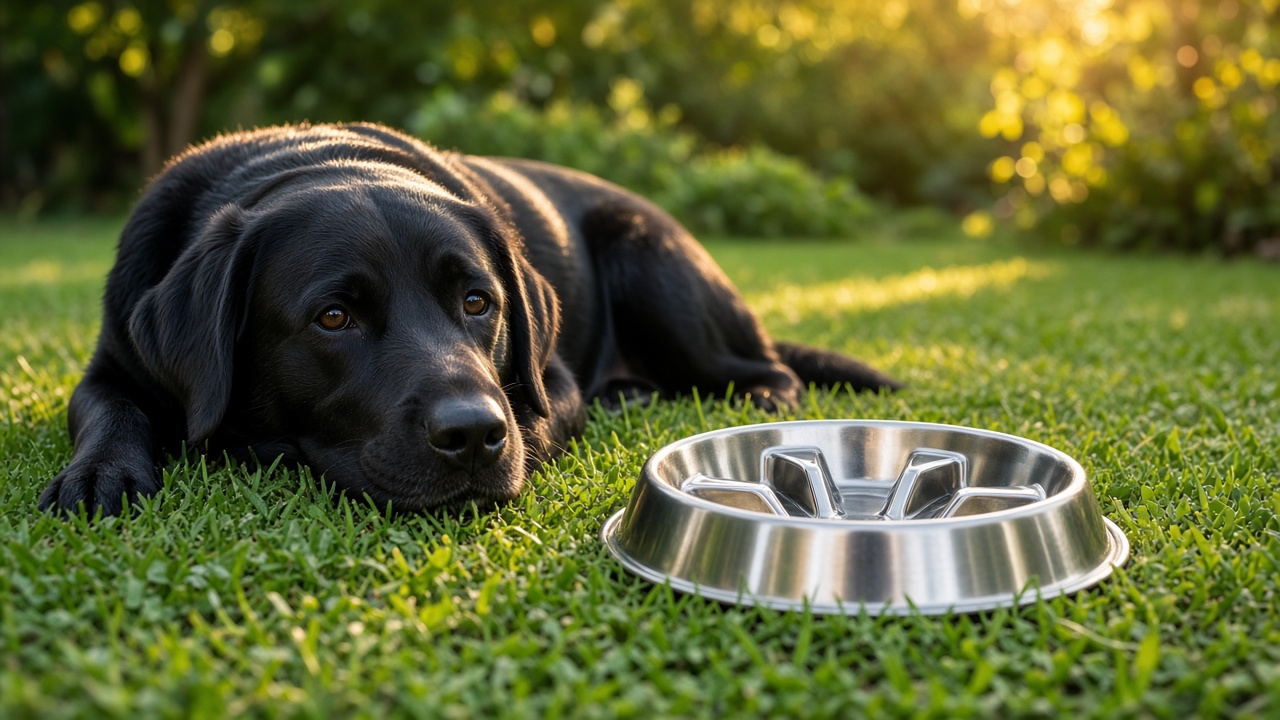
Most home hiccups start at the bowl. Slowing the meal is the one change that maps to the trigger. We compared four tools sold now.
Each maker lists a size or a capacity. We did not rank them or price them.
Our research team compared listed hold volumes. West Paw lists a Toppl Small at 1/4 cup. Outward Hound lists a Fun Feeder Slo Bowl Large at 3 to 4 cups.
That is a 12-fold to 16-fold spread in published meal volume. A small dog and a large gulper do not share one bowl.
| Product | Maker-listed job | Listed size or capacity | Material and clean note | How it slows a gulp |
|---|---|---|---|---|
| Outward Hound Fun Feeder Slo Bowl | Maze slow-feed bowl | Small 3/4 cup; Medium 2 cups; Large 3–4 cups | BPA, PVC, lead, and phthalate free; top-rack dishwasher safe | Ridges and mazes; maker claims meals last up to 10× longer |
| KONG Classic | Stuffable rubber chew | Medium 2.25 × 2.25 × 3.5 in, 0.25 lb; six sizes; Medium listed for 15–35 lb dogs | 100% natural rubber; made in the USA | Kibble is stuffed so each bite is earned |
| West Paw Toppl | Treat toy and slow feeder | Small 1/4 cup, 2.5 × 3 × 3 in; Large 3/4 cup, 3.5 × 4 × 3.5 in; XL 1 1/4 cup, 3.75 × 4.75 × 4.75 in | Zogoflex; no BPA, latex, phthalates, or silicone; top-rack dishwasher safe | Fill, freeze, or twist two sizes together |
| LickiMat Buddy Classic | Lick-mat slow feeder | 20 × 20 cm / 8 × 8 in | Food-grade TPR; hand wash; freezer and microwave safe | Cross maze for licking, not shoveling |
Outward Hound’s Fun Feeder Slo Bowl page lists three capacities. Small holds 3/4 cup, Medium holds 2 cups, and Large holds 3 to 4 cups. The brand says the maze can stretch a meal up to 10 times longer.
That 10× figure is the maker’s claim. We did not clock it. The same page says the bowl is non-slip, top-rack dishwasher safe, and sold for dry or wet food.
Pick the cup size from the label, not from the dog’s “looks hungry” face.
The KONG Classic page lists six sizes. Medium is listed for 15–35 lb dogs and measures 2.25 × 2.25 × 3.5 inches at 0.25 lb. The material line is 100% natural rubber.
The company says the red Classic has been a staple for over forty years. Stuff part of a meal, then freeze it if the dog finishes too fast.
If your dog shreds shoes when bored, pair meal stuffing with the habits in our guide to stop a dog chewing shoes. Supervision still applies. KONG’s own page says to stop use if the toy is damaged.
West Paw’s Toppl page lists three holds: Small 1/4 cup, Large 3/4 cup, and XL 1 1/4 cups. Two sizes can interlock. Small plus Large, or Large plus XL, becomes a chase puzzle.
The page lists Zogoflex and a top-rack wash. It also lists 710 reviews and a 4.8 rating. Those are shopper counts, not a clinic trial.
LickiMat’s Buddy Classic page lists an 8 × 8 inch, or 20 × 20 cm, sheet. The surface is food-grade thermoplastic rubber. The brand says hand wash only.
There is no cup capacity. The job is a smear, not a pile. Spread wet food, soaked kibble, or a thin puree, and freeze a thin layer if the lick ends too soon.
This is not a chew toy. The maker says to supervise, especially with a puppy. None of these tools treats a disease; they change meal speed.
Use a slower meal without rewriting the recipe
Keep the same complete food unless a clinician changes it. Change the delivery. Scatter one meal on a tray, or split the AAFCO daily amount into two or three timed sittings.
AAFCO is clear that label cups are a start, not a law. Activity, age, and body shape change the need.
Calm the room before the bowl hits the floor. Excitement before a meal is a common gulp trigger. A two-minute sit can drop the rush.
Skip ice-cold water right after a sprint if that pairing keeps causing a bout. Room-temperature water in a wide dish can slow a gulp.
If you add wet food to a toy, count it in the daily calories. A smear on an 8 × 8 inch LickiMat is still food. So is a 3/4 cup Toppl fill.
Replace any cracked maze or torn rubber. A broken ridge can become a swallow risk. Outward Hound, KONG, West Paw, and LickiMat all tell owners to remove a damaged piece.
FAQ
Why does my dog get hiccups after eating?
Swallowed air is the usual reason. Food and air hit the stomach together, then the stomach presses the diaphragm. Slow the meal with a maze, a stuffed toy, or smaller sittings. If food comes back up whole, use the regurgitation briefing linked above.
How long should dog hiccups last?
Most isolated bouts fade in minutes. Time the spell. A continuous hour is the line we use to call, and several spells a day for several days is the other line. Partner signs move the call earlier.
Are puppy hiccups different from adult hiccups?
Puppies hiccup more because they gulp more and play harder. Their breathing pattern is still settling. Daily short bouts can be ordinary in a young puppy. The same hour rule still applies, as do partner signs such as vomit, diarrhea, or a closed appetite.
Can I scare my dog to stop hiccups?
Do not scare the dog. A scare adds panting, and panting adds air. Offer a slow sip or a quiet walk instead.
Should I change my dog’s food to stop hiccups?
Not as a first step. Change pace first and keep the same complete food. Follow the bag’s weight-and-time directions, which AAFCO requires on complete and balanced labels. Switch recipes only if a clinician or a documented intolerance says so.
When do hiccups mean I should go to a clinic now?
Go now if breathing looks hard, gums look wrong, or the dog collapses. Go soon if hiccups last more than an hour, repeat all day, or arrive with vomit, cough, wheeze, pain, or a skipped meal. Film the bout if you can.
Do slow feeders always stop hiccups?
No. They target the gulp. Outward Hound claims up to 10× longer meals, and that is a pace claim, not a hiccup guarantee. If the meal is already slow and hiccups stay frequent, look past the bowl.