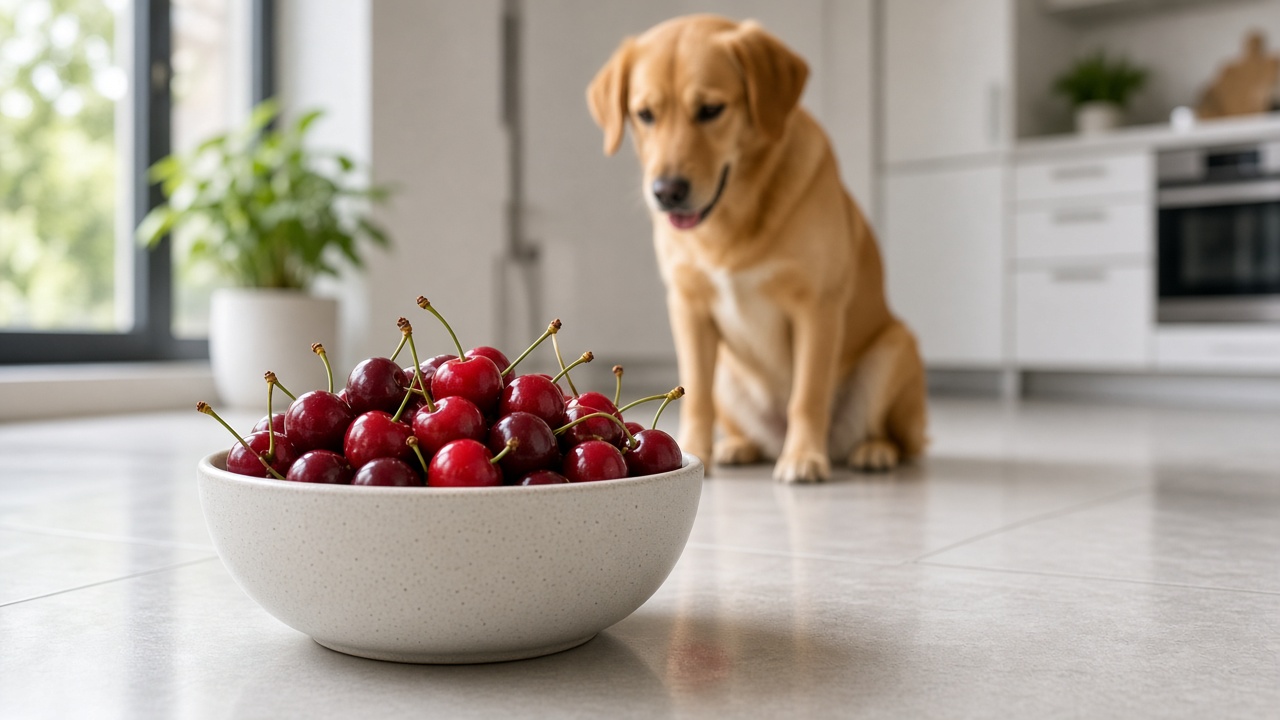
Foods dogs can and cannot eat is a call-first worksheet — name the food, estimate the amount, know the dog’s weight, then use ASPCA’s never-feed list and AAHA’s ≤10% extras rule — not a ranked aisle of “safe human snacks.” We read current Amazon listing titles and descriptions and scored 0 SKUs. Sticker sum is $0.00. 0 of 0 cards replace a poison-control line. 0 of 0 cards are a grape-safe dose. 0 of 0 cards are a chocolate assay. We grouped listings by jobs, not treats.
Hero stat (August 2026): zero cards, zero stickers, one never-feed list that actually decides the table, four jobs a rank table cannot finish. If the dog already ate something you cannot name, that is a phone, not a blog table.
Our guides are reader-supported. This article may contain affiliate links. As an Amazon Associate we may earn a commission if you buy through links, at no extra cost to you.
Related: can dogs eat grapes, bananas, pineapple, cheese, shrimp, mushrooms, cantaloupe, watermelon, how to choose dog food, first-aid kits. Vomiting, seizures, collapse, or a puppy that ate sugar-free gum is a clinic tonight. We are not that clinic.
What are foods dogs can and cannot eat?
A two-bin kitchen problem. Bin one: foods ASPCA Animal Poison Control tells staff to treat as exposures — grapes and raisins, xylitol, chocolate and caffeine, Allium (onion, garlic, chives), alcohol and raw yeast dough, macadamia nuts, high-fat nuts, excess salt, raw meat and eggs, and bones. Bin two: ordinary foods that are not on that list when they are plain, cooked if they need cooking, and kept inside AAHA’s treat budget. The question is never “human food: yes or no.” It is what the food is, how it was prepared, how much, and how big the dog is.
Browse people-food safety tools on Amazon →
Quick picks at a glance
- Only object that clears this checklist: a named food plus a weight plus a phone if it is on the never-feed list.
- Honest leftover: any “safe threshold” for grapes. ASPCA does not publish one.
- Clinic objects (not this URL): induced vomiting, activated charcoal, and home antidotes. MSD’s emesis drugs are clinic treatments.
- Sister URL when the job is one fruit: grapes, bananas, pineapple.
- Sister URL when the job is the bowl: how to choose the right dog food. Sharing is not a meal plan.
What current Amazon listings show (Plate-Job, August 2026)
| Job | What actually works | Category | Fail if you skip it |
|---|---|---|---|
| Already ate an unknown or never-list food | Veterinarian or ASPCA (888) 426-4435 / Pet Poison Helpline | Off every leftover | Waiting for “proof” of illness |
| Deciding whether to share | ASPCA never-feed list, then plain prep, then ≤10% extras | Off any bag of people food | “Just a little” grape or garlic salt |
| Chocolate exposure | Type + ounces + body weight, then a call | MSD milk-chocolate 1 oz/lb is not dark | Applying 1 oz/lb to cocoa powder |
| Daily leftovers as dinner | Complete-and-balanced food ≥90% of intake (AAHA 2021) | None of the zero cards | A running platter of scraps |
Before you shop: (1) you can name the food, (2) you can estimate the amount, (3) you know the dog’s weight, (4) seizures, collapse, or unstoppable vomiting is stop reading. Fail gate 4 and this checklist is how you walk past an emergency.
ASPCA’s 2025 year-end toxin report put food and drink as the second-largest call category (16.4% of exposures), driven largely by grapes, raisins, xylitol gums, onions, and garlic. Chocolate was fourth (13.6%). Those are call shares, not a ranking of “deadliest food.” We reprint the shares.
Why “foods dogs can and cannot eat” is a call worksheet
The zero Amazon cards sit in a sixth bin: there is nothing to rank. Useful as a reminder. $0 of brand science.
How this desk scored the zero cards (and refused to score “safe snacks”)
” 5 oz/lb dark chocolate as a house typical.
We grouped listings by this URL on job honesty:
- Product cards: 0.
- ASPCA food-and-drink call share we will repeat: 16.4% of 2025 exposures. Chocolate: 13.6%.
- MSD milk-chocolate potentially lethal figure: ~62 g/kg (1 oz/lb). Methylxanthine table below. Those are published numbers, not “good.”
- Yes. Process add-ons are a label this desk does not ship.
Want current SKU shopping? You do not need a SKU for this job. Then: browse foods dogs can and cannot eat on Amazon →
Foods dogs can and cannot eat — the four jobs in order
Job 1 — The dog already ate something
This is the more important half of the page. A list of safe fruit does not help if the dog just ate raisins.
- Get the dog away from the food. Remove what is left so a second pass is not possible.
- Identify what it was. Keep the package. Note the type of chocolate, whether gum or candy was sugar-free, whether the food was raw or cooked, and whether it was seasoned. Photograph the label if you still have it.
- Estimate the amount and the dog’s weight. “A few bites” and “half a bar” are different cases. Poison-control staff will ask.
- Call before symptoms start. ASPCA Animal Poison Control: (888) 426-4435. Pet Poison Helpline lists 855-764-7661 on its homepage and an $89 USD per-incident fee. Follow their instructions, then your own veterinarian’s if they send you in.
- Do not induce vomiting, and do not give a home antidote, unless a veterinarian or poison-control specialist instructs you to. The MSD Veterinary Manual describes emesis drugs used in clinic. Those are veterinary treatments, not a kitchen protocol.
Watch for vomiting, diarrhea, lethargy, incoordination, tremors, seizures, panting, collapse, or a sudden change in thirst or urination. Some toxins — grapes, xylitol, chocolate — can do damage before the dog looks sick. Waiting for “proof” is not a plan.
A pet first-aid kit is useful for phone numbers and transport. It is not a substitute for a veterinarian or poison control.
Job 2 — You are deciding whether to share
Use this only when the dog has not already eaten the food.
Never-list. If the food is on the ASPCA people-foods-to-avoid list, the answer is no. “Just a little” grape, a dusting of garlic salt, or a whole bar of white chocolate because it “barely counts” are not exceptions.
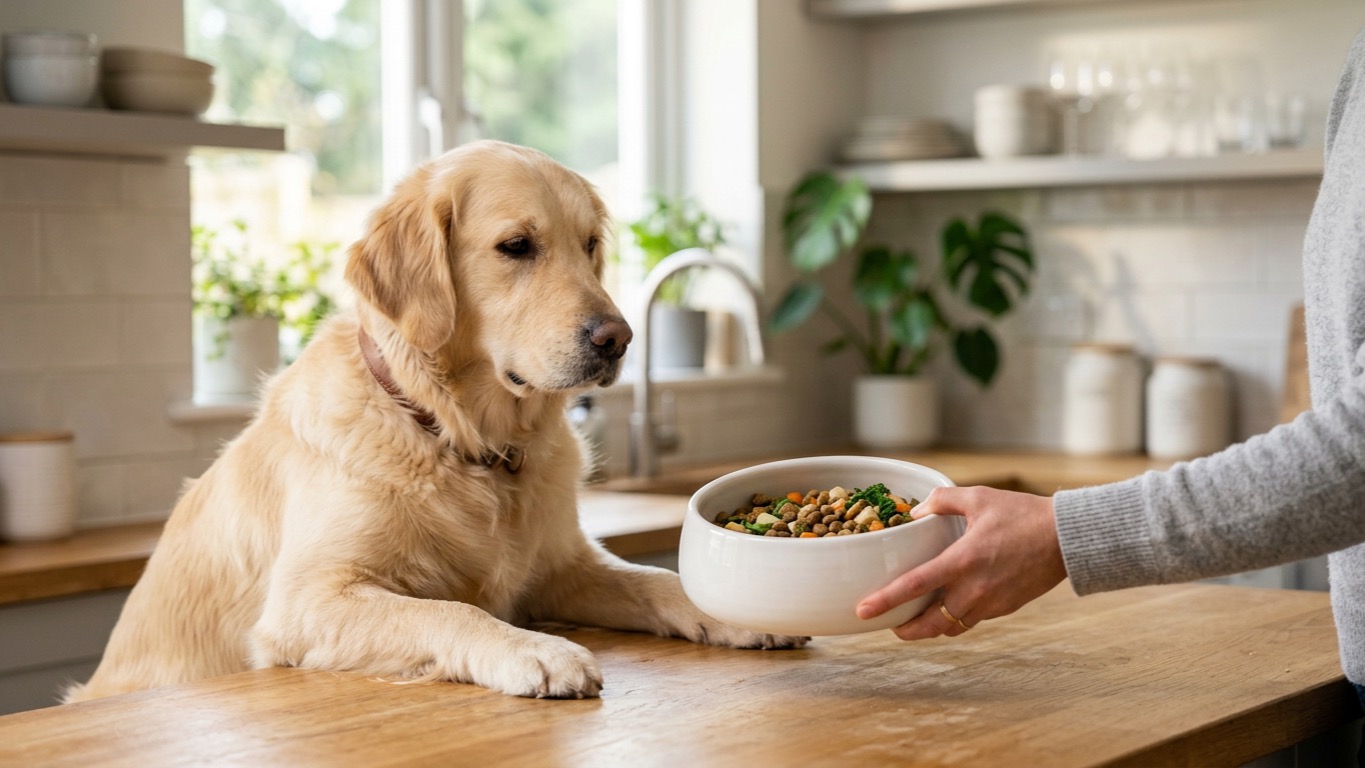
Prep rules. If the food is usually fine, it still has to be plain: cooked, unseasoned protein; fruit flesh only; no cooked bones; no butter, oil, salt, onion, or garlic.
The 10% rule. AAHA’s 2021 feeding-plan chapter is explicit: the complete-and-balanced diet should represent ≥90% of total intake; treats and other food items make up ≤10%. AAFCO does not require treats to be complete and balanced. They are rewards, not meals.
Call a professional instead of deciding at the table when the dog is a puppy or senior, has a pancreatitis history, ate an unknown amount, is already showing signs, or you cannot name the food. Puppy nutrition and senior dog food are diet problems. Human leftovers will not solve them.
Job 3 — Chocolate is not one number
The MSD Veterinary Manual chocolate chapter — full review September 2024 by the editorial team, ASPCA Animal Poison Control Center; last updated February 2026 — gives that figure for milk chocolate. Do not apply it to dark chocolate, baking chocolate, or cocoa powder.
MSD’s approximate methylxanthine content:
| Type | Methylxanthines |
|---|---|
| Cocoa powder | 807 mg/oz |
| Unsweetened (baker’s) chocolate | 440 mg/oz |
| Semisweet and sweet dark chocolate | 150–160 mg/oz |
| Milk chocolate | 64 mg/oz |
| White chocolate | 1.1 mg/oz |
ASPCA makes the same qualitative point: white chocolate is lowest; baking chocolate and cocoa powder are highest. Darker (higher cacao) chocolate and higher caffeine mean greater risk.
MSD also publishes dose bands for dogs, with the caveat that individual susceptibility varies and that severe signs and death may occur well below the reported oral LD50 of 100–200 mg/kg for caffeine and theobromine:
- Mild signs (vomiting, diarrhea, polydipsia) may occur at 20 mg/kg
- Cardiotoxic effects at 40–50 mg/kg
- Seizures at ≥60 mg/kg
Signs usually appear within 6–12 hours and may persist up to 72 hours in severe cases. High fat content may trigger pancreatitis.
A kitchen scale plus this table does not replace a poison-control calculation. Type, amount, and body weight all change the answer. Call.
Job 4 — Sharing is not a substitute for dog food
AAHA’s 2021 feeding-plan guidance for healthy, appropriate-weight dogs and cats is the frame that keeps this page from becoming a second menu:
- The main source of complete-and-balanced nutrition should represent ≥90% of total intake.
- Treats and other food items should make up ≤10%.
AAFCO’s consumer page on treats and chews is equally plain. Treats are usually not intended as complete-and-balanced nutrition. AAFCO’s model rules do not require treats to meet the nutrient profiles that a complete-and-balanced dog food must meet. If the label says “snack” or “treat,” AAFCO’s advice is to give it sparingly. Too many extras can unbalance an otherwise adequate diet and add calories the dog does not need.
“Complete and balanced” is a diet claim. It is not a treat claim, and it is not something a piece of chicken breast earns by being lean.
For the actual bowl, use a complete-and-balanced food matched to life stage — how to choose dog food and the rest of the pet food and feeding guides — not a running platter of human leftovers.
Foods dogs cannot eat (ASPCA people-foods list)
ASPCA Animal Poison Control publishes the people-food list veterinary staff actually use.
| Food | Why the source flags it |
|---|---|
| Grapes and raisins | ASPCA: tartaric acid is speculated; dogs cannot process it; can lead to kidney damage. |
| Xylitol (gum, candy, baked goods, toothpaste) | ASPCA: hypoglycemia and potentially liver damage. |
| Chocolate, coffee, caffeine | ASPCA: methylxanthines. Darker / higher cacao and higher caffeine raise risk. |
| Onion, garlic, chives | ASPCA: Allium species cause gastrointestinal irritation and red-blood-cell damage that can lead to anemia. |
| Alcohol and yeast dough | ASPCA: vomiting, diarrhea, incoordination, depression, breathing difficulty, tremors, pH changes, coma, death. Yeast dough can bloat or twist and produces alcohol in the stomach. |
| Macadamia nuts | ASPCA: weakness, incoordination, depression, vomiting, tremors, hyperthermia. |
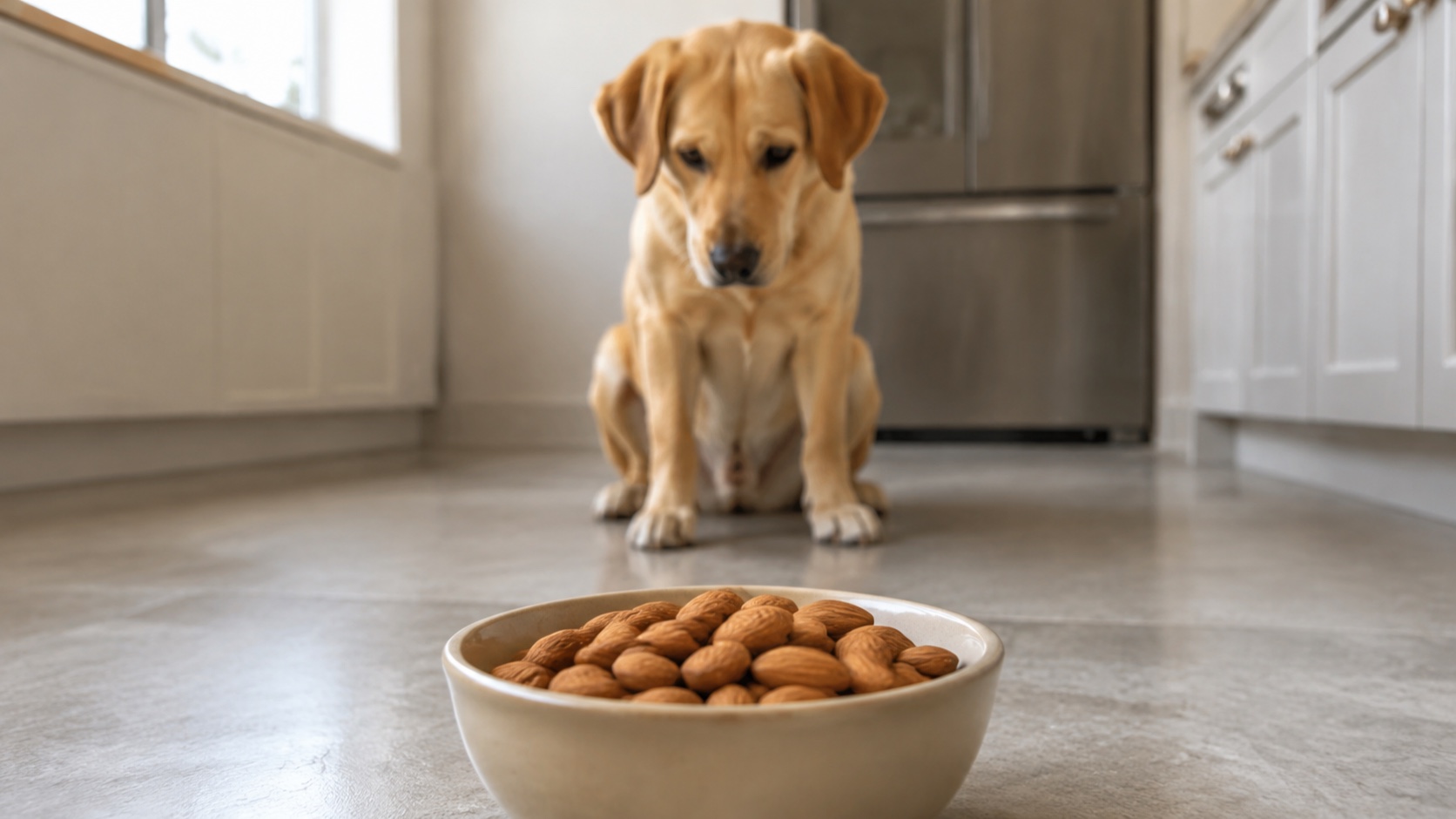
| Other nuts (almonds, pecans, walnuts) | ASPCA: high oils and fats — vomiting, diarrhea, potentially pancreatitis. |
| Salt / excessively salty foods | ASPCA: thirst, urination, abnormal electrolytes; vomiting, diarrhea, depression, tremors, seizures, death. |
| Raw or undercooked meat and eggs; bones | ASPCA: Salmonella and E. coli; raw eggs contain an enzyme that can interfere with vitamin absorption; bones can injure or obstruct the GI tract. |
If the dog ate grapes or raisins, treat it as a poison-control call. Separate explainer: can dogs eat grapes.
Xylitol. First signs are vomiting, lethargy, and loss of coordination, which can progress to seizures. Liver damage can occur within 12–24 hours and can bring secondary abnormal bleeding. There is no home dose chart on this page. If the dog got into sugar-free gum, candy, or toothpaste, call.
Alcohol and raw dough. Alcohol is absorbed quickly. Raw yeast dough can rise in the stomach, cause painful gas, and potentially bloat or twist — a surgical emergency — and the yeast produces alcohol as a by-product.
Allium. We are not repeating a circulating blog claim that garlic is “five times” more toxic than onion. That multiplier is not on the ASPCA page we used, so it is not on this page. Powdered forms in soups, leftovers, and seasoning blends still count.
Macadamia nuts. Signs usually appear within 12 hours; recovery is expected within 24–72 hours. That “expected recovery” is the typical course, not permission to wait it out at home. Almonds, pecans, and walnuts are flagged for fat, not for the same syndrome.
Salt, raw food, and bones. Cooked bones are brittle; they are not a loophole. Wild mushrooms are a separate problem from a store-bought button mushroom. See can dogs eat mushrooms.
Foods that are usually fine — if you prepare them
These are not superfoods, and They are ordinary foods that are not on the ASPCA people-foods-to-avoid list when prepared as below. They still count toward AAHA’s ≤10% extras.
| Food | Prep rule |
|---|---|
| Chicken, turkey, lean beef | Plain, fully cooked, unseasoned. No cooked bones. |
| Eggs | Fully cooked. No butter, oil, or seasoning. Not raw. |
| Blueberries | Plain, as a small treat. |
| Carrot | Plain; raw or cooked. Size the pieces so they are not a choking hazard. |
| Plain pumpkin | Cooked or canned pumpkin, not pie filling. |
| Watermelon | Flesh only. No seeds, no rind. Serving notes. |
| Apple | Flesh only. No core, no seeds. |
| Banana | Small amount of flesh. Serving notes. |
| Pineapple | Flesh only. No skin, no core. Serving notes. |
| Broccoli | Small amounts. Too much can upset the gut. We do not have a sourced percentage limit, so we are not inventing one. |
| Plain yogurt or cottage cheese | Small amounts only. ASPCA: pets lack significant lactase; dairy can cause diarrhea. More on cheese. |
Cantaloupe and cooked shrimp follow the same logic — flesh or plain cooked meat, tiny amounts, watch fat and shell.
Do not dress a “safe” food in onion powder, garlic salt, butter, gravy, or xylitol-sweetened sauces. The protein was not the problem. The seasoning was.
Gray-zone foods dogs can and cannot eat
Avocado. ASPCA’s people-foods page frames avocado as primarily a problem for birds, rabbits, donkeys, horses, and ruminants, with the biggest concern being cardiovascular damage and death in birds and rabbits. That is not the same sentence as “avocado is always deadly to dogs.” We are not going to upgrade ASPCA’s wording. If a dog ate a large amount of fruit, the pit, or guacamole (onion, garlic, salt), call anyway. The pit is also a foreign-body risk.
Dairy. ASPCA: pets do not possess significant lactase, so milk and other dairy can cause diarrhea or other digestive upset. Small amounts of plain yogurt or cottage cheese are a common household extra, not a requirement. Lactose intolerance is ordinary, not rare.
Coconut and coconut oil. ASPCA: small amounts are not likely to cause serious harm; the oils in flesh and milk may cause stomach upset, loose stools, and diarrhea.
Citrus. ASPCA: stems, leaves, peels, fruit, and seeds contain varying amounts of citric acid and essential oils that can irritate and, in significant quantities, possibly cause depression. Small ingestions of the fruit are not likely to present problems beyond minor stomach upset.
Raw diets, including raw fish. ASPCA’s raw-meat warning is bacterial (Salmonella, E. coli) and physical (bones). Salmon poisoning disease is a different claim. The MSD Veterinary Manual chapter on salmon poisoning — full review September 2025 — describes an infection with Neorickettsia helminthoeca after a dog eats raw or undercooked fish, most commonly salmonids, that carry the fluke Nanophyetus salmincola. In the United States, distribution is limited to coastal areas of the Pacific Northwest. Infected fish are found in the Pacific from San Francisco to the coast of Alaska; the disease is more prevalent from northern California to Puget Sound and inland along migration rivers. It is not a universal “raw salmon is poisoned” fact. It is also not a reason to ignore the Salmonella problem everywhere else. If you feed raw, that is a conversation with a veterinarian, not a blog loophole.
When the answer is a professional
Decide at the clinic or on a poison-control line, not from a table, when any of these are true:
- The dog is a puppy, a senior, pregnant, or has a history of pancreatitis, kidney disease, or diabetes.
- You do not know what was eaten or how much.
- The food is on the never-feed list.
- The dog is already vomiting, staggering, seizing, collapsing, or unusually quiet.
- The food was seasoned, baked with xylitol, or mixed with alcohol.
We will not write a home treatment. We will not rank “best treats.” This page is a safety explainer compiled from published veterinary toxicology and nutrition guidance. It is not a substitute for a veterinarian who can see the dog.
- We will not tell you to make the dog vomit from a blog.
Frequently asked questions
What should I do if my dog eats chocolate?
Identify the type (cocoa powder, baking, dark, milk, white), estimate how much, know the dog’s weight, and call your veterinarian or ASPCA Animal Poison Control at (888) 426-4435. MSD’s potentially lethal “1 oz/lb” figure is for milk chocolate, not dark. Signs may take 6–12 hours. Do not induce vomiting unless you are told to.
Is one grape one of the foods dogs can and cannot eat that I should call about?
Yes. ASPCA does not publish a safe grape dose. Tartaric acid is speculated as the toxic component; exposure can lead to kidney damage. Call.
Can I feed table scraps every day?
Not as a plan. Even safe scraps count toward AAHA’s ≤10% extras and often arrive with onion, garlic, salt, or fat. Daily leftovers are how a complete-and-balanced diet quietly stops being one.
Can dogs eat avocado?
ASPCA’s main concern is other species. That is not a green light to feed guacamole. When in doubt, skip it or call.
Should I make my dog vomit?
Not unless a veterinarian or poison-control specialist tells you to, and tells you how. MSD’s emesis protocols are clinic treatments. Pet our editorial team says do not give home antidotes and do not induce vomiting without a consult.
Where is the full list of foods dogs can and cannot eat?
The ASPCA people-foods table above is the never-feed half. The prep table is the usually-fine half. When unsure, skip sharing and call poison control.
Sources this desk actually used
- ASPCA — People Foods to Avoid Feeding Your Pets
- ASPCA — The Top 10 Toxins of 2025
- MSD Veterinary Manual — Chocolate Toxicosis in Animals
- MSD Veterinary Manual — Salmon Poisoning Disease in Dogs
- AAHA 2021 — Feeding Plans for Healthy, Appropriate-Weight Cats and Dogs
- AAFCO — Treats and Chews
- Pet Poison Helpline
If a label updates, believe the label and the poison-control staff.
A closing kit you can assemble without a podium: the ASPCA people-foods page bookmarked, the two phone numbers written on the fridge, a kitchen scale, the dog’s last weight, and the veterinarian’s after-hours line. If that kit is empty, a “safe fruit” rank is not the missing piece. If that kit is full and the food is on the never-feed list, you have already done foods dogs can and cannot eat. The next action is the call, not a table.
Children and guests need one rule: the dog’s bowl is not a snack bar. Table food is calories plus an elimination-diet leak plus, sometimes, a toxin.
If you only open one related guide after this URL, open can dogs eat grapes for the no-threshold fruit, or how to choose dog food for the bowl. Do not open both and feed both the same hour. One job. One decision.
Empty card count means this page is a worksheet, not a catalog. A reader who came for a podium and leaves with two phone numbers and a photographed wrapper has used the page correctly. We wrote the first path on purpose.