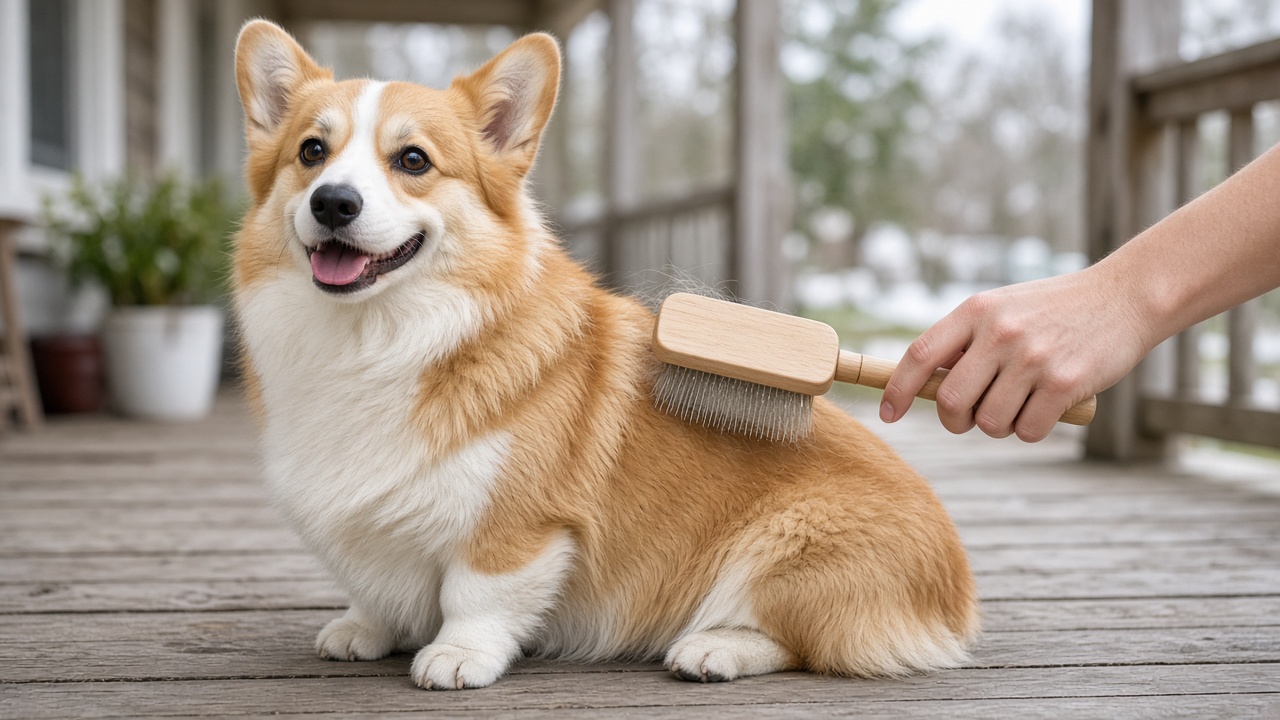
Quick answer: Brush a short, smooth coat once a week. Brush a long, silky, or curly coat every day. Bathe when the coat is dirty, not on a weekly clock.
A short, smooth coat stays tidy with one weekly brush; a long or curly coat needs a daily brush. This page is a household coat calendar drawn from published care pages and maker specs. We did not run in-home trials, and we did not rank salons or tools.
How we chose what this schedule covers
Selection rule: a coat type enters only if a United States care organization names a brush interval for that architecture. A product enters only if a current maker page lists a numeric spec we can table.
Show clips stay out. So do medicated bath protocols and marketplace-only listings.
The Pet Bench is a research desk. Our research team analyzed published coat-care pages from the ASPCA and VCA Animal Hospitals. We then compared listed specs on five maker pages.
That method cannot tell you how your dog felt last Tuesday. It can tell you which interval those organizations already published.
For stroke-by-stroke technique after you pick a cadence, use our how to groom a dog at home guide.
The Pet Bench Coat Clock
We name the framework the Pet Bench Coat Clock. It has four coat jobs, not a breed popularity list.
Smooth-short coats get a weekly brush. Short-dense and double coats get a weekly brush that becomes daily in a heavy shed.
Long-silky coats get a daily brush. Curly and continuous-growth coats get a daily brush plus a trim cycle.
VCA Animal Hospitals states that dogs with long, silky, or curly coats require daily brushing. The same page says short haircoats may need less frequent brushing.
The ASPCA’s dog grooming page matches that split. It sets weekly brushing for smooth, short coats and daily work for long, silky coats.
Those two pages are the clock’s floor. They are not a salon menu.
The clock answers the search query in one line. Weekly for short and smooth. Daily for long or curly.
Baths sit on a dirt trigger, not a seven-day timer.
Coat-by-coat brushing and bath intervals
Smooth, short coats
Think Chihuahua, Boxer, or Basset Hound. The ASPCA says you only need to brush once a week.
Start with a rubber tool to loosen dirt. Follow with a bristle brush to lift dead hair.
These coats still shed. They just shed in short pieces. A missed week rarely creates a mat.
It does leave more hair on the sofa.
Short, dense, and double coats
Retrievers sit here. So do many shepherds and huskies. The ASPCA still lists weekly brushing for short, dense fur.
VCA Animal Hospitals adds the seasonal twist. Breeds with a guard coat and a fine undercoat often have two heavy sheds each year.
Those windows are late spring and late fall. During those sheds, move from weekly to daily.
Work the undercoat first. Then finish the topcoat. Skip this step and loose undercoat felts against the skin.
VCA Animal Hospitals also notes that indoor, short-haired dogs often shed at a low level all year. They do not get a free pass. They just lack a dramatic blowout.
Long, silky coats
Yorkshire Terriers and Afghan Hounds live on the daily side of the clock. The ASPCA says these coats need daily tangle removal with a slicker, then a bristle pass.
Check ears, armpits, and the back of the legs every day. VCA Animal Hospitals flags those three zones as mat magnets.
A mat is not a style problem. It pulls skin and hides debris.
If a clump is already tight, VCA Animal Hospitals says to use clippers. Do not use scissors.
Curly and continuous-growth coats
Poodles, many doodle mixes, and similar coats keep growing. VCA Animal Hospitals groups silky and curly coats with the daily-brush set.
Non-shedding dogs with no health issues typically need a bath about every six to eight weeks. That figure comes from VCA Animal Hospitals.
That is a bath interval, not a skip-the-brush license. These coats still need a daily pass.
Skip two or three days and curls lock. Then the next bath welds the tangle.
Baths, water, and leftover length
The ASPCA recommends bathing a dog at least once every three months. Some dogs need more if they live outdoors or have skin trouble.
That three-month floor is a minimum, not a ceiling. VCA Animal Hospitals puts typical non-shedding baths on a six-to-eight-week rhythm.
Dirty, smelly, or muddy dogs bathe when the coat is dirty.
The ASPCA’s bath setup is concrete. Fill the tub with about three to four inches of lukewarm water.
Do not pour water into ears, eyes, or nose.
VCA Animal Hospitals says dogs should be bathed with shampoo made for dogs. Human shampoo, including baby shampoo, is the wrong pH for canine skin.
If you shorten a long coat for summer, leave at least 1 inch (2.5 cm) of hair. VCA Animal Hospitals publishes that leftover length for sun cover, not fashion.
earthbath’s maker page tells owners most dogs will not need a bath more than once a week. More frequent washing can strip skin oils.
That weekly cap sits well above the ASPCA’s three-month floor.
Tools matched to coat jobs
A schedule fails when the tool cannot reach the coat layer you mean to clean. Comparing published specs, the five products below are current maker listings with a numeric attribute we could record.
We picked one undercoat tool, one rubber bath brush, and one long-pin slicker. We also picked one dual-speed clipper and one concentrated shampoo.
We skipped any item we could not confirm on a maker page.
| Product | Coat job | Listed build spec | Maker session note | Material or power |
|---|---|---|---|---|
| FURminator Undercoat deShedding Tool for Large Short Hair Dogs | Loose undercoat on shedders over 50 lb | Stainless-steel deShedding edge with FURejector button | 1–2 times a week, 10–20 minutes on dry hair | Manual steel edge |
| KONG ZoomGroom Boysenberry Large | Short coats and bath work | 3/4-inch rubber fingers; 2.75 × 4.75 × 1.75 in; 0.26 lb | Circular strokes on dry fur or with shampoo | 100% TPE |
| Chris Christensen Big G Slicker Large | Long, curly, or cottony coats | 27 mm stainless pins; 3-3/4 in × 3-3/4 in head; 8 in length | Maker positions it for dense-coat fluffing | Manual slicker |
| Andis UltraEdge AGC Super 2-Speed | Full-body clips on mixed coats | Dual rotary speeds, 3,400 or 4,400 SPM; 14-ft cord | Cool-running housing with no vents or fans | Corded rotary |
| earthbath Oatmeal & Aloe Itch Relief Shampoo, Fragrance Free | Routine baths on dogs over 6 weeks | 16 fl oz bottle; maker allows up to 10:1 dilution | Use a diluted mix within 24 hours | Soap-free liquid |
FURminator’s Australian maker page says the large short-hair tool is for dogs over 50 pounds. The same page claims regular use can reduce loose shed hair by up to 90 percent when used as directed.
Sessions run 10 to 20 minutes, one or two times a week, on dry hair. That tool is not a curly-coat clipper.
FURminator’s own breed guide says Poodles lack an undercoat and need clipping instead.
The KONG ZoomGroom Boysenberry Large is a different job. KONG lists 3/4-inch rubber fingers and a 0.26-pound body.
The Large size is listed for dogs between 30 and 65 pounds. KONG’s page says to work in circles, dry or with shampoo.
Chris Christensen’s Big G Large is the long-coat slicker in the set. The maker lists 27-millimeter stainless pins and a 6-month warranty.
The page also says the Big G has 30 percent more pins than the brand’s Big K line.
Andis lists the UltraEdge AGC Super 2-Speed at 3,400 or 4,400 strokes per minute. The housing uses a 14-foot cord.
earthbath lists the fragrance-free oatmeal and aloe shampoo in a 16-fluid-ounce bottle. The same page also lists 128- and 320-fluid-ounce sizes.
The maker says 16-ounce bottles can be diluted up to 10:1. Mix that dilution in a separate container and use it within 24 hours.
Those five rows are attributes, not a ranking. A pin length is not a score.
A slicker that already lives in a rabbit grooming kit is still a different job on a dog. Rabbit coats mat on a tighter body plan.
If a rabbit shares the house, do not reuse this calendar. Follow a species-specific sequence such as our how to groom a rabbit guide.
What grooming is, and what a bottle is not
The Food and Drug Administration draws a bright line here. Compliance Policy Guide Sec. 653.100, revised in March 2019, covers animal grooming aids.
The FDA says products intended solely to cleanse or beautify animals are not regulated by FDA. They are not cosmetics under the Federal Food, Drug, and Cosmetic Act.
The cosmetic definition in section 201(i) is limited to humans.
The same guide flips the status if the label claims to cure, mitigate, treat, or prevent disease. A structure-or-function claim can also make the product a drug under section 201(g).
That is why this calendar talks about dirt, mats, and loose hair. It does not talk about treating skin disease with a shampoo.
Coat shine also tracks food. The Association of American Feed Control Officials states it does not regulate, test, approve, or certify pet food.
It writes model language that states may adopt. A dull coat can be a diet problem, a parasite problem, or a brushing gap.
The ASPCA lists parasites, infections, and allergies among causes of excess hair loss. Bald patches, scabs, or constant licking are stop-the-calendar signals.
Get a clinical exam. Do not add more shampoo first.
When the calendar should change
Puppies in house training soil themselves. VCA Animal Hospitals says to bathe them when that happens, not on the adult clock.
Mud, ponds, and skunk spray are dirt events. They override the six-to-eight-week bath rhythm.
Heavy shed weeks override a weekly double-coat plan. Move to daily undercoat work until the clumps stop coming.
A household with mild dog allergies may need daily brushing even on a short coat. VCA Animal Hospitals notes that daily brushing can cut airborne dander for some people.
Age and joint pain change the map too. VCA Animal Hospitals links thinning hair over elbows and hocks to pressure and reduced self-grooming.
A dog that cannot twist still needs your hands on those spots.
Do not invent a fifth coat type because a mix looks unusual. Sort the coat by architecture. Then pick the matching clock face.
FAQ
How often should you groom a short-haired dog?
Once a week is the interval the ASPCA publishes for smooth, short coats. Use a rubber tool, then a bristle brush. Add extra sessions after mud or a heavy seasonal shed.
How often should you groom a long-haired or curly dog?
Every day. VCA Animal Hospitals groups long, silky, and curly coats on a daily brush. Miss a few days and mats form behind the ears and in the armpits.
How often should you bathe a dog?
The ASPCA’s published floor is at least once every three months. VCA Animal Hospitals puts many non-shedding dogs on a six-to-eight-week bath. Bath sooner when the coat is dirty or smells.
Can I use human shampoo on my dog?
VCA Animal Hospitals says no. Dog skin has a different thickness and pH than human skin. Human shampoo, including baby shampoo, is too harsh for routine dog baths.
How often should I use a deShedding tool?
FURminator’s maker page says one to two times a week for 10 to 20 minutes, on dry hair. Increase frequency in a heavy shed. Do not use that tool on non-shedding coats.
Should I shave my double-coated dog in summer?
VCA Animal Hospitals says some long-haired dogs are more comfortable with a shorter summer cut. If you cut, leave at least 1 inch (2.5 cm) of coat. Plush double coats can also fail to grow back for a long time after a close clip.
What if my dog hates being brushed?
Shorten the session. Keep the tool on the coat layer that matches the job. If fear or pain blocks every pass, stop and get hands-on help from a groomer or a clinic.