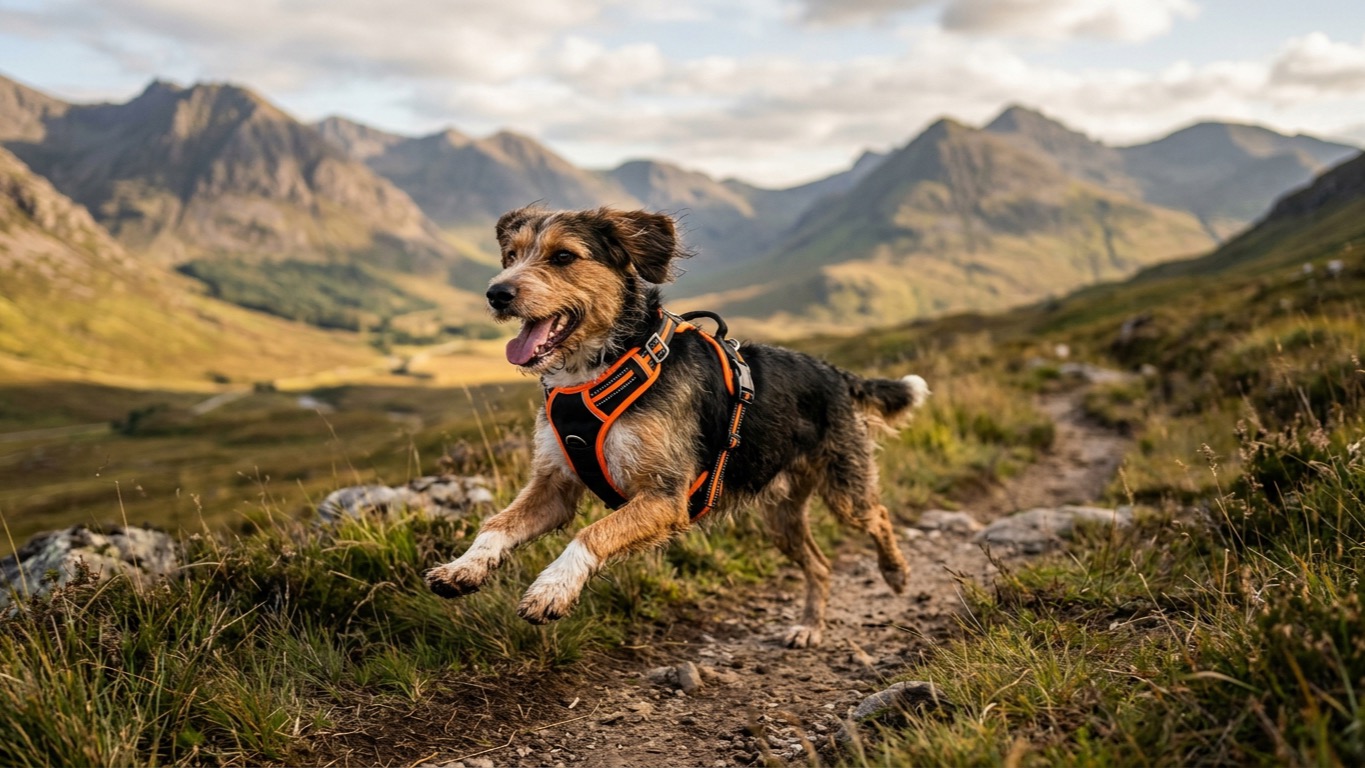
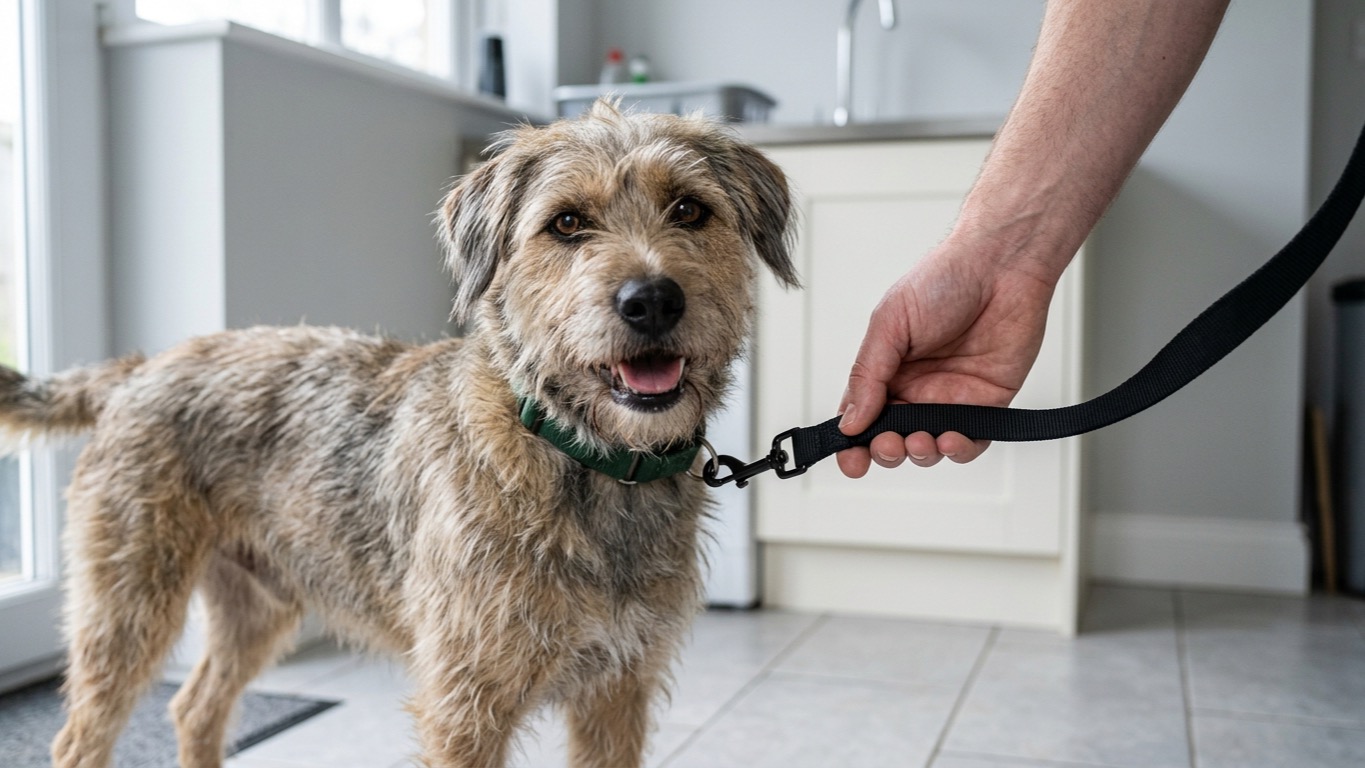
How to stop a dog from pulling on leash is a paycheck change: stop the instant the line goes tight, pay the dog for slack at your side, turn if the dog keeps hauling, and fit a front-clip harness or a head collar — not a stronger neck collar. The American Kennel Club’s loose-leash page says that if you keep walking while the line is tight, you are “giving them the very reward they seek.” The American Veterinary Society of Animal Behavior’s dominance statement says most unruly behaviors happen because they “have been inadvertently rewarded.” The American Animal Hospital Association’s 2015 behavior guidelines pair that idea with equipment: reward the walk you want, remove the payoff for the walk you do not, and use head collars and harnesses.
AKC’s puppy page adds one hardware rule: skip retractables and use a lightweight 6-foot leash while you teach this. Lunging, freezing, or new pulling with pain signs is a veterinarian or veterinary behaviorist, not another gadget.
They are the printed sequence. The five cards later on this URL are objects that match those classes. They are listing snapshots, not AKC prices.
Our guides are reader-supported. This article may contain affiliate links. As an Amazon Associate we may earn a commission if you buy through links, at no extra cost to you.
Related: dog harnesses for pulling, leash for a dog that pulls, dog harness vs collar for puppies, dog harness size guide, treat pouch for training, training treats. .
How to stop a dog from pulling on leash — six printed moves
- Stop the instant the leash goes tight. AKC: plant your feet. ASPCA Pro: stand still until the dog looks at you or comes within about two feet.
- Pay for slack. AKC wants a J-shaped leash and a treat at your side. ASPCA Pro marks “Yes!” and a low treat. AKC Reunite puts the food at your leg, “because that is where you want the dog to be.”
- If the dog keeps hauling, change direction. AKC Reunite: “Whoops, this way!” ASPCA Pro: a U-turn while you still have distance. AKC’s puppy page adds a cue such as “turn.”
- Fit a class the sources name. Front-clip / front-hook harness, head halter / head collar, or a well-fitted flat buckle collar. No winner.
- Skip retractable leads while teaching this. AKC’s puppy page: “Avoid using retractable leashes, and opt for lightweight 6-foot-leashes instead.”
- New pain signs, a lunge you cannot manage, or a freeze go to a veterinarian or veterinary behaviorist.
That is the page. Hardware is a class. The method is the walk.
”
Session counts appear only where a source printed them. AKC Reunite is the only page we fetched that prints a practice length: “Rather than taking a 30-minute walk, practice back-and-forth for 10 minutes in front of your home or in the driveway.” We are not turning that into a house schedule.
A method is listed only if AKC, AKC Reunite, ASPCA / ASPCA Pro, AAHA, AVSAB, or APDT describes it. Gear appears only as a class a source names. Prong, shock, and choke appear only as quoted positions.
Listed prices later on this page are August 2026 Amazon search snapshots this desk recorded. They are not figures AKC, ASPCA, or AAHA printed. They move.
Why dogs pull — reinforcement, not spite
Leash walking is a trained skill. AKC Reunite: “Walking on a leash is not really natural to dogs.” AKC’s main pulling page adds the learning rule: dogs repeat what pays. Forward motion is the paycheck.
AVSAB’s dominance position is the spite-check. Most behaviors owners want to change “are not related to valued resources.” They “occur because they have been inadvertently rewarded and because alternate appropriate behaviors have not been trained instead.” Pulling fits that list. The lamppost, the other dog, and the park gate are the rewards.
AAHA’s 2019 canine life-stage guidelines put “pulling on leash” among “unruly type behaviors” at every life stage. That is normal-but-unwanted, not dominance. The 2015 guidelines say the job is “rewarding correct behaviors and removing rewards for unwanted behaviors.” If the dog hits the end of the leash and still gets to the smell, you just paid for the next pull.
How to stop a dog from pulling on leash: the stop-and-pay method
None of the cards teach the walk by themselves. AKC Reunite: “Training is crucial, but the right equipment can make all the difference.”
Stop when the leash is tight
AKC: “Never walk when your dog is pulling on the leash. As soon as your dog pulls, stop, plant your feet, and wait for your dog to either return to you or loosen the tension.”
AKC Reunite: “make no forward motion” the moment there is no slack, because “being allowed to do so can be a reward.”
ASPCA Pro’s 2025 loose-leash handout: stop and stand still. Wait for a look, or for the dog to come within two feet.
Restart only on slack. AKC wants the leash “hanging in a J-shape,” then “praise and reward your dog with a treat at your side.” It “might take quite a while in the beginning.” ASPCA Pro: keep the leash slack at two feet, and carry “very tasty treats.”
That is why a retractable is the wrong teaching object. You cannot plant your feet on a line that is still unspooling. AKC’s retractable-leash safety page: the line unspools when the dog pulls, and “if your dog is pulling, you can’t reel your dog back” without catching up. Hitting the end can injure trachea or spine.
Change of direction
AKC Reunite: surprise the dog with “quick direction changes” and “Whoops, this way!” several times in a row. “Make it a game, with rewards thrown in.”
ASPCA Pro’s leash-handling guide: if you are not sure how a dog will take an approaching dog or running children, “make a U-turn and head in the other direction while you are still far enough away,” or lure with food.
AKC’s puppy page treats the turn as a taught cue. Name the dog. Say “turn” or “left” / “right.” Pay the dog for staying with you. That is communication, not a leash pop.
AVSAB’s 2021 statement lists “leash jerking” among techniques to avoid.
A U-turn on a chest clip and a U-turn on a head collar are the same handler move. The hardware steers. The turn teaches.
Treat for slack
AKC: reward polite walking “heavily and frequently” at first. Later thin food and use “life rewards” such as a sniff. Deliver the treat at your side so the dog is not paid for forging.
ASPCA Pro: “reward every time the dog looks at you or comes within two feet of you.” Mark “Yes!” Hold the treat low enough that the dog does not jump.
AKC Reunite: ordinary treats on a boring block. “Stronger treats” in the exciting world. Always close to your leg.
The training-treats page is the shopping cluster for the food. A pea-size piece at the left leg is the delivery. A handful at the dog’s nose while you keep walking is another paycheck for forging.
What current Amazon listings show (Slack-Leash Toolkit)
The method above does not need a store. If you still need objects that match the named classes, this desk recorded five Amazon search listings in August 2026. These stickers are ours. They are not institution prices. They move.
Five classes, five tiles:
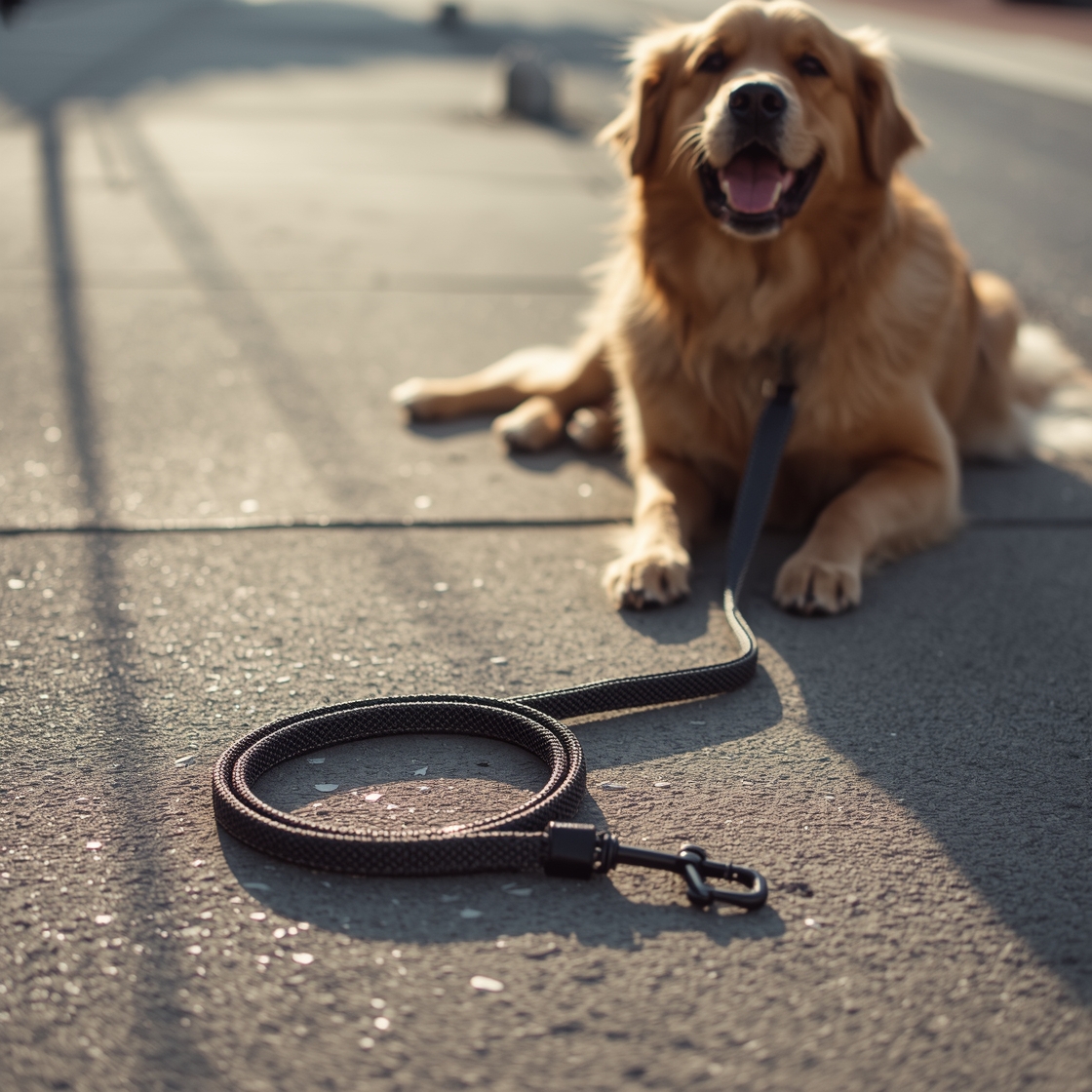
- A fixed 6-foot nylon — the length AKC’s puppy page names instead of a retractable.
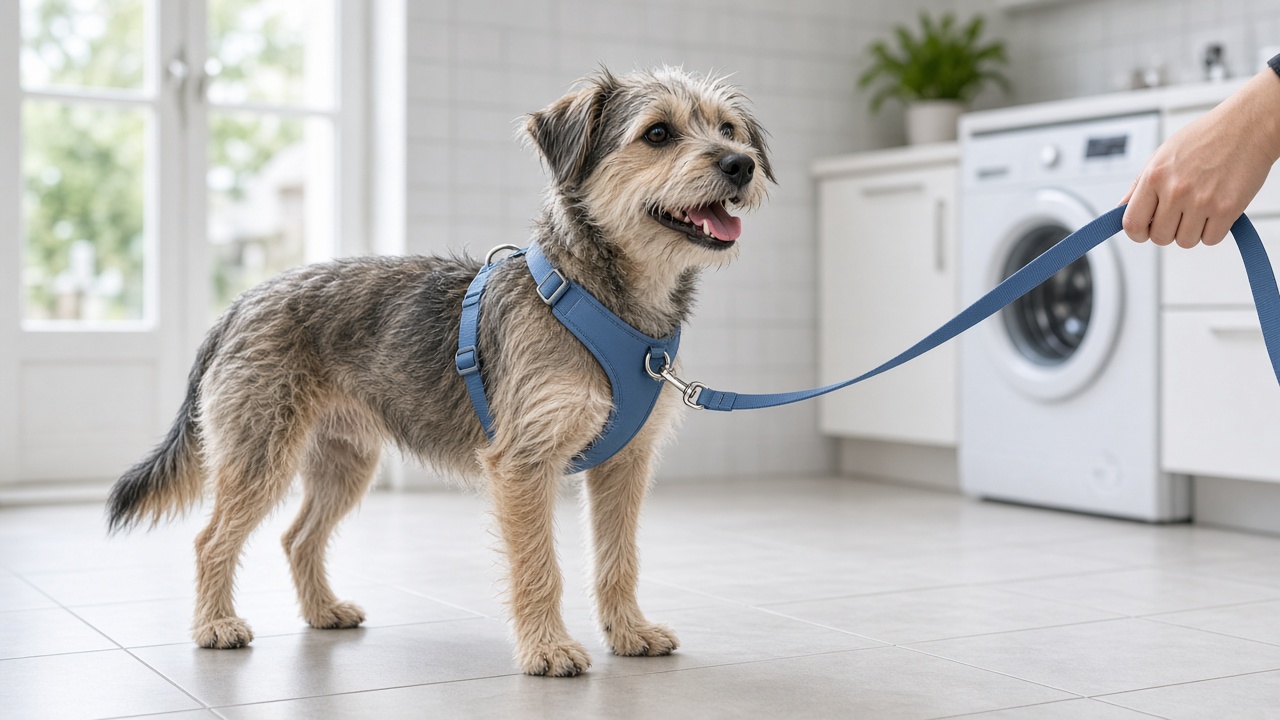
- A budget front / dual-clip harness — the front-hook class AKC Reunite and AAHA name.
- A named front-clip harness — same class, slimmer strap story.
- A head collar — the class AAHA, ASPCA Pro, and AKC Reunite name for serious tuggers.
- A treat pouch — the pocket that makes “treat at your side” reachable.
You do not buy all five. You buy one steering object, one 6-foot leash, and a way to carry food.
Table 1 — Named SKUs and listing snapshots
| SKU on this URL | August 2026 listing snapshot | Class the sources name |
|---|---|---|
| PetSafe Nylon Dog Leash 6 ft | $5.29 | Fixed 6-foot leash (AKC puppy page) |
| rabbitgoo Dog Harness | $15.97 | Front / dual-clip harness |
| PetSafe Gentle Leader Headcollar | $16.95 | Head collar / head halter |
| PetSafe Treat Pouch Sport | $17.99 | Treat at your side (AKC / AKC Reunite) |
| PetSafe Easy Walk Harness for Dogs | $22.95 | Front-clip / front-hook harness |
Those five snapshots add to $79.15. The middle sticker is $16.95 (Gentle Leader). Three of the five sit at or under that middle sticker. Easy Walk is the high tile. The 6-foot nylon is the low tile. That spread is a listing range. It is not a walk grade.
Table 2 — What you actually buy
| Cart idea | Listing-snapshot math | What it is not |
|---|---|---|
| 6-foot nylon alone | $5.29 | A method. A retractable replacement only. |
| rabbitgoo + 6-foot nylon + pouch | $39.25 | A finished heel |
| Gentle Leader + 6-foot nylon + pouch | $40.23 | A muzzle. PetSafe says it is not one. |
| Easy Walk + 6-foot nylon + pouch | $46.23 | A better walk than the method |
| All five cards | $79.15 | A kit this desk assembled on a dog |
Buying rabbitgoo and Easy Walk and Gentle Leader is three geometries in one drawer. That is a return pile, not a protocol.
Table 3 — Class vs the walk
| Job | Institution language | Card on this URL | Fail |
|---|---|---|---|
| Stop paying the pull | AKC: plant your feet. ASPCA Pro: stand still. | None — this is a handler move | Walking through a tight line |
| Pay slack at your side | AKC / AKC Reunite: treat at the leg | PetSafe Treat Pouch Sport | Food in the car |
| Fixed 6-foot line | AKC puppy page: lightweight 6-foot; skip retractables | PetSafe Nylon 6 ft | A spool that unrolls when the dog hauls |
| Front-clip steer | AKC Reunite: front-hook. AAHA 2015: front-attach harnesses. | rabbitgoo or Easy Walk | Back-clip only on a sledder |
| Headcollar management | AAHA 2015: head collars. ASPCA Pro: management tool. AKC Reunite: “lifesavers” for serious tuggers. | Gentle Leader | First wear on a crowded sidewalk |
Before you shop: (1) you ruled out pain — new cough, limp, or collapse is a clinic first, (2) the leash is fixed length, not a retractable, (3) you will stop and pay slack, not walk through a tight line, (4) the clip is on a front ring or a fitted head collar if the dog still forges. Fail gate 1 and this checklist is how you shop past a sore shoulder.
The five cards for how to stop a dog from pulling on leash
Each note is a class reading plus a listing snapshot. It is not a walk trial.
1. PetSafe Nylon Dog Leash 6 ft
Best for: Replacing a retractable while you teach the stop-and-pay walk
August 2026 listing snapshot: $5.29. Lowest tile on this URL.
AKC’s puppy page wants a lightweight 6-foot leash. It wants retractables off the teaching walk. This card is that 6-foot object. It is not a harness. It is not a method.
PetSafe’s listing language pairs this nylon with Easy Walk and Gentle Leader. That is maker copy. It matches the Index: one fixed leash, one steering object.
Pros: The length AKC names. Lowest snapshot on this URL. Cons: A leash does not teach heel. Width options exist — read the listing you open.
2. rabbitgoo Dog Harness
Best for: The budget front / dual-clip class when you want load off a skinny collar
August 2026 listing snapshot: $15.97.
AKC Reunite: back-clip harnesses “actually encourage tugging.” “Front-hook harnesses” attach on the chest. AKC’s puppy page, citing a CPDT-KA instructor, recommends a front-clip harness for large puppies. It says a harness puts “no pressure on their neck if they pull.”
This card is the budget dual-clip vest already used on our harness-for-pulling page. This URL does not rerank that page. It uses the card as the cheap steering object.
Clip the leash on the chest ring while you teach. The back ring is the easy-day clip. Using only the back ring on a determined puller is the sled hitch AKC Reunite warned about.
Pros: Dual-clip so you can retire the front ring later. Lower snapshot than Easy Walk. Cons: Vest geometry, not Easy Walk’s slim strap. Size charts differ. Tape the girth.
3. PetSafe Gentle Leader Headcollar
Best for: The head-collar class AAHA and AKC Reunite name when a chest clip still loses
August 2026 listing snapshot: $16.95. Middle sticker on this URL.
AKC Reunite calls head collars “lifesavers” for “serious tuggers.” AAHA 2015 lists “the appropriate use of head collars, harnesses” among nonaversive tools. The clinic toolkit says well-fitted head collars “provide better control than standard collars.” Dogs must be accustomed to them. Stop if the dog panics. ASPCA Pro names the class as management that steers the nose — “purely a management tool.”
Acclimate in the kitchen. Do not debut a nose loop on a Saturday farmers’ market.
Pros: The class institutions name for serious tuggers. Middle snapshot. Cons: Panic on first wear is a documented risk. Not a finished heel. Not for jogging or bikes on PetSafe’s page.
4. PetSafe Treat Pouch Sport
Best for: Making “treat at your side” a pocket instead of a crushed bag in a jacket
August 2026 listing snapshot: $17.99.
AKC wants the treat at your side. ASPCA Pro wants a mark and a low treat. AKC Reunite wants the food at your leg. A pouch does not teach the walk. It makes the paycheck reachable.
Food in the car is how you walk through a tight leash and then wonder why the dog learned nothing. The sibling shopping page is best dog treat pouch for training. This card is the named PetSafe tile already on that URL. We are not reranking pouches.
A zipper bag from the kitchen drawer can do the same job. This card is the named tile if you want one.
Pros: The delivery object the stop-and-pay method actually needs. Cons: A pouch is optional hardware. The method is not.
5. PetSafe Easy Walk Harness for Dogs
Best for: The named front-clip classic when you want the slim-strap geometry, not a vest
August 2026 listing snapshot: $22.95. Highest tile on this URL.
The geometry is a chest ring and a martingale-style loop that steers the shoulders. Deep-chested dogs need extra strap care. That is the honest limit already printed on our harness page. It is not a breed ban.
This is the nameplate front-clip. It is not a better method than $5.29 of nylon. If the dog has never worn a harness, this is a larger first bet than rabbitgoo. If the dog already lives in an Easy Walk, this card is a refill search.
Pros: Named front-clip class. Simple steer story. Cons: Highest snapshot on this URL. Deep chests need a careful chest strap.
Comparison: toolkit at a glance
| Product | Best for | August 2026 snapshot | Where to buy |
|---|---|---|---|
| PetSafe Nylon Dog Leash 6 ft | Fixed 6-foot line | $5.29 | Check price |
| rabbitgoo Dog Harness | Budget front / dual clip | $15.97 | Check price |
| PetSafe Gentle Leader Headcollar | Head-collar class | $16.95 | Check price |
| PetSafe Treat Pouch Sport | Pay slack at your side | $17.99 | Check price |
| PetSafe Easy Walk Harness for Dogs | Named front-clip | $22.95 | Check price |
Want current listings? See no-pull walking gear on Amazon →
Gear classes — who they are for
Front-clip / front-hook harness. Cards: rabbitgoo and Easy Walk. AAHA’s 2024 recap of the 2015 guidelines names “front-attach harnesses and head collars” instead of pain-based collars. The snapshot gap between those two cards is a cut pattern (vest vs slim strap). It is not a tension lab.
Head halter / head collar. Card: Gentle Leader. Management, not a finished heel. Acclimate. Stop if the dog panics. ASPCA Pro and AAHA both print that caution.
Flat collar. AKC Reunite: “Many dogs will do fine with a well-fitted flat buckle collar or martingale collar,” and reserves the other classes for tuggers. ASPCA Pro: a martingale “is a good option for dogs that don’t pull hard or don’t have medical contradictions precluding the use of a collar.” Add a harness “if needed, depending on the dog’s behavior.” A harness-versus-collar explainer for puppies is the sibling page for early walks. This page does not crown one. There is no flat-collar card on this Index. The five SKUs are the teaching toolkit, not a collar aisle.
Retractable leash — named only as a warning. Not a card. AKC’s puppy page: avoid retractables. Use a lightweight 6-foot leash. That is why the nylon tile is on the URL.
If you still need a walking-harness ranking after the method, use the live harness-for-pulling guide. Do not treat that shopping page as a second how-to. Do not treat this how-to as a second ranking.
We cut harness rankings. We cut unsourced session counts. We cut the best-no-pull URL stubs that 404. We also cut a house ban written in our voice.
What the positions actually print:
AVSAB’s 2021 humane-training statement: “The application of aversive methods — which, by definition, rely on application of force, pain, or emotional or physical discomfort — should not be used in canine training or for the treatment of behavioral disorders.” The 2025 board restatement lists “electronic collars, prong collars, choke chains, leash corrections” among methods that “should not be used under any circumstances.” The FAQ adds choke chains, prong collars, electronic shock collars, and “leash jerking.”
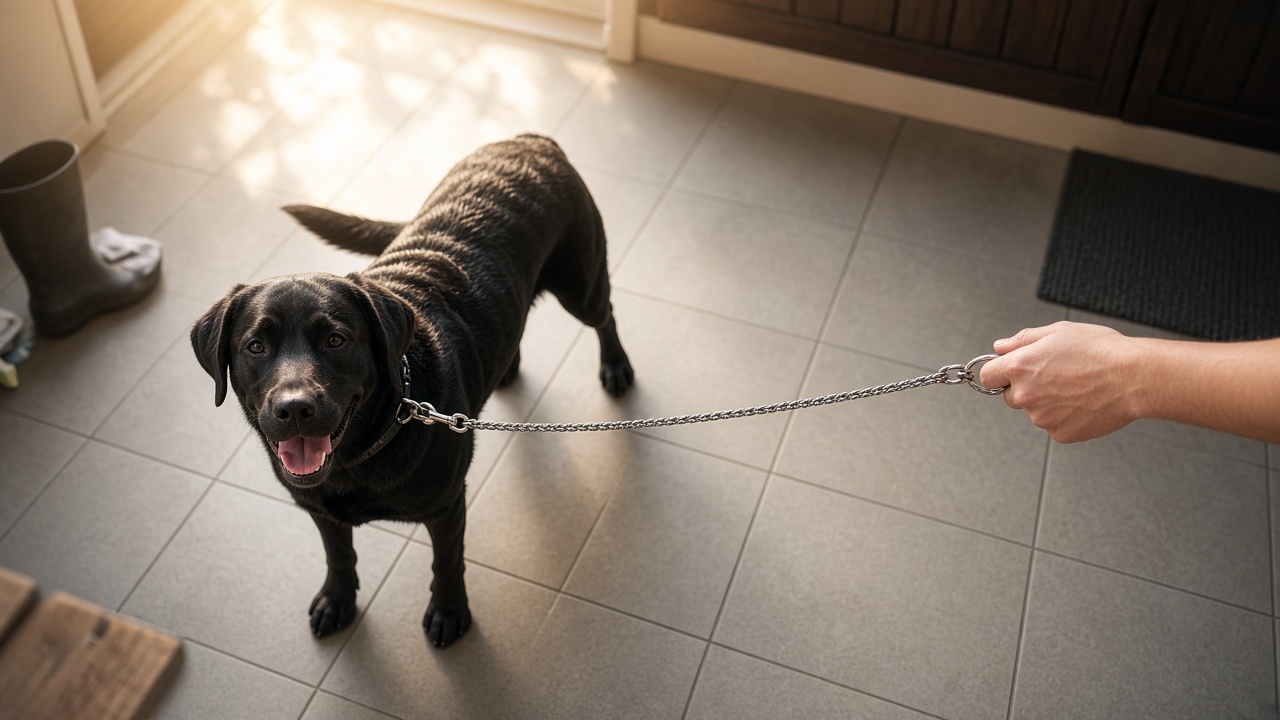
AAHA 2015: “This Task Force opposes training methods that use aversive techniques.” The list includes “prong (pinch) or choke collars” and “electronic shock collars.” “None of those tools and methods should be used to either teach or alter behavior.”
APDT International’s Standards of Practice: there are “no training or behavior cases which justify the use of intentional aversive punishment-based interventions.” Choke, prong, and shock collars, plus “leash-pop/leash-corrections,” “are not practices that fall within APDT Standards.”
Those are their sentences. Shock is not a first-line house pick because those pages do not offer it as one. Easy Walk is not a house trial of a humane alternative. It is the named front-clip card. AVSAB, AAHA, and APDT already wrote the aversive position.
When pulling is a veterinarian or behaviorist problem
AAHA wants “unruly type behaviors such as pulling on leash” addressed at every life stage. That is still manners. It becomes a medical or specialist problem when the pull is a lunge, a freeze, or a new change.
Cases AAHA sends to a veterinary behaviorist: aggression toward humans or other animals, self-injury, profound phobias or fears, multiple concurrent diagnoses, and patients who have not responded to the primary-care veterinarian.
ASPCA’s training-aids position sends guardians to the Animal Behavior Society or the American College of Veterinary Behaviorists if the pet is in “severe emotional distress” or may injure itself, other animals, or people.
ASPCA Pro treats leash reactivity — barking and lunging at other dogs — as a different file from ordinary pulling. Management can include more distance, a U-turn, and, on that page, a head halter.
AVSAB’s standard of care is to “address the underlying emotional state and motivations, including medical and genetic factors.” A dog that suddenly starts hauling, coughing, or avoiding the walk needs a veterinary exam before another protocol. We are not diagnosing pain from a keyboard.
AVSAB also says reward-based methods remain the standard even for aggression: “There are no exceptions to this standard.”
| Signal | Toolkit may be in play | Needs a veterinarian / behavior professional |
|---|---|---|
| Forges to smells, then looks back when you stop | Yes — stop, pay, turn | If a new limp or cough showed up the same week |
| Hits the end, then offers slack for a treat | Yes | If the “treat” is the only thing stopping a snap |
| Barks and lunges at other dogs | Distance + U-turn. Maybe a head collar as management. | Yes if you cannot get distance, or if anyone is at risk |
| New haul, cough, or skipped front leg | No — clinic first | Yes |
| Growls when you reach for the harness | No | Yes. Do not force a harness or a head collar on. |
A slack leash is a paid habit. Institutions start with the tool’s fit and the paycheck for slack. They do not start with a stronger collar.
Fit, size, and the two-finger check
A front-clip that rides up onto the throat is a neck collar with extra fabric. AKC Reunite and the harness-size page agree on girth: measure the widest rib, standing, behind the front legs. Weight bands on a generic chart are starting bins. They are not this dog.
| Rough weight bin | Typical chest talk on generic charts | Which card to open first | Desk caution |
|---|---|---|---|
| Under ~25 lb | ~14–22 in | rabbitgoo if the chart says so. Easy Walk can look wide. | Tiny dogs still need a 6-foot leash, not a retractable. |
| 25–50 lb | ~22–30 in | Either harness card. Gentle Leader in the matching size. | Deep chests: Easy Walk strap care. |
| 50–80 lb+ | ~30–38 in | Easy Walk or rabbitgoo large. Gentle Leader large. | A vest that fits beats a nameplate strap that does not. |
If the return window is short, measure twice before you open the bag. The dog harness size guide is the tape page.
Two fingers under a harness chest plate. Two fingers under a Gentle Leader neck strap — PetSafe prints its own fit pictures. If breathing sounds change, loosen. If the dog paws the nose loop and panics, take it off. That is AAHA’s stop rule.
Practice length, puppies, and seniors
AKC Reunite’s 10-minute driveway vs 30-minute walk is the only printed practice length we will keep. A first session on a brand-new Easy Walk at the dog park is how you pair a new harness with chaos. Ten minutes of stop-and-pay on a 6-foot nylon, in front of the house, is the session those pages describe.
Puppies: AKC’s puppy page is the source for the 6-foot leash and the front-clip recommendation. Sessions are short. A rabbitgoo on a growing puppy will be outgrown. That is household arithmetic, not a reason to skip the method.
Seniors: arthritis. Rolling a stiff dog to buckle a harness is not kindness. A new night limp plus “he pulls” is a clinic sentence first. Pain looks like stubbornness.
Two dogs do not share a chest girth. If only one dog forges, do not buy a head collar for the polite dog “to match.”
Frequently asked questions about how to stop a dog from pulling on leash
Does a front-clip harness stop pulling by itself?
No. AKC Reunite: training is crucial; equipment helps. A chest ring turns a surge. It does not delete the paycheck. rabbitgoo and Easy Walk are steering objects. The method is still stop, pay, turn.
Is Gentle Leader better than Easy Walk?
No. Gentle Leader is the head-collar class. Easy Walk is the named front-clip. They are different geometries. AAHA names both classes. This desk does not crown one.
Why does the 6-foot leash matter if it is the cheap tile?
Because nylon is cheap and retractables are the wrong object. AKC’s puppy page wants the 6-foot length. The nylon card is that length. A listing snapshot is a sticker, not a training result.
Can I keep using a retractable if I lock it?
AKC’s retractable-safety page is about unspooling as a reward. It is also about not being able to reel a tight dog. A locked spool is still a spool. this listing review does not card retractables. Use the 6-foot nylon while you teach.
How long until the pulling stops?
AKC says it “might take quite a while in the beginning.” AKC Reunite printed 10 minutes of driveway work instead of a 30-minute haul. A weekend is not a protocol we ran.
Which three items should I buy first?
If the dog has never worn a harness: rabbitgoo + the 6-foot nylon + a way to carry food. If the dog already wears Easy Walk: refill that search + the 6-foot leash. If a chest clip still loses and you will acclimate a nose loop: Gentle Leader + the 6-foot leash + food at your side. Do not buy all five.
How to stop a dog from pulling on leash is a handler habit plus a fitted class. Buy one steering object. Pay slack. A veterinarian still owns a new cough, a lunge you cannot manage, and a dog who cannot be touched.
Last reviewed: August 2026. If something is stale, contact us.