Quick answer: Match the sound to a need first: potty, hunger, pain, or loneliness. Meet that need, then reward a quiet pause. If the puppy panics, stop forcing isolation and restart with shorter, calmer steps.
Puppy whining is a need signal first—potty, hunger, pain, or loneliness—then a trained demand only after those needs are met. This page is a research-desk comparison of published rules and maker specs, not a crate trial, night recording, or clinic exam.
What this guide covers, and the rule we used
Our selection rule is trigger-first, not catalog-first. A scenario enters only if it maps to potty, hunger, teething, loneliness, or distress.
A product enters only if a current maker page names a crate, chew, comfort, or puzzle use for one of those triggers. We left out adult-only power chews, drugs, and items with no live spec page.
We also left out ranked lists. Our research team compared published specs on five currently sold items. We did not handle the products.
Need first: potty, hunger, pain, then demand
A young puppy has a short bladder and a small stomach. The sound often means “I need something now,” not “I am training you.”
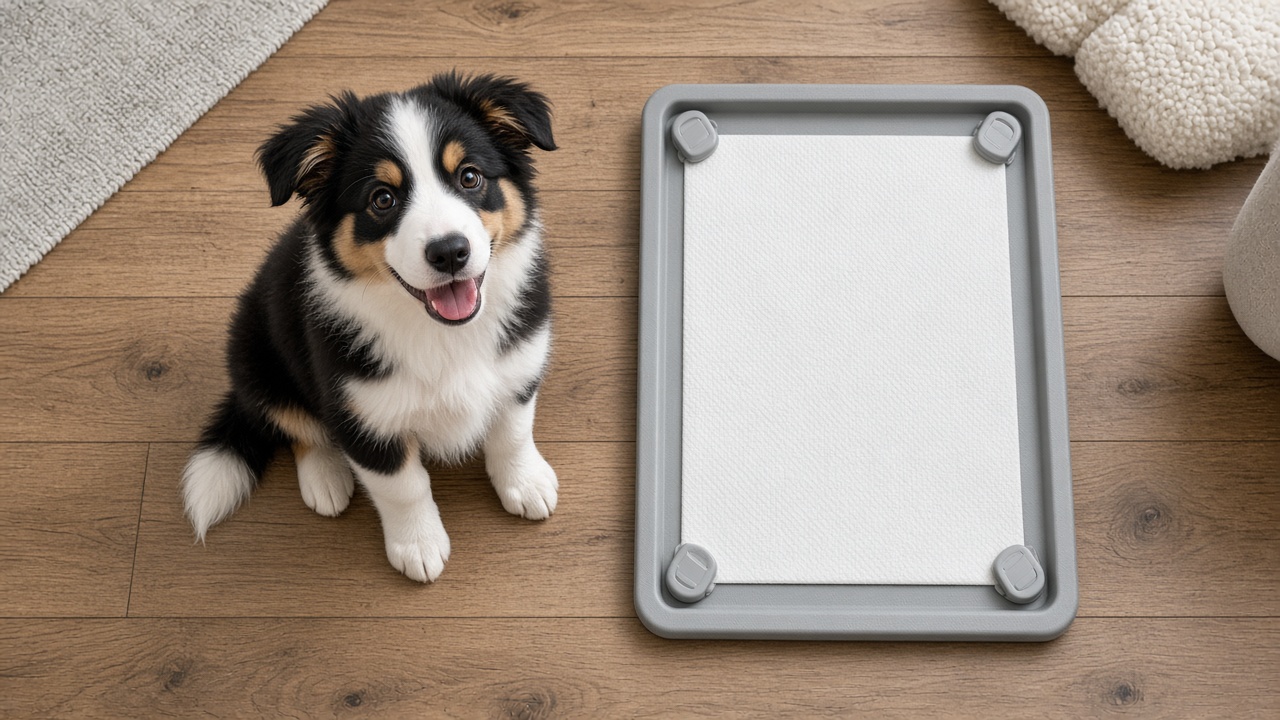
Check the body before you check the training plan. Pacing, sniffing, circling, or a hard stare at the door often means potty.
Lip licking near an empty bowl often means food. Pain looks different. Limping, a hunched back, a hard belly, or a cry when touched is a clinic visit.
Demand whining shows up after those checks fail. It starts when you sit down, pick up a phone, or close a baby gate.
The puppy can see you. The puppy already peed. The puppy already ate.
Respond to the need. Then wait for two seconds of quiet before you give attention. That split is the whole method.
The American Society for the Prevention of Cruelty to Animals (ASPCA) notes a key timing clue. Dogs with separation distress often start barking or other distress signs within minutes of being left.
A potty request can also start fast. Use context, not volume. If the puppy soils the crate, treat that as a scheduling miss, not spite.
Night and crate sounds
The first nights after a litter split are loud for a reason. The puppy lost warmth, smell, and contact. A crate does not erase that loss.
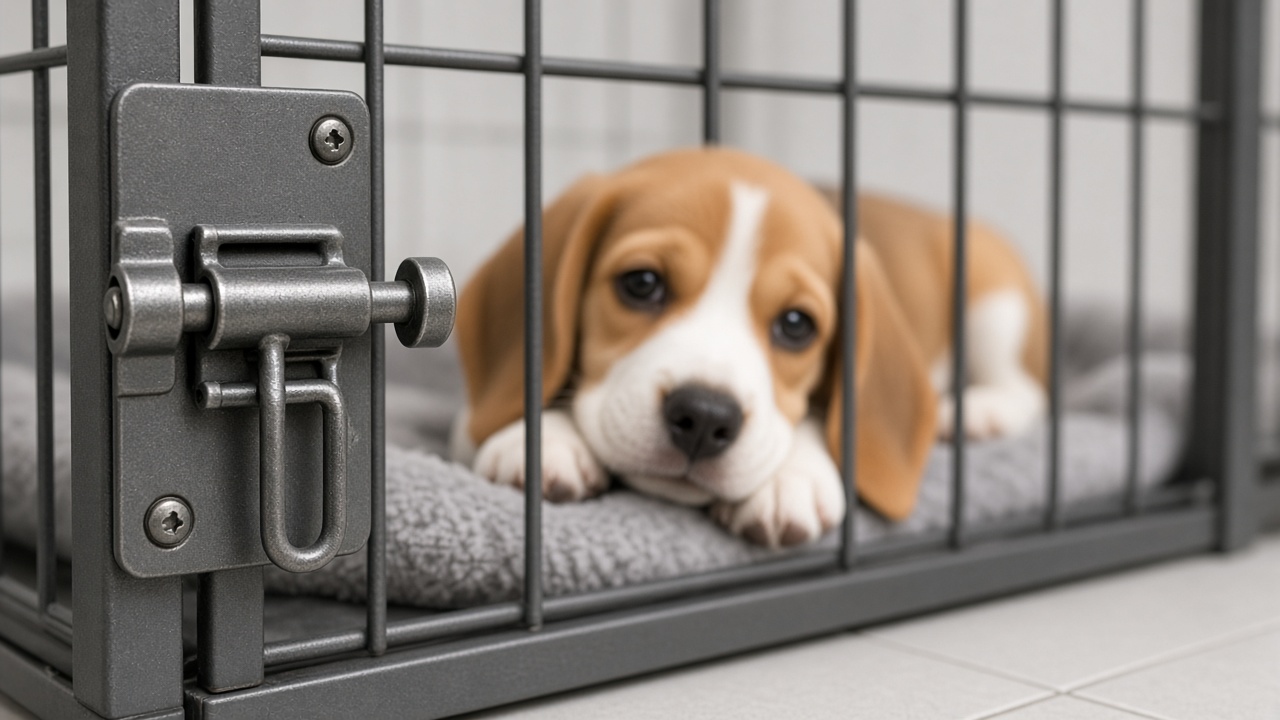
Place the crate where the puppy can hear you breathe. A closed door two rooms away is a harder test than most eight-week-olds can pass.
The MidWest Homes for Pets iCrate page lists seven lengths: 18, 22, 24, 30, 36, 42, and 48 inches. Buy for adult size.
Use the included divider so the sleep spot stays small. The puppy should stand, turn, and lie down. The puppy should not have a spare corner for a toilet.
The American Veterinary Medical Association (AVMA) model bill for dogs kept as pets sets a floor-space formula. Square the nose-to-tail length in inches plus 6 inches. Divide by 144.
That number is the minimum floor space in square feet. Our research team ran that math on two common lengths.
A 16-inch puppy needs 3.36 square feet. A 24-inch youngster needs 6.25 square feet.
The same AVMA text requires interior height at least 6 inches above the tallest standing head. Those numbers do not tell you how long to lock the door. They tell you when the box itself is the problem.
If the puppy screams, drools, or claws until nails tear, stop the session. The ASPCA says a crate is a poor fit when panting, frantic escape, or howling shows up while you are still home.
Switch to a pen or a gated room. Rebuild the crate as a snack den with the door open.
The AVMA model text also sets a cleaning floor. Waste should leave a primary enclosure at least once daily. Hard surfaces should get a full sanitize at least every 2 weeks.
Hunger, growth food, and teething
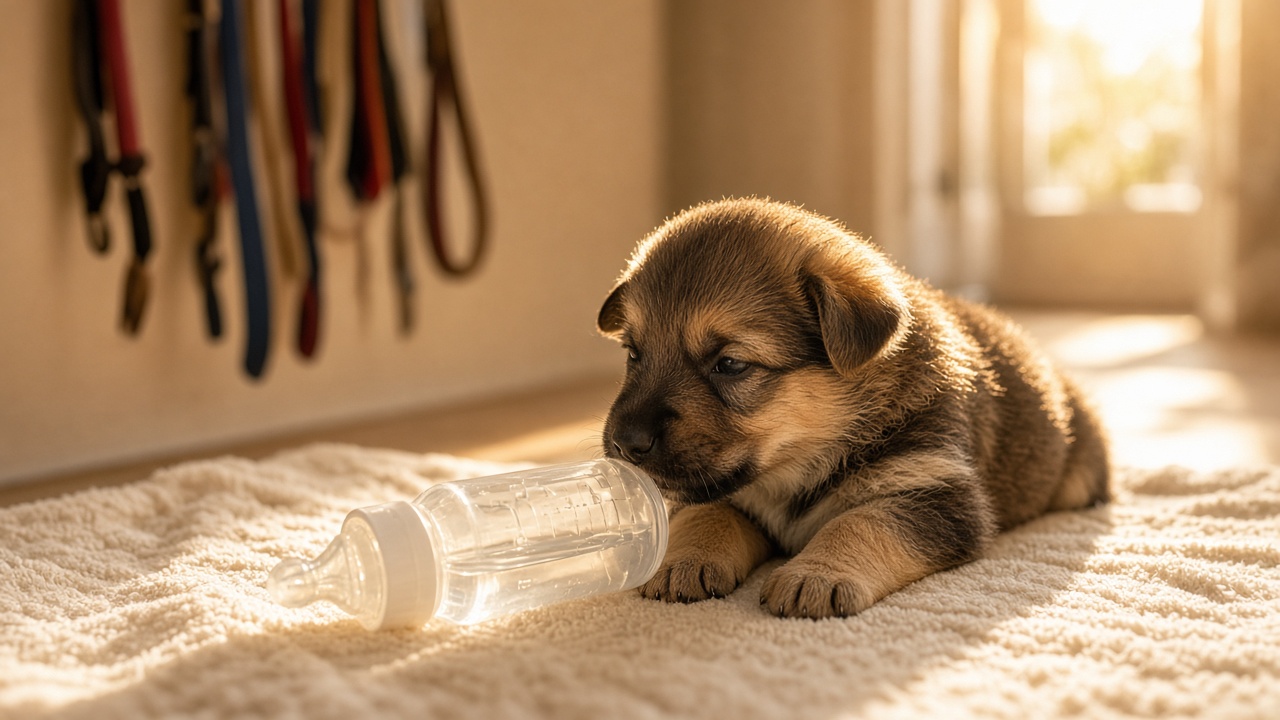
Hunger whining has a clock. It clusters before meals and after long gaps. It fades when a growth diet lands on a steady schedule.
The Association of American Feed Control Officials (AAFCO) Dog Food Nutrient Profile for Growth and Reproduction sets a dry-matter floor. That floor is 22.5 percent crude protein and 8.5 percent crude fat.
Adult maintenance sits lower, at 18.0 percent protein and 5.5 percent fat. A puppy food that only meets the adult floor is the wrong tool.
The U.S. Food and Drug Administration (FDA) treats xylitol as an approved sweetener in some human foods. The same FDA page calls xylitol extremely toxic to dogs. If you stuff a toy, skip sugar-free nut butters that list xylitol.
Label math and feeding intervals live in our puppy nutrition guide. Small mouths often do better on wet food. Our wet puppy food page compares textures and moisture, not ranks.
Teething is a second hunger-like sound. The mouth hurts. The puppy chews to change the pressure.
KONG’s Puppy Blue page lists an extra-small toy at 1.5 × 1.5 × 2.25 inches for pups up to 5 pounds. The large size is 2.75 × 2.75 × 4 inches for dogs between 30 and 65 pounds.
KONG also says the Puppy line is not recommended past 9 months.
Pair a size-right rubber chew with the options in our puppy teething toys guide. Frozen rubber can help. Ice cubes that slide and get swallowed do not.
Alone time: protest versus distress
Protest is loud, then it dips. The puppy takes a breath and lies down. You can work with that.
Distress climbs. The ASPCA lists persistent vocalizing, destruction at exits, drooling, pacing, and escape damage such as broken teeth or torn nails.
The ASPCA’s mild-case plan uses a food puzzle that takes at least 20 to 30 minutes to empty. The toy comes out only when you leave. It goes away when you return.
The same page says a highly anxious dog often will not eat at all. If the stuffed toy sits untouched, you do not have a boredom problem.
Start shorter than the panic point. One calm minute beats a 20-minute spiral. Add time only after the puppy stays loose-bodied.
Keep departures dull. Pick up keys, sit down, and stay. Repeat until keys stop predicting a long absence.
Film the first five minutes after you leave.
Products matched to a trigger
The table below is an attribute map, not a ranking. Each row is a currently sold model. Each attribute comes from the maker’s own page.
| Product | Maker-listed job | Fit or size rule | Built-in spec | Use limit from the maker |
|---|---|---|---|---|
| KONG Puppy Blue | Stuffable teething chew | Extra-small up to 5 lb; large 30–65 lb | 100% natural rubber; extra-small is 1.5 × 1.5 × 2.25 in | Not recommended over 9 months; supervised use |
| Smart Pet Love Snuggle Puppy, Medium | Heartbeat companion for crate rest | For dogs that mature to 25–70 lb | Motion-activated SmartBeat; standard run is 8 hours | Not a chew toy; remove heart and heat pack before washing |
| MidWest Homes for Pets iCrate | Housetraining crate with divider | Seven lengths, 18 in through 48 in | Wire frame, leak-proof pan, rubber feet | Size to adult length; use the divider while the puppy is small |
| ThunderShirt Heather Gray Classic | Pressure wrap for situational stress | Seven weights, under 8 lb through over 110 lb | Machine-washable vest; put on in 3 steps | ThunderShirt says size down if weight sits on a range edge |
| Nina Ottosson by Outward Hound Puppy Smart | Level 1 treat puzzle | Nine hidden cups under nine bone covers | BPA-, PVC-, and phthalate-free composite | Outward Hound says do not leave a dog alone with the puzzle |
KONG Puppy Blue is the stuffed-chew option in the ASPCA’s mild-alone plan. Stuff it so the job lasts.
The extra-small unit weighs 0.06 pounds on KONG’s page. It is easy to swallow if you buy too small.
Smart Pet Love’s Snuggle Puppy page says the Medium size is for dogs that mature to 25–70 pounds. The FAQ lists an 8-hour heartbeat mode. Advanced SmartBeat mode stops after 30 minutes with no motion.
The same FAQ lists two AAA batteries and a claimed 6-plus-month life in advanced mode. The air-activated heat pack is listed at 126°F to 144°F and about 24 hours of heat.
That pack is not a chew. The company dates the product to 1997.
ThunderShirt’s own page reports that 80 percent of users in its customer survey saw improvement. That is ThunderShirt’s survey, not our count. The Classic line lists seven weight bands, from under 8 pounds to over 110 pounds.
The Puppy Smart board is a boredom tool, not a panic tool. Outward Hound lists nine treat cups and nine bone covers. It also says to teach the game and to store the board when empty.
A response sequence that does not reward panic
Use the same order every time. Do not skip a step because the sound is annoying.
First, take the puppy out on a short leash and stand still. If the puppy pees or poops, praise once and go back in. Do not start a play session.
Second, offer water and the next scheduled meal if the clock is due. Do not free-feed to buy silence.
Third, offer a legal chew or a stuffed KONG Puppy while you stay nearby. If the mouth is the problem, the sound should drop.
Fourth, if the puppy is still scanning you, wait for a quiet pause. Then give calm contact. You are paying for quiet, not for volume.
Fifth, if the body goes stiff, the gums go pale, or the puppy cannot settle even in your lap, stop the plan. Call a clinic. Pain and illness do not wait for a training week.
Do not open a crate door during a scream if you just confirmed potty, food, and safety. Opening on the peak teaches the peak. Opening after a pause teaches the pause.
Do not use the crate as a penalty box.
Do not stack every product at once. One stuffed chew plus a correctly sized crate is a plan. A heartbeat plush plus a wrap plus a puzzle plus a covered crate is noise.
FAQ
Should I ignore my puppy’s whining at night?
Not on night one, and not if the last potty break was hours ago. Take the puppy out on a dull trip. Skip play.
If the puppy already eliminated and then starts a long, looping cry, wait for a pause before you talk. Ignoring a full bladder is not training.
Why does my puppy whine when I am in the same room?
That pattern is usually access, not abandonment. The puppy can see you and cannot reach you.
Meet potty and food first. Then reward two seconds of quiet. If you answer every squeak, you buy more squeaks.
How do I know the crate is the problem?
Watch while you are home. Heavy panting, drool puddles, and frantic digging are stop signs.
The ASPCA says those signs mean crate confinement is a poor option. A pen or a gated room is the next setup, not a smaller crate.
Can a heartbeat toy replace training?
No. Smart Pet Love lists the Snuggle Puppy as a crate companion that recreates warmth and a pulse.
It is not a chew. It is not a substitute for short, planned absences. Use it as bedding context, then still teach alone time in tiny steps.
What if the puppy will not eat the stuffed toy when I leave?
The ASPCA says a highly anxious dog often will not eat. Treat that as distress, not picky eating.
Shorten the absence until the puppy can take food. Then grow the time.
When should I call a clinic about whining?
Call if the sound is new and sharp, or if the puppy guards a body part. Call if you see vomiting, diarrhea, collapse, or a tight belly.
Call if escape damage includes blood, broken teeth, or torn nails. Training does not treat those signs.
Does more food stop hunger whining?
Only if the diet is a growth formula and the portions match the puppy’s body. AAFCO’s growth profile starts at 22.5 percent protein and 8.5 percent fat on a dry-matter basis.
Extra adult kibble is the wrong fix. Recheck the label, then recheck the clock.