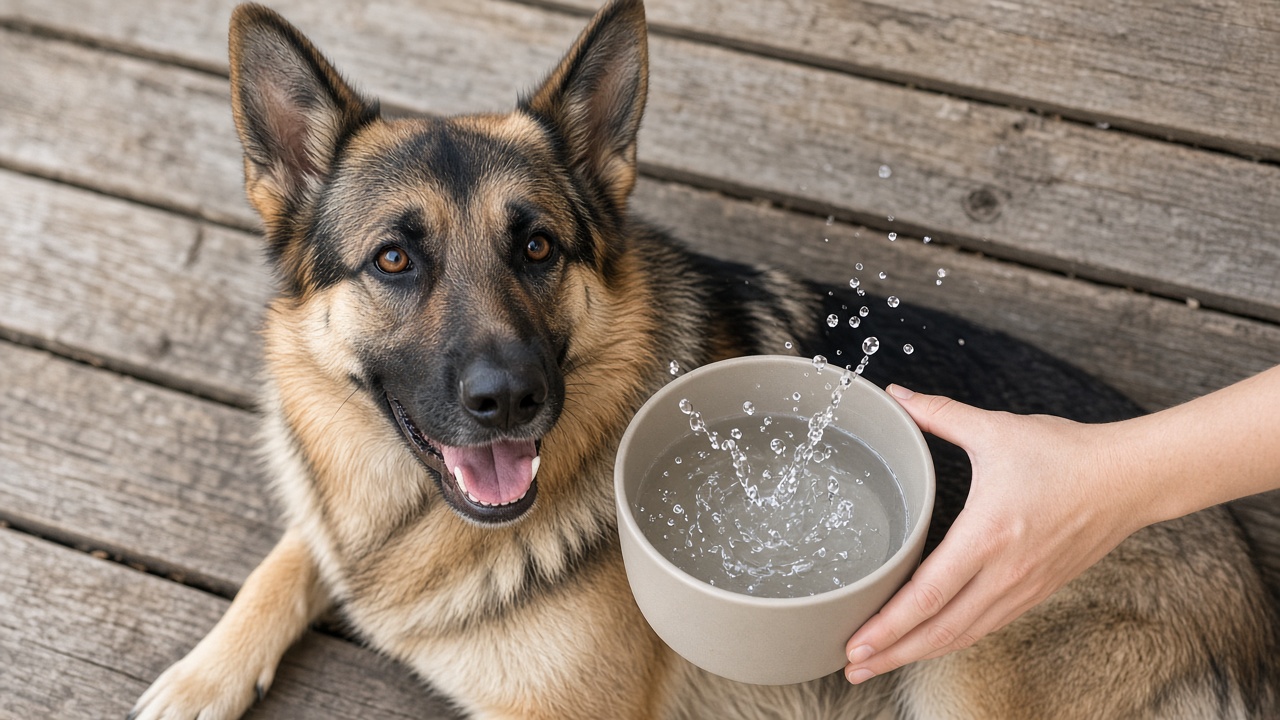
Quick answer: Move the dog into cool, quiet air and offer water. If heavy panting continues after about 10 minutes, or gums look odd, call a clinic the same day. Heat, pain, heart strain, and short muzzles are the published causes to sort.
If heavy panting lasts past 10 minutes in cool air, treat it as illness, not weather.
This page is a research-desk briefing on published panting causes and maker-listed cooling specs. We did not examine any dog, take a rectal temperature, or run a heat trial.
Selection rule: a product had to list a cooling method or a temperature-measurement range on its maker page. We left out toys, treats, supplements, and plain beds with no cooling or thermometer attribute.
On September 9, 2026, our research team analyzed five maker pages side by side. That comparison is the Pet Bench Heavy-Pant Spec Scan. It is a spec reading, not a product ranking.
Run the Cool-Quiet-Ten check
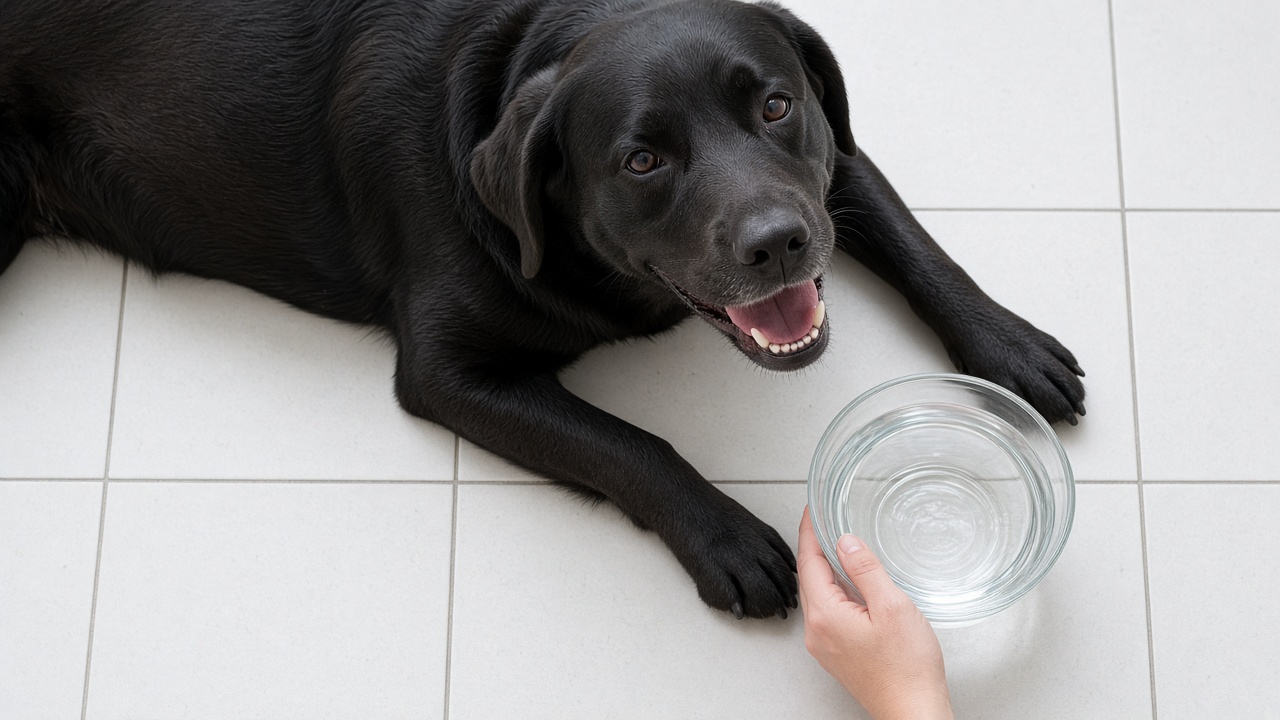
Use the Cool-Quiet-Ten check before you guess a cause. Cool the room, quiet the room, and wait about 10 minutes.
VCA Animal Hospitals tells owners to rest an agitated dog for 10 minutes, then recheck a high temperature. That rest window is the same gate we use for unexplained heavy panting.
Panting after a walk or a warm car ride can be normal cooling. Panting that stays hard after cool air is a different problem.
Look at the gums while you wait. VCA lists dry, sticky, bruised, or oddly colored gums among heat-stroke signs.
Blue, gray, white, or brick-red gums are not a home experiment. Go now.
Watch the body, not just the mouth. Cornell University College of Veterinary Medicine lists drooling, weakness, confusion, vomiting, bloody diarrhea, seizures, or collapse as heatstroke signs.
USDA Animal and Plant Health Inspection Service lists the same emergency cluster for kennel heat stroke. That list includes uncontrollable panting, dark red gums, and an inability to stand.
A swollen belly plus hard panting is not a cooling-mat problem. Call emergency care.
If the dog settles, write down the time, the room, and how long the pant lasted. A written log helps a clinic more than a vague “he always pants.”
Heat numbers that do not agree
Dogs dump heat by panting. Cornell notes that dogs sweat mainly on their paws. Panting needs moving air.
The American Animal Hospital Association says a typical pet temperature sits between 100 and 102.5 degrees Fahrenheit. Heatstroke, on that AAHA page, usually starts above 104 degrees.
VCA uses a tighter ladder. A reading above 103 degrees Fahrenheit is already abnormal, or hyperthermic.
VCA ties classic environmental heat stroke to readings above 106 degrees Fahrenheit. The same page puts multi-organ failure near 107 to 109 degrees.
USDA APHIS, writing for commercial kennels, draws a third line. More than 104 degrees Fahrenheit “requires immediate action.” More than 106 degrees is “a dire emergency.”
AAHA and VCA both tell caregivers to stop active cooling near 103 degrees Fahrenheit. Do not chase ice.
VCA no longer recommends ice packs or rubbing alcohol for home cooling. AAHA says skip ice and skip wet-towel wraps, which trap heat.
Pour tepid water on the neck, chest, and belly. Point a fan at wet fur.
Cornell says wet double-coated dogs all the way to the skin.
The ASPCA says a 70-degree day can push a parked car to 90 degrees. On an 85-degree day, that page says the cabin can top 100 degrees in 10 minutes. It can hit 120 degrees in 30 minutes.
Cornell uses a steeper cabin rise. At 70 degrees outside, it says the interior can climb 40 degrees in an hour.
Cornell also says most of that rise happens in the first 15 to 30 minutes. Cracked windows do not fix the math.
Cornell says late afternoon, about 3 to 5 p.m., is often hotter than noon.
The same Cornell page gives a pavement check. If you cannot hold a bare hand on the asphalt for 10 seconds, it is too hot for paws.
USDA APHIS flags humidity above 70 percent as a kennel heat-stress risk, especially with air above 85 degrees. That bulletin says a healthy dog may need 7 to 60 days to acclimate to heat above 85 degrees.
Pain, heart strain, and short muzzles
Heat is the loud cause. It is not the only cause.
A dog in pain often pants in a cool room. There may be no walk and no sun.
Do not diagnose the pain from the couch. A limp, a tight belly, or a new hunch is enough to call.
Heart and lung disease can look like heat. Night restlessness, a new cough, and a stretch-neck stand are clinic flags.
Heavy panting plus a swollen abdomen can signal fluid behind heart failure. That is not a crate-fan night.
Steroid drugs such as prednisone are a common published reason for extra panting. If the pant started after a new tablet, call the prescribing clinic.
Short-muzzle dogs fail the cooling job sooner. USDA APHIS says brachycephalic breeds have less nasal surface for evaporative cooling.
VCA says pugs, boxers, and bulldogs can show heat-stroke signs when outdoor heat is only moderate.
USDA APHIS also flags obese dogs, young dogs, older dogs, and dogs with heart disease.
If the pant has no heat story, skip the shopping cart and call.
Night panting, crates, and thick coats
Night panting is a triage question, not a breed quirk. Ask whether the room is hot, and whether the dog can lie down.
If the dog paces, coughs, or refuses to settle, treat it as medical. A cool basement does not prove the heart is fine.
A crate can help a dog rest after you have cooled the air. A crate cannot rescue a dog from a hot, still box.
Do not shut a heavily panting dog into a poorly vented crate in a warm room. Airflow is the point.
Large dogs that need a quiet, open-sided rest spot should use a vented crate. See our best dog crate for large dogs.
Thick undercoat holds heat against the skin. That is a load, not a personality trait.
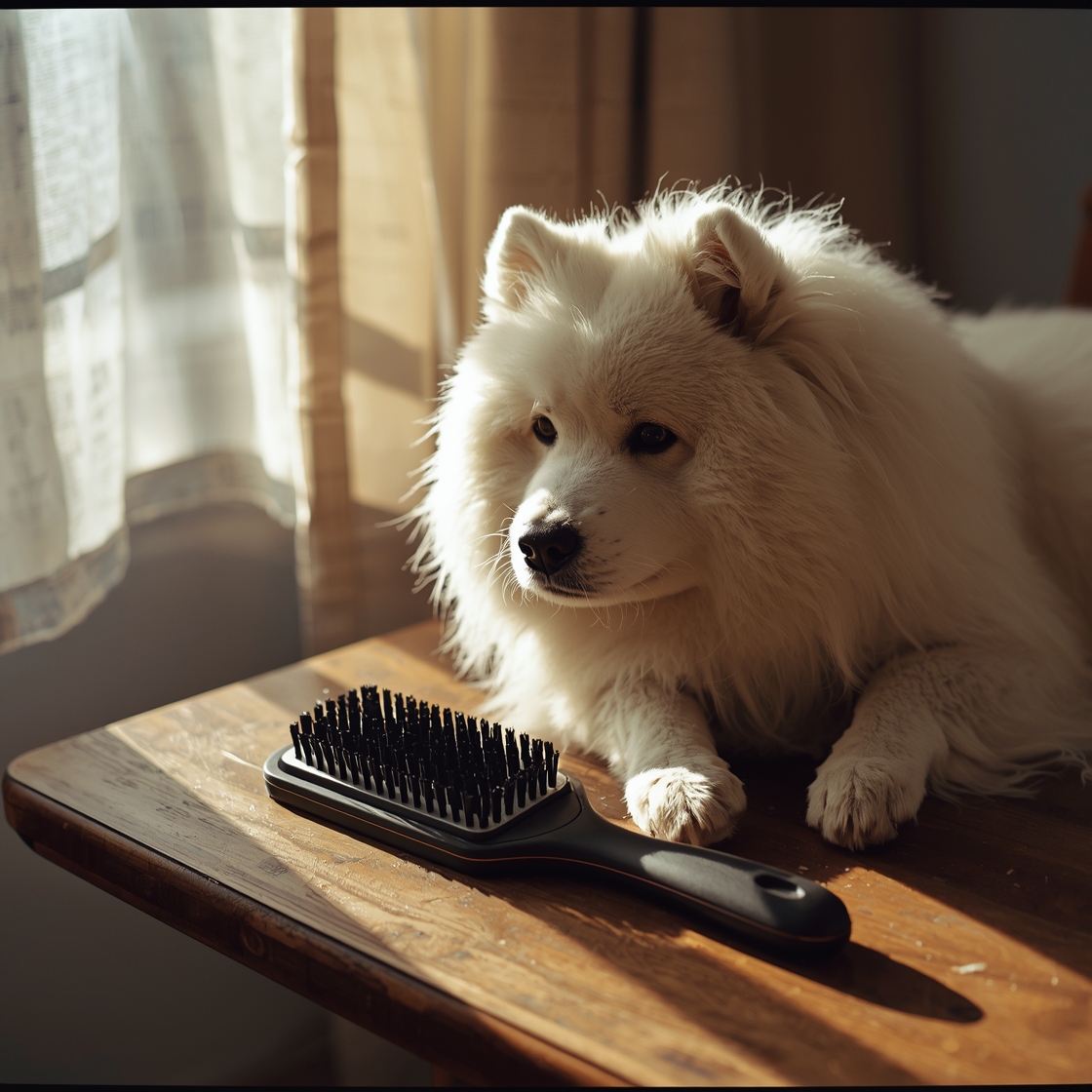
A shedding brush for heavy coats lifts loose undercoat. It does not treat heatstroke, heart disease, or pain.
Cornell lists thick or dark coats among heatstroke risk factors. Brushing is coat management. It is not a diagnosis.
Cooling gear compared by listed attributes
Gear can help a heat load. Gear cannot replace the Cool-Quiet-Ten check.
The September 9, 2026 Pet Bench Heavy-Pant Spec Scan compared two vests, two pads, and one thermometer. We compared published specs. We did not wear the vests or time a pant.
Ruffwear’s Swamp Cooler Vest is a three-layer evaporative shell with a UPF 50+ outer layer. Ruffwear sizes it by chest girth from 13 to 42 inches across six sizes.
Kurgo’s Core Cooling Vest is also a wet-and-wring evaporative shell. Kurgo lists four sizes. The XL chest range is 35 to 45 inches.
Those two girth spans are not the same. Ruffwear’s published girth window is 29 inches wide. Kurgo’s published window is 26 inches wide, and it starts at 19 inches, not 13.
K&H Pet Products’ Coolin’ Pet Pad is a water-fill mat. Sizes run from 11 by 15 inches to 27 by 38 inches.
K&H tells owners to place that pad on wood, tile, or another hard surface. The same page says carpet holds heat and can blunt the pad.
The Green Pet Shop Cool Pet Pad is a pressure-activated gel mat. The maker says it cools up to 3 hours, then recharges after 15 to 20 minutes off the dog.
Green Pet Shop’s extra-large pad is 27.5 by 43.3 inches for pets over 80 pounds. That rectangle is about 1,191 square inches. The K&H extra-large pad is 1,026 square inches.
The Green Pet Shop pad is the larger listed rectangle. It is not a better medical device.
Green Pet Shop also says not to leave the pad in a hot car or in direct sun. The pad absorbs the hottest nearby surface. That can be the seat, not the dog.
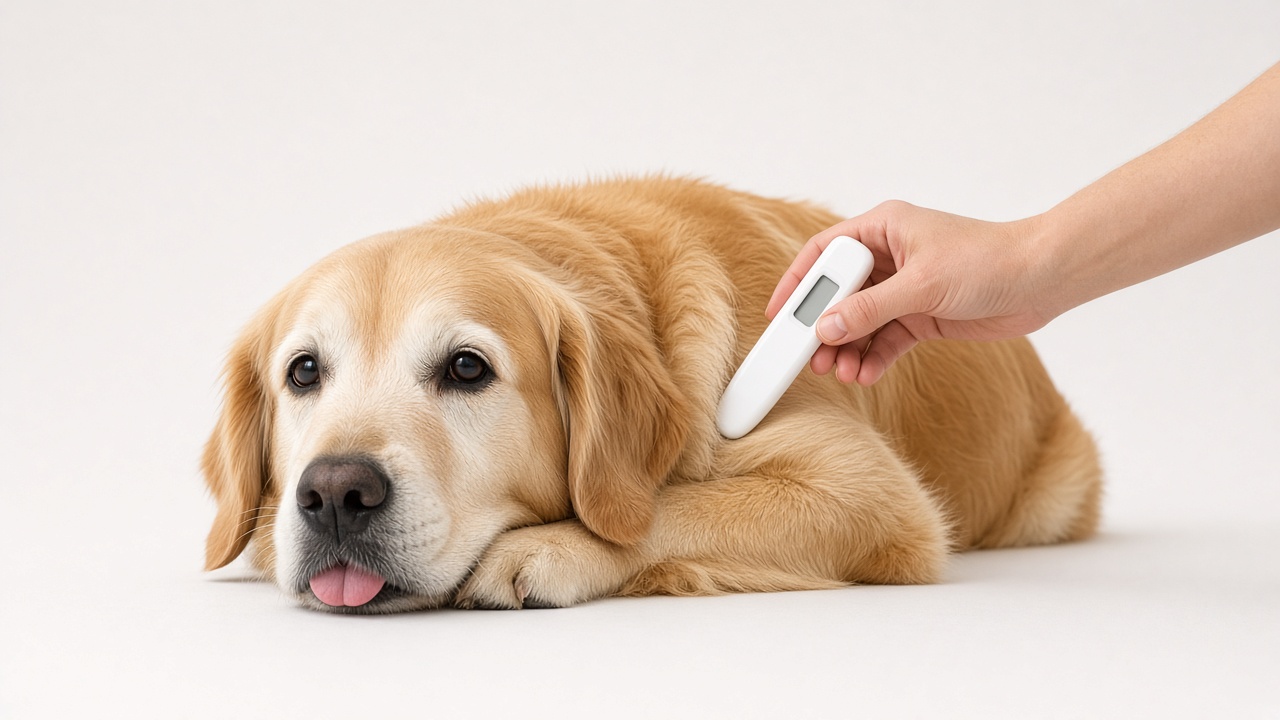
iProven’s DTK-117Y is a digital pet thermometer, not a cooler. The maker page says a reading takes 20 seconds.
iProven says the display may show “Lo” when ambient air is outside 89.6 to 109.2 degrees Fahrenheit. That band is the listed window, not a dog’s normal range.
iProven recommends rectal use. The page says about 1 inch for small pets and 2 to 3 inches for larger pets. Do not force the tip.
| Product | Maker-listed method | Maker-listed size or range | Other listed spec |
|---|---|---|---|
| Ruffwear Swamp Cooler Vest | Three-layer evaporative vest; UPF 50+ outer | Chest girth 13–42 in; six sizes | XL length 24 in; leash portal |
| Kurgo Core Cooling Vest | Wet-and-wring evaporative polyester and air mesh | Four sizes; XL chest 35–45 in | XL back coverage 27 in |
| K&H Coolin’ Pet Pad | Water-fill pad; no electricity | 11×15 in through 27×38 in | Maker says use on hard floors, not carpet |
| Green Pet Shop Cool Pet Pad | Pressure-activated gel; indoor | 11.8×15.7 in through 27.5×43.3 in | Up to 3 hours; 15–20 min recharge |
| iProven DTK-117Y | Digital rectal thermometer | One size; 20-second reading | Listed display window 89.6–109.2 F |
None of these products diagnose a cause. A wet vest on a dog with blue gums wastes minutes.
What a home thermometer can show
A number beats a guess. A number is still not a full exam.
VCA sets a normal dog range at 100.0 to 102.5 degrees Fahrenheit. The same page calls readings above 104 degrees, or below 99 degrees, emergencies.
If a first reading looks wild, VCA says rest the dog 10 minutes and measure again. Struggle can fake a high number.
AAHA’s “usually above 104” line and VCA’s “above 103 is abnormal” line can both be true at home. Use the lower published worry line if you are unsure.
Stop cooling when the reading nears 103 degrees Fahrenheit, the stop point both AAHA and VCA publish. Then go to a clinic.
If you cannot take a temperature safely, skip the fight. VCA says a hard struggle is a reason to let a clinic do the reading.
USDA APHIS notes that young puppies do not pant well until 3 to 4 weeks of age. A tiny puppy that is hot and quiet is under-equipped.
FAQ
How long should I wait before I call?
Use the Cool-Quiet-Ten check. If heavy panting is still hard after about 10 minutes in cool, quiet air, call the same day. Blue gums, collapse, a swollen belly, or a rectal reading above 104 degrees Fahrenheit are now, not later.
Is panting after a walk always safe?
A short pant after exercise can be normal cooling. Cornell still flags heavy panting, shade-seeking, and drool as early overheating signs. If the walk was on hot asphalt, do not wait.
Why do short-muzzle dogs seem to pant more?
USDA APHIS says flat-faced breeds have less nasal surface for evaporative cooling. VCA adds that heat-stroke signs can appear in those breeds when outdoor heat is only moderate.
Can a cooling vest replace a clinic visit?
No. The Pet Bench Heavy-Pant Spec Scan compared listed fabric and size claims. It did not measure body temperature under those vests.
What if my dog pants at night in a cool house?
Cool air rules out simple weather. It does not rule out pain or heart strain. Pair the Cool-Quiet-Ten check with gum color and, if you can do it calmly, a rectal reading.
Do the car-temperature pages all say the same thing?
No. The ASPCA publishes a 70-to-90-degree cabin rise, plus a 10-minute jump past 100 degrees on an 85-degree day. Cornell publishes a 40-degree rise in an hour from a 70-degree start.
Both warn that a parked car is unsafe. Neither page is a permission slip to “just run inside.”