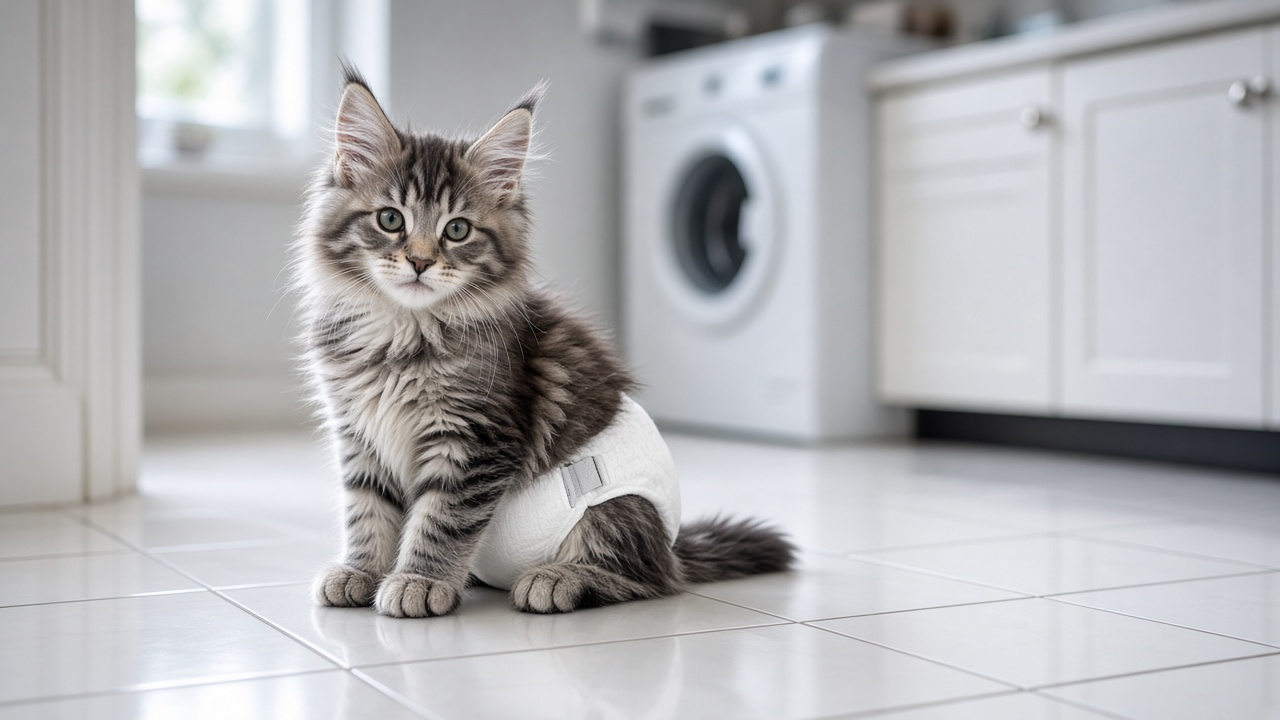
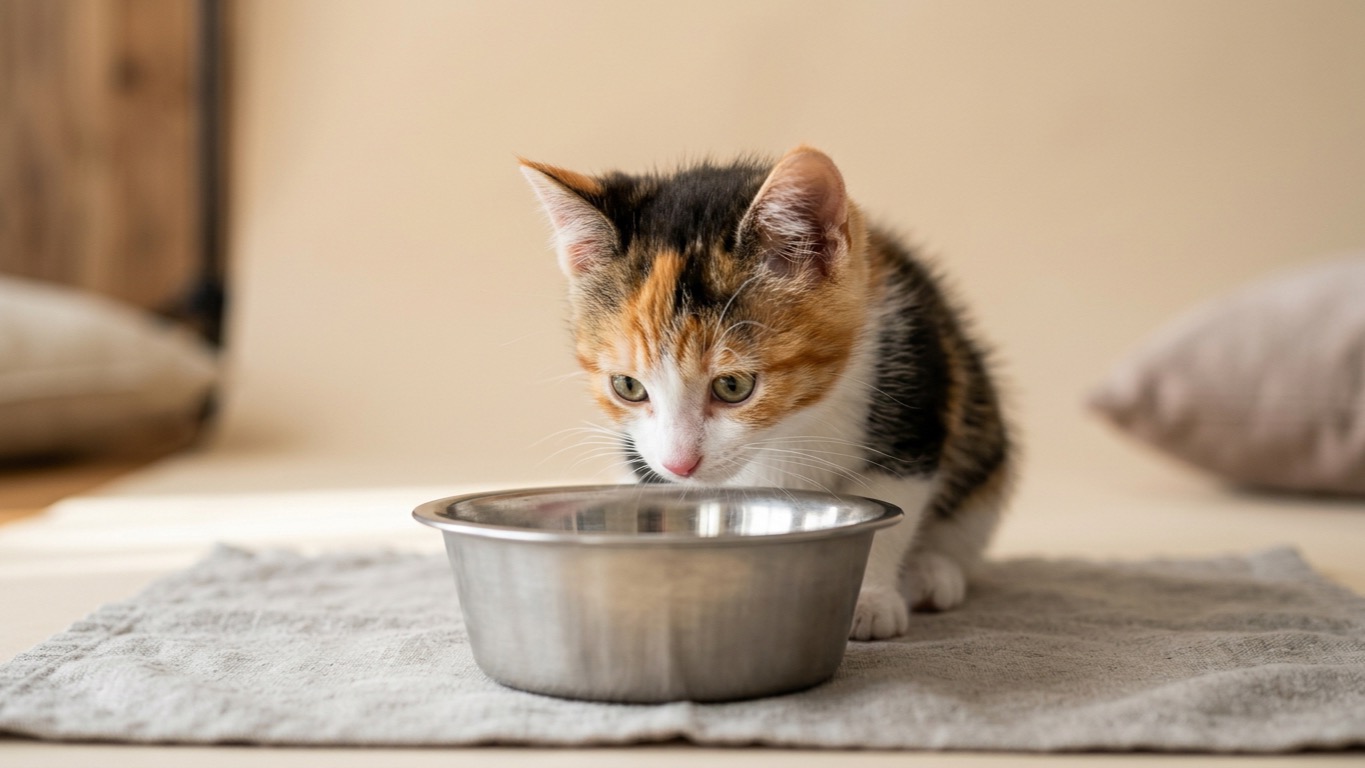
Quick answer: Keep a 12-week-old kitten on complete growth food, split into three or four meals. Scoop an unscented box daily and run short hunting games. This is still a growth week, not an adult reset.
A 12-week-old kitten still needs growth food, 3–4 daily meals, and vaccine boosters through 16–20 weeks.
This page is a desk comparison of published feeding, play, and litter specs for week 12.
Selection rule: a SKU appears here only if its maker names a kitten, growth, or 1-to-4-month window. The same page must print a calorie, cup, fill-depth, or dimension figure. Adult-maintenance bags, unsized toys, and crystal litter with no fill depth stay out.
Week 12 is still a growth week
Twelve weeks is three months of age. The body is still building bone, muscle, and immunity.
It is not a switch to adult kibble. It is not the last clinic visit.
The Merck Veterinary Manual, restating AAFCO growth rules, sets kitten protein at 30 percent of dry matter. That equals 75 grams of protein per 1,000 kcal of metabolizable energy. Adult maintenance sits lower, at 26 percent dry matter, or 65 grams per 1,000 kcal.
AAFCO itself says it does not regulate, test, approve, or certify pet food. It writes model language that states may adopt.
Read the nutritional adequacy line on the bag. It should name growth, or growth plus gestation and lactation.
Royal Canin’s own U.S. pages split kittenhood. Mother & Babycat Dry is for queens and kittens from 1 to 4 months. Kitten Dry starts at 4 months and runs to 1 year.
A 12-week kitten is still inside that first window. Our research team analyzed those two labels side by side. The later bag is not the week-12 bag.
Feeding: match the label window, then the cup
Start with the life-stage line. Then use the maker’s cup chart. Then watch the rib cage and waist.
Royal Canin prints a 3-month column on Mother & Babycat Dry. For a 6.6 lb adult target, the chart lists 3/8 cup, or 49 grams, a day.
At an 8.8 lb adult target, it lists 1/2 cup, or 57 grams. At an 11 lb adult target, it lists 5/8 cup, or 66 grams.
Those cups are the day’s total. Split them. Three or four plates beat one heap.
Hill’s Science Diet Kitten Chicken Recipe names weaning to 1 year. Its U.S. page lists 4,067 kcal per kilogram and 407 kcal per cup. It also asks for a 7-day mix-in when you change bags.
Purina Pro Plan Complete Essentials Kitten Chicken & Rice lists 3.5 lb, 7 lb, and 16 lb bags. The shop listing prints 42.0 percent minimum crude protein. It also prints 3,967 kcal per kilogram, or 562 kcal per cup.
Our research team compared those published cup calories. Royal Canin Kitten Dry lists 367 kcal per cup. Hill’s lists 407.
Purina Pro Plan lists 562. That is a 195 kcal gap in one measured cup.
A cup is a volume. It is not a calorie.
Weigh the first week if you can. Then adjust to body condition.
Royal Canin’s U.S. cart listed the 3 lb Mother & Babycat bag at $10.00 per pound. The 6 lb bag listed $7.00 per pound.
Kitten Dry listed $10.00 per pound on 3 lb. The 7 lb bag listed $6.00 per pound. The 14 lb bag listed $5.29 per pound.
Those are unit prices on the maker page, not store tags. Autoship math moves.
Compare subscription discounts the same way our dog food subscription pricing guide walks through dog boxes. Read the listed percent off. Ignore the banner.
Keep water down all day. Keep food away from the box. Do not add vitamin jars to a complete growth diet unless a clinician writes that plan.
Kitten foods we compared
The table below is an attribute sheet. It is not a ranking. Protein lines use each maker’s own basis.
Do not treat dry-matter figures and as-fed minima as the same number.
| Product | Form | Maker age window | Protein as listed | Calories as listed | Other printed spec |
|---|---|---|---|---|---|
| Royal Canin Mother & Babycat Dry | Dry | 1 to 4 months; queens | 32.0% min (as fed) | 484 kcal/cup; 4,211 kcal/kg | AAFCO growth, gestation, lactation; 3-month chart 3/8–5/8 cup |
| Royal Canin Kitten Dry | Dry | 4 months to 1 year | 34.0% min (as fed) | 367 kcal/cup; 3,823 kcal/kg | AAFCO growth; vitamin E 350 IU/kg min |
| Hill’s Science Diet Kitten Chicken Recipe | Dry | Weaning to 1 year | 38.5% protein (dry matter) | 407 kcal/cup; 4,067 kcal/kg | Bags 3.5, 7, 15.5 lb; 7-day transition |
| Purina Pro Plan Complete Essentials Kitten Chicken & Rice | Dry | Kitten | 42.0% min (as fed) | 562 kcal/cup; 3,967 kcal/kg | Bags 3.5, 7, 16 lb; DHA 0.02% min |
Hill’s publishes average nutrients on a dry-matter basis. The other three print guaranteed minima on an as-fed basis. That is why 38.5 percent on Hill’s is not “more protein” than 42.0 percent on Purina.
Royal Canin Kitten Dry also lists 16.0 percent minimum fat and 7.5 percent maximum moisture. Mother & Babycat Dry lists 23.0 percent minimum fat and 7.5 percent maximum moisture. The younger formula is the denser fat bag.
If the kitten already eats a growth food that is not in this table, keep it. Stay through week 16 unless stool or the clinic says otherwise. A sudden swap is not a virtue.
Play, hunting, and chewing
Week 12 is a hunt week. Prey drive is up. Teeth are changing.
Naps are short.
Use toys that move away from fingers. A wand keeps skin out of the game.
End each bout with a small meal or a few kibbles. That closes the hunt.
Catit lists the Senses Food Tree, SKU 43151, at 14.8 by 14.8 by 13.1 inches. The page names four levels and three disc settings. It is a dry-food puzzle, not a wet-food bowl.
A 13-inch tree is short enough for a 12-week kitten to reach. Start on the widest opening. Close it only after the kitten understands the game.
Two or three sessions of 10 to 15 minutes beat one long romp. Stop while the kitten still wants more.
Chewing lands on cords, plants, and shoes. Redirect. Do not scold after the fact.
The same swap-and-replace pattern we outline for puppies that chew shoes works on kitten teeth. Trade the lace for a wand. Then play.
Skip string that can be swallowed. Skip toys with no published size. If you cannot read a dimension, it does not meet this page’s rule.
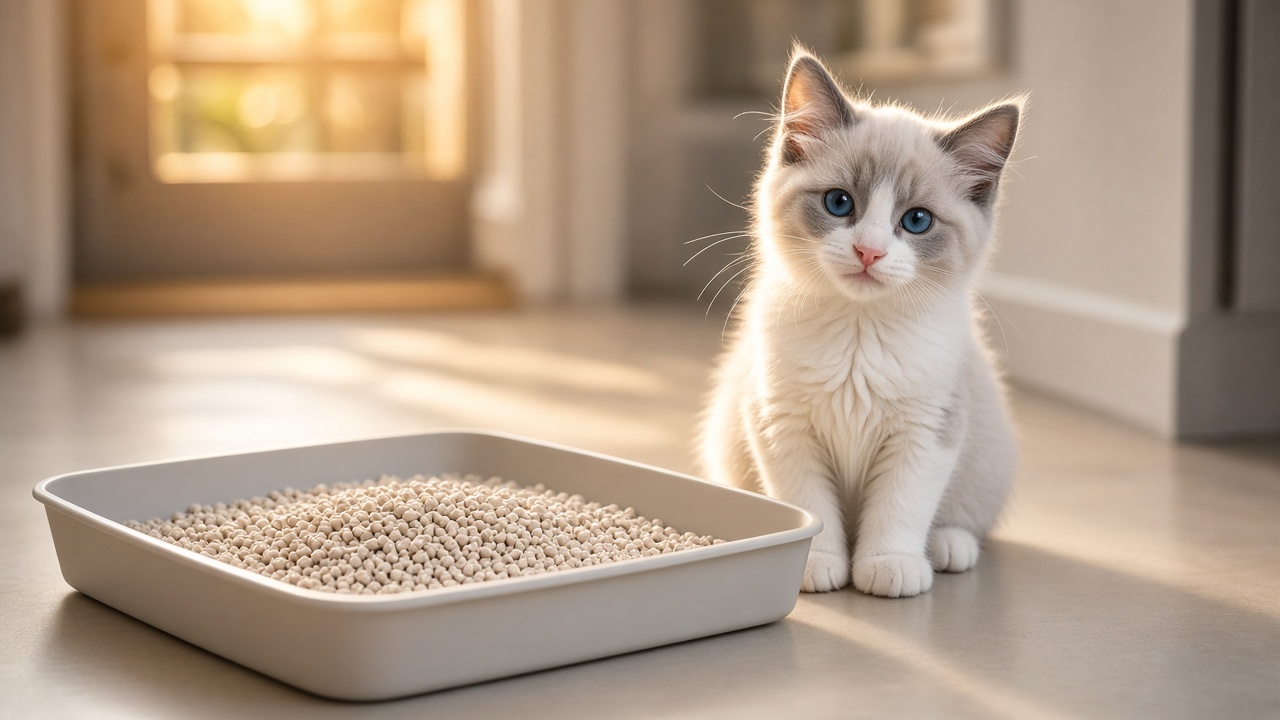
Litter depth, box count, and entry height
The ASPCA reports that at least 10 percent of cats develop elimination problems. Many of those problems start with a box that is dirty, deep, small, or hard to enter.
The ASPCA also asks for one box per cat, plus one extra. One kitten still gets two boxes. Place them in quiet rooms with more than one exit.
The same ASPCA page says most cats prefer one to two inches of litter, not three to four. World’s Best Cat Litter Multiple Cat Unscented tells owners to keep 2 to 3 inches in the box.
Scoop that litter daily.
Those two printed depths overlap at two inches. For a 12-week kitten, start at two inches. Raise later if clumps break.
World’s Best lists the Multiple Cat formula as 99 percent dust-free whole-kernel corn. Bags run 8, 15, 28, and 32 lb.
The maker’s 8 lb chart claims 38-plus days for one cat. That figure assumes daily scooping and an average-size cat. A kitten is not average size.
Budget a faster change-out.
The 2021 AAHA/AAFP Feline Life Stage Guidelines want a box at least 1.5 times nose-to-tail length. Most store boxes fail that test. A low storage tote often fits better.
Keep the entry low. High walls punish short legs. Skip the hood for now.
Skip scented litter. The ASPCA notes that most cats prefer unscented clumping grains.
Scoop at least once a day. Wash the box weekly with unscented soap or baking soda.
Do not rub a nose in a miss. Clean the miss with an enzymatic cleaner.
World’s Best also says to keep the box away from food and water. Put a box on each floor if the home has stairs.
The mid-series clinic calendar
Week 12 is a booster week, not a graduation week.
The 2020 AAHA/AAFP feline vaccination table keeps boosters every 3 to 4 weeks until 16 to 20 weeks of age. A shot given at 8 weeks does not close the series at 12.
Bring the written record. Ask which dose this visit is. Ask when the next one falls.
Rabies timing follows state law and the product label. Do not invent a date from a blog. Read the clinic plan.
Keep the carrier out during the week. Feed a meal in it. A 12-week kitten that only sees a carrier on shot day will fight the box.
If stool is black, watery, or worm-flecked, call the clinic the same day. This desk does not diagnose.
FAQ
How much should a 12-week-old kitten eat each day?
Use the growth food’s own chart, not a generic cup. Royal Canin Mother & Babycat Dry lists 3/8 to 5/8 cup at 3 months, based on expected adult weight. Split that total into three or four meals.
Can I feed adult cat food at 12 weeks?
No. Adult maintenance is a different AAFCO profile. Merck, citing AAFCO, puts adult protein at 26 percent dry matter, not the 30 percent growth minimum. Stay on a bag that names growth until the maker’s upper age, often 12 months.
When do I switch from Mother & Babycat to Kitten Dry?
Royal Canin’s U.S. page holds Mother & Babycat through 4 months. Kitten Dry starts at 4 months. Week 12 is month 3, so stay on the younger formula unless the clinic writes a different plan.
How often should I play with a 12-week-old kitten?
Plan two or three short hunts a day. Ten to 15 minutes is enough. Use a wand or a sized puzzle such as the Catit Senses Food Tree. End with food so the hunt has a finish.
How many litter boxes does one 12-week-old kitten need?
The ASPCA’s rule is one box per cat plus one extra. One kitten means two boxes. AAHA wants each box at least 1.5 times the kitten’s nose-to-tail length, with a low entry.
What vaccines does a 12-week-old kitten still need?
The 2020 AAHA/AAFP table keeps core boosters coming every 3 to 4 weeks through 16 to 20 weeks. Week 12 is mid-series. The exact antigens and the rabies date belong to the clinic record and to state law.
What if my kitten pees beside the box?
First look at depth, scent, and entry height. The ASPCA flags dirty boxes, deep litter, hoods, and missing extra boxes as common causes. Then call the clinic. Do not punish.