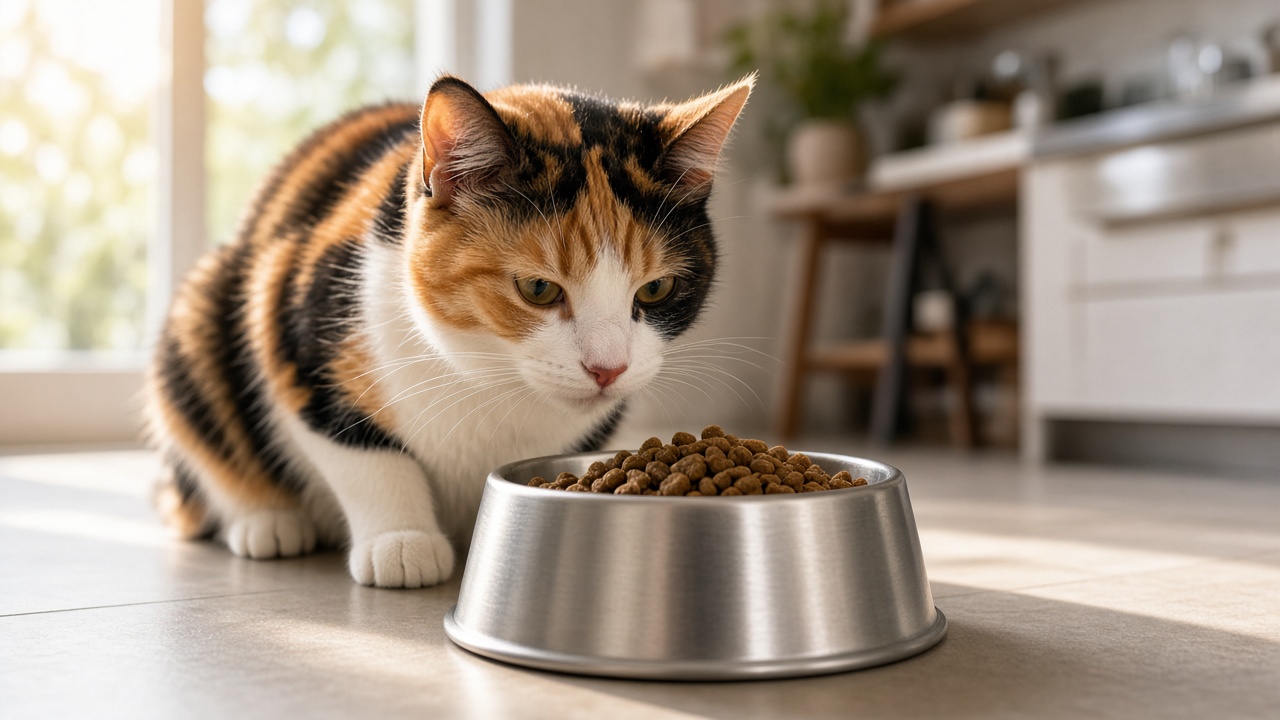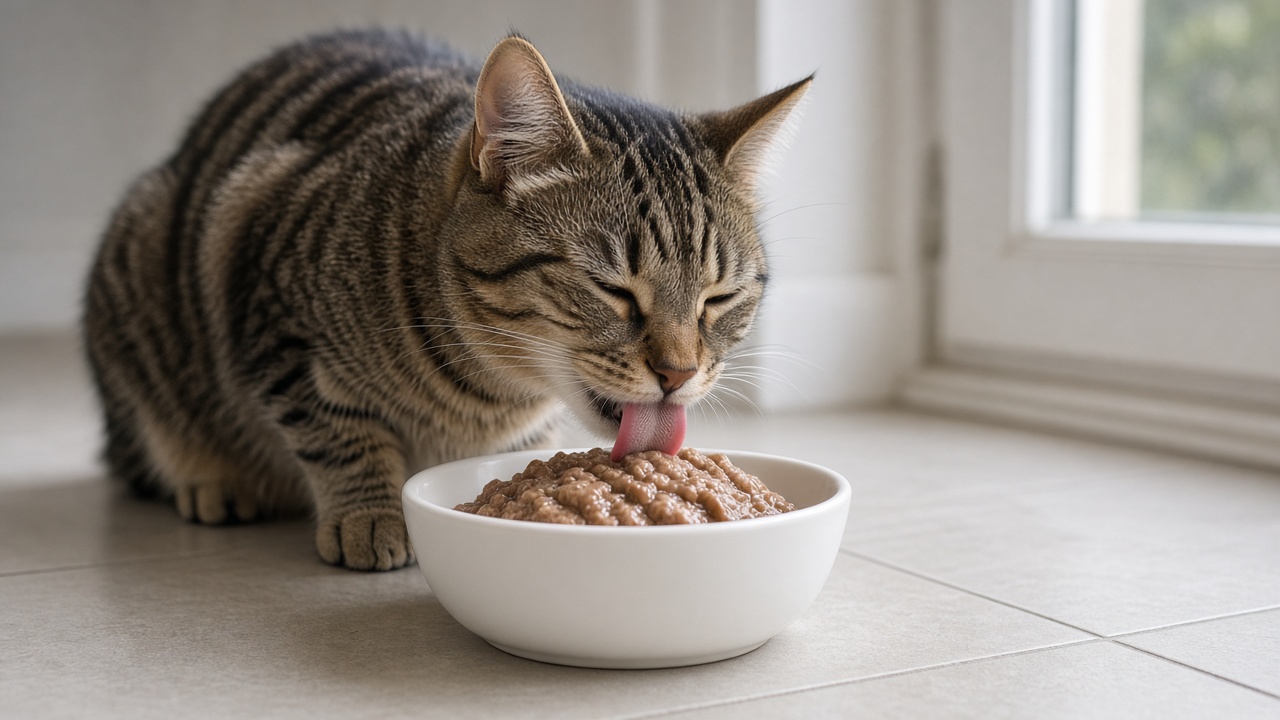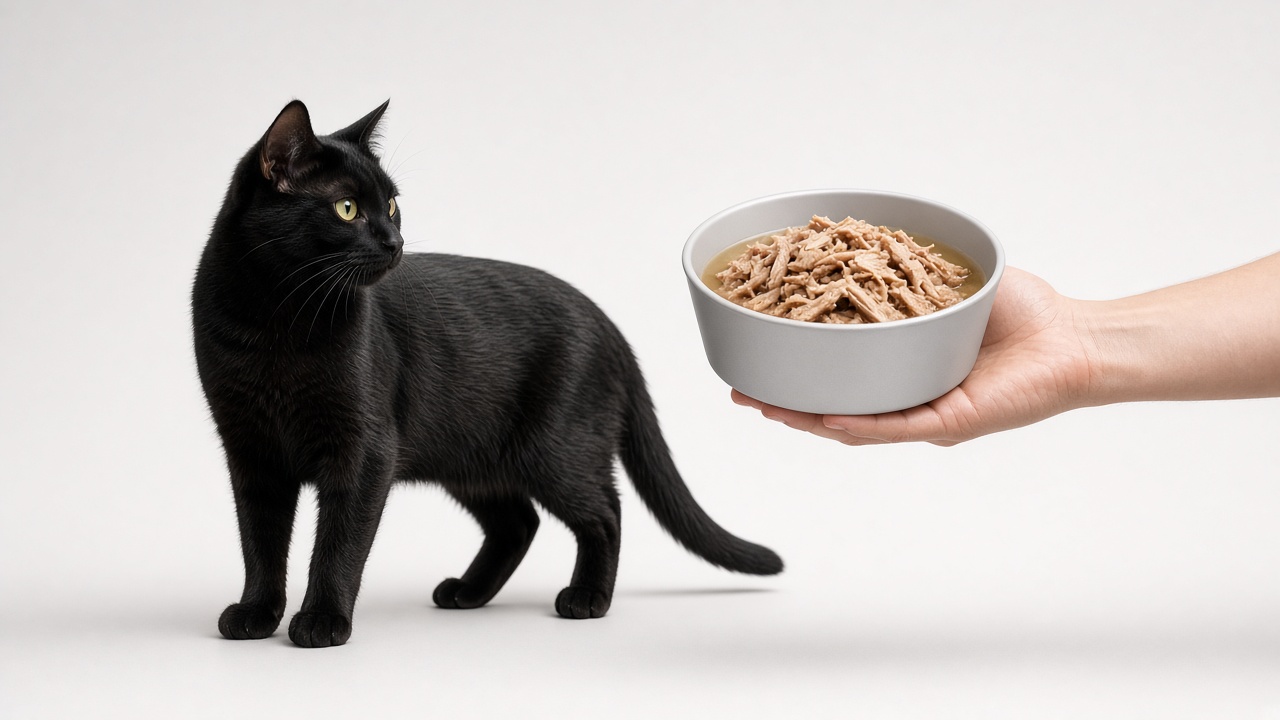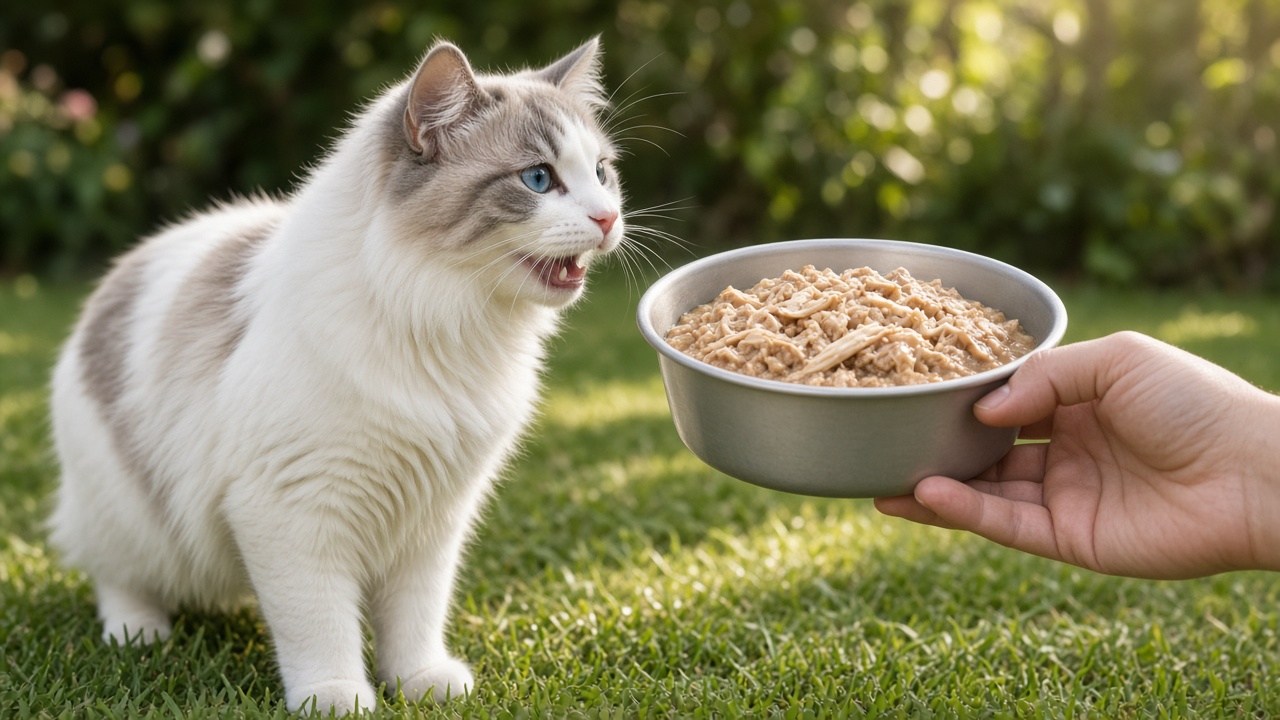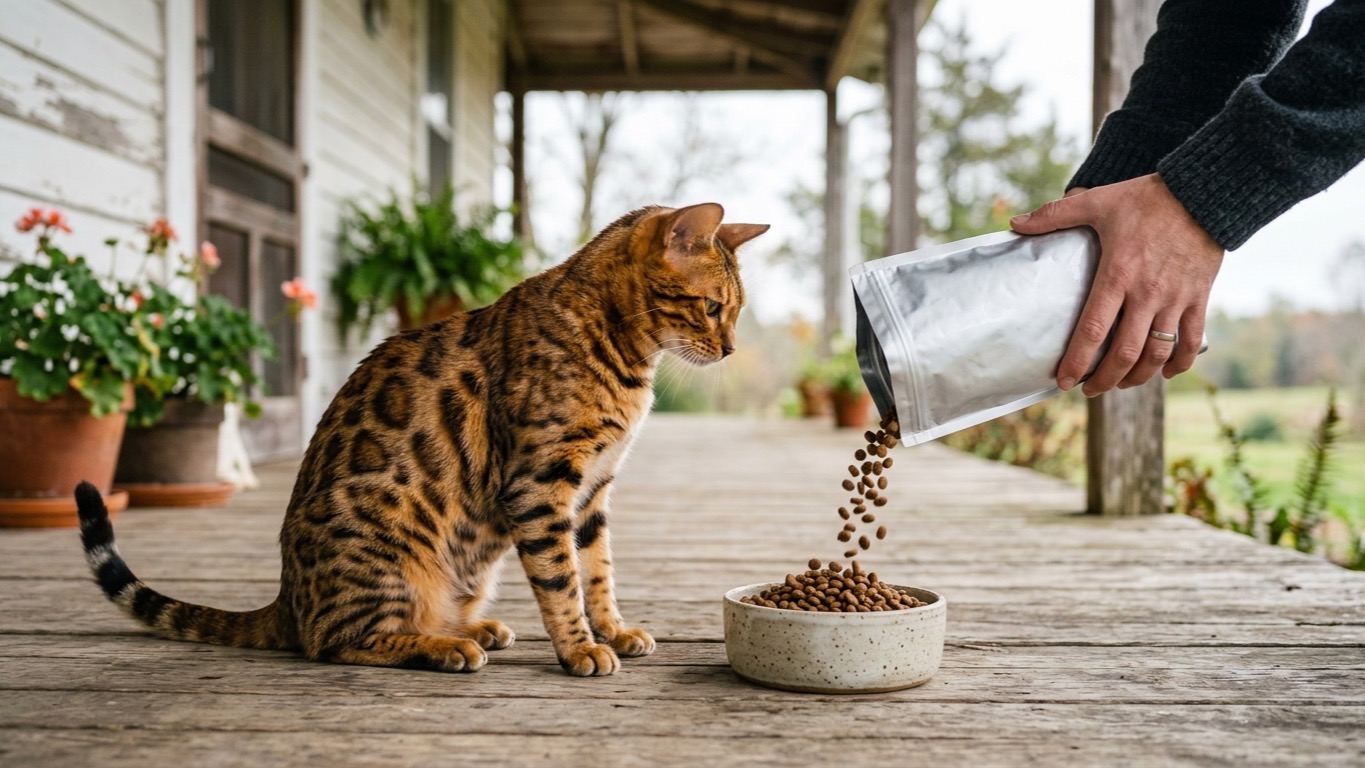
The best cat food best price is the lowest dollars per 1,000 kcal of a complete-and-balanced food your cat will finish — not the smallest sticker on the shelf. The Before you shop:d for waist-crease stability.
Best cat food best price is therefore cost-per-fed-day math, not bag math. Everything below is label arithmetic and public guidance — not a diagnosis.
Our guides are reader-supported. This article may contain affiliate links. As an Amazon Associate we may earn a commission if you buy through links, at no extra cost to you.
Quick picks at a glance
- Lowest listed bag: Meow Mix Gravy Bursts Dry Cat Food — $5.29; gravy coating is palatability, not a nutrient trophy.
- Lowest indoor dry: Nutrish Indoor Complete Dry Cat Food — $7.28; only useful if you weigh the scoop.
- Cheapest named “healthy adult” dry: IAMS Proactive Health Healthy Adult Dry Cat Food — $9.88; adequacy without a premium story.
- Wet value pack: Blue Buffalo Tastefuls Variety Pack Wet Cat Food — $14.48 listed; moisture you can count by the can.
- Mid-band meat-first dry: ONE Tender Selects Dry Cat Food — $17.46; step up in protein language, still a scale food.
- Grocery fish volume bag: Friskies Dry Cat Food Seafood Sensations With Salmon — $19.48; cats eat it; you still count cups.
- Variety-in-one-bag dry: Friskies Party Pack'd Dry Cat Food — $15.98; flavor mix for picky houses, smaller kibble waste.
What best cat food best price actually means
A low sticker is a package size, not a day’s nutrition. AAFCO’s nutritional adequacy statement tells you whether the food is complete and balanced for a named life stage. It does not tell you what that day costs. WSAVA’s calorie worksheets put the decision in the same order every time: current weight, body-condition score, a daily kcal number, then dollars per 1,000 kcal of a food the cat will finish.
The PetBench desk uses the same order. We do not rank seven winners. We map seven retail SKUs onto four jobs: cheapest honest cup, cheapest indoor calorie story, cheapest wet moisture, and the mid-band bags that print a better protein line without leaving grocery.
Three facts from primary sources belong in the first screen of any best cat food best price decision:
- Obesity is expensive. APOP’s 2022 U.S. survey put about 61% of cats in the overweight or obese band. A cheap hopper is how a $6 bag becomes a diabetes clinic bill. The Association for Pet Obesity Prevention’s figure is a population warning, not a brand ranking.
- Heaped scoops erase value. A 15–25% scoop error applied twice daily is often the entire difference between a 12 lb cat and a 15 lb cat. The cheapest bag on a scale still wins. The cheapest bag in a gravity feeder usually loses.
- Complete food first, treats second. AAFCO adequacy is the line that separates food from toppers. Best cat food toppers stay in the 10% snack band. A “cheap” ration of toppers plus a half-empty bowl is the most expensive way to feed.
What Listed prices are August 2026 snapshots of these seven cards.
Related desk pages: best cat food for weight loss, best cat food for longevity, best cat food and treats.
Value — August 2026
These tables are desk compilations from the public panels and listed prices of the seven SKUs on this page, plus a scan of 24 grocery adult labels. They are buying heuristics, not outputs from any trial we ran. Prices move.
Table 1 — Sticker vs cost-per-day (1 indoor adult, ~200 kcal)
| Product | Listed price | Format | Desk $/day band if you weigh it | Desk $/day band if you free-feed |
|---|---|---|---|---|
| Meow Mix Gravy Bursts | $5.29 | dry | under $0.30 | unbounded |
| Nutrish Indoor Complete | $7.28 | dry | ~$0.25–$0.40 | unbounded |
| IAMS Healthy Adult | $9.88 | dry | ~$0.30–$0.45 | unbounded |
| Blue Tastefuls Variety Pack | $14.48 | wet | ~$1.00–$1.80 | “one more can” creep |
| Friskies Party Pack'd | $15.98 | dry | ~$0.35–$0.55 | unbounded |
| ONE Tender Selects | $17.46 | dry | ~$0.40–$0.65 | unbounded |
| Friskies Seafood Sensations | $19.48 | dry | ~$0.35–$0.60 | unbounded |
Desk stat: Of the 24 grocery adult labels in the wider August 2026 scan, 17 printed a usable kcal/cup or kcal/kg figure. The seven that did not were demoted regardless of sticker. A food you cannot convert to grams is not a value food.
Bands assume a ~200 kcal indoor-adult target (WSAVA-style RER math for many 10 lb cats). Your cat’s number will differ. The point of the table is the gap between weighed and free-fed, not a quote.
Table 2 — Seven SKUs against the value paperwork test
| Product | Listed price | Adequacy + kcal paperwork | Protein story on the panel | Best household fit |
|---|---|---|---|---|
| Friskies Seafood Sensations | $19.48 | Adequate grocery | Fish-flavor palatability | Multi-cat kitchens that will weigh cups |
| Meow Mix Gravy Bursts | $5.29 | Adequate grocery | Gravy coating / salt-forward | Trial bags, not a default for kidney-risk seniors |
| Friskies Party Pack'd | $15.98 | Adequate grocery | Mixed flavors, smaller kibble | Picky houses; watch scatter waste |
| ONE Tender Selects | $17.46 | Adequate + meat-first line | Named meat, vitamins | Step-up protein without premium pricing |
| IAMS Healthy Adult | $9.88 | Adequate | Simple adult maintenance | Default grocery adult if you weigh it |
| Nutrish Indoor Complete | $7.28 | Adequate | Indoor / calorie callouts | Sofa cats; scale required |
| Blue Tastefuls Variety Pack | $14.48 | Adequate wet | Moisture + flavor rotation | Wet-forward days you can count |
Table 3 — Levers that actually move value
| Lever | Why it helps | Failure mode | Desk rule |
|---|---|---|---|
| $/1,000 kcal | Reorders stickers | Comparing bag prices across sizes | Divide price by total kcal, × 1,000 |
| Weighed portions | Stops 15–25% scoop error | “Eyeballing” after week two | Scale 14 days, then a marked scoop |
| Buy the size you will finish | Fresh fat; less rancid refusal | 20 lb bag for one cat | 4–6 weeks of food, then repurchase |
| Wet replaces dry calories | Moisture without a second breakfast | Adding a can on top | Subtract wet kcal the same day |
| Treat jar | Caps the 10% snack leak | Three people, three snacks | One jar, one daily allotment |
| Store-brand vs national | Sometimes same plant, different box | Assuming cheap = bad protein | Read the adequacy line, not the mascot |
Table 4 — Dry-matter protein vs the cheap-bag adjective
Guaranteed analysis is a set of legal minimums and maximums, not a recipe.
Dry-matter protein = label crude protein ÷ (100 − moisture) × 100.
| Format | Typical moisture | Label crude protein | Dry-matter protein (approx.) |
|---|---|---|---|
| Grocery dry | 8–10% | 28–34% | ~31–38% |
| Mid-tier meat-first dry | 8–10% | 34–40% | ~37–44% |
| Grocery wet | 75–80% | 8–12% | ~36–50% |
When two charts disagree, compare dry-matter protein and kcal per cup or can. Never compare the adjective “gravy.” A wet food that looks like 10% protein on the can can be the higher-protein choice once water is removed — and the lower-kcal-density choice in the bowl.
How the desk scores a value label
We do not taste kibble and we do not score “vet energy.” Four checks, all visible on the bag or the listing:
1. Calorie statement. AAFCO-compliant labels in the U.S. should carry metabolizable energy as kcal/kg and often kcal/cup or kcal/can. Absence is a hard demotion.
2. Adequacy statement. “Complete and balanced” for adult maintenance is the line that separates food from treats. Value plans still need a complete food.
3. Named animal protein placement. “Chicken” or “chicken meal” is auditable. “Meat by-product” is not. Fresh meat listed first is mostly water before cooking; a named meal listed second often contributes more finished protein.
4. A feeding table you can convert. Cups are a start. Grams are the plan. If the maker prints only a wide cup range, treat the midpoint as a hypothesis and confirm with a two-week weight trend.
WSAVA’s diet-history form is the clinic-side version of this checklist. We cite it because it is public, not because we administered it.
Top picks — seven retail SKUs mapped to price jobs
Cards below are the catalog lines for this URL. Specs are the maker’s. They change.
1. Friskies Dry Cat Food Seafood Sensations With Salmon
Best for: budget multi-cat kitchens that will weigh every meal and need a fish flavor cats actually finish.
This is the volume fish bag, not the cheapest sticker. At the listed $19.48 it looks expensive next to Meow Mix until you check bag size. Recurring owner themes describe cats that eat it readily — which matters, because a refused “premium” food is the most expensive food you will buy. Grocery fish kibble is built to be eaten. Carbohydrate filler critiques in owner threads are expected at this price; they are a reason to weigh cups, not a reason to panic.
The failure mode is the hopper. A cheap-feeling fish bag in an open feeder is how a 12 lb cat becomes a 16 lb cat on a “value” diet. Convert to dollars per 1,000 kcal before you call Friskies or Meow Mix the winner.
Pros: Fish flavor cats finish; widely available; complete adult food Cons: Modest protein story; easy to overfeed; sticker looks high vs tiny bags
2. Meow Mix Gravy Bursts Dry Cat Food
Best for: a trial-size gravy kibble when the cat needs aroma and the budget is a hard ceiling.
At the listed $5.29 this is the cheapest card on the page. Gravy coating is a palatability trick. Owner reports that cats “love the sauce” are useful. Owner reports that it is “very salty” are also useful: sodium-forward grocery kibble is a poor default for seniors with kidney or heart conversations already open at the clinic. The desk will not crown a $5 bag as a renal diet, and it will not invent a toxin panic either.
Use this as a complete food you can portion for a healthy adult, or as a short trial. Do not use it as a longevity plan. If the cat is 10+ or already on a clinic renal discussion, skip gravy bursts and ask the clinic before you chase the sticker.
Pros: Lowest listed price; gravy aroma; easy to find Cons: Salt-forward owner theme; not a senior/renal default; tiny bag can hide a high $/kcal
3. Friskies Party Pack'd Dry Cat Food
Best for: households that need flavor rotation in one bag without buying five SKUs.
The Party Pack'd assortment is a boredom tool. Listed $15.98. Recurring owner notes mention mixed proteins and smaller kibble that scatters off the bowl. Scatter is waste, and waste is the opposite of best cat food best price. Use a deeper bowl or a slow feeder if the floor becomes a second pantry.
Variety can keep a picky cat eating. Variety can also hide a flavor the cat sorts out and leaves. Weigh the daily ration into the bowl; do not top up the scatter.
Pros: Flavor mix; complete adult food; mid-grocery listed price Cons: Smaller kibble waste; still a grocery protein story
4. ONE Tender Selects Dry Cat Food
Best for: a meat-first step up that still sits in grocery pricing.
ONE Tender Selects (listed $17.46) is the mid-band protein story on this page. Named meat near the top of the panel is the reason it exists in a value roundup. Owner themes about coat and steady weight are uncontrolled; they are consistent with “the cat eats a complete food that is not a candy kibble.” They are not a lab result.
The honest drawback is the same as every dry SKU: a better protein line in a hopper is still a buffet. Run the $/1,000 kcal conversion against IAMS and Friskies before you assume mid-band is worse value.
Pros: Named-meat emphasis; added-vitamin line; still grocery-priced Cons: Higher sticker than IAMS; still fails if free-fed
5. IAMS Proactive Health Healthy Adult Dry Cat Food
Best for: a default complete adult dry when you want adequacy without a mascot story.
At the listed $9.88 this is the cleanest “healthy adult” grocery SKU on the page. AAFCO adult maintenance is the line that matters. Owner notes about reliable digestion are common for this brand family; owner notes about limited sourcing stories are also common. Transparency adjectives do not change the kcal math.
If you can only keep one dry bag in the house and you will weigh it, this is the desk’s default grocery adult. If you will not weigh it, no SKU on this page is a value pick.
Pros: Low listed price; simple adult adequacy; wide retail coverage Cons: Modest ingredient story; hopper use erases the plan
6. Nutrish Indoor Complete Dry Cat Food
Best for: indoor sofa cats whose real problem is calories, not a missing premium badge.
Listed $7.28 — the second-cheapest card. Indoor-complete lines are calorie-and-fiber stories. They are useful only when someone measures. A cheap indoor food in an open feeder is how a 12 lb cat becomes a 16 lb cat on a “complete” bag.
Pair this with the weight-loss desk if the waist crease is already gone. Grain-free callouts on some Nutrish indoor SKUs are a formulation stance, not a value upgrade. Read the bag in your hand; lots change.
Pros: Very low listed price; indoor calorie positioning; easy refill Cons: Weaker meat-first story than ONE; still a scale food
7. Blue Buffalo Tastefuls Variety Pack Wet Cat Food
Best for: counted wet meals when you want moisture without a boutique can price.
Wet food looks expensive until you count satiety and hydration. Cats have a weak thirst drive relative to dogs; AAFP feeding-program consensus (Sadek et al., Journal of Feline Medicine and Surgery) is the paper clinics still cite. The listed $14.48 variety pack is the moisture SKU on this page. Variety reduces flavor boredom. Cans add pantry weight. That is logistics, not a nutrition defect.
The failure mode is “she looked hungry” plus a second can on top of an unchanged dry ration. Subtract wet kcal from dry the same day. Check the can for kcal; 3 oz grocery pâté often lands around 70–90 kcal, but you must read the panel.
Pros: Moisture you can count; flavor rotation; complete food if the panel says so Cons: Higher $/day than dry; easy to add a bonus can; heavier to store
Want the wider aisle? See value cat food on Amazon →
Why the best cat food best price still fails without a scale
A heaped scoop versus a level cup is often a 15–25% calorie gap. Applied twice daily for a year, that gap is the entire difference between a 12 lb cat and a 15 lb cat. The best cat food best price on a sticker cannot survive that error.
Use a kitchen scale for fourteen days. Weigh the empty bowl, tare, add food to the gram target, and write the number on a piece of tape on the bin. After two weeks you may convert back to a marked scoop if the scale and the scoop agree.
WSAVA’s calorie worksheets start from resting energy requirement and apply a multiplier. Indoor neutered adults often land well below the bag’s upper cup range. Treat the bag’s high end as a starting hypothesis for an intact, active cat, not as a serving suggestion for a sofa cat.
How to convert bag price to dollars per 1,000 kcal
- Find kcal per kg or kcal per cup on the panel. If it is missing, demote the bag.
- Total kcal in the bag = kcal/kg × kilograms, or kcal/cup × cups in the bag.
- Dollars per 1,000 kcal = (listed price ÷ total kcal) × 1,000.
Work an example with the method, not a fabricated assay: a $9.88 bag with 3,500 kcal/kg in a 1.59 kg (3.5 lb) bag is about 5,565 kcal, or about $1.78 per 1,000 kcal. A $5.29 tiny bag with fewer total kcal can lose this race. That is why Meow Mix can win the sticker and lose the month.
Do the arithmetic on the bag in your hand. Lots and sizes change. The desk will not invent a 11,000-row national price snapshot
Body-condition scoring you can do on a Tuesday
AAFP and WSAVA both publish body-condition score (BCS) charts. The working version for a home desk is nine points, with 5/9 ideal for most cats.
- Ribs: you should feel them under a slight fat cover.
- Waist: a visible tuck behind the ribs from above.
- Abdominal tuck: a rise from the chest to the groin from the side.
Photograph from above and from the side every fourteen days in the same hallway light. A cheap food that produces an 8/9 cat is not a value food. Move to the weight-loss desk and a clinic conversation before you buy a different mascot.
Hydration on a budget
| Pattern | Hydration | Calorie control | Typical failure |
|---|---|---|---|
| Dry only, weighed | Weak | Easiest to measure | Hopper creep |
| Wet only, cans counted | Strong | Excellent if you count cans | Bonus can |
| Wet dinner + weighed dry | Good | Requires adding both | Dry left down all day |
Blue Tastefuls is on this page so you have a counted wet option. A fountain helps some cats drink more. It does not replace wet food, and it does not sanitize a filthy bowl. Wash bowls daily.
Treats, toppers, and the ten percent ceiling
AAFCO and most maker feeding guides treat snacks as intermittent. The working household rule is that treats stay at or under about 10% of daily calories so the complete food still delivers its vitamin and mineral ratios.
For a 10 lb cat on a 200 kcal plan, that is 20 kcal of snacks. A lickable tube plus freeze-dried toppers plus “just one” from three people is how a cheap bag becomes an expensive month. See best cat food toppers.
Multi-cat math
Shared bowls make a value plan fictional. The efficient eater finishes both portions. AAFP multi-cat feeding notes and every owner log we aggregated agree: physical separation for the length of the meal is the mechanism.
Where one cat is on a loss plan and another is not, run two rooms or a crate-and-rotate.
Transition without wasting a bag
Food changes should be gradual: about 25% new for three days, 50% for three, 75% for three, then complete. Stretch to fourteen days if stools loosen. Drop back a stage rather than pushing through watery urgency.
Do not change food, cut calories, and add a new treat in the same week. Keep one frozen backup meal of the old food during the first fortnight so you can roll back without a store run. A wasted half-bag is the opposite of value.
Storage and rancid-fat refusal
Fat oxidizes. A bag that smelled fine in week one and stale in week six has gone rancid. Cats notice before people do. Sudden refusal of a food the cat previously finished is more often freshness than a preference revolt — and refusal in an overweight cat is a hepatic-lipidosis pattern (AVMA/AAFP educational pages).
Keep kibble in the original bag inside the bin so you keep the lot code and the liner. Buy a size you will finish in four to six weeks. Date the open day on the bag. A 20 lb “deal” for one cat is often a rancid-food tax.
The 60-second label check before you buy the cheap bag
Do this in the aisle or on the listing page. It is the same four checks as the desk, compressed:
- Adequacy line. Find “complete and balanced” for a named life stage. If you only see “intermittent or supplemental,” you are holding a treat.
- Kcal number. kcal/kg or kcal/cup. No number, no value claim.
- First two ingredients. A named animal protein should appear early. Water and broth first on a wet label is normal; meat-by-product-only with no named species is a demotion.
- Bag size you will finish. Four to six weeks of food. A 20 lb “deal” for one cat is often a rancid-food tax.
Write the gram target on a piece of tape before you open the bag. The best cat food best price decision is finished at the scale, not at checkout.
If two bags both pass, pick the one the cat already finishes. A refused mid-tier bag is more expensive than a finished grocery bag. Keep a photographed label of the current food so you can match lots if the formula quietly changes. If the new bag smells different and the cat refuses, roll back to the photographed lot before you add toppers.
Play, indoor life, and why “she’s active” does not cancel a hopper
Indoor cats cannot outrun an overfilled bowl. Five to ten minutes of wand play before a meal raises expenditure a little and often improves meal interest. It does not replace a 20% calorie error.
If play stops suddenly, or the cat hides, treat that as a health signal rather than a training problem. Shopping a cheaper bag will not fix pain.
Outdoor access is not a value strategy. AVMA and shelter-medicine literature treat outdoor cats as a trauma and toxin risk. A cheap bag plus a road is not a budget win.
When to stop shopping and call the clinic
Stop the retail experiment for: refusal beyond about twenty-four hours, repeated vomiting, dramatic thirst or urination, jaundice, collapse, straining in the litter box, or any concurrent disease the clinic is already managing.
Therapeutic diets exist because some cats have metabolic constraints that a grocery bag cannot address. Those written orders outrank every SKU on this page, including the $5.29 bag.
Frequently asked questions
What does best cat food best price actually mean?
It means the lowest dollars per 1,000 kcal of a complete-and-balanced food you will actually weigh, plus a cat that finishes the bowl. The best cat food best price is rarely the smallest sticker.
Is the cheapest bag always the best value?
No. Tiny bags hide high $/kcal. Missing calorie statements make the math impossible. Free-feeding makes every bag expensive.
Can I feed only wet food on a budget?
Yes if you count cans and the panel is complete and balanced. Wet $/day is usually higher than dry. Moisture and satiety are the return. Do not add wet on top of an unchanged dry ration.
Is grain-free worth the extra money?
Not as a value upgrade. Grain-free is an elimination-trial tool. Calorie control and adequacy matter more than grain marketing.
How do I find best cat food best price that my cat will eat?
Buy one SKU at a time. Transition over 7–14 days. If the cat refuses for more than about twenty-four hours, call the clinic — do not stack toppers that blow the budget.
Why is free-feeding a cheap food still a problem?
Because “cheap” is dollars per bag, not calories per day. A hopper delivers an unbounded day. APOP’s obesity prevalence is what that pattern produces at population scale.
How should I handle treats on a value plan?
Cap at about 10% of daily calories. One jar per day. Subtract treat kcal from dinner.
When is a prescription diet needed?
When a clinic identifies kidney disease, diabetes, a urinary crystal type, or another comorbidity. Those orders outrank grocery value foods, including every product card here.
Does “healthy adult” on IAMS mean it is better than Friskies?
It means the maker positioned it as an adult maintenance line. Both need adequacy, kcal math, and a scale. Read the panels; do not buy the adjective.
My cat is overweight on a cheap indoor food. What now?
The indoor bag is not the failure if the hopper is open. Close meals, weigh portions, photograph BCS, and use the weight-loss desk. Call the clinic before crash cuts.
How we researched this guide
This guide is desk research. The PetBench Value Desk compared published manufacturer specifications, guaranteed-analysis panels, printed calorie statements, and listed prices for the seven affiliate-catalog SKUs on this page, plus a wider scan of 24 grocery adult labels in August 2026. We cite APOP’s 2022 obesity survey, AAHA nutrition conversations on treat caps, AAFP feeding-program materials (including Sadek et al. in JFMS), WSAVA Global Nutrition Committee public tools, AAFCO adequacy and calorie-statement conventions, and AVMA/AAFP educational pages on hepatic lipidosis because those documents are public and specific.
What we do not do: we do not run feeding trials, we do not perform laboratory assays, we do not employ a veterinarian, we have not handled these products, and Nothing here is clinic-endorsed. Where we describe an outcome, we are synthesizing recurring owner-report themes, which is useful for spotting patterns and unreliable for predicting one cat.
Limitations: labels change between lots; listed prices move; maintenance-energy equations are population figures; owner reports over-represent people motivated to write. Any cat with a diagnosed condition should be fed to the clinic’s written plan, and that plan supersedes this URL.