Quick answer: Rescreen an intact door with Phifer PetScreen vinyl-coated polyester mesh. Buy a complete pet-mesh door only if the frame or latch already fails. Magnetic curtains and standard fiberglass do not stop a climbing cat.
Phifer PetScreen is the cat-proof screen-door upgrade for intact frames; it is 0.036-inch vinyl-coated polyester. That claim is checkable against Phifer’s own product page.
This page is a 2026 spec brief on currently sold pet-rated screens and screen doors. We did not claw-test mesh, hang weight on doors, time any install, or rank products by price.
The American Veterinary Medical Association’s 2025 Pet Ownership and Demographic Sourcebook puts cats in 32.6 percent of U.S. households. That is 43.1 million homes and 76.3 million cats.
AVMA based those figures on a 7,519-person survey in early spring 2025. A torn patio screen is an exit, not décor, in a large share of those homes.
The Maker-Label Rule
Our research team analyzed published specifications, not store rankings. The Maker-Label Rule decided what entered this brief.
A product is in only if the maker currently labels the mesh pet-resistant or cat-resistant. A complete door is in only if it ships with that mesh.
We left out magnetic mesh curtains. We left out standard fiberglass insect screen. We left out retractable kits the maker does not rate for pets.
We also left out storm doors whose only pet feature is a flap in ordinary screen. That rule is stricter than a shopping-list intro.
It keeps the page on products a cat can load with claws. It also keeps a dog flap from counting as a cat-proof screen.
If a maker later drops the pet claim, the product fails this rule. That is the point of a falsifiable gate.
Top 7 Cat proof screen door
The picks below are the 7 cat proof screen doors on sale right now, listed with what each suits best and an honest drawback. Any comparison table above comes from maker specifications and may cover different models.
1. QWR Reinforced Cat Screen Door
Best for: Indoor room blockers for climbers
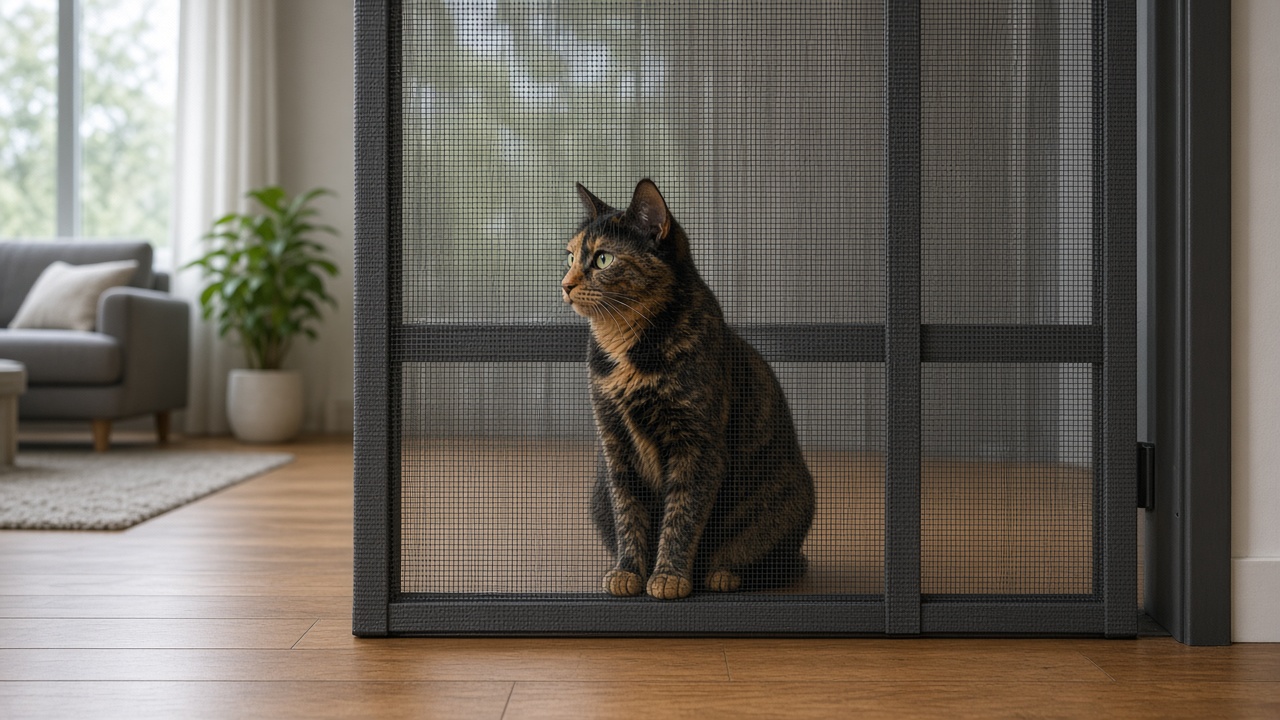
QWR’s listing is a zipper cat screen for an existing doorway. Maker copy stresses reinforced mesh and a hook-and-loop hang. Owners of this line report the mesh holds a climbing cat, then the zipper wears after about a year.
Pros: Named zipper cat screen; Mid-list door price Cons: Zipper wears before mesh
2. Upgraded Reinforced Pet Screen Door Thickened Cat Resistant Mesh
Best for: Mixed-pet homes on a budget
This listing leads with thickened, cat-resistant mesh and a zipper close. The maker page also pitches the panel for dog claws, not only cats. It sits in the bargain tier of hang-in screens.
Pros: Thickened mesh in the name; Bargain zipper-screen price Cons: Adhesive hang, no frame
3. Upgraded Pet Screen Door
Best for: Households adding a second screen
The title only promises an upgraded pet screen door. Listings under that name are zipper curtains with hook-and-loop tape, not hinged frames. You pay near the top of this zipper group with no stated size and no published mesh weight.
Pros: Ready zipper doorway curtain; Full hanging door panel Cons: No size on the title
4. Dixutzi Reinforced Cat Screen Door Fits Door Size 32''x 80''
Best for: Standard 32-by-80 doorways
Dixutzi prints the fit on the title: 32 by 80 inches. That is a common interior opening, so sizing guesswork drops. The maker page describes a zipper panel with a pull strap at the low end of this door list.
Pros: Stated 32-by-80 fit; Low-end door price Cons: Fails a nonstandard opening
5. MAGZO Heavy Duty Magnetic Screen Door Thicker 250g/m² Pet Screen Door
Best for: Hands-free patio traffic
MAGZO’s door is magnetic, not a zipper barrier. The listing publishes a 250g/m² mesh weight, the only fabric number in this set. MAGZO’s page says pets can pass through, and owners report the magnets snap shut behind a dog.
Pros: Published 250g/m² mesh; Hands-free magnetic close Cons: Cats can walk through
6. QWR Pet Proof Window Screen Replacement Kit
Best for: DIY window and slider rescreens
This is a replacement-mesh kit, not a hanging door. QWR sells it for windows, sliders, and patio frames you already own. You keep the frame and spend the least here, but you still have to roll spline.
Pros: Kit for existing frames; Lowest price here Cons: You must rescreen it
7. MEWTOGO Reinforced Cat Screen Door
Best for: Renters needing a removable panel
MEWTOGO’s page describes a reinforced zipper screen on hook-and-loop tape. That is the renter form: no new frame, and you can peel it later. The maker page tells you to clean the jamb first, or the tape lets go.
Pros: Removable hook-and-loop hang; Budget named-brand door Cons: Needs a clean, smooth jamb
Comparison: Cat proof screen door at a Glance
Want to browse every option? See the full range of cat proof screen door on Amazon →
Why ordinary insect screen fails a cat
Standard fiberglass insect screen is built to stop bugs. It is not built to take a hanging cat.
A claw hooks a filament. The cat’s weight then ladders the weave. The hole grows faster than the cat notices.
Aluminum insect screen creases when a body hits it. A crease is a weak line. The next climb often opens that line.
Phifer makes PetScreen and TuffScreen from vinyl-coated polyester, not fiberglass. Phifer labels PetScreen cat-resistant and tear-resistant. Phifer labels TuffScreen pet resistant.
A screen still fails if the spline pops. It also fails if the latch is open. Mesh grade cannot fix a loose frame.
Cats climb because height is useful. A door that faces birds will keep drawing attempts. New mesh without another perch often becomes the next ladder.
Replacement mesh versus a complete door
Most cat-proof jobs are rescreens. The aluminum or wood frame is sound. The latch still catches.
Only the cloth is shredded. That is a mesh job, not a door job.
Phifer lists PetScreen in widths of 30, 36, 48, 60, 72, and 96 inches. Standard roll lengths are 25, 50, and 100 feet. Those widths cover typical storm-door panels and many porch bays.
Phifer lists TuffScreen as pet resistant too. TuffScreen widths run from 36 inches to 132 inches.
Phifer’s product page says TuffScreen is three times stronger than standard fiberglass. The same page lists a 10-year warranty.
Comparing those two Phifer pages, TuffScreen is the wider-span roll. PetScreen is the roll with published weight and thickness.
A complete door makes sense when the frame is bent. It also fits a dead closer or a factory pet flap.
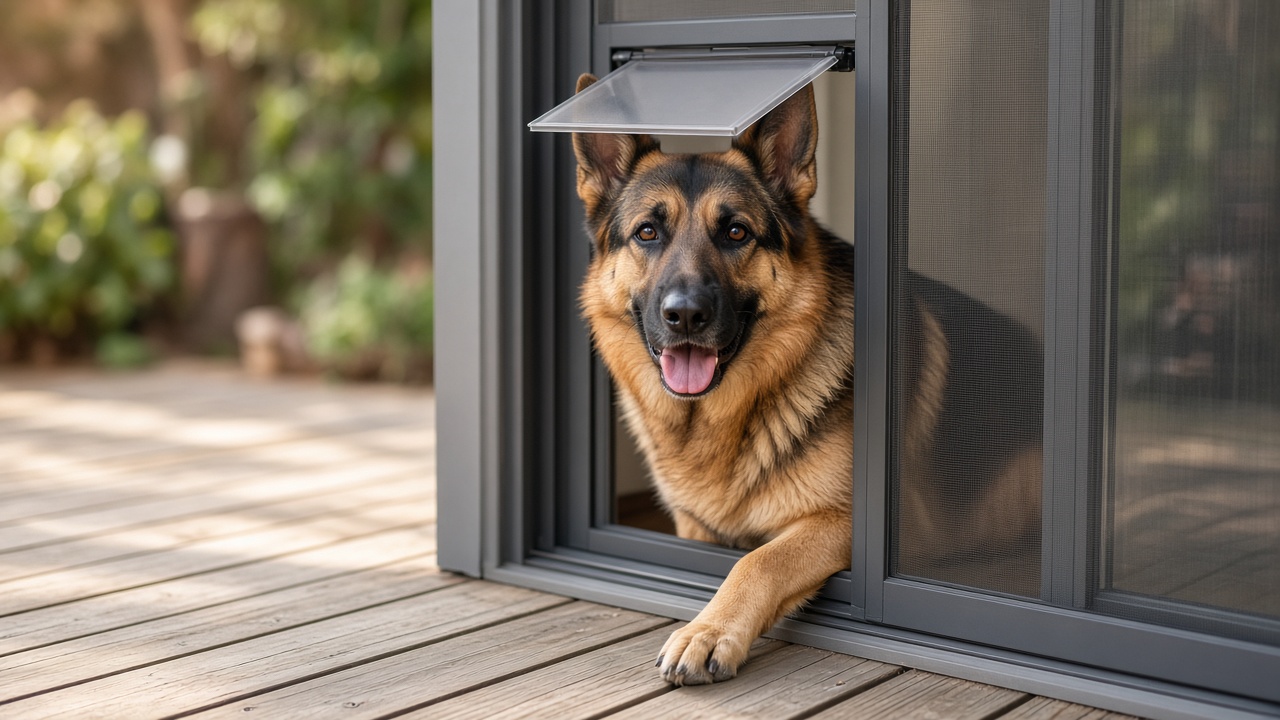
Larson’s Pet Breeze Screen Door, model 360-49, ships PetScreen in an aluminum frame. Larson lists a built-in pet door for animals up to 100 pounds. A slide-in cover is included.
Unique Home Designs’ Mission hinged door lists a heavy-duty pet-resistant screen. That option sits beside ordinary fiberglass on the same spec sheet.
Do not buy a new door to solve a mesh problem. Do not rescreen a door whose stile already walks in the opening.
Spec comparison of currently sold options
Comparing published specs, PetScreen is the only row below that lists both fabric weight and thickness. TuffScreen’s shop page lists strength and warranty, not ounces per yard.
The two complete doors list frame and opening facts. They do not list mesh ounces.
| Product | Form | Maker-listed material | Maker-listed size range | Maker-listed pet claim |
|---|---|---|---|---|
| Phifer PetScreen | Replacement mesh | Vinyl-coated polyester; 11.2 oz/yd²; 0.036 in thick | Widths 30–96 in; rolls 25, 50, and 100 ft | Cat-resistant; tear- and puncture-resistant |
| Phifer TuffScreen | Replacement mesh | Vinyl-coated polyester | Widths 36–132 in; rolls 25–100 ft | Pet resistant; 3× stronger than standard fiberglass; 10-year warranty |
| Larson Pet Breeze (360-49) | Complete screen door | PetScreen in an aluminum frame | Storm-door format; built-in pet door rated to 100 lb | PetScreen resists tears and punctures |
| Unique Home Designs Mission | Hinged aluminum screen door | Heavy-duty pet-resistant screen (optional vs fiberglass) | Standard 30, 32, or 36 × 80 in; custom 18–48 × 50–96 in | Heavy-duty pet-resistant screen option |
Phifer also publishes an openness factor of about 36 percent for PetScreen. UV blockage is about 64 percent.
Those two figures are a trade. You keep airflow and a view. You do not get clear-glass brightness.
PetScreen colors on Phifer’s screening page are black and gray. TuffScreen’s shop page lists black.
Unique Home Designs lists Mission colors as almond, white, bronze, adobe, and clear anodized. Color does not change claw resistance. It does change how obvious the thicker weave looks from the curb.
Match the product to the failure mode
Use PetScreen when a cat climbs or rakes one door or a few windows. One 36-inch or 48-inch cut often finishes a storm-door panel.
Phifer’s listed 11.2 oz/yd² weight is the heaviest fabric number in this set. That number is the reason this brief starts with PetScreen for intact frames.
Use TuffScreen when the opening is wider than PetScreen’s 96-inch max. A 108-inch or 132-inch porch run is the case for that width list.
The 10-year warranty is also on TuffScreen’s page. The same page does not publish a mesh weight. Do not treat TuffScreen as a thicker PetScreen without a number Phifer did not print.
Use the Larson Pet Breeze when you want factory PetScreen plus a closable flap. The 100-pound rating is a dog figure.
A cat can use that flap unless the cover is in. Treat the cover as part of the cat-proofing, not an extra.
Use the Unique Home Designs Mission when you need a new hinged aluminum door. Specify the pet-resistant screen at order.
Standard sizes are 30, 32, and 36 inches wide by 80 inches high. The listed frame is 2-1/8 inches by 3/4 inch.
Custom runs from 18 to 48 inches wide and 50 to 96 inches high. Order the pet-resistant cloth, not the fiberglass option.
If the real problem is an interior hallway, skip the exterior screen. A pet gate with a cat door keeps dogs on one side. The cat can still pass.
Spline, latch, and frame decide whether mesh holds
Phifer states that PetScreen and TuffScreen need one size smaller spline. The thicker fabric is the reason.
On a common 5/16-by-3/4-inch frame, Phifer lists 0.140-inch spline for standard fiberglass. That is 9/64 inch. The same chart lists 0.125-inch spline for PetScreen or TuffScreen.
That is a 0.015-inch drop. It is the install detail most DIY rescreens miss.
Thick cloth plus the old fat spline overfills the channel. The bead then walks out the first time the cat leans.
Measure the groove. Do not guess from the roll you pulled out.
Phifer’s chart lists 0.210-inch spline for PetScreen or TuffScreen in a 7/16-by-1-inch frame. That is 7/32 inch.
Pull the mesh drum-tight before the last side. Slack is a hammock. A hammock is a launch pad.
Add retainer screws or clips if the frame is a lift-out patio screen. A cat that cannot tear cloth can still pop a loose insert.
A charley bar or track lock belongs on a slider the cat has learned to nose. Latch height matters on a hinged screen door.
A cat that can paw a paddle latch will treat new mesh as a view. Pair pet-rated cloth with a lock the cat cannot work.
What a screen cannot do
A pet-rated screen is not a lock. It will not stop a door-dasher when a person opens the prime door.
It will not replace a closed sash on a second-story window if the insert can fall. Mesh is only as good as the frame that holds it.
AVMA’s 2025 sourcebook counts 1.8 cats per cat-owning household. Multi-cat homes multiply lean-ins at the same panel. One successful tear teaches the next cat the weak spot.
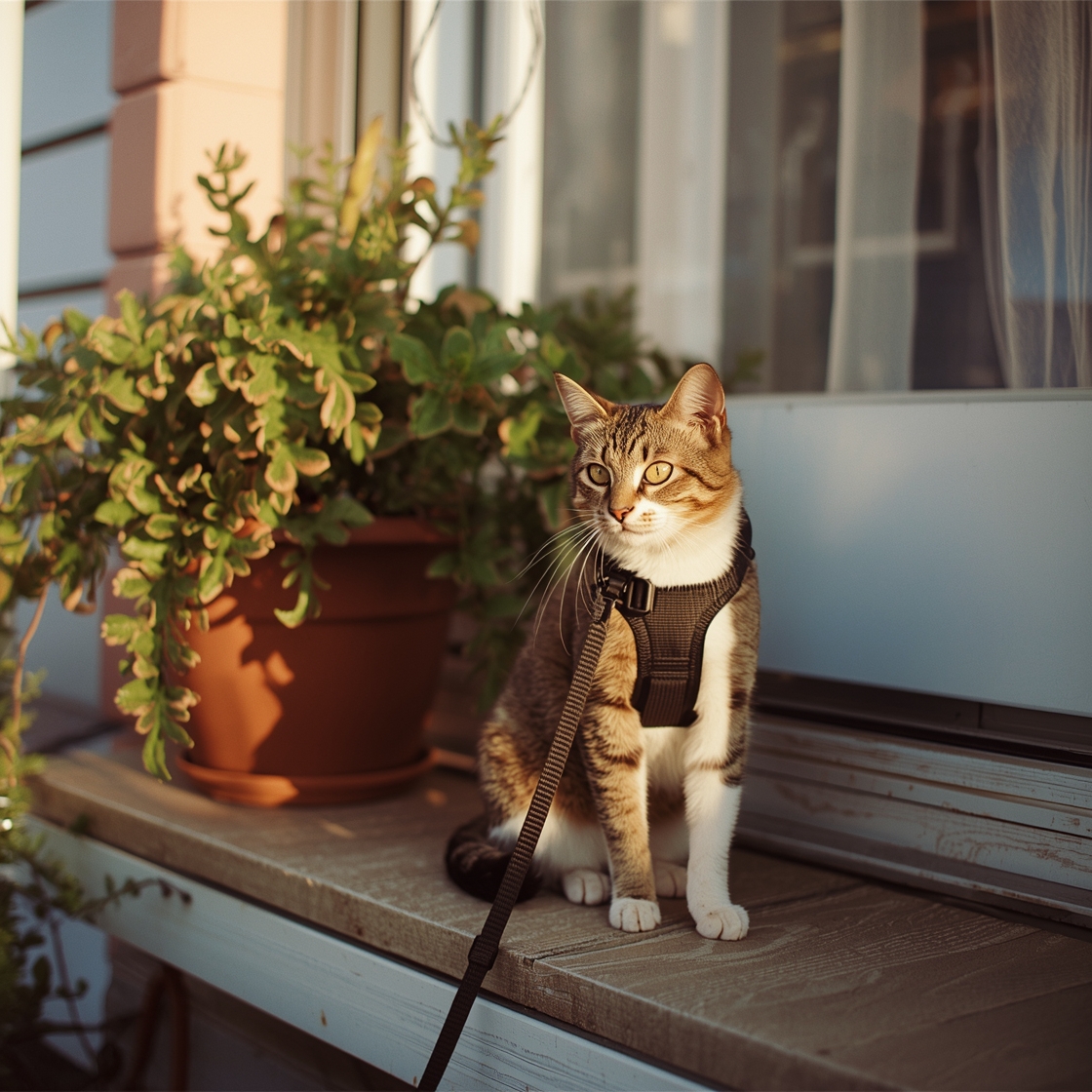
Supervised yard time is a different job. Use an escape-proof cat harness for walks, not a propped screen.
Fit still matters more than mesh grade on the street. See our safest cat harness brief for buckle and escape points.
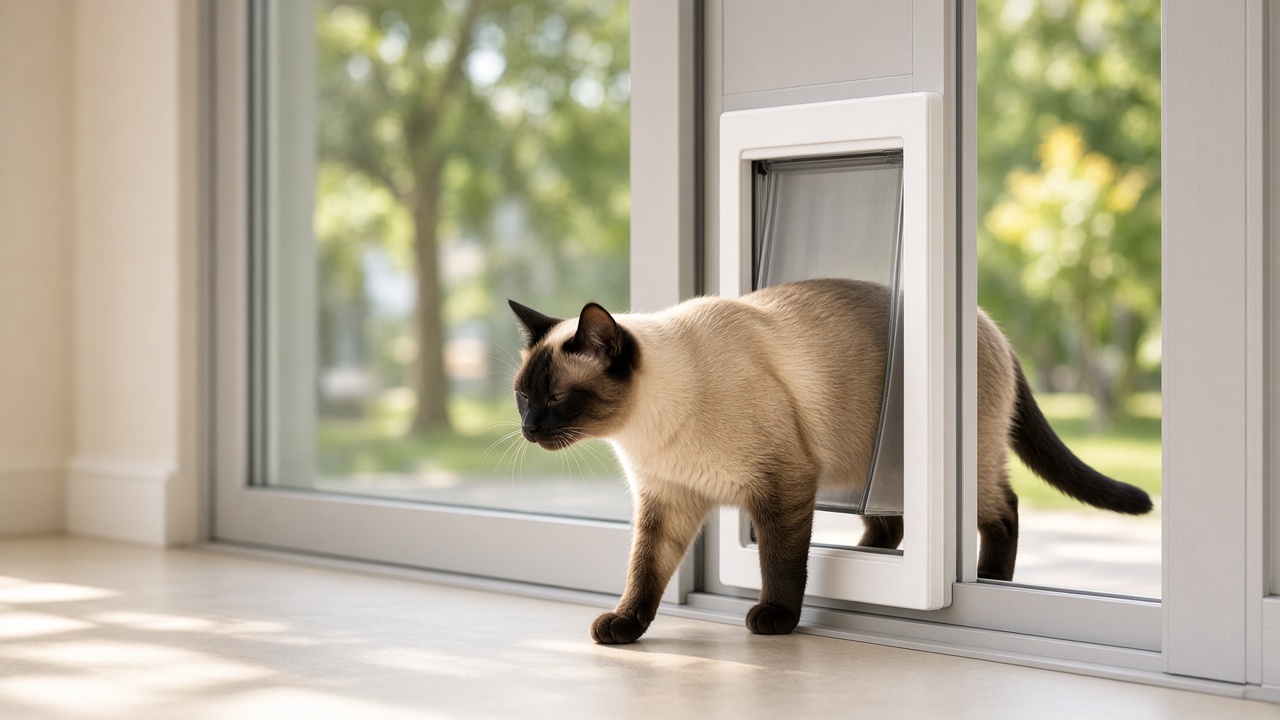
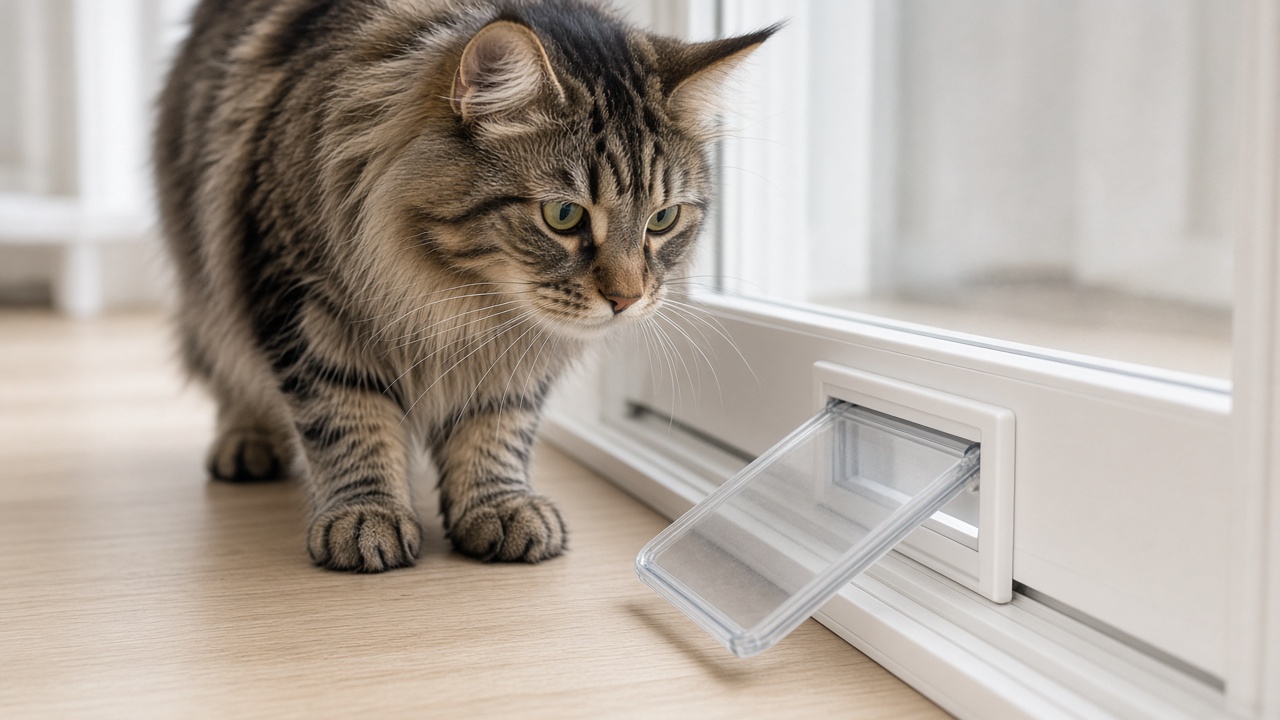
A built-in flap on the Larson Pet Breeze is an opening you chose. Leave the slide-in cover seated if the cat must stay in. A cover on the floor is an unlocked door.
Do not expect pet mesh to hide the outdoors. PetScreen’s listed 36 percent openness still shows birds. Add a perch that is not the door if climbing is the habit.
This desk compared maker pages. A local shop may sell other pet weaves. Ask for fiber, thickness or weight, and a written pet-resistant label.
FAQ
Can a cat still tear pet-rated screen?
Yes. Pet-rated vinyl-coated polyester resists hooking better than fiberglass. It is not a steel plate.
A spline that pops, a bent stile, or a long climb can still open a hole. Phifer’s own wording is cat-resistant and tear-resistant, not indestructible.
Is a magnetic screen door cat-proof?
No magnetic curtain met the Maker-Label Rule for this page. Those kits are sewn insect panels with magnets.
A cat walks through the overlap the same way a person does. They are not a substitute for splined pet mesh in a rigid frame.
Do I need a new door or just new mesh?
Rescreen if the frame is square and the latch holds. Phifer PetScreen or TuffScreen is the cloth change.
Buy a complete door if the frame is twisted or the closer is shot. Unique Home Designs’ Mission is the new hinged-door path when you replace the whole unit. Larson’s Pet Breeze is the path when you also want a factory flap.
What spline size does PetScreen need?
Phifer says to drop one spline size versus standard fiberglass. PetScreen is thicker, so the old bead no longer fits.
On a 5/16-by-3/4-inch frame, that is 0.125 inch instead of 0.140 inch. Measure your groove. A mismatch is why a strong screen still falls out.
Will a pet door in a screen door let my cat out?
Larson rates the Pet Breeze flap for pets up to 100 pounds. A house cat is well under that.
The slide-in cover is the control. If the cover is out, treat the door as open to the cat.
Are retractable screen doors cat-proof?
Only if the maker rates that mesh for pets. The track also must stay closed against a nose.
Many retractable kits use standard insect mesh. Those kits failed the Maker-Label Rule here. A retractable housing can leave a gap if the slider does not seat.
How do I stop a cat from climbing a new screen?
Give a taller legal perch that is not the door. Keep bird feeders off that elevation.
Lock the latch and seat the spline. Pet mesh raises the cost of a climb. It does not remove the reason to climb.