The best cat tree for two cats is a structure with two separate lie-down zones and a base wider than the tower — not one hammock two adults are expected to timeshare. The We read the titles and descriptions of the seven catalog SKUs on this page plus a wider scan of 24 multi-cat listings on four buyer-visible signals: number of independent lounges (perch, condo, hammock), listed height, base-vs-tower language, and whether a wall strap is mentioned. Of those 24 listings, only 11 clearly offered two full rest spots. A 54-inch column with one condo is a timeshare.
The best cat tree for two cats is therefore a resource count problem. The 2013 AAFP/ISFM Environmental Needs Guidelines treat multiple rest and lookout sites as a core multi-cat need. They do not rank Amazon SKUs. They do say cats share space better when they can avoid each other in three dimensions.
Our guides are reader-supported. This article may contain affiliate links. As an Amazon Associate we may earn a commission if you buy through links, at no extra cost to you.
Quick picks at a glance
- Two hammocks on a budget: Three Layer Cat Tree with Cat Condo Scratch Pad and Two Hammocks — two cradles; watch the base in play.
- Wood-frame mid: Heybly Cat Tree — sturdier feel; one condo as the “leave me alone” room.
- Two condos + height: Yaheetech 62.5in Tall Cat Tree with 2 Cat-Ear Perches & 2 Condos — this comparison's clearest dual-lounge layout.
- Scratch-heavy mid: Gitelsnour Cat Tree — extra sisal when two cats shred at once.
- Shared sprawl platform: Hey-brother Cat Tree Tower with Large Platform — one wide bed; still add a second zone.
- Corner compact: DUMOS 54-inch Cat Tree Tower with Scratching Posts — small rooms; two cats will still contest the top.
- Multi-level play: Globlazer Cat Tree Tower for Indoor Cats — activity stack; strap it.
Related desk pages: best cat tree for maine coon, best cat feeder for two cats, best automatic pet feeders for multiple cats.
What the best cat tree for two cats actually means
Two cats are not “one cat twice.” Combined static weight is the easy number. Combined dynamic force — two adults launching, wrestling, and landing on different levels — is the number listings rarely print. Owner-report wobble clusters on entry towers whose base is a skinny disc under a 60-inch stack.
International Cat Care treats multi-cat homes as a resource-distribution problem: food, water, litter, rest, and scratch sites in more than one place. A single penthouse condo is one resource. The second cat waits, then takes the sofa.
Four facts belong in the first screen of any best cat tree for two cats decision:
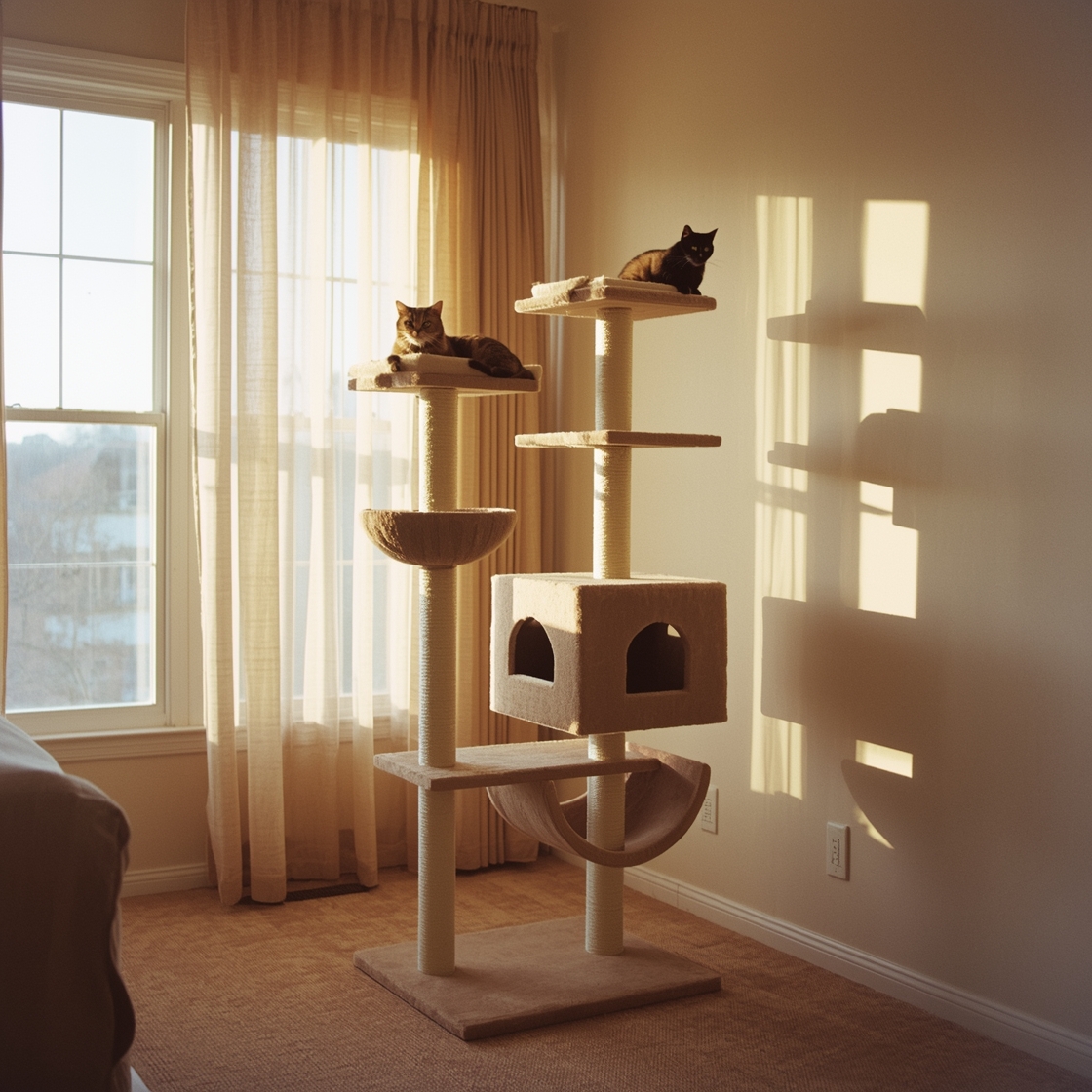
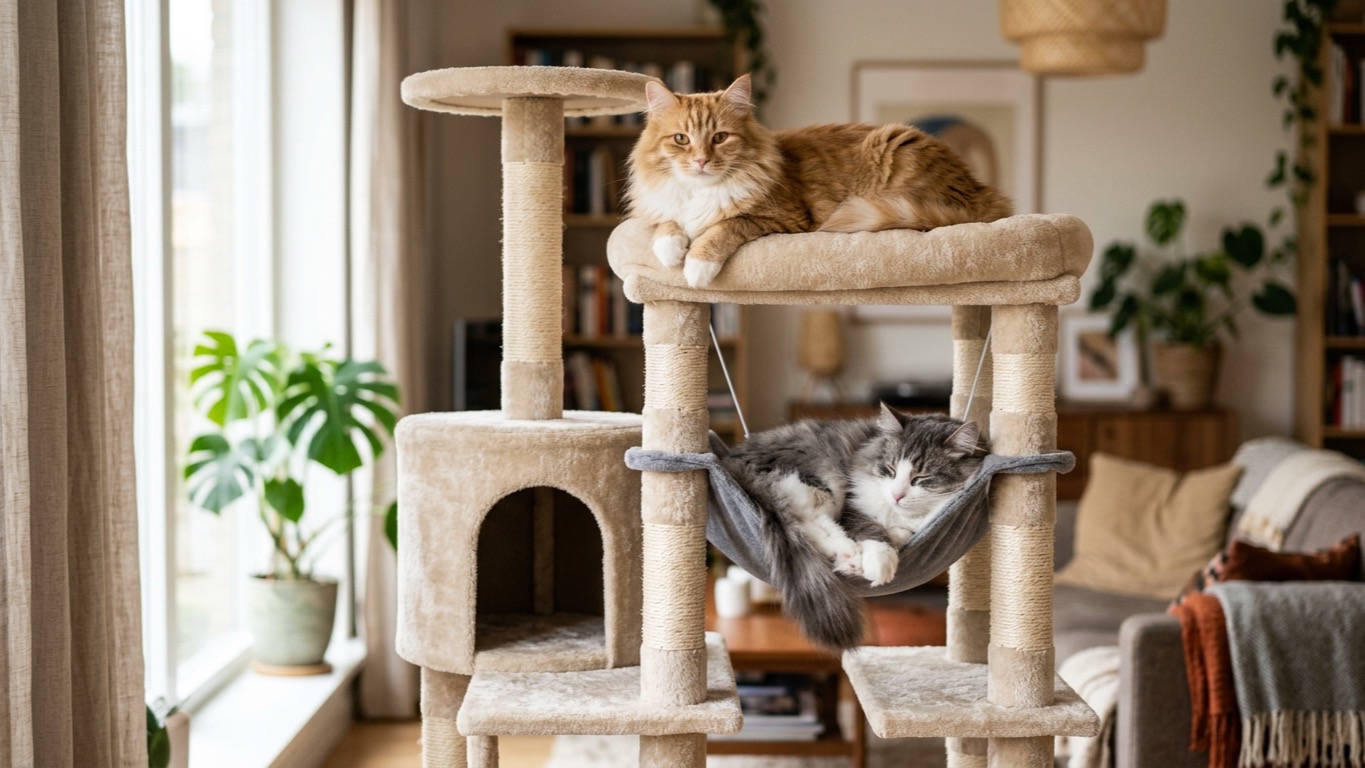
- Count independent beds. Two hammocks, or two condos, or a condo plus a wide perch. One platform two cats “can share” is a hope.
- Base wider than the tower. Two jumpers double the torque. Corner placement plus a stud strap is the cheap stability upgrade.
- Scratch redundancy. Two sisal posts beat one post and a ruined armchair. See also best cat scratching post for furniture.
- Height is a vantage, not a second bedroom. A 62.5-inch Yaheetech with two condos beats a taller column with one box.
What
How dual cat tree listings compare on labels
These tables are desk compilations from listed layouts, materials, and typical August 2026 listing bands. Bands move. Heuristics, not lab output.
Table 1 — Job, lounge count, and typical listing band
| Product | Independent lounge count (desk read) | Typical listing band (Aug 2026) | Two-cat job |
|---|---|---|---|
| Three Layer + condo + two hammocks | 3 (condo + 2 hammocks) | $40–$80 | Budget dual hang |
| Heybly Cat Tree | 2 (condo + perch theme) | $70–$120 | Mid wood frame |
| Yaheetech 62.5in, 2 perches & 2 condos | 4 named spots | $45–$80 | Clearest dual layout |
| Gitelsnour Cat Tree | 2+ plus scratch | $80–$140 | Scratch durability |
| Hey-brother Large Platform | 1 wide + extras | $60–$120 | Shared sprawl |
| DUMOS 54-inch | 2–3 compact levels | $40–$75 | Corner vertical |
| Globlazer Indoor Tower | Multi-level play | $70–$120 | Activity stack |
Desk stat: In the wider August 2026 scan of 24 multi-cat listings, 13 of 24 used the phrase “for multiple cats” while showing one enclosed condo in the hero photo. Marketing is not a lounge count.
Table 2 — Seven SKUs against the two-cat fit test
| Product | Two-cat lounge fit | Sway / base theme | Scratch redundancy | Best household fit |
|---|---|---|---|---|
| Three Layer + hammocks | Two hammocks help; fabric stretch | Owner notes: base walks in play | Scratch pad present | Apartments; quieter pairs |
| Heybly | Condo as private room | Wood frame feels sturdier | Typical posts | One shy + one social |
| Yaheetech 62.5 | Two condos + two perches | Tall; wall/corner required | Standard sisal | The usual pick |
| Gitelsnour | Mid lounges | Mid stability | Heavy sisal theme | Two scratchers |
| Hey-brother | One wide bed | Entry hardware | Basic | Bonded pair that pile |
| DUMOS 54 | Compact levels | Short helps sway; still strap | Several posts | Tight corners |
| Globlazer | Play levels | Mid; strap tall configs | Activity + posts | High-energy pair |
Table 3 — Pair type vs tree choice
| Pair | Typical combined weight | Conflict cue | Desk system |
|---|---|---|---|
| Two 8–10 lb adults | 16–20 lb | Mild queueing | Yaheetech or Three Layer + corner |
| One large + one small | 18–30 lb | Large cat owns the top | Two trees, or Heybly condo for the small cat |
| Two large / Maine Coon mix | 25–45 lb | Sofa becomes the second tree | See Maine Coon trees; do not share one disc |
| Bonded pair that pile | 16–24 lb | They want one bed | Hey-brother wide platform + a second low bed |
| Newly introduced pair | varies | Staring, blocking | Two separate towers in two rooms first |
Weights are household estimates, not measurements we took. Individual cats miss them in both directions.
Table 4 — Levers that actually keep two cats on the tree (not the sofa)
| Lever | Why it helps | Failure mode | Desk rule |
|---|---|---|---|
| Two independent beds | Removes the queue | One condo, two cats | Count boxes, not “levels” |
| Wall / corner brace | Kills sway when both jump | Free-standing tall column | Stud strap on anything ≥54" |
| Second scratch post | Two cats scratch at once | One post, two sofas | Sisal + a floor scratcher |
| Living-room placement | Cats rest where you sit | Guest-room tree | Sightline, then migrate inches |
| N+1 rest sites in the home | AAFP resource rule | One tree is the only high bed | Window perch or shelf as #2 |
| Quarterly bolt check | Two cats = more vibration | “It was tight in January” | Calendar, not vibes |
How the desk scores the best cat tree for two cats (this catalog)
We do not tip-test platforms and we do not award stability medals. Four checks:
1. Lounge count you can name. Condo, hammock, perch. If you cannot point to two separate beds, This checklist fails the SKU for two adults.
2. Base and brace. Wide base + corner + stud strap. Height without brace is a pendulum.
3. Scratch count. Two posts or a post plus a floor scratcher.
4. Introduction path. A new tree is a new resource. Treats on different levels. Do not crate both cats onto the same platform on day one.
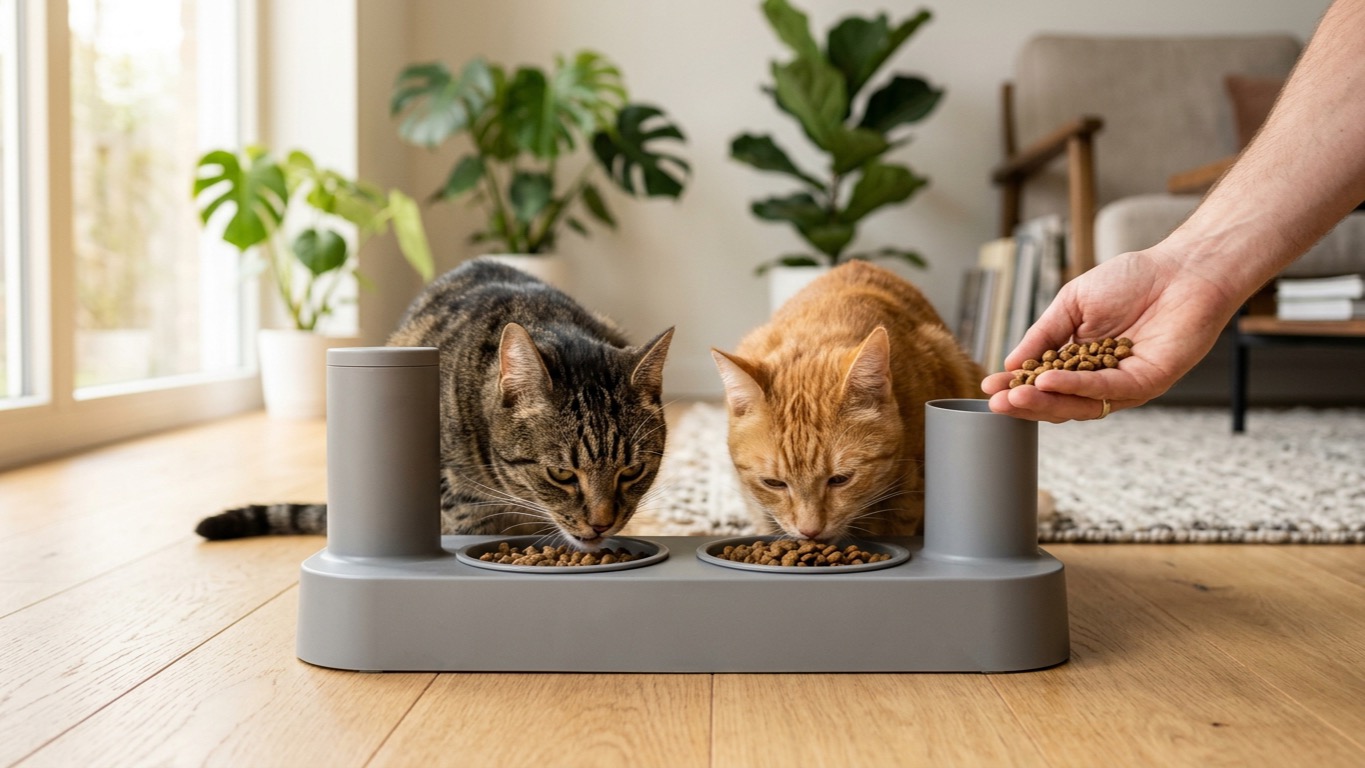
If feeding is the actual fight, that is a two-cat feeder problem, not a taller tree.
Top picks — seven catalog trees for two-cat homes
Cards below are the catalog lines for this URL. Specs are the maker’s. They change.
1. Three Layer Cat Tree with Cat Condo Scratch Pad and Two Hammocks
Best for: a budget apartment that needs two hang spots, not one penthouse.
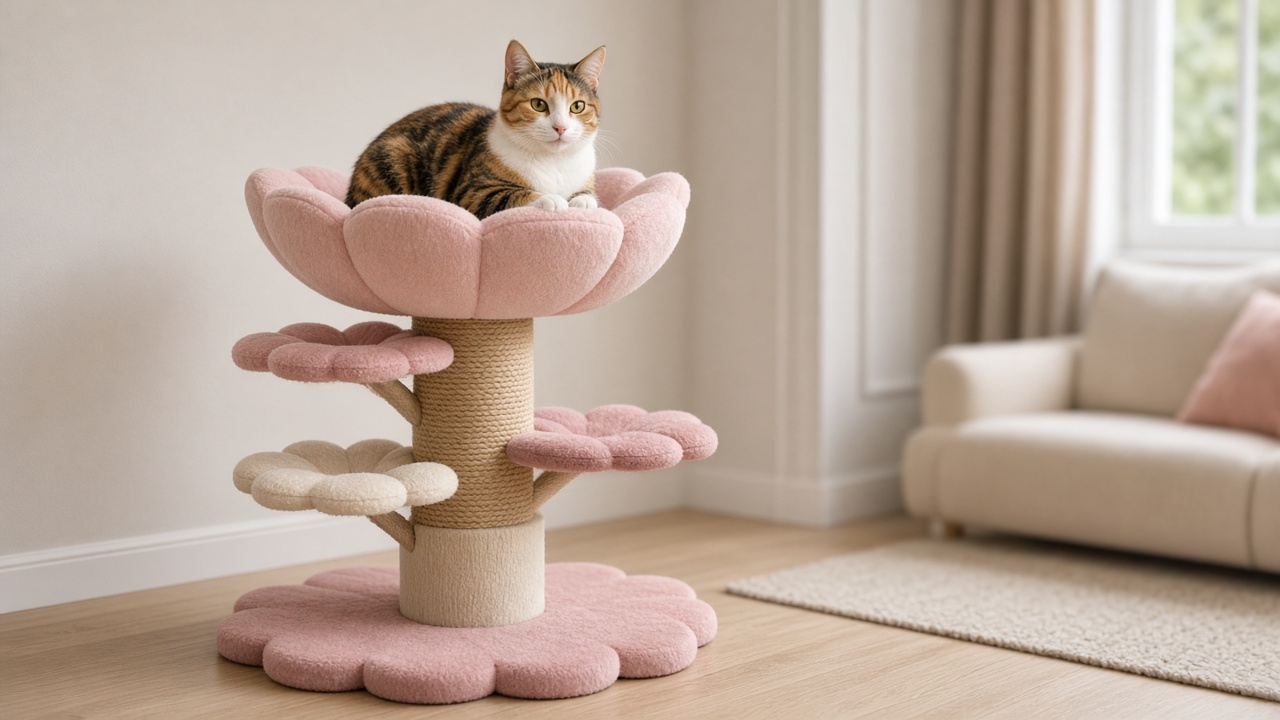
Two hammocks are the product. A condo plus a scratch pad add a third texture. That lounge count is why this card is on a two-cat page. The honest con is the base: owner themes mention walk and wobble when both cats play. Corner placement is not optional here. It is the upgrade you did not pay for in the SKU.
Hammocks stretch. Two 12 lb cats in one hammock is a sag, not a cuddle. Treat the hammocks as two beds, not one shared pouch.
Pros: Dual hammocks; small footprint; low ticket Cons: Base movement in high-energy play; fabric sag
2. Heybly Cat Tree
Best for: a mid-range wood-frame stack with a condo the second cat can claim.
Heybly shows up as the “feels like wood, not foam” card. A condo is the private room when one cat is done socializing. That is the two-cat feature — not the finish. Confirm the listing you open still shows a real enclosed box, not just a carpet cave photo.
Place it on a sightline. A sturdy tree in the unused bedroom is still unused. Tighten hardware after week one.
Pros: Wood-frame theme; condo retreat Cons: Mid price; still one primary box
3. Yaheetech 62.5in Tall Cat Tree with 2 Cat-Ear Perches & 2 Condos
Best for: the clearest dual-lounge layout on this URL — two condos, two perches, real height.
This is The usual pick for two adults who do not pile. Two condos are two bedrooms. Two perches are two lookouts. 62.5 inches is tall enough to matter and tall enough to sway. Wall or corner is mandatory. Do not free-stand this in the middle of a room and call it “for two cats.”
Entry price is the other pitch. Entry materials mean a bolt calendar. That is cheaper than a second sofa.
Pros: Four named rest spots; vertical vantage Cons: Tall sway if unbraced; entry hardware
4. Gitelsnour Cat Tree
Best for: two cats who already destroyed one post and are starting on the armchair.
Gitelsnour’s two-cat job is sisal volume. Two cats scratch at the same hour. One post loses. Owner themes talk about daily wear holding up better than the cheapest carpet wrap. Layout still needs two rest spots — do not buy this only because the rope looks thick if the listing shows one tiny perch.
Pair with a floor cardboard if both cats are horizontal shredders. The tree is not the only legal surface.
Pros: Scratch-heavy; mid durability theme Cons: Confirm lounge count on the listing you open
5. Hey-brother Cat Tree Tower with Large Platform
Best for: a bonded pair that already sleeps in one pile — plus a second low bed elsewhere.
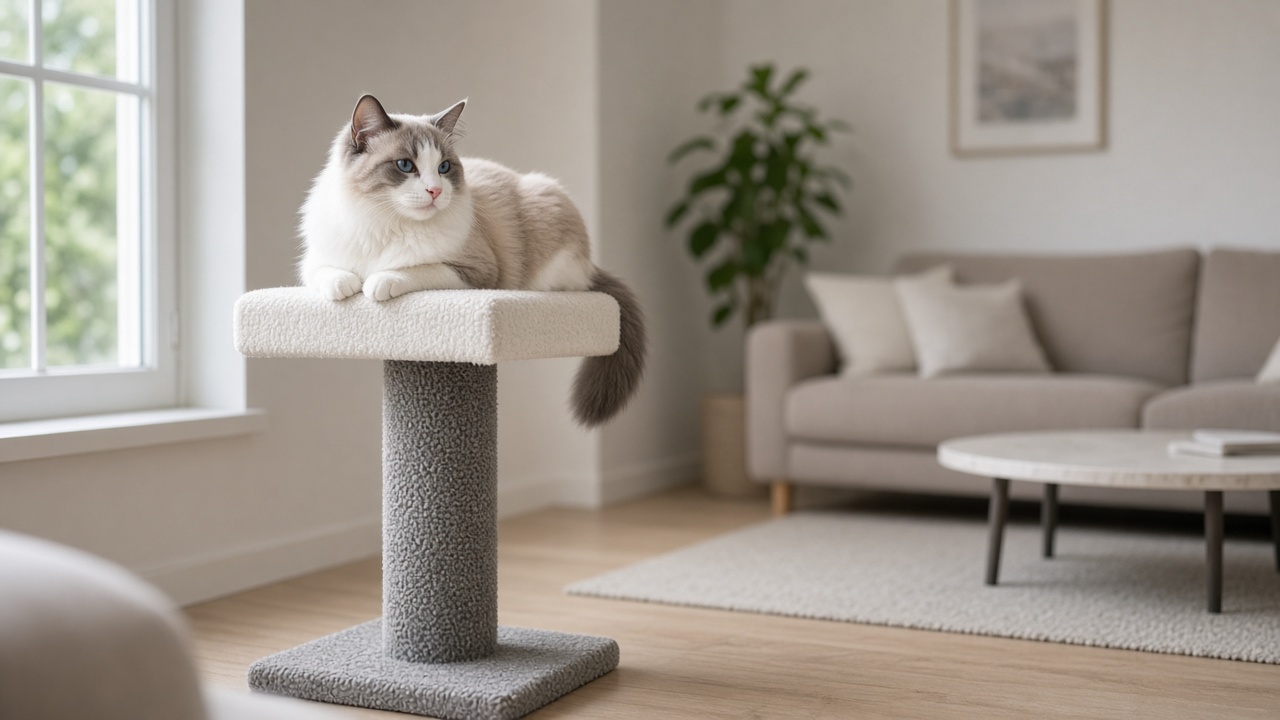
A large platform is one excellent bed. Two cats who like each other will share it. Two cats who tolerate each other will stack, then fight. We grouped listings by this as a shared sprawl SKU, not a dual-condo SKU. If your pair already has a staring problem, buy Yaheetech’s two condos instead.
Hardware wants a retighten. Large platforms collect two cats’ worth of launch force.
Pros: Wide shared bed; accessible Cons: One primary lounge; not a conflict pair’s tree
6. DUMOS 54-inch Cat Tree Tower with Scratching Posts
Best for: a corner in a small room when 62 inches will hit a soffit.
Fifty-four inches is the compact vertical. Several posts help the claw job. Multiple levels let two cats pass, which is not the same as two cats resting. The top will still be the prize. Add a window perch or a wall shelf so the second cat has a high that is not this tower’s penthouse.
Shorter helps sway. It does not remove the need for a corner.
Pros: Corner-friendly; several posts Cons: Compact lounges; top still contested
7. Globlazer Cat Tree Tower for Indoor Cats
Best for: a multi-level play stack when the pair is high-energy and the room can take a mid-size footprint.
Globlazer’s indoor tower is the activity card: levels, hanging toys, enough complexity to keep two cats moving. Movement is not the same as two bedrooms. If the pair already blocks each other, add a second rest site — a window perch or a shelf run — so the tree is not the only high.
Strap it. Mid-range frames still walk when two adults wrestle on the upper third.
Pros: Multi-level play; living-room scale Cons: Play ≠ two private beds; needs a brace
Want the wider aisle? See cat trees for two cats on Amazon →
How to choose the best cat tree for two cats (five checks)
- Count beds, not levels. Two condos or two hammocks beat six tiny discs.
- Plan the brace. Corner + stud strap on anything 54 inches or taller.
- Match the relationship. Bonded pilers can share a wide platform. Conflict pairs need two boxes or two trees.
- Put it in the room you sit in. A second tree in a closed bedroom does not count as a second resource during the day.
- Add a floor scratcher. Two cats will not take turns on one post at 7 a.m.
International Cat Care and AAFP both treat distributed resources as the multi-cat intervention. The tree is one resource cluster. Water, food, and litter still need their own N+1.
Introducing a new tree without starting a fight
Assemble in the room it will live in. Let both cats sniff panels on the floor before the tower exists. Reward separate levels. Do not pick up the shy cat and place them in the condo the bold cat already claimed.
If you are still in a slow introduction, two smaller trees in two rooms beat one trophy tower in the hallway. Merge furniture after the cats can pass each other without a freeze.
Vacuum platforms weekly. Two coats of undercoat will felt a hammock into a hammock-shaped brick. Spot-clean and dry fully — damp carpet odor is how both cats abandon the SKU.
Price bands and what two cats actually wear out
Entry (under $100): Two hammocks or two condos are possible. Hardware and bases are the tax. Budget a quarterly bolt night.
Mid ($100–$200): Thicker board and better sisal. The most common long-term band for two adults.
Premium ($200+): Solid wood, heavier fasteners. Worth it for two large breeds, not required for two 8 lb indoor cats if the lounge count is already right.
Owner themes say mid-range trees with replaceable sisal outlast fixed-carpet budget models by a couple of years in two-cat homes. That is a pattern, not a warranty we issued.
Seven buying mistakes the Dual-Cat we keep seeing
“Multiple cats” on a one-condo photo. Read the layout.
Free-standing 62-inch tower. Two jumpers, one pendulum.
One wide platform for a conflict pair. They needed two boxes.
Guest-room placement. The sofa in the TV room wins.
No second scratcher. The armchair becomes the overflow post.
Skipping the bolt calendar. Two cats loosen what one cat did not.
Using the tree to “fix” redirected aggression. If they fight, that is a behavior and clinic question. A taller SKU will not mediate.
When a two-cat tree question is a clinic question
Blood drawn, one cat hiding for days, spraying in a previously clean home, or a sudden limp after a jump. Buy nothing. Book the clinic. AAFP treats new inter-cat aggression and pain as medical until proven otherwise.
Declawing is not a two-cat solution. AVMA policy opposes declawing as an elective convenience procedure.
Frequently asked questions
What is the best cat tree for two cats if I only buy one thing from this page?
Yaheetech 62.5in with two condos and two perches, then wall-brace it. The best cat tree for two cats on this URL is the one with two named bedrooms, not the tallest photo.
Do two cats need two cat trees?
Often, yes — especially a large-plus-small pair or a new introduction. One well-laid-out tree plus a window perch can work for a bonded pair.
How wide should the base be for two cats?
Wider than the tower. Listings rarely print a useful number. If the base looks like a pizza box under a 60-inch stack, keep shopping or commit to a corner and a stud strap.
Will a 54-inch tree work for two cats?
As a compact pass-through, yes. As two full rest spots, only if the listing shows two real lounges. Add a second high elsewhere.
How do I stop two cats from fighting over the top perch?
Add a second high of similar quality. Do not punish the winner. Resource competition is a layout problem.
How often should I tighten hardware on a shared tree?
After week one, then quarterly — sooner if you hear creak or see walk.
Can kittens share an adult two-cat tree?
They will climb it. Confirm adult weight intent. Supervise early leaps from the top.
Should I put food on the tree to encourage use?
No. Food on a shared vertical creates a new blockade. Use treats on separate levels during introduction, then keep meals on the floor in two places.
Are hammocks enough for two adult cats?
They count as two beds if both hammocks are used. They sag. They are a poor sole plan for two 15 lb cats.
How we researched this guide
This guide is desk research. The We read the titles and descriptions of seven current catalog SKUs plus a wider scan of 24 multi-cat listings against lounge count, height, base language, and wall-strap mentions. We cite the 2013 AAFP/ISFM Environmental Needs Guidelines, International Cat Care’s multi-cat advice, and AVMA declawing policy because those documents are public and specific.
What we do not do: we do not run tipping trials, we do not employ a veterinarian or an engineer, and we have not house-trialed these trees with two cats. Nothing here carries clinical or structural endorsement.
A written clinic or behavior plan supersedes this URL.