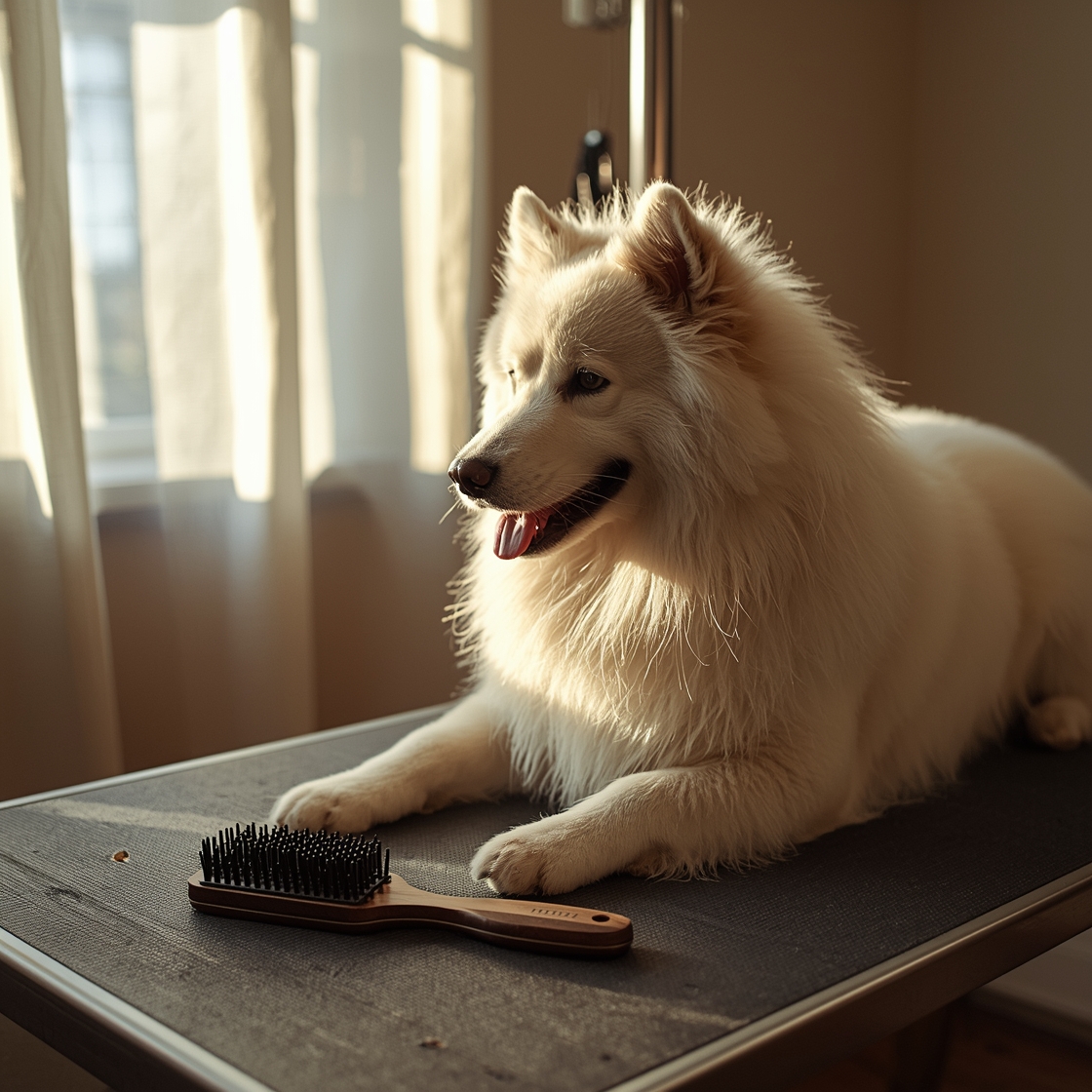
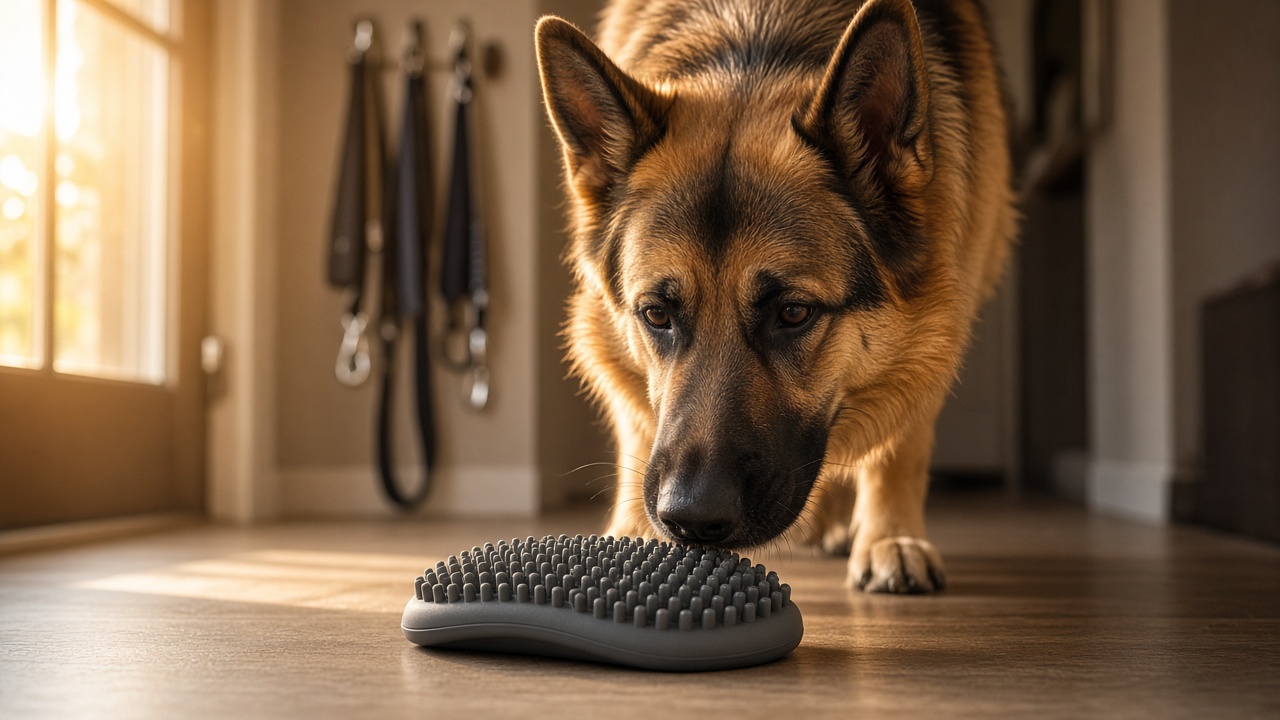
Quick answer: Use a rubber curry brush first on a smooth short coat. Add a short-hair undercoat tool only if your dog has a dense undercoat. The ASPCA says weekly brushing is enough for smooth short coats.
The ASPCA says a smooth short coat needs a weekly rubber brush, then a bristle brush. This page is a research-desk spec comparison of current maker pages. We did not run shed-weight trials, skin exams, or wear tests.
Short coats still shed, but the hair sits closer to the skin. A metal pin can scrape that thin buffer, while a rubber face lifts dirt without a rake.
The selection rule we used
A tool entered this guide only if its live maker page listed a loose-hair claim and one quotable number.
That number had to be inches, pounds, minutes, or a published size count. We left out dematting blades, show-ring pin slickers, and any brush we could not match to a live maker page.
Our research team analyzed five currently listed tools for the Pet Bench Short-Coat Spec Desk. Comparing published specs, three of the five maker pages state wet-and-dry use.
Only one page lists a session time in minutes. Two of the five pages list a dog weight band, and those bands do not match.
KONG lists 30 to 65 pounds on the ZoomGroom Boysenberry Large. FURminator lists 25 to 50 pounds on its medium short-hair undercoat tool.
The Two-Job Short-Coat Rule
A short coat needs two jobs, not one trophy brush.
Job one loosens dirt and dead skin at the surface. Job two lifts the hair you loosened. The ASPCA splits those jobs on a smooth short coat.
Use a rubber brush first, then follow with a bristle brush to pull dead hair off the coat.
The ASPCA also sets a floor on timing. Brush a smooth short coat once a week, and brush short, dense fur once a week too.
Use a slicker on that denser coat, then a bristle brush. Our research team did not invent a third required job, and the ASPCA mentions a chamois only as an optional polish.
Match the first tool to the coat, not to a breed nickname.
- Smooth, thin coats (Boxer, Chihuahua, Basset): rubber first, bristle second.
- Short, dense coats (many retrievers): slicker or undercoat edge first, bristle second.
- Short coat with a true undercoat: add the short-hair undercoat tool on dry fur.
Skip a steel undercoat edge if the dog has no undercoat. FURminator’s own page says the tool is for pets that shed an undercoat.
It also says not to use that tool on non-shedding breeds or on pets with very sensitive skin.
How to tell a smooth coat from a short double coat
You can sort most short coats with two fingers and a good look at the part.
A smooth short coat lies flat and feels like velvet on the ribs, and you can see skin when you open a small part.
A short double coat feels thicker in the same spot, and you will see a softer, fuzzier layer under the stiffer top hairs.
Many Labs and pointers carry that hidden layer, while many Boxers and smooth hounds do not.
If loose hair still mats in the brush after a rubber pass, the second job is not done. That is when a bristle brush or a short-hair undercoat edge earns a place.
If the rubber pass already leaves the coat clean, stop there, because extra steel does not help a single coat.
Short-coat tools compared by published specs
The table below is an attribute grid copied from maker pages, not a rank list.
| Product | Tool type | Maker-listed size or weight | Contact surface | Wet or dry use |
|---|---|---|---|---|
| KONG ZoomGroom Boysenberry | Rubber curry | Large for dogs 30 to 65 lb; body 2.75 × 4.75 × 1.75 in | 3/4 inch rubber fingers | Wet and dry |
| FURminator Undercoat deShedding Tool Medium Dog Short Hair | Stainless undercoat edge | Medium for dogs 25 to 50 lb | Stainless steel deShedding edge | Dry coat; also after washing or drying |
| SleekEZ Original Medium | Wave-pattern blade | 5 in Medium tool | Tooth-and-wave blade | Dry coat; hair falls off the blade |
| Tangle Teezer De-shedding Dog Grooming Brush | Two-tier polymer teeth | Large and Small | Longer teeth plus shorter teeth | Wet or dry |
| HandsOn Animal Gloves | Five-finger glove | Junior through X-Large | Nodules on fingers and palms | Wet or dry |
No price column appears here, because this grid is about size and contact surface only.
What each maker page actually lists
Each note below quotes a number from that brand’s own product page.
KONG’s ZoomGroom Boysenberry page lists 3/4 inch rubber fingers that are meant to reach the skin. The same page lists a 0.26 lb tool made of 100% TPE.
KONG also says to brush in a circular motion on dry fur, then put shampoo on the tool and work it through wet hair.
FURminator’s medium short-hair page claims a cut in loose shed hair of up to 90% with regular use. That is the maker’s claim, not a lab result from our desk.
The same page sets the medium size at 25 to 50 pounds. It also sets use at 1 to 2 times a week for 10 to 20 minutes.
FURminator tells owners to work on a fully dry coat and says results are better right after a wash and dry.
Use long, light strokes, and do not grind one patch. Press the FURejector button to dump the hair.
FURminator’s FAQ also says the tool pulls a large amount of loose hair. It suggests a tile floor or an outdoor spot so cleanup stays simple.
SleekEZ lists the Medium Original as a 5 inch tool on its current product page. The page describes a tooth-and-wave blade that grabs hair tips, then lets the hair line up on the blade and fall.
Tangle Teezer’s US page sells the De-shedding Dog Grooming Brush in Large and Small. It describes patented two-tiered teeth.
Longer teeth reach dirt in the undercoat, and shorter teeth pick up loose hair. The page says the brush can be used on wet or dry hair.
HandsOn’s Animal Gloves page lists a five-finger design with nodules on the fingers and palms. It lists five sizes, from Junior to X-Large.
The same page says the gloves work wet or dry. It also notes a 2023 Pet Business Industry Recognition Award in the dog and cat grooming category.
A weekly short-coat routine
Keep the session short, and stop if the skin looks pink.
The ASPCA’s bath note is separate from brushing, and it recommends a bath at least once every three months for many dogs.
Brush first, then fill the tub with about three to four inches of lukewarm water and wet the coat.
Use this weekly dry-brush order on a smooth short coat.
- Look for fleas, flea dirt, scabs, or bald patches before you start.
- Use the rubber curry in small circles from neck to tail.
- Follow with a bristle pass in the direction of growth.
- Wipe the tool. Check the belly, armpits, and tail.
Use this order on a short coat with undercoat.
- Confirm the coat is fully dry.
- Make a few long, light passes with the short-hair undercoat tool.
- Stay inside the 10 to 20 minutes FURminator lists for a session.
- Finish with a rubber or bristle pass to lift what the edge loosened.
If you want the difference between a finishing brush and a tooth comb, read our dog grooming brush vs comb guide.
A comb finds missed undercoat, but it is not the first tool on a smooth cheek or inner thigh.
Gloves, combs, and older dogs
A glove is still a brush that wraps your hand.
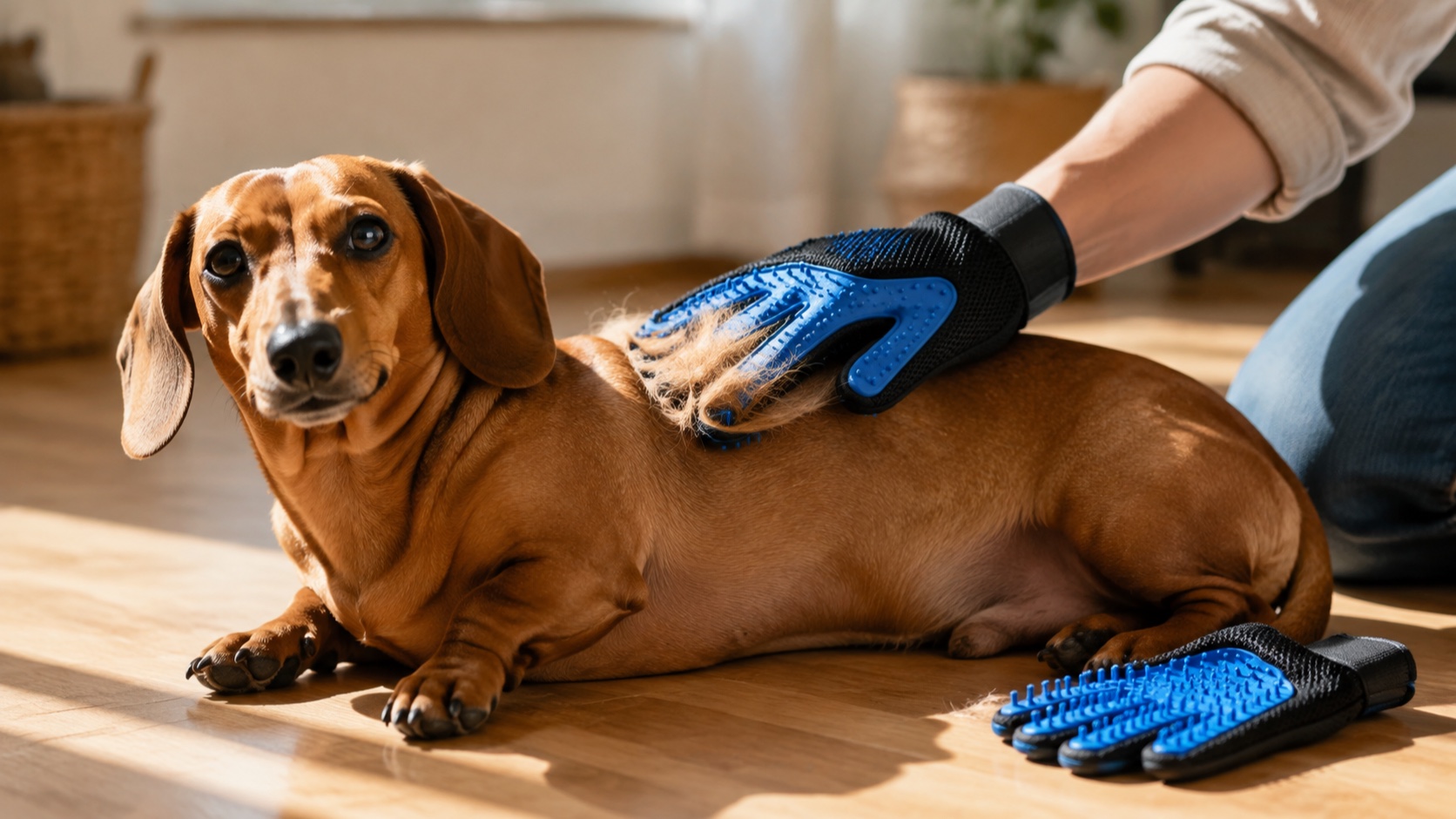
HandsOn lists wet-and-dry use and a five-finger grip, which helps on a chest, a face, and a tail.
If you want a full glove roundup, see our guide to best pet grooming gloves for dogs with short hair.
Older dogs often have thinner skin, and they may also have less patience. Keep pressure light, and sit instead of standing over them.
Our grooming senior dogs at home article covers those slower sessions.
The ASPCA says grooming time is also flea-check time, so look for black specks in the coat.
The same page lists bald spots, open sores, and constant licking as reasons to call your dog’s regular clinic. Our research team did not score pain or fear.
If a dog snaps or freezes, stop and try a glove or a shorter rubber face on another day.
FAQ
How often should I brush a short-haired dog?
The ASPCA says once a week for a smooth short coat, and it says once a week for short, dense fur as well.
FURminator’s undercoat tool is a different job. That maker page lists 1 to 2 sessions a week, at 10 to 20 minutes each.
Can I use a deshedding tool on a Boxer or Chihuahua?
Use one only if that dog has an undercoat that sheds. FURminator’s page limits the tool to pets that shed an undercoat.
It also says not to use it on non-shedding breeds or very sensitive skin. A thin, single coat usually needs the rubber-then-bristle pair the ASPCA describes.
Is a slicker brush the right first tool on short hair?
Not on a smooth, thin coat. The ASPCA puts a slicker on short, dense fur that mats, not on a Boxer-style coat.
A fine wire pin can hit skin when the hair is short, so start with rubber unless the coat is dense.
Do rubber brushes work in the bath?
KONG’s ZoomGroom page says yes. Put shampoo on the tool, move it in circles through wet hair, then rinse.
HandsOn also lists wet use on its glove page. Tangle Teezer lists wet or dry use on its de-shedding brush.
Will brushing stop a short-haired dog from shedding?
The ASPCA says you cannot stop a healthy dog from normal shedding. You can cut the hair that lands on the floor by brushing on a set day. Indoor dogs may shed in a steadier pattern all year, per that same ASPCA page.
What if my dog hates the feel of pins?
Switch to a rubber curry or a five-finger glove. KONG lists a massage motion, and HandsOn lists nodules on the palm and fingers.
Stop if the skin looks red, then try again on another day with shorter passes.
Does a short-haired senior need a different brush?
Often the same rubber tool, with less pressure, because thin skin tears more easily and shorter passes are safer.
See our grooming senior dogs at home guide for pacing and handling notes.