
Why Is My Dog's Hair Falling Out? Causes and Fixes
Quick answer: Most dogs shed as new hair replaces old hair. Bald patches, raw skin, or sudden clumps are different. Check for fleas first, then book a clinic visit before you change food or buy another brush.
This page is a research-desk guide for owners who typed “dog hair fall out.” If hair falls out and leaves bald skin, the drop is not a normal seasonal shed. Our research team compared published maker specs and public AAFCO and AVMA pages. We did not examine clinic cases. We did not run home grooming trials.
A shed leaves hair. Hair loss leaves skin.
A healthy coat drops old hairs as new hairs push through. That process can look dramatic on a double-coated dog. It still leaves skin covered.
Hair loss is different. Skin shows through. The pattern may be one patch, many patches, or two matching sides.
If you can see skin that used to be covered, stop treating the problem as a house-cleaning issue. Buy a tool later. Get a clinic exam first.
Feel the leftover coat. Shed hair slides out with a light pull. Broken hair feels short and rough.
Chewed hair often sits over red or scabby skin. That pattern points to itch, not a finished coat cycle.
Scratching, licking, and chewing pull hair out. That is skin trouble. It needs a clinic exam.
The selection rule for this page
We used one rule for what got in. We cover causes an owner can see at home. We also cover tools whose makers list loose-hair removal on a current product page.
We skip prescription drugs, prescription diets, and surgical options. Those belong in a clinic, not in a shopping grid.
We also skip ranked “top tools” lists. A rank column would imply we scored dogs in a trial. We did not.
We name only four products. Each one has a live maker page with listed attributes we can quote.
We left out tools whose maker pages we could not read. We also left out clinic-series rates from papers we did not open.
Parasites that pull hair out
The American Veterinary Medical Association says fleas, ticks, and mites are common in pets. An infestation is the word it uses for that load.
Start with fleas. The AVMA says one early sign may be “flea dirt,” the black droppings left in the coat.
You may see dirt and never see a live flea. Treat the dirt as a real finding.
Flea bites can drive scratching hard enough to open sores. The AVMA calls those sores “hot spots.”
Hair over those spots comes out because the dog is tearing at skin. That is not a finished coat cycle.
Ticks matter too. The AVMA states that an adult female tick can eat up to 100 times her weight in blood.
A heavy load can leave a dog weak. Bite sites can also leave local irritation and a thin patch.
Mites cause two different pictures. The AVMA describes sarcoptic mange mites as burrowing through the top layer of a dog’s skin.
Signs include constant scratching, chewing, hair loss, and thickened skin. People who handle the dog may also get a rash, the AVMA notes.
Demodectic mange is the other mite story. The AVMA splits it into localized and generalized forms.
Localized demodicosis, the AVMA says, tends to appear in dogs less than 6 months old. Those patches often sit around the eyes and mouth.
The AVMA describes them as non-itchy, scaly, and red. Generalized demodicosis is the wider form, with hair loss and scaly, thickened skin.
None of that is a job for a slicker brush. If you see flea dirt, bald patches, or a puppy with scaly face spots, book a clinic visit.
What AAFCO protein numbers actually mean
Coat quality tracks diet. Hair is a protein structure. A food that misses amino acids can leave a thin, brittle coat.
The Association of American Feed Control Officials publishes the Dog Food Nutrient Profiles that many labels cite. On its Calorie Content page, AAFCO sets adult-maintenance crude protein at 18.0% minimum, dry matter.
For growth and reproduction diets, AAFCO sets that dry-matter crude-protein minimum at 22.0%. Those two numbers are floors, not shine targets.
AAFCO also says it does not regulate, test, approve, or certify pet foods. States and the companies carry that duty.
A label that “meets AAFCO” is a formulation claim. It is not a clinic result.
Guarantees on the bag are “as fed.” Moisture changes the math.
A wet food can look low in protein on the panel. It can still meet the 18.0% dry-matter floor after water is removed.
The same AAFCO page assigns modified Atwater factors of 3.5 for protein and 8.5 for fat. Fat is calorie-dense. It also carries coat-supporting fatty acids.
Read the life-stage line before you switch food to “fix” shedding. Puppy food is built to the 22.0% growth floor. Adult food is built to the 18.0% maintenance floor.
If the dog is already on a complete adult food, patchy loss is probably not a protein gap. Go back to parasites, itch, and a clinic exam.
Tools listed for loose hair, not for disease
Comparing published specs, our research team found only one of these four products states a loose-hair reduction percentage. FURminator lists up to 90% reduction of loose hair from shedding with regular use.
That 90% figure is FURminator’s own claim for directed use. It is not a disease-treatment rate. It does not apply to bald patches from mites or infection.
We compared four currently sold products whose maker pages list coat-care attributes. The table is an attribute grid, not a ranking.
| Product | Maker-listed job | Size or fit | Listed numeric spec | Coat note | Wet or dry |
|---|---|---|---|---|---|
| FURminator Undercoat deShedding Tool Large Dog Long Hair | Remove loose undercoat through the topcoat | Large, dogs over 50 pounds | 1–2 uses a week, 10 to 20 minutes; up to 90% loose-hair reduction | Not for non-shedding breeds | Dry coat |
| KONG ZoomGroom Boysenberry | Massage skin and collect loose hair | Large, dogs 30 to 65 pounds | 3/4-inch rubber fingers; 2.75 × 4.75 × 1.75 in; 0.26 lb | Circular strokes | Wet or dry |
| Chris Christensen Big G Large slicker | Fluff dense coats and remove thick undercoat | Head 3-3/4 in × 3-3/4 in; length 8 in | 27 mm stainless-steel pins; 30% more pins than Big K | Long coats; 6-month warranty | Dry coat |
| earthbath Oatmeal & Aloe Itch Relief Shampoo, Vanilla & Almond | Clean dry, itchy skin | 16 fl oz; pets over 6 weeks | Dilute up to 10:1; use mix within 24 hours | Bath no more than once a week | Wet bath |
FURminator’s large long-hair tool is the only rake here listed for dogs over 50 pounds. Its FAQ sets 1–2 weekly sessions of 10 to 20 minutes and bars non-shedding breeds.
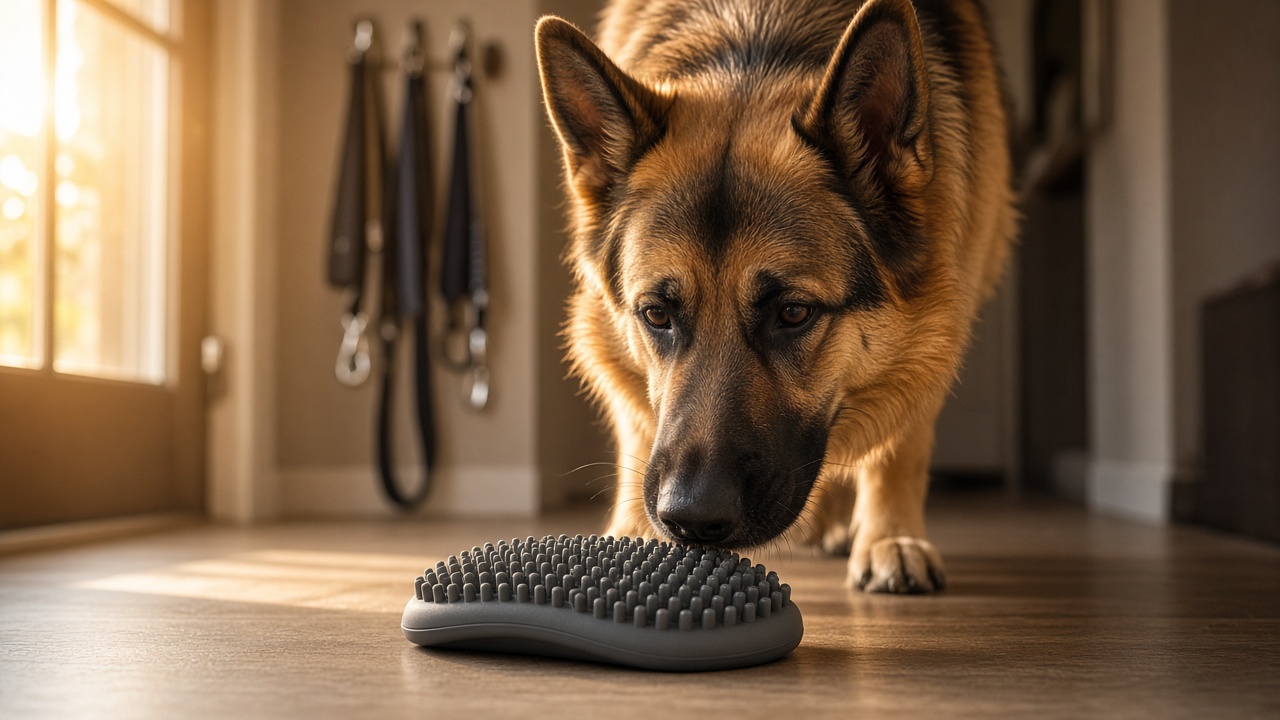
KONG’s ZoomGroom Boysenberry is a rubber curry. The maker lists 3/4-inch fingers and a 0.26 lb body. The large size is for dogs between 30 and 65 pounds.
Chris Christensen’s Big G Large slicker lists a 3-3/4-inch square head and an 8-inch length. It also lists 27 mm pins and 30% more pins than the Big K line.
earthbath’s Oatmeal & Aloe Itch Relief Shampoo is the 16 fl oz bath product we read. The maker lists pets over 6 weeks and a 10:1 dilution cap.
None of these four products treats mange, hormone disease, or infection. They move loose hair or wash itchy skin.
A weekly coat-and-house routine
Put the dog on a stable surface before a long session. A dog grooming table keeps the coat at hand height. It also lets you see the skin.
Work in the direction of hair growth. FURminator’s own directions say to use long, gentle strokes.
Avoid extra pressure in one spot. Stop if the skin turns red.
For a dog between 30 and 65 pounds, the KONG ZoomGroom Boysenberry can do the first pass. Use circular strokes on a dry coat.
Then switch to a steel tool only if the coat still holds a thick undercoat. Do not stack every tool in one sitting.
A large double-coated dog over 50 pounds matches the FURminator large-size listing. Keep that session in the 10-to-20-minute window the maker lists.
Two short sessions beat one marathon. Heavy shed weeks may need the extra weekly pass FURminator mentions.
Long, curly, or cottony coats match the Chris Christensen Big G listing. The 27 mm pins are meant to reach a long coat.
Do not dig the pad into thin skin. Lift the coat. Then let the pins do the work.
Bathe less often than you brush. earthbath says most dogs will not need a bath more than once a week.
If you dilute the 16 fl oz shampoo, mix it in a separate container. Use that mix within 24 hours, per earthbath.
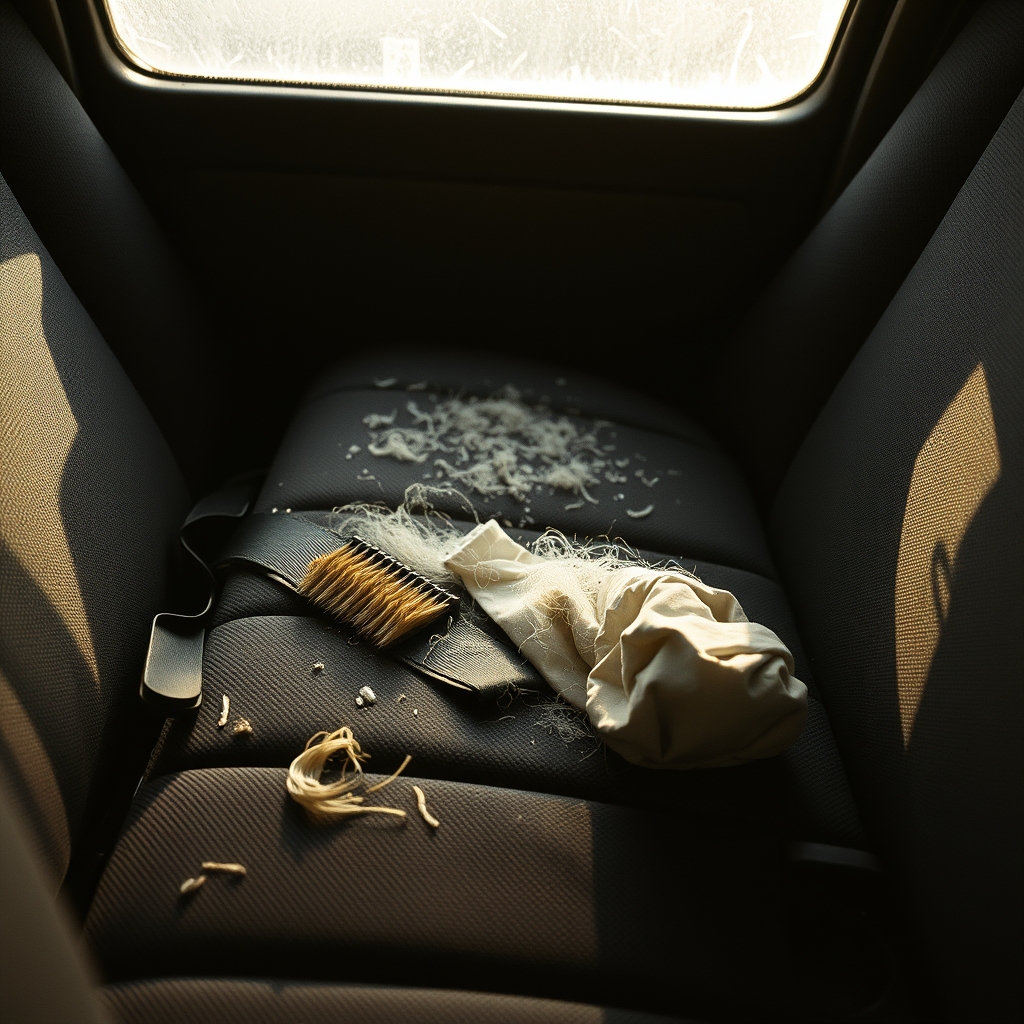
Hair that leaves the dog still has to leave the house. After a car ride, get pet hair out of car seats. Do that before hair packs into the foam.
A clean seat also makes flea dirt easier to see. Coat mess and floor mess stay separate jobs.
If the same carpet holds urine odor, use a carpet urine-odor cleanup. A brush will not lift it.
Stop brushing and call a clinic
Stop the grooming plan when skin is the story. Open sores, thick crusts, and matching bald sides are clinic signs.
The AVMA’s mite descriptions are the clearest home flag. Intense chewing with hair loss points toward sarcoptic mange until a clinic says otherwise.
A puppy under 6 months with scaly red eye patches matches the AVMA’s localized demodicosis picture. Do not wait that out with a new slicker.
A tick load is a clinic issue, not a rake issue. Remember the AVMA’s 100-times-body-weight feeding figure. A weak dog after outdoor time needs more than a bath.
Do not “wait out” bald skin while you buy another tool. The four products above move loose hair. They do not diagnose follicle disease.
If the coat is full and the skin is quiet, stay with the weekly routine. That is a shed. It is messy, not an emergency.
FAQ
Why is my dog’s hair falling out in clumps?
Clumps that leave bald skin are not a normal shed. Look for flea dirt first, as the AVMA flags that as an early infestation sign.
Then book a clinic visit before you change food. A new brush will not close a bald patch.
How much shedding is normal?
A full coat that still covers skin can drop a lot of hair. Double-coated breeds can dump undercoat in thick sheets.
The test is coverage, not the size of the pile on the floor. If skin stays hidden, you are looking at a shed.
Can food stop my dog’s hair from falling out?
A complete food that meets AAFCO’s 18.0% adult dry-matter protein floor supplies the amino acids hair needs. A growth diet uses AAFCO’s 22.0% floor.
Patchy loss on an already complete food is more often parasites or skin disease. It is less often a protein gap.
How often should I use a deShedding tool?
FURminator lists 1–2 sessions a week and 10 to 20 minutes each time for its Undercoat deShedding Tool. It also says heavy shed seasons may need more frequent use.
Skip that tool on non-shedding breeds, per the same page. Use a rubber curry or slicker instead.
Which tool fits a 40-pound dog?
KONG lists the large ZoomGroom Boysenberry for dogs between 30 and 65 pounds. FURminator’s large long-hair tool is listed for dogs over 50 pounds.
A 40-pound dog sits in the KONG band. It sits below the FURminator large cutoff we quoted.
Should I bathe a shedding dog every day?
earthbath says most dogs do not need a bath more than once a week. Daily washing can strip skin oil.
Brush more often than you bathe. Keep baths in that weekly ceiling unless a clinic says otherwise.
When is hair loss an emergency?
Bleeding skin, sudden widespread baldness, or a weak dog after ticks should not wait. The AVMA links heavy tick feeding to blood loss.
It also links mite infestations to open sores. Call a clinic the same day.