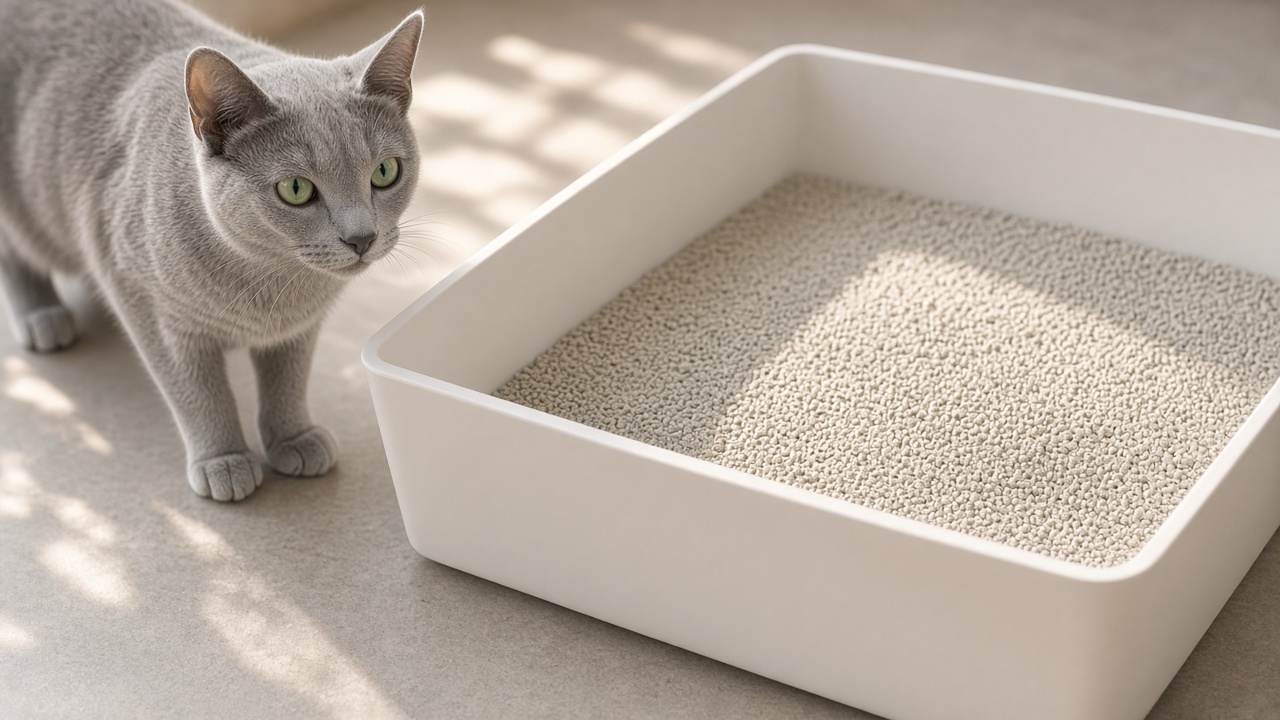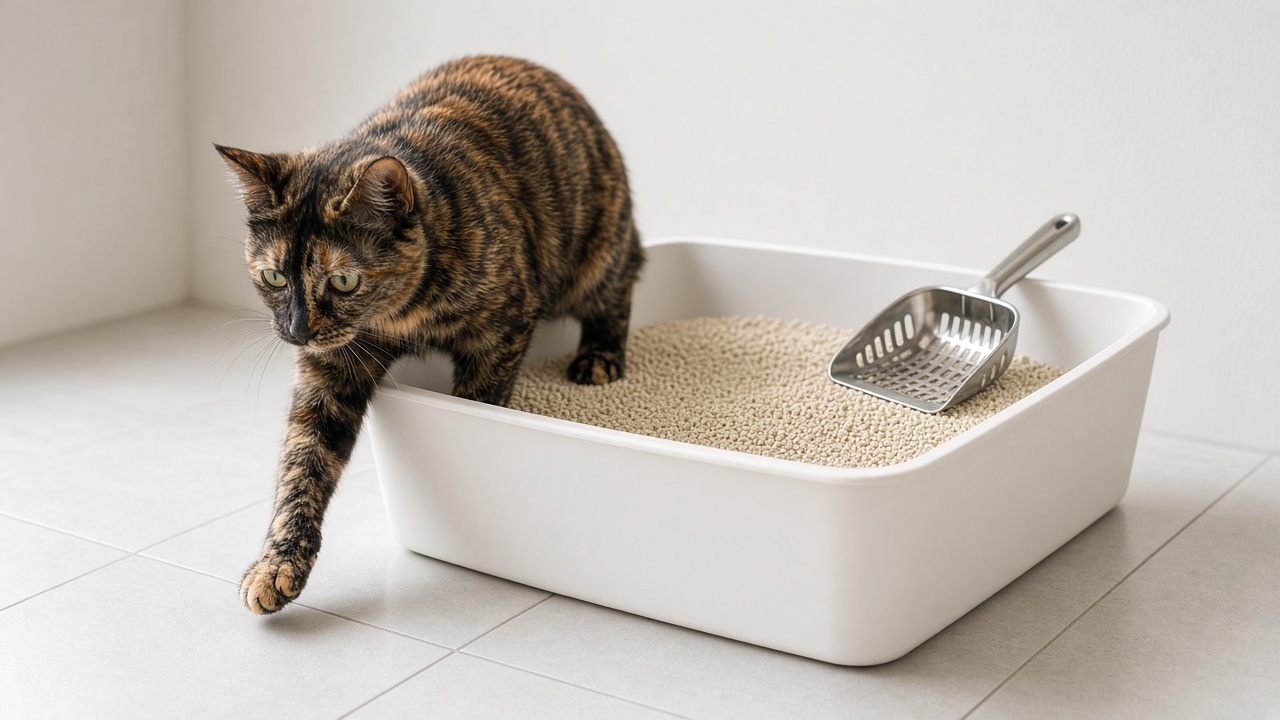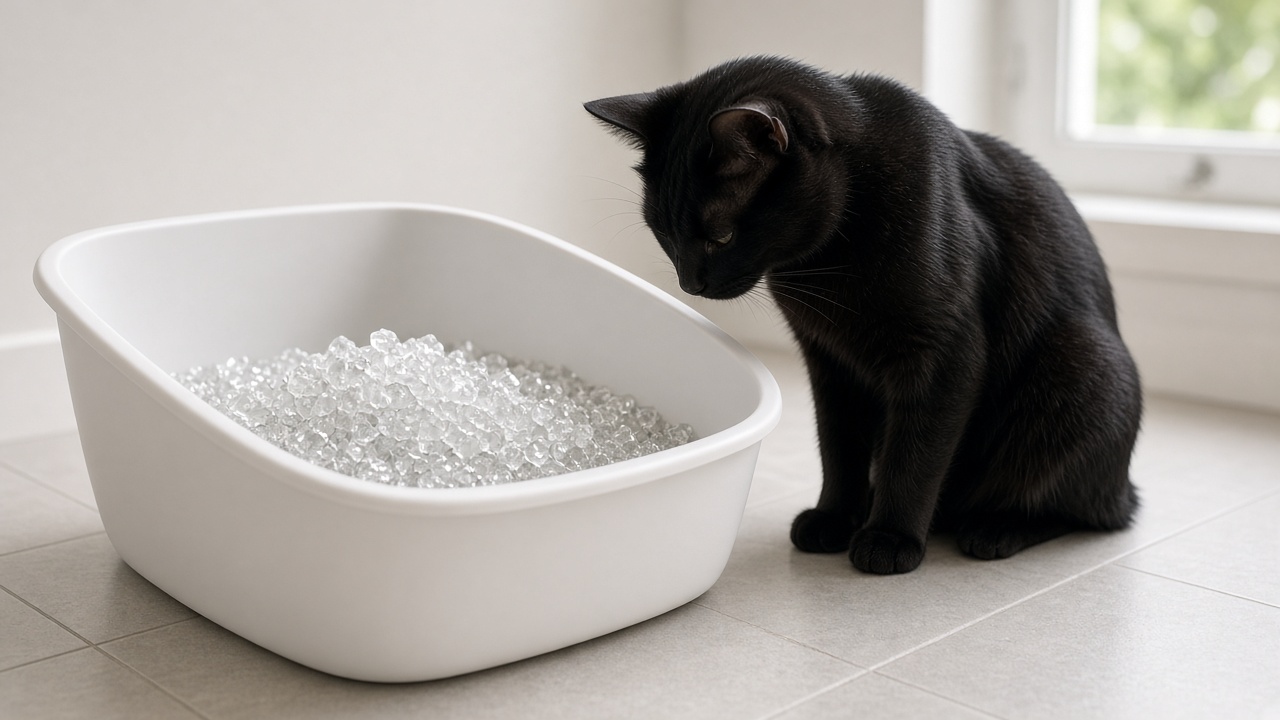
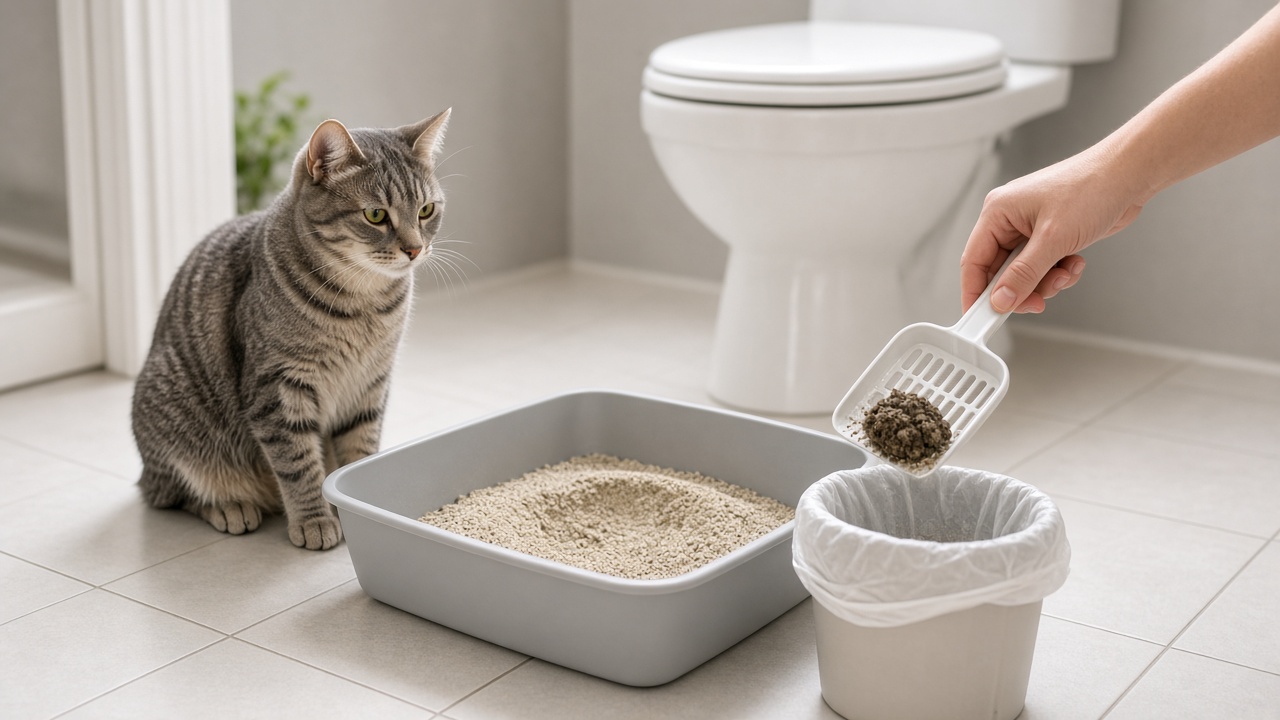
Quick answer: Do not flush cat litter. Bag clumps and used litter and put them in the trash. Even plant-based bags that say flushable can clog pipes and load a septic tank.
The US Environmental Protection Agency lists cat litter among items you should never flush. This page compares maker labels and two federal pages; we did not camera a drain, dye-test a toilet, or pump a septic tank.
We included a litter only when its current maker page listed a flush rule, a soak time, or a fill depth. We left out crystal-only “health” bags, automatic-box beads, and brands we could not open.
Pipes are built for paper, not absorbent clumps
Toilet pipes move water, human waste, and paper, not litter designed to lock up liquid. Cat litter is made to hold urine, which is the opposite of what a drain needs.
A clump that is helpful in a box becomes a plug in a trap. A scoop that feels light in your hand can still stall a bend.
World’s Best Cat Litter says clumping clay uses bentonite, and its flush page says bentonite forms a cement-like compound in water. Fresh Step Odor Shield is a clay litter whose how-to page says the litter forms a clump around liquid waste.
That same Fresh Step page says to put clumps in the trash and not to flush. Our research team compared those published specs and did not pour clay into a toilet.
One plant-based brand warns that clay can harden in water, while one clay brand tells you to keep clumps out of the bowl.
A clog often starts in a short run of pipe.
- The toilet trap holds standing water that a dry clump can sit in.
- A clump drops into that water and then swells or stays put.
- The next flush may not carry the mass around the bend.
The EPA says toilet use accounts for 25 to 30 percent of household water. Many older homes still have 3.5- to 5-gallon tanks.
Newer high-efficiency toilets use 1.6 gallons or less per flush, which leaves less push behind a heavy clump.
A leaky or running toilet can add as much as 200 gallons of water per day, according to the EPA. Extra flushes meant to wash litter down add volume without making clay dissolve.
What “flushable” on a bag actually means
A flushable claim is a maker method with tight limits, not a green light for the whole box. World’s Best Cat Litter says all of its formulas are flushable and septic-safe.
Its flush page tells you to scoop one to two clumps at a time into the toilet, then flush. The company says the litter is designed for well-maintained systems.
sWheat Scoop also prints a flush method, and its FAQ page says you can flush if you follow four steps.
- Scoop the box daily so clumps stay small enough to handle.
- Put only a few clumps in the toilet at a time.
- Let the clumps soak for 20 minutes so they soften and break down.
- Then flush after that soak, and do not add a new pile.
Those limits matter because one to two clumps is not a full scoop pile. A 20-minute soak is not a quick bathroom trip, and a “flushable” asterisk is a method, not a permit.
ökocat Super Soft Clumping Wood Natural Cat Litter takes a harder line, and Healthy Pet’s product page cites California law AB 2485. It says California asks that you do not flush cat litter in toilets and that you keep it out of gutters and storm drains.
Fresh Step Odor Shield does not offer a flush path at all. The how-to block is three steps: fill, remove to trash, and top up, and the middle step says “Do not flush.”
Our research team counted those four current pages. Two still print a small-clump flush method, and two tell you to keep litter out of the toilet.
The Bag-Not-Bowl Rule we use on this desk is simple. If a federal septic page and a clay label both say no, we do not treat a plant-based asterisk as a household permit.
What flushed litter does to a septic tank
A septic tank settles solids, and cat litter adds solids the tank is not meant to hold. The EPA explains that solids settle as sludge, oils float as scum, and a T-shaped outlet should keep those layers out of the drainfield.
Pump marks from the EPA are specific.
- Pump if the scum layer is within six inches of the outlet bottom.
- Pump if the sludge layer is within 12 inches of the outlet.
- Pump if sludge and scum make up more than 25 percent of the liquid depth.
Household tanks are typically pumped every three to five years, and the average system should be inspected at least every three years. Extra solids shorten that window because litter clumps are extra solids by design.
The EPA lists cat litter on the never-flush list, next to wipes, diapers, grease, and paper towels. The rule of thumb on that page is blunt: flush only human waste and toilet paper.
Plant-based clumps do not change that federal list. Corn and wheat may soften in a bowl, but they still arrive as extra solids.
The EPA says solids volume is one of four factors that set pump timing.
Indoor use in a typical home can reach 70 gallons per person per day, according to the EPA. Many small flushes of so-called flushable litter raise that number.
Do not grind leftover meat to help the tank either. The EPA says a garbage disposal adds fats and solids and can force earlier pumping.
Kitchen scraps from a homemade dog food batch belong in the trash, not the disposal.
Why cat feces should stay out of wastewater
Daily scooping into a bag cuts parasite risk that a flush cannot erase. The Centers for Disease Control and Prevention, or CDC, sets a clear clock.
The Toxoplasma parasite is not infectious until one to five days after a cat sheds it. Cleaning the box every day removes feces before that window.
That is a timing rule, not a flush rule. A toilet does not make the one-to-five-day clock safer.
It only moves feces into pipes and then into a plant or tank. The CDC also tells people to wash hands after touching soil or sand that cat feces may have contaminated.
Gloves help during garden work, and the same care belongs at the litter box. Daily scooping is the habit that matters most.
Our guide to how often to change cat litter covers box timing that does not involve a flush.
ökocat Super Soft’s product page repeats California’s water-quality request. Do not flush cat litter, and do not put it in gutters or storm drains.
Four current litters, compared by maker rules
Maker pages disagree on flushing, but they agree on fill depth and daily scooping. The table below uses only attributes printed on the four maker pages we opened.
| Litter | Base material | Fill depth on the maker page | Maker flush instruction | Other listed spec |
|---|---|---|---|---|
| World’s Best Cat Litter (all formulas, including Multiple Cat Unscented) | Whole-kernel corn | Not listed on the flush page | Flush 1–2 clumps at a time | Maker says bentonite can form a cement-like compound |
| sWheat Scoop Original | Wheat | 4 inches; scoop twice daily | Soak a few clumps 20 minutes, then flush | Transition mix: 3 inches of wheat under 1 inch of old litter |
| ökocat Super Soft Clumping Wood Natural Cat Litter | Rescued wood fiber (spruce, fir, and pine) | 2–3 inches | Do not flush; keep out of gutters and storm drains | Up to 7 weeks with daily scooping; 99% dust free; 8 lb, 10.6 lb, 15.8 lb |
| Fresh Step Odor Shield Scented Cat Litter | Clay with carbon | 3–4 inches | Do not flush; trash only | 15-day odor claim; 14 lb, 22 lb, 38 lb, 42 lb boxes |
World’s Best Cat Litter says it offers eight formulas, and the flush method is the same across them: one to two clumps, then flush. sWheat Scoop’s FAQ page is stricter on time, because 20 minutes of soak is a listed step, not a hint.
ökocat Super Soft lists a 2–3 inch bed and a seven-week base if you scoop daily. Healthy Pet also says formed clumps should sit one to two hours before sifting in a manual machine.
Fresh Step Odor Shield lists four box weights, and the how-to page still ends on trash, not the bowl.
How to throw litter away without the toilet
Scoop into a bag, tie it, and use the household trash.
- Scoop clumps and solids every day so feces do not sit past the CDC window.
- Drop them into a small bag you can tie closed.
- Put the tied bag in your outdoor trash can.
- Top the box back to the fill depth printed on the bag.
- Wash your hands with soap and water after you finish.
Keep the box deep enough for a real clump.
- sWheat Scoop Original: keep a 4-inch bed and scoop twice daily.
- ökocat Super Soft: pour 2–3 inches and scoop waste daily.
- Fresh Step Odor Shield: maintain 3–4 inches and remove clumps to the trash.
A stainless-steel top-entry litter box keeps more granules inside the pan, which makes the bag step easier.
For a full change, dump the used bed into a bag, and do not rinse leftover clay down a tub or utility sink. Those drains join the same stack as the toilet.
If you already flushed litter, stop adding more and watch for a slow bowl or a gurgle in nearby drains. Call a plumber if the toilet will not clear.
On a septic system, ask the pumper to check sludge against the six-inch, 12-inch, and 25 percent marks from the EPA.
FAQ
Can you flush cat litter down the toilet?
No. The EPA lists cat litter with items you should never flush, so bag clumps and used litter and put them in the trash. A plant-based “flushable” line does not override that federal septic list.
Can you flush clumping clay litter?
No. Fresh Step Odor Shield is a clay litter and says do not flush.
World’s Best Cat Litter says bentonite clay can form a cement-like compound in water. Clay is made to lock liquid, so it is a poor match for a trap full of standing water.
Is flushable cat litter safe for septic systems?
Treat it as unsafe. The EPA says to flush only human waste and toilet paper, and it names cat litter on the never-flush list.
World’s Best Cat Litter still prints a septic-safe claim for one to two clumps. That maker claim does not remove litter from the federal list.
How many clumps can you flush if the bag says flushable?
Our research team does not recommend flushing any clumps. If you are reading a maker method only, World’s Best Cat Litter says one to two clumps at a time.
sWheat Scoop says a few clumps and a 20-minute soak.
Does flushing litter save water or make less trash?
It often uses more water. The EPA says toilets already use 25 to 30 percent of household water, and newer tanks may hold 1.6 gallons or less. Several small flushes plus a 20-minute soak add volume a septic tank must then hold.
How soon should you scoop so feces stay less risky?
The CDC says the Toxoplasma parasite is not infectious until one to five days after a cat sheds it. Scoop into a bag every day, then wash your hands, and do not use the toilet as the disposal step.
What should you do if litter is already in the pipes?
Stop flushing more litter, and try one plain water flush only if the bowl is clear. If the water rises or drains slowly, stop and call a plumber.
On a septic system, schedule the three-to-five-year pump check sooner if solids jumped.