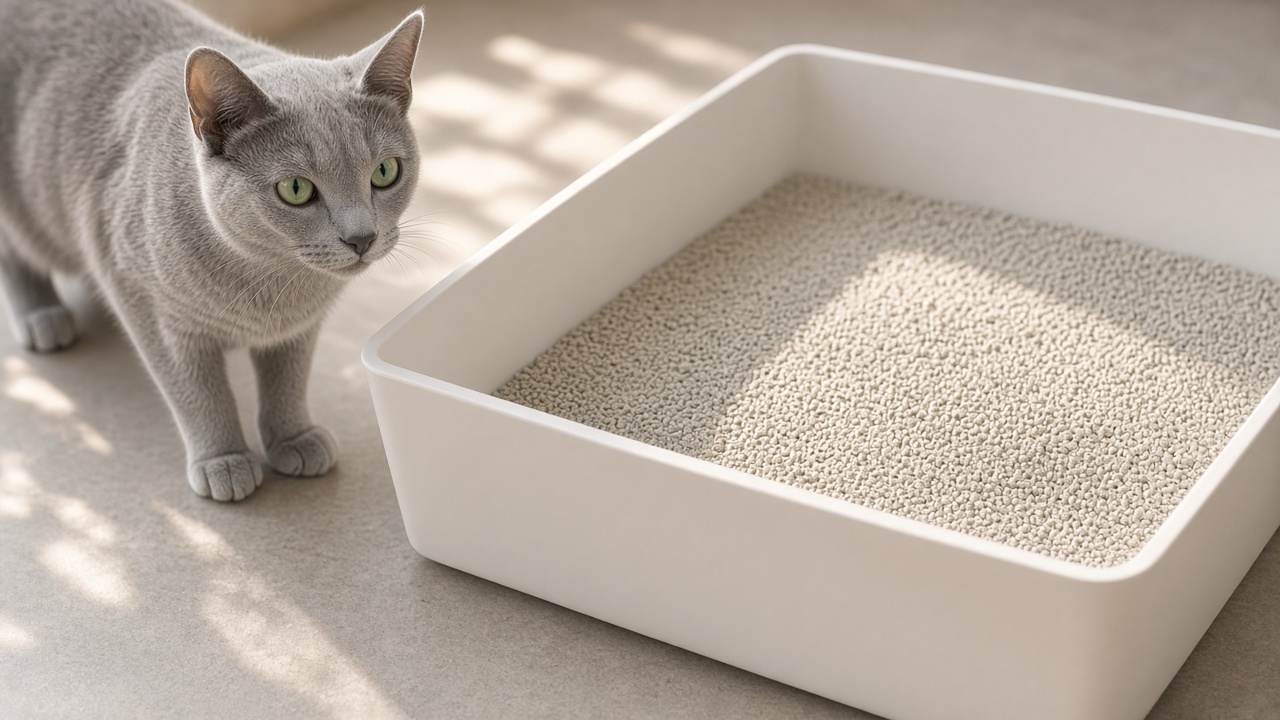
Quick answer: Put an uncovered box in one quiet room. Keep the cat there until it uses the box on its own. Scoop daily and skip hoods, liners, and scented litter until the habit holds.
Confine a healthy cat with one uncovered box 1.5 times its length, and it will use that box within seven days. This page is a research-desk walkthrough of first-week setup. We did not house a training cohort, time first-use events, or run litter-brand trials.
Cats already bury waste. Training is mostly setup, not trick teaching. The job is to make the box the easiest place to go.
Our research team analyzed published box specs against size rules from the 2021 AAHA/AAFP Feline Life Stage Guidelines. We also compared those specs with house-soiling notes from the ASPCA and Cornell University College of Veterinary Medicine.
What we included, and what we left out
We use the One-Room First-Week Rule. We cover only indoor household training that starts in a single closable room. The starter box must be uncovered.
The cat must step in without a hop. We leave out toilet-training, outdoor dirt patches, and colony programs. We also leave out any plan that starts with a hooded box or a furniture hide.
Those later options can wait. A kitten or newly indoor adult needs a clear, open pan first. Covered boxes and cabinets come after the habit is solid.
This article also skips medical incontinence plans. Sudden straining, blood, or crying needs a clinic visit. That is not a training gap.
Set up the box before the cat arrives
Place the box before the carrier comes through the door. A new cat should not hunt for a toilet.
AAHA’s posted 2021 life-stage notes call for one box per cat plus one extra. A single cat still needs two boxes once it gains the run of the house. During week one, one open box in the confinement room is enough.
AAHA also says the box should be 1.5 times the cat’s length, nose to tail tip. Most store pans fail that test.
Comparing published specs, the IRIS USA Top Entry Cat Litter Box with Scoop Large lists a 15-inch interior floor. That meets the AAHA 1.5-times rule only for a cat 10 inches long, nose to tail tip.
The Van Ness High Sides Giant Cat Litter Box (CP3HS) lists 21.25 by 17.63 by 9.25 inches. That is larger than many pans. It still falls short of 24 inches, the AAHA threshold for a 16-inch cat.
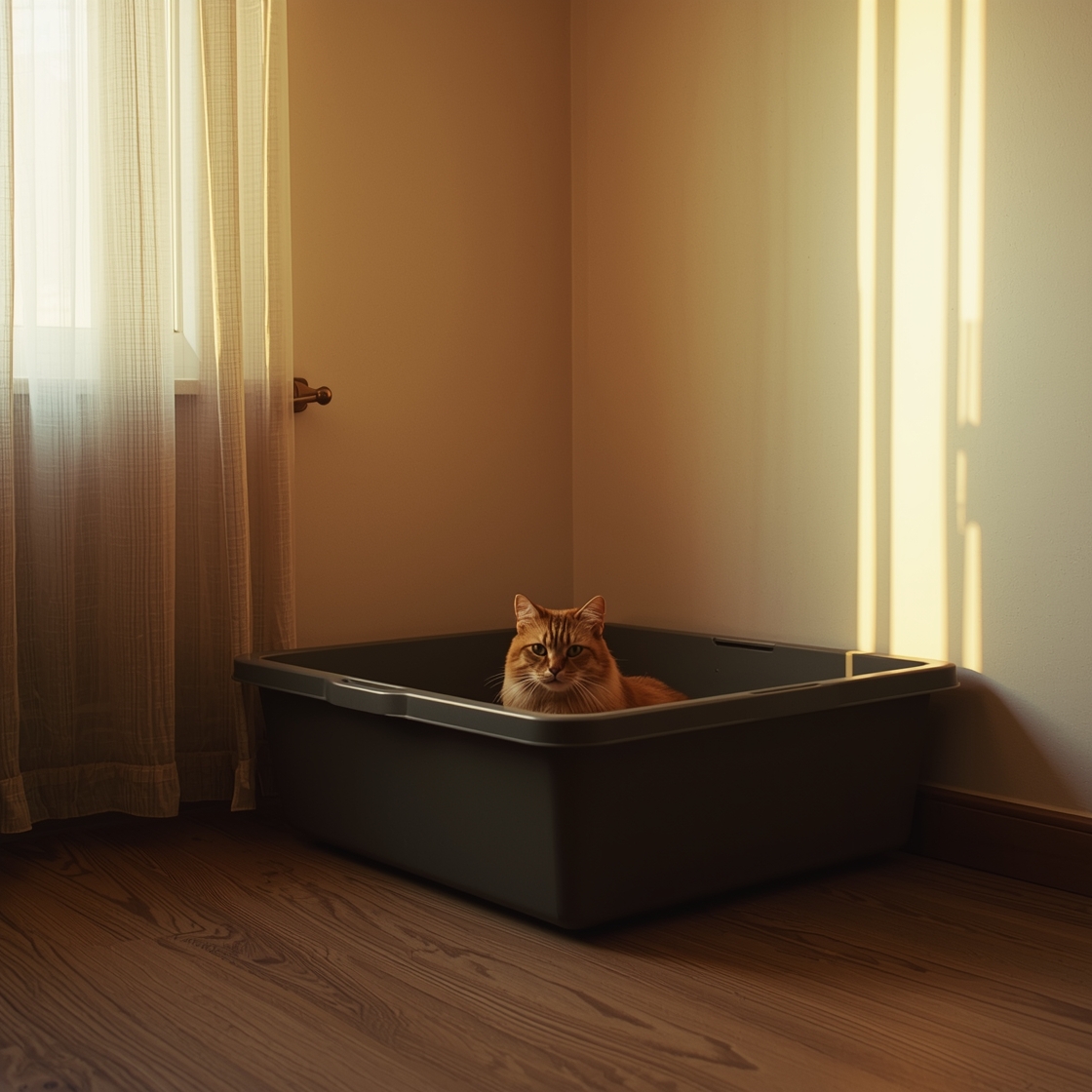
Keep the first box open. The ASPCA says most cats dislike lids and liners.
Hoods trap odor. Liners snag claws.
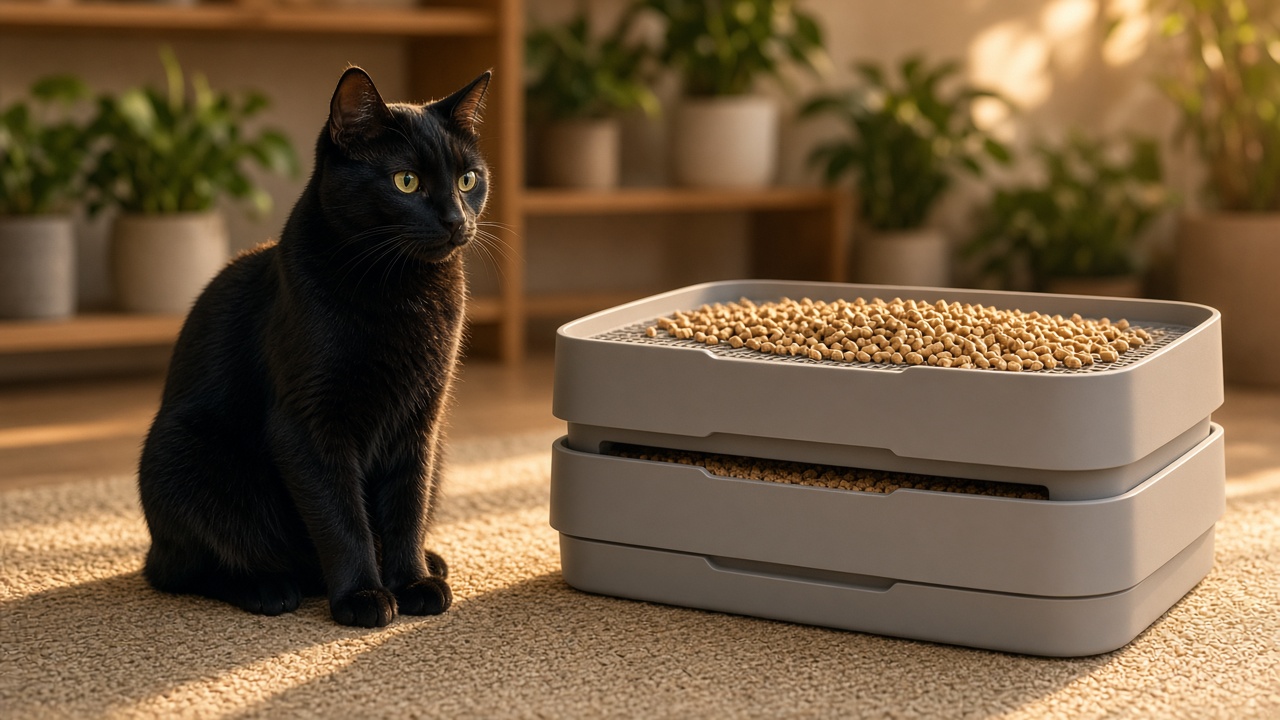
Fill the pan with unscented clumping litter. The ASPCA says cats usually prefer one to two inches, not three to four. Deep beds feel unstable.
Set the box away from food and water. Place it where the cat can see people approaching. Leave an escape path on at least two sides.
Skip laundry rooms and next to dryers. Sudden noise can poison the first visit.
The first-week confinement sequence
Bring the cat to the room, not the whole house. Close the door. Leave food, water, a bed, and the box.
Do not shove the cat into the pan. The ASPCA says forced placement often backfires. Set the cat down near the box and step back.
After meals and naps, wait nearby. Many cats toilet then.
If the cat starts to squat on the floor, lift it into the box. Then leave it alone.
Scoop as soon as you see waste. AAHA says some cats refuse a dirty box. A first-week box should look unused after each visit.
If the cat uses the box, let it stay in that room for 72 hours. Add short, supervised walks after that. Return the cat to the room when you cannot watch.
Do not move the box during those first three days. After that, you may slide it a few inches a day. Cornell University College of Veterinary Medicine says to stop the move if use drops, then slide it back.
Praise is optional. Many cats dislike attention while they toilet. A quiet exit from the room is enough.
Never punish a miss. AAHA says cats should never be reprimanded for toileting in the wrong place. Rubbing a nose in waste does not teach the box.
How kittens and adult cats differ
Kittens need a low lip. AAHA notes that high edges block small or old cats.
The PetSafe ScoopFree Crystal Plus lists 6.6 inches of height when uncovered. That is an easy step for a young kitten.
Adults need floor length more than a low lip. A long cat cannot turn in a short pan.
That is why many large-cat homes outgrow starter boxes. Our guide to litter boxes for large cats walks through footprint and entry height in more detail.
Kittens under 3 pounds should not use a cycling automatic box. Whisker’s Litter-Robot 4 page limits automatic mode to cats from 3 to 25 pounds. For lighter kittens, Whisker tells owners to leave the unit off, then power it after a clump forms.
Adults adopted from a street or barn may never have seen clay litter. Offer a second open box with a finer texture. The ASPCA says to place different litters side by side and let the cat choose.
Do not switch brands overnight. Cornell says a sudden litter change can start avoidance. Blend a little new litter into the old over several days.
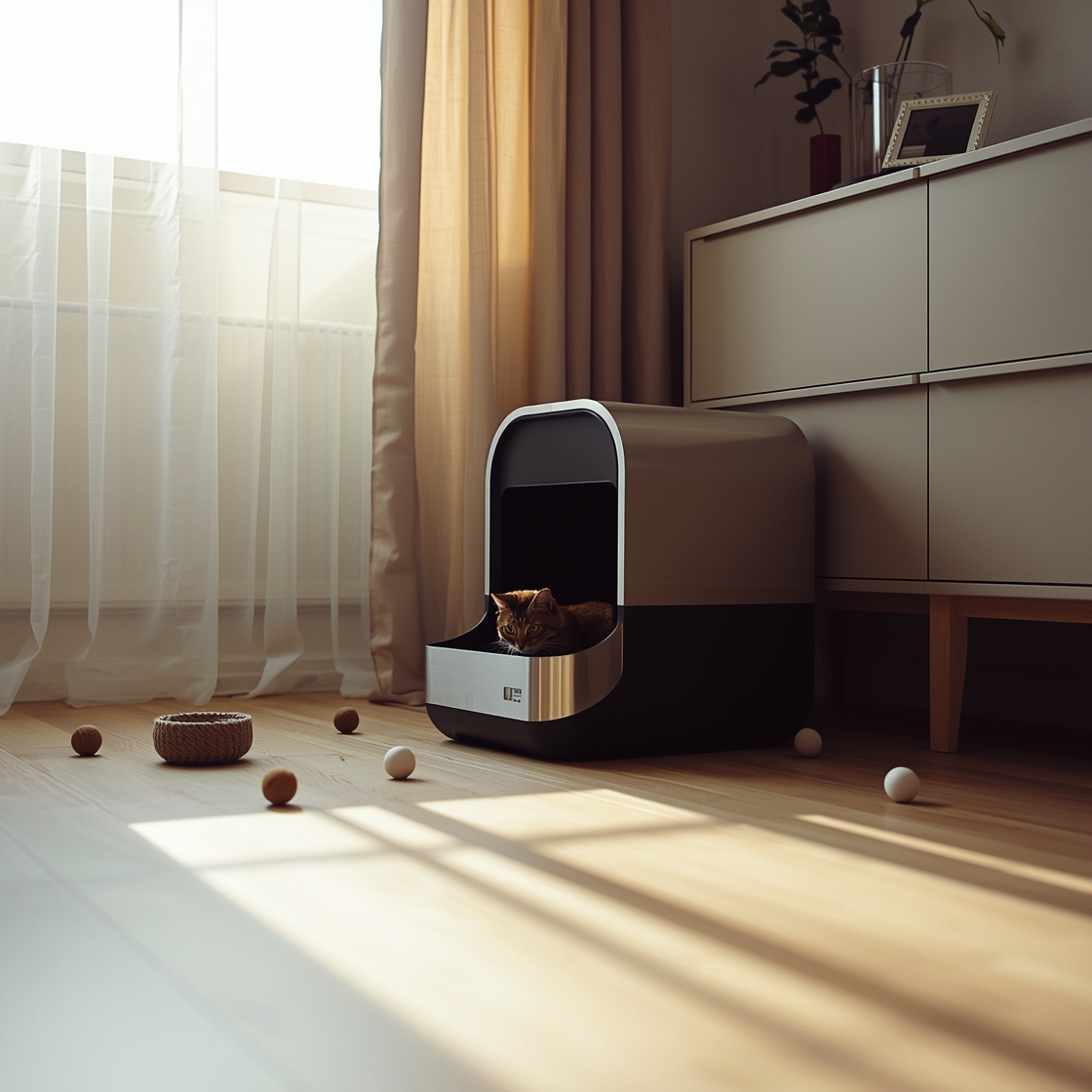
If you later want less scooping, wait until the cat is reliable. Then look at an automatic litter box. Do not start week one inside a motorized globe.
Boxes that match different body sizes
We compared maker-listed sizes, not prices. The table is an attribute sheet. It is not a ranking.
We included only currently sold models whose maker pages list hard numbers. We skipped any box whose official page hid length, width, or height.
| Model | Entry | Maker-listed exterior size | Maker-listed fit | Litter the maker names |
|---|---|---|---|---|
| Whisker Litter-Robot 4 | Front globe, 15.75 × 15.75 in | 22 × 27 in footprint, 29.5 in tall | Cats 3–25 lb; up to 4 cats | Clumping litter in the globe |
| PetSafe ScoopFree Crystal Plus | Open, 6.6 in tall | 28.2 × 20.4 × 6.6 in | Single or multi-cat homes | ScoopFree crystal trays only |
| IRIS USA Top Entry Large | Top hole, 9.25 in diameter | 20.5 × 14.75 × 14.5 in | Interior floor 15 × 9.75 in | Any scoopable litter |
| Van Ness High Sides Giant (CP3HS) | Open, 9.25 in sides | 21.25 × 17.63 × 9.25 in | Large cats and multi-cat homes | Any scoopable litter |
| Modkat XL | Top 10.25 in, or front 8.3 × 9.8 in | 21.0 × 16.5 × 17.0 in | All cat sizes, per Modkat | Any litter; liner lasts up to 3 months |
Whisker says a one-cat home can go up to 8 days before emptying the waste drawer. Whisker also reports that over 95 percent of cats acclimated to Litter-Robot.
That figure comes from stated return reasons for Litter-Robot 4 and 3 over one year. It is not a training trial we ran.
PetSafe says the Crystal Plus rake can run up to 30 days between tray changes. The same page claims 5 times better odor control than clay.
It also calls the crystal litter 99 percent dust free. Those claims belong to PetSafe, not to us.
Modkat lists the XL empty weight at 9.0 pounds. The front entry sits 6.25 inches off the floor.
That lip is fine for many adults. It can stall a tiny kitten.
IRIS USA’s 9.25-inch top hole keeps dogs out. It also forces a climb. Save top-entry for a cat that already uses an open pan.
The Van Ness CP3HS stays open and uses BPA-free plastic, per Van Ness. High sides help high-pee cats.
They can still block a kitten. Start with a lower pan instead of cutting a door.
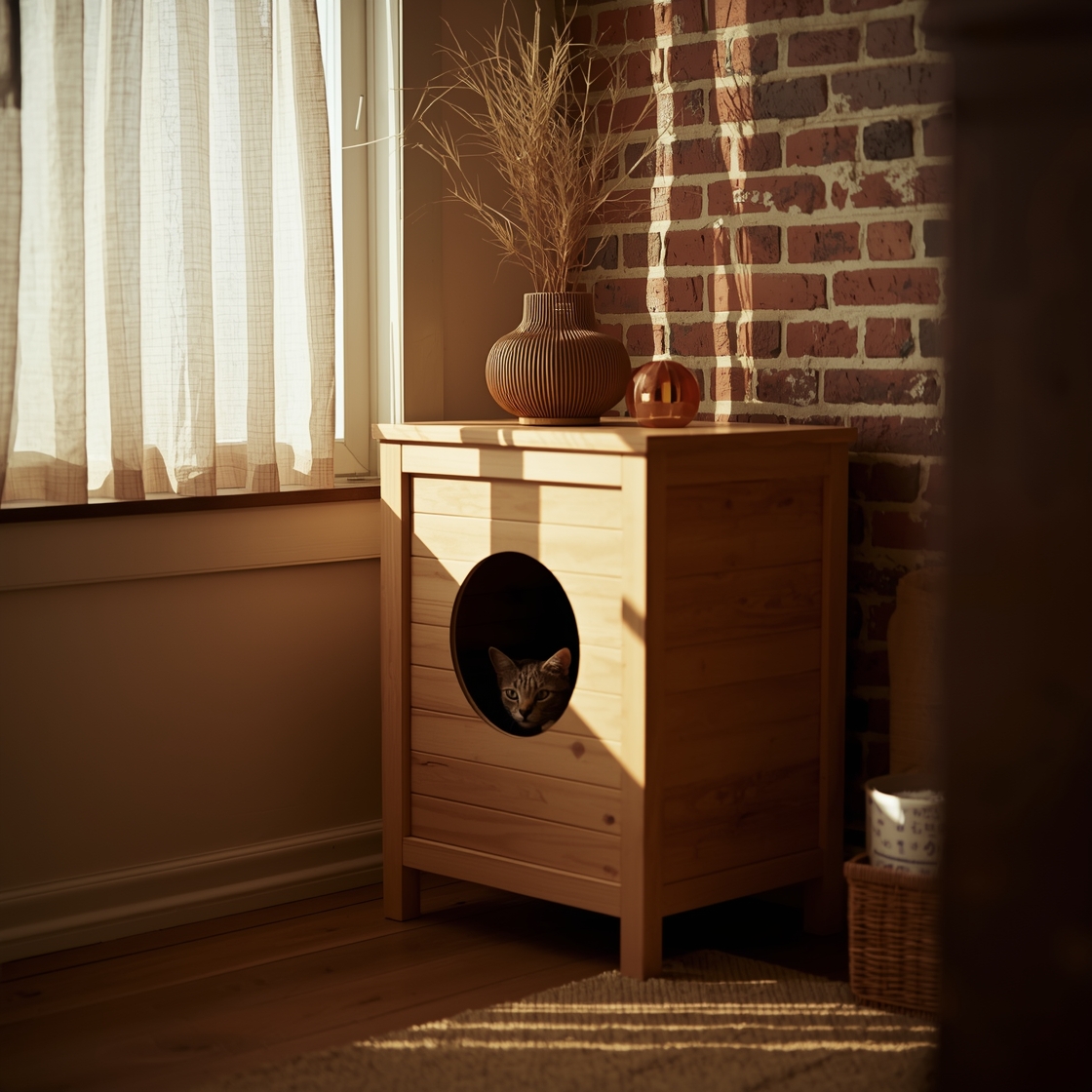
If you later hide a box, keep the opening wide and the sight lines clear. A tight cabinet can trap a shy cat. Our notes on litter box enclosure furniture cover those sight-line tradeoffs.
When the cat misses the box
The ASPCA says at least 10 percent of all cats develop elimination problems. A miss in week one is common. It is not a failed cat.
First, look at the box, not the cat. Check length, litter depth, and whether a hood is on. Fix those before you add more rooms.
Cornell reports that 10 percent of neutered males and 5 percent of neutered females still spray. Cornell also says that in homes with more than seven cats, at least one cat is likely to spray.
Spraying is a standing tail quiver on a vertical face. It is not a squat on the rug.
A squat on a soft surface often means the box feels wrong. Cornell says a cat that likes carpet may accept a finer litter. A cat that likes tile may want a thinner bed.
Clean the miss with an enzymatic cleaner. The ASPCA warns against ammonia products. Ammonia smells like urine to a cat.
If the cat keeps using one wrong spot, put a second open box there. Cornell says to use the preferred spot first, then slide the box later.
Watch for pain signs. Crying, frequent tiny puddles, or blood are medical. Pause training and get a clinic exam.
Do not lock a cat in a tiny room for weeks with no other change. The ASPCA lists that as a method to avoid. Confinement works only when the box itself is usable.
FAQ
How many litter boxes does one cat need?
AAHA’s notes say one box per cat plus one extra, or one per social group plus one extra. After week one, a single cat should have two boxes in two rooms. Boxes lined up side by side count as one station, not two.
How soon should a kitten use the box?
A healthy kitten in a quiet room with an open pan often uses it the same day. Give the setup 72 hours before you change litter or location. If there is no use by day three, recheck lip height, litter depth, and noise.
Can I start with a covered or automatic box?
Start uncovered. The ASPCA says most cats dislike lids.
Automatic units can wait until the cat is reliable and heavy enough. Whisker sets Litter-Robot 4 automatic mode at 3 pounds and up.
What litter depth should I use?
The ASPCA says most cats prefer one to two inches. Three to four inches is usually too deep. Scoop daily and top up to that shallow band.
Why did my cat stop after using the box at first?
A dirty box is the usual cause. AAHA says to scoop daily and avoid strong soaps.
A sudden litter-brand change can also break the habit. Blend new litter in slowly.
Do I need a box on every floor?
Once the cat has the run of a multi-level home, yes. AAHA says boxes should sit in different, easy-to-reach spots. Stairs should not be the only path to a toilet.
When is a miss not a training problem?
Cornell lists urinary pain, kidney disease, thyroid disease, and diabetes as medical drivers of house soiling. Spraying is a different behavior from a squat. If the cat strains, cries, or passes blood, stop rearranging boxes and seek a clinic visit.
Training succeeds when the box is bigger than the cat, cleaner than the floor, and closer than the stairs. Keep week one boring and the pan open. Expand the house only after the box is the default.