Quick answer: Treat shaded rest spots, not the open lawn. Mow and rake those bands, then apply a hose-end spray or Steinernema carpocapsae nematodes only there. Pair the yard work with indoor vacuuming and an on-pet plan from your clinic.
Flea larvae develop in shaded, moist harborage, so spraying open sunny turf misses the infestation.
This page is a research-desk comparison of outdoor flea tools. We did not spray yards, did not culture nematodes, and did not enroll households.
A product entered this guide only if its maker page names fleas as a target and sells that SKU for outdoor use. Indoor foggers, on-pet spot-ons, and bottles that never list fleas stayed out.
Why fleas persist in yards
Adult fleas live on the animal. Eggs, larvae, and pupae live off it.
That split is why a yard pass alone rarely ends a flare (according to AVMA). Treat the pet and skip the ground, and new adults keep hopping on.
A female can lay up to 50 eggs a day (according to AVMA). Those eggs drop into soil, mulch, and bedding.
The cat flea is the usual species on both dogs and cats (according to AVMA). Outdoors, cool, shady rest spots are a common source (according to AVMA).
CDC describes four stages: egg, larva, pupa in a cocoon, and adult (according to CDC). Eggs hatch in one to ten days (according to CDC).
Larvae then spin cocoons within 5 to 20 days (according to CDC). The cocoon can shield pupae from insecticides for days or weeks (according to CDC).
Adults wait for heat or movement before they emerge (according to CDC).
UF/IFAS reports larvae prefer humidity of at least 75 percent (according to UF/IFAS). They also prefer air of 70°F to 90°F (according to UF/IFAS). The life cycle often runs 30 to 75 days (according to UF/IFAS).
The Merck Veterinary Manual places outdoor development only in shade (according to the Merck Veterinary Manual). Soil moisture there sits at 1 to 20 percent (according to the Merck Veterinary Manual).
Typical sites sit under decks, beside porches, around doghouses, and under bushes (according to the Merck Veterinary Manual).
The Shade-Zone Rule
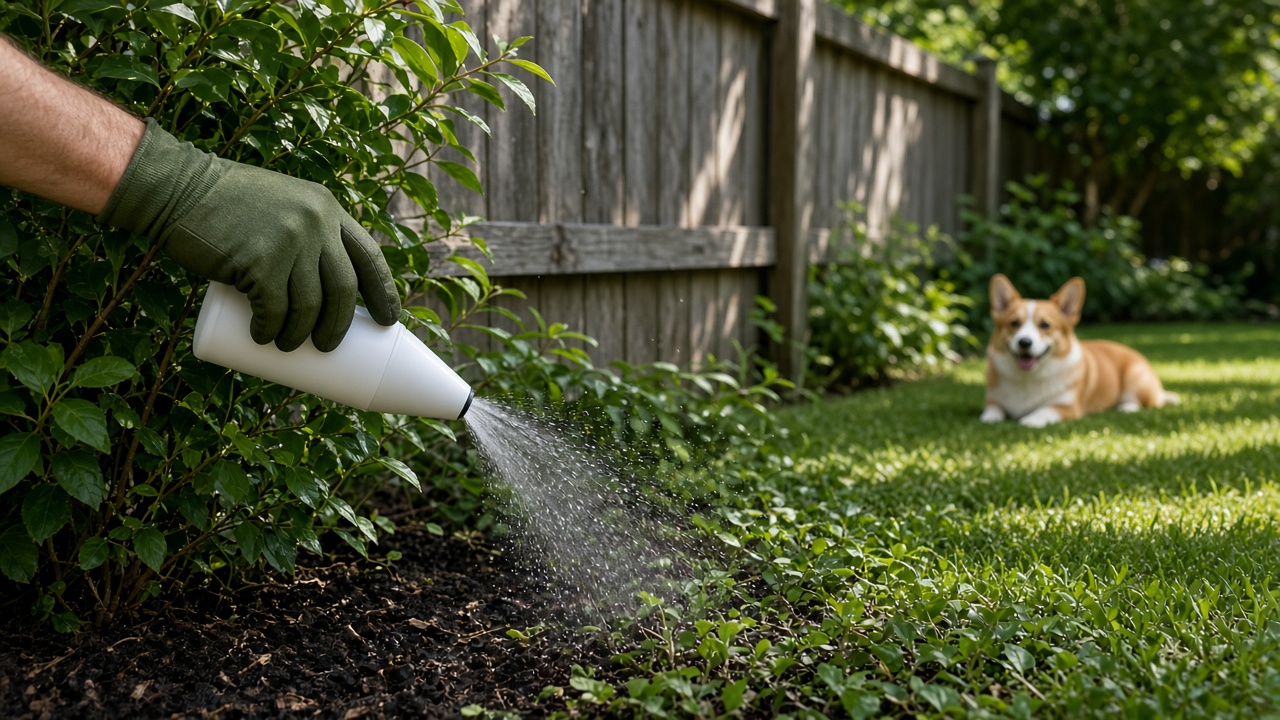
We call our working method the Shade-Zone Rule. Treat the shaded, moist bands where pets lie down. Skip the open, sunny lawn.
UF/IFAS states that spraying the entire yard is wasteful because larvae prefer those protected bands (according to UF/IFAS). Our research team used that habitat fact as the filter for every product note below.
Map the yard before you buy a bottle. Mark deck skirts, north fence lines, shrub drip lines, and any damp kennel run.
Rake leaf litter and clippings out of those bands first. Larvae feed on organic debris and flea dirt in that layer.
Mow so sun and air can reach the soil. Then apply a spray or nematodes only on the marked strips.
Hard-to-reach voids under decks are a special case. UF/IFAS advises restricting pet access when you cannot treat those voids (according to UF/IFAS).
Wildlife reseeds yards. Opossums, raccoons, and free-roaming cats drop new eggs (according to UF/IFAS).
Yard sprays
Our research team compared published specs on five hose-end sprays sold for outdoor fleas. We did not apply any of them.
Listed coverage for a flea-area pass ranged from 5,000 square feet to 16,000 square feet.
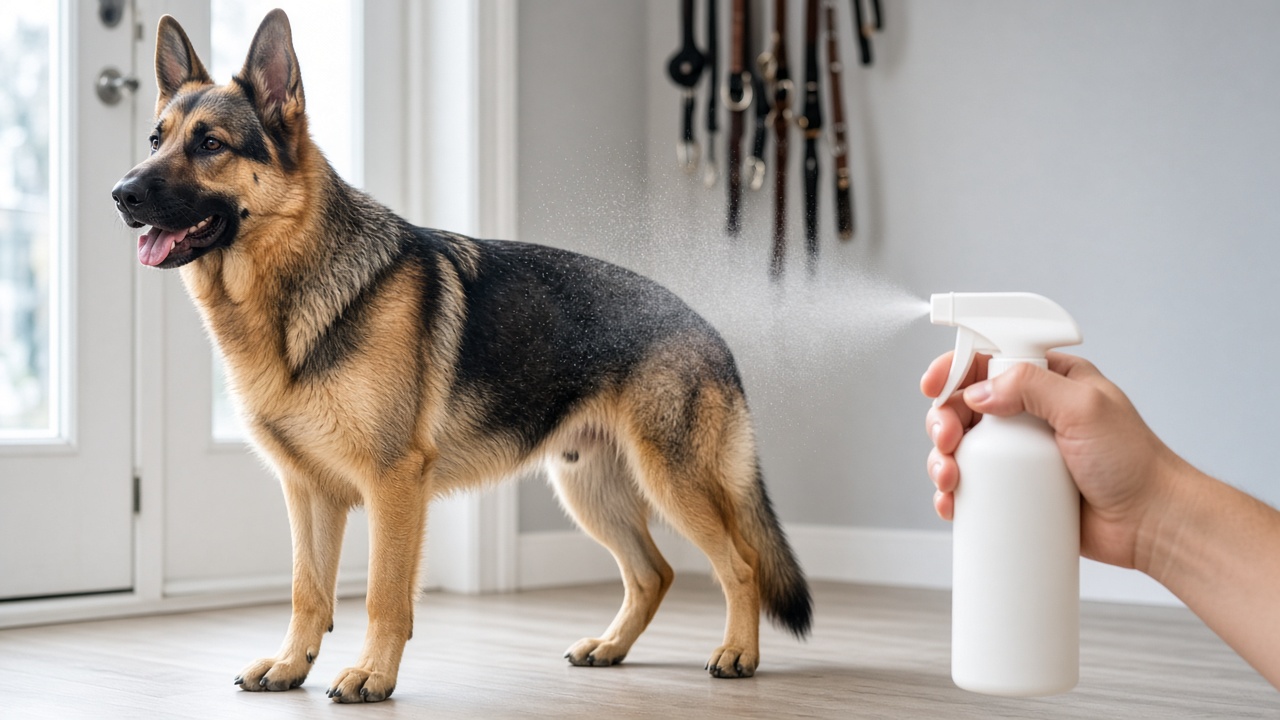
Wondercide Ready-to-Use Flea & Tick Spray for Yard + Garden lists up to 5,000 square feet to kill fleas (according to Wondercide). Spectracide Triazicide Insect Killer Concentrate for Lawns & Landscapes Ready-to-Spray lists 5,120 square feet of lawn per quart (according to Spectracide).
Ortho BugClear Insect Killer for Lawns & Landscapes Ready-to-Spray lists 5,300 square feet of lawn from a 32-fluid-ounce bottle (according to Ortho). BioAdvanced 24 Hour Lawn Insect Killer Ready-to-Spray lists up to 5,334 square feet (according to BioAdvanced).
Advantage Yard & Premise Spray lists up to 16,000 square feet around the perimeter, deck, and patio (according to Elanco).
What is in the bottle
Spectracide lists gamma-cyhalothrin at 0.08 percent (according to Spectracide). Ortho lists bifenthrin plus zeta-cypermethrin (according to Ortho).
Wondercide lists cedarwood oil at 12.63 percent and sesame oil at 2.73 percent (according to Wondercide). It also lists sodium lauryl sulfate at 1.09 percent (according to Wondercide). The Elanco and BioAdvanced pages we read name target insects, not a full active table.
How labels tell you to apply
Spectracide tells users to wet the grass a few hours before treating surface insects (according to Spectracide). Then delay extra watering or mowing for 24 hours (according to Spectracide). The same label caps lawn use at 14 applications per year and limits foundation sprays to 3 feet (according to Spectracide).
Ortho tells users to wait 4 to 6 weeks between lawn applications (according to Ortho). People and pets may enter after the spray has dried (according to Ortho).
Elanco tells users to mow a day or two before spraying (according to Elanco). Keep pets and children out until the spray has dried, and do not spray animals (according to Elanco).
BioAdvanced says the product kills listed insects, including fleas, through contact in 24 hours (according to BioAdvanced). It lists protection for up to 2 weeks and rainproofing in 1 hour (according to BioAdvanced).
Wondercide tells users to apply under 90°F when possible and claims Spray & Play convenience with no dry time (according to Wondercide).
What a spray will not do
CDC notes that cocoons can protect pupae from insecticides (according to CDC). A contact spray can kill adults on the surface and still miss the next hatch.
Plan a follow-up pass if the label allows it. Ortho and Spectracide both warn that these pyrethroids are toxic to fish and bees (according to Ortho; according to Spectracide).
Beneficial nematodes
Beneficial nematodes are live roundworms sold for soil pests. They are not a lawn chemical.
ARBICO Organics NemAttack uses Steinernema carpocapsae. The maker page lists flea larvae among the targets (according to ARBICO Organics).
UF/IFAS has reviewed this species for outdoor flea larvae (according to UF/IFAS). The nematodes work best in sandy soils and lose effect when that soil is missing (according to UF/IFAS).
Pack size and coverage
ARBICO Organics lists a 5-million pack for about 1,600 square feet (according to ARBICO Organics). A 10-million pack is listed for 3,200 square feet (according to ARBICO Organics).
How to apply them
Apply when soil is above 42°F, in early morning or predusk (according to ARBICO Organics). The soil should be moist at application, then watered lightly after the pass (according to ARBICO Organics).
ARBICO Organics recommends at least two applications, 7 to 10 days apart (according to ARBICO Organics). Shelf life is 14 days after delivery if the pack stays refrigerated and unopened (according to ARBICO Organics).
Once opened, use the whole container the same day (according to ARBICO Organics). Do not leave the water mix sitting more than 2 hours (according to ARBICO Organics).
What to expect
Nematodes locate a host within 7 to 10 days (according to ARBICO Organics). Once inside, they inject bacteria that kill the pest in 48 to 72 hours (according to ARBICO Organics).
Maximum control is listed over 2 to 4 weeks (according to ARBICO Organics). Keep the treated band moist, and water every 3 to 4 days if rain does not (according to ARBICO Organics).
How spray, nematodes, and shade work together
Use one tool family at a time on the same strip unless a label says they mix. Nematodes are living animals. Many insecticides will kill them.
Rake and mow the shade bands first. Then pick one tool that matches the soil and the household.
Outdoor products compared by attributes
The table below is an attribute sheet, not a ranking. Coverage figures are maker claims from the pages our research team read.
| Product | Form | Active or organism | Maker-listed coverage | Flea listing | Reentry note |
|---|---|---|---|---|---|
| Ortho BugClear Ready-to-Spray | 32 fl oz hose-end | Bifenthrin and zeta-cypermethrin | 5,300 sq ft lawn; 1,400 sq ft foundation | Fleas listed | Pets after dry; lawn interval 4–6 weeks |
| Advantage Yard & Premise Spray | 32 oz hose-end | Conventional yard insecticide (see Elanco label) | Up to 16,000 sq ft around perimeter, deck, patio | Fleas listed | Pets out until dry; do not spray animals |
| Spectracide Triazicide Ready-to-Spray | 32 oz hose-end | Gamma-cyhalothrin 0.08% | 5,120 sq ft lawn per quart | Fleas listed | Pets out until dry; wet grass first; wait 24 hours to mow |
| BioAdvanced 24 Hour Lawn Insect Killer | 32 oz hose-end | Contact lawn insecticide (see BioAdvanced label) | Up to 5,334 sq ft | Fleas listed among 500+ insects | Avoid walking wet turf; rainproof in 1 hour |
| Wondercide Yard + Garden Ready-to-Use | Hose-end plant-oil spray | Cedarwood 12.63%; sesame 2.73%; SLS 1.09% | Up to 5,000 sq ft to kill fleas | Kills fleas | Maker claims no dry-time wait; apply under 90°F |
| ARBICO Organics NemAttack | Live nematodes | Steinernema carpocapsae | 5 million per 1,600 sq ft | Flea larvae listed | Keep soil moist; apply above 42°F; repeat in 7–10 days |
In that 2026 Yard Label Scan, Advantage’s 16,000-square-foot claim is more than three times Spectracide’s 5,120-square-foot lawn figure. Wider coverage is a mixing-rate claim, not a quality score.
Only Wondercide, among the five sprays, claims no dry-time wait (according to Wondercide).
The house still matters
AVMA states that much of the life cycle is spent somewhere other than on the pet (according to AVMA). Yard work without indoor cleaning leaves a reservoir.
Vacuum floors and wash bedding where the animal sleeps. UF/IFAS notes that vacuuming lifts eggs and food, while larvae can curl around carpet fibers (according to UF/IFAS).
A sealed-canister machine helps here. See our best vacuum for dog hair and grooming guide for pickup and coat control.
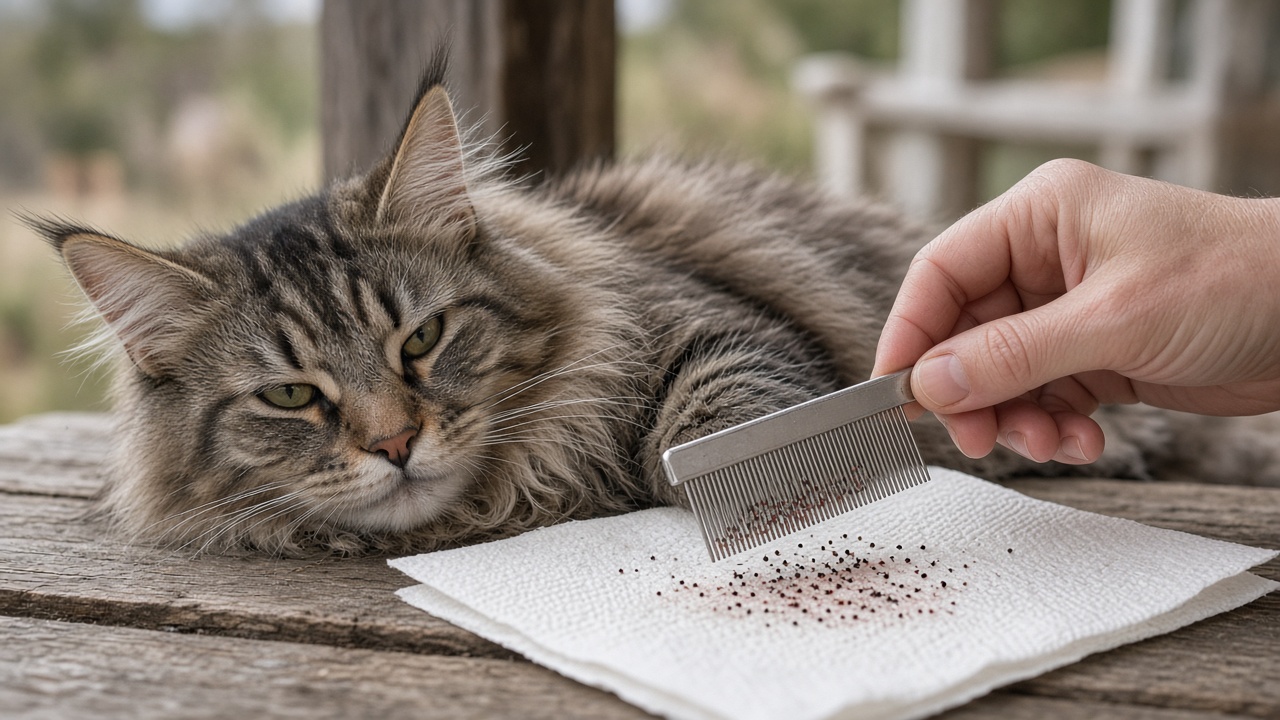
Flea dirt is dried blood. It stains fabric and leaves a stale indoor smell after a flare. Our pet odor control guide covers wash-and-air steps for bedding and rooms.
If a spray label keeps dogs off the lawn for a day, indoor time rises. Bored chewers then hit chair legs. Our dog chewing furniture guide covers that indoor stretch.
AVMA says treating only the pet gives temporary relief if eggs and larvae remain (according to AVMA). For moderate or severe cases, a yard step may also be advised (according to AVMA).
Never put a dog-only spot-on on a cat. Some dog formulas that contain permethrin are toxic to cats (according to AVMA).
FAQ
Do I need to spray my whole lawn for fleas?
No. Larvae develop in shaded, moist harborage, not open sun (according to the Merck Veterinary Manual). UF/IFAS calls whole-yard spraying wasteful for that reason (according to UF/IFAS).
How soon can pets return after a yard spray?
Follow the bottle you used. Ortho, Elanco, and Spectracide keep pets off until the spray dries (according to Ortho; according to Elanco; according to Spectracide). Wondercide claims no dry-time wait (according to Wondercide).
Do beneficial nematodes kill fleas on my dog?
No. ARBICO Organics describes NemAttack as a soil treatment for larval and other soil stages (according to ARBICO Organics). Adults on the animal need a separate on-pet plan from your clinic.
Why do fleas come back a week after I spray?
Pupae sit in cocoons that can block insecticides for days or weeks (according to CDC). Adults also wait for host cues before they emerge (according to CDC). A second pass, if the label allows it, targets that later hatch.
Can I use these yard products if I have cats?
Read each outdoor label for pet reentry. Do not spray animals with a lawn product (according to Elanco). On-animal dog products that contain permethrin stay off cats (according to AVMA).
Should I treat the house if I only see fleas outside?
Yes, if pets move in and out. Eggs fall off the host into carpets and beds (according to AVMA). Vacuum, wash sleep spots, and ask your clinic about the animals.