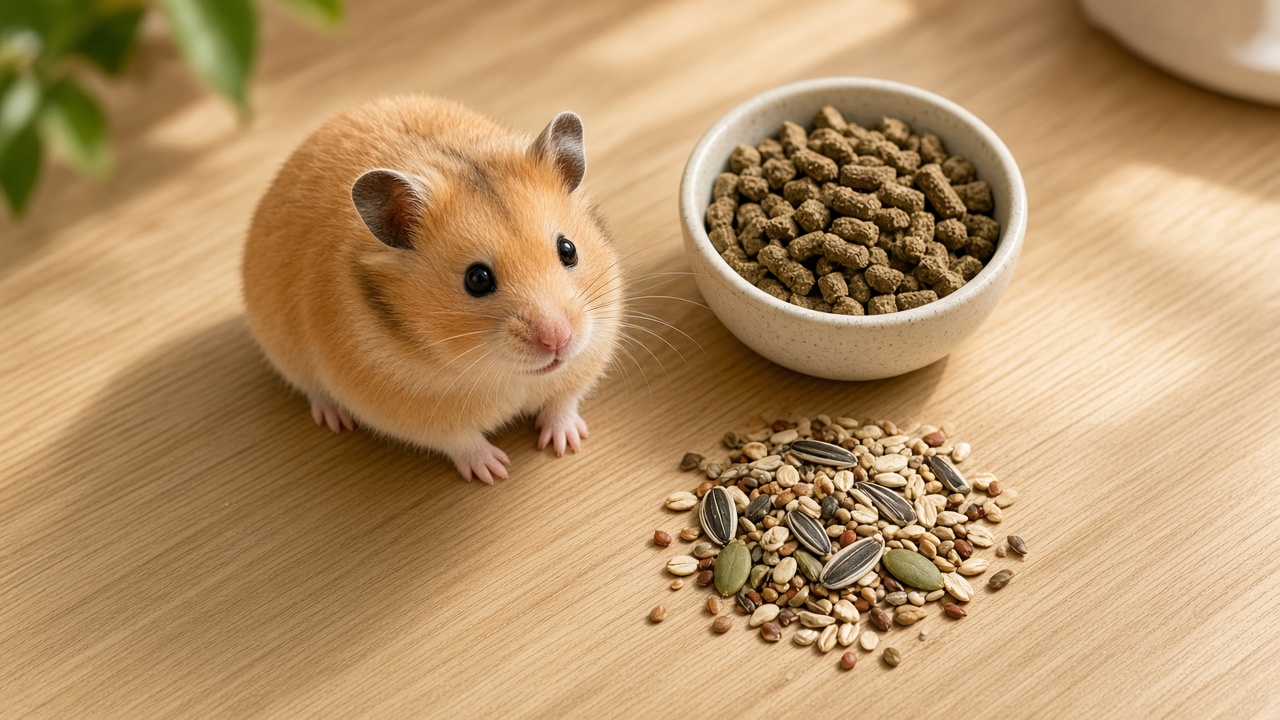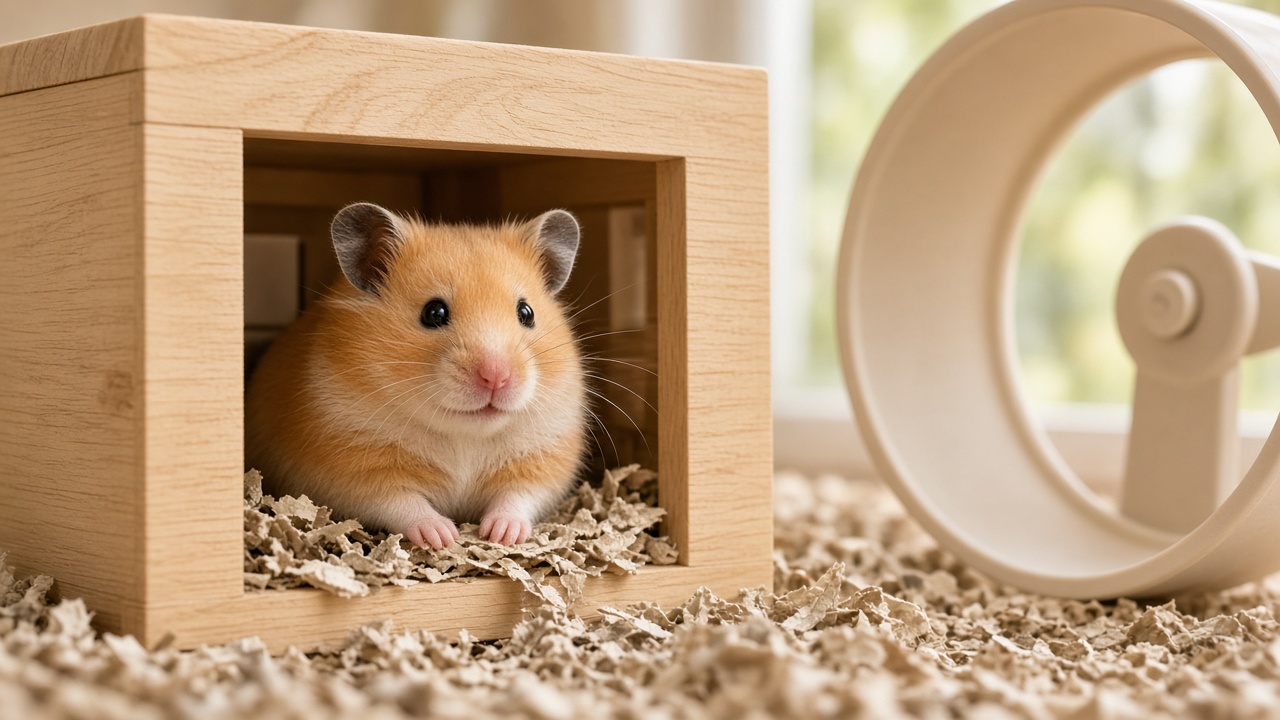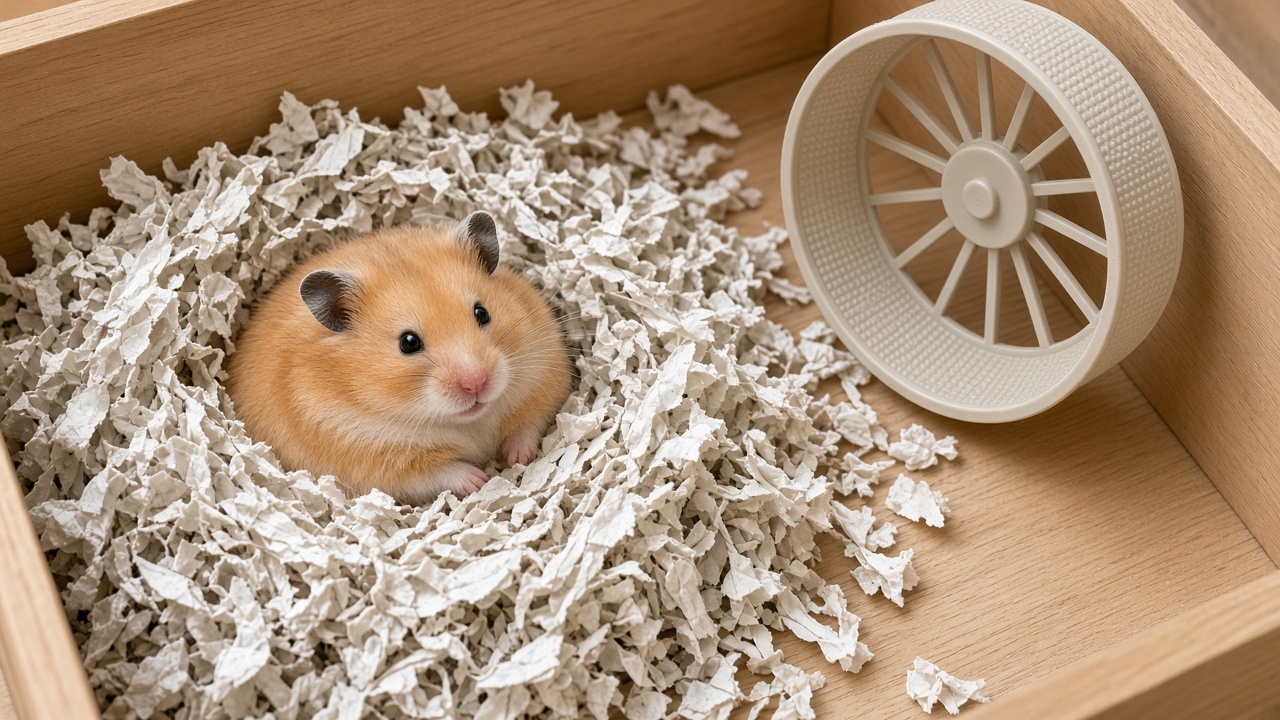
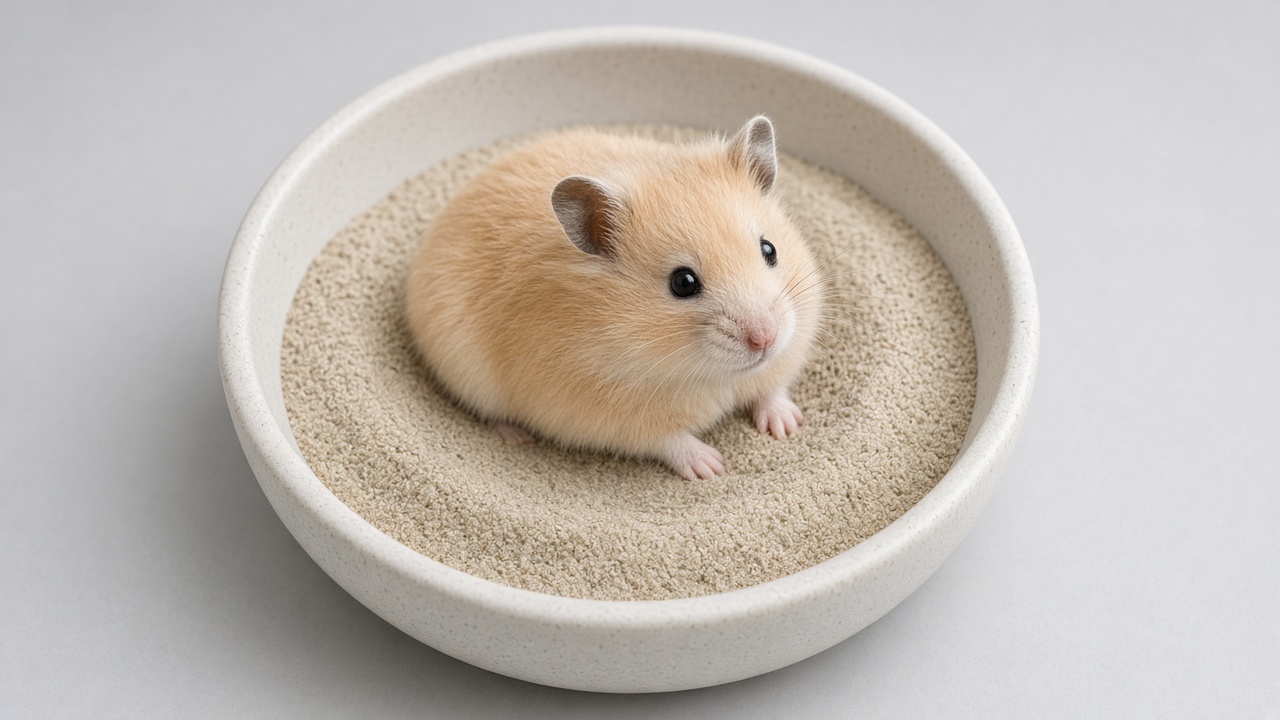
Quick answer: Put a stable, open dish of unscented, calcium-free desert sand in the enclosure and leave it there. Skip water, calcium-fortified reptile sand, and chinchilla dusting powder. Sift waste every day.
A hamster sand bath is a dry dish of unscented, calcium-free, low-dust sand, not water and not chinchilla dust.
This page is a published-spec guide from a pet research desk. We did not house hamsters for this article. We did not run a dust meter, and we did not wash any animal.
Selection rule: A product entered this article only if the maker’s current page listed pack weight. It also had to list a material or species claim. We left out play sand, construction sand, and unlabeled bulk bags.
We kept one calcium-fortified reptile sand and one chinchilla dusting powder as aisle-confusion controls.
Our research team compared six current maker pages in September 2026. None listed a grain size in microns. That gap is the Pet Bench Sand Spec Check.
A label that says “dust” or “calcium” tells you more than a bag photo.
Why a hamster uses sand, not water
A hamster sand bath is a grooming tool. It is not a splash pool. The animal rolls and kicks dry grain through the coat.
The grain lifts extra oil and loose debris. Water is the wrong tool for that job. A wet hamster loses heat fast.
Soap strips oils the coat still needs. Sticky fur is a spot-clean job, not a soak.
The same dry-groom idea shows up in other species. A step-by-step rabbit grooming guide is also about coat care without a soak. A waterless dog-cleaning guide covers the same logic for a different pet.
The Merck Veterinary Manual’s pet-owner hamster chapter says hamsters are normally housed singly except during breeding. Sexually mature females fight. Plan one sand dish per hamster.
That same Merck chapter sets a living-space range of 64°F to 79°F (17°C to 26°C). Keep the dish inside that band. A sand bath on a sunny windowsill can overheat the grain.
Merck also says the enclosure should be at least 6 inches (15 cm) high. Enclosures 8 inches (20 cm) or more allow deeper bedding. A short dish can sink in deep litter, so place it on a solid floor or a firm platform.
The 4-Gate Sand Rule
We use one named filter for every bag: the 4-Gate Sand Rule. A product has to clear all four gates before it belongs in a hamster dish.
Gate 1 is calcium-free. If the maker lists calcium carbonate as the substrate, treat it as reptile or hermit-crab substrate. It is not bath sand.
Gate 2 is grain, not powder. If the maker calls it a dusting powder, it is built for a different coat.
Gate 3 is no perfume and no dye claim. A flower-scented SKU exists to please people. It does not help a hamster roll.
Gate 4 is a dish the hamster can enter, turn, and roll in. A shot-glass ramekin fails even if the sand is right.
The U.S. Food and Drug Administration’s Compliance Policy Guide Sec. 653.100 covers products intended solely to cleanse or beautify animals. FDA calls those products grooming aids.
Bath sand sits in that class when it is sold as a cleanser, not as a drug.
AAFCO states on its startup pages that it has no statutory authority to regulate pet products. AAFCO also says it does not regulate, test, approve, or certify pet foods. AAFCO model rules target animal feed labels, not sand.
Which current products match the rule
The table below is an attribute grid. It is not a ranking. It is not a price list.
We compared the six products our research team could match to a current maker page. Four are sold as sand. One is a vitamin-fortified calcium substrate, and one is a chinchilla dusting powder.
| Product | Maker-listed material or form | Pack size on maker page | Listed species or use | Additive or form claim |
|---|---|---|---|---|
| Niteangel Desert Bathing Sand (Pure Desert Sand) | Desert sand | 2.5 lb, 6 lb, 12 lb | Hamsters, gerbils, mice, degus, other small pets | Desert-sand SKUs on the same page |
| Niteangel Desert Sand Mixed w/ Zeolite | Desert sand mixed with zeolite | 2.5 lb, 6 lb | Same small-pet list | Zeolite blend listed as a separate material |
| BUCATSTATE Hamster Bath Sand | Natural desert sand | 3.3 lb, 5.5 lb, 6.6 lb | Hamsters plus a long small-animal list | Fine, granular, or plant-scented styles |
| Zoo Med ReptiSand Desert White | Natural sand with no added dyes or chemicals | 10 lb (SW-10), 20 lb (SW-20) | Desert reptiles, including bearded dragons and sand boas | No calcium claim on this SKU |
| Zoo Med Vita-Sand | Calcium carbonate plus listed vitamins | 10 lb in four colors | Desert reptiles; also sold for hermit crabs | Vitamin-fortified calcium carbonate |
| Kaytee Chinchilla Dust | All-natural dusting powder | 2.5 lb; box 4 in. × 4.25 in. × 6.75 in. | Chinchillas | Sold as powder, not hamster sand |
Niteangel’s sand page lists seven material-and-weight variants on one listing. Pure Desert Sand is sold in 2.5 lb, 6 lb, and 12 lb bags. The zeolite mix is sold in 2.5 lb and 6 lb bags.
White Sand is sold in 2.5 lb and 6 lb bags. That page shows a 4.7 out of 5 score from 12 reviews.
BUCATSTATE’s hamster sand page lists three styles and three sizes. Fine Sand, granular “Hamster Sand,” and Fine Sand with Flower sit on the same product. Sizes are 3.3 lb, 5.5 lb, and 6.6 lb.
Pick an unscented fine or granular style. Skip the plant-scented SKU under Gate 3.
Zoo Med’s ReptiSand Desert White page lists item SW-10 at 10 lb and SW-20 at 20 lb. Zoo Med writes that Desert White and Natural Red are natural sand colors with no added dyes or chemicals. The page markets the sand for desert reptiles and does not name hamsters.
The useful fact is the missing calcium claim.
Zoo Med’s Vita-Sand page is the contrast row. The composition line starts with calcium carbonate. It then lists magnesium carbonate, iron oxide, beta-carotene, and a vitamin stack.
Zoo Med tells keepers to add at least ½ inch (1.3 cm). It also says to replace the substrate entirely every 6 months. That is reptile husbandry copy, and it is a clear Gate 1 fail for a hamster dish.
Kaytee’s Chinchilla Dust page calls the product a dusting powder. The listed weight is 2.5 pounds. The box is 4 inches by 4.25 inches by 6.75 inches.
That is a Gate 2 fail. A hamster lung is not a chinchilla coat. If a store clerk hands you “chinchilla sand,” read the form word.
How to set up the dish
You need two parts: safe sand and a tip-resistant dish. The dish can be ceramic, thick glass, or a lidded acrylic box. Soft wood soaks urine, and a light plastic bowl flips.
Niteangel’s rectangle acrylic sand-bath box is listed at 12.2 inches long by 8.6 inches wide by 4 inches high. That footprint fits a corner. Confirm your cage can take 12.2 inches before you buy.
A Syrian needs more floor than a dwarf.
Fill the dish so the hamster can roll without burying the rim. None of the six sand pages listed a hamster-specific fill depth.
Zoo Med’s ½ inch (1.3 cm) line is for Vita-Sand in a reptile tank. Do not copy that number into a hamster bath.
A working start is a layer deep enough to kick, not deep enough to hide the walls. If sand pours over the rim on the first roll, you overfilled.
Set the dish on a hard surface. Deep bedding will tilt a 4-inch box.
Merck’s 8-inch (20 cm) height note exists so bedding can be deep. The sand dish still needs a firm base.
Leave the dish in the enclosure. A hamster grooms on its own clock. Pulling the dish after a short session is a dust-bath habit, not a hamster-sand habit.
Watch the first night. Sneezing, wet eyes, or a duller coat after a roll means the grain is wrong. Dump it and switch to a coarser unscented desert sand.
Keep food out of the dish. Merck notes that hamsters hoard pellets in pouches and around the cage floor. Sand mixed with stale food is no longer a bath.
How to keep the bath and the cage clean
Many hamsters also pee in sand. That does not void the setup. It makes the dish a toilet corner you can lift.
Scoop wet clumps as soon as you see them. A kitchen sieve works. So does a small slotted spoon.
Drop clean grain back. Bin the wet ball.
Dump the whole dish when the sand stays damp, smells sharp, or looks gray. Wash the container with hot water. Dry it fully, then refill with dry sand only.
Do not add detergent perfume. Residue becomes Gate 3 by accident.
Cage hygiene still matters. A clean sand dish cannot rescue a dirty tank. Pair the bath with a full hamster cage cleaning routine.
Merck says cedar chips and fresh pine should be avoided because of possible toxicity. It prefers paper-based bedding that is as dust-free as possible. Dusty litter plus dusty sand is a double load.
Merck also says cotton balls can catch in toenails and feet. Keep nesting paper in the nest, not in the sand.
Merck says the water bowl or bottle should be cleaned and sanitized regularly, usually daily. Sand on a sipper tip can clog the ball. Merck limits healthy treats to not more than 10% of the total diet.
What this comparison does not prove
The Pet Bench Sand Spec Check is a label audit. It is not a lung study. It is not a coat-oil assay.
A “low dust” or “no dust” line is the maker’s wording. We did not weigh airborne particles. We did not compare bags under a microscope.
We also did not bake play sand, rinse construction sand, or sterilize a sandbox bag. Those methods sit outside the selection rule. If a bag has no maker composition line, it did not get a row.
Zoo Med ReptiSand is a reptile SKU with a clean additive claim. That does not make Zoo Med a hamster brand. It makes that one SKU easier to sort than Vita-Sand.
If a hamster already has a wet nose, a click, or a matted rump, stop guessing with bags. A clinician who treats small mammals should see the animal. This desk does not diagnose.
FAQ
Can I use chinchilla dust for a hamster sand bath?
No. Kaytee’s own product page sells Kaytee Chinchilla Dust as a 2.5 lb dusting powder for chinchillas. Powder is Gate 2.
Use visible grain sold as sand.
Is reptile sand safe for hamsters?
Only if the maker does not list calcium as the substrate. Zoo Med ReptiSand Desert White is sold in 10 lb and 20 lb bags. That page claims no added dyes or chemicals.
Zoo Med Vita-Sand is calcium carbonate in 10 lb bags and fails Gate 1.
How deep should I fill the dish?
The six sand pages we compared did not publish a hamster fill depth. Fill until the animal can roll without burying the rim. If walls disappear, you used too much.
Should the sand bath stay in the cage all day?
Yes, for a hamster. Leave a dry, sifted dish in place. Chinchilla dust schedules belong to a different species and a different product class.
Can I wash my hamster with water instead?
Do not use a water bath as routine grooming. Sand is the dry tool. A damp cloth on one sticky patch is spot care, not a soak.
What if my hamster pees in the sand?
Scoop clumps daily. Replace the dish when the grain stays wet. A used corner is still easier to lift than soaked bedding.
How big should the container be?
Niteangel lists a rectangle box at 12.2 by 8.6 by 4 inches. That is a useful Syrian-scale footprint if the cage can take it. A dwarf can use a smaller open dish if it can still turn around.