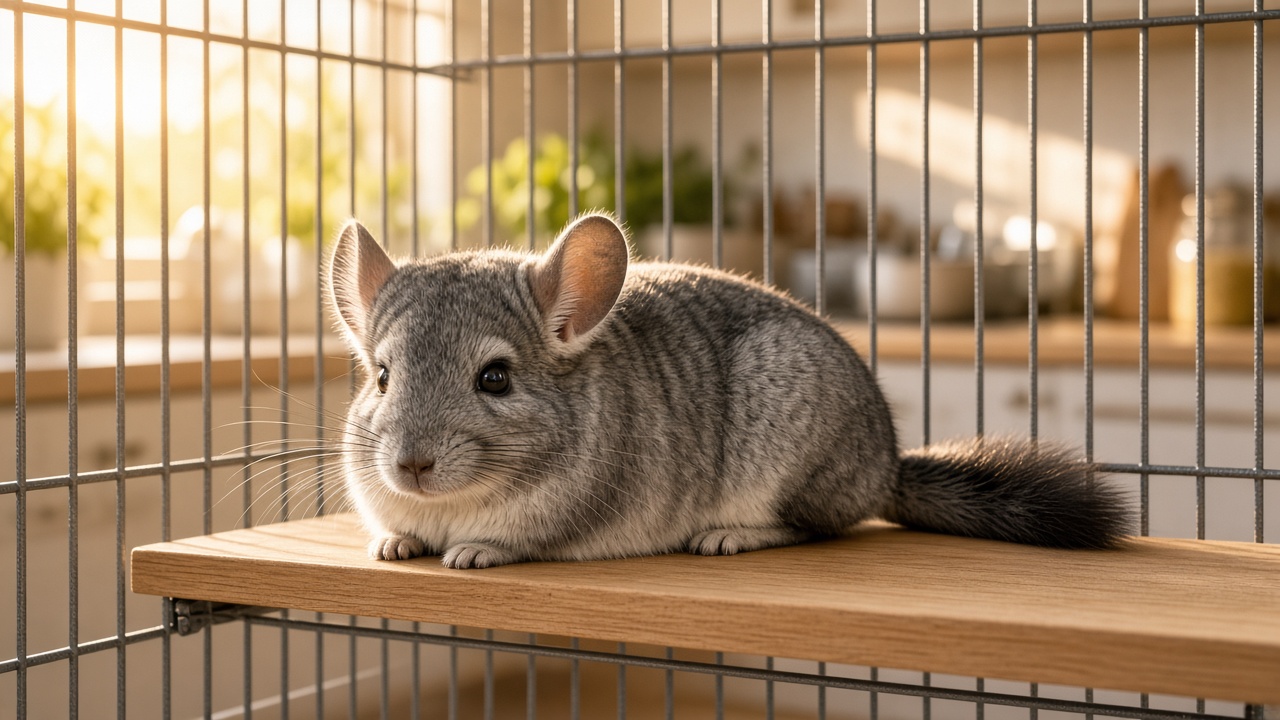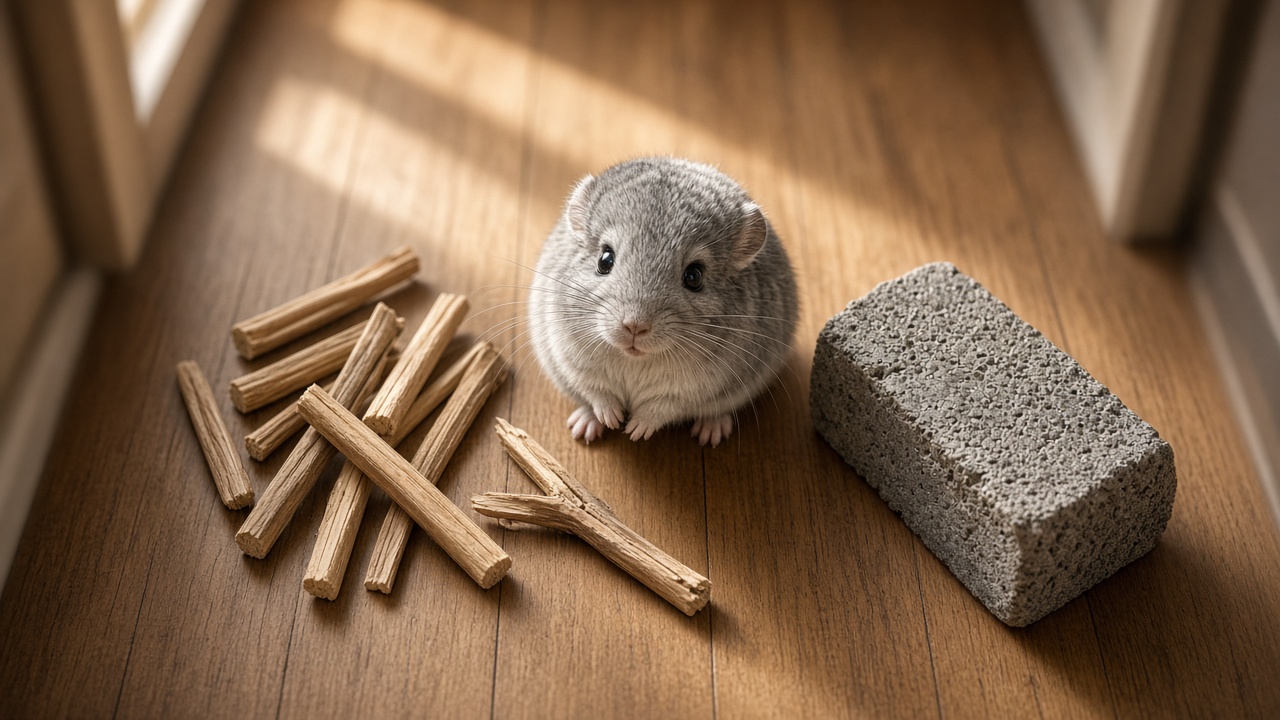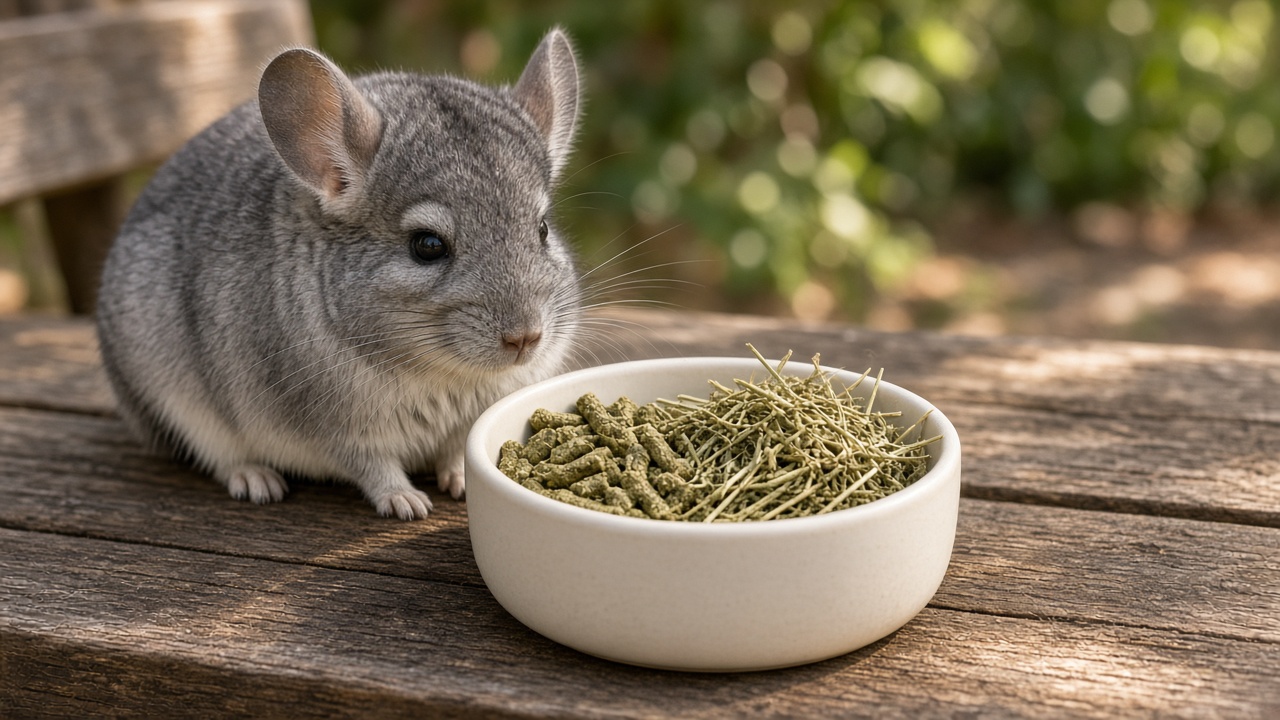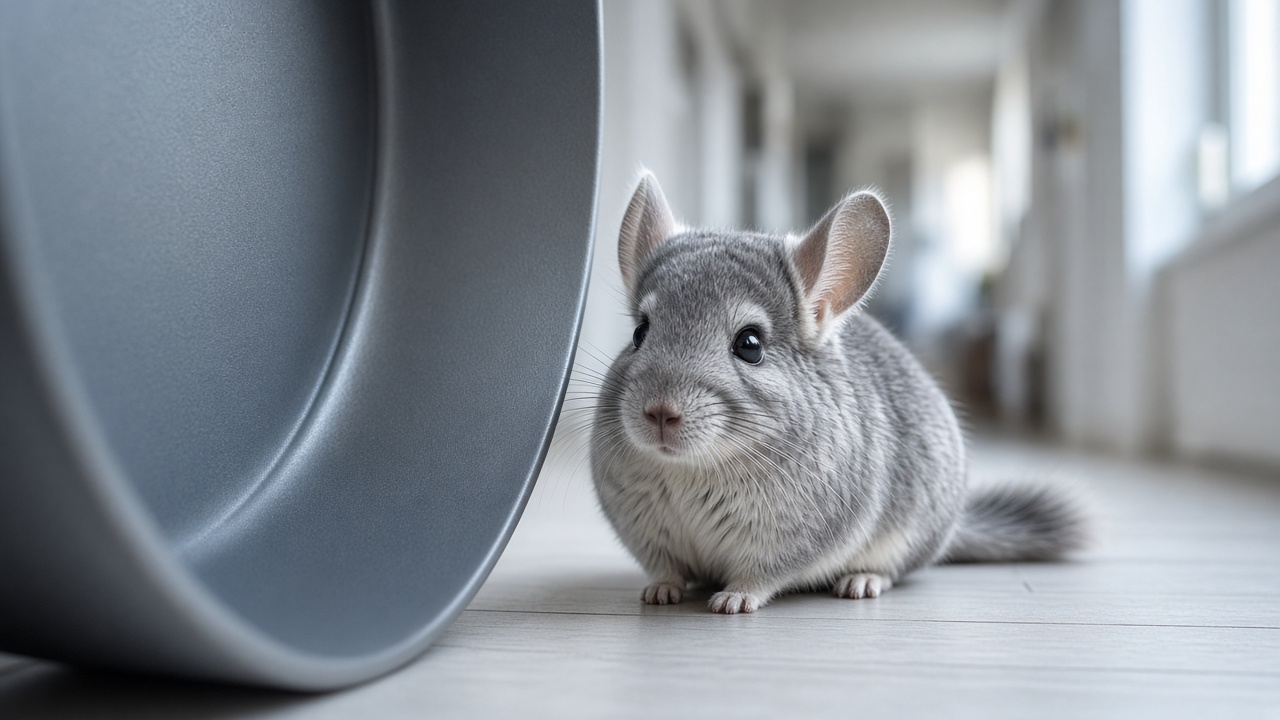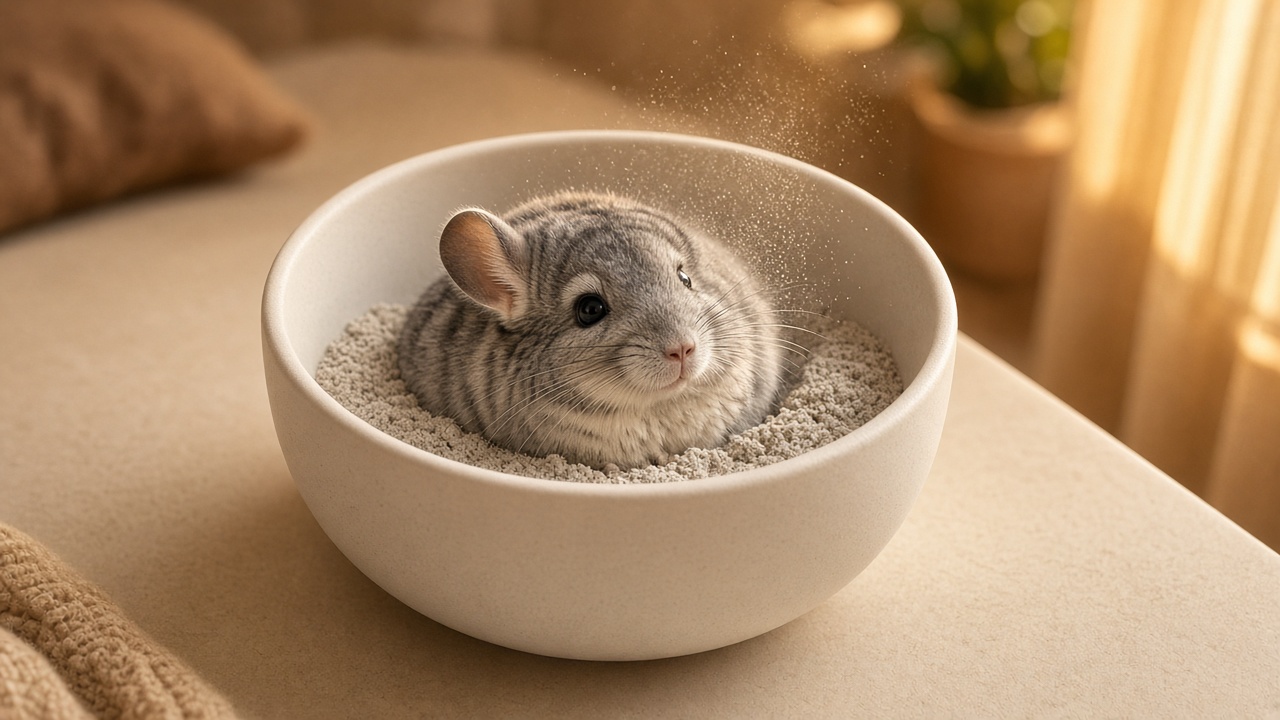
Quick answer: Offer a chinchilla a dust bath two to four times a week. Use about one inch of volcanic dust in a stable tub, then take the tub out after a short session. Do not wash a chinchilla with water.
A chinchilla bath is a timed dust session, two to four times weekly, not a water wash. This page is a research-desk comparison of published dust-bath directions and current maker specs. We did not run home trials, weigh coats, or film timed sessions.
How we chose what to cover
We used one selection rule for every product and every scenario on this page.
We included a product only if its maker page names chinchillas and lists a net weight or an exterior dimension. We included only dry-dust baths a keeper can lift out after one session.
We left out hamster sand, play sand, bird baths, cornstarch, and any water-wash kit. We also left out cages sold without a bath accessory.
That rule is why this guide covers five currently listed items. Three are dusts. Two are bath houses.
What a chinchilla bath is, and is not
A chinchilla bath is a roll in fine volcanic dust. The animal flips and works powder into the coat. The dust lifts oil, loose fur, and trapped moisture.
It is not a soak. It is not soap. It is not a bowl of water left in the cage.
Oxbow Animal Health states that a chinchilla averages 60 to 70 hairs per follicle. Kaytee’s care pages put the upper figure near 80 hairs per follicle.
Either count is far denser than a single human hair per follicle. That density is why water stays against the skin.
Oxbow’s care article warns that trapped moisture can lead to skin infection or inflammation. Kaytee’s care pages make the same point. Do not wash the coat.
Wild chinchillas roll in volcanic ash. The Merck Veterinary Manual places those animals in the Andes of northern Chile. The cited elevation range is 3,000 to 5,000 meters.
Packaged dust is the home substitute. Merck’s husbandry notes say most commercial dusts are powdered pumice or aluminum silicate.
Oxbow’s product page lists Blue Beauty Dust as the ingredient in POOF! Chinchilla Dust Bath. Oxbow’s support article says Blue Beauty is 100 percent volcanic ash sourced in the United States.
Miller Manufacturing says Lixit Blue Beauty contains no added chemicals or free silica.
Sand sold for hamsters is a different grain. Oxbow’s care article says coarse sand absorbs oil poorly. It can lodge at the hair base.
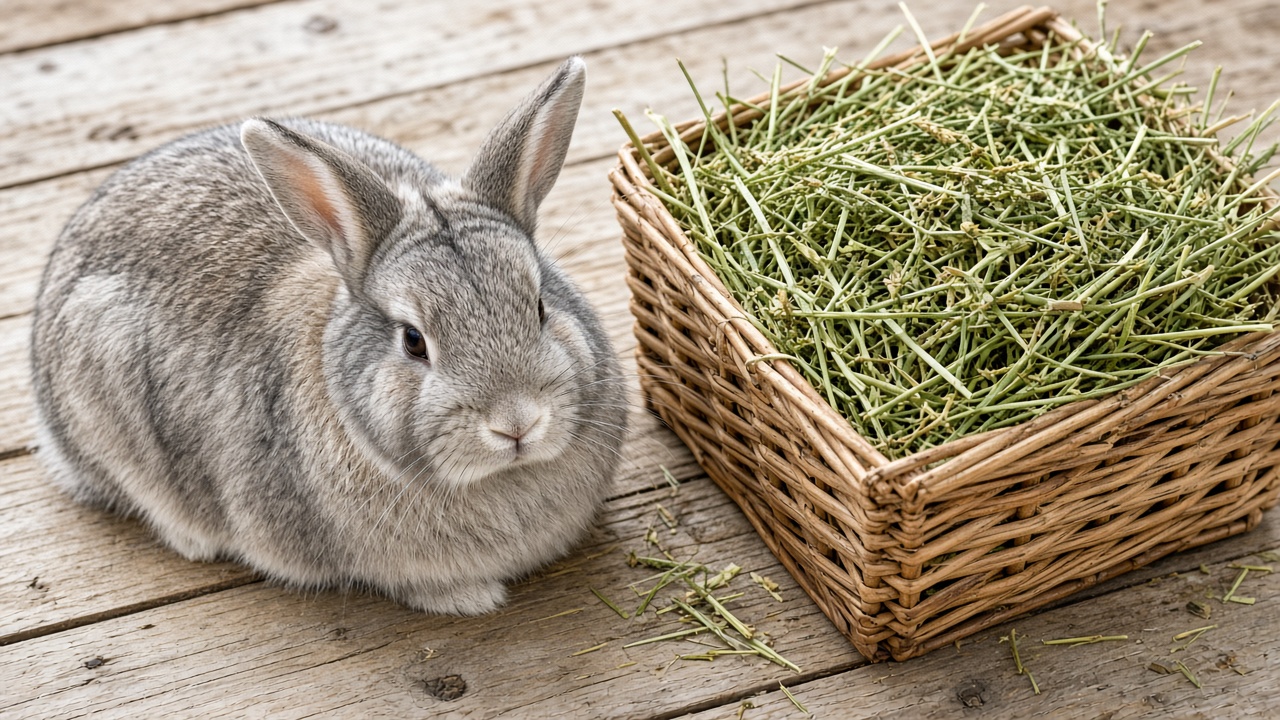
Other pets need other dry-clean methods. A rabbit is brushed, not dusted. See our step-by-step rabbit grooming guide.
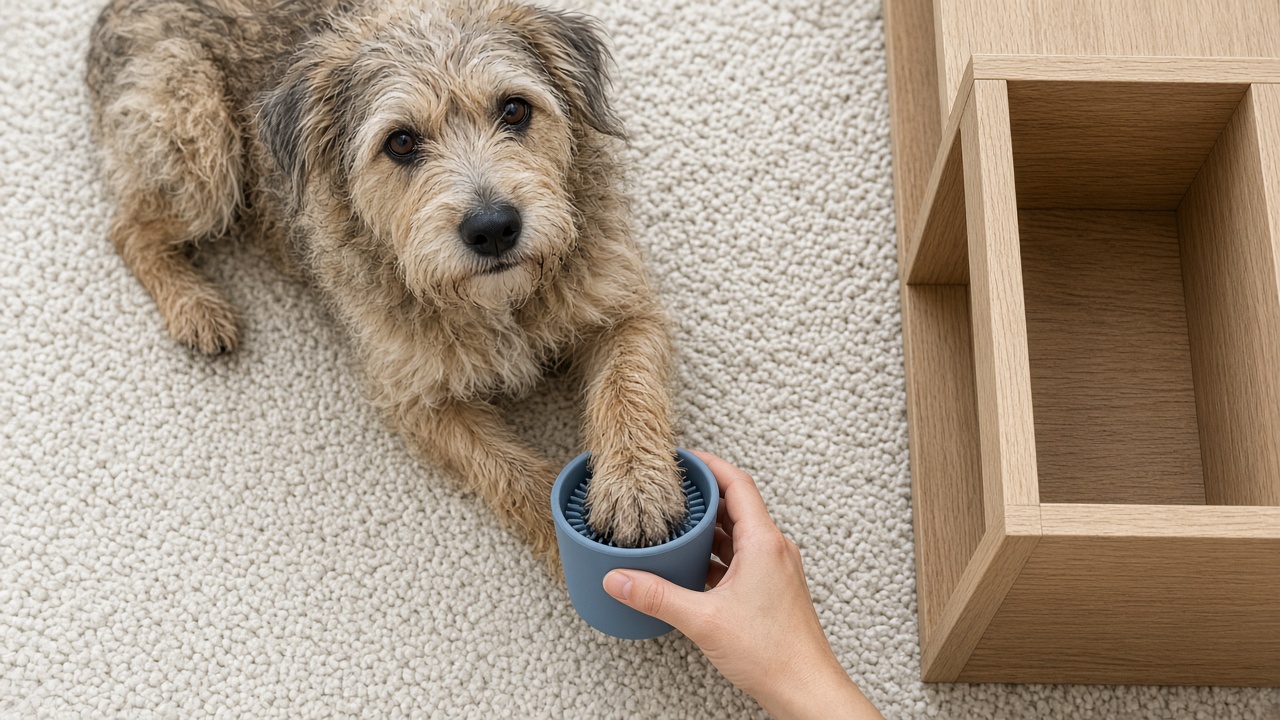
A dog can be wiped without a soak. See our guide to cleaning a dog without a bath. Neither method replaces chinchilla dust.
How often to offer a dust bath
Published directions do not agree on the minute count. They do agree on a short, repeated offer. Then they agree on removal.
The Merck Veterinary Manual says place a dust box in the cage two to three times a week. Fill it with about 2.5 cm of dust. That is one inch.
Leave the box for up to 15 minutes at a time.
Oxbow’s POOF! page says bathe two to four times per week. Use one inch of dust. Remove the house after three to five minutes.
Oxbow’s care article repeats that range. Humid weather often needs closer to four baths a week. Dry or cold rooms may need only two.
Kaytee’s care pages say offer a bath at least twice a week. One Kaytee article says leave a house in the habitat for about 15 minutes. It expects the actual roll to last five to 10 minutes.
Another Kaytee article says offer a two-inch layer two to three times each week, usually in the evening.
Hagen’s Living World listing in Spain says offer a dust bath at least twice a week. It says 20 to 30 minutes of bath time is usually enough. Then remove the sand so the house is not used as a toilet.
Our research team analyzed those published times side by side. Maker and manual access windows run from Oxbow’s three to five minutes to Living World’s 20 to 30 minutes. That is a fourfold to tenfold spread on the same task.
We treat Merck’s 15-minute cap as the middle published figure. We treat Oxbow’s three-to-five-minute pull as the shortest published pull.
A simple weekly pattern
Start with three short offers in a typical indoor week.
Add a fourth offer if the room is humid and the coat looks oily. Drop to two if the skin looks dry or the ears look flaky. Oxbow’s care article describes that humidity split.
Never leave the tub in overnight. Merck says boxes left in the cage become soiled with feces. Oxbow says a long stay turns the tub into a litter box.
Kaytee says an always-on bath can dry the skin.
Young animals and irritated eyes need a shorter offer. Merck links too-frequent bathing to conjunctivitis without a respiratory infection.
It also links excessive bathing to lung-tissue changes. Shorten or skip if the eyes look red.
How to give a dust bath
Set the bath up outside the main clutter if you can. A kitchen towel under the tub catches the plume.
What you need
You need chinchilla dust, not play sand. You need a stable tub the animal can enter and roll in.
Kaytee’s product page for Chinchilla Dust lists a 2.5-pound carton. The carton measures 4 inches by 4.25 inches by 6.75 inches.
Oxbow’s support catalog lists POOF! as a 2.5-pound dust. Miller Manufacturing lists Lixit Blue Beauty in 13-ounce, 27-ounce, and 3-pound sizes.
Kaytee’s Chinchilla Bath House page lists 8.62 inches by 9 inches by 8.5 inches. The house weighs 1.35 pounds.
Hagen lists the Living World Chinchilla Bath House at 21 cm in diameter.
A clean ceramic crock also works if it cannot tip. Oxbow’s product page says use a bath house or a stable container.
The session
- Pour about one inch of dust into the tub. Merck and Oxbow both use that depth. Kaytee’s care pages allow a half inch to two inches, depending on body size.
- Set the tub where the chinchilla already likes to stand. Do not chase the animal into it.
- Let the animal enter on its own. A willing roll is the whole method.
- Watch the clock. Pull the tub at the short end of your chosen published window if the eyes look wet.
Oxbow’s three-to-five-minute window is the tightest published window we found.
- Lift the tub out. Tip out clumps, feces, and packed fur. Store the house dry until the next offer.
- Reuse clean, loose dust. Oxbow says reuse is fine until the dust clumps or looks soiled. Replace the lot when it cakes.
Do not rinse the animal afterward. Do not blow the coat with a hair dryer. Shake-out time on a towel is enough.
Dust and bath houses we compared
The table below is an attribute grid. It is not a ranking. There is no price column.
| Product | Role | Listed size | Maker-stated material or design | Maker-stated access time |
|---|---|---|---|---|
| Kaytee Chinchilla Dust | Dust | 2.5 lb; carton 4 in × 4.25 in × 6.75 in | All-natural dusting powder | Not stated on the product page |
| Oxbow POOF! Chinchilla Dust Bath | Dust | 2.5 lb on Oxbow’s related-product listing | Blue Beauty volcanic ash | 3–5 minutes; 2–4 times weekly |
| Lixit Blue Beauty Chinchilla Dust Powder | Dust | 27 oz size listed; also 13 oz and 3 lb | Natural dust; no added chemicals or free silica | Not stated on the product page |
| Kaytee Chinchilla Bath House | Tub | 8.62 in × 9 in × 8.5 in; 1.35 lb | Translucent plastic; concave bottom; sample sand included | Not stated on the product page |
| Living World Chinchilla Bath House | Tub | 21 cm diameter | Sphere bottom; removable tinted cover | 20–30 minutes; at least twice weekly |
Kaytee’s dust page does not state a session length. Use Kaytee’s separate care pages for timing, or use Merck’s 15-minute cap.
Oxbow is the only dust in this set with a minute count on the product page. Lixit states mining and silica claims. It does not state a weekly schedule.
Kaytee’s house includes a sample of Kaytee Bath Sand. That is a starter packet, not a full season of dust. Plan on a separate 2.5-pound carton or a 27-ounce Lixit jar after the sample.
Living World’s 21 cm bowl is about 8.3 inches across. Kaytee’s house is 8.62 inches on the long side. Hagen says the sphere bottom keeps contact with the dust and holds sand inside.
Our research team did not score mess control. We only compared listed shapes. An enclosed house should cut floor scatter.
Heat, humidity, and leftover dust
Chinchillas handle cold better than heat. Merck gives an adapted range of 18.3 to 26.7°C. That is 65 to 80°F.
Merck’s heat rule adds the Fahrenheit temperature to the relative humidity. A sum over 150 is called dangerous.
Example: 85°F plus 65 percent humidity equals 150. Merck says chinchillas develop matted fur above 80°F in a humid room.
Dust will not fix heat stress. Move the cage first.
In a humid room the coat holds oil longer. Oxbow’s care article then points toward four baths a week. In a dry winter room, two baths may be enough.
Store leftover dust in a closed jar. Humidity cakes the powder. Caked dust is the discard signal on Oxbow’s page.
Sweep the cage after each session. Fine dust on hay is wasted feed.
People who react to powder should wear a mask while pouring. Do not shake the carton over the animal’s face.
Merck notes that all domestic chinchillas in the United States descend from 13 animals imported in 1927. That is a history fact, not a bathing instruction.
If the coat still looks oily after a month of timed baths, change the dust brand. Do that before you add more days.
If the skin looks tight or flaky, subtract a day. Persistent eye wetness is a stop sign. End the session and keep the tub out.
FAQ
Can I bathe a chinchilla in water?
No. A water wash is not a chinchilla bath. Kaytee and Oxbow both warn that dense fur holds moisture against the skin.
Use volcanic dust. Keep the animal dry.
How often should I give a chinchilla a dust bath?
Most published directions we compared say two to four times a week. Merck’s manual says two to three times. Oxbow’s product page says two to four.
Hagen’s Living World page says at least twice, then remove the tub.
How much dust do I pour in the tub?
Merck and Oxbow both say about one inch, or 2.5 cm. Kaytee’s care pages allow a half inch to two inches.
Start at one inch. Add a little only if the animal cannot roll and still get coated.
How long should the bath last?
Oxbow’s product page says three to five minutes. Kaytee’s care pages expect a five-to-10-minute roll inside a 15-minute offer.
Merck caps the box at 15 minutes. Hagen’s Living World page allows 20 to 30 minutes; pull early if the eyes look irritated.
Can I leave the dust house in the cage all day?
No. Merck says long stays soil the dust with feces. Oxbow says the tub becomes a litter box.
Kaytee says an always-on bath can dry the skin. Lift the house out when the roll ends.
Is play sand or hamster sand the same thing?
No. Oxbow’s care article says sand is a poorer oil absorber. Grains can lodge at the hair base.
The products we listed are volcanic ash or chinchilla dusting powder. Hamster desert sand did not meet our selection rule.
What if my chinchilla will not enter the tub?
Set the tub in a familiar spot. Do not push the animal in. Try an open crock if a closed house feels tight.
Some animals wait until evening. Kaytee’s care pages say evening is the usual active window. Skip the session rather than force it.