
Quick answer: Leave the mother and pups alone for one week. Set food and water by the nest. Do not scoop the nest or pick up the babies.
A baby hamster is a pup that stays on the nest and nurses. Leave a new hamster litter unhandled for 7 days; Merck Veterinary Manual links nest disturbance to pup cannibalism.
This page compares published manuals and maker specs; we did not raise a litter, time a birth, or run a feeding trial. Our research team analyzed six maker pages and two husbandry manuals on 9 September 2026.
The 28-Day Litter Desk Rule
We cover only accidental litters in pet Syrian and dwarf hamsters. The window runs from the hour of birth through day 28.
Merck Veterinary Manual’s pet-owner chapter places weaning at about 21 to 28 days. That published end is why day 28 is the stop line.
We include keeper actions that protect the nest, feed the mother, and house the weanlings. We leave out planned breeding calendars, coat-color genetics, and hand-rearing as a first-line plan.
Merck Veterinary Manual says fostering abandoned pups onto another mother is rarely successful. That is why this page skips milk-replacer schedules.
What a newborn hamster looks like
Pups are born hairless. Merck Veterinary Manual’s pet-owner chapter says the eyes and ears are closed. The same chapter says the incisors are already present.
Do not empty the nest to count. Count only what you can see from a distance.
Merck Veterinary Manual’s professional hamster chapter lists litter size as 2 to 16, with an average of 9. The pet-owner chapter lists a normal litter as 6 to 8 pups.
Syrian pregnancy is short. The professional chapter lists gestation at 16 to 19 days. The pet-owner chapter lists Syrian pregnancies at 16 to 17 days.
A first-time keeper often finds pups with no warning. Leave the nest alone anyway.
The first week: do almost nothing
The first job is stillness. Merck Veterinary Manual’s pet-owner chapter says mothers and litters should not be disturbed for at least 7 days. The warning is stronger for a first-time mother.
Cannibalism of young hamsters accounts for nearly all preweaning deaths, per that professional chapter. Handling the young or the nest is listed as a trigger.
Cold is another listed trigger. Merck Veterinary Manual flags ambient temperatures under 10°C, or 50°F. Lean diets and low pregnancy weight sit on that same list.
Keep the room quiet. Keep other pets away from the cage.
If a male shares the cage, move him out. The American Veterinary Medical Association says hamsters housed in pairs or groups may fight. They are usually housed alone.
Put food and water where the mother can reach them without a long trip. Then step back.
Spot-clean only a soaked corner far from the nest. Leave the nest pile itself untouched.
That pause conflicts with some bedding labels. The carefresh maker page tells keepers to clean a cage completely once a week. For a new litter, we follow Merck Veterinary Manual’s 7-day leave-alone rule.
For later timing, see how often to clean a hamster cage. A nursing week is not a normal week.
Merck Veterinary Manual’s pet-owner chapter says handling can start slowly at about 7 days. Day 7 is the earliest handle mark, not a photo session.
Wait for fur and motion before a real clean. Then follow how to clean a hamster cage. Keep a handful of old nest paper for scent.
Work fast. Lift the family into a small, warm holding bin. Do not wash the pups.
Feed the mother, not the pups
The mother does the feeding. Your job is her bowl and her bottle.
Oxbow Animal Health’s page for Essentials Hamster & Gerbil Food lists an unlimited ration for a young hamster under six months. The same unlimited line covers a pregnant or nursing small hamster.
The same Oxbow page lists 15.00% minimum crude protein and 4.50% minimum crude fat. Crude fiber is listed at 10.00% minimum and 15.00% maximum.
Kaytee’s Forti-Diet Pro Health Nourish+Protect Hamster and Gerbil Food page lists 2 tablespoons, about 20 g, for a hamster or gerbil. That figure is an adult maintenance amount on the label.
It is not a nursing instruction. Do not shrink a nursing mother’s bowl to 20 g.
Kaytee lists 12.0% minimum crude protein and 6.0% minimum crude fat on that food. Fiber and moisture are both listed at 12.0% maximum.
The Association of American Feed Control Officials states that it does not approve, certify, or endorse pet foods. Its consumer FAQ names 37 nutrient parameters for dogs and 44 for cats. A hamster ration is not covered by those two lists.
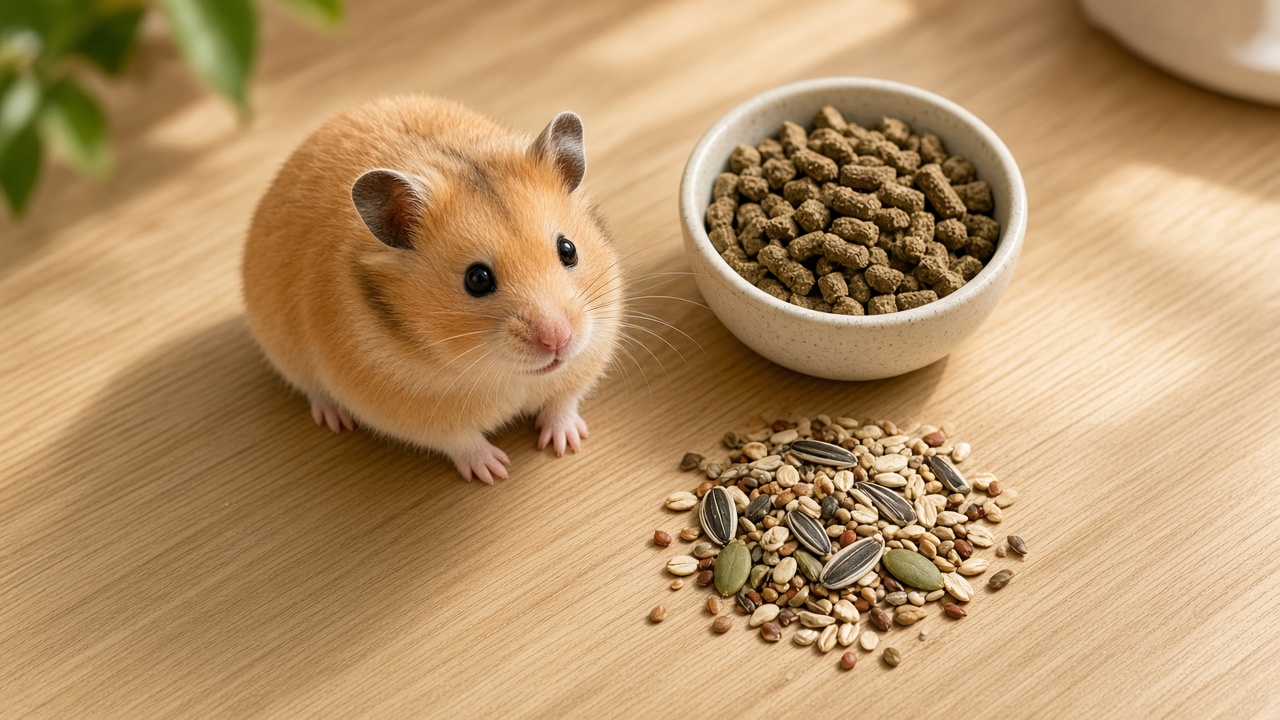
Place pellets on the floor. Merck Veterinary Manual notes that Syrian hamsters have broad muzzles and often cannot eat well from hoppers. The professional chapter says to avoid generic seed mixes, because hamsters pick seeds and ignore pellets.
Merck Veterinary Manual’s pet-owner chapter says moistened solid food can start at about 10 days of age. Until then, do not push mash into the nest.
Keep water full. A nursing mother drinks more than a dry adult. Check the bottle from outside the bars.
Bedding, hides, and cage size from maker specs
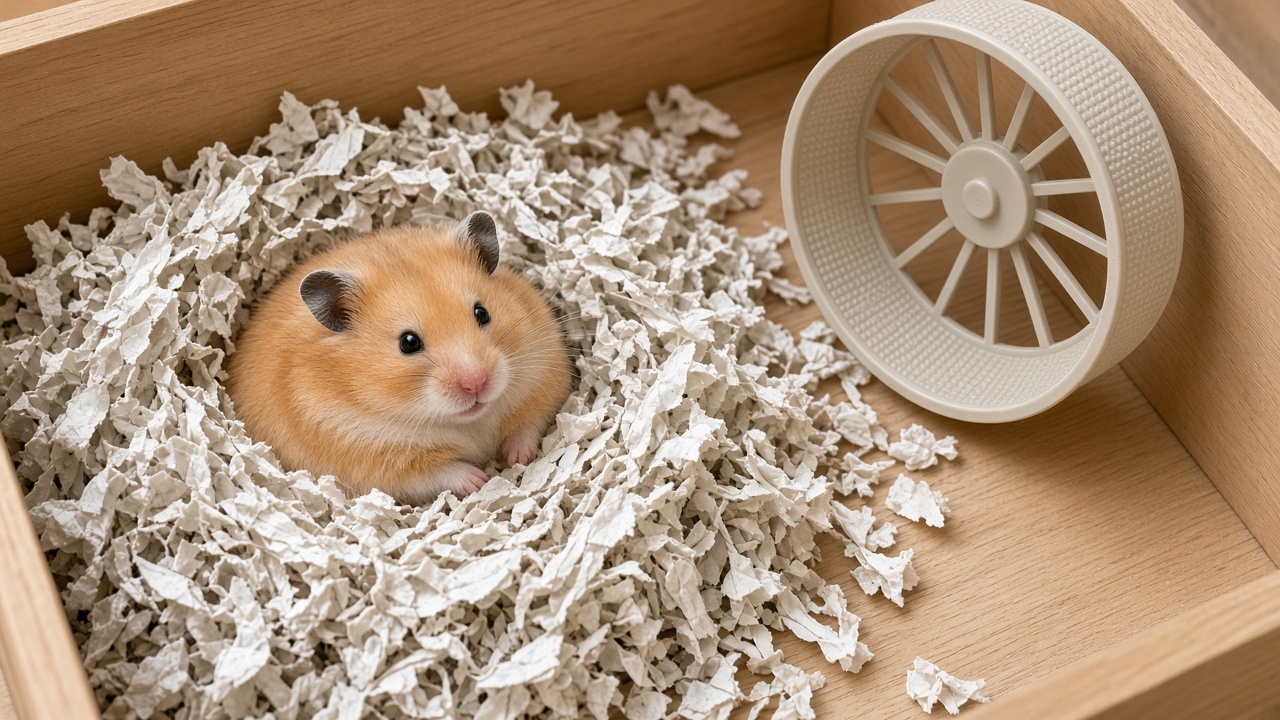
Nest material is not optional. The American Veterinary Medical Association says nesting materials are necessary for all pet rodents.
Our product rule was narrow. We kept a nursing diet, paper bedding, a nest hide, and a cage with listed wire spacing. We dropped scented bedding, seed-only mixes, and wheels sold as the main product.
Kaytee’s Clean & Cozy White Bedding page says the paper absorbs up to 6 times its weight in liquid. The same page lists it as 99.9% dust-free. Bag volumes are 24.6 L, 49.2 L, and 85 L.
carefresh Natural Paper Small Pet Bedding lists odor control for up to 10 days. The maker page also claims 2 times more absorbency than wood shavings, plus 99% dust-free fiber.
For hamsters, gerbils, and mice, carefresh lists a habitat size of 650 square inches. Bedding depth on that row is 2 to 5 inches.
Prevue Pet Products lists the Hamster Haven (large), model SP2005GRAY, at 21 5/8 by 13 3/8 by 14 1/4 inches. Wire spacing is listed at 1/2 inch.
Our research team multiplied Prevue’s listed length and width. The floor is about 289 square inches, less than half of carefresh’s 650-square-inch hamster line.
Height is a second mismatch. Merck Veterinary Manual recommends 40 to 80 cm of bedding, about 15 to 30 inches. Prevue’s height is 14 1/4 inches, so it cannot hold that 40 cm depth.
A DIY hamster cage built from a solid-base bin can hold deeper paper bedding and avoid 1/2-inch bar gaps.
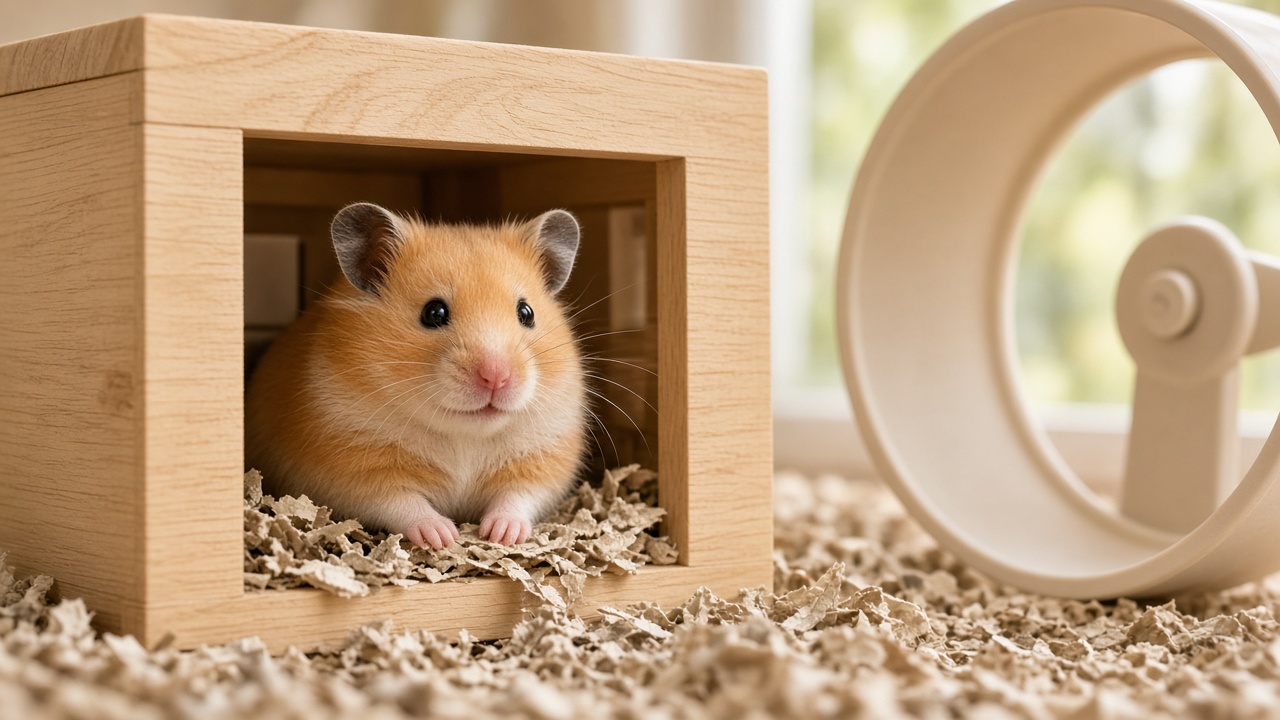
Niteangel’s Large Wooden Multi-Chamber Hideout lists the large size at 16.9 by 11.2 by 4.3 inches. The door is listed at about 2.7 inches, or about 7 cm, for Syrian hamsters.
Niteangel says the hide has no floor, so the hamster can burrow under it. Leave that hide in place during week one. Do not lift the lid to check on pups.
Take the exercise wheel out of a new-litter cage. A wheel is a trap for a newborn that cannot steer.
Prevue’s care line for SP2005GRAY is mild soap, warm water, and a full dry. The maker warns not to dry the tray in the sun, because it can warp.
| Product | Type | Maker-listed spec | Second listed spec |
|---|---|---|---|
| Oxbow Essentials Hamster & Gerbil Food | Pelleted daily food | 15.00% min. crude protein | Unlimited for nursing, per Oxbow |
| Kaytee Forti-Diet Pro Health Nourish+Protect | Mixed daily food | 12.0% min. crude protein | 2 Tbsp, about 20 g, adult serving |
| Kaytee Clean & Cozy White Bedding | Paper bedding | Absorbs up to 6× its weight | 99.9% dust-free; 24.6 / 49.2 / 85 L |
| carefresh Natural Paper Small Pet Bedding | Paper bedding | 2× absorbency vs. shavings | Up to 10-day odor control; 2–5 in. depth |
| Prevue Hamster Haven (large) SP2005GRAY | Wire cage | 21 5/8 × 13 3/8 × 14 1/4 in. | 1/2 in. wire spacing |
| Niteangel Large Wooden Multi-Chamber Hideout | Wooden hide | Large 16.9 × 11.2 × 4.3 in. | Door about 2.7 in. (Syrian) |
Weaning, housing, and finding homes
Merck Veterinary Manual’s professional chapter says young are weaned at about 20 days. They can reproduce at 7 to 8 weeks. Syrian hamsters produce as many as 3 to 5 litters per year.
The pet-owner chapter sets weaning at about 21 to 28 days. Use the later end if pups still nurse and the mother still allows it.
Sexual maturity is the housing deadline. Separate sexes before 7 weeks if you can sex them with clinical help. Do not wait until 8 weeks if pups are already mounting.
The American Veterinary Medical Association says hamsters are usually housed alone. Plan one cage per weaned Syrian.
AVMA also says a veterinarian should examine any pet rodent within 48 hours of acquisition. Use that 48-hour mark when a pup leaves for a new home.
AVMA lists average hamster life span as 2 to 3 years. Merck Veterinary Manual lists the same span for Syrian hamsters.
AVMA states that breeding a pet rodent only so children can watch a birth is not responsible ownership. If she is already pregnant, AVMA says you must find good homes for the offspring.
AVMA also warns that some females may harm or eat their offspring. Keep the cage out of a busy playroom for week one.
Watch the tail area on weanlings. AVMA says it should be dry and free of diarrhea. The same page says baby hamsters may have “wet tail,” which can be fatal.
Merck Veterinary Manual’s professional chapter names proliferative ileitis in 3- to 10-week-old Syrian hamsters. It names Lawsonia intracellularis as the cause and says mortality is high.
Do not treat diarrhea from a blog recipe. Syrian hamsters are listed as nocturnal on the AVMA rodent page. Night noise will rise as pups grow.
FAQ
How long should I leave baby hamsters alone?
Leave the nest alone for at least 7 days. Merck Veterinary Manual’s pet-owner chapter uses that 7-day mark, especially for a first-time mother. Limit cage visits to filling food and water.
When do hamster pups start eating solid food?
Merck Veterinary Manual’s pet-owner chapter says moistened solid food can start at about 10 days of age. Put softened pellets on the floor, not in the nest cup. The mother should still nurse.
When are baby hamsters weaned?
Merck Veterinary Manual’s professional chapter lists weaning at about 20 days. The pet-owner chapter lists about 21 to 28 days. Keep sexes apart before the 7- to 8-week breeding age Merck names.
Can I keep the father in the cage with the pups?
No. Move the male to his own cage as soon as you see pups. The American Veterinary Medical Association says hamsters housed in pairs or groups may fight and are usually housed alone.
What bedding should I use under a nest?
Use plain paper bedding with a listed dust figure. Kaytee Clean & Cozy White lists 99.9% dust-free paper and absorbency up to 6 times its weight. carefresh Natural lists 99% dust-free fiber and up to 10 days of odor control.
Why is my hamster eating her babies?
Merck Veterinary Manual says cannibalism accounts for nearly all preweaning deaths. Listed drivers include nest handling, cold under 50°F, lean diets, and too little nest material. Stop touching the nest, warm the room, and keep food beside her.
When should a baby hamster see a clinician?
AVMA says any new pet rodent should be examined within 48 hours of acquisition. Seek care sooner for a wet tail, crusted eyes after week one, or a cold pup outside the nest. Merck Veterinary Manual flags proliferative ileitis in 3- to 10-week-old Syrians as a high-mortality disease.
Hold the still-cage plan through day 7, then split the litter before week 8.