Quick answer: Keep a Havana as an indoor companion built around the American Rabbit Breeders Association 6.5-pound senior maximum. Feed unlimited grass hay, not a seed mix. Give a 4-by-4-foot pen plus daily run time.
People search “Havana rabbit” to identify the breed, not to collect a checklist.
A Havana is an ARBA compact breed with a 6.5-pound senior maximum and five show colors.
This page is a research-desk brief on published standards and current pellet labels. We did not house a Havana colony, run feeding trials, or handle live show stock.
Our research team used the Compact-Weight Hay-First Rule. We included only care that fits an ARBA-weight Havana on a House Rabbit Society hay-first diet. We left out giant-breed housing, outdoor-hutch-only setups, and mixed gourmet pellets.
Size: the ARBA 6.5-pound frame
The American Rabbit Breeders Association recognized the Havana in 1916. The same page still calls the breed the “Mink of the Fancy.”
ARBA lists a compact body and a maximum weight of 6.5 pounds. That number is a show-table ceiling, not a pet-store guess.
ARBA names five recognized colors: chocolate, black, blue, broken, and lilac. If a rabbit is sold as a Havana in another color, it is outside that published list.
A 6.5-pound adult is small enough for apartment life. It is still too large for a travel carrier used as a home.
Our research team compared that ceiling with current pellet feeding bands. A senior Havana sits inside Oxbow Animal Health’s 4-to-8-pound band. It also matches Supreme Petfoods’ 5.5-pound adult example.
Do not expect dwarf size. The American Rabbit Breeders Association lists a 3-pound maximum for the Dwarf Hotot.
Temperament: what the standard does not score
ARBA’s Havana page does not publish a temperament score. We did not invent one.
House Rabbit Society describes domestic rabbits as inquisitive, intelligent, sociable, and affectionate. That is a species note, not a Havana-only claim.
The same House Rabbit Society primer says an adult should be the primary caretaker when children share the home. Rabbits are physically delicate. Dropped rabbits can break legs or backs.
Handle a Havana by supporting the forequarters and the hindquarters at the same time. House Rabbit Society warns that a struggling rabbit can injure its own spine.
Expect a prey animal, not a lap dog. Some rabbits nuzzle. Others box when a person enters their space.
Unspayed females are often more territorial. House Rabbit Society treats that as normal rabbit behavior, not a Havana defect.
Coat, color, and the grooming load
ARBA prizes Havana fur for a mink-like quality. That is a short, dense, glossy coat, not wool.
Havanas are not a wool breed. They still shed. House Rabbit Society tells guardians to brush regularly with a soft brush.
A weekly brush is enough for most of the year. During a heavy molt, daily passes cut the hair a Havana would otherwise swallow.
For tool choice, see our rabbit grooming kit review. For technique, use the step-by-step rabbit grooming guide.
ARBA also records a 1934 mutation in a Havana litter owned by Walter Huey of Pendleton, Indiana. Those kits became Satin Havanas, then the separate Satin breed.
A modern Havana should not be sold as a Satin. Satins have a different coat gene and an ARBA maximum of 11 pounds.
Chocolate remains the historic color. Black, blue, broken, and lilac are later ARBA varieties. Color does not change housing or hay needs.
Lifespan: what ARBA does not publish
The American Rabbit Breeders Association does not list a Havana-specific lifespan. We will not borrow a year-range from another website.
House Rabbit Society’s primer says well-cared-for indoor rabbits can live seven to 10-plus years. Treat that as a house-rabbit figure, not a Havana warranty.
Outdoor-hutch life is a different bet. House Rabbit Society says domestic rabbits can die of heart attacks at the approach of a predator.
Longevity work is daily and plain: unlimited grass hay, measured pellets, indoor run time, and fast help if eating stops.
House Rabbit Society says to seek expert care if eating or stool stops for 12 hours.
Spay and neuter decisions belong with a rabbit-experienced clinician. House Rabbit Society notes that spaying can prevent uterine cancer rates of 50 to 80 percent as rabbits age.
Diet under the Compact-Weight Hay-First Rule
House Rabbit Society puts hay at 85 percent of an adult diet. Vegetables sit near 10 percent, pellets near 5 percent, and fruit under 5 percent.
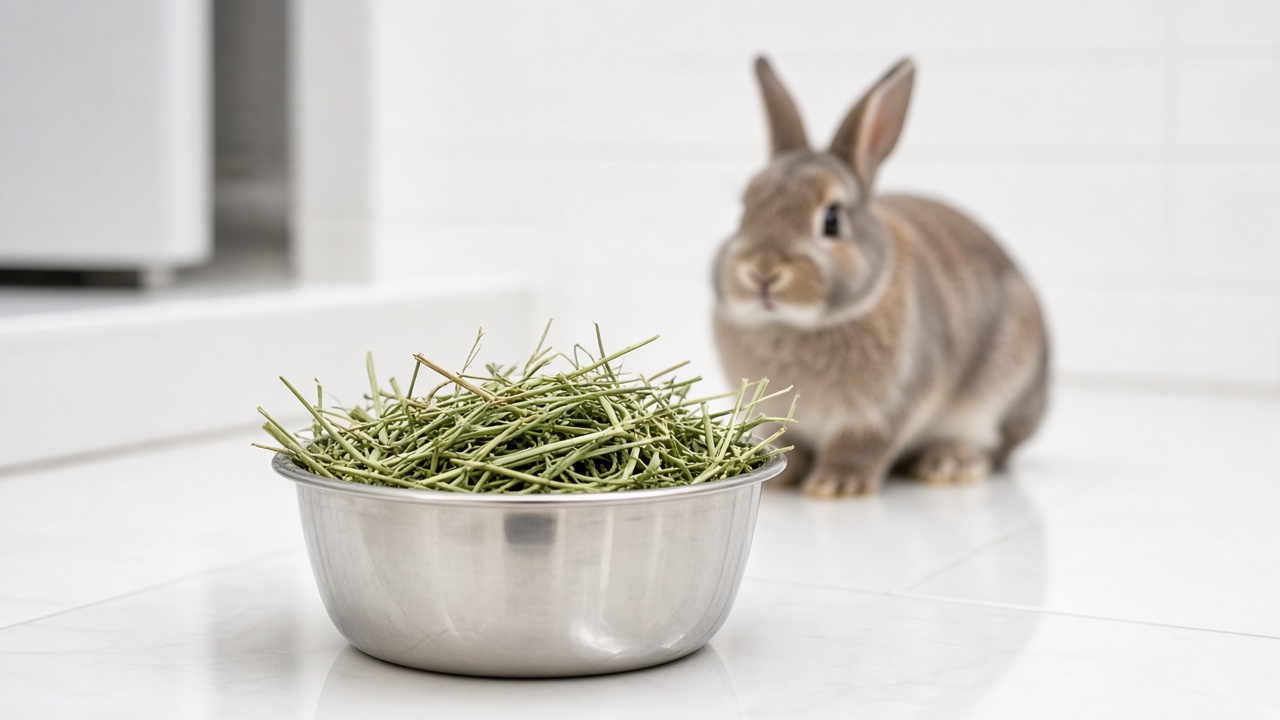
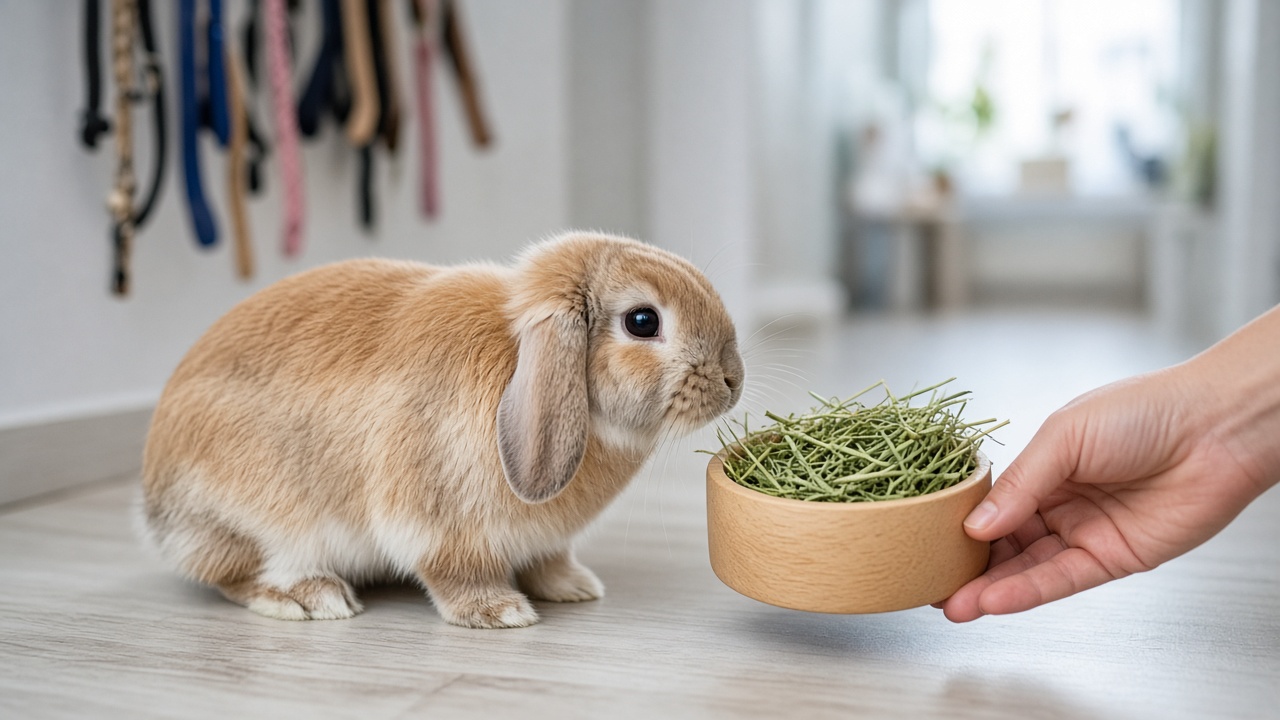
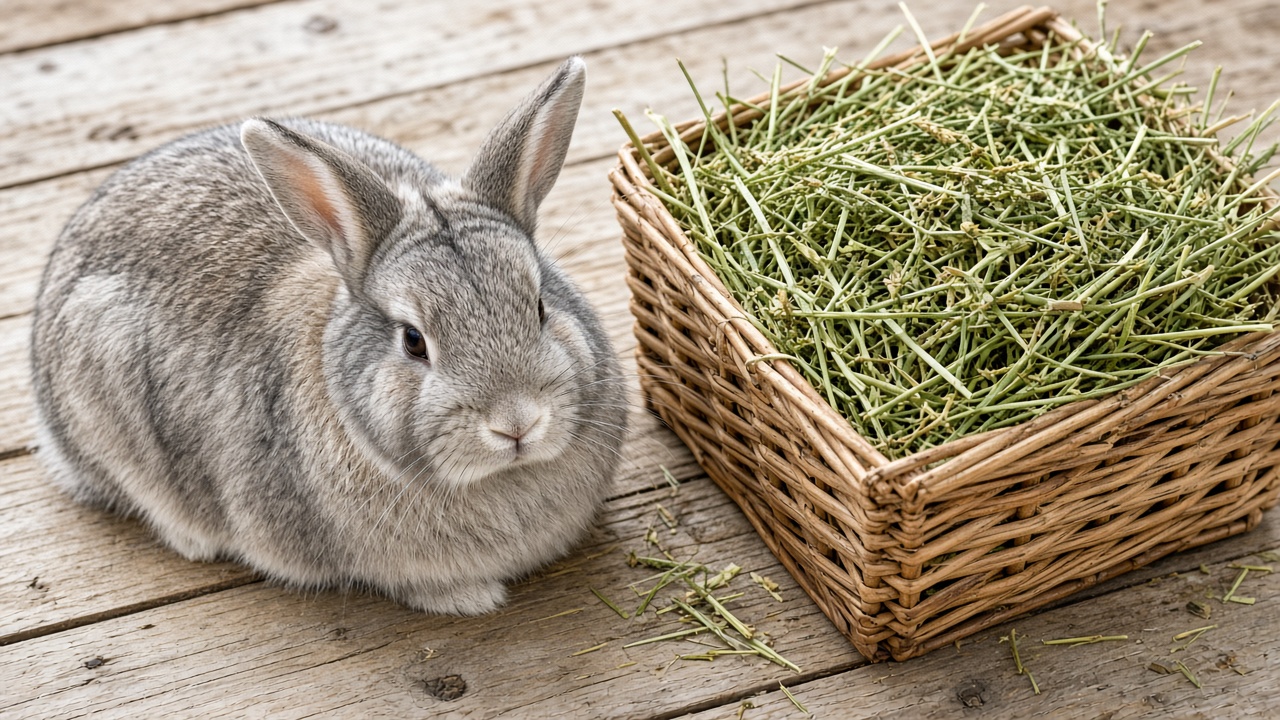
Hay is not optional bedding. House Rabbit Society says hay grinds constantly growing teeth and cuts blockage risk.
Offer timothy or other grass hay in unlimited piles. House Rabbit Society reserves alfalfa hay for babies, nursing mothers, and elderly or injured rabbits.
For greens, House Rabbit Society uses 1 to 2 cups of vegetables per 4 pounds of body weight. A 6-pound Havana lands near 1.5 to 3 cups of mixed leafy greens.
Pick at least three leafy types. Add one new green at a time.
Pellets are a supplement. House Rabbit Society wants a timothy-based pellet with 18 percent minimum fiber. Skip mixes with nuts, seeds, or colored bits.
Our best rabbit pellets guide walks through that label check in more detail.
A Havana in the 4.5-to-6.5-pound ARBA window should get a measured cup, not a free hopper. Oxbow Animal Health lists 1/4 to 1/3 cup daily for rabbits between 4 and 8 pounds.
Small Pet Select lists 1/4 to 1/2 cup per 6 pounds of body weight for rabbits from 1 to 5 years. Supreme Petfoods lists about 2 to 2.5 ounces a day for a 5.5-pound adult.
Those three maker notes overlap. They do not replace the House Rabbit Society 85 percent hay rule.
Oxbow Animal Health publishes a four-week switch. Mix three-to-one, then even parts, then flip the ratio, then feed the new pellet only.
Kaytee Products publishes a shorter 7-to-10-day mix. Use the slower Oxbow schedule if stools loosen.
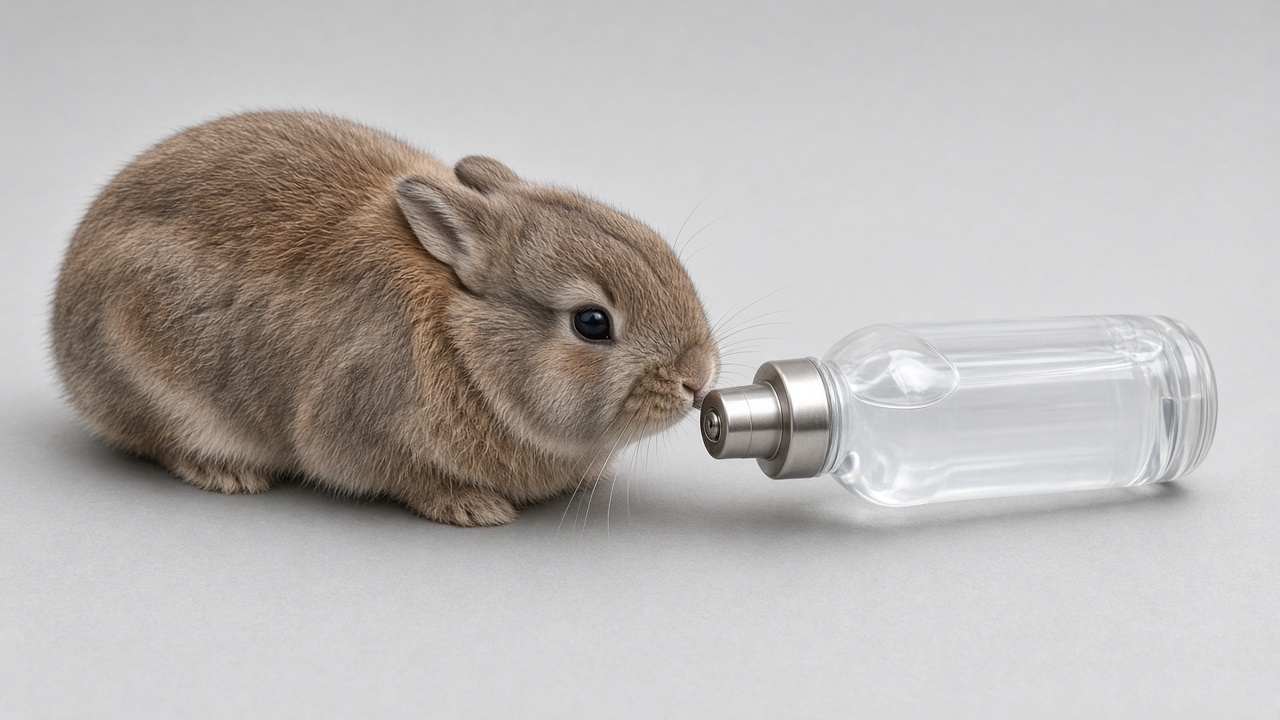
Fresh water stays down all day. House Rabbit Society prefers a heavy crock because bowls raise intake.
Four adult pellets compared by label, not rank
Our research team compared published specs on four currently sold adult pellets. We did not rank them. We did not assign scores.
We kept a pellet only if the maker listed a first ingredient, protein, fiber, and a compact-adult feeding note.
| Product | First ingredient on maker page | Crude protein min | Crude fiber min–max | Maker feeding note for a compact adult |
|---|---|---|---|---|
| Oxbow Essentials Adult Rabbit Food | Timothy grass meal | 14.00% | 25.00–29.00% | 1/4–1/3 cup daily for 4–8 lb rabbits |
| Kaytee Timothy Complete Rabbit Food | Sun-cured timothy grass hay | 13.0% | 22.0–27.0% | 1/3–1/2 cup for a small breed |
| Small Pet Select Rabbit Food Pellets | Timothy hay | 14% | 25–29% | 1/4–1/2 cup per 6 lb, ages 1–5 years |
| Science Selective Adult Rabbit Food | Alfalfa meal pellets | 12.5% | 21.5–28.5% | 2–2.5 oz daily for a 5.5 lb adult |
All four fiber minima sit at or above the House Rabbit Society 18 percent floor. Oxbow Animal Health and Small Pet Select post the highest fiber floors, both 25 percent.
Science Selective Adult Rabbit Food is the outlier on the first ingredient. Supreme Petfoods lists alfalfa meal pellets first. House Rabbit Society prefers timothy-based pellets for healthy adults.
Kaytee Products lists 100,000 CFU/g of Bacillus species. That is a label claim, not a result from our lab.
Oxbow Animal Health lists 5, 10, and 25 pound bags. Kaytee lists 4.5, 9.5, and 25. Small Pet Select lists 5, 10, 20, and 40, while Supreme Petfoods lists 4 and 8.8 pounds.
Uniform pellets beat muesli. Every maker above sells a single-shape nugget so a Havana cannot sort out the sweet bits.
Housing that fits a 4.5-to-6.5-pound body
House Rabbit Society’s housing page calls a 4-by-4-foot puppy exercise pen an ideal base for most rabbits, plus free-roam time. A cage is a bedroom, not a life.
The same page wants sleeping space at least four times the rabbit’s size. Any cage should be three to four times the rabbit’s stretched-out length.
House Rabbit Society’s primer still lists 2 by 2 by 4 feet as a minimum cage. That is a floor, not a target. A Havana can stretch longer than many people expect.
Give at least four hours of cardiovascular play each day. House Rabbit Society lists running, jumping, zooming, climbing, and digging.
Cover wires, remove house plants, and block the undersides of sofas. House Rabbit Society treats chewing as normal work, not spite.
Use a solid floor. House Rabbit Society warns that wire bottoms can ulcerate feet.
Keep the pen in a shared room. House Rabbit Society wants the rabbit in family space, not isolation.
Do not leave a Havana unsupervised outdoors. House Rabbit Society lists cats, dogs, and predatory birds as enough reason to stay inside.
Timothy hay dust drives many “rabbit allergies.” House Rabbit Society says orchard grass can be a lower-dust swap.
FAQ
How big do Havana rabbits get?
The American Rabbit Breeders Association sets a 6.5-pound maximum for the breed. Seniors that stay over that mark fall outside the published standard. Pet Havanas still cluster in that compact band if they are true to type.
Are Havana rabbits good house pets?
They fit indoor life when hay, space, and handling are right. ARBA does not score friendliness. House Rabbit Society says an adult, not a child, should own the daily care.
How long do Havana rabbits live?
ARBA does not publish a Havana lifespan. House Rabbit Society says well-cared-for indoor rabbits can live seven to 10-plus years. Outdoor-hutch years are a poorer bet on that same page.
Do Havana rabbits need much grooming?
The coat is short and dense, not wool. Weekly brushing covers most months; daily brushing during a molt cuts swallowed hair. Use a soft brush, as House Rabbit Society states.
What should I feed a Havana rabbit?
Follow the House Rabbit Society split: about 85 percent grass hay, about 10 percent leafy greens, about 5 percent pellets. For a 4-to-8-pound adult, Oxbow Animal Health lists 1/4 to 1/3 cup of pellets a day.
How much space does a Havana rabbit need?
House Rabbit Society calls a 4-by-4-foot pen plus free-roam time a workable base. Add at least four hours of hard play each day. A carrier or starter cage is not a home.
Are chocolate and black Havana rabbits different breeds?
No. ARBA lists chocolate, black, blue, broken, and lilac as colors of one breed. Color does not change the 6.5-pound maximum or the hay-first diet.