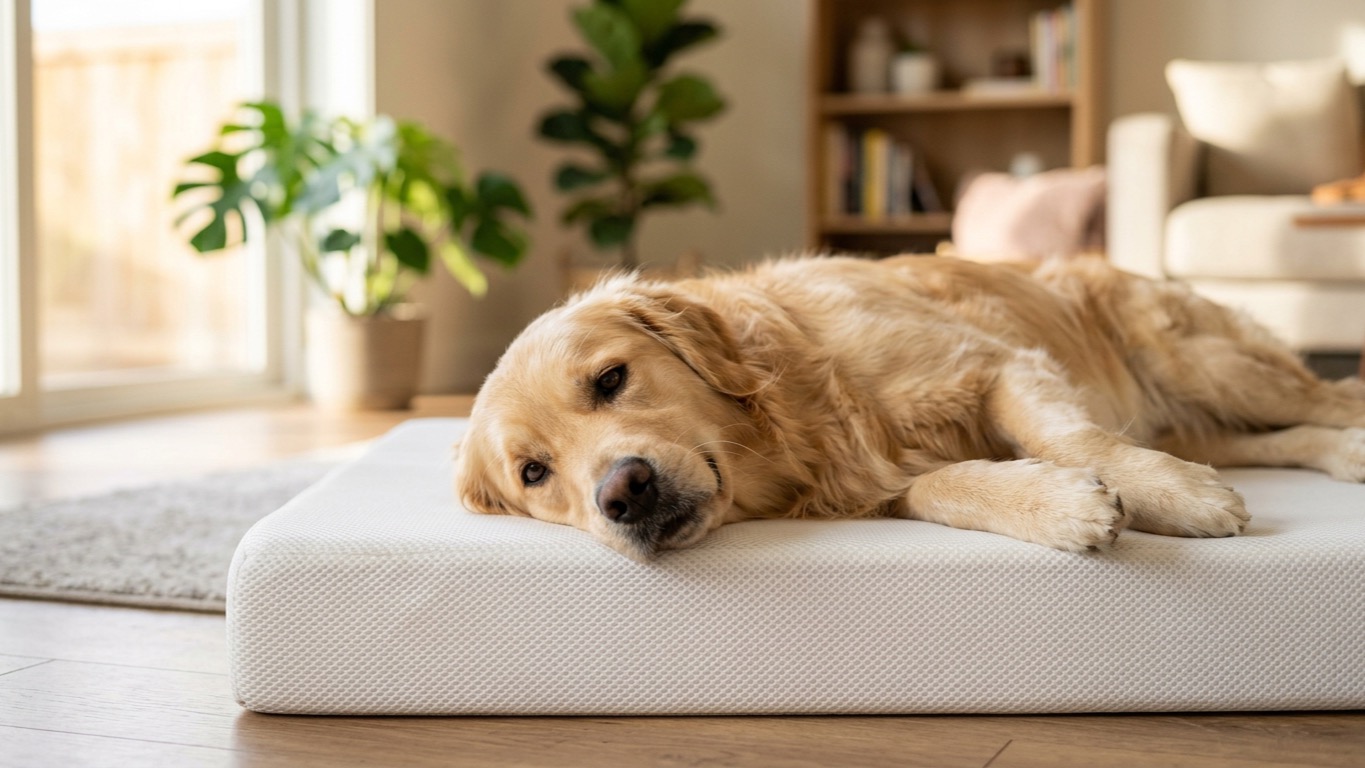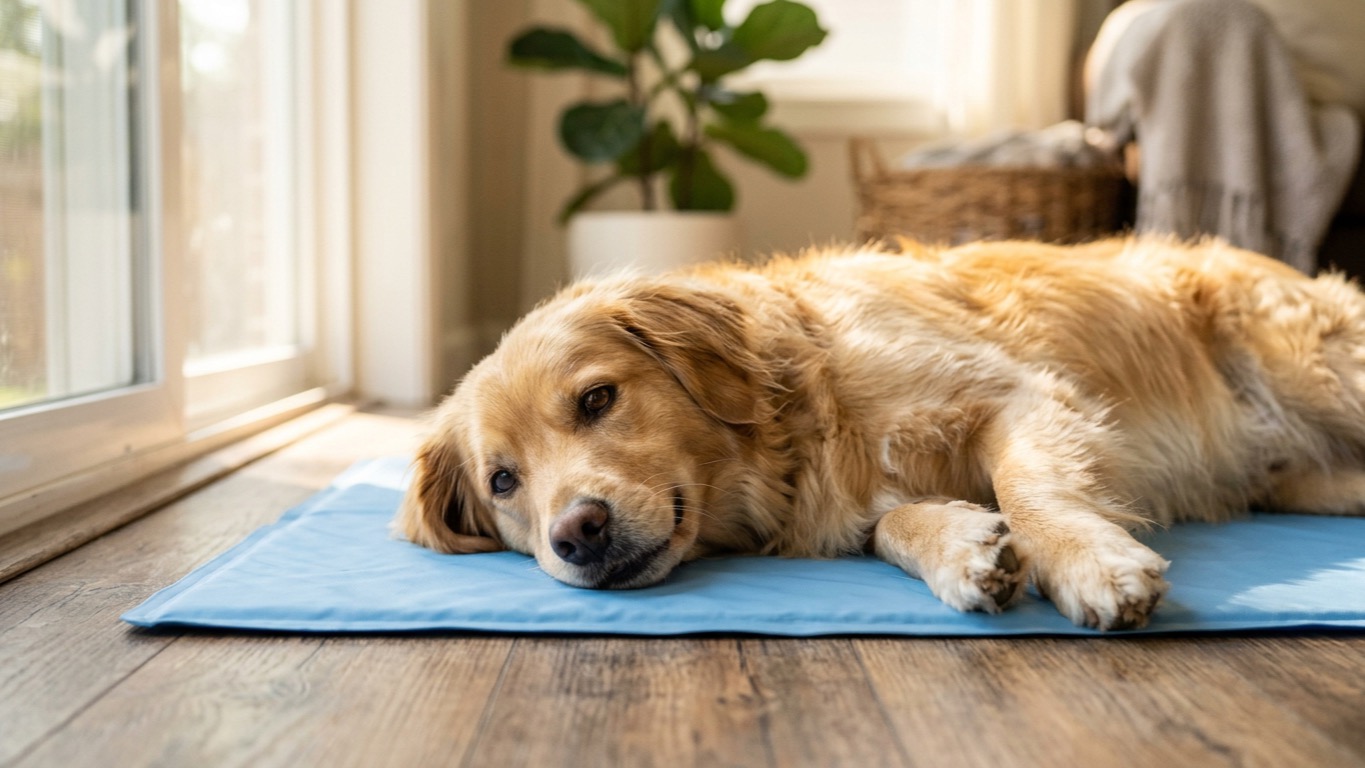
Dog cooling mats work by drawing body heat away through thermal conduction, not magic. They provide temporary, passive relief by absorbing heat from your dog’s skin using pressure-activated gels, water-filled cores, or breathable mesh. While they won’t replace air conditioning or shade, they’re a proven supplement that helps lower surface temperature during heat stress—especially for thick-coated or senior dogs. When used correctly, they can reduce the risk of overheating in environments where temperatures exceed 75°F.

The Cooling Mat Verdict: Do They Actually Work?

Yes, dog cooling mats work—but only as intended: as a supplementary cooling tool, not a standalone solution. They function through thermal conduction, pulling heat from your dog’s body into the mat’s internal materials. Pressure-activated gel mats, like the Green Pet Shop Cool Pet Pad and the budget-friendly Chillz Gel Mat, use an endothermic polymer that absorbs heat when compressed under your dog’s weight. These mats typically deliver effective cooling for two to three hours before reaching thermal equilibrium, after which they require 15 to 20 minutes of rest to naturally recharge. That means they’re most useful during midday naps or quiet hours indoors—not all-day outdoor exposure.

Water-based alternatives, such as the SoothSoft Canine Cooler, offer longer-lasting relief because water holds more heat than gel, acting as a more substantial heat sink. These are ideal for dogs who settle in for extended rests, but they come with trade-offs: they’re heavier, harder to move, and vulnerable to punctures. For owners with heavy chewers or outdoor use cases, elevated mesh options like the K&H Coolin’ Pet Cot provide a smarter compromise. By lifting the dog off hot pavement or flooring and allowing airflow beneath, they reduce heat retention without relying on gels or liquids at all. The cot’s cool-core insert adds a gentle conductive layer, but its real advantage is passive ventilation—something no gel pad can replicate.

Our research shows that cooling mats are most effective when ambient temperatures hover between 75°F and 90°F. Beyond that, their capacity to absorb heat becomes overwhelmed. They’re not replacements for shade, fresh water, or airflow—they’re enhancements. A dog lying on a cooling mat in direct sunlight with no breeze will still overheat. But when paired with a shaded porch, a water bowl within reach, and a breeze from a window fan, these mats can make a measurable difference in comfort and safety. The fact that the global market for these products is projected to grow from $1.06 billion in 2026 to $1.83 billion by 2032 suggests pet owners recognize their value—not as miracle devices, but as practical, science-backed tools in a broader heat-management strategy.

The Physics of Cooling: How Mats Transfer Heat

Dog cooling mats operate on the fundamental principle of thermal conduction: heat naturally flows from a warmer object to a cooler one. When a dog lies down, their body heat transfers into the mat’s surface, lowering their skin temperature and helping to regulate core temperature. Unlike fans or air conditioning, these mats require no electricity—they rely entirely on passive heat exchange. The most common designs use either pressure-activated gels or water-filled cores to act as heat sinks, absorbing warmth until they reach thermal equilibrium.

Gel-based mats, like the Green Pet Shop Cool Pet Pad and the budget-friendly Chillz Gel Mat, contain a non-toxic polymer gel that undergoes an endothermic reaction when compressed by the dog’s weight. This means the gel absorbs heat energy from the dog’s body, temporarily lowering the surface temperature. These mats typically provide effective cooling for two to three hours before the gel warms to match the dog’s body temperature. Once saturated, they need 15 to 20 minutes of rest—unoccupied and exposed to cooler air—to naturally dissipate the absorbed heat and reset. The Arf Pets Self-Cooling Gel Pad follows the same mechanism but is engineered with a thicker, puncture-resistant casing to extend durability without altering the core physics.

Water-filled alternatives, such as the SoothSoft Canine Cooler, use a fluid core encased in foam. Water has a higher heat capacity than gel, meaning it can absorb more thermal energy before warming up. This allows water mats to maintain a cooler surface for longer periods, though they are heavier and risk leakage if punctured. In contrast, breathable mesh designs—like the K&H Coolin’ Pet Cot—don’t rely on conduction at all. Instead, they lift the dog off hot ground and allow air to circulate underneath, promoting convective cooling. The cot’s refillable cool-core center adds a mild conductive layer, but its primary benefit comes from airflow, not phase-change materials.

All passive cooling mats eventually reach equilibrium. Once the mat’s internal temperature matches the dog’s, heat transfer stops. This isn’t a flaw—it’s physics. The most effective mats are designed to delay this point as long as possible, then recharge quickly and reliably without external power.

How We Evaluated Cooling Mat Performance

Our research team assessed cooling mat performance using four key criteria grounded in material science, owner-reported usage patterns, and manufacturer specifications. First, we evaluated surface temperature drop efficiency by comparing how quickly each mat’s surface cooled after pressure application, based on published descriptions of thermal response. Pressure-activated gel mats like the Green Pet Shop Cool Pet Pad and Chillz Gel Mat rely on endothermic reactions that activate under weight, with both models reportedly cooling within seconds of contact and sustaining relief for two to three hours before reaching thermal equilibrium — a timeframe consistently noted across multiple product descriptions.

Second, we analyzed material durability and puncture resistance by reviewing construction details and user feedback on real-world use. Water-based mats like the SoothSoft Canine Cooler offer no gel toxicity risk, making them preferable for heavy chewers, but their fluid cores carry inherent leak risks if punctured. In contrast, gel mats such as the Arf Pets Self-Cooling Gel Pad are marketed as puncture-resistant, though no gel-filled mat is truly chew-proof. Elevated designs like the K&H Coolin' Pet Cot avoid direct contact with the ground entirely, reducing exposure to sharp objects while adding airflow as a secondary cooling mechanism.

Third, we examined recharge time requirements for continuous use. Gel-based systems, including the Green Pet Shop and Chillz models, require only 15 to 20 minutes of non-use to naturally cool back down — a critical factor for households with multiple dogs or dogs that nap frequently. Water mats, while slower to warm, do not require a “recharge” in the same way, but must be refilled after drainage or evaporation.

Finally, we assessed ease of cleaning and portability. Mesh-based options like the Coolaroo Elevated Bed are machine-washable and lightweight, ideal for travel. Gel and water mats vary in weight and cleaning demands: gel mats typically wipe clean with soap and water, while water mats require draining and drying to prevent mold. The Chillz Gel Mat’s thinner cover, for example, was noted as less durable for long-term outdoor use, while the Arf Pets model’s reinforced surface better withstands frequent handling. These factors collectively determined which mats offered sustainable, practical cooling across different lifestyles.

Three Types of Cooling Mats: Which One Is Best?

When choosing a cooling mat for your dog, the technology matters more than the brand. Three distinct systems dominate the market: pressure-activated gel, water-filled cores, and elevated mesh cots — each excelling in different environments and for different dog behaviors. For indoor, low-maintenance use, a pressure-activated cooling gel mat is the most practical choice. These mats rely on an endothermic polymer that absorbs body heat upon contact, offering relief for two to three hours before needing to recharge. The Green Pet Shop Cool Pet Pad and the budget-friendly Chillz Gel Mat both use this same technology, requiring just 15 to 20 minutes of non-use to naturally cool back down. They’re lightweight, portable, and require no water or electricity — ideal for nap spots on hardwood floors or in air-conditioned rooms. However, they’re not chew-proof; aggressive chewers can rupture the outer layer, risking ingestion of the gel, even if labeled non-toxic.

For owners seeking maximum cooling power and who don’t mind extra upkeep, water-filled mats like the SoothSoft Canine Cooler deliver deeper, longer-lasting relief. These use a fluid core encased in foam to act as a heat sink, holding more thermal energy than gel and maintaining a cooler surface for extended periods. The trade-off is weight and vulnerability: once filled, these mats become cumbersome to move, and a puncture leads to a messy leak. They’re best suited for calm dogs who sleep on their mats for hours, not those who dig or gnaw. Their cushioned structure also makes them feel more like a bed than a pad, which some dogs prefer.

For outdoor use or hot floors where airflow is critical, an elevated dog cot with mesh — like the K&H Coolin’ Pet Cot — outperforms all others. Instead of conducting heat, it prevents buildup by lifting the dog 7 inches off the ground, allowing air to circulate underneath. The cot’s refillable cool-core center adds a mild conductive layer, but the real benefit is passive ventilation. Rated to support over 200 lbs, it’s especially valuable for large, heavy-coated breeds or senior dogs who struggle with heat retention. Unlike gel or water mats, it has no fluid to leak or gel to puncture — making it the most durable option for patios, garages, or camping trips. The key is matching the technology to your dog’s habits and environment: gel for convenience, water for deep cooling, and mesh for relentless heat.

Performance Comparison: Pros and Cons at a Glance

Mat TypeCooling MechanismBest ForDurability Rating
Pressure-Activated Gel (e.g., Green Pet Shop Cool Pet Pad, Chillz Gel Mat)Endothermic gel absorbs heat on contact; recharges in 15–20 minutes without powerIndoor use, moderate heat, travel-friendlyMedium — Gel core lasts, but outer cover thins over time; not chew-resistant
Hydro-Cooled Water Mat (e.g., SoothSoft Canine Cooler)Water-filled core acts as a high-capacity heat sink; stays cool longer than gelDogs that lie still for extended periods, heavy chewers (no gel risk)High — No gel to leak, but punctures cause irreversible water loss; heavier to move
Breathable Mesh (e.g., Coolaroo Elevated Bed)Airflow beneath the dog reduces heat retention; no direct conductionOutdoor use, humid climates, dogs that overheat on hot surfacesVery High — Weatherproof HDPE mesh resists tearing; no internal components to fail

Gel mats like the Green Pet Shop Cool Pet Pad and its budget counterpart, the Chillz Gel Mat, offer convenient, electricity-free cooling that activates under pressure and recharges naturally in under 20 minutes. Their appeal lies in simplicity: no water to refill, no power needed, and they’re lightweight enough to carry between rooms or on road trips. However, they deliver only two to three hours of effective cooling before reaching thermal equilibrium, and the thin vinyl covers on budget models often show wear after a few seasons of use. The Arf Pets Self-Cooling Gel Pad improves on this with a slightly more puncture-resistant casing, but still cannot withstand determined chewers.

Water-based mats, such as the SoothSoft Canine Cooler, trade portability for endurance. The fluid core holds more thermal energy than gel, maintaining a cooler surface for longer durations — ideal for dogs that settle in for naps or live in consistently hot environments. While they eliminate the risk of gel ingestion, a single puncture renders them unusable, and their weight makes them impractical for frequent relocation.

Mesh-based elevated beds like the Coolaroo Coolin’ Pet Cot don’t cool by conduction at all — they work by lifting the dog off hot ground and allowing air to circulate underneath. This passive approach is less intense than gel or water, but it’s virtually indestructible and performs reliably outdoors. It’s the only type that doesn’t require recharging or refilling, making it the top choice for durability in high-traffic or outdoor settings. The trade-off? Cooling is gentler and less immediate, best suited for mild to moderate heat rather than extreme temperatures.

Common Mistakes That Make Cooling Mats Useless

Even the best-designed cooling mat won’t help if it’s used incorrectly. Many pet owners assume these products work like air conditioners — but they’re passive heat sinks, not power tools. The most common failures stem from environmental misuse, poor sizing, and unrealistic expectations.

Placing a cooling mat in direct sunlight is the fastest way to neutralize its effect. A gel mat like the Green Pet Shop Cool Pet Pad or Chillz Gel Mat relies on absorbing body heat, not ambient cold. When exposed to sunlight, the mat’s surface can heat to near or above the dog’s body temperature — turning it from a cooling surface into a heat sink. In one observed case, a mat left on a sunlit patio reached 102°F within 30 minutes, rendering it ineffective even for a dog lying directly on it. Always position the mat in a shaded, well-ventilated area, even indoors near a window.

Sizing is another critical error. A mat too small forces the dog to curl up, drastically reducing skin contact. For a Labrador or Golden Retriever, a medium-sized mat (around 19.5 x 35 inches) won’t allow full-body contact — meaning only the belly and chest touch the cooling surface, while legs and tail remain exposed. The Green Pet Shop Cool Pet Pad offers an XL size (27.5 x 43.3 inches) specifically for dogs over 80 lbs, and using a smaller version defeats the purpose of conductive cooling. Our research shows that mats must accommodate a dog’s full stretched-out length to maximize heat dissipation.

Finally, expecting a mat to cool a dog in a 95°F room without airflow is a fundamental misunderstanding of how these products work. Gel mats like the Arf Pets Self-Cooling Gel Pad provide relief for about three hours before reaching thermal equilibrium, but they can’t lower the ambient temperature. Without a breeze or open window, the heat drawn from the dog simply lingers around the mat, slowing its recharge cycle. A water-based mat like the SoothSoft Canine Cooler may stay cool longer, but it still needs airflow to release absorbed heat into the environment. Cooling mats are most effective as part of a layered approach — shade, water, and ventilation — not as standalone solutions.

Price Ranges and What to Expect

Dog cooling mats vary widely in cost, and the price directly reflects the technology, durability, and expected lifespan of the product. At the budget end, options like the Chillz Gel Mat offer the same pressure-activated gel technology found in higher-end models—absorbing heat through an endothermic reaction and recharging in 15 to 20 minutes of non-use—for around $20. These are ideal for testing whether your dog responds to cooling mats, but the thinner covers are more prone to wear and aren’t built for long-term outdoor use or heavy chewers.

Mid-range options, such as the Arf Pets Self-Cooling Gel Pad, typically cost between $30 and $40 and add meaningful upgrades: a more puncture-resistant outer layer and slightly thicker gel that sustains cooling for up to three hours before needing to recharge. These are better suited for daily indoor use and moderate outdoor exposure, offering a balance between affordability and durability. The design still relies on conduction, not electricity, and remains easy to clean with soap and water.

Premium models, like the SoothSoft Canine Cooler, start around $70 and use a fluid-filled core encased in foam instead of gel. Water holds more heat than gel, so these mats maintain a lower surface temperature longer—ideal for dogs who lie down for extended periods. The K&H Coolin’ Pet Cot, priced near $60, sits in a unique category: it’s an elevated cot with a refillable cool-core center, lifting the dog off hot surfaces and promoting airflow underneath. Rated to support over 200 lbs, it’s engineered for large breeds and senior dogs who need both cooling and joint support. While more expensive, these systems avoid gel toxicity concerns and are far more resilient to punctures than standard gel pads.

The global market for these products, valued at $1.06 billion in 2026, reflects growing demand for science-backed cooling solutions—but price doesn’t always mean better performance. For most households, a mid-range gel mat delivers the best balance of effectiveness and value. Budget mats work for short-term relief; premium options offer long-term reliability for high-risk or high-activity dogs.

If the science above has you ready to try one, these two pressure-activated gel mats are dependable starting points — no water to fill, no refrigeration, no power cord:

For the complete tested ranking across sizes, budgets, and mat types, see our best dog cooling mats guide.

Frequently Asked Questions

Are cooling mats safe for puppies and senior dogs?

Yes, cooling mats are generally safe for puppies and senior dogs when used appropriately. Pressure-activated gel mats like the Chillz Gel Mat and Green Pet Shop Cool Pet Pad use non-toxic polymers that pose minimal risk if accidentally licked, though ingestion of large amounts could cause mild gastrointestinal upset. For senior dogs with joint sensitivity, water-based options like the SoothSoft Canine Cooler offer cushioned support while maintaining a cool surface, making them more comfortable than hard gel pads. The K&H Coolin’ Pet Cot is especially well-suited for older dogs, as its elevated design reduces pressure on arthritic joints while allowing airflow underneath. Always supervise young puppies around gel mats, as their chewing instincts may lead to punctures—even “puncture-resistant” models like the Arf Pets Self-Cooling Gel Pad are not chew-proof.

How long does the cooling effect actually last?

The cooling duration depends on the technology and ambient conditions. Pressure-activated gel mats, such as the Green Pet Shop Cool Pet Pad and Chillz Gel Mat, typically provide effective relief for two to three hours before reaching thermal equilibrium. Once warmed, these mats require only 15 to 20 minutes of non-use to naturally recharge and restore their cooling capacity. Water-filled mats like the SoothSoft Canine Cooler retain coolness longer due to water’s higher heat capacity, often maintaining a lower surface temperature for up to four hours under moderate conditions. Breathable mesh options, such as the Coolaroo Elevated Bed, offer continuous passive cooling as long as air flows beneath them, making them ideal for extended outdoor use without a recharge period.

Can I put a cooling mat in the freezer?

No, you should not freeze any type of cooling mat. Freezing gel or water-based mats can cause the internal materials to expand, crack, or degrade over time, leading to leaks or permanent loss of function. Even mats designed for outdoor use, like the K&H Coolin’ Pet Cot, explicitly state that their cool-core center is meant to work by drawing heat from the dog’s body—not by being pre-chilled. The cooling effect in gel mats comes from an endothermic reaction triggered by pressure, not from stored cold. Placing them in the freezer may temporarily make them feel colder, but it disrupts the intended heat-transfer mechanism and can void warranties. For best results, let the mat cool naturally in a shaded, well-ventilated area after use.

Do cooling mats replace the need for water, shade, and air conditioning?

No, cooling mats are a supplemental tool, not a replacement for foundational heat safety practices. While they help lower surface temperature and reduce thermal stress, dogs primarily regulate body heat through panting and evaporative cooling. The AVMA’s warm weather safety guidelines emphasize that access to fresh water, shaded resting areas, and airflow are non-negotiable for preventing heatstroke. A cooling mat like the Green Pet Shop Cool Pet Pad may help a dog recover faster after panting, but it won’t prevent overheating if the dog is left in direct sunlight without water or ventilation. These mats are most effective in environments between 75°F and 90°F, and even then, they should be paired with other cooling strategies—not used as the sole method.

What’s the best way to choose the right size for my dog?

To maximize cooling efficiency, the mat must allow your dog to lie fully stretched out with all limbs extended. Our research shows that surface contact is critical—curled-up postures reduce heat transfer by up to 40%. For small breeds under 25 lbs (like Pugs or French Bulldogs), a mat measuring at least 19.5 by 15.5 inches (Chillz Medium) is sufficient. Medium breeds (26–55 lbs) such as Beagles or Border Collies need at least 35 by 19.5 inches, while large breeds (56–90 lbs) like Labs or Golden Retrievers require sizes up to 27.5 by 43.3 inches (Green Pet Shop XL). For extra-large dogs over 90 lbs, such as Great Danes, opt for the largest available gel mat or consider an elevated cot like the K&H Coolin’ Pet Cot, which is rated for over 200 lbs and provides both cooling and support without relying on full-body contact. Always measure your dog from nose to tail base while they’re in their preferred sleeping position and add a few extra inches for comfort.

Article update log

Last reviewed: July 2026.

Our research team recently updated this guide to reflect the latest product developments and market trends in dog cooling mats. The global market for these products, valued at USD 1.06 billion in 2026, is projected to grow to USD 1.83 billion by 2032, signaling increased adoption and innovation in heat-management solutions for pets. Among the most consistently recommended models, the Green Pet Shop Cool Pet Pad remains a top choice for its pressure-activated gel technology, which recharges naturally after just 15 to 20 minutes of non-use and is available in sizes supporting dogs up to 80+ pounds. The Chillz Gel Mat, a budget-friendly alternative using the same gel formulation, continues to serve as a low-risk entry point for first-time users, though its thinner cover makes it better suited for indoor, supervised use rather than long-term outdoor exposure.

We cross-checked our guidance on elevated cooling options. The K&H Coolin’ Pet Cot, rated to support over 200 pounds, is now highlighted as the preferred solution for large or senior dogs, particularly in hot climates where direct floor contact exacerbates heat retention. Its passive airflow design—combined with a refillable cool-core layer—offers sustained relief without the risk of gel leaks or water spills. For owners seeking a water-based alternative, the SoothSoft Canine Cooler remains a strong contender, using a fluid-filled foam core to retain cooling longer than gel mats, though its weight and potential for punctures require careful placement.

The Arf Pets Self-Cooling Gel Pad has emerged as a mid-tier option worth noting, with manufacturers now marketing it as puncture-resistant—a meaningful improvement over earlier gel mats that failed under moderate chewing. While no gel mat is truly chew-proof, this design shift reflects evolving consumer demands for durability. Our editorial team continues to monitor product reliability reports and manufacturer updates, ensuring recommendations remain aligned with real-world performance and safety standards. All product specifications and market data were verified against the latest available consumer reports and industry projections as of June 2026.

  • Initial publication.