Quick answer: A Mini Lop is a compact indoor companion, not a dwarf pocket pet. Plan for an adult near the ARBA 6.5-pound cap, unlimited grass hay, and daily floor time. Use a timothy-forward adult pellet plus greens.
An ARBA Mini Lop is a medium rabbit with a published maximum weight of 6.5 pounds. This page is a research-desk Mini Lop briefing, and we did not weigh rabbits, score personalities, or run feeding trials.
The American Rabbit Breeders Association recognized the Mini Lop in 1980. The same ARBA page traces the U.S. import to the 1970s as Klein Widder. Herb Dyck presented the renamed breed.
We used one rule for products and scenarios. Call it the Adult-Fiber Rule. The table includes only pellets whose maker page lists a first ingredient plus an 18 percent fiber minimum.
House Rabbit Society publishes that 18 percent floor for a good-quality pellet. We excluded muesli mixes, seed-and-fruit blends, junior grower diets, treats, and cages. We also skipped any ranked “best of” list.
How we chose what belongs in this briefing
Shoppers want adult size, daily care load, and house fit. This briefing answers those three. It does not cover breeding, show clipping, or outdoor hutch builds.
Our research team analyzed published specs on four adult pellet pages. We compared first ingredients, fiber ranges, and feeding cues near Mini Lop weight. We did not open bags or score taste.
House Rabbit Society numbers sit beside maker numbers. When those two disagree, we report both. We do not pick a winner.
Mini Lop size on the ARBA record
The ARBA Mini Lop page states a maximum weight of 6.5 pounds. That figure is a breed cap, not a pet average. A “Mini Lop” that matures well above it is off the published standard.
ARBA describes the type as stocky and compact. It calls out a softball-sized head and lopped ears. Those marks help identify the breed, but they do not replace a scale.
The name “Mini” compares this breed with larger lops. It does not mean dwarf. A Holland Lop is a different ARBA breed.
A 6.5-pound adult still needs a full house setup. Think indoor pen, litter area, and chew-safe floor time. A carrier is travel gear, not a home.
Temperament without a home-trial score
ARBA does not publish a Mini Lop personality score. The breed page notes engaging ears and rising popularity. Popularity is not a temperament test.
Many Mini Lops live as house rabbits. Individuals still vary. Some seek laps, while others want floor time and then a hide box.
Handle from the floor when you can. Support the hind end if you lift. Do not dangle a rabbit by the ears.
Children can refill hay and spot-clean. An adult still owns daily care. Cute ears do not shrink that job.
A second rabbit can help a social animal. Introductions need time and separate spaces. This briefing does not cover bonding steps.
Indoor space and daily movement
Give the Mini Lop a roomy indoor rest area plus supervised floor time. A wire travel cage is not a full living space. Treat a cage as a bedroom, not a home.
Use solid or padded flooring in the rest area. Wire floors press on hocks. A hide box lowers stress in a busy room.
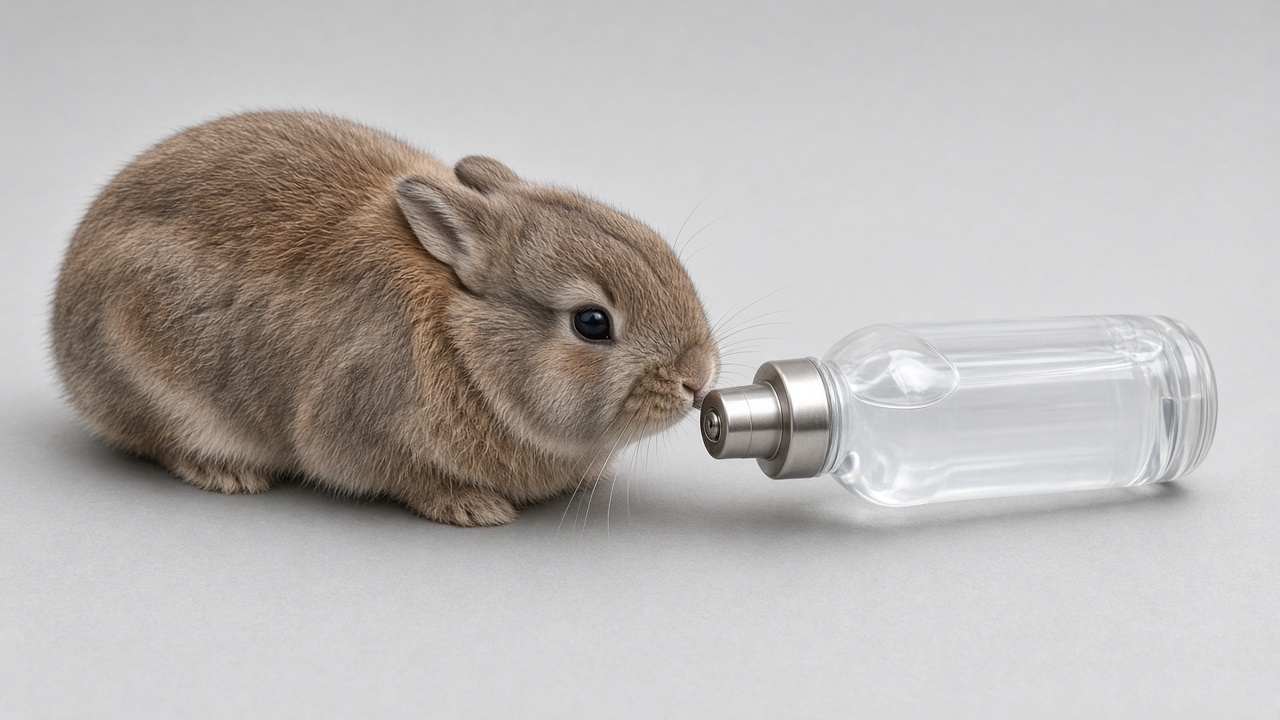
Offer water in a bowl you can scrub daily. Refresh it when you refresh hay. Bottles hide slime until they clog.
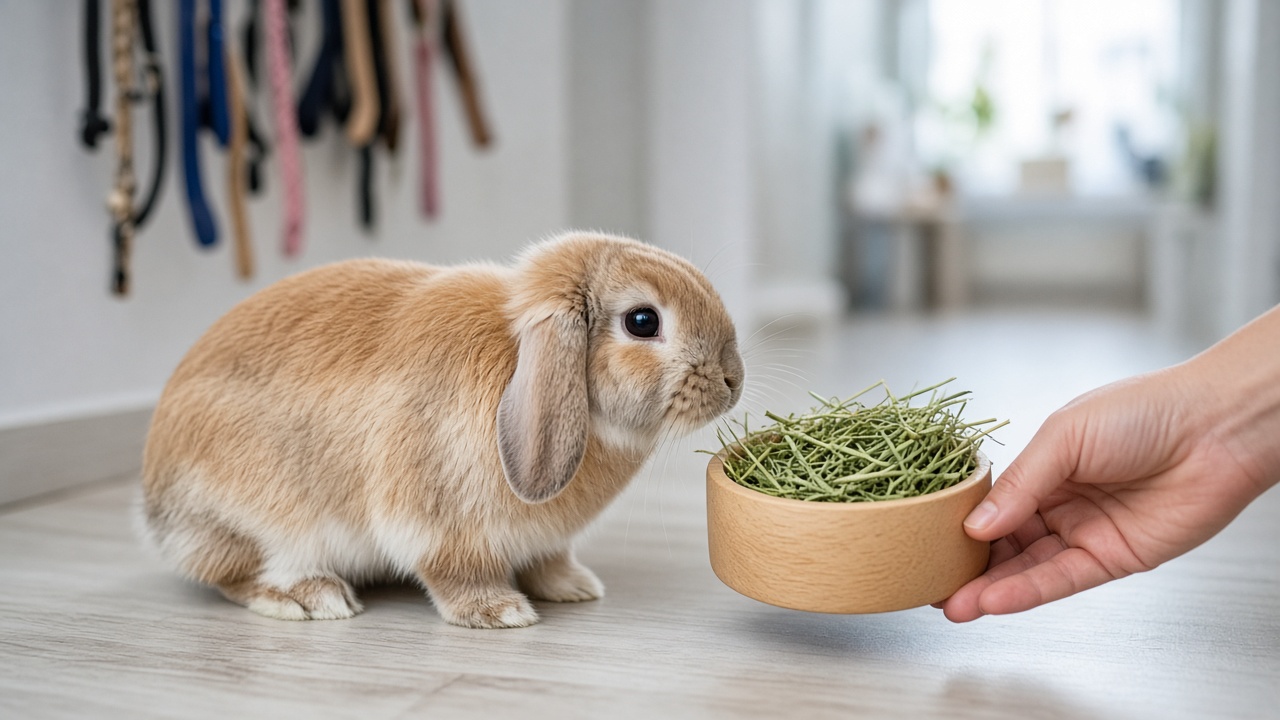
Hide cords. Move houseplants out of reach. Rabbits chew first and sort later.
Litter training is realistic for many house rabbits. Place hay next to the box. Rabbits often eat and eliminate in one zone.
Hay, greens, and adult pellets
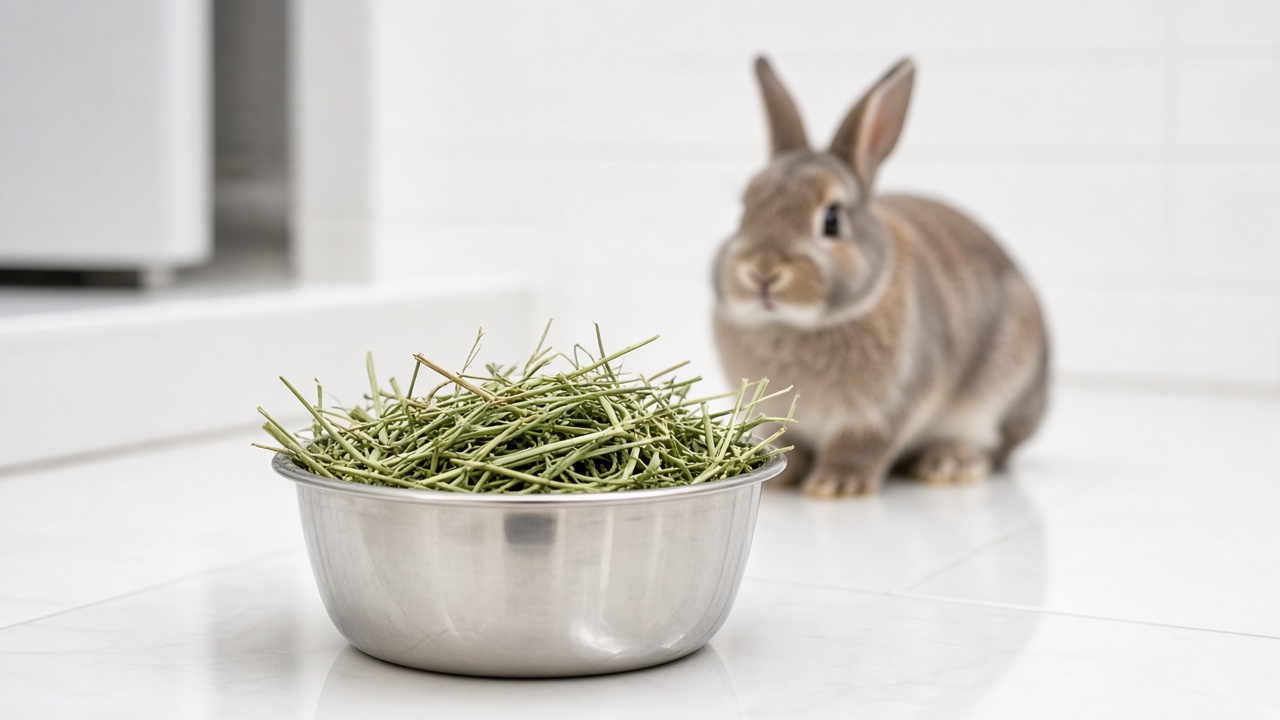
House Rabbit Society puts unlimited grass hay first for adults. Timothy, orchard, and oat hays sit on that list. Alfalfa hay is for young rabbits and nursing does.
House Rabbit Society sets pellets at 1/4 cup per 6 pounds of body weight per day. A Mini Lop near the ARBA 6.5-pound cap sits just above that unit. Treat the cup as a start, not a prize.
The same page asks for at least 2 cups of chopped vegetables per 6 pounds. It wants at least three leafy greens each day. Leafy greens should make up about 75 percent of the fresh portion.
Non-leafy vegetables cap at about 1 tablespoon per 2 pounds of body weight. Fruit, if used, caps at about 1 teaspoon per 2 pounds. For a 6.5-pound Mini Lop, that fruit cap is about 3 teaspoons.
House Rabbit Society tells readers to wash vegetables for at least two minutes. The stated reason is Rabbit Hemorrhagic Disease Virus Type-2. Change the wash water several times.
A good pellet, on that page, should list at least 18 percent fiber. Uniform pellets beat mixes with seeds, nuts, corn, or yogurt drops. Those mixes invite selective eating.
For a wider field, see our best rabbit pellets briefing. The table below stays inside the Adult-Fiber Rule.
Our research team compared four currently sold adult formulas. Label fiber minimums run from Mazuri’s 18.00 percent to Oxbow Essentials’ 25.00 percent. That is a 7-point spread, not a feeding trial.
Three of the four list a grass-hay first ingredient. Science Selective Adult Rabbit Food lists alfalfa meal pellets first. House Rabbit Society prefers timothy-based pellets for healthy-weight adults.
| Product | First ingredient | Crude protein (min) | Crude fiber (min–max) | Maker feeding cue near Mini Lop weight |
|---|---|---|---|---|
| Oxbow Essentials Adult Rabbit Food | Timothy Grass Meal | 14.00% | 25.00–29.00% | 1/4–1/3 cup daily for a 4–8 lb adult over 1 year |
| Kaytee Timothy Complete Rabbit Food | Sun-cured Timothy Grass Hay | 13.0% | 22.0–27.0% | 1/3–1/2 cup daily for a small breed |
| Science Selective Adult Rabbit Food | Alfalfa meal pellets | 12.5% | 21.5–28.5% | 2–2.5 oz daily for a typical 5.5 lb adult, from 20 weeks |
| Mazuri Timothy-Hay Based Rabbit Diet | Ground Timothy Hay | 14.00% | 18.00–22.00% | Any-life-stage pellet, 1/8 in × 3/8 in; no 4–8 lb cup listed |
Oxbow Animal Health prints 1/4 to 1/3 cup for a 4–8 pound adult. That band overlaps a Mini Lop at the ARBA cap. Feed Essentials Adult Rabbit Food with unlimited grass hay, as Oxbow states.
Kaytee prints 1/3 to 1/2 cup for a small breed on Timothy Complete Rabbit Food. That range sits above the House Rabbit Society 1/4 cup cue. If both apply, start low and watch body condition.
Kaytee also prints a Bacillus minimum of 100,000 CFU per gram. The first ingredient is sun-cured timothy grass hay. The page states more than 150 years of nutritional work.
Supreme Petfoods prints 2 to 2.5 ounces per day for a typical 5.5-pound adult. That weight sits inside the Mini Lop range. Science Selective Adult Rabbit Food starts at 20 weeks of age.
Supreme Petfoods also prints a marketing fiber figure of 25 percent. The guaranteed panel is 21.5 percent minimum and 28.5 percent maximum. Use the panel when you compare labels.
Mazuri lists formula 5M15 and a 1/8 by 3/8 inch pellet. Crude fiber on that page is 18.00 to 22.00 percent. It meets the House Rabbit Society 18 percent floor and sits at the bottom of this set.
Mazuri prints calcium at 0.75 to 1.25 percent. Oxbow Essentials prints 0.35 to 0.75 percent. Kaytee prints 0.25 to 0.75 percent.
Science Selective prints calcium at 0.3 to 1.2 percent. House Rabbit Society prefers timothy-based adult pellets in part to limit extra calcium. Keep alfalfa hay off a healthy adult Mini Lop’s daily menu.
Oxbow tells owners to change foods across four weeks. Kaytee uses a 7 to 10 day mix. Sudden pellet swaps are a poor match for a rabbit gut.
We did not assign a Mini Lop lifespan. ARBA does not print one on the breed page we read. We also did not price the four pellets.
Coat care for a dense, short coat
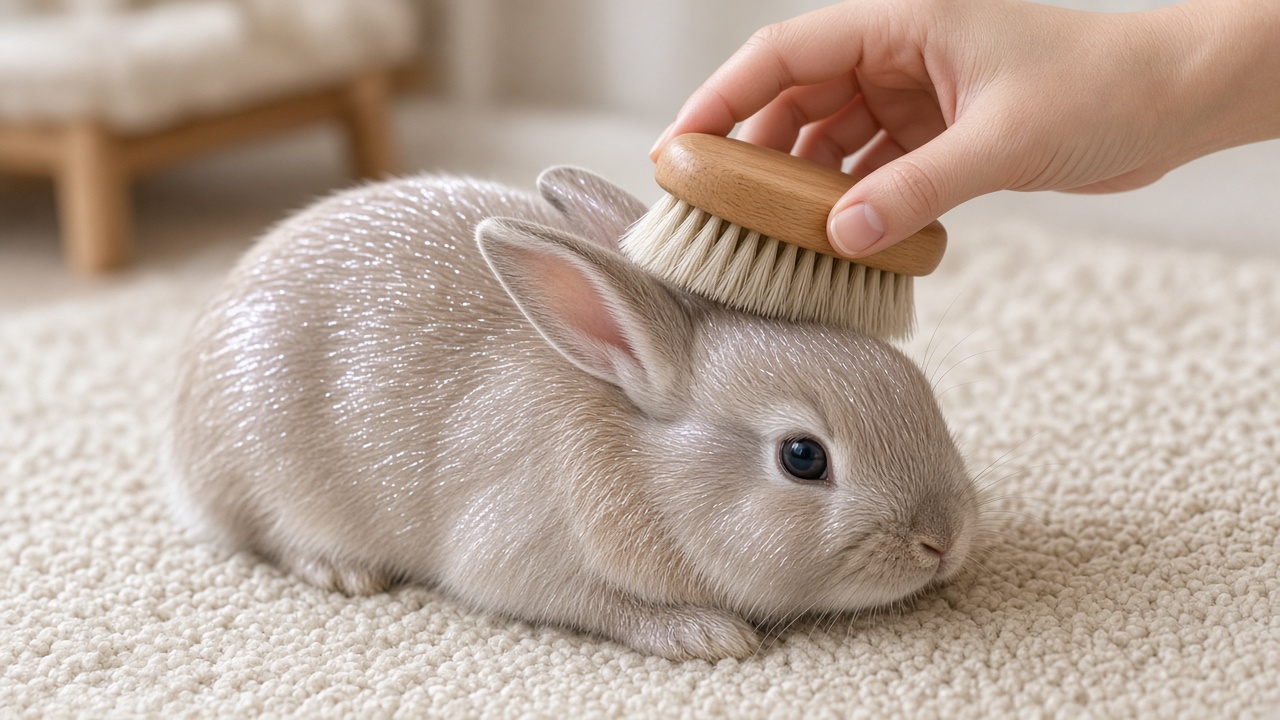
Mini Lops are not wool breeds. They still shed. A weekly brush session catches loose coat before it becomes gut freight.
Use a soft slicker or a small-animal rubber tool. For kit options we already reviewed, see our rabbit grooming kit review. Match the tool to a short, dense coat.
Check the lop fold in that same session. Debris can sit where the ear hangs. Wipe only what you can see.
Nails grow on soft floors. Trim small amounts. For a full photo sequence, use our how to groom a rabbit guide.
Baths are rarely useful. Rabbits groom themselves. Spot-clean soiled fur with a damp cloth.
FAQ
How big does a Mini Lop rabbit get?
The American Rabbit Breeders Association publishes a 6.5-pound maximum. That is a breed cap, not a promise of a 5-pound pet. Ask for a recent weight if you adopt an adult.
A rabbit labeled Mini Lop that keeps growing past that cap may be a mixed lop. Size still drives pen choice and pellet cups. Weigh monthly during the first year.
Are Mini Lops good pets for first-time owners?
They can be, if you accept daily hay, litter, and floor time. ARBA does not certify a beginner personality. The care load matches other medium house rabbits.
Plan for an adult near 6.5 pounds, not a toy rabbit. Budget time for grooming checks and vegetable prep. A cute head does not shrink the chore list.
How much should I feed a Mini Lop?
House Rabbit Society starts adults at unlimited grass hay plus 1/4 cup of pellets per 6 pounds. Vegetables start at 2 cups per 6 pounds. Fruit, if used, stays near 1 teaspoon per 2 pounds.
Maker pages do not all match that cup. Oxbow Essentials lists 1/4 to 1/3 cup for a 4–8 pound adult. Kaytee lists 1/3 to 1/2 cup for a small breed.
Science Selective lists 2 to 2.5 ounces for a 5.5-pound adult. Watch the waist, not the bag slogan. Hay should still dwarf the pellet scoop.
What is the difference between a Mini Lop and a Holland Lop?
They are separate ARBA breeds. The Mini Lop page sets a 6.5-pound maximum and a 1980 recognition year. Do not shop by ear shape alone.
Ask for the breed name in writing. Housing and pellet cups should follow the rabbit you bring home. A mixed lop still needs hay first.
Do Mini Lops need a companion rabbit?
Rabbits are social. A bonded pair can work in a large indoor setup. This briefing did not review pairing studies, so we state no success rate.
If you keep one Mini Lop, you are the social partner. Daily floor time and calm handling matter more. A lonely rabbit in a back room is a poor match.
How often should I groom a Mini Lop?
Plan a short weekly session for coat, nails, and ear folds. Increase brushing during heavy sheds. Mini Lops are not wool rabbits.
Use the tools in our rabbit grooming kit review. Follow the steps in our how to groom a rabbit guide. Stop if the skin is sore.
Can a Mini Lop live in a small cage?
A small cage can hold a litter box and a hide. It cannot replace daily movement. Size the setup to a 6.5-pound adult, not to the word “mini.”
Give a Mini Lop a pen or a rabbit-proofed room. Add chew toys and a water bowl. Floor time is part of care, not a weekend extra.