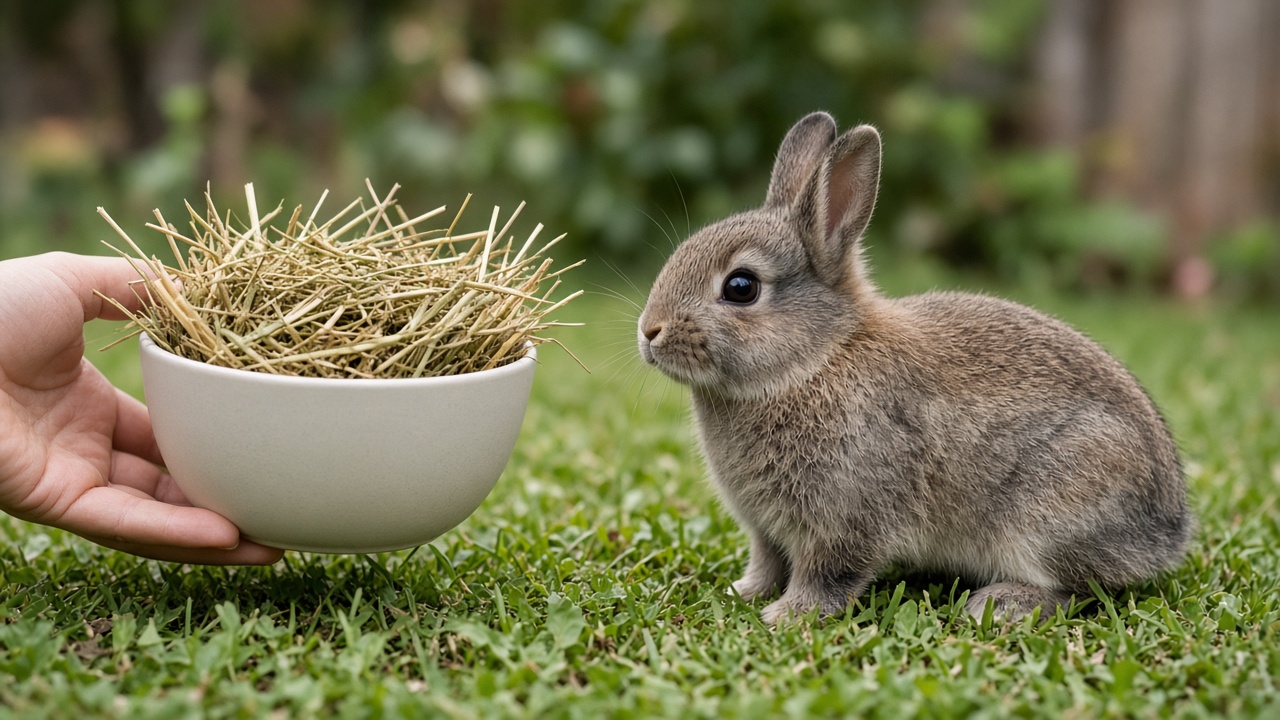
Quick answer: Keep an adult Netherland Dwarf on unlimited grass hay and a measured timothy pellet. Give it a 4-by-4-foot indoor floor with daily run time. Size is not a license for a tiny cage.
A Netherland Dwarf is an ARBA breed capped at 2.5 lb that still needs a 4-by-4-foot indoor floor. This page is a desk comparison of published breed, housing, and pellet specs.
Selection rule: We covered indoor companion setups for rabbits at or under the ARBA 2.5 lb senior cap. We kept only uniform adult pellets whose maker pages list fiber and a measured scoop. We left out outdoor hutch-only plans, breeding stock, junior alfalfa diets, and seed mixes.
What the registry says this breed is
The American Rabbit Breeders Association lists the Netherland Dwarf as a Dutch-origin breed from the early 20th century. ARBA’s breed page names diminutive size, a brachycephalic head, and a wide color set.
ARBA now recognizes 25 showable color varieties. A mixed-color companion rabbit can still be dwarf type. It is not a show Netherland Dwarf unless it meets that standard.
ARBA sets the senior maximum at 2.5 lb. Our research team used that figure as the working adult size here. If a rabbit sold as a “dwarf” sits well above that cap, size food and floor to the body you have.
A 2.5 lb body does not shrink the gut. Teeth still grow, and fiber still has to move. The usual published-care error is treating that cap as a reason to buy a starter cage.
ARBA also flags the brachycephalic head. That is a skull shape, not a personality note. Keep rooms cool and air moving.
Indoor space that fits a 2.5 lb rabbit
House Rabbit Society does not shrink living space for a small breed. Its housing page calls a 4-by-4-foot exercise pen, with free-roam time, an ideal setup for most companion rabbits.
That floor is 16 square feet. It is the daily living area, not a weekend treat. House Rabbit Society also wants at least four hours of running, jumping, and digging each day.
A cage, on that same page, is a rest bedroom. House Rabbit Society says any cage should be three to four times the rabbit’s stretched length. The smaller that rest box is, the more hours the rabbit needs outside it.
Shared indoor rooms are the stated preference. Living rooms, kitchens, studies, and adult bedrooms are the examples it lists. A spare-room condo can be a rest base, not the whole life.
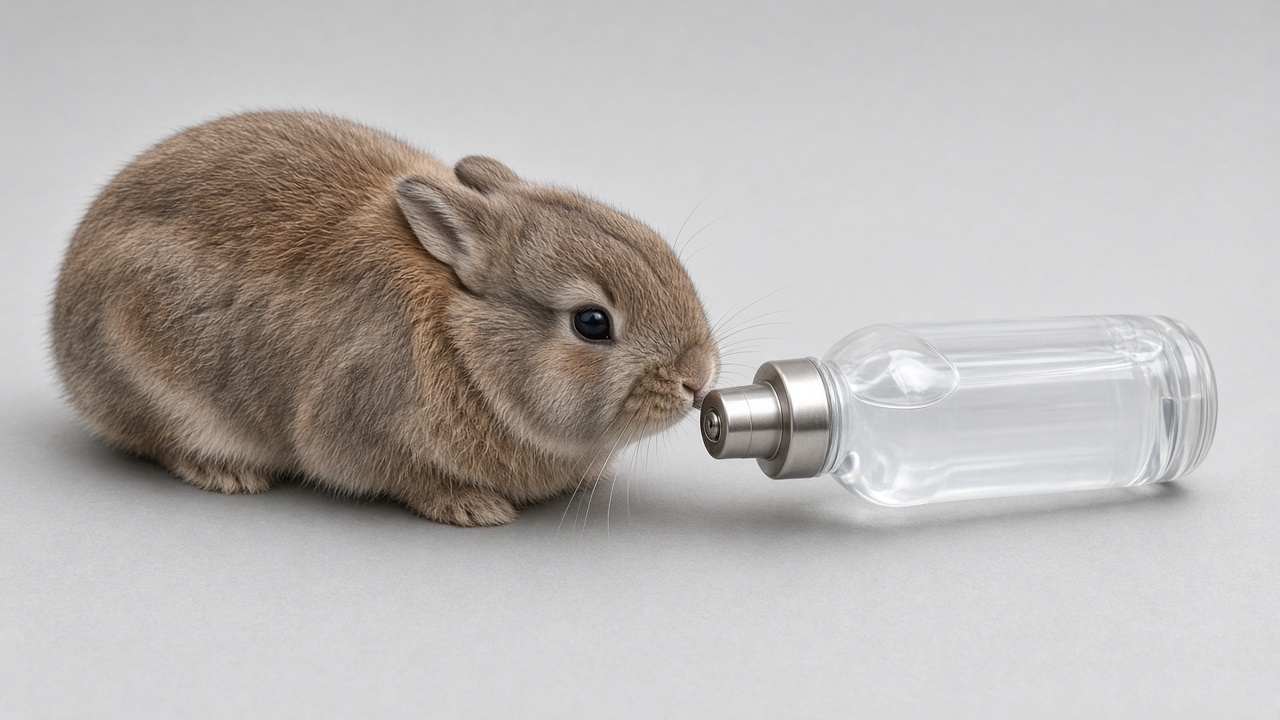
Water belongs in a bowl on that list. House Rabbit Society says rabbits drink more from bowls, and bowls are easier to wash daily. Add a hide, a litter box, a hay source, and chew toys.
House Rabbit Society also tells guardians to lift cords, pull houseplants, and block gaps under couches. If hay dust bothers people, it names orchard grass as one lower-dust swap.
Hay, greens, and a measured pellet
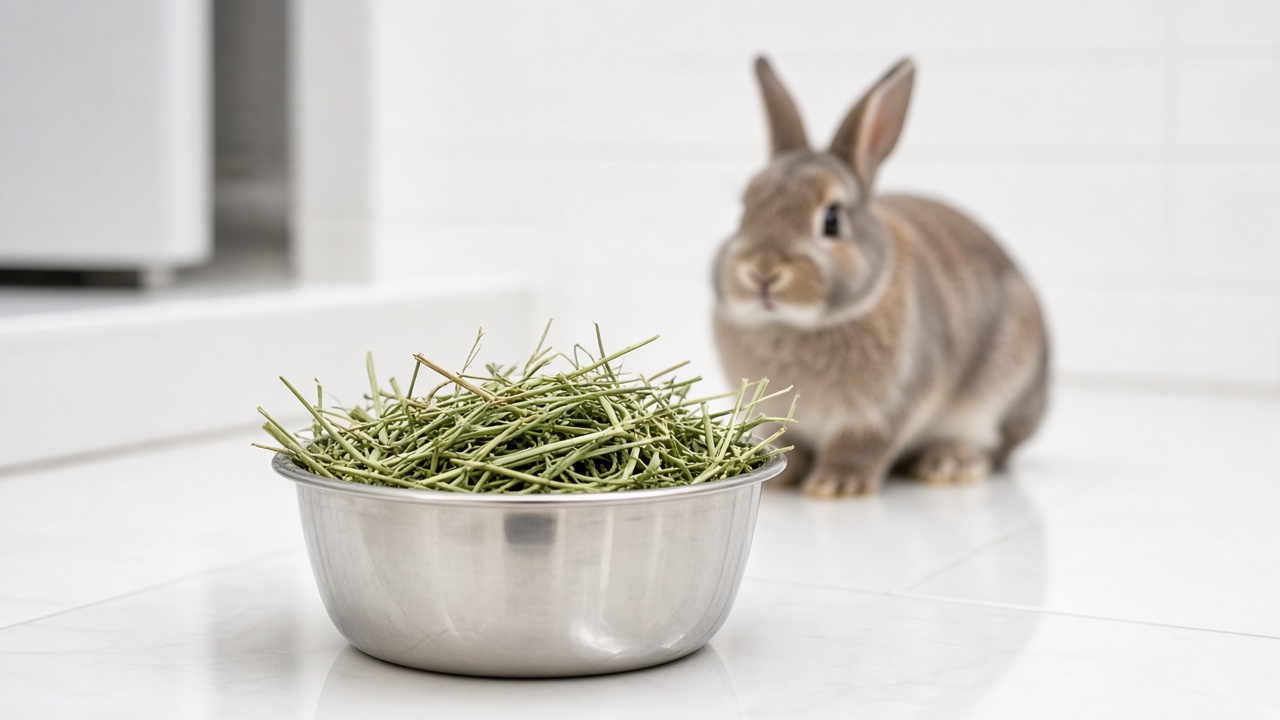
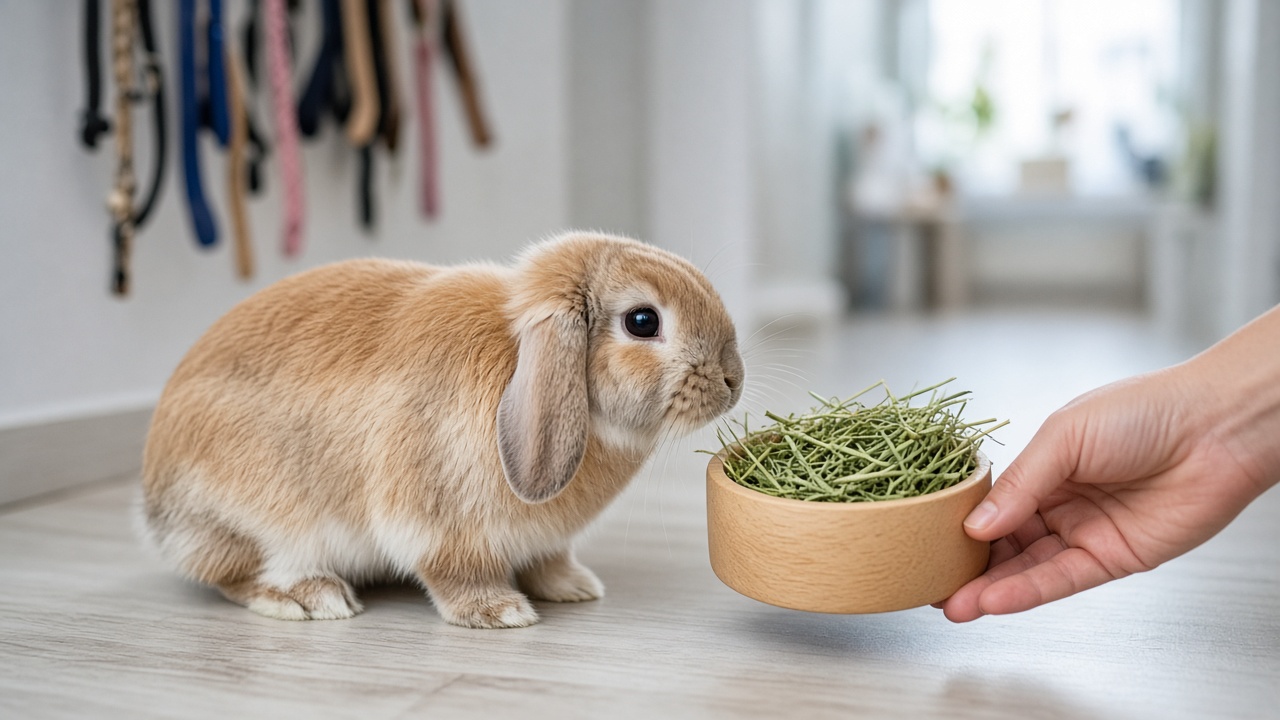
House Rabbit Society’s diet page puts unlimited grass hay first for adults one to five years old. Timothy, orchard, and oat hays are the grasses it names. Alfalfa hay stays with young rabbits and nursing does.
Rabbit.org, the House Rabbit Society education site, states that hay should make up 85% of an adult diet. Pellets, on that same page, are about 5%. Those two percentages are the diet map we used for this breed.
House Rabbit Society asks for a high-fiber pellet at 18% minimum fiber. It also sets a measured adult scoop: 1/4 cup of pellets per 6 lb of body weight per day. Scale that down for a rabbit under the ARBA 2.5 lb cap.
On that math, a 2.5 lb adult is due about 0.10 cup of pellets a day. Offer all the grass hay it will eat. That dish is small on purpose.
Greens sit between hay and pellets. House Rabbit Society wants a minimum of 2 cups of chopped vegetables per 6 lb of body weight. It also wants at least three leafy types each day.
Leafy greens should be about 75% of the fresh portion. Non-leafy vegetables, including carrot, stay at about 1 tablespoon per 2 lb of body weight. Fruit is a treat at about 1 teaspoon per 2 lb.
Wash produce. House Rabbit Society, citing Rabbit Hemorrhagic Disease Virus Type-2, tells guardians to wash vegetables for at least two minutes. Use a bowl and change the water several times.
Rabbit.org quotes Susan Brown on why the pellet scoop stays small. Uncontrolled pellet feeding, she wrote, can lead to obesity, heart and liver disease, chronic diarrhea, and kidney disease.
Do not buy mixes with seeds, nuts, corn, or yogurt drops. House Rabbit Society bans those add-ins on the pellet page. They teach selective eating and do not replace hay.
Young rabbits eat a different ration. House Rabbit Society keeps kits and teenagers on unlimited alfalfa hay and alfalfa pellets through about seven months. From seven months to one year it moves them to grass hay, 1/2 cup of timothy pellets, and 1 cup of greens.
Adult pellets compared by maker labels
Our research team compared four currently sold adult pellets. We used each maker’s own product page.
We kept a product only if the page listed a first ingredient, a fiber guarantee, and a measured feeding note.
Maker scoops do not agree. Oxbow Animal Health lists 1/8 cup daily for mature rabbits that weigh 1–4 lb. Kaytee lists 1/3 to 1/2 cup for a small rabbit breed.
Those two notes can differ by a factor of three on the same 2 lb rabbit. House Rabbit Society’s 1/4 cup per 6 lb rule sits closer to Oxbow’s small-adult band. When labels conflict, we treat the smaller measured scoop plus unlimited hay as the conservative desk reading.
For a wider pellet field, see our best rabbit pellets guide.
| Product | First listed ingredient | Crude fiber on maker page | Crude protein (min) | Maker feeding note for a small adult | Listed bag sizes |
|---|---|---|---|---|---|
| Oxbow Essentials Adult Rabbit Food | Timothy Grass Meal | 25.00% min, 29.00% max | 14.00% | 1–4 lb, over 1 year: 1/8 cup daily, plus unlimited grass hay | 5 lb, 10 lb, 25 lb |
| Kaytee Timothy Complete Rabbit Food | Sun-cured Timothy Grass Hay | 22.0% min, 27.0% max | 13.0% | Small breed: 1/3 to 1/2 cup, plus unlimited loose hay | 4.5 lb, 9.5 lb, 25 lb |
| Science Selective Adult Rabbit Food | Alfalfa meal pellets | 21.5% min, 28.5% max on the U.S. label | 12.5% | 2–2.5 oz daily for a 5.5 lb adult; hay and water always offered | 4 lb, 8.8 lb |
| Small Pet Select Rabbit Food Pellets | Timothy hay | 25% min, 29% max | 14% | Ages 1–5 years: 1/4 to 1/2 cup per 6 lb body weight | 5 lb, 10 lb, 20 lb, 40 lb |
Oxbow Essentials Adult Rabbit Food is a timothy-meal pellet for rabbits over one year. Oxbow’s page lists calcium at 0.35% min and 0.75% max, plus a four-week switch. It is not labeled for growing, gestating, or lactating animals.
Kaytee Timothy Complete Rabbit Food lists timothy hay first and a Bacillus count of 100,000 CFU/g. Kaytee tells buyers to blend old and new food over 7 to 10 days and to use an opened bag within 30–45 days.
Science Selective Adult Rabbit Food, from Supreme Petfoods, is sold in the United States for rabbits aged 20 weeks and older. The United States page lists calcium at 0.6% and phosphorus at 0.4% in the marketing copy. Do not copy its 2–2.5 oz scoop onto a 2.5 lb rabbit without scaling.
Small Pet Select Rabbit Food Pellets are timothy-based for rabbits seven months or older. The maker’s 1–5 year note is 1/4 to 1/2 cup per 6 lb. Calcium is listed at 0.4% min and 0.6% max.
None of these four pages replaces hay. Each one says grass hay stays unlimited.
Coat care and daily handling
This is not a wool breed on ARBA’s public breed page. It still sheds. House Rabbit Society lists daily brushing, preferably outdoors, as one way to cut hay-and-hair dust in the house.
A weekly once-over is enough for many short coats in a quiet molt. During a heavy shed, check the rear daily so waste does not mat. Skin is thin, so do not yank clumps.
For tool choices, use our rabbit grooming kit review. For the order of steps, use our step-by-step rabbit grooming guide.
Support the chest and hindquarters when you lift. Set the rabbit down if it starts to kick.
House Rabbit Society warns that rabbits that skip hay can grow points that cut tongue and cheek. A sudden drop in hay intake is a clinic signal, not a picky phase.
Heat, litter, and signs that need a clinic
House Rabbit Society wants the rabbit in a lived-in, ventilated room. Do not treat a parked car, a sun porch, or a closed hutch as housing. ARBA’s brachycephalic note is one more reason to avoid hot, still air.
House Rabbit Society includes a litter box in the essential kit. Skip cedar and other aromatic wood shavings.
A day of no fecal pellets, or a pile of very small dry ones, is an emergency pattern in rabbits. So is a rabbit that sits hunched and stops eating hay. Those names belong in a clinic, not on this desk.
If you change pellets, follow the maker’s own transition days. Oxbow publishes four weeks. Kaytee publishes 7 to 10 days.
FAQ
How big do Netherland Dwarf rabbits get?
The American Rabbit Breeders Association sets the senior maximum at 2.5 lb. That is the number we used for adult housing and pellet math. A pet sold as a dwarf that weighs more still needs hay and floor space sized to its real body.
How much pellet should an adult Netherland Dwarf eat?
House Rabbit Society sets 1/4 cup of high-fiber pellets per 6 lb of body weight. For a rabbit at the 2.5 lb ARBA cap, that is about 0.10 cup a day plus unlimited grass hay. Oxbow’s 1–4 lb note is 1/8 cup, while Kaytee’s small-breed note is 1/3 to 1/2 cup.
Can a Netherland Dwarf live in a small starter cage?
House Rabbit Society says a cage is a rest bedroom, not a home. It names a 4-by-4-foot pen with free-roam time as an ideal daily setup. It also wants four or more hours of running and digging each day.
What hay should I feed an adult?
House Rabbit Society names timothy, orchard, and oat as adult grass hays. Rabbit.org says hay should be 85% of the adult diet. Keep alfalfa hay for young rabbits and nursing does unless a clinician has a different plan for an underweight senior.
When do I switch a young Netherland Dwarf off alfalfa?
House Rabbit Society keeps alfalfa hay and alfalfa pellets in front of rabbits from about seven weeks to seven months. From seven months to one year it moves them to unlimited grass hay and 1/2 cup of timothy pellets. Oxbow Essentials Adult Rabbit Food is labeled for rabbits over one year.
How many vegetables should I offer?
House Rabbit Society wants at least 2 cups of chopped vegetables per 6 lb of body weight, with three or more leafy types. Rabbit.org’s companion page uses 1–2 cups of vegetables per 4 lb. Start with one new green at a time and stop any green that loosens stool.