Quick answer: Pick a rabbit by adult weight and coat work, not by color photos. If you live in an apartment, start with an ARBA breed at or under 6.5 pounds. Skip wool and giant breeds unless you already have floor space and a daily grooming hour.
A first-time indoor keeper should start with one of the 18 ARBA breeds whose published maximum adult weight is 6.5 pounds or less. This page is a desk comparison of ARBA, AVMA, House Rabbit Society, and maker pages; we did not house rabbits or run feeding trials.
The Indoor Weight-and-Coat Rule
Our selection rule is public. We cover a breed only when the American Rabbit Breeders Association states a numeric adult maximum. That figure must appear on ARBA’s recognized-breeds page.
Apartment-scale breeds sit at or under 6.5 pounds. House-scale breeds sit between 7 and 12 pounds. We keep those two bands separate.
We add one exception. Flemish Giant has no ARBA maximum. ARBA says adults often exceed 20 pounds.
That giant is a space warning, not a starter pet. We leave out breeds whose current ARBA page states no weight. We also leave out meat herds, outdoor colonies, and show-only running programs.
For products, we include only SKUs with a live maker page. That page must publish a numeric analysis or a numeric enclosure size. We skip seed mixes and cages sold as a full-time home.
Compact breeds under 6.5 pounds
ARBA’s home page states that it currently recognizes 53 rabbit breeds. Our research team counted those breed pages one by one. Eighteen of the 53, or 34 percent, publish a maximum of 6.5 pounds or less.
The 18 names are American Fuzzy Lop, Britannia Petite, Dutch, Dwarf Hotot, Florida White, Havana, Himalayan, and Holland Lop. The rest are Jersey Wooly, Lionhead, Mini Californian, Mini Lop, Mini Rex, Mini Satin, Netherland Dwarf, Polish, Tan, and Thrianta.
The smallest published ceiling is 2.5 pounds. ARBA lists that figure for Netherland Dwarf and Britannia Petite. ARBA also says Netherland Dwarf now has 25 showable colors.
Holland Lop is a frequent first pet. ARBA lists a 4-pound maximum. ARBA calls the breed one of its top five most popular.
Mini Rex sits at 4.5 pounds. ARBA says Mini Rex is consistently the number one or number two entry at its convention. Lionhead is newer.
ARBA recognized Lionhead in 2014. The listed maximum is 3.75 pounds. Mini Californian is newer still.
ARBA calls Mini Californian the 53rd recognized breed. The listed maximum is 6 pounds. The breed became eligible for all sanctioned shows on December 1, 2025.
Compact does not mean easy. ARBA describes Britannia Petite as more high-strung than other breeds. A 2.5-pound rabbit still needs room to sprint.
House-scale breeds from 7 to 12 pounds
The next band covers ARBA breeds with published maxima from 7 to 12 pounds. New Zealand is the headline name. ARBA lists a 12-pound maximum.
ARBA also says New Zealand has more Best in Show wins than any other breed. Rex sits at 10.5 pounds. Californian sits at 10.5 pounds as well.
Standard Chinchilla sits at 7.5 pounds. Silver Fox and the American both sit at 12 pounds. Those three still need a room, not a tabletop cage.
ARBA’s American page notes that the American Livestock Breed Conservancy lists the American as critical. ARBA’s Creme d’Argent page says the breed numbers less than 1,000 in the United States. Those facts matter if you want a rare house rabbit.
A 10-pound adult is four times a Netherland Dwarf. Litter boxes get larger. So do food bowls and the hay bill.
House Rabbit Society’s adult diet page sets pellets at 1/4 cup per 6 pounds of body weight. That is 1/4 cup for a 6-pound Dutch. It is about 1/2 cup for a 12-pound New Zealand.
House Rabbit Society also sets vegetables at a 2-cup minimum per 6 pounds each day. A 12-pound rabbit therefore needs at least 4 cups of chopped vegetables. That is a shopping habit, not a weekend treat.
Giants and wool coats that change the job
ARBA gives Flemish Giant no maximum weight. The same page says they often tip the scales at over 20 pounds. Giant Chinchilla does have a ceiling.
ARBA lists Giant Chinchilla at 16 pounds. Five ARBA breeds publish no maximum on the recognized-breeds page. Those are Checkered Giant, English Lop, Flemish Giant, French Lop, and Giant Angora.
Treat any of them as a furniture-scale animal. Wool and mane coats change weekly work more than color does. ARBA lists four Angora breeds plus American Fuzzy Lop, Jersey Wooly, and Lionhead.
That is seven coats that hold loose fiber. House rabbits swallow fur while they groom. House Rabbit Society treats unlimited grass hay as the main defense against blockage.
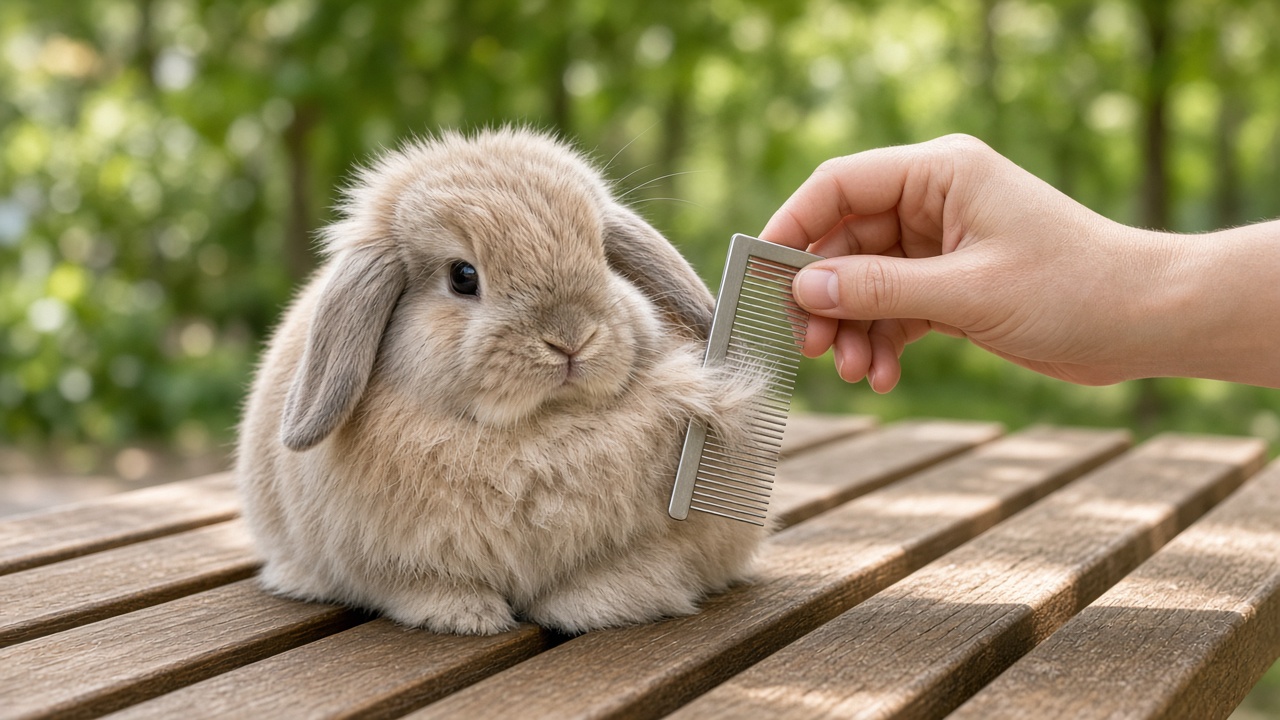
A wool breed still needs hands-on combing. Our step-by-step rabbit grooming guide walks through the sequence. Our rabbit grooming kit review compares tools by coat type.
Do not buy a wool breed for a child who wanted low-care handling. Do not buy a Flemish Giant for a studio apartment. Those two mismatches, not color, are the usual setup failures.
Food and housing specs that scale with adult weight
The American Veterinary Medical Association’s 2025 sourcebook puts rabbits in about 800,000 U.S. households. That is 0.6 percent of households. AVMA based those figures on an opt-in survey of 7,519 people in early spring 2025.
The American Pet Products Association reported on December 3, 2025. APPA says six million U.S. households own small animals. APPA says 37 percent of those owners have a rabbit.
That rabbit share is a 37 percent rise from 2018. Rabbit is the top small-animal type in that survey. Guinea pigs follow at 23 percent, then hamsters at 18 percent.
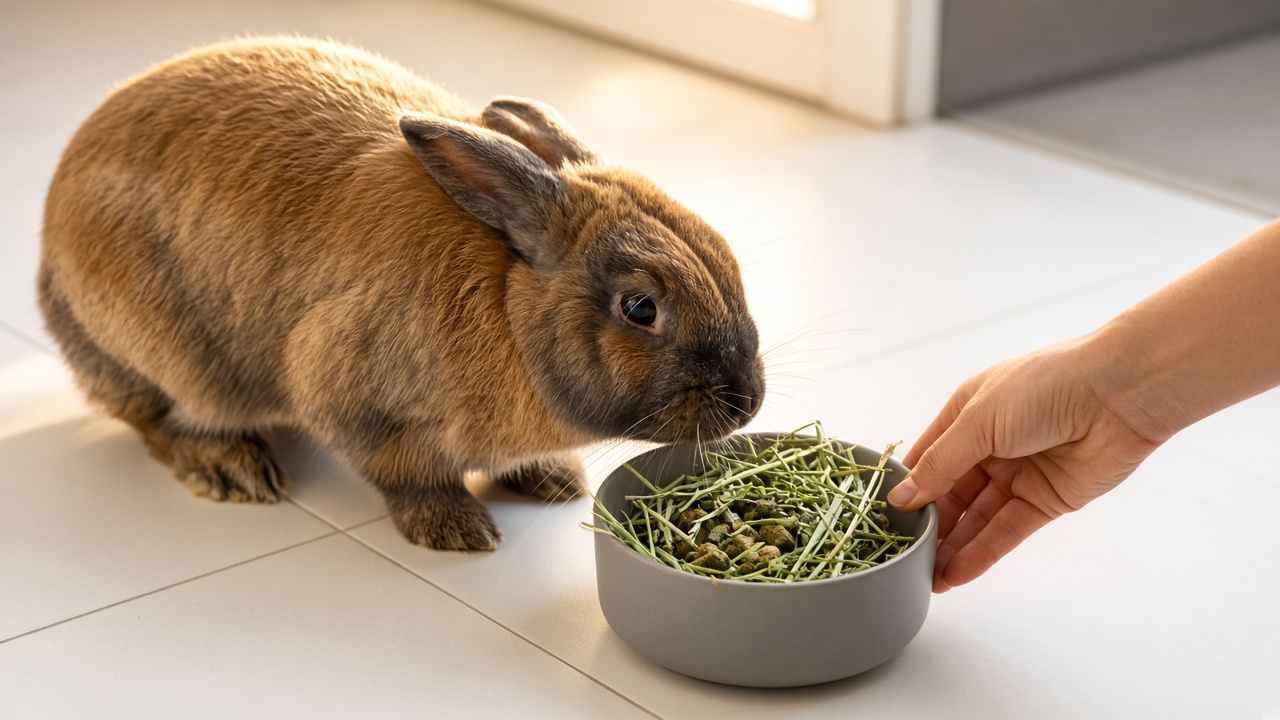
Diet still follows size. House Rabbit Society’s adult plan is unlimited hay plus 1/4 cup of pellets per 6 pounds. It also asks for at least 2 cups of vegetables per 6 pounds.
Rabbit.org, the House Rabbit Society education site, states hay should be 85 percent of an adult diet. House Rabbit Society wants pellets at 18 percent minimum fiber. Comparing published specs, Oxbow Essentials Adult Rabbit Food lists fiber at 25 to 29 percent.
Kaytee Forti-Diet Pro Health Nourish+Protect Adult Rabbit Food lists fiber at 21 percent maximum. Oxbow’s page lists protein at 14 percent minimum. Kaytee’s page lists protein at 12 percent minimum.
Oxbow bags are listed at 5, 10, and 25 pounds. Kaytee bags are listed at 5, 8, and 20 pounds. Oxbow’s feeding table is weight-banded.
Oxbow lists 1/8 cup daily for rabbits of 1 to 4 pounds. It lists 3/4 cup daily for rabbits over 10 pounds. Kaytee’s table is breed-banded.
Kaytee lists 1/4 to 1/2 cup, or 30 to 60 grams, for a small breed. It lists 1/2 to 1 cup, or 60 to 120 grams, for a large breed. Hay is the larger daily volume.
Oxbow Western Timothy Hay lists protein at 7 percent minimum. It lists fiber at 32 percent maximum. Pack sizes run from 15 ounces to 50 pounds.
Small Pet Select 2nd Cutting Timothy Hay ships in boxes from 2 pounds to 40 pounds. That maker’s feeding note says 80 percent of the diet should be hay. Use either hay as the daily base, then add a measured pellet.
| Product | Form | Maker-listed pack or size | Maker-listed nutrition or build | Weight band it maps to |
|---|---|---|---|---|
| Oxbow Essentials Adult Rabbit Food | Uniform timothy pellet | 5 lb, 10 lb, 25 lb | Protein min 14%; fiber 25–29% | Oxbow: 1/8 cup at 1–4 lb; 3/4 cup at 10 lb+ |
| Kaytee Forti-Diet Pro Health Nourish+Protect Adult Rabbit Food | Uniform pellet | 5 lb, 8 lb, 20 lb | Protein min 12%; fiber max 21%; 120,000 CFU/g Bacillus | Kaytee: 30–60 g small breed; 60–120 g large breed |
| Oxbow Western Timothy Hay | Loose grass hay | 15 oz to 50 lb | Protein min 7%; fiber max 32% | Unlimited hay, any adult breed |
| Small Pet Select 2nd Cutting Timothy Hay | Loose timothy hay | 2 lb to 40 lb | Maker feeding note: 80% of diet as hay | Adult grass-hay keepers |
| Prevue Pet Products Small Animal Home Coco 425 | Wire home on casters | 32-1/2" L × 21-5/8" W × 33" H | 1" wire spacing; 6-1/2" plastic pan | Rest box only, not a full living space |
A cage is not a home. House Rabbit Society says any cage should be three to four times the rabbit’s stretched length. It also asks for four or more hours of cardiovascular play each day.
Prevue Pet Products lists the Coco 425 at 32-1/2 inches by 21-5/8 inches by 33 inches. That footprint is about 4.9 square feet. House Rabbit Society still cites a 4-foot by 4-foot pen as a common home-base size.
That pen is 16 square feet. The Prevue unit can hold a litter box. It cannot replace the pen.
Space, play, and what a cage cannot do
House Rabbit Society wants large-scale play for four or more hours a day. That means running, jumping, and digging. It does not mean circling a disk.
A large silent hamster wheel is built for hamsters. APPA says hamster ownership has fallen 25 percent since 2018. Rabbit ownership inside the small-animal group has risen.
Those are different bodies. Do not put a rabbit on a hamster wheel. Floor sprints are the exercise that matches a rabbit’s gait.
ARBA has almost 20,000 members. It has promoted rabbits since 1921. Its 103rd convention is set for October 24–28, 2026.
Show culture and pet culture share breed names. They do not share housing. A convention cage is a staging pen.
A living room is the actual habitat. Blue Holicer became ARBA’s 52nd breed in 2023. ARBA lists its maximum at 7-1/4 pounds.
New recognized names will keep arriving. The Indoor Weight-and-Coat Rule still applies. Read the published maximum, then measure the floor.
If those two numbers do not fit your home, wait. The breed that matches a photo is not the breed that matches a lease.
FAQ
How many rabbit breeds are there?
ARBA currently recognizes 53 rabbit breeds. That is the U.S. show-registry number, not a world census. For a U.S. pet search, 53 is the list you will meet at shows and many rescues.
Which rabbit breed is best for a first-time owner?
Start inside the 18 ARBA breeds at or under 6.5 pounds. Holland Lop, Mini Rex, Dutch, and Florida White sit in that band with short coats. Skip Britannia Petite if you want calmer handling, because ARBA itself calls that breed high-strung.
How big do Flemish Giant rabbits get?
ARBA publishes no maximum weight for Flemish Giant. The same ARBA page says adults often exceed 20 pounds. If you cannot give floor sprints, pick a compact breed instead.
How much should an adult rabbit eat?
House Rabbit Society calls for unlimited grass hay and 1/4 cup of pellets per 6 pounds. It also asks for at least 2 cups of vegetables per 6 pounds. Rabbit.org states hay should be 85 percent of the adult diet.
Do long-haired rabbit breeds need more grooming?
Yes. Lionhead, Jersey Wooly, American Fuzzy Lop, and the four ARBA Angoras hold loose fiber. House Rabbit Society still treats hay as the daily gut and tooth tool, and combing is extra work on top.
Can I keep a rabbit in a cage sold for rabbits?
You can use a cage as a bedroom. You should not use it as the whole home. Prevue’s Coco 425 offers about 4.9 square feet of floor, while a 4-by-4 pen is 16 square feet plus free-roam time.
Are rabbits common U.S. pets?
They are common among small-animal homes and rare among all homes. AVMA’s 2025 sourcebook puts rabbits in 0.6 percent of U.S. households, about 800,000 homes. APPA’s 2025 report says 37 percent of small-animal owners keep a rabbit.