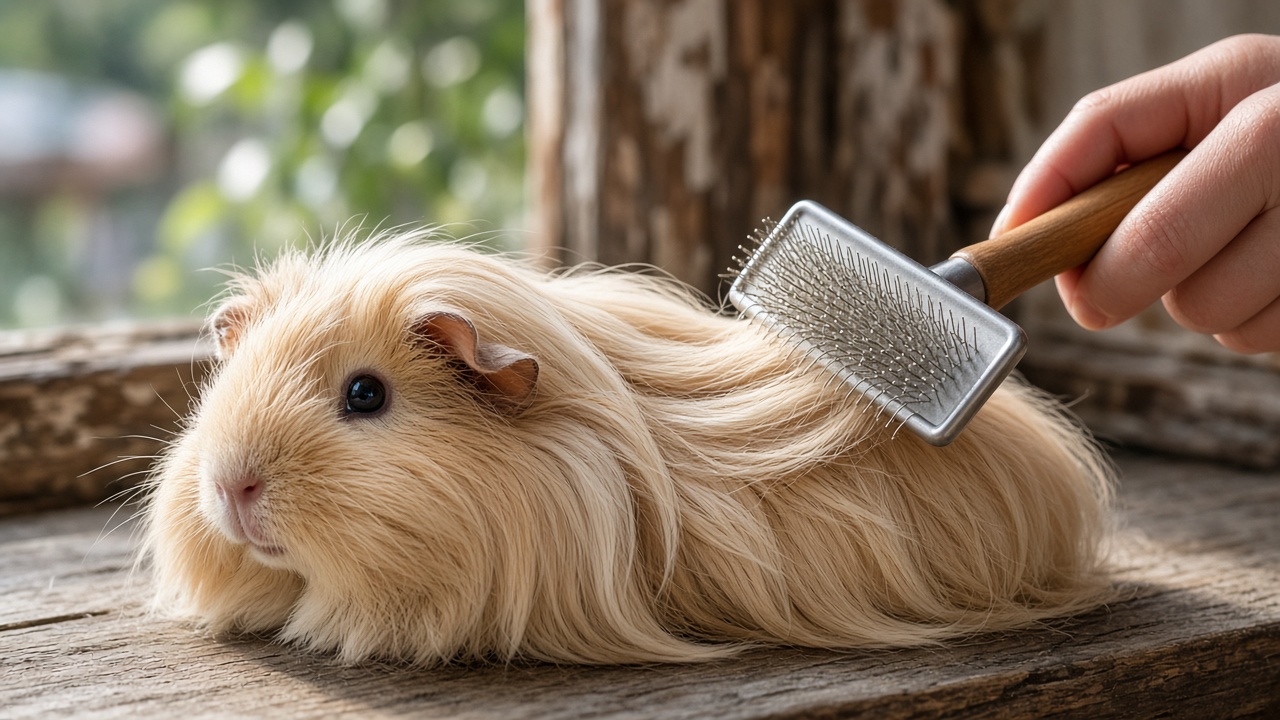
Quick answer: Plan on daily combing, a sanitary trim when the skirt hits the floor, and a solid-floor cage of at least 7.5 square feet. Unlimited grass hay plus a measured adult pellet keeps the coat and gut working. This is a high-maintenance long-haired cavy, not a low-groom pet.
A Peruvian guinea pig’s hair grows about one inch per month and needs daily combing to stay mat-free.
This page is a research-desk comparison of published breed standards and maker specs. We did not time brushing sessions, weigh shed hair, or house Peruvians in our office.
Selection rule: A product entered only when a named organization printed a number for coat length, floor space, debris, or vitamin C. We left out show wraps, curly Texels, swept-back Silkies, and habitats under 7.5 square feet.
How a Peruvian coat grows, and what that number means
The British Cavy Council updated its Peruvian standard on 1 January 2024. The breed is a long-coated cavy with two rosettes on the rump. Hair parts along the spine.
It falls forward as a frontal curtain and back as a sweep. The Council’s guideline is about 1 inch of coat per month of age. A six-month Peruvian is near 6 inches.
A yearling is near 12 inches. An 18-month coat is near 18 inches.
The same notes say the undercoat stops at 6 to 7 inches. A top coat 3 to 4 inches past that starts to look thin on a show board. Near 18 inches, even a dense coat looks wispy.
Show presentation uses a 100-point card. Coat appearance is 30 points. Coat feel is another 30 points.
Frontal, chops, and head furnishings are 20 points. Body is 10 points. Clean, unmatted presentation with no resistance to a comb is 10 points.
The cavy must be shown with a central parting. The board has a published maximum of 20 inches by 20 inches. If a comb snags at home, the coat is already past that clean state.
A Peruvian is not a Silkie. A Silkie’s hair sweeps back and does not cover the face. A Texel’s coat is curly, so we did not treat those breeds as this skirt.
The daily combing sequence we use as a rule
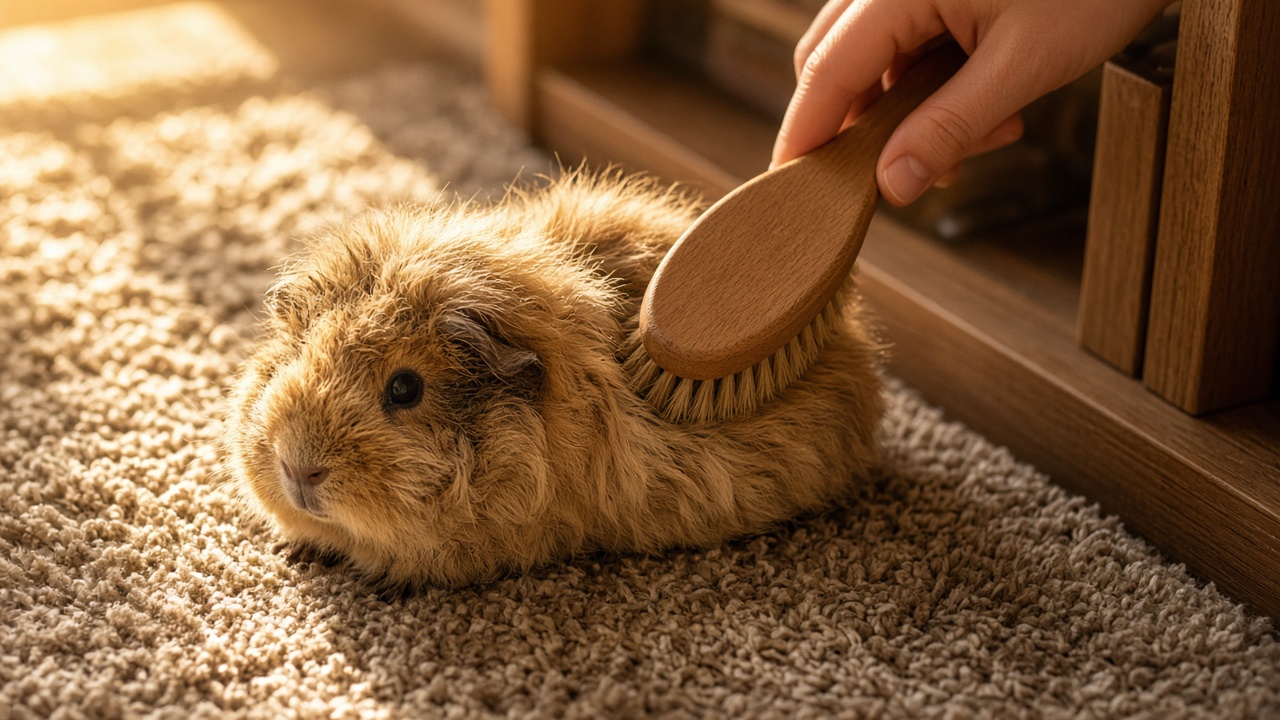
Daily combing is the job. The British Cavy Council’s presentation line is the test. The coat should offer no resistance to a comb.
Skip a day and hay clings to the next day’s knots. Our desk rule is to hold the hair at the skin. Then comb from the ends toward that held point.
A snag then pulls your fingers, not the follicle. Work in small parts down the sides and sweep. The rump rosettes hide debris, as do the chops.
The sanitary zone is the rear, belly, and feet. Check that zone first.
The Floor-Clear Skirt Rule: trim any hair that drags on bedding or collects urine. Leave the top coat if you want the look. Do not leave a wet fringe on the floor.
Oxbow Animal Health lists its Enriched Life Wood Brush & Comb for guinea pigs. The maker page says the set manages multiple coat thicknesses and lengths. The page does not list pin length, and we did not invent one.
A silicone grooming glove can finish the top coat after the comb. It lifts surface hay. It does not part a Peruvian skirt at the skin.
We covered that finishing pass in our cat grooming glove review. Hold the hair before you pull pins through the sweep.
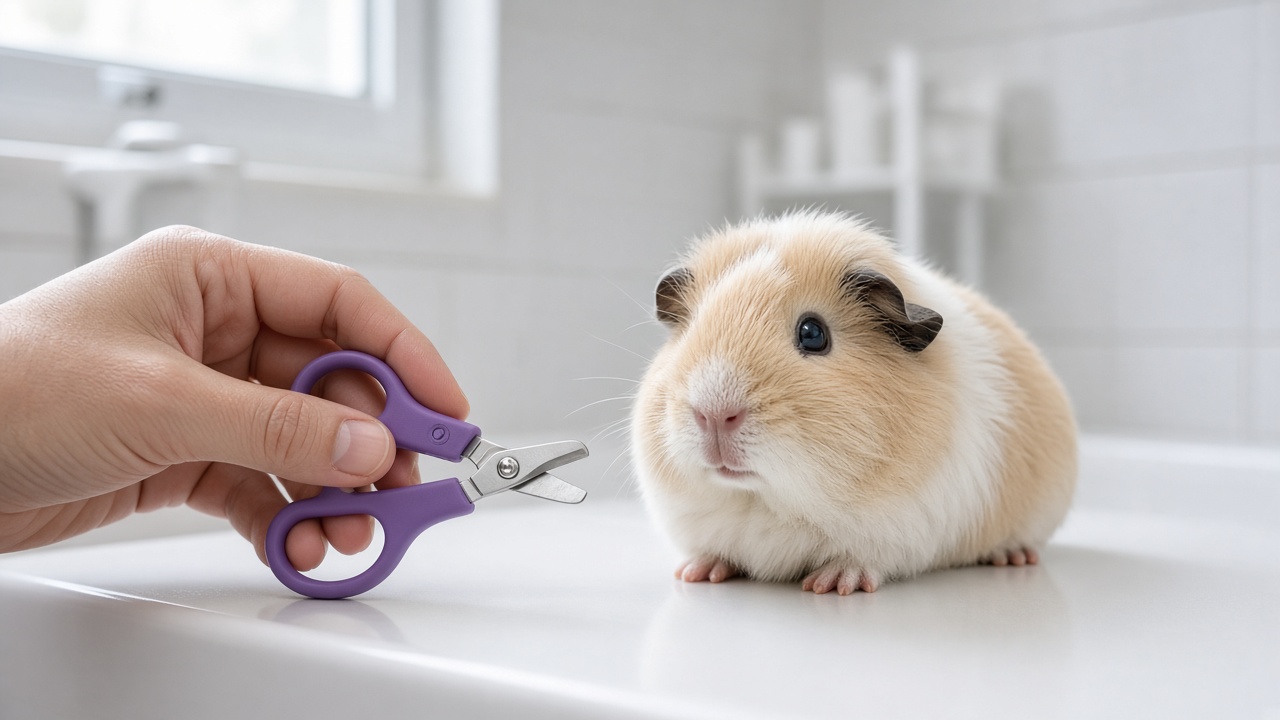
Do not yank a mat. Cut it out with blunt-tip scissors, a little at a time. If the skin is red, stop and get the animal examined.
Baths are not a weekly event. Long hair that stays damp holds fungus. Dry the coat fully before the cavy goes back on bedding.
We found no bath-interval number on the standards we read.
Housing that keeps a floor-length skirt out of waste
The Merck Veterinary Manual’s housing chapter recommends a solid floor. The minimum is 7.5 square feet for one guinea pig. Add about 2 to 4 square feet for each extra animal.
Wire floors are out. They injure feet. Glass tanks are out because they trap ammonia.
The same chapter sets 65 to 79°F and 30 to 60 percent humidity. The Manual’s pet-owner page lists 65 to 75°F and a cage height of about 18 inches.
Hides matter. Merck’s professional text wants more hiding spots than guinea pigs. Three animals need at least four hides.
Our research team compared published footprints against that 7.5 square foot floor. Several starter cages sit near 2 square feet. That is less than one-third of Merck’s one-pig minimum.
We did not treat those cages as a fit.
MidWest Homes for Pets lists 8 square feet on its Guinea Habitat page. The sides are 14 inches high. A second unit expands the floor to 16 square feet.
The bottom is a PVC-lined canvas tray. That listed floor clears Merck’s 7.5 square foot line. For layouts that also meet this floor rule, see our guinea pig cage guide.
Bedding must stay dry. Merck lists recycled paper products and fleece. It warns against aromatic wood shavings.
Paper or fleece both work if you change the wet spots. A long coat will tell you when you are late. For material tradeoffs, see our guinea pig bedding guide.
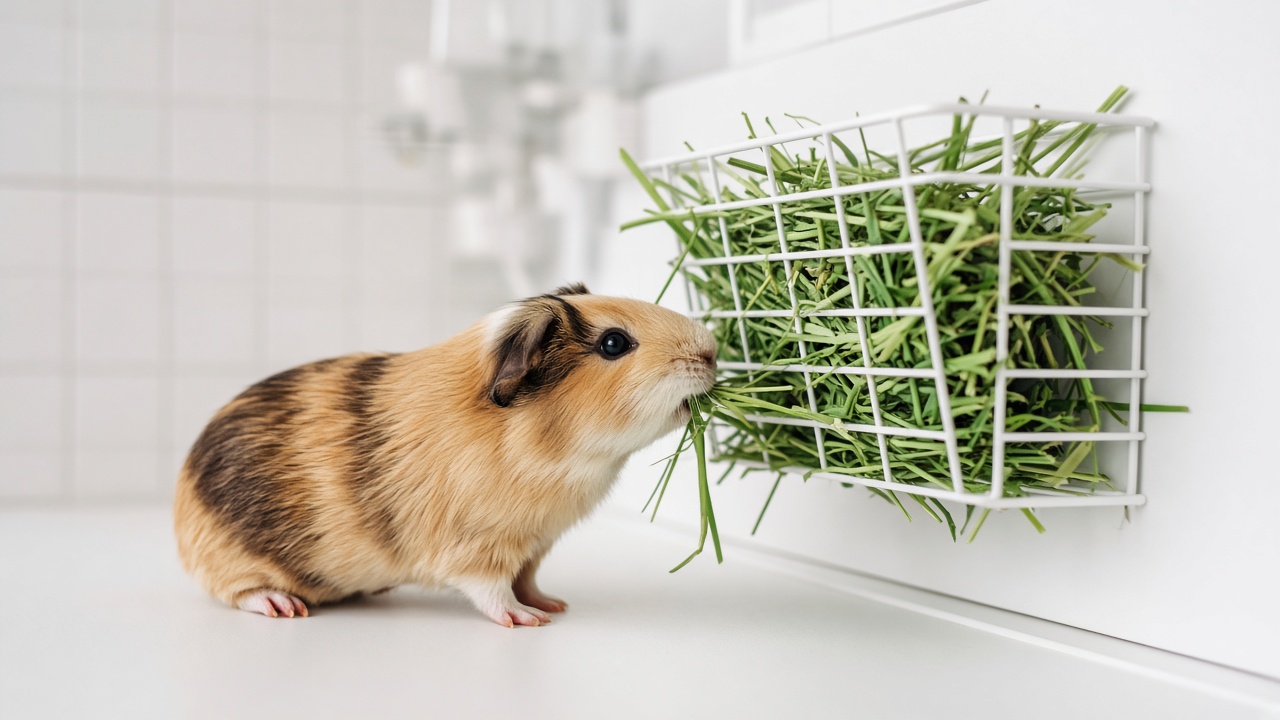
Hay storage is part of coat care. Loose piles become a nest and a comb-out. A rack or a compressed portion keeps the sweep off the salad.
Food numbers that support skin, not just fill a bowl
Guinea pigs lack L-gulonolactone oxidase. The Merck Veterinary Manual states that fact. They cannot make vitamin C from glucose.
Adults typically need 10 to 25 mg per kilogram each day. Growing, pregnant, lactating, or ill animals need 30 mg per kilogram or more. That range is Merck’s published band, not a guess.
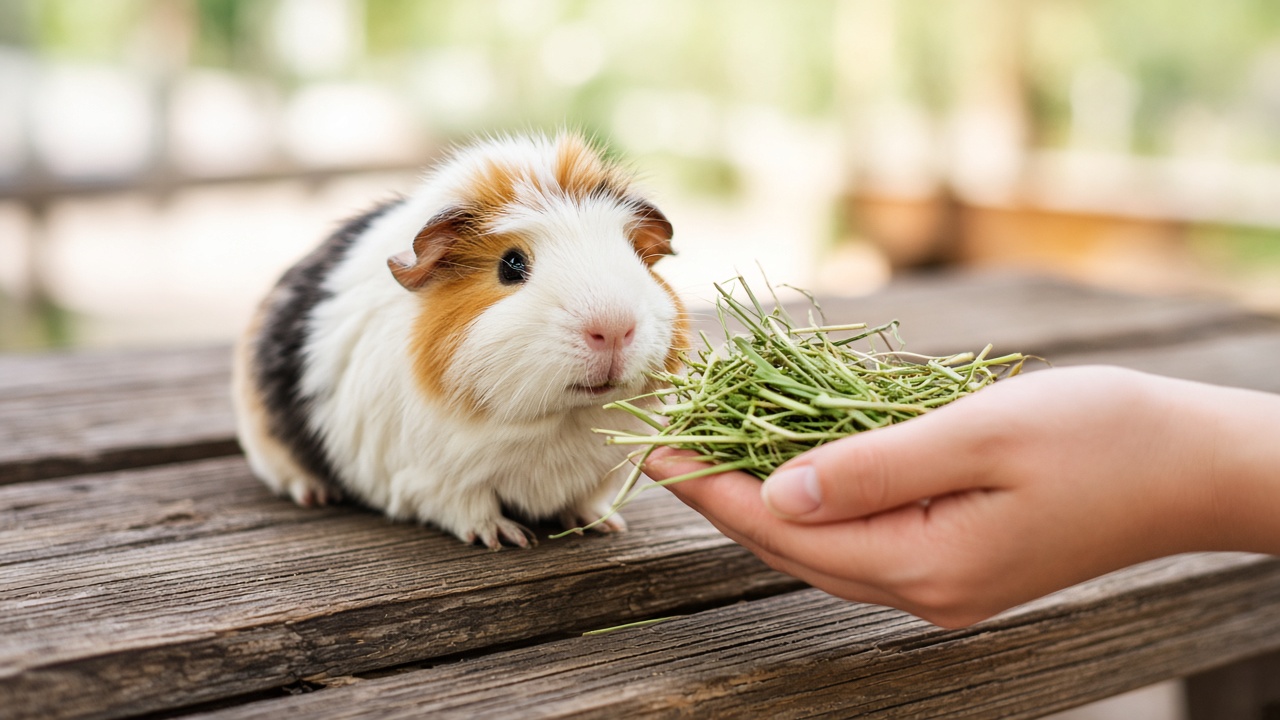
Merck’s daily plate is blunt. A guinea pig should eat about its body size in hay. Add about 1 to 2 teaspoons of species pellets.
Add 1 to 2 cups of fresh produce, with a focus on vitamin C. Do not dose the water bottle. The vitamin breaks down, and the taste can cut drinking.
A 2025 study summarized on that Merck page looked at produce count. Diets with 7 to 10 types, or more than 10, were tied to fewer clinical uroliths. Variety is a published risk note.
Oxbow Animal Health’s Essentials Adult Guinea Pig Food page lists a different pellet amount. Feed 1/8 cup daily for animals over 6 months. Keep unlimited grass hay down at the same time.
The bag lists ascorbic acid at a minimum of 250 mg per kilogram. Crude protein is 14.00 percent minimum. Crude fiber is 25.00 to 28.00 percent.
Calcium is 0.35 to 0.75 percent. Moisture is 10.00 percent maximum. Bag sizes on that page are 5, 10, and 25 pounds.
Our research team lined those two pellet numbers up. One-eighth cup is 2 tablespoons, or about 6 teaspoons. Merck’s text is 1 to 2 teaspoons.
Both pages still put unlimited grass hay first. We did not pick a winner. We reported both published figures.
Oxbow’s page says this adult formula is not for growing, pregnant, or nursing animals. Merck says those same life stages need alfalfa hay and pellets. Use the life-stage bag the maker names.
Oxbow’s transition schedule is four weeks. Week one is 3 parts old food to 1 part new. Week two is even parts.
Week three flips the ratio. Week four is the new food alone.
Oxbow Harvest Stacks – Western Timothy is a compressed timothy portion. The maker page lists 80 percent less airborne dust than loose hay when fed as directed. The stack is sold as a 35-ounce pack.
Guaranteed analysis matches Oxbow’s other timothy. Protein is 7.00 percent minimum. Fat is 1.50 percent minimum.
Fiber is 32.00 percent maximum. Moisture is 15.00 percent maximum. Less airborne dust means less grit in a 12-inch skirt.
Tools and habitats compared by published specs
The table below is an attribute grid. It is not a ranking. There is no price column.
We used only numbers the maker or the Manual already printed.
| Product | Published role | Listed numeric spec | Coat or housing job |
|---|---|---|---|
| Oxbow Enriched Life Wood Brush & Comb | Small-pet brush and comb | Maker lists multiple coat lengths; sold for guinea pigs | Daily detangle of a growing skirt |
| Oxbow Essentials Adult Guinea Pig Food | Adult timothy pellet | 1/8 cup daily; vitamin C 250 mg/kg min; fiber 25–28% | Measured pellet beside unlimited hay |
| Oxbow Harvest Stacks – Western Timothy | Compressed timothy hay | 80% less airborne dust than loose hay; 35 oz pack | Hay with less dust in the coat |
| MidWest Guinea Habitat | Solid-floor habitat | 8 sq ft floor; 14 in sides; expands to 16 sq ft | Floor space at or above Merck’s 7.5 sq ft line |
Use the brush and comb every day. Keep hay in front of the animal at all times. Use the pellet number on the bag you bought.
Use a habitat that prints a floor at or above 7.5 square feet. If a listing omits floor area, do the length-times-width math before you buy.
What we left out on purpose
We did not write a top-five list or split products into price tiers. We skipped show wrappers and clipper kits with no published numeric spec.
We did not cover Silkie or Texel care as if those coats were Peruvian skirts. We did not treat a 2-square-foot starter tray as a Peruvian home. We did not claim a clinic trial.
If a number is not on a page we opened, it is not in this article.
FAQ
How often should I brush a Peruvian guinea pig?
Every day. The British Cavy Council’s presentation standard is a coat with no resistance to a comb. A Peruvian cannot clear a floor-length skirt by social grooming.
Skip a day and the next session is a mat hunt.
How long does Peruvian guinea pig hair get?
The British Cavy Council’s guideline is about 1 inch per month of age. The undercoat stops near 6 to 7 inches. Past that, the top coat can keep going.
Near 18 inches the Council says the hair looks wispy even when it is dense.
Do Peruvians need haircuts?
A pet Peruvian needs a sanitary trim whenever hair drags in waste. That is the Floor-Clear Skirt Rule. A full show coat is optional.
The Council’s 20-by-20-inch board is built for a long, parted coat. It is not built for a wet floor fringe.
What cage size does a Peruvian need?
The Merck Veterinary Manual recommends 7.5 square feet of solid floor for one guinea pig. Add 2 to 4 square feet for each extra animal. MidWest’s Guinea Habitat page lists 8 square feet and an expansion to 16.
A long coat in a 2-square-foot tray sits in urine.
Can I use a cat slicker or a grooming glove?
A small, soft tool can lift surface hay. A glove is a finishing pass, not a root comb. Our cat grooming glove review is about that surface job.
Hold the hair at the skin before you pull any pin through a Peruvian skirt.
How much vitamin C does a Peruvian need?
The Merck Veterinary Manual lists 10 to 25 mg per kilogram daily for adults. Growing, pregnant, lactating, or ill animals need 30 mg per kilogram or more. Oxbow’s adult pellet lists 250 mg of ascorbic acid per kilogram of food.
Hay and produce still do the bulk of the plate.
Are Peruvians good for first-time owners?
Only if the owner already accepts daily combing and a 7.5 square foot floor. The coat is the job. If you cannot spare a daily comb session, pick a short-coated breed.