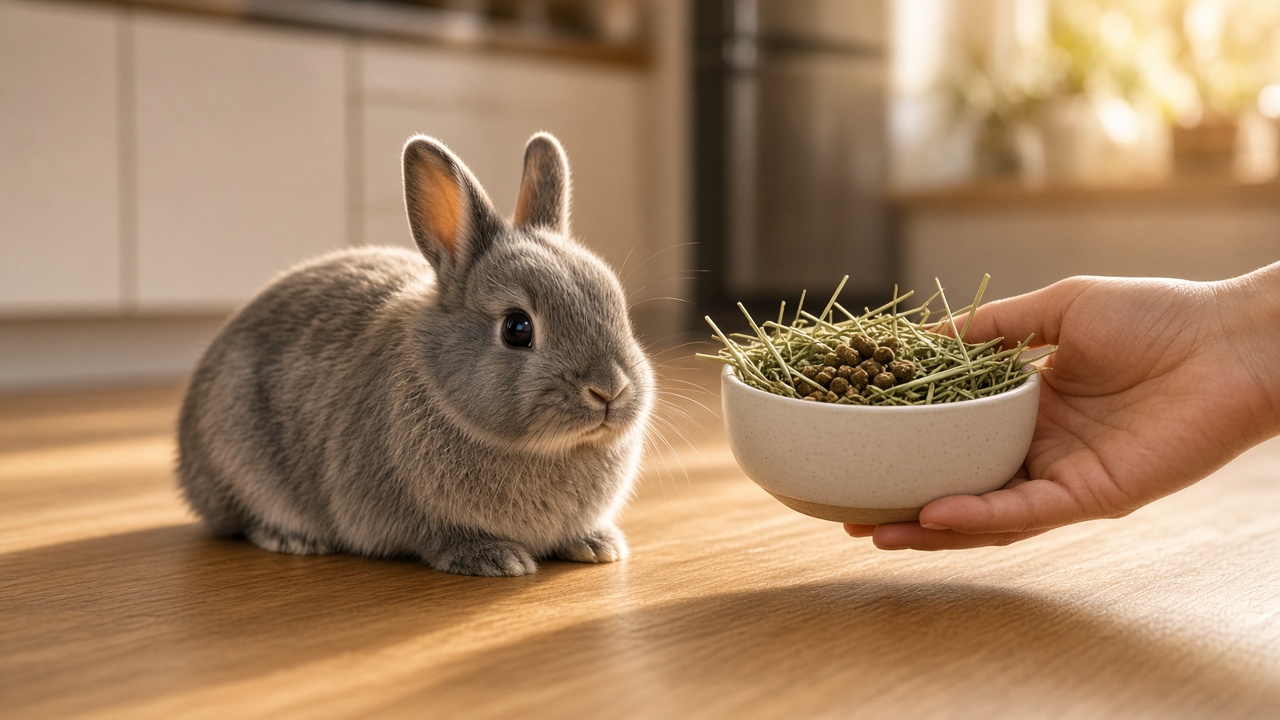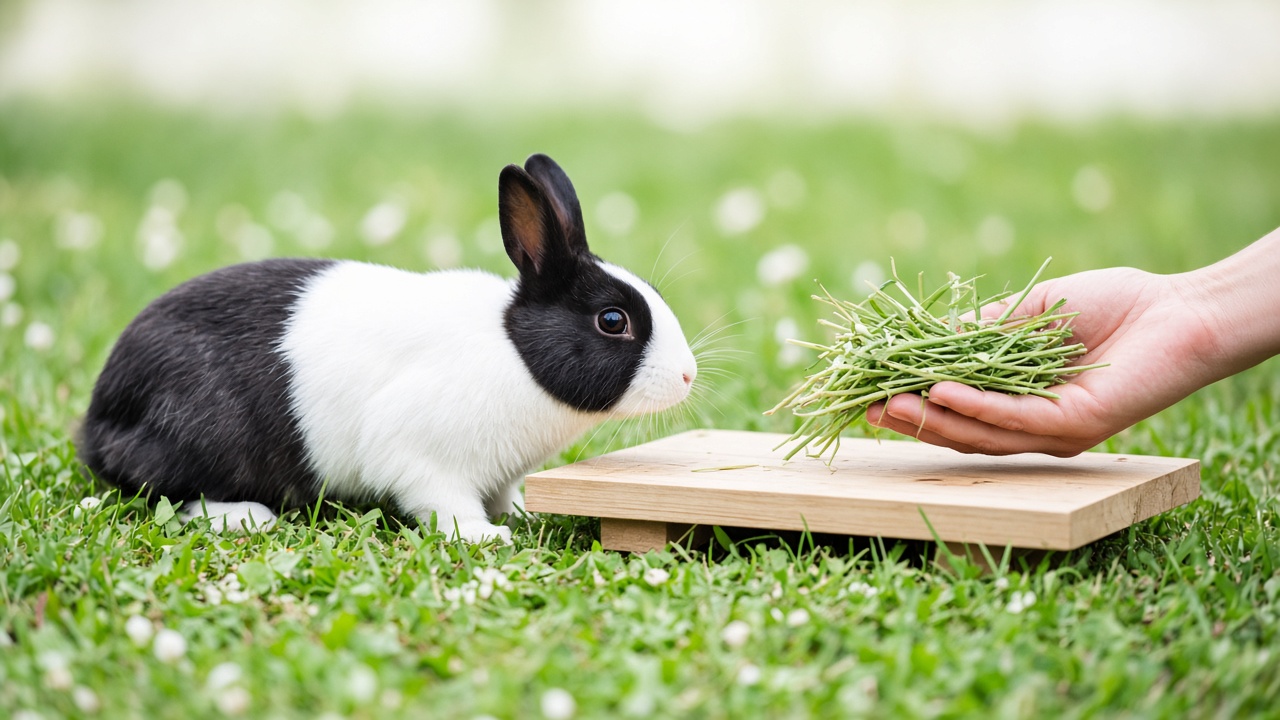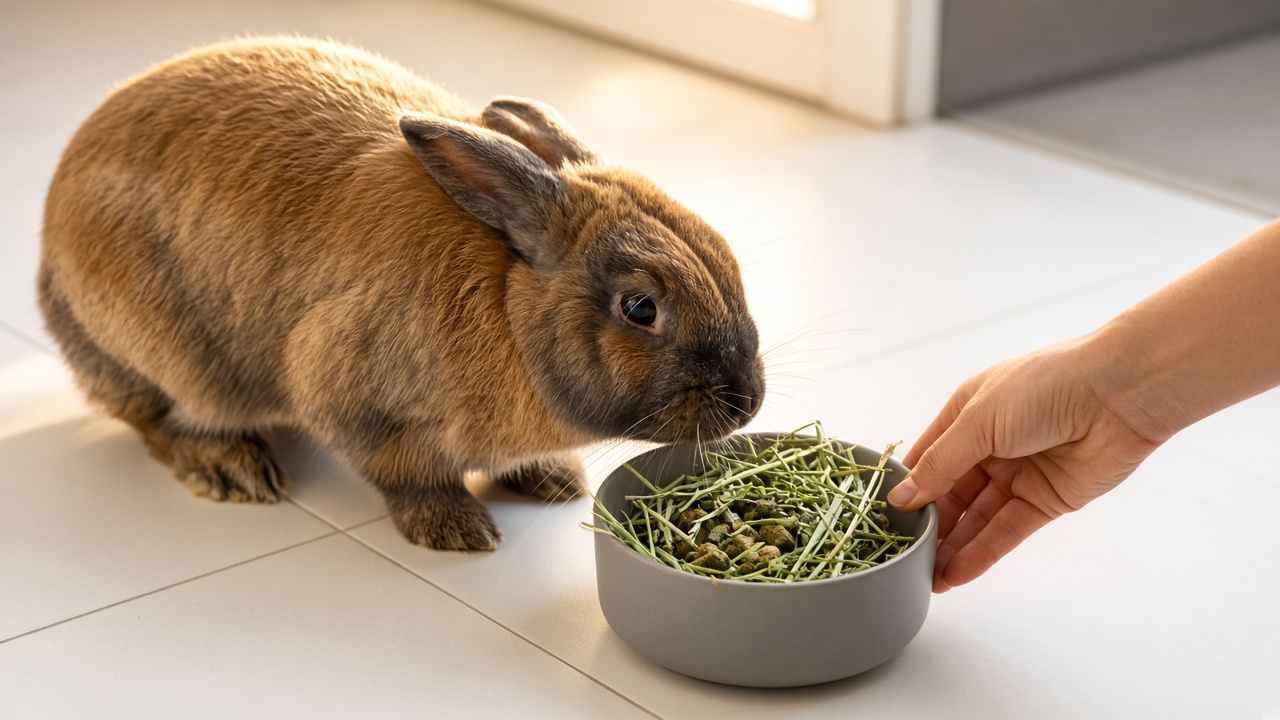
Quick answer: The biggest pet rabbits are ARBA giant and no-max breeds, led by the Flemish Giant. Plan for a 4-by-4-foot pen, unlimited grass hay, and pellets sized for animals over 10 pounds. Do not treat a store cage as a full home.
Five ARBA-recognized rabbit breeds have no senior maximum weight; Giant Chinchilla is capped at 16 pounds. This page is a research-desk read of published breed standards and current maker spec sheets. We did not weigh live rabbits, visit barns, or run feeding trials.
Our research team analyzed the American Rabbit Breeders Association recognized-breeds list. We compared it with House Rabbit Society housing notes and maker feeding numbers. The aim is a usable size map, not a shopping rank.
Guinness World Records measured Darius, a Flemish Giant, at 4 feet 3 inches (129 centimeters) on 6 April 2010. That single length is why a pet-store cage fails these animals.
Which rabbits this page covers
The selection rule is public. We cover only ARBA-recognized breeds whose published standard sets no senior maximum, plus Giant Chinchilla at a 16-pound cap.
We left out every ARBA breed with a 12-pound or lower maximum. That cut removes New Zealand, Silver Fox, American, and the commercial 10-to-12-pound class.
We also left out dwarf and compact pets. A 4-pound Holland Lop is not a big bunny under this rule.
ARBA’s recognized-breeds page does not list a separate Continental Giant. We did not invent a U.S. standard for a name that page does not carry.
The five no-maximum ARBA breeds
ARBA describes the Flemish Giant as a 16th-century Flanders breed. It was exported to America in the early 1890s. ARBA sets no maximum weight and says they often exceed 20 pounds.
The National Federation of Flemish Giant Rabbit Breeders quotes the ARBA Standard of Perfection. Juniors under 6 months need a 6½-pound minimum. Seniors start at 8 months.
Senior bucks must reach 13 pounds. Senior does must reach 14 pounds. Those figures are show-floor floors, not pet averages.
ARBA recognized the Checkered Giant in 1919. It calls the breed one of the largest, with no maximum weight. The type is arched and built to run.
French Lops reached the United States in 1971, per ARBA. The association calls them massive and heavy-boned. It sets no maximum weight.
English Lops have no senior maximum on the same ARBA list. ARBA calls them the original lop and the breed with the longest ears.
Giant Angora is the largest of the four ARBA Angora breeds. ARBA lists three fiber types: underwool, awn fluff, and awn hair. The breed does not molt and must be shorn.
Giant Chinchilla and the 16-pound line
Giant Chinchilla is the only giant on this page with a published cap. ARBA sets the maximum at 16 pounds.
Edward H. Stahl developed the breed in the United States in 1921, according to ARBA. Recognition came in 1928.
ARBA still uses the Million Dollar Rabbit nickname for Stahl’s breeding-stock sales.
That 16-pound ceiling is still a large rabbit. Housing still has to scale. ARBA caps New Zealand at 12 pounds, which is why that breed stays off this list.
Housing that matches a stretched giant
House Rabbit Society says a rabbit’s sleeping area should be four times the rabbit. It also wants four or more hours of cardiovascular play each day.
The same page calls a 4-by-4-foot puppy exercise pen an ideal setup for most rabbits. Add free-roam time. Any cage should be three to four times the rabbit’s stretch-out length.
The cage is a bedroom, not the whole home. Apply that stretch-out rule to the Guinness figure of 129 centimeters. A rest cage alone would need about 12 to 17 feet of length.
A 4-by-4-foot pen is 16 square feet. House Rabbit Society wrote that size for most rabbits. Giants need more floor, not a taller lid on the same box.
MidWest Homes for Pets sells an Exercise Pen with Door in 24-, 30-, 36-, 42-, and 48-inch heights. The maker’s assembly sheet covers models 550-24DR through 558-48DR. It lists eight connected panels and eight ground anchors.
The door uses dual slide-bolt latches. The 48-inch height matches a standing giant. Shorter panels are easier for a 20-pound rabbit to lean on.
MidWest’s Wabbitat Deluxe Rabbit Home is a different tool. The maker lists a 5.5-inch-deep plastic pan and 1-inch mesh spacing. A hay feeder, water bottle, and feeding bowl are included.
The unit is expandable. It is still not a 4-by-4-foot living floor.
House Rabbit Society wants cushioned flooring and water bowls, not only bottles. Heavy rabbits drink more from a bowl, per that page. They also grind hocks on wire.
Joint load at 14 to 20 pounds is a large-animal problem. The same scale logic shows up in our guide to orthopedic dog beds for large breeds. Soft, washable floor layers matter more than a pretty cage photo.
Feeding adults over 10 pounds
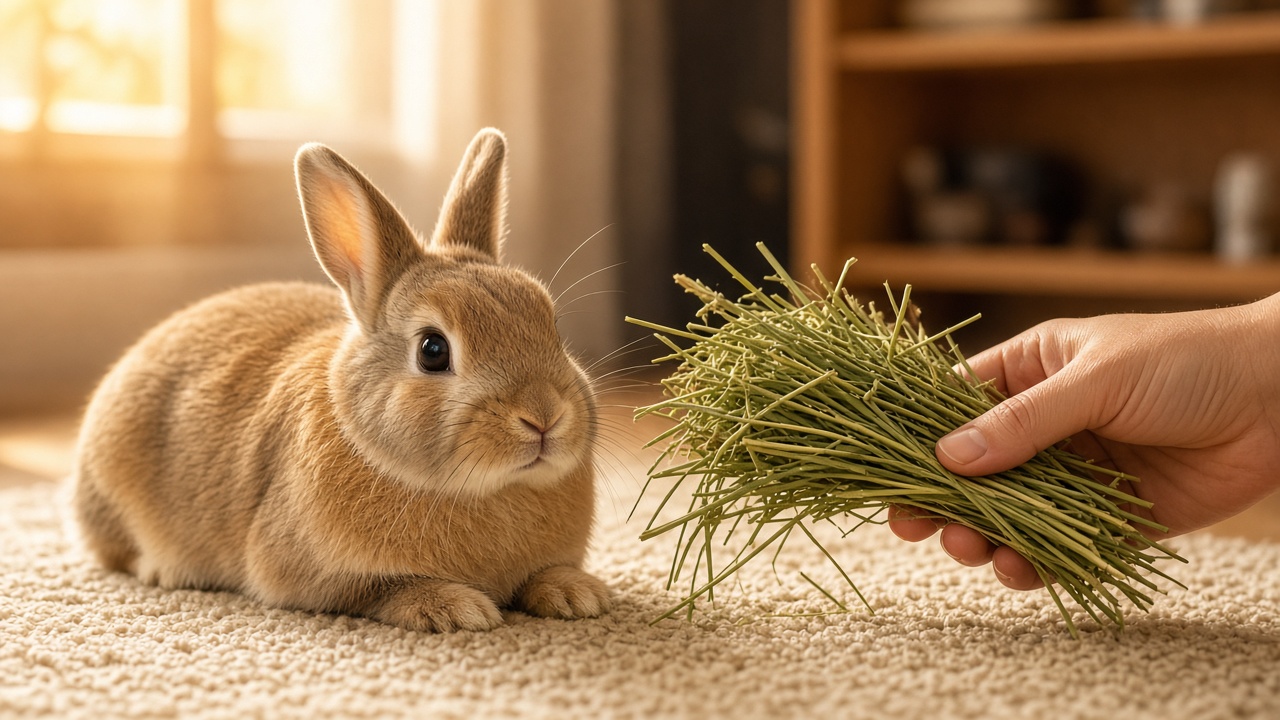
Rabbit.org puts hay at 85 percent of an adult diet. Vegetables are 10 percent. Pellets are 5 percent.
Fruit and treats sit under 5 percent. The same page wants 1 to 2 cups of vegetables per 4 pounds of body weight. It wants pellets at 18 percent minimum fiber.
A 16-pound Giant Chinchilla, on that vegetable rule, needs 4 to 8 cups of greens. That is a salad, not a garnish.
Small Pet Select’s 2nd Cutting Timothy Hay page says 80 percent of the diet should be hay. The animal should never run out. Comparing those two published figures, the gap is 5 percentage points.
Oxbow Animal Health’s Essentials Adult Rabbit Food is a timothy-first pellet for rabbits over 1 year. The maker lists 14.00 percent minimum protein and 25.00 to 29.00 percent fiber. Vitamin A is 10,000 IU/kg, and vitamin E is 190 IU/kg.
Oxbow’s adult feeding chart ends at one line for animals over 10 pounds. That line is ¾ cup daily, plus unlimited grass hay. A 13-pound senior buck and a 22-pound pet share that same published cup.
Oxbow also publishes a four-week switch. Week one is three parts old food to one part new. The mix flips each week until week four is Essentials only.
Oxbow Western Timothy Hay lists 7.00 percent minimum crude protein and 32.00 percent maximum crude fiber. Moisture is 15.00 percent maximum. Bag sizes on that page run from 15 ounces to 50 pounds.
Small Pet Select 2nd Cutting Timothy Hay is listed as 100 percent second-cutting timothy. Sizes include 2-, 5-, 10-, 20-, 25-, and 40-pound boxes. The company says it travels 22,500 miles each summer to choose hay.
Giant Angoras may need more protein because they grow wool, per Rabbit.org. That is a coat exception, not a license to free-feed pellets.
Products compared by published specs
We did not rank these items. We compared only attributes the makers print.
The product rule matches the breed rule. An item entered only if the maker lists a bag weight, height, mesh, or analysis for rabbits over 10 pounds.
We skipped hamster-scale cottages and seed mixes.
| Product | Maker | Published format | Listed spec that matters at giant scale |
|---|---|---|---|
| Essentials Adult Rabbit Food | Oxbow Animal Health | Uniform timothy pellet; 5, 10, and 25 lb bags | 14% min protein; 25–29% fiber; ¾ cup daily for 10 lb+ |
| Western Timothy Hay | Oxbow Animal Health | Loose timothy; 15 oz to 50 lb | 7% min protein; 32% max fiber; 15% max moisture |
| 2nd Cutting Timothy Hay | Small Pet Select | 100% 2nd-cut timothy; 2 to 40 lb | Maker diet note: 80% hay; refill at least daily |
| Exercise Pen with Door | MidWest Homes for Pets | Folding wire pen; 24 to 48 in heights | 8 connected panels; dual slide-bolt door |
| Wabbitat Deluxe Rabbit Home | MidWest Homes for Pets | Expandable habitat with accessories | 5.5 in pan; 1 in mesh; feeder, bottle, and bowl included |
A 48-inch MidWest pen can form the 4-by-4-foot footprint House Rabbit Society names. The Wabbitat Deluxe is a rest box with a deep pan. Use it as a bedroom, then open it to the pen.
Hay volume is the hidden cost of a giant. A 50-pound Oxbow bale and a 40-pound Small Pet Select box exist because these rabbits eat like small goats.
Size-matched gear is the same problem in other small-pet categories. A Syrian hamster needs a large silent wheel, not a dwarf disc. A Flemish Giant needs floor area, not a taller 2-foot cage.
Handling, heat, and what we left out
ARBA calls Flemish Giants docile and French Lops placid. Checkered Giants are a running breed. Temperament is not interchangeable just because all five share a missing weight cap.
Pick up a giant only if you can support the whole spine and hindquarters. A 20-pound drop is a fracture risk. Two people are safer than one hero lift.
House Rabbit Society flags hay dust and asks for a room with one or two windows. Add a HEPA purifier when allergies are an issue. Giants eat more hay and shed more dust.
Do not dress a giant like a Chihuahua. Mass holds heat. That is the opposite problem from insulated coats for small dog breeds.
Cool floors and shade beat a jacket. We did not cover outdoor hutch winters, breeding, or meat production. This page is indoor pet care for oversized breeds.
We also did not turn the ARBA list into a top five. The order above follows the published standard, not a score.
FAQ
How big do Flemish Giants get?
ARBA sets no maximum and says they often exceed 20 pounds. The National Federation of Flemish Giant Rabbit Breeders cites the ARBA Standard of Perfection.
Senior bucks need 13 pounds and senior does need 14 pounds at 8 months. Guinness World Records lists Darius at 129 centimeters (4 feet 3 inches) on 6 April 2010.
Which rabbit breeds have no maximum weight?
On the ARBA recognized-breeds pages we read, five breeds carry no senior maximum. They are Flemish Giant, Checkered Giant, French Lop, English Lop, and Giant Angora. Giant Chinchilla is the nearby giant with a 16-pound maximum.
How much space does a giant rabbit need?
House Rabbit Society wants a rest space four times the rabbit and four or more hours of play each day. It names a 4-by-4-foot exercise pen as an ideal base for most rabbits, plus free-roam time. For a body that can stretch past 4 feet, treat 16 square feet as a start.
How much should a 14-pound rabbit eat?
Rabbit.org wants unlimited hay as about 85 percent of the diet. It also wants 1 to 2 cups of vegetables per 4 pounds of body weight.
That vegetable line is 3.5 to 7 cups at 14 pounds. Oxbow’s adult pellet chart gives ¾ cup daily over 10 pounds.
Can a pet-store cage be the whole home?
House Rabbit Society says a cage is a bedroom, not a home. It should be three to four times the rabbit’s stretch-out length. MidWest’s Wabbitat Deluxe lists a deep pan and 1-inch mesh, which helps as a rest box.
Do two giant rabbits need twice the space?
House Rabbit Society’s 4-by-4-foot note is written for most rabbits, not as a pair minimum for 20-pound animals. A bonded pair still needs room to hop past each other. Add floor, or give a second pen.
Does a Giant Angora need different care than a Flemish Giant?
ARBA says Giant Angora wool has three fiber types and must be shorn because the breed does not molt. Rabbit.org notes that long-coated rabbits may need more protein to grow wool. Housing and hay rules stay the same.