Quick answer: Use a private, unused yard for potty from the first day home. Carry the puppy through public spaces until two weeks after the last core dose at 16 weeks or older. Skip dog parks and shared grass until that clinic-set date.
Most puppies can use a private unused yard immediately and public ground two weeks after the 16-week core dose.
This page is a week-by-week desk reading of published schedules, not a field trial, soil swab, or clinic-date survey.
The Ground-Contact Rule we used
Our research team compared published schedules, not field trials. We needed one rule that a caregiver can apply on a Tuesday morning.
The Pet Bench Ground-Contact Rule is simple. A puppy may touch private ground that unknown dogs have not used. Public ground waits until after the core dose given at 16 weeks or older, plus the wait the clinic names.
We included only scenarios where you control the dirt under the paws. We excluded dog parks, boarding kennels, group daycare, and pet-store floors until that later date.
We also included only currently sold gear whose maker pages list a puppy-relevant size or weight cutoff. We excluded hiking packs, GPS trackers, and adult-only long-line kits.
Two clocks run at once
The outdoor question is not one date. It is two clocks that do not end together.
The American Animal Hospital Association 2022 Canine Vaccination Guidelines start the core combination series at 6–8 weeks. Boosters then repeat every 2–4 weeks until the puppy is older than 16 weeks.
The American Veterinary Medical Association tells owners the same span. The series starts at 6–8 weeks. For most puppies, the final dose lands at 16 weeks of age or older.
The American Veterinary Society of Animal Behavior sets a different clock. It names the first three months as the primary socialization window. After that window, fear can rise faster than curiosity.
Our research team lined those two clocks side by side. AVSAB’s three-month window closes near 12 weeks. AAHA still wants core doses after 16 weeks.
That leaves about four weeks of overlap. The puppy still needs new people and surfaces. Shared grass is the wrong place to get them.
AAHA also notes that maternally derived antibodies against canine parvovirus may last 13–15 weeks. Antibodies against canine distemper are usually gone by 12–14 weeks. One early shot does not close that gap.
Week-by-week outdoor access
Treat the ages below as published intervals, not a promise for one litter. The clinic that gave the series can move a dose by a week.
Weeks 6 to 8: first core dose, first private grass
Most puppies go home in this window. The first core combination dose is due.
A clean yard that stray dogs do not use is fair for potty. Carry the puppy across sidewalks, parking lots, and building lobbies.
Do not set the puppy down on roadside grass. That strip is a public toilet.
Weeks 8 to 12: second dose, carried outings
The next core dose usually falls 2–4 weeks later. AVSAB says puppy classes may start at 7–8 weeks. The puppy should have had one vaccine set at least 7 days before the first class.
AVSAB also wants those classes on surfaces that staff can clean. It tells owners to skip dog parks and other unsanitized, high-traffic ground.
Carried walks still count. A sling or carrier lets the puppy hear traffic and see strangers without licking the curb.
Known, fully vaccinated adult dogs can visit at home if they have not just come from a park.
Weeks 12 to 16: rabies often due, public grass still closed
AAHA states that licensed rabies products for dogs are labeled for puppies 3 months of age and older. Local law may set the exact week.
The CDC-hosted 2011 NASPHV rabies compendium names a 28-day peak antibody window after the first dose. That is a blood-test timeline. It is not a sidewalk clearance.
AAHA’s 2024 update lists leptospirosis as a core vaccine for all dogs. The 2022 task force suggested the first lepto dose at or after 12 weeks. It reported fewer than 53 adverse events per 10,000 lepto doses.
Those shots do not open dog parks. Shared grass stays closed.
Week 16 and after: the dose that closes the series
AAHA wants revaccination until the puppy is older than 16 weeks. In high distemper or parvovirus areas, it prefers 18–20 weeks for that last dose.
The Merck Veterinary Manual lists a common core series at 6–8, 10–12, and 14–16 weeks. Then a booster one year later, then every 3 years.
Public sidewalks and quiet neighborhood grass wait until 1–2 weeks after that last core dose. Ask the clinic for a calendar date, not a guess from an earlier shot.
Dog parks wait longer if the clinic names a later week. That is a lifestyle call, not a ranking.
Why shared grass stays dangerous
The Merck Veterinary Manual states that infectious canine parvovirus can persist indoors at room temperature for at least 2 months. Shade and moisture outdoors can shelter the virus for many months. It may last years.
Infected dogs shed virus in feces within 4–5 days after exposure. They often shed before they look sick. Shedding can continue about 10 days after recovery.
Clinical signs usually appear 5–7 days after infection. The range is 2–14 days. About 25% of dogs have diarrhea that is not bloody.
Do not wait for blood before you worry.
Young dogs from 6 weeks to 6 months are the group Merck names as most susceptible. That is the same span as the outdoor waiting period.
Merck reports hospital survival above 90% with aggressive inpatient care. Outpatient protocols in published reports sit near 80%. Even so, prevention is still the cheaper clock.
If a puppy vomits, crashes, or passes bloody stool, skip the walk. Use our emergency-versus-wait guide to decide how fast to move.
A puppy that stops eating is also a clinic question, not a park question. See how long a dog can go without food before you assume it is “just stress.”
Socialize on purpose, not on shared lawns
AVSAB states that behavior problems are the number one cause of death for dogs under three years of age. Infectious disease is not that top cause. The same statement names behavior problems as the number one reason dogs are surrendered to shelters.
That is why “wait inside until 16 weeks” is not a complete plan. Isolation has a cost too.
Safe exposure still exists. Carry the puppy through a hardware store. Sit on a blanket on private concrete.
Invite vaccinated, park-free adult dogs to your house. Use a class on a mopped floor after that 7-day vaccine gap.
Keep meals on a growth diet during this stretch. Merck, citing the Association of American Feed Control Officials, lists a 22.5% protein dry-matter minimum for growth.
Our puppy nutrition guide covers how those labels read on a bag.
Gear that keeps paws off public ground
Our research team compared maker spec sheets for items that solve the wait. We kept four products whose pages list a puppy-relevant size or weight cutoff. We dropped adult hiking kits.
Comparing published specs, the PetSafe Easy Walk Harness Petite starts at a 12-inch girth. The Ruffwear Front Range Harness XXS starts at 13 inches. A very small chest may fit PetSafe first.
| Product | Maker-listed puppy size | How it attaches or sits | Maker-listed build note |
|---|---|---|---|
| Ruffwear Front Range Harness | XXS girth 13–17 in (33–43 cm) | Back aluminum V-ring plus front chest clip | Four adjustment points; foam-padded shell |
| PetSafe Easy Walk Harness | Petite girth 12–17 in; under 10 lb | Front chest leash ring only | Four adjustment points; martingale loop |
| Sleepypod Air | Pets 18 lb or less; exterior 16–22 × 10.5 × 10.5 in | Soft carrier for carried public outings | Sleepypod states 30 mph crash testing and Center for Pet Safety certification |
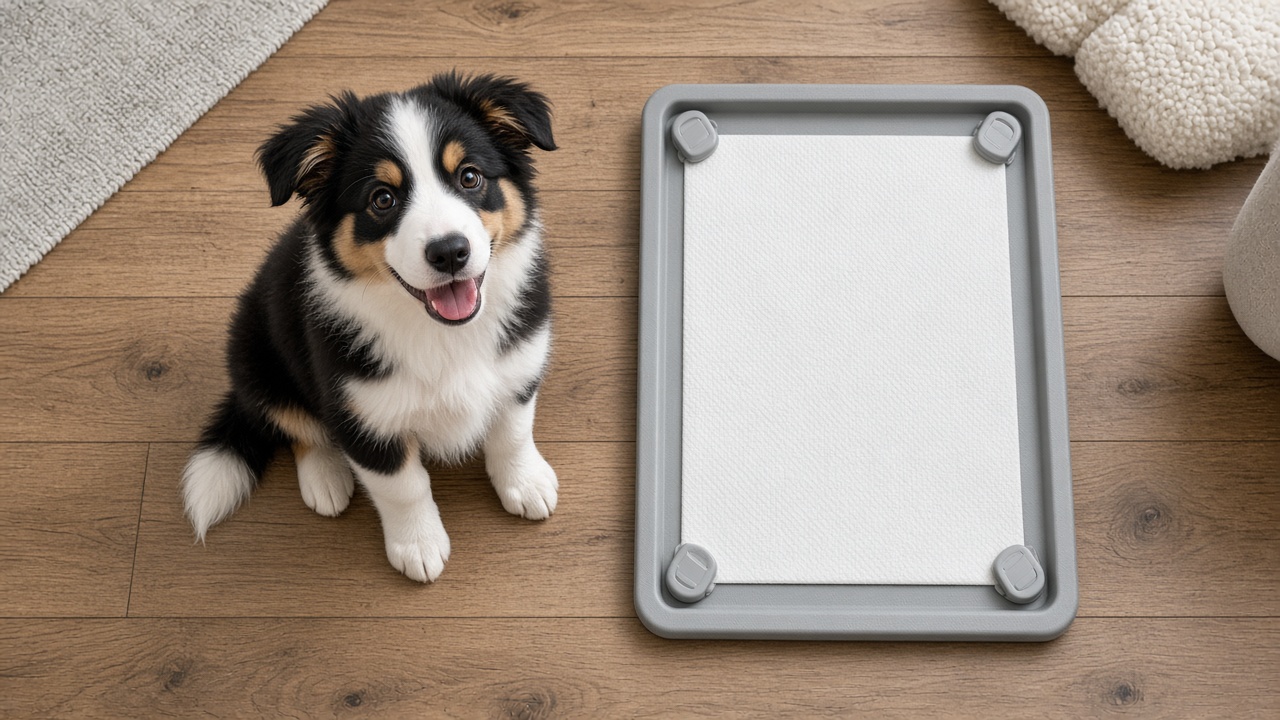
| Fresh Patch Standard | 16 × 24 in pad; dogs under 15 lb | Indoor, balcony, or patio potty | Hydroponic soilless grass; maker says replace every 1–4 weeks |
Use the Ruffwear Front Range Harness or the PetSafe Easy Walk Harness on private unused grass. Skip the first public trail.
Use the Sleepypod Air for lobbies and stores. Use the Fresh Patch Standard when the building has no unused yard.
Fresh Patch says the grass is about 50% lighter than soil-grown sod. That is a handling fact, not a hygiene claim. Shared apartment-hallway pads used by other dogs are still public ground.
Refit any harness every week. Puppies outgrow a 13-inch girth fast.
When the outdoor plan should stop
A skipped vaccine appointment resets the public-ground date. Do not invent a makeup week from a blog chart.
AAHA says dogs with an unknown vaccine history can still start a series. It does not say they may visit a dog park the same afternoon.
Bloody diarrhea, repeated vomiting, collapse, or a sudden food strike belongs at a clinic. Those signs overlap parvovirus. They also overlap a simple diet change.
The clinic sorts that. The park does not.
Keep the private-yard habit even after public walks start. A known patch of dirt is still the easiest potty cue.
FAQ
Can a puppy go outside to pee before all vaccines are done?
Yes, on private ground that unknown dogs have not used. Carry the puppy to that spot if you must cross a sidewalk. Do not use the strip of grass along a busy road.
When can a puppy walk on a public sidewalk?
Plan for 1–2 weeks after the core dose given at 16 weeks or older. AAHA prefers 18–20 weeks for that last dose in high-parvo areas. Ask the clinic for the date on the record.
When can a puppy go to a dog park?
After the same final-dose-plus-wait date, and only if the clinic agrees for your county. AVSAB still flags unsanitized, high-traffic ground as a poor classroom. A quiet private playdate is the lower-risk first step.
Can I take a young puppy to a store?
Yes, if the puppy stays off the floor. A carrier such as the Sleepypod Air keeps paws off tiles that many dogs cross. Skip pet-store floors and the outdoor seating area at a cafe.
What if my puppy misses a booster by two weeks?
Call the clinic that started the series. AAHA spaces core doses 2–4 weeks apart. A long gap is a medical scheduling question, not a reason to start public walks early.
When can a puppy meet other dogs?
AVSAB supports contact with well-socialized, healthy animals during the first three months if the setting is controlled. Prefer vaccinated adults that have not just left a park. Wait on unknown dogs until after the final core dose and the stated wait.
Does a clean apartment balcony count as private ground?
Yes, if other dogs do not use it. A Fresh Patch Standard pad on that balcony is still private. A shared courtyard lawn is not.