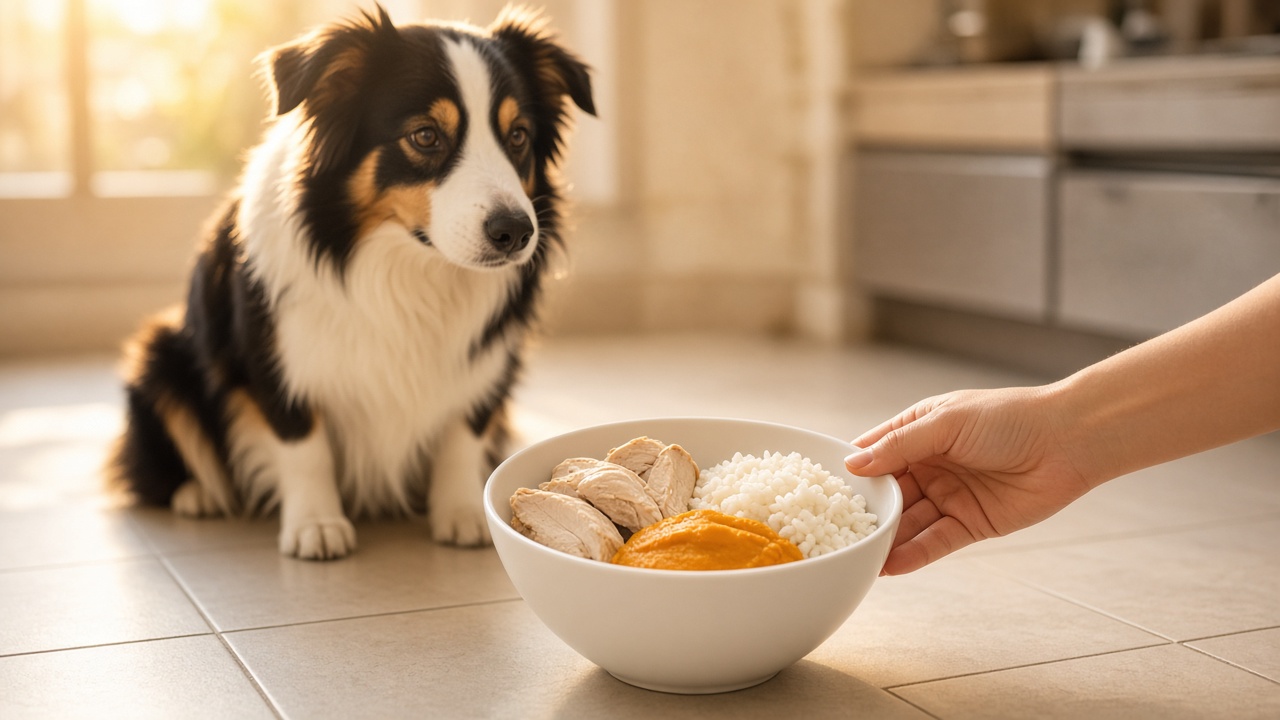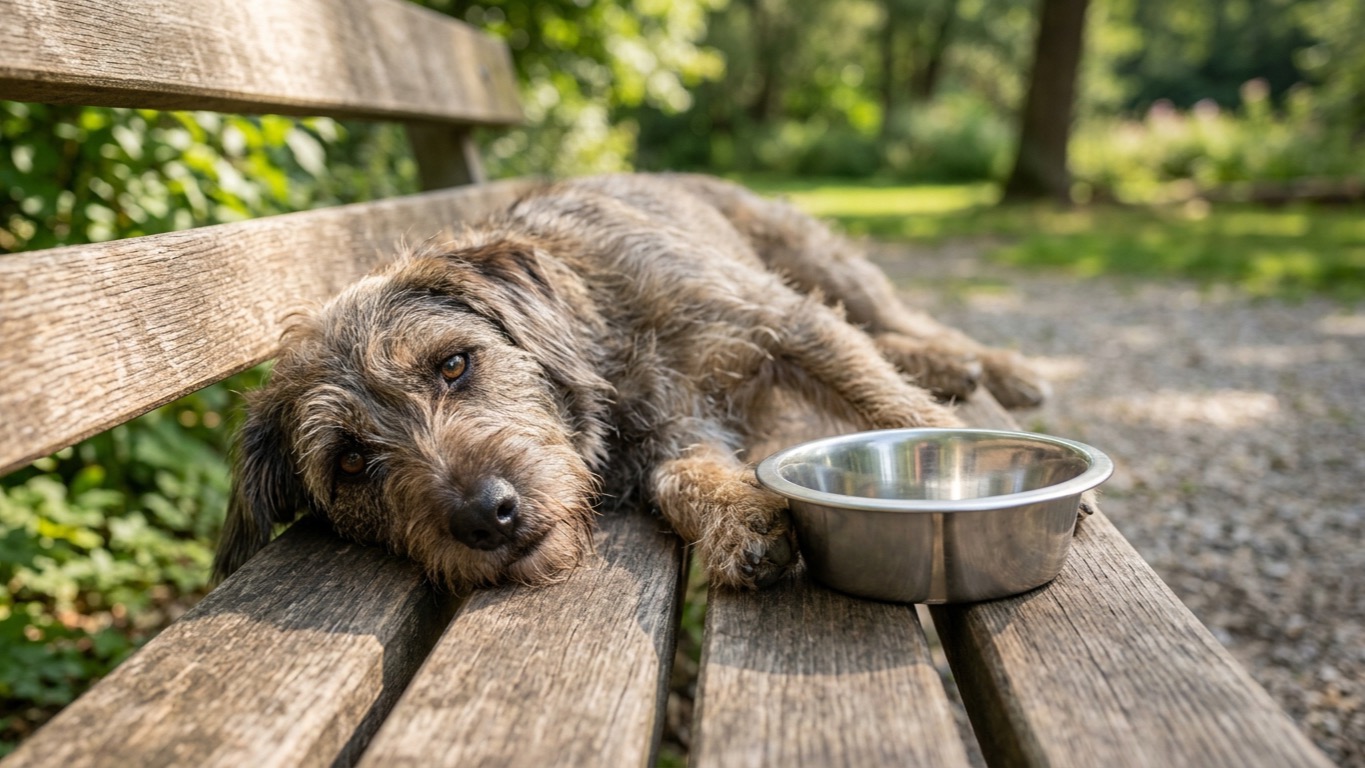
Quick answer: Offer fresh water now. Call a clinic if an adult dog eats nothing for 24 hours, or a puppy eats nothing for 12 hours. Call sooner for vomiting, diarrhea, collapse, or no drinking.
An adult dog that eats nothing for 24 hours, or a puppy that eats nothing for 12 hours, needs a same-day veterinary exam. This page is a household meal-gap clock built from published clinic guidelines.
Selection rule: we cover household dogs that skip meals at home, including healthy adults, puppies, seniors, and dogs already on a medical diet. We leave out wildlife, lab starvation protocols, and weight-loss plans sold as fasting.
The household clocks are 12 hours and 24 hours
A skipped meal at home is an open-ended problem, not a planned fast.
Our research team compared published hospital clocks with what an owner can actually see. Clinics can place a feeding tube, and you cannot, so this page uses an earlier call time than the three-to-five-day hospital window.
Use this clock:
- Puppy or toy-breed adult: call if no food for 12 hours.
- Otherwise healthy adult: call if no food for 24 hours.
- Any age: call the same hour if water also stops, or if vomiting starts.
Write down the last time your dog ate and the last time your dog drank. Those two times are the only numbers a clinic can use on the phone.
A dog that sniffs food and walks away still counts as a missed meal, and a few treats do not restart the clock.
The 3-to-5-day number is a clinic trigger, not a home wait
Hospital papers treat three days without enough calories as a malnutrition risk, not a safe home plan.
A 2017 paper in the Journal of the American Veterinary Medical Association lists high-risk animals. One criterion is hyporexia or anorexia for more than 3 to 5 days. Another is expected low intake for more than 3 to 5 days.
The Institute’s appetite-management page uses a similar line. It says to consider nutritional intervention after three or more days of anorexia or hyporexia. It also says home days without food count toward that total.
That is the Pet Bench Meal-Gap Clock in three layers:
- Home call: 12 hours for a puppy, 24 hours for an adult.
- Hospital review: 3 or more days of low intake, per the Institute.
- High-risk support: more than 3 to 5 days, per the JAVMA paper.
Waiting for layer two at home is the common mistake. Layer two assumes staff, fluids, and a calorie plan that you do not have on the kitchen floor.
The same JAVMA paper gives starting calorie math. Resting energy requirement, or RER, is 70 × (body weight in kg)^0.75. For dogs between 3 and 25 kg, it also allows RER = (30 × kg) + 70.
Example for a 10 kg dog on the linear formula:
- 30 × 10 = 300
- 300 + 70 = 370 kcal per day at rest
That 370 kcal figure is a hospital starting point, not a homemade force-feeding target.
The Institute page says hospital refeeding often starts at about 25% of RER, then steps toward 100% of RER over about four days. Do not copy that ramp at home after a long skip. A clinic should set the first meals.
Water, toxins, and same-hour emergencies change the clock
No drinking, plus no eating, is an emergency on the same hour.
Food and water are different clocks. A dog can miss a meal and still sip, but a dog that stops both is already in trouble.
Call during the same hour if any of these are true:
- The water bowl is untouched and the dog is dull or panting.
- Vomiting or diarrhea started with the food refusal.
- The dog collapses, seizes, or walks as if drunk.
- You know the dog ate a toxin.
- The gums look pale, gray, or bright yellow.
The FDA xylitol page is our toxin example. The FDA says xylitol can drop a dog’s blood sugar within 10 to 60 minutes. It also says serious effects may wait 12 to 24 hours.
Sugar-free gum, mints, some nut butters, and “skinny” ice cream are on that FDA list. Do not wait for the 24-hour food clock after a known toxin.
A bath is the wrong project on a sick day. If the coat is dirty, clean a dog without a bath and keep the body warm. A full wash adds stress when calories are already missing.
Puppies, thin dogs, and seniors cannot use the adult 24-hour slack
Young, small, and already-thin dogs run out of reserves first.
The JAVMA paper flags a low body condition score or muscle score plus low intake as high risk. It does not give those dogs extra days, and it gives them less room to wait.
AAHA’s 2021 nutrition screening page uses a 9-point body condition score. It states each step up the scale equals a 5% rise in body fat. Each score above 5 out of 9 equals being 10% overweight.
AAHA’s table on that page is blunt:
- Score 5: about 20–24% body fat, treated as ideal.
- Score 6: 10% overweight.
- Score 7: 20% overweight.
- Score 8: 30% overweight.
- Score 9: 40% overweight, with 40–45%+ body fat.
Read that table in reverse when a dog stops eating. A dog at score 3 is already thin, and a dog at score 8 can still lose muscle while fat remains.
AAHA says body condition and muscle condition are not the same score. Fat cover can hide muscle loss during a skipped day.
Watch these dogs on the 12-hour clock, not the 24-hour clock:
- Puppies still growing.
- Toy-breed adults.
- Dogs you can feel ribs and spine with no fat cover.
- Seniors that already eat less than last year.
- Dogs with kidney, liver, or cancer care in the record.
A chubby adult is not “safe for five days.” Fat is not a meal plan, and muscle loss still starts when intake hits zero.
Labels and calories tell you what a missed day actually costs
A missed day is a missed calorie block, and labels state those blocks in numbers.
AAFCO’s consumer label page requires a “Calorie Content” heading. The statement must show kilocalories per kilogram and kilocalories per familiar unit, such as a cup.
AAFCO also sets a hard cap for “lite” dry dog food: no more than 3,100 kilocalories per kilogram. Food above that lite cap packs more energy per cup.
AAFCO’s Dog Food Nutrient Profiles list 37 required nutrient specifications. Protein on the bag is “crude protein,” and AAFCO explains that lab nitrogen × 6.25 equals that number.
When a dog eats nothing, all 37 of those nutrient lines go to zero for the day.
If you switch foods to tempt a sick dog, read the name rules first. AAFCO’s 95% rule says named meats must be at least 70% of the product by weight, and 95% once added water is ignored.
That is why meat meal and meat are not interchangeable words on a bag. A sudden swap can also create a food aversion, which the JAVMA paper warns about in ill animals.
Do not build a new homemade stew to “get something down.” The JAVMA paper notes that nearly all casual home recipes are unbalanced. Use the current food or go in.
When a medical diet is already in the bowl
A dog on a kidney or other clinic diet that stops eating needs the same 12- or 24-hour call, not a pantry experiment.
The JAVMA paper calls out stage 3 or 4 chronic kidney disease when the dog will not eat the renal diet. That is listed as a reason to consider a feeding tube, not a reason to wait.
Hill’s Pet Nutrition publishes a page for Prescription Diet k/d with Chicken dry food. That page says the formula is meant to stimulate appetite and raise calorie intake in dogs with kidney disease.
The same maker page lists bag sizes of 8.5 lb, 17.6 lb, and 27.5 lb. It also tells owners to mix the new food in over a 7-day period.
Do not start that 7-day mix on a dog that has already refused food for a day. If the bowl is untouched, call the clinic that prescribed the diet.
If you need the authorized path later, use our page on where to buy Hill’s k/d.
Skip random grocery “kidney support” bags. AAFCO’s label page says many veterinary medical foods carry an “intermittent or supplemental” adequacy line when they limit nutrients. That line is a clinic food flag.
What to do at home before you leave
Collect facts, keep water available, and do not force a meal.
Do this before the car ride:
- Note the last food time and last water time.
- Weigh the dog if you have a scale, then write the number.
- Photograph the gums and the vomit or stool, if any.
- Bag a sample of the usual food and any new treat.
- List every human food, gum, or pill the dog could have reached.
Offer water in a clean bowl, then offer the usual food once and take it up. The Institute page tells hospital staff to remove uneaten food after about 20 minutes, and that same idea helps at home.
A stale bowl sitting for hours can create aversion, so one short offer of fresh food is enough.
Do not do these things:
- Do not force food down the throat.
- Do not give human pain pills or leftover antibiotics.
- Do not add onions, grapes, raisins, or xylitol sweets as “tempting” food.
- Do not wait for a second full day because the dog “still has energy.”
If the dog eats a few bites on the way out, still keep the appointment. Partial intake is hyporexia in the JAVMA paper’s terms, not a cleared exam.
FAQ
How long can a healthy adult dog go without food?
Do not use survival stories as a plan. The JAVMA paper treats more than 3 to 5 days of very low intake as a high-risk hospital problem. Our household rule is shorter: call at 24 hours of no food in an adult, and sooner if water stops.
How long can a puppy go without food?
Use 12 hours, not 24. Puppies have less stored energy and a higher need per pound, and the published hospital clocks start at three days. If a puppy also vomits, has diarrhea, or will not drink, go in during the same hour.
Is it safe if my dog drinks water but skips dinner?
Water buys time, but it does not replace calories. Keep offering water, and still start the 12- or 24-hour food clock from the last real meal. If drinking also fades, treat it as a same-hour problem and write both times down.
Should I fast my dog on purpose after a rich meal?
A planned short fast is a clinic instruction, not a weekend project. Do not withhold food for days to “rest the stomach.” If you suspect a rich-food binge, call and ask for that night’s plan.
What if my dog has kidney disease and refuses the renal diet?
Call the prescribing clinic at the 12- or 24-hour mark, same as any other dog. The JAVMA paper lists a kidney patient that will not eat the renal diet as a high-risk case. Hill’s k/d page discusses appetite support, but an untouched bowl still needs a person.
Can I add broth or people food to restart eating?
Plain water is the first offer, and a clinic may allow a specific topper. Do not use sugar-free products, because the FDA’s xylitol page includes some nut butters, gum, and sugar-free desserts. If the dog has eaten nothing for 12 or 24 hours, the topper debate happens at the clinic.
When is no food a same-hour emergency?
Go now if there is no water, repeated vomiting, bloody stool, collapse, seizures, a known toxin, or a very young puppy that will not eat. The FDA’s 10-to-60-minute xylitol window is one reason not to “sleep on it,” and the 24-hour adult clock does not apply to those signs.