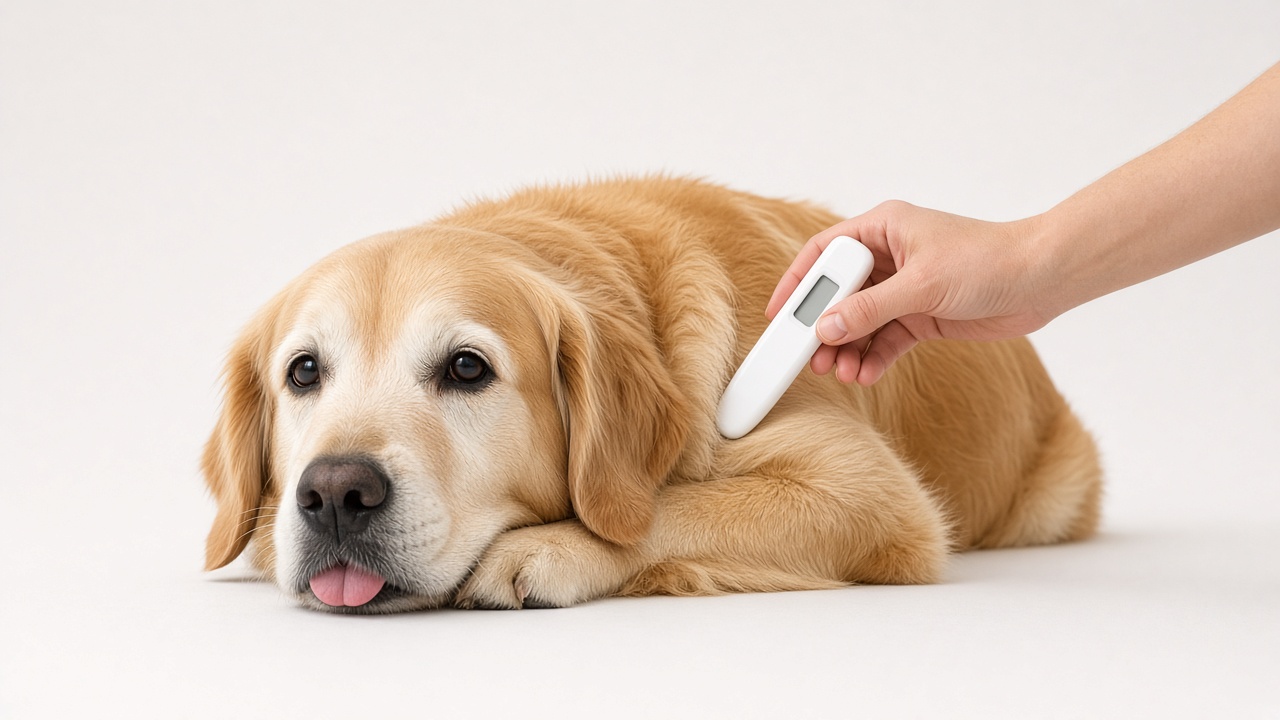
Quick answer: Match panting to heat, play, or stress. If it eases after rest, shade, and water, it is ordinary cooling. If it stays frantic, or gums change color, treat it as an emergency and get the dog to a clinic.
Panting that stays frantic after ten minutes of rest in cool air with water is not ordinary cooling.
This page is a research-desk briefing on panting scenes and published cooling-gear specs. We did not run heat trials, time panting in clinic dogs, or examine any animal.
Our selection rule is strict. A product entered the table only if it is sold now and uses water or evaporation. It also had to list a numeric size or capacity on the maker’s own page.
We left out gel mats, ice packs, and chemical coolant pads. We also left out any listing we could not open on the brand site.
How panting cools a dog
Dogs dump heat by moving wet air across the tongue and airway. Evaporation carries heat out with each pant. That is the job of a panting dog after play, a car ride, or a warm room.
The Merck Veterinary Manual lists a resting dog’s respiratory rate as 18 to 34 breaths per minute. Panting sits above that band on purpose. It is work, not a decoration.
The same Merck table lists average body temperature as 101 to 102.5°F. Panting is how a dog tries to stay inside that band.
It works when the air, the pavement, or the run is hotter than sitting still can fix. It fails when the air is already wet, the muzzle is short, or the dog will not stop.
Humidity slows evaporation. A short muzzle moves less air per breath. A dog that keeps chasing a ball keeps making heat.
The Rest-Shade-Water Check
We use one field rule on this desk. We call it the Rest-Shade-Water Check. It is a scene test, not a diagnosis.
Stop the activity and move the dog into shade or cool indoor air. Offer water. Watch the mouth, the gums, and the feet.
Ordinary cooling looks rhythmic and quieter as the minutes pass. The tongue shortens and the dog will lie down. Water is taken in small sips.
Worrying panting stays loud and frantic after that pause. Cornell University College of Veterinary Medicine lists early overheating signs. Those signs are heavy panting, shade-seeking, whining, reluctance to play, and drooling.
Cornell also lists later heatstroke signs: trouble breathing, bloody diarrhea, vomiting, weakness, confusion, seizures, or collapse. Those signs need a clinic now, not another walk.
If a hot dog later throws up undigested food, treat the vomit as part of the same heat scene. Do not wait for a second episode.
Heat, cars, and pavement numbers
Cornell’s summer heat page uses a 70°F outdoor example. A parked car’s interior can rise 40 degrees in one hour. Most of that rise happens in the first 15 to 30 minutes.
Cornell also says cracking the windows is not an effective cool-down. A running, air-conditioned car is still a poor place to leave a dog alone.
The same Cornell page times the hottest outdoor stretch at about 3 to 5 p.m., not at noon. Plan walks earlier or later than that window.
Cornell’s pavement check is blunt. If you cannot rest a bare hand on the asphalt for about 10 seconds, skip the walk.
Short-muzzle breeds sit in Cornell’s higher-risk list: Pugs, Bulldogs, Boston Terriers, and Boxers. Extra caution also applies to overweight dogs, older dogs, and dogs with heart or breathing disease. Thick or dark coats raise risk too.
None of those facts replace a clinic visit. They tell you when a panting dog is in a known risk scene.
What our Cooling Spec Scan compared
Our research team analyzed six maker pages in the Pet Bench Cooling Spec Scan. We compared listed sizes, materials, and recharge steps. We did not wear the gear on dogs or time how long a soak stayed cold.
Five evaporative pieces use the same idea: soak, wring, wear, then soak again when dry. One indoor fountain is here because panting burns water, and a dry bowl is a failed cool-down.
Ruffwear’s Swamp Cooler Vest lists six girth sizes from 13 to 42 inches. It uses a three-layer stack with UPF 50+ on the outer mesh. The maker’s chart gives an XXS back length of 9.75 inches and an XL length of 24 inches.
Hurtta’s Cooling Wrap lists a cooling area of about 30 percent of the dog and 30 percent adjustability. The same Hurtta page lists reflector intensity at 400 to 450 cd/m². It also says 60 to 80 percent of materials are recycled.
Kurgo’s Core Cooling Vest lists four sizes. Chest girth runs from 19 to 27 inches on Small and from 35 to 45 inches on X-Large. Kurgo lists a two-way zipper and two Nifco side buckles.
Canada Pooch’s size-guide page says the brand offers up to 15 sizes. The Chill Seeker product page lists sizes from 8 through 36. It shows a 55-pound Golden Retriever in size 24 and a 95-pound Labrador in size 28.
Ruffwear’s Swamp Cooler Neck Gaiter lists six neck sizes from 11 to 27 inches and UPF 50+ stretch fabric. It is the smallest evaporative piece in the scan.
PetSafe’s Drinkwell Platinum fountain lists 168 ounces of capacity, also written as 1.3 gallons. The same PetSafe page states a daily water need of 1 ounce per 1 pound of body weight.
Cooling tools compared by listed attributes
Use the table as a spec sheet, not a ranking. Match girth or neck, then match how you will recharge the water.
| Product | Cooling method | Maker-listed size span | Listed numeric spec | How you recharge |
|---|---|---|---|---|
| Ruffwear Swamp Cooler Vest | Three-layer evaporative vest, UPF 50+ | Chest girth 13–42 in, six sizes | XXS length 9.75 in; XL length 24 in | Soak, wear, re-soak when dry |
| Hurtta Cooling Wrap | Evaporative wrap over chest and lungs | Six sizes, 40–50 through 85–95 | About 30% coverage; 400–450 cd/m² reflector | Soak, squeeze, wear |
| Kurgo Core Cooling Vest | Evaporative vest, light-color shell | Four sizes; chest 19–45 in | Small back 13 in; X-Large back 27 in | Wet, wring, strap on |
| Canada Pooch Chill Seeker Cooling Vest | Evaporative pullover, no chemical coolant | Sizes 8–36 on the product page | Brand size guide: up to 15 sizes | Wet, wring, wear |
| Ruffwear Swamp Cooler Neck Gaiter | Evaporative neck wrap, UPF 50+ | Neck 11–27 in, six sizes | Body fabric 80% polyester, 20% spandex | Soak and go |
| PetSafe Drinkwell Platinum | Indoor flowing bowl, carbon filter | One fountain size | 168 oz / 1.3 gal capacity | Refill the snap-on reservoir |
A vest does not fix heatstroke. It is a walk tool for a dog that can still recover in shade. A fountain does not replace a clinic; it only makes water easier to take at home.
If humidity is high, evaporation slows for every soaked garment. Re-wet more often, or stay indoors with a fan.
Night panting, stress, and other non-heat scenes
Not every panting dog is overheated. Excitement, fear, pain, and some medicines can raise the breath rate in a cool room.
A dog left alone may pant from stress. The same dog may also chew shoes. Those two habits can share a boredom or anxiety scene.
Cooling gear will not stop the chewing.
Panting at rest in a cool, quiet house is a different scene from post-walk panting. Count breaths for 30 seconds while the dog lies still. Double that count to get a per-minute rate.
If that resting count sits well above Merck’s 18 to 34 band, call the clinic the same day. That call matters when no heat or play explains the rate. Do not wait for collapse.
Night panting that is new, louder, or paired with a pot-bellied look needs a medical workup. Hormonal disease, heart disease, and pain can all look like “just panting.”
Water, food, and what kibble cannot do
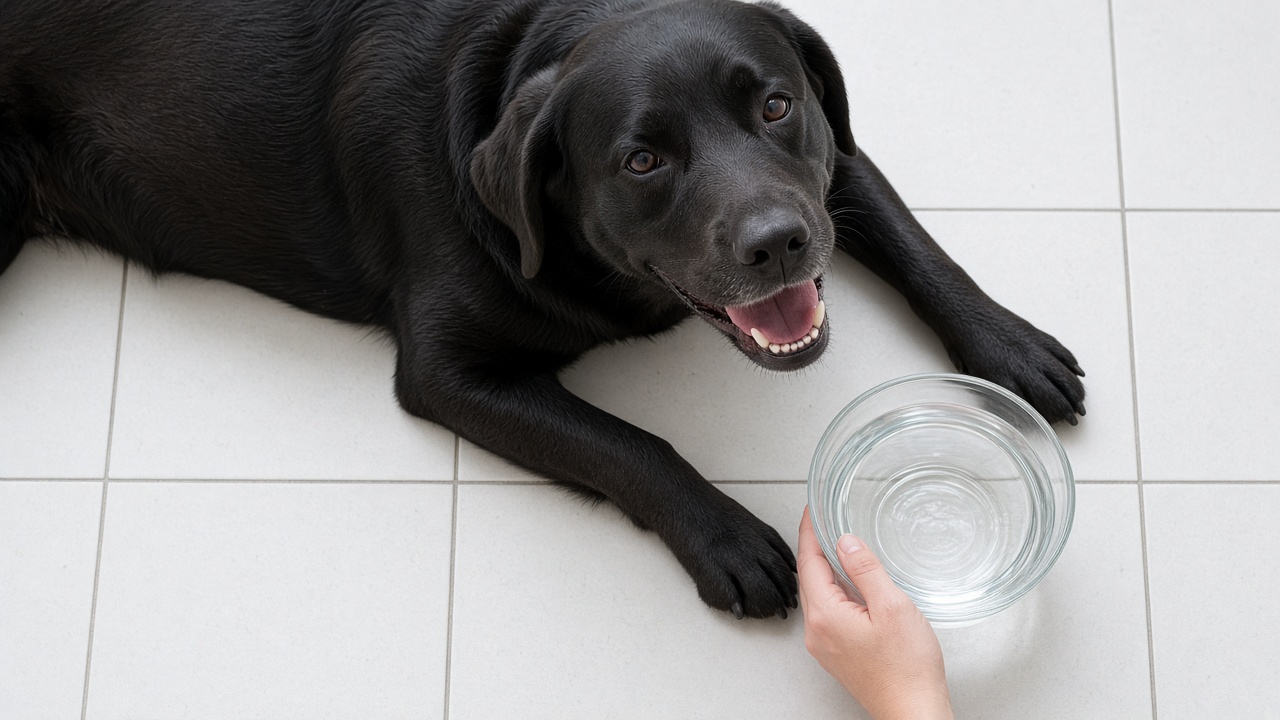
Panting spends water. A dry bowl after a hot walk is a failed cool-down, even if the kibble bag looks generous.
PetSafe’s fountain page uses simple water math. It lists 1 ounce of water per 1 pound of body weight each day. A 40-pound dog would need about 40 ounces on that rule.
Heat and panting raise the need above a rest day.
Food moisture is not a substitute for a bowl. AAFCO’s Model Regulations cap most pet-food moisture declarations at 78.00 percent. Stew, gravy, sauce, broth, aspic, juice, or milk-replacer labels can sit above that cap.
That 78.00 percent figure is a labeling rule, not a panting treatment. Wet food can add water to a meal. It cannot replace shade, rest, and a clinic when gums change color.
If you are reading a bag because of chicken meal in dog food, keep that question on the ingredient page. Protein source does not change the Rest-Shade-Water Check.
When to go now
Go now if panting is frantic after rest and shade. Go now if gums look brick-red, pale, gray, or blue. Go now if the dog staggers, vomits, has bloody diarrhea, seizes, or collapses.
Start cooling on the way. Cornell tells owners to move the dog into cool air, offer water, and use a fan. Wet a double-coated breed to the skin, and do not delay the drive.
Do not pack the dog in ice. Sudden extreme cold can create its own problems. Room-temperature water and moving air are the desk’s default while you travel.
Leave the vest off if the dog is already in collapse. A soaked garment is for a walk, not for a dog that cannot stand.
FAQ
Why do dogs pant after a short walk?
A walk still makes heat. Panting is the main dump valve. If the mouth quiets after rest, shade, and water, the scene was ordinary cooling.
How long should normal panting last?
Our desk rule is ten minutes of rest in cool air with water. If the panting stays frantic past that pause, treat it as a worry scene and get help.
Can a dog pant from stress instead of heat?
Yes. Fear, fireworks, car rides, and being left alone can all raise the breath rate. Look at the room temperature and the rest of the body before you assume heat.
Is panting at night always an emergency?
New night panting deserves a same-day clinic call. It is more urgent if the dog cannot settle, if gums look wrong, or if the belly looks tight.
Do cooling vests replace water and shade?
No. Every vest in our scan is a soak-and-wear layer. They support a walk and do not replace water, shade, or a clinic.
How much water should a panting dog get?
PetSafe’s listed rule is 1 ounce per 1 pound of body weight per day at baseline. Offer small, frequent sips during a heat scene. Do not force a huge gulp.
When is panting a reason to go to the clinic tonight?
Go tonight if panting stays frantic after rest or gums change color. Vomiting, weakness, confusion, or collapse also counts. Those are Cornell’s later heatstroke signs.