Quick answer: Most dogs sleep under the bed because it feels like a den. Leave the habit if your dog still eats, plays, and comes when called. Offer a covered or bolstered bed if you want the same hide without the dust.
If a dog still eats, plays, and comes when called, under-bed sleep is a den habit, not a medical emergency.
This page is a research-desk briefing from published papers and maker specs, not a sleep trial, a camera study, or a diagnosis.
Selection rule: We keep a reason only if you can check it at home. The home checks are season, noise, guests, appetite, and recall.
We keep a product only if the maker lists a hood or a 7-inch rim. A published foam stack or a frame under 8 inches also qualifies. We drop outdoor-only heated pads, cat-only condos, and chew toys.
Seven reasons dogs sleep under the bed
Dogs nap in short blocks. The American Kennel Club states that most dogs sleep 12 to 14 hours a day. Puppies sleep even more.
That volume of rest makes the chosen spot matter. The gap under a bed is dark, low, and hard for others to enter.
1. The space works like a den
A bed frame gives a ceiling, side walls, and a narrow entrance. Your dog can watch the room while staying partly hidden.
That layout reduces startle risk. A passing foot or another pet cannot walk straight through the nap.
Many dogs pick this spot with no fear at all. They treat it as a private room.
2. The floor stays cooler
Hard flooring under a bed sits in shade. Air also moves less there than in a sunlit hall.
Dogs cool mainly by panting. Cornell University College of Veterinary Medicine states a dog’s normal body temperature is 100.5 to 102.5 degrees Fahrenheit.
Heatstroke begins at 105 degrees Fahrenheit or higher. A cool floor is often a summer choice for thick-coated breeds.
If hiding spikes only on hot days, temperature is doing part of the work. A breathable, off-floor bed can copy that effect.
3. Your scent is concentrated there
The bedroom holds more of your scent than the kitchen. Bedding, laundry, and the mattress all store it.
Dogs often rest near that scent even when you are gone. Under the bed keeps them close without climbing onto the mattress.
This is proximity, not spite. The dog is staying in your room, not leaving the household.
4. Noise and storms drive hiding
Some dogs only vanish when a truck, vacuum, or storm starts. The bed then becomes a bunker, not a lounge.
A 2023 review in the journal Animals, by our editorial team reports a wide range. Noise fears affect between a quarter and half of pet dogs.
Fireworks were the most common trigger. Thunder and gunshots followed.
The Journal of the American Veterinary Medical Association published a 2025 analysis of 32,468,046 canine primary-care records. The window ran from 2010 through 2020.
Fear or anxiety labels unrelated to separation anxiety rose sharply. They moved from 0.21 percent in 2010 to 6.9 percent in 2020.
Those figures do not prove your dog is afraid. They do show that noise fear is a real category. Trembling or a refusal to come out is distress, not a cute nap.
5. The bedroom is quieter than the rest of the house
Living rooms carry television, guests, and foot traffic. Bedrooms often do not.
Under the bed multiplies that quiet. The mattress also muffles some household sound.
Multi-dog or multi-child homes see this most. The smallest dog may claim the tightest hide.
6. A low spot is easier on sore joints
Climbing onto a couch takes a jump. The floor under a bed does not.
Older dogs and large breeds may choose the low slot for that reason. They still want cover. They do not want a climb.
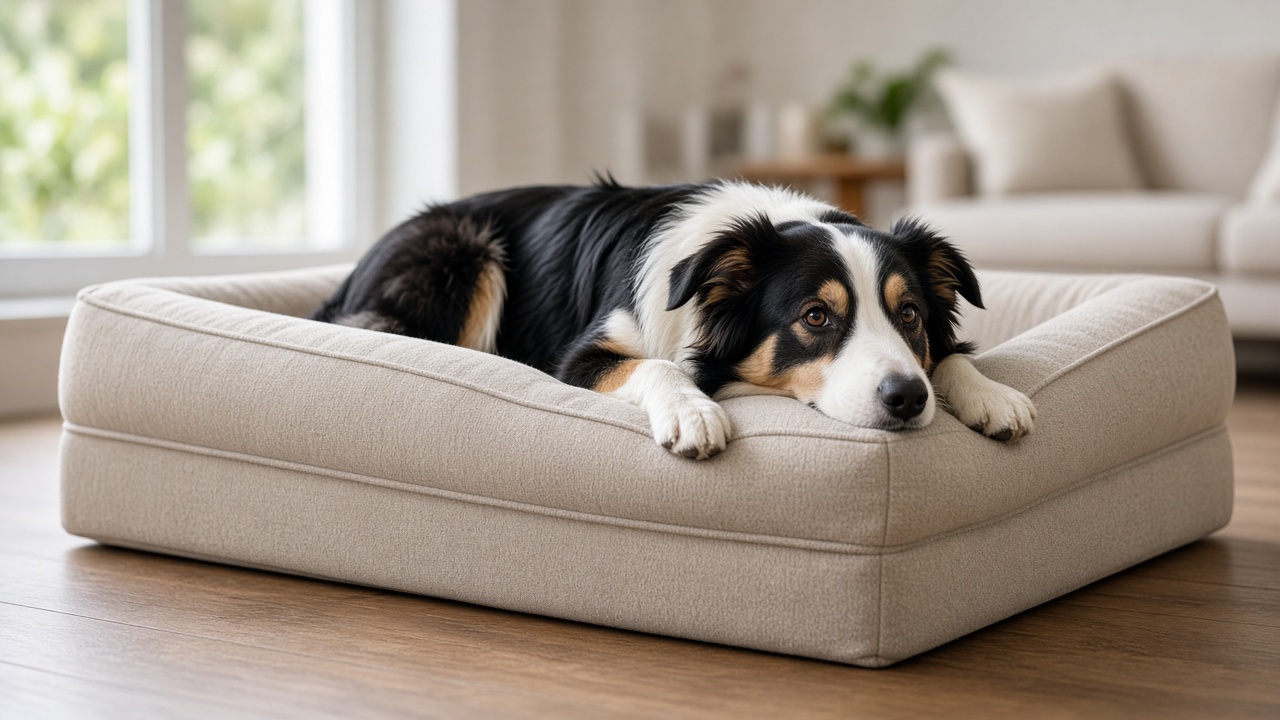
If your dog also hesitates on stairs, joint comfort belongs on the list. A floor-level orthopedic mattress can replace the hide.
Large dogs that need a thick slab belong on a support bed. See our orthopedic dog beds for large breeds guide.
7. Sudden hiding can track with illness
A dog that newly refuses meals, walks, or play is not “just denning.” Isolation can appear when a dog feels unwell.
Watch for a cluster, not a single nap. Skipped food, a tucked belly, stiffness, or a limp change the reading.
The same JAVMA paper tracked behavior-problem labels in those records. The share rose from 1.0 percent in 2010 to 10.2 percent in 2020.
That is a record-keeping shift, not a verdict on your dog. A sudden hide plus lost appetite is a clinic question.
When the habit is a problem
Leave the habit alone when three checks pass. The dog still eats, plays, and comes when called.
Worry when the hide is new and sticky. Worry when the dog will not come out for food or a walk.
A dog that only hides during fireworks is using a refuge. That dog still needs a safer den than a dusty gap.
Do not punish the hide. Punishment teaches the dog that the bedroom is unsafe. Offer a den first, then close the gap if you must.
A den that is not under the furniture
The goal is the same three traits. You want cover, low light, and a single entrance.
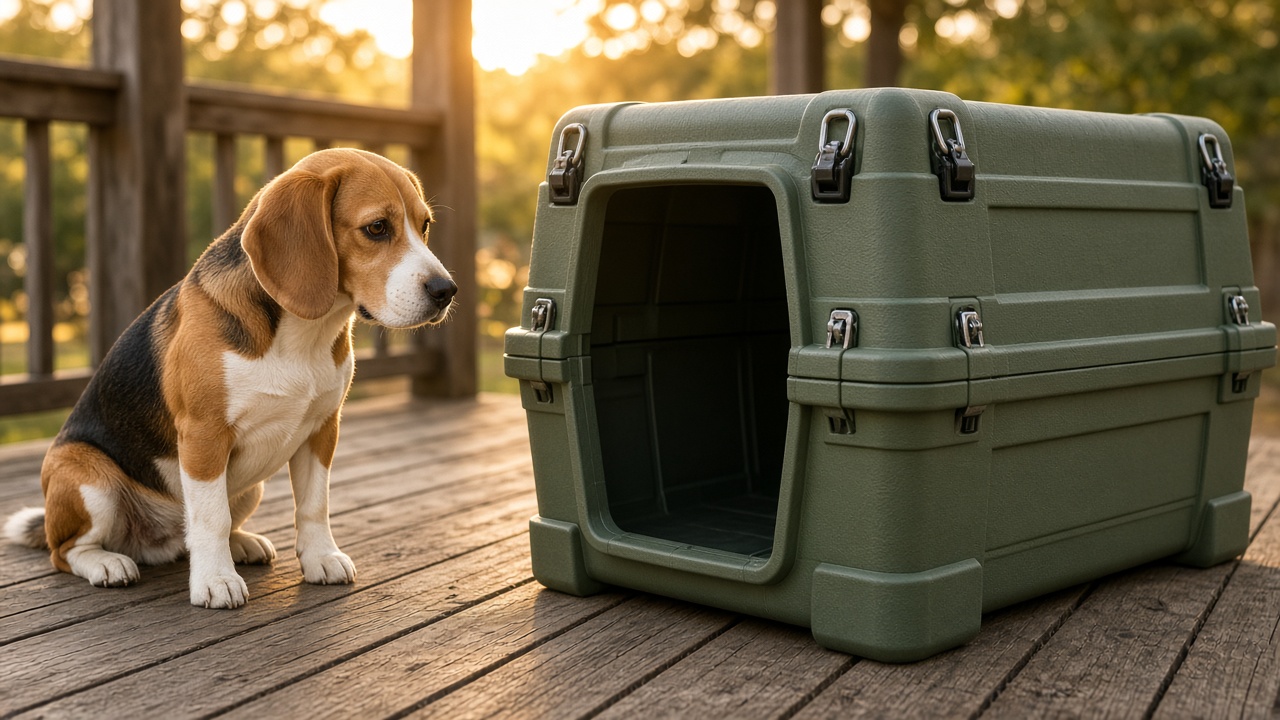
A crate with a cover can supply them. So can a hooded burrow bed or a high-rim donut.
Place the new den in the bedroom, not the laundry room. You are swapping the address, not the neighborhood.
For storm nights, a covered nest beats an open plush mat. See our calming dog bed for anxiety guide.
A wider bedroom bed may be enough for everyday naps. See our best dog beds roundup for an open mattress.
The Food and Drug Administration approved clomipramine hydrochloride tablets on December 10, 1998. The label covers dogs greater than 6 months of age.
The listed dose is 2 to 4 milligrams per kilogram per day. FDA framed it as part of a behavior program for separation anxiety.
That approval is a clinic tool, not a home experiment. This desk does not assign drugs.
How five current beds compare on listed specs
Our research team compared published loft, rim height, and care notes on five beds sold now. We used each maker’s own product page. We did not sleep-test the foam.
Four of the five list a total height between 7.0 and 7.6 inches. That is the Clearance-to-Loft cut we used.
The Best Friends by Sheri Calming Donut Bed in Lux Fur, 23 by 23 inches, lists a 7-inch height. The listed cap is 25 pounds.
The same line in 36 by 36 inches keeps the 7-inch rim. The cap rises to 100 pounds.
The FurHaven Snuggery Burrow Dog Bed sells a 26-inch Round orthopedic-foam option. FurHaven lists a shapeable hood, a plastic hoop, and CertiPUR-US foam made in the United States. Coverage is 90 days, and the cover is machine washable.
The Barker Original Orthopedic Dog Bed in Large measures 48 by 30 by 7 inches. Barker lists a 2-inch base, a 3-inch support layer, and a 2-inch comfort layer.
The same page adds a 10-year no-flatten warranty. Barker states the foam will keep at least 90 percent of its original shape.
The Coolaroo Original Elevated Dog Bed, Medium, lists a 43 by 25.5 by 7.6 inch frame. The listed cap is 75 pounds.
Coolaroo also states a 5-year fabric warranty and hose-only cleaning.
| Model | Sleep style | Maker-listed size | Capacity or loft on the maker page | Care listed by the maker |
|---|---|---|---|---|
| Best Friends by Sheri Calming Donut Bed in Lux Fur | Raised-rim donut | 23 in. x 23 in. x 7 in. | Up to 25 lb | Machine wash and dry |
| Best Friends by Sheri Calming Donut Bed in Lux Fur | Raised-rim donut | 36 in. x 36 in. x 7 in. | Up to 100 lb | Machine wash and dry |
| FurHaven Snuggery Burrow Dog Bed, Orthopedic Foam | Hooded burrow | 26 in. Round | CertiPUR-US foam; 90-day coverage | Removable cover, machine wash |
| Barker Original Orthopedic Dog Bed, Large | Flat foam slab | 48 in. x 30 in. x 7 in. | 2 in. + 3 in. + 2 in. layers; 10-year, 90% loft | Cover, wash cold |
| Coolaroo Original Elevated Dog Bed, Medium | Elevated mesh | 43 in. x 25.5 in. x 7.6 in. | Up to 75 lb | Hose rinse; no machine wash |
Match the product to the reason, not to a rank. A 25-pound donut cannot replace a Labrador’s under-bed hide.
Pick the 36-inch donut or the Snuggery when the dog curls and burrows. Pick the Barker slab when a large dog avoids a jump. Pick Coolaroo when the hide is a summer cool-seek.
How to move the nap without a fight
Put the new bed against the same wall as your bed. Keep the old gap open for a week.
Feed one meal a day on the new bed. Drop a worn shirt in the nest so your scent moves with the dog.
Close the gap only after the dog has napped on the new bed on its own. Early blocking creates a scramble.
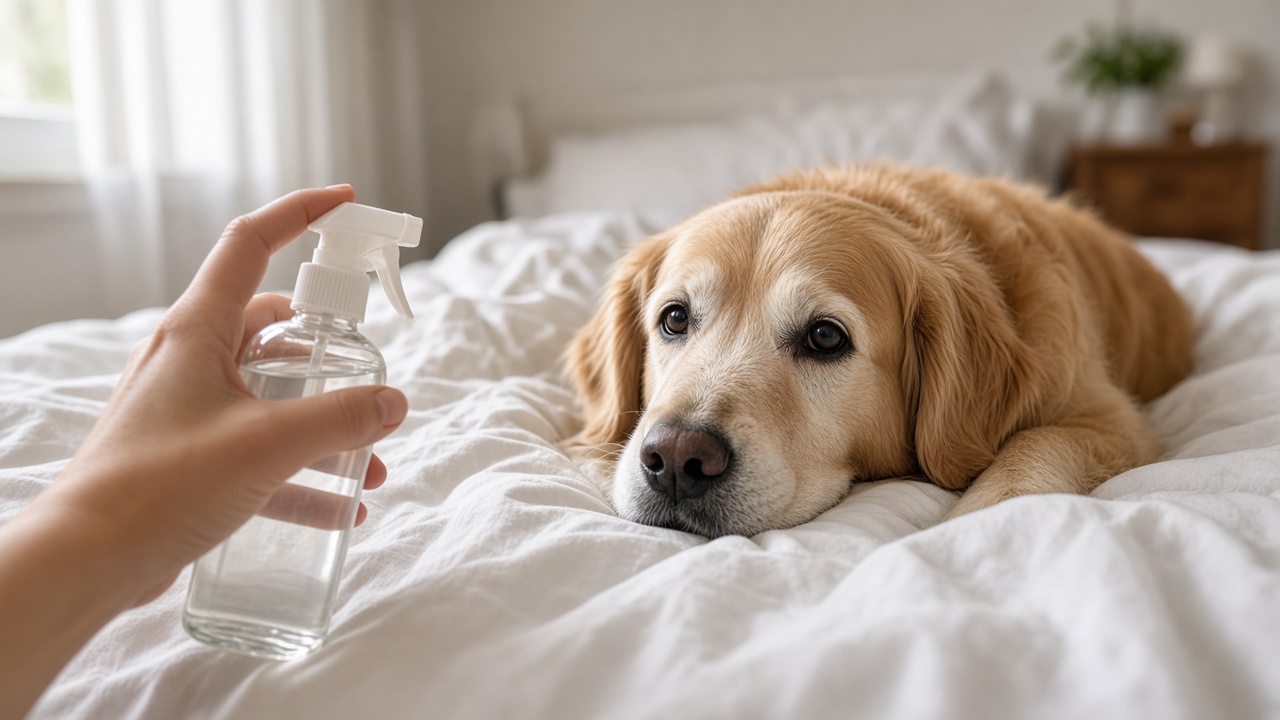
Skip citrus sprays and shout-downs. Those tactics raise fear. They do not teach a new den.
If the dog hides only during storms, leave a covered nest in place year-round. Measure the dog, not the old gap. A dog that stretches to 36 inches needs the 36-inch donut or a slab.
FAQ
Is it normal for my dog to sleep under the bed every night?
Yes, if appetite, play, and recall stay intact. Nightly denning is a location habit, not a personality flaw. Change the furniture only if dust, access, or your sleep is the problem.
Why does my dog go under the bed only during storms?
That pattern points to noise fear, not a cooling need. Riemer’s 2023 Animals review placed noise fears in a quarter to half of pet dogs, with fireworks first and thunder second.
Keep a covered nest ready. Do not haul the dog out mid-storm.
Should I block the space under the bed?
Block it only after a replacement den is in the same room and already in use. A sudden board-up can shift hiding to a closet. If you must close the gap for safety, do it on a quiet day.
What size den bed replaces an under-bed hide?
Use the maker’s weight cap and the dog’s stretch length. Ignore the old gap. Best Friends by Sheri lists 25 pounds on the 23-inch donut and 100 pounds on the 36-inch donut.
A dog that sprawls needs a slab. The Barker Large is 48 by 30 inches.
Why does my puppy sleep under the bed more than my adult dog?
Puppies sleep more and startle more. The American Kennel Club notes that puppies sleep even more than the 12-to-14-hour adult average. A small body also fits the gap, and the habit often fades as the puppy grows.
Can joint pain make a dog prefer the floor under the bed?
Yes. A low, no-jump slot can feel easier than a tall couch. Pair that reading with stiffness, stair hesitation, or a shortened walk.
Then look at a floor-level orthopedic bed. Skip a tall sofa bed.
When should I book a clinic visit about hiding?
Book one when hiding is new and paired with skipped meals, vomiting, a limp, or a refusal to come out. Isolated, long-running under-bed naps do not meet that bar. Bring notes on when the hide started and what else changed that week.