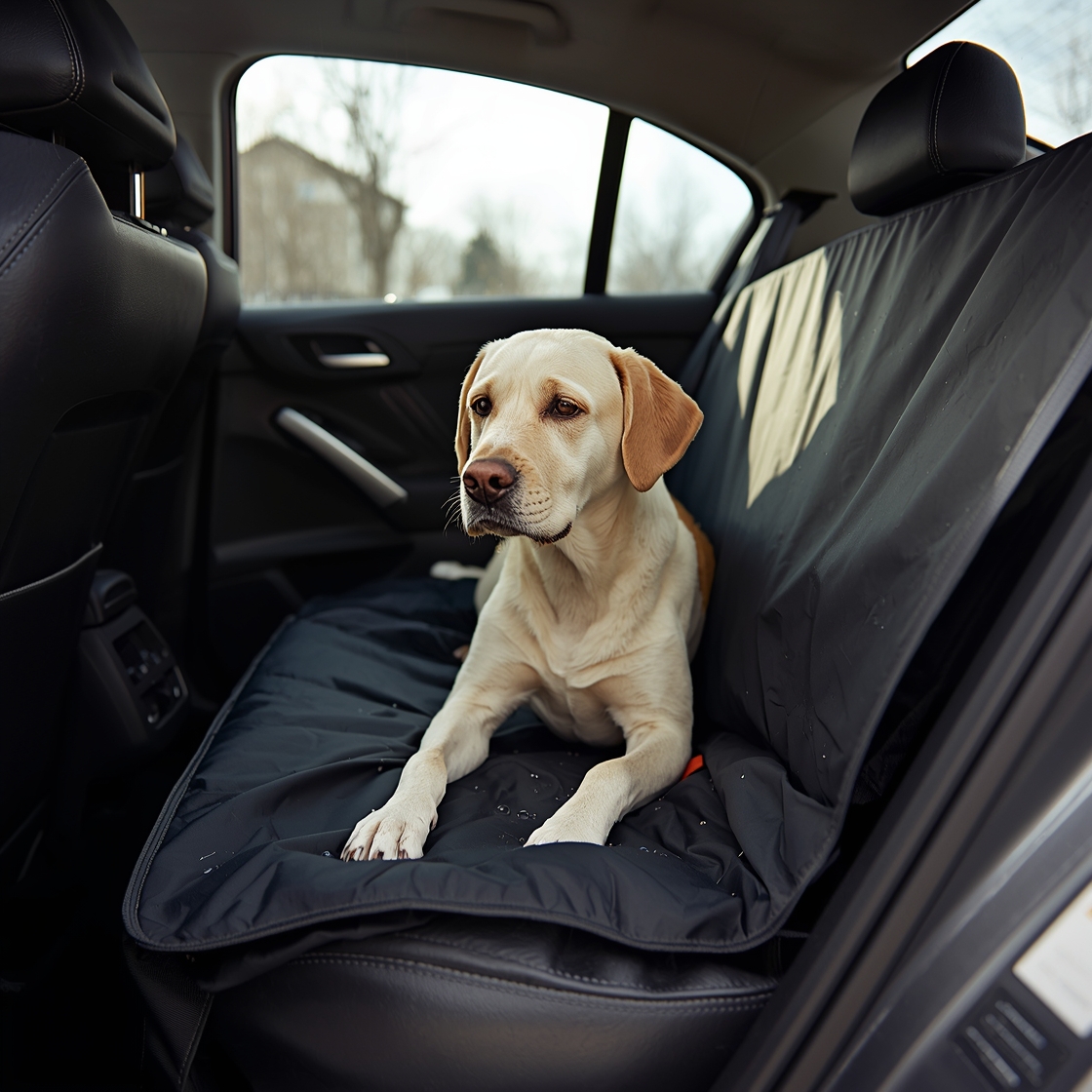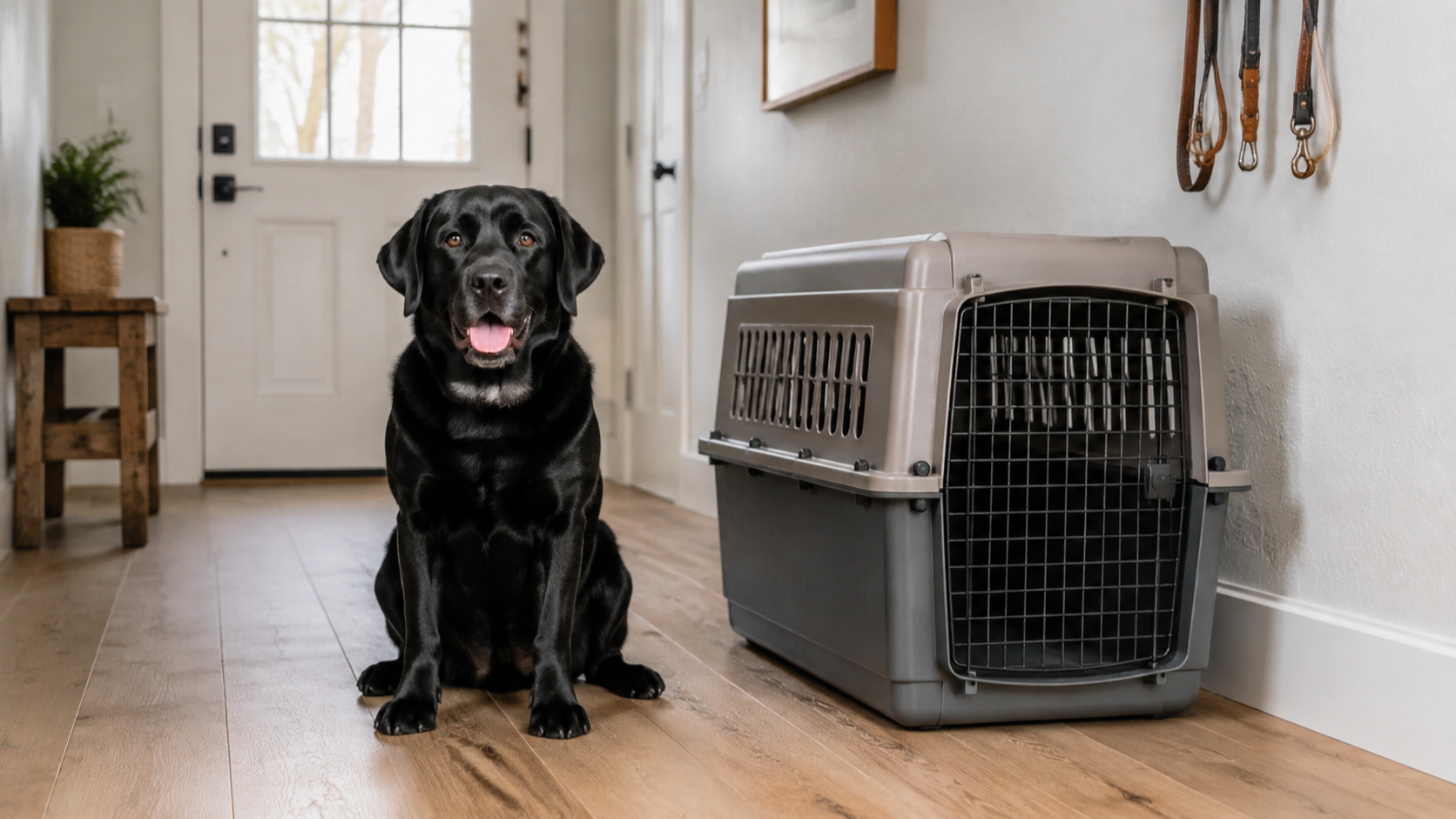
Quick answer: A large dog that will not fit under the seat flies as cargo or on a pet-only cabin service. Size the kennel with IATA’s A-plus-half-B formula. Confirm the airline still accepts live animals on that route before you buy a ticket.
Book an IATA-size cargo kennel or a pet-only cabin flight; large dogs cannot sit under a U.S. airline seat. This page is a research-desk comparison of published airline and crate rules.
Selection rule: we included only rigid kennels whose maker publishes interior dimensions and an empty weight, and whose page claims cargo or IATA construction. We left out cabin-only soft carriers, wire home crates, and any kennel whose maker withholds internal measurements.
Cabin is a size test, not a weight guess
A large dog is any dog that cannot stand, turn, and lie down in an under-seat carrier. Breed charts do not decide this. The carrier does.
Delta’s pet travel page recommends a soft-sided cabin kennel of 18 by 11 by 11 inches because that size fits most of its aircraft. The same page requires the kennel to sit fully under the seat in front of you. A Labrador, shepherd, or similar dog cannot occupy that box.
Delta collects a one-way cabin fee at check-in. For U.S. and Canada tickets issued on or after April 8, 2025, that fee is $150 USD or CAD. Those cabin numbers matter only if the dog fits.
Cargo is the default path for a large dog
If the dog cannot ride under the seat, book cargo or a pet-only cabin operator. Standard passenger seats do not stretch.
Alaska Air Cargo still publishes a public Pet Connect cargo program. Its kennel page caps the combined weight of animal and kennel at 150 pounds. Aircraft type can cut that limit further.
Alaska Air Cargo also sets a time window. Reservations must be made at least 24 hours before departure. Live animals must be tendered no more than four hours before departure.
Most flights complete acceptance two to three hours before pushback.
After landing, Alaska Air Cargo says animals are typically ready about one hour after arrival. The consignee must pick the animal up within four hours. Miss that window and extra kenneling may be required.
Our research team used that 150-pound combined cap as a filter, not a ranking. A heavy kennel can push a heavy dog off the flight even when the interior size is correct.
Size the kennel with IATA math, not a breed chart
The International Air Transport Association publishes container math on its Traveler’s Pet Corner page. Airlines use that math to check whether a dog can turn about while standing, sit erect, and lie in a natural position.
Measure the dog standing. A is nose to the base of the tail. B is ground to the elbow.
C is shoulder width or the widest point, whichever is larger. D is floor to the top of the head or ear tip, whichever is higher.
IATA’s minimum internal length is A plus half of B. Minimum internal width is C times 2. Minimum internal height is D plus bedding.
Snub-nosed breeds need a container 10 percent larger than that result.
IATA also limits sharing. Animals over 14 kilograms must travel alone. Two adults may share only if each is at most 14 kilograms and they already live together.
Weaned puppies in one box must be from the same litter. They must be no older than six months and no more than 14 kilograms each. IATA allows no more than three per container.
A 14-kilogram cap is about 31 pounds. A large dog clears it. Plan on one dog, one kennel.
IATA asks you to reconfirm the booking at least 48 hours before departure. It also notes a United States rule: a light meal about two hours before you tender the animal.
IATA and its carriers discourage sedatives and tranquilizers for transit. That page says the American Veterinary Medical Association endorses the same caution.
Kennels we compared from published specs
A home crate is not automatically a cargo kennel. Wire sides, snap-only lids, and rolling frames fail many cargo desks. For indoor models after the trip, see our best dog crate for large dogs guide.
Comparing published specs, we kept six currently sold kennels that list interior size and empty weight. We dropped any model whose maker hid those two numbers.
| Model | Maker-listed L × W × H (in) | Empty weight | Maker size note | Shell |
|---|---|---|---|---|
| Petmate Sky Kennel 36" | 32.5 × 22 × 26 | 20.75 lb | Pets 50–70 lb | Recycled plastic |
| Petmate Sky Kennel 40" | 36.25 × 24.75 × 28.8 | 30.48 lb | Pets 70–90 lb | Recycled plastic |
| Petmate Sky Kennel 48" | 44 × 29 × 32.5 | 51.5 lb | Pets 90–125 lb | Recycled plastic |
| GUNNER G1 Large | 33.25 × 21 × 29 | 72 lb | Large G1 size | Double-wall plastic |
| RuffLand 500 Series Airline | 36 × 23 × 28 | 42 lb | XL airline series | Roto-molded polyethylene |
| Impact Airline Dog Crate 40"+ | 40.5 × 27 × 33 | 42 lb | Extra-large airline size | Aluminum |
Petmate’s Sky Kennel page says the line is compliant with the 51st edition (2025) of the IATA Live Animals Regulations. EcoTEC plastic is listed as at least 90 percent pre-consumer recycled material. Only the 21-inch and 28-inch sizes include a handle.
The GUNNER G1 Large is the heaviest box in this set. GUNNER lists a 72-pound empty weight and a 33.25-inch interior floor length. That length is shorter than the Petmate 40-inch and 48-inch interiors.
RuffLand lists 1-inch vent holes along the top half of the 500 Series Airline kennel. The page says there are no bottom vent holes. Empty weight is about 42 pounds.
Impact lists 0.817-inch ventilation holes on the Airline Dog Crate. The 40-inch-plus size is listed at 42 pounds and 40.5 by 27 by 33 inches. With airline rails the published width is 29 inches.
We then ran a Pet Bench cargo-payload check against Alaska Air Cargo’s 150-pound combined limit. Subtract each published empty weight from 150.
The Petmate 36-inch leaves about 129 pounds for the dog. The 40-inch leaves about 120 pounds. The 48-inch leaves about 99 pounds.
The RuffLand 500 and Impact 40-inch-plus each leave about 108 pounds. The GUNNER G1 Large leaves about 78 pounds.
Those leftovers are not a ranking. They are a published-spec check against one cargo cap. A tall, lean dog can fail a short interior even when the leftover pounds look generous.
Alaska Air Cargo rejects kennels that are collapsible in any way. It also rejects wheels, snap-only closures, zip ties used as fasteners, and wire roofs. Hardware must be metal or plastic nuts and bolts.
Temperature, labels, and paperwork
Alaska Air Cargo generally accepts pets when forecast temperatures sit between 45°F and 85°F at every airport on the itinerary. Travel below 45°F may proceed only with a certificate of acclimation issued within 10 days. The certificate must state the temperature range the animal can tolerate.
Alaska Air Cargo requires a health certificate signed no more than 10 days before travel. For dogs and cats going to Hawaiʻi, that window stretches to 14 days. A rabies certificate is required for interstate trips, Alaska routings, and Hawaiʻi travel.
Dogs and cats must be at least eight weeks old and weaned. Two puppies may share a kennel only if each weighs 20 pounds or less.
They must be eight weeks to six months old and comparable in size. A large adult dog travels alone.
Each kennel must show the words “Live Animal” in letters at least one inch high. Directional arrows must mark the upright position. A document pouch with shipper and consignee contacts goes on the kennel.
The shipper must offer food and water within four hours before departure. A dish must clip inside the door and stay fillable from outside. Alaska Air Cargo will not give medication in its care.
Delta’s pet page points to extra paperwork for dogs that enter the United States. It states that the CDC requires those dogs to appear healthy, be microchipped, and be at least six months of age. A completed CDC Dog Import Form receipt must travel with the dog.
The same Delta page states a Mexico rule effective August 3, 2026. All dogs entering Mexico must have a New World Screwworm Inspection Certificate from a USDA-accredited veterinarian. That certificate must be issued no more than five days before arrival.
Day-of-flight crate setup
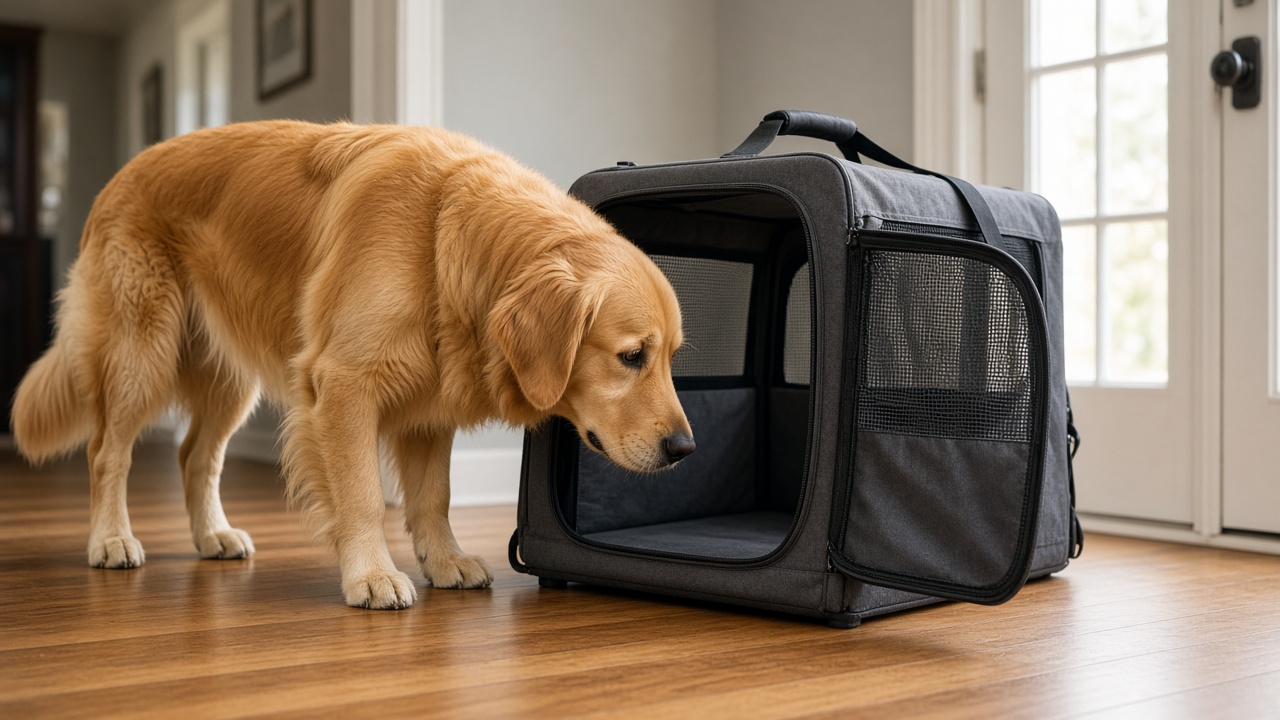
Buy the kennel early. IATA tells owners to let the dog live with the crate for weeks before the airport day. A first meeting at check-in is a common refusal risk.
Walk the dog before you leave home and again before you tender the kennel. Attach two IDs on the collar. IATA wants a permanent home ID and a temporary travel ID with a reachable phone number.
Use absorbent bedding. Alaska Air Cargo allows one small comfort item and no other extras. Clip the water cup so staff can refill it without opening the door.
Remove wheels and bolt every hole. Print “Live Animal” labels that do not block vents. Tape feeding notes and a 24-hour phone number to the top.
Do not lock the kennel so staff cannot open it in an emergency. Follow the airline’s fastener rules, not a blog tip.
After you land: move a tired large dog
Cargo travel ends at a cargo building, not the baggage carousel. Budget time and a second adult. A stiff, thirsty dog may not want to walk a long terminal.
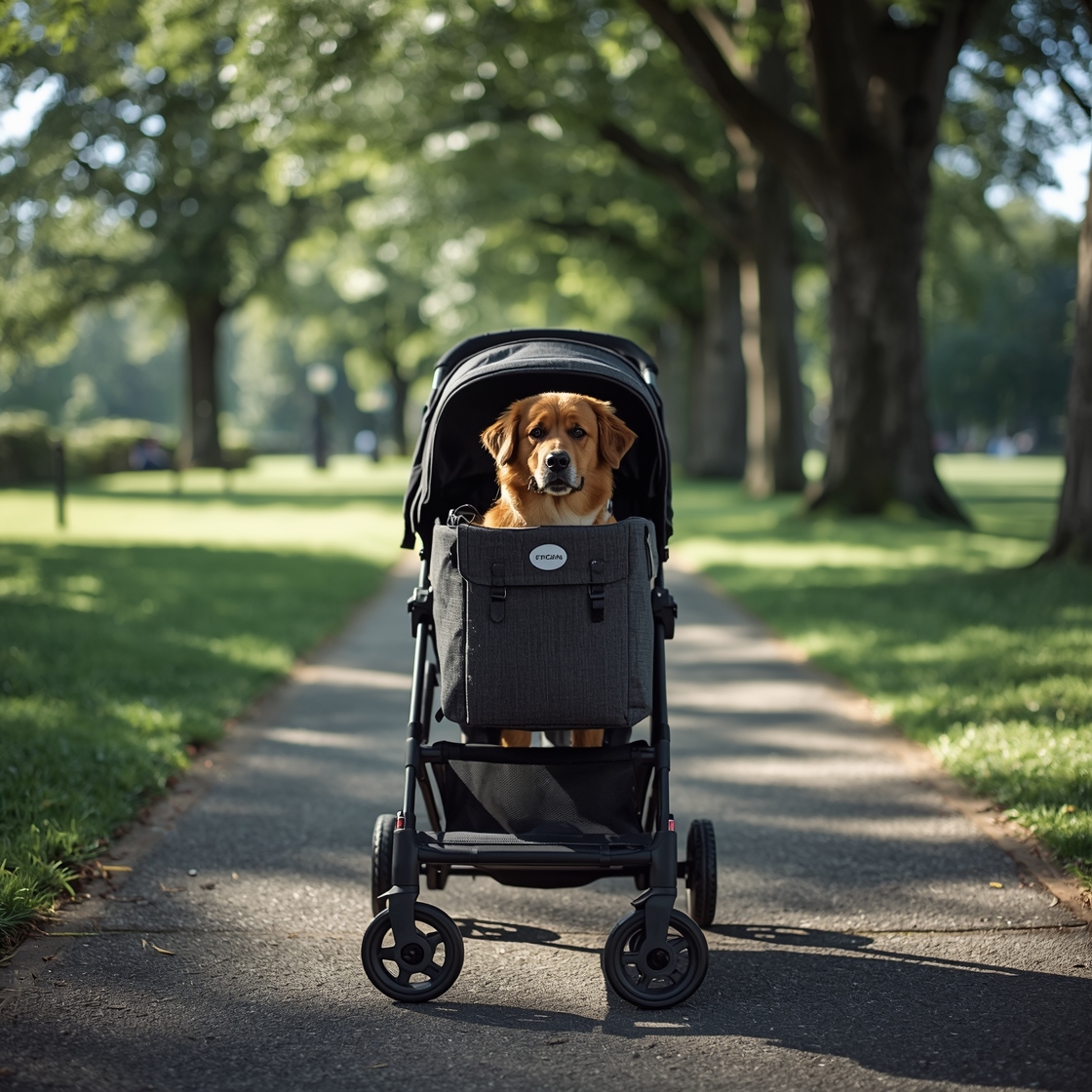
A folding stroller can spare that first walk. Our best dog stroller for large dogs roundup covers frames sized for bigger breeds. If you are still choosing a chassis, the dog stroller buying guide explains wheelbase, weight rating, and fold.
Offer water after the dog settles, and keep the first meal small. If the itinerary was international, keep the health packet in your hand.
FAQ
Can a large dog fly in the cabin on a regular U.S. flight?
Usually no. Delta’s published cabin kennel target is 18 by 11 by 11 inches, and the kennel must fit under the seat. A large dog cannot stand and turn in that space.
How do I calculate cargo crate size?
Use IATA’s published formula: length is A plus half of B, width is C times 2, and height is D plus bedding. Add 10 percent on each dimension for a snub-nosed breed. Then compare those internals with the maker’s interior numbers, not the exterior marketing size.
Can two large dogs share one kennel?
Not under IATA’s published sharing rules. Animals over 14 kilograms must be crated individually, and Alaska Air Cargo also limits a shared kennel to two young puppies of 20 pounds or less. Plan one adult large dog per kennel.
Should I give a sedative before the flight?
IATA discourages sedatives and tranquilizers for cargo or cabin transit. Its Traveler’s Pet Corner page says those drugs can remove balance and block an airway when nobody is watching. Ask your own clinician about medical exceptions, and do not dose from a travel forum.
Alaska Air Cargo generally accepts pets when forecasts stay between 45°F and 85°F at every airport on the route. Colder forecasts may need a 10-day acclimation certificate. Hotter forecasts can cancel the booking even if the kennel is correct.
How early should I arrive for cargo drop-off?
Alaska Air Cargo says animals must be tendered no more than four hours before departure. Most flights finish acceptance two to three hours out, and Hawaiʻi departures need three to four hours. Build a buffer for weighing, label checks, and a last walk.
Does a domestic cargo flight need a health certificate?
Alaska Air Cargo requires a health certificate signed no more than 10 days before travel for live warm-blooded cargo. Interstate trips also need a rabies certificate on the routes that page lists. Other airlines set their own windows, so read the carrier you booked.