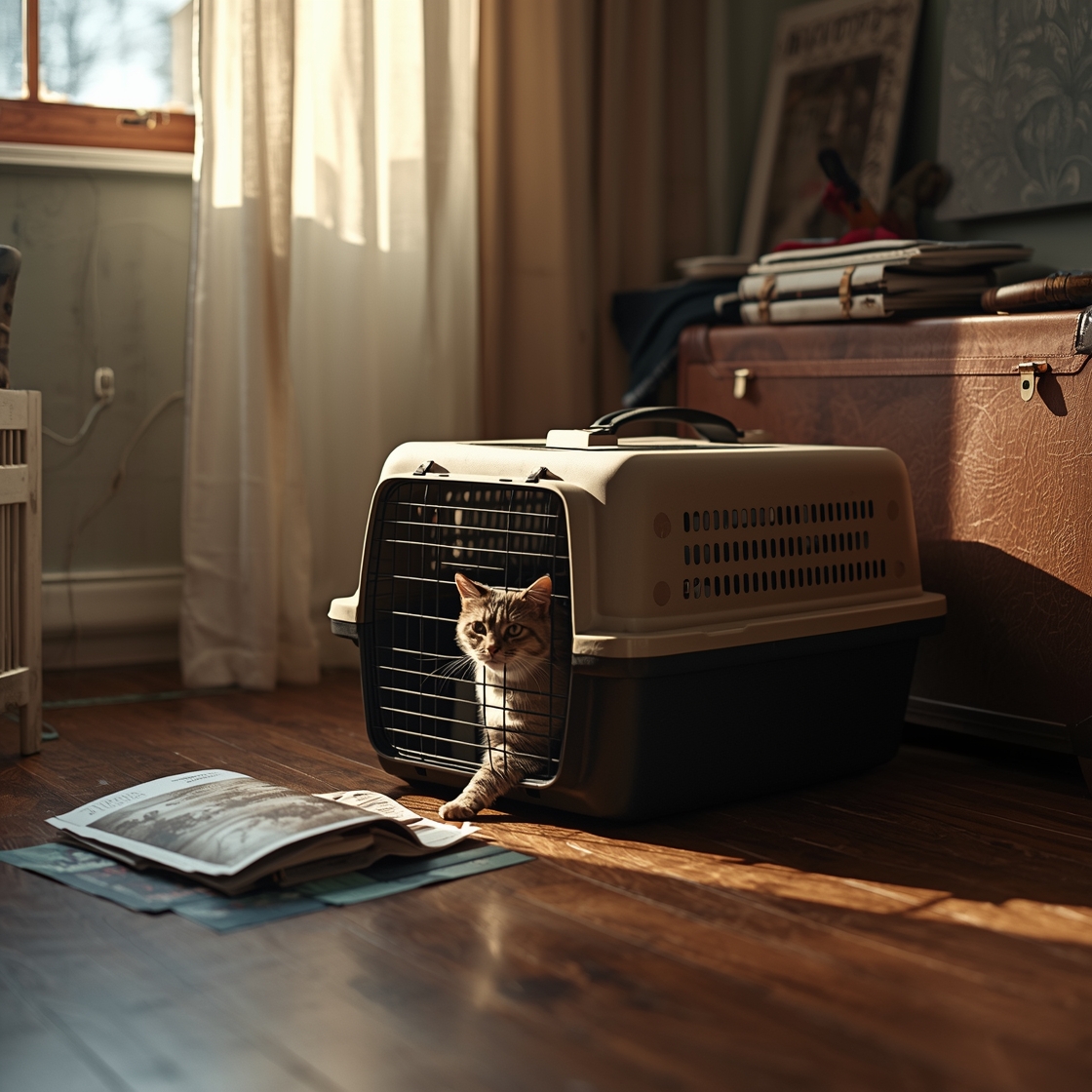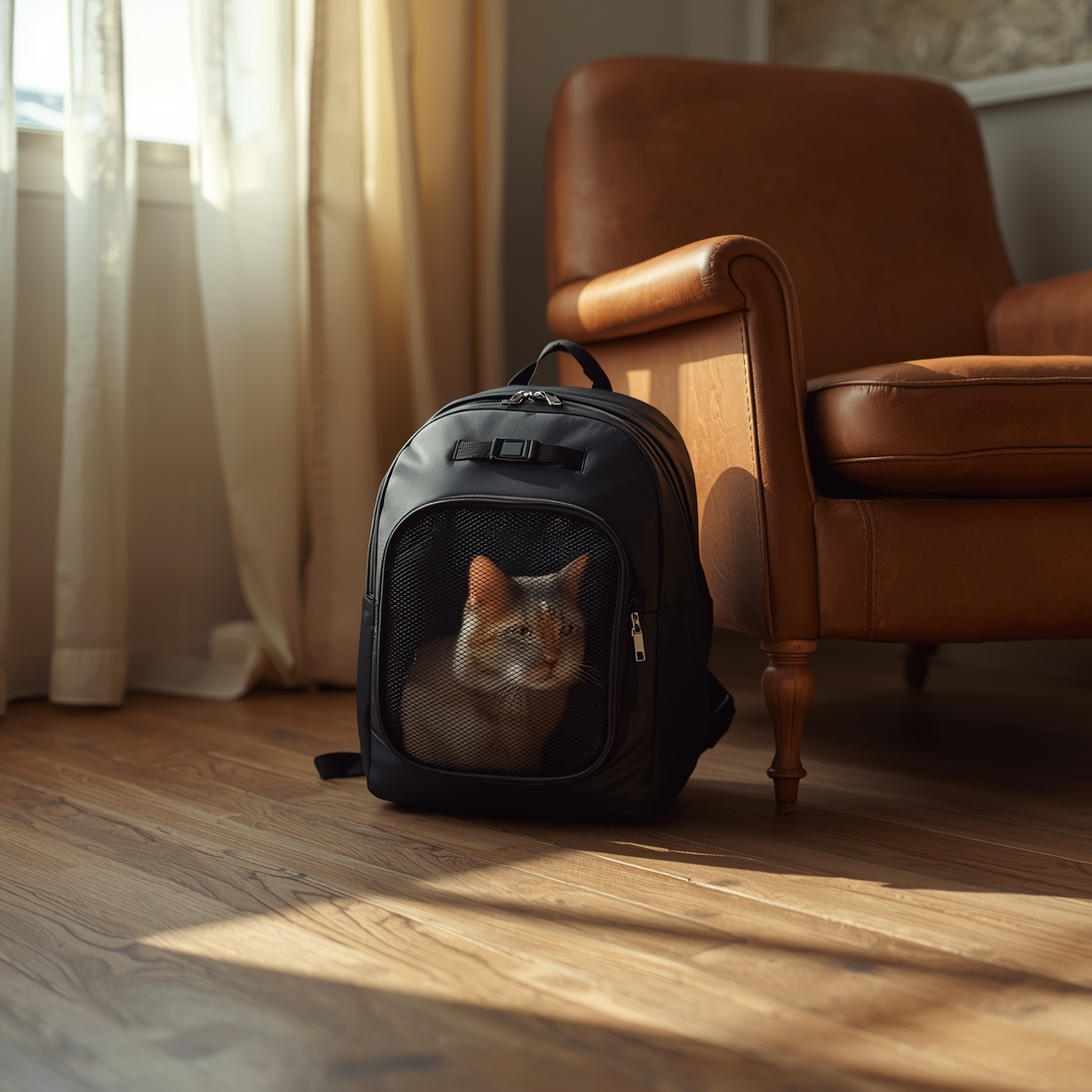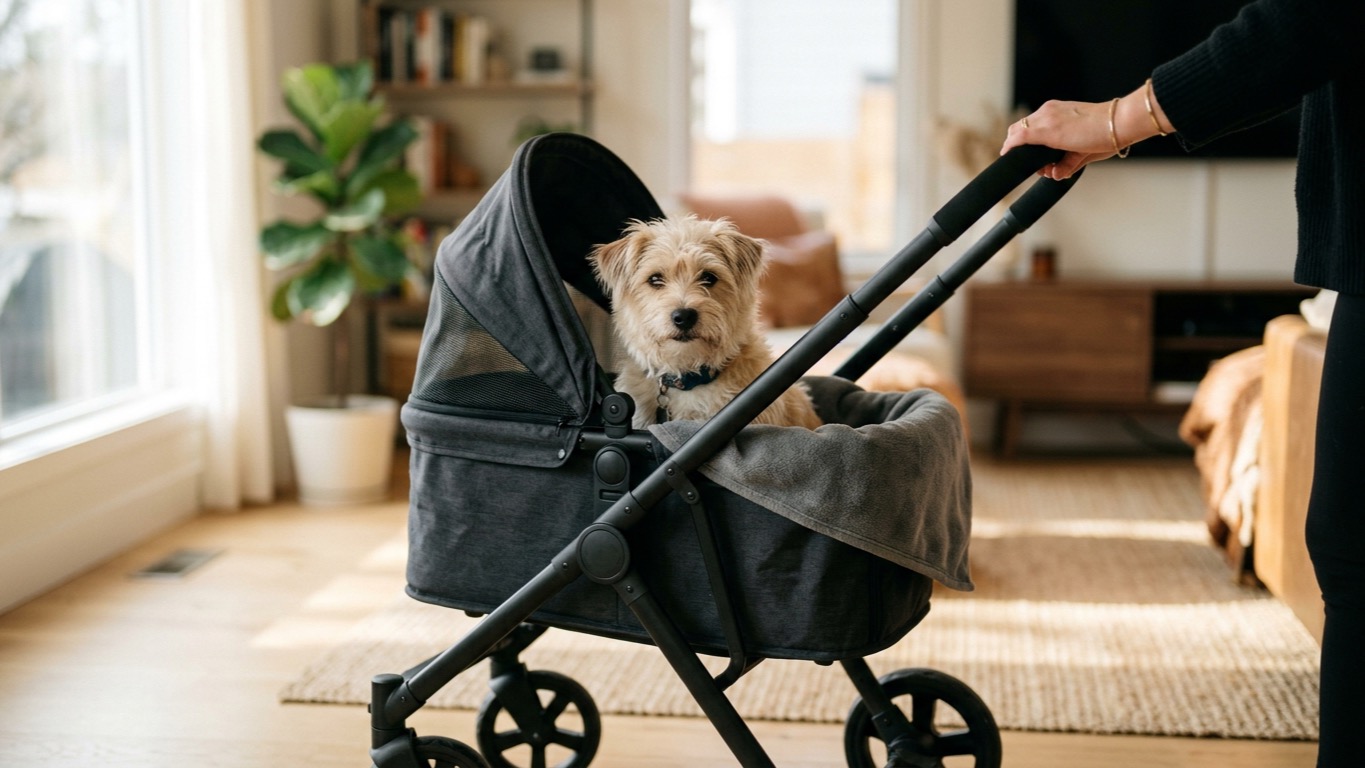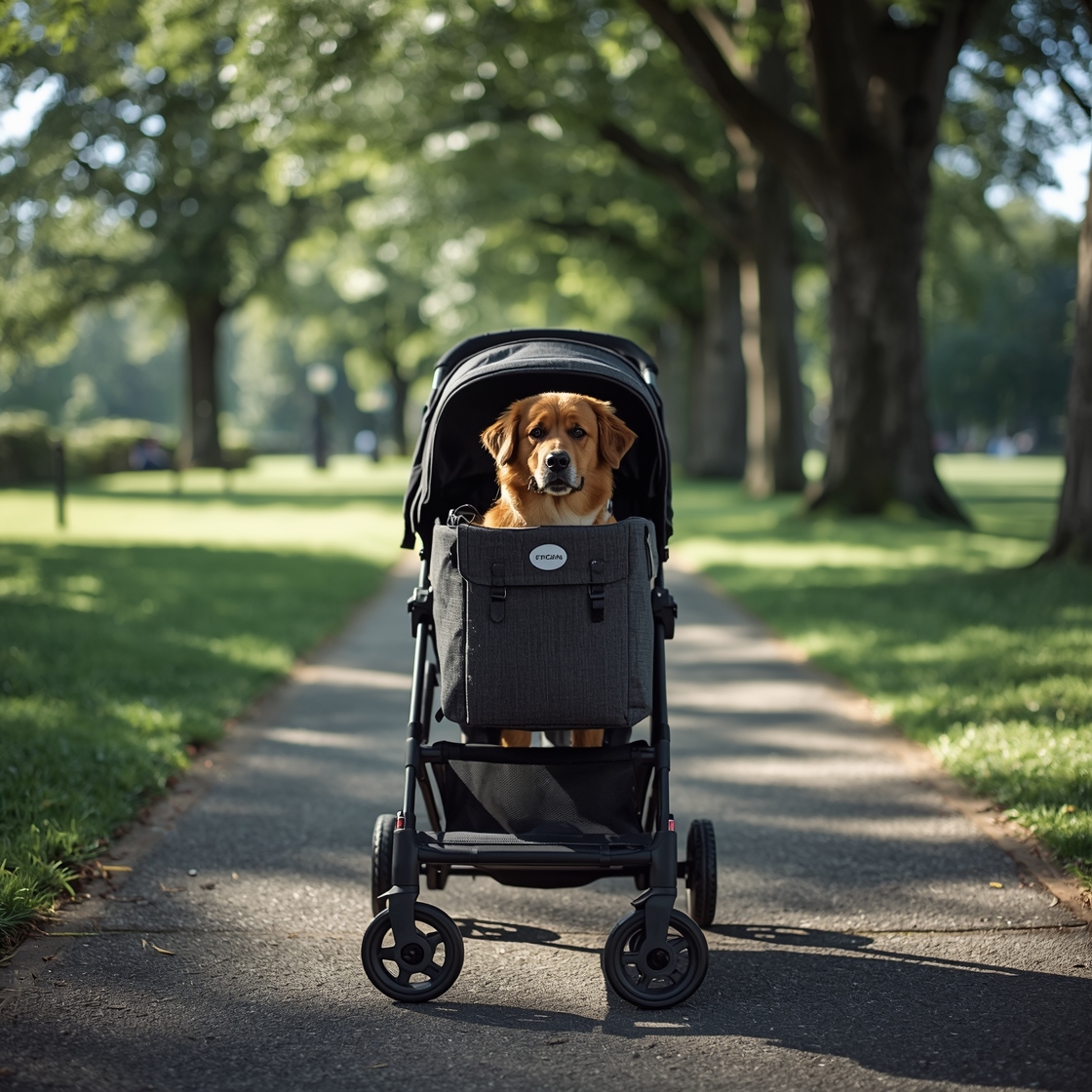
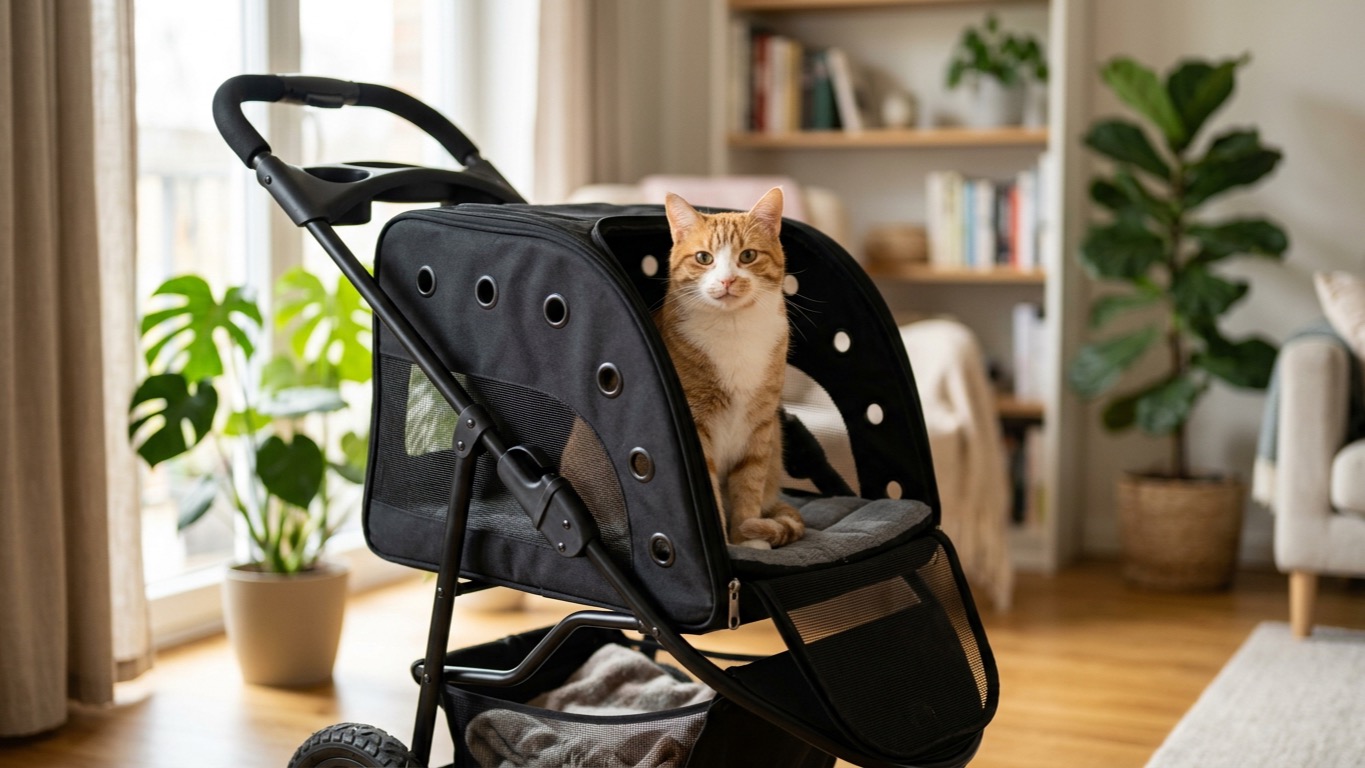
A true cat stroller with removable carrier is a 2-in-1 system: a wheeled frame plus a zip-off or clip-off soft pod you can lift into a café, car, or clinic without transferring a wary cat. On the the seven frames on this page run $57.83–$179.99, a 3.1× spread, with a median of $89.99 and a mean of $94.17. The practical sweet spot is $90–$120, where two of the seven listings (Pawccoli at $92.99, Zoosky at $99.99) combine a genuine detachable pod with stabler wheels. One listing on this page — the ZENY at $58.39 — is a wheeled crate, not a 2-in-1: public product notes and listing photos show no detachable carrier bag.
If you searched for a cat stroller with removable carrier and every result looked interchangeable, that is the category problem. Marketplace titles reuse "removable," "detachable," and "3-in-1" as keywords. A $58 one-piece mesh box will appear next to a $180 frame with a zip-off pod that actually lifts, and the photographs are similar enough that most buyers notice the difference only at a clinic doorway.
This guide is organized so you can tell those products apart before you buy. First the listing review tables. Then seven product notes written against the detach test, not against star averages. Then the apartment protocol, the heat rules, and the airline reality: a stroller adjective is not an IATA approval.
The 30-Second Verdict
- If you need a true 2-in-1: Zoosky ($99.99) or Pawccoli ($92.99). Both sit in the sweet spot and both advertise a pod that leaves the frame.
- If you will carry two small cats: the Double at $89.99 — confirm per-pod weight, not the marketing photo.
- If you want the heaviest hardware on this page: Bicystar at $179.99. You are paying roughly 2.0× the page median for a thicker frame and a detachable carrier with an interior harness.
- If you only roll on smooth sidewalks and will never lift the cabin off: VEVOR ($57.83) or AODI ($79.99) can work as wheeled crates. Do not expect café-door convenience.
- Skip for this keyword: ZENY ($58.39) unless you have abandoned the removable-carrier requirement. It is a mesh cage on wheels.
- The single check that decides it: can one adult park the frame, release the pod, and walk through a 32-inch doorway in under 30 seconds without unzipping the cat onto the floor?
Proprietary Tables
Built from published listing specifications and listed prices for the seven frames on this page, plus the desk's standing rules for wheeled feline transport. These are shopping heuristics, not engineering certifications.
Table 1 — Price bands for a cat stroller with removable carrier
| Band | Price range | Page examples | Count | Desk expectation |
|---|---|---|---|---|
| Budget frame | $57.83–$58.39 | VEVOR, ZENY | 2 | City sidewalks; confirm whether the cabin detaches at all |
| Mid four-wheel | $79.99–$89.99 | AODI, Double | 2 | Better stance; Double is the two-pet fork |
| Sweet spot | $92.99–$99.99 | Pawccoli, Zoosky | 2 | Removable pod + stabler wheels show up together |
| Premium detach | $179.99 | Bicystar | 1 | Thicker fabrics, interior harness, heavier fold |
Desk stat: Page median $89.99; page mean $94.17. The gap between the budget pair median ($58.11) and the Bicystar ($179.99) is $121.88 — that is the real cost of a lockable-feeling chassis plus a pod you can actually lift.
Table 2 — Removable-carrier pass/fail
| Checkpoint | Pass | Fail |
|---|---|---|
| Release mechanism | Zip, buckle, or clip; one-person lift in under 30 seconds | Cabin sewn or bolted to the frame |
| Carrier base | Semi-rigid panel that stays flat on a café chair | Soft floor tacos when lifted |
| Mesh airflow | Openings on three or more sides | One stuffy window |
| Internal tether | Clip for a harness | No tether (escape at the first unzip) |
| Frame fold | One-hand or a labeled latch | Fights you at every curb |
| Standalone use | Pod works as a soft crate for a short sit | Pod collapses without the frame |
Table 3 — Cat weight versus stroller class
| Cat + gear weight | Stroller class | Notes |
|---|---|---|
| Under 12 lb | Compact 4-wheel | Most removable pods on this page are sized here |
| 12–18 lb | Mid chassis | Check the manufacturer pet limit, not the lifestyle photo |
| Two cats / large | Double or XL | Confirm per-pod limits; combined ratings hide the weak pod |
| Over 20 lb or a Maine-coon-class cat | Verify cabin floor length | Many "cat" listings are small-dog cabins with a new title |
Table 4 — Detach-use cases that actually justify the keyword
| Use case | Why the pod must leave the frame | Frame-only alternative fails when |
|---|---|---|
| Clinic lobby | Elevators and exam-room doors are not stroller-width | You wrestle a full chassis through a 32-inch door |
| Café or shop | Staff will accept a bag on a chair, not a wheeled cage in the aisle | Wheels pick up grit and the cabin never leaves the sidewalk |
| Car transfer | A pod on a seat is a known shape; a full stroller is not | Trunk fold fights you in a rainstorm |
| Apartment elevator | One adult, one free hand for buttons | Fixed rears cannot turn in a small cab |
| Overnight sit | Pod as a familiar crate | Cat associates the whole noisy frame with every outing |
Table 5 — Wheel and latch wear model
| Part | Inspect | Retire when |
|---|---|---|
| Swivel forks | Every 4 weeks | Lateral play over about 3 mm |
| Cabin zips | Each outing | Teeth skip or tape tears |
| Carrier clips | Each detach | Cracked male tab |
| Parking brake | Each stop | Lever slips under a light push |
| Wheel bearings | After sand or rain | Gritty spin or squeal |
| Fold latch | Each fold | Auto-lock that pinches or fails to catch |
Table 6 — Ten-day introduction plan
| Days | What happens | Success signal |
|---|---|---|
| 1–2 | Treats in a parked pod; frame folded away | Cat eats inside without freezing |
| 3–4 | Short indoor rolls on quiet floors | Cat stays down, no frantic digging |
| 5–6 | Building hallway and elevator only | Self-loading or calm lift |
| 7–8 | One quiet block at off-peak | Recovery to baseline within 10 minutes home |
| 9–10 | Outdoor sit-spot for 3 minutes, then home | Food still accepted in the parked pod that evening |
Skip festivals, dog parks, and fireworks as session one. Changing three variables at once (new pod, new route, new dogs) makes the failure unreadable.
How We Evaluated These Frames
The ordering below is a shopping sequence, not a quality ladder. Budget frames come first because that is where most cat stroller with removable carrier searches land. Then the sweet-spot 2-in-1s, then the two-pet fork, then the premium detach.
For each listing we read the published specification block, compared the stated mechanism against Table 2, and noted recurring themes in public owner commentary — zip quality, wheel squeak, fold fights, and whether the cabin actually lifts. Pet strollers are not covered by ASTM F2050, the infant-stroller performance standard; treat "jogging" and "all-terrain" adjectives as marketing unless the listing shows a lockable front wheel and a hand brake.
Top Picks: Cat Stroller with Removable Carrier — Reviewed Products
1. VEVOR Pet Stroller
Best for: a first wheeled crate on a smooth sidewalk when you are not yet sure the cat will tolerate motion.
At $57.83 this is the cheapest frame on the page and a fair entry if your honest use case is "roll to the end of the block and home." Owner-report patterns in this band are consistent: the fold is simple, the ventilation is the weak point, and nervous cats run out of air before they run out of patience. That is a listing-class problem, not a VEVOR-specific scandal — budget cabins often put mesh on one long side and solid fabric on the rest.
The detach question is the one to settle in the listing images before you click. Some VEVOR revisions include a lift-off cabin; some are one-piece. If the photographs never show the cabin sitting on a chair by itself, assume it does not leave the frame. At this price that can still be a useful purchase — just not a cat stroller with removable carrier.
Pros: Lowest listed price on this page; simple fold; enough of a frame to test whether your cat will ride at all.
Cons: Limited ventilation openings in typical configurations; zip and wheel quality are the usual budget failure points; detach is not guaranteed across listing revisions.
2. ZENY Pet Stroller
Best for: apartment sidewalks when you have dropped the removable-carrier requirement and want mesh volume.
At $58.39 this sits $0.56 above the VEVOR and occupies the same budget band. The public product notes are unusually honest for the keyword: owners like the airy mesh cage and the lightweight aluminum feel on city pavement, and they also note there is no detachable carrier bag. That single fact knocks it out of the title of this page.
If you keep it, treat it as a rolling crate. The mesh volume is a real advantage for a cat that overheats in a fabric box. The disadvantage is every doorway, elevator, and clinic lobby: you roll the entire chassis or you unzip the cat. Unzipping a startled cat onto a lobby floor is the failure this keyword exists to prevent.
Pros: Lightweight aluminum frame; spacious mesh cage; glides on smooth sidewalks.
Cons: No detachable carrier; fails the 2-in-1 test that defines this page; cabin-only transfers are not an option.
3. Zoosky 3 in 1 Pet Stroller with Removable Carrier
Best for: owners who will actually use backpack mode, not just read the words on the box.
At $99.99 this is the page's clearest 2-in-1 — the title states the removable carrier, and the 3-in-1 claim adds a backpack conversion. That conversion is the reason to pay $41.60 more than the VEVOR. A pod that becomes a backpack is how you take stairs, board a bus, or walk a gravel path the wheels cannot handle without transferring the cat.
The trade is bulk. Three functions share one set of hardware, and owner notes in this class consistently mention a heavier fold and a larger closet footprint than a single-function frame. Adjustable handle height is the human-side spec worth checking if two people of different heights will push.
Confirm the release in the listing video if one exists. "3-in-1" is a keyword; a zipper that fights you for forty seconds is a one-in-one that you will stop detaching by week two.
Pros: Stroller, carrier, and backpack in one purchase; adjustable handle height; sits in the $90–$120 sweet spot.
Cons: Heavier and bulkier than a single-function frame; conversion hardware adds failure points; street price drifts.
4. Pawccoli Pet Stroller for Small Dogs and Cats
Best for: a shy cat that needs a padded cabin more than a backpack strap.
At $92.99 this is $7.00 under the Zoosky and the other sweet-spot listing. The public notes emphasize extra cushioning and a removable carrier — the combination that matters for a cat that freezes on a hard plastic floor. Soft interiors do not make a cat like motion; they make the first parked-pod feeding sessions less of a cold box.
The recurring complaint in this class is wheel squeak on indoor floors. That is not a safety defect. It is a reason the introduction plan in Table 6 starts indoors: if the first sound the cat hears is a dry bearing, you have trained a fear of the frame rather than a fear of outdoors. A drop of manufacturer-approved lubricant on the axles after you confirm the warranty terms is a cheaper fix than returning the unit.
Pros: Padded interior; removable carrier included; $92.99 lands in the practical band.
Cons: Wheels can squeak on smooth floors; "small dogs and cats" sizing still needs a floor-length check for a long-bodied cat.
5. Double Pet Stroller for Dogs and Cats: Dog Stroller Foldable Travel
Best for: two small cats that already co-travel calmly — not two cats you hope will become friends in a moving box.
At $89.99 this sits $0.00 off the page median and is the only two-cabin fork on this list. Dual compartments solve a real problem: a tense pair forced into one pod will spend the outing on each other instead of the scenery. They also create a storage problem. Owner notes in this class are consistent — useful on the sidewalk, bulky in a closet, awkward in a compact-car trunk.
The specification that listings bury is per-pod weight. A combined "25 lb" rating can mean one 18 lb cat and one 7 lb cat, or two 12 lb cats, or a marketing total that assumes empty cabins. Read the per-side number. If it is missing, treat the Double as a two-kitten tool until you can confirm otherwise.
Detach: some doubles lift both pods; some lift neither. Apply Table 2 to each cabin independently.
Pros: Dual compartments; side-by-side fold story; priced at the page median.
Cons: Bulky when folded; per-pod limits are often unpublished; two stressed cats do not become one relaxed outing.
6. Bicystar Dog Stroller with Detachable Carrier
Best for: owners who will lift the pod weekly and want hardware that feels like it will survive that cycle.
At $179.99 this is 2.0× the page median and the only premium listing here. The public notes point at a heavy-duty frame and a detachable carrier with a safety harness — two features that match the actual job of a cat stroller with removable carrier. The interior harness is the one we care about most. Zips fail. A startled cat exploits a gap. A tether clipped to a well-fitted harness is the last line, and budget cabins often omit it.
You are not buying speed. Pet "joggers" at this price still need a lockable front wheel and a hand brake before they earn a running label, and most cat outings should not be runs. You are buying thicker fabric, a more credible detach, and a frame that is less likely to flex when the pod is off and you are carrying twenty pounds of cat plus carrier up a stoop.
Pros: Detachable carrier with an interior harness; heavier-duty frame; the only listing here that is priced like a travel tool rather than a toy.
Cons: $179.99 is steep if you stroll two blocks a month; heavier to lift into a trunk; cat-specific cabin height still needs a check against a large breed.
7. AODI Pet Stroller for Small Dogs and Cats with 4 Wheels
Best for: grass and broken sidewalk when you want four-wheel stance more than a backpack strap.
At $79.99 this sits between the budget pair and the sweet spot — $20.16 above the VEVOR, $13.00 below the Pawccoli. Four wheels are a stability story, not a jogging story. A wider stance helps on grass and brick; it also makes tight elevator turns worse. Compact folding is the other claim in this listing class, which matters more in a studio than on a trail.
Detach is again the photo test. Four-wheel frames in the $80 band sometimes include a lift-off cabin and sometimes do not. If your use case is park grass plus a clinic lift, confirm the pod. If your use case is a rolling crate for a cat that hates being carried, the four-wheel stance alone can be the purchase.
Pros: Four-wheel stability on uneven paths; compact fold; mid-budget price.
Cons: Limited color and revision variety; four wheels fight small elevators; detach must be verified, not assumed from the page title.
Comparison at a Glance
| Product | Approx. price | Who it suits | Watch-out |
|---|---|---|---|
| VEVOR Pet Stroller | $57.83 | First ride on smooth sidewalk | Ventilation and detach vary by revision |
| ZENY Pet Stroller | $58.39 | Mesh volume, no café lift | No detachable carrier |
| Zoosky 3 in 1 Pet Stroller with Removable Carrier | $99.99 | True 2-in-1 plus backpack | Bulk and weight |
| Pawccoli Pet Stroller for Small Dogs and Cats | $92.99 | Padded cabin, shy cats | Indoor wheel squeak |
| Double Pet Stroller for Dogs and Cats: Dog Stroller Foldable Travel | $89.99 | Two calm small pets | Folded bulk; per-pod limits |
| Bicystar Dog Stroller with Detachable Carrier | $179.99 | Weekly pod lifts, heavier hardware | 2.0× median price |
| AODI Pet Stroller for Small Dogs and Cats with 4 Wheels | $79.99 | Grass and brick stance | Elevator turns; confirm detach |
Browse more: See cat stroller with removable carrier on Amazon →
Why a Cat Stroller with Removable Carrier Beats a One-Piece Mesh Box
Cats tolerate motion differently than dogs. A dog will often self-load and watch the world. A cat treats the cabin as a den and treats every transfer as a capture. The removable pod is how you keep the den intact while the wheeled half stays on the sidewalk.
The sequence that earns the keyword: park, lock the wheels, release the pod, walk through the door, set the pod down, only then unzip. If any step requires unzipping first, you bought a wheeled crate.
A one-piece box can still be the right tool for a cat that only ever rolls in a quiet courtyard. It is the wrong tool for a clinic, a café, a rideshare, or a building with a small elevator. Those are the outings people imagine when they type this search.
The 30-Second Detach Test (PetBench Apartment Protocol)
Do this in the hallway before the return window closes.
- Fold and unfold the frame twice. If the auto-lock pinches or misses, the curb will be worse.
- Load the empty pod with a bag of rice equal to your cat's weight. Lift. The floor should stay flat.
- Time a cold detach: park, release, walk through a 32-inch doorway, set down. Desk pass: under 30 seconds, one adult, no tools.
- Sit the pod on a dining chair. If it tacos, the base is a fail for café and clinic use.
- Photograph the cat in the pod on day one and day seven. Fit photos settle size-chart arguments.
Keep the carton through the return window. Street prices and bundle contents on this page drift; a listing cue of $89.99 is not a promise.
Cabin Microclimate
Cats overheat quietly. Prefer mesh on three sides. In heat: shade parking, a privacy cover that does not seal airflow, outings under 20 minutes until self-loading is calm. Never leave a pod in a parked car. Cabin temperatures climb faster than owners expect; that is ordinary vehicle physics, and it is why veterinary organizations treat unattended pets in cars as an emergency rather than a judgment call.
| Goal | Move | Avoid |
|---|---|---|
| Privacy | Cover one long side | Full plastic rain bubble sealed shut |
| Cooling | Park in shade, keep mesh open | Noon sun "for vitamin D" |
| Rain | Vented rain cover | Trash-bag DIY with no vent |
| Night | Frame light so drivers see the silhouette | Dark fabric, no reflector, no handler light |
A clip thermometer on the cabin wall is optional. Watching the cat is not. Open-mouth breathing, frantic digging, or a sudden limp body are stop-the-outing signals, not "push through" signals.
Wheels, Zips, and the Parts That Actually Fail
Tiny plastic wheels chatter on brick and fatigue wrists. Larger front swivels help city cracks; locked fronts help a straight path. A parking brake that slips under a light push is a retire-or-return item — you will stop on a slope eventually.
Zips fail at the tape, not the pull. If teeth skip, stop using the cabin as a closed box until it is repaired. A harness tether inside is what makes a skipped zip a close call instead of a lost cat.
City grit shreds cheap bearings. Wipe wheels after sand or rain. That is maintenance, not a product defect.
Airline and Car Reality
IATA's Live Animals Regulations govern how airlines accept pets in cabin and as cargo. A stroller listing that says "travel" is not an approval. Soft-sided cabin carriers have published maximum dimensions that vary by airline and aircraft. Measure the pod, not the frame. If the pod is larger than the under-seat box your airline publishes, the stroller is a sidewalk tool and a different carrier does the flight.
In a car, an unsecured pod on a seat is an unsecured mass. Use a seatbelt pass-through if the carrier has one, or put the pod on the floor behind a seat. Do not let the full stroller roll in a cargo area unlatched.
Buyer Script at the Cards
- Confirm the detach mechanism in images or video.
- Write your cat's weight and the cabin floor length you need.
- Check folded dimensions against your closet or trunk.
- Only then compare the $58–$180 band cues on this page.
- If the cat refuses food in the parked pod across three evenings, fix desensitization before you spend up the price ladder.
A dedicated "stroller pouch" on the handle — spare zip pull, a photo of the fold latch, and a waste bag if a dog shares the outing — beats a kitchen drawer you cannot reach at the curb. Label the auto-lock with tape if it pinches. Urine that wicked into a foam base is a silent retire trigger; if the pod smells after a wipe-down, the foam is done.
Cleaning and Storage Without Killing the Frame
Wipe the cabin after every outing that included food or a clinic floor. A damp cloth and unscented soap beat a washing-machine cycle that warps a semi-rigid base. Air-dry fully before the next fold; trapping moisture in a closet is how mesh mildews. After sand or salt, spin each wheel by hand and wipe the forks. Store the frame folded with the latch engaged so it cannot spring open in a trunk. Store the pod unzipped so the interior dries. If two people share the stroller, put the fold photo on the handle — the second adult is who usually fights the latch.
When to Involve Your Veterinarian
If the outing is for illness, ask the clinic how they want the cat to arrive. A stroller does not replace a carrier the staff can place on an exam table, and it does not replace a stress plan. Sudden hiding, refusal to eat, or a change in litter habits after you start outings is a clinical question, not a wheel question.
We do not diagnose travel stress from a product page.
Frequently Asked Questions
What makes a cat stroller with removable carrier worth it?
The detachable pod. If the cabin does not lift off cleanly, you bought a wheeled crate. The worth shows up at the first doorway that is narrower than the wheelbase.
Can two cats share a cat stroller with removable carrier?
Only if the manufacturer rates the cabin for combined weight and the cats already co-travel calmly. Many doubles still need separate pods. A shared cabin is not a socialization plan.
Is a cat stroller with removable carrier safe on busy sidewalks?
Safer than a loose cat, not equivalent to a closed room. Use a wrist strap, lock wheels when stopped, harness-tether inside, and treat dogs and scooters as abort conditions if frantic digging starts.
How do I introduce a cat stroller with removable carrier?
Feed in the parked pod for several days with the frame folded away, then short indoor rolls, then hallway and elevator, then one quiet block. Table 6 is the whole protocol. Skip festivals as session one.
What wheels work best on a cat stroller with removable carrier?
Larger front swivels for brick; lockable fronts for a straight path. Tiny plastic wheels chatter and fatigue wrists. Four small wheels can still be worse than three larger ones.
Will dogs spook my cat inside a cat stroller with removable carrier?
Often. Cross early, cover the dog-facing mesh, abort if frantic digging starts. A cover is not a substitute for leaving.
Can I fly with the removable pod from a cat stroller with removable carrier?
Only if the pod's soft-sided dimensions match that airline's cabin pet rules for that aircraft. Stroller adjectives are not IATA approvals. Measure the pod and read the airline's current page.
Do I need a harness inside a cat stroller with removable carrier?
Yes. Use the interior tether every time. Zips fail; startled cats exploit gaps. Fit the harness in the apartment first.
Does a higher price mean a better cat stroller with removable carrier?
On this page, higher price tracks thicker fabric and a more credible detach more often than it tracks a better ride. The ZENY and VEVOR are $58-class frames; the Bicystar is $180. The $90–$120 pair is where the 2-in-1 job and the wheel quality overlap without the 2.0× premium.
Sources and Method
The these cat mobility listings is compiled from published Amazon listing specifications and listed prices for the seven frames on this page, captured in August 2026, plus the desk's standing detach and airflow heuristics for wheeled feline transport. The $89.99 median, $94.17 mean, 3.1× spread, $121.88 budget-to-premium gap, and the 2.0× Bicystar-to-median ratio are calculated directly from the listed prices in the comparison table. The 30-second detach threshold and the 32-inch doorway figure are apartment-protocol heuristics, not measured results from these SKUs.
IATA Live Animals Regulations are the primary reference for in-cabin pet acceptance; they do not certify strollers. ASTM F2050 applies to infant strollers, not pet frames — we name it only to say pet listings are outside it. Nothing here has been reviewed or endorsed by a veterinarian. Prices and specifications change; verify on the live listing before purchase.