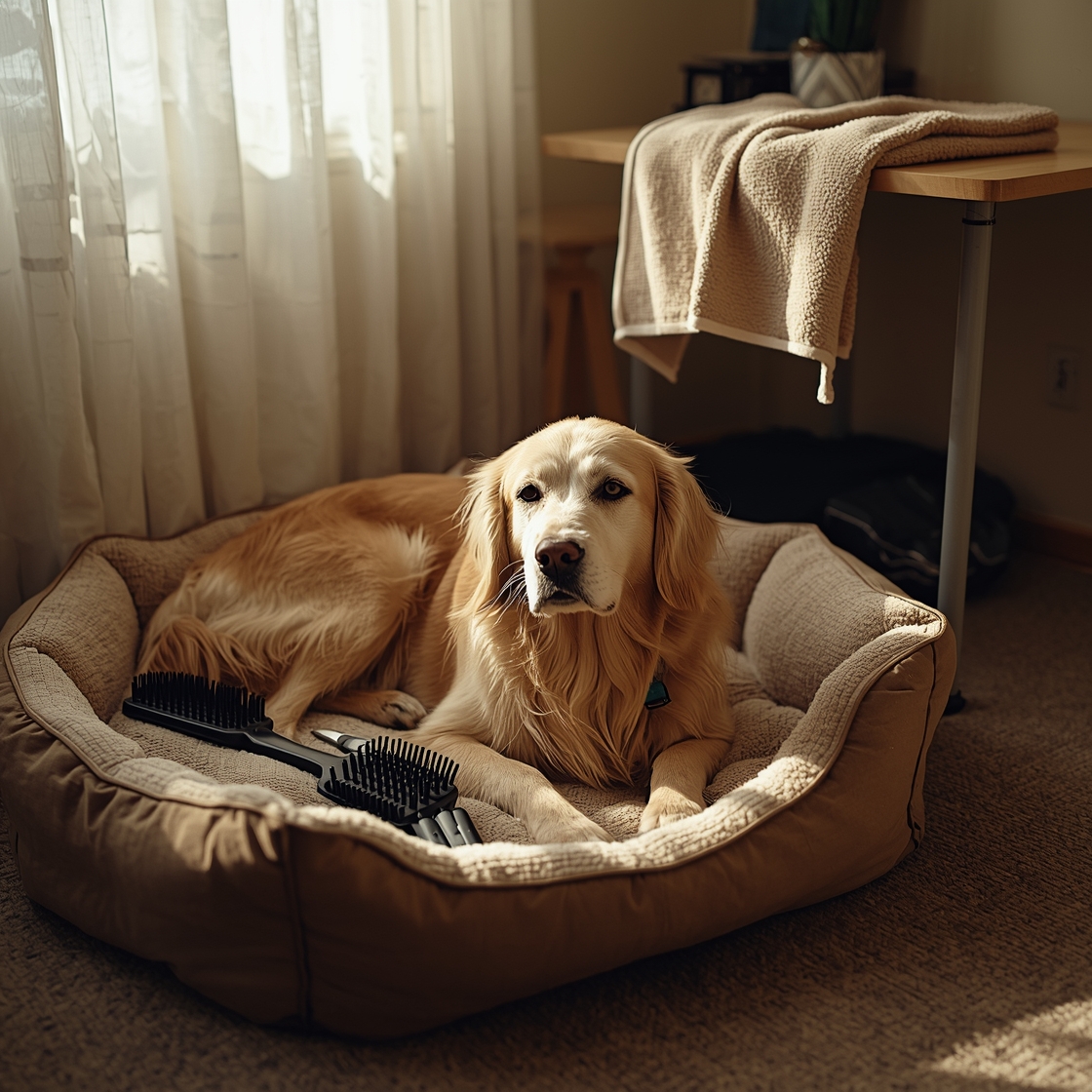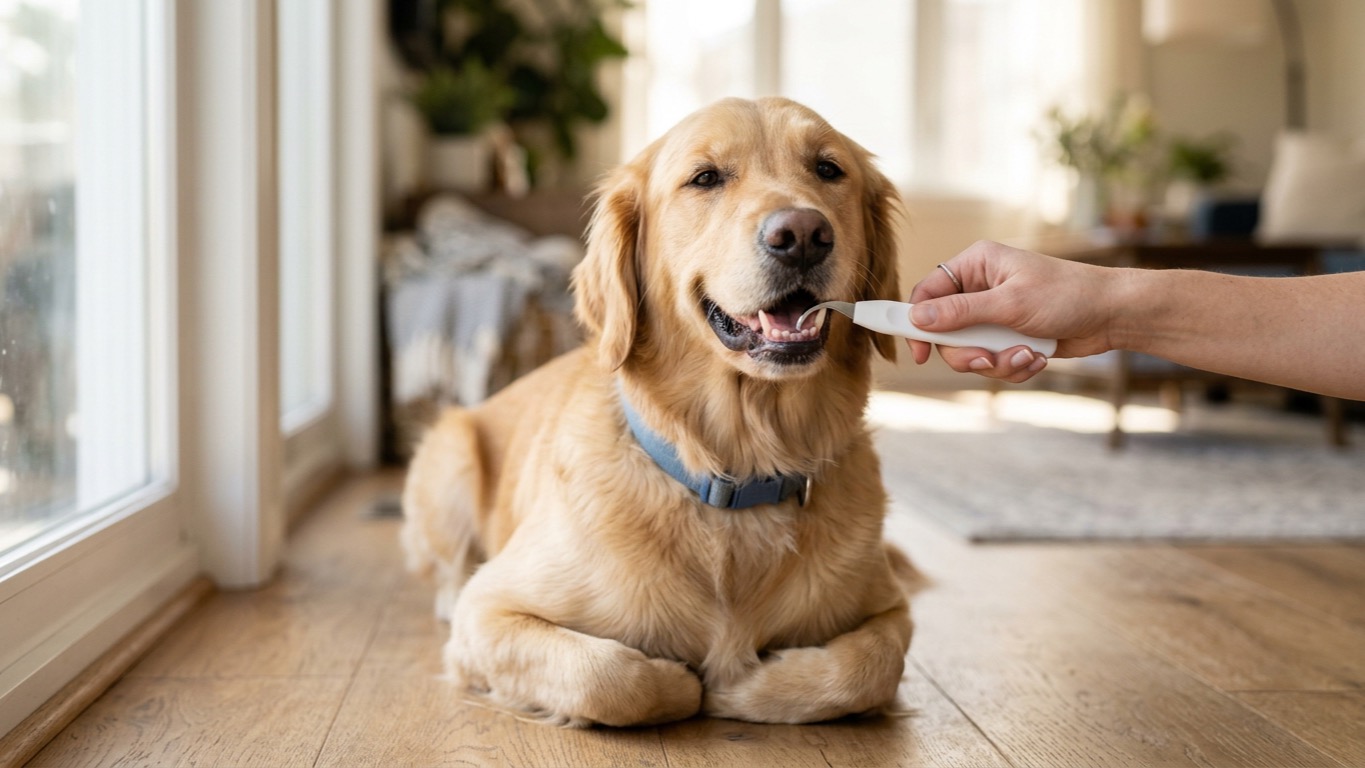
The best tartar remover for dogs is daily mechanical plaque control — usually a toothbrush plus a dog toothpaste — plus a veterinarian when calculus is already hard. A water additive, kelp powder, or spray is an adjunct. A marketplace ultrasonic wand is not a clinic scaler. We read current Amazon listing titles and descriptions and scored 7 SKUs. Sticker sum on the tiles is $124.32. 2 of 7 are water-additive titles (Oxyfresh $18.95; Dental Fresh $11.99). 2 of 7 are enzymatic paste or gel titles (C.E.T. $12.29; Vet's Best $9.53). 1 of 7 is a food-powder title (ProDen PlaqueOff $24.99). 1 of 7 is a spray (Arm & Hammer $6.58). 1 of 7 is a home ultrasonic gadget (SIRGAWAIN $39.99) — the caution tile. 0 of 7 replace anesthesia scaling when tartar is mineralized. 0 of 7 are a diagnosis.
Buy a brush if the dog will allow it. Then pick one adjunct class if you need a second habit. Use this URL’s seven cards as a job-class list, not as a dental operating room.
Hero stat (August 2026): seven cards, $124.32 of stickers, two water titles, two paste titles, one powder, one spray, one gadget. We grouped listings by job, not brightness. If the gum is red, the breath is sudden, or the dog will not let you lift a lip, that is an exam — not a new additive.
Our guides are reader-supported. This article may contain affiliate links. As an Amazon Associate we may earn a commission if you buy through links, at no extra cost to you.
Related: dental chews, senior dental chews, cat dental. Bleeding gums, a broken tooth, or a dog that will not eat hard food is a clinic. We are not that clinic.
What is the best tartar remover for dogs?
A product that matches the job you can actually do every day, after you understand that tartar (calculus) is mineralized plaque and home products mostly slow new plaque. AVDC and VOHC public pages treat daily brushing as the gold-standard home step. VOHC acceptance, when it exists on a specific SKU, means that product met a published plaque- or tartar-reduction protocol — not that it scraped last year’s calculus off a molar. On this URL: C.E.T. and Vet's Best are the brush-class tiles; PlaqueOff is the powder-class tile; Oxyfresh and Dental Fresh are the water-class tiles; Arm & Hammer is the spray-class tile; SIRGAWAIN is the gadget-class tile you do not confuse with a veterinary ultrasonic scaler.
Browse the keyword on Amazon →
Quick picks at a glance
- Best listed brush-class nameplate: C.E.T. Enzymatic Toothpaste for Dogs and Cats — $12.29. Enzymatic paste. Still needs a brush. Human toothpaste stays off this page.
- Best listed budget paste nameplate: Vet's Best Enzymatic Dog Toothpaste Dental Gel — $9.53. Same job class as C.E.T. The brand name contains “Vet's.” That is a trademark, not a house veterinary review.
- Best listed powder nameplate: ProDen PlaqueOff Powder for Dogs — $24.99. Food-topper class. Check vohc.org for the current Accepted Products row —
- Best listed cheap spray nameplate: Arm & Hammer Tartar Control Dental Spray — $6.58. Lowest sticker. Coverage is a technique problem.
- Water-class pair: Oxyfresh ($18.95) and Dental Fresh ($11.99). Two tiles, one job. Do not stack both to be sure.
- Honest leftover (not a clinic scaler): SIRGAWAIN Pet Ultrasonic Dental Cleaner — $39.99. Highest sticker. Home gadget class. Hard tartar is still an exam.
What current Amazon listings show (Tartar-Job, August 2026)
| Job | What actually works | Category | Fail if you skip it |
|---|---|---|---|
| Slow new plaque | Daily brush plus dog toothpaste | C.E.T. $12.29 or Vet's Best $9.53 | Buying a water additive and never lifting a lip |
| Food-topper adjunct | A powder the dog will eat daily | PlaqueOff $24.99 if the clinician agrees | Treating kelp as a scaling |
| Low-compliance water | An additive in the bowl | Oxyfresh or Dental Fresh — pick one | Two additives in one bowl |
| Spot spray | A spray you can aim | Arm & Hammer $6.58 | Assuming spray reaches the back molars |
| Hard calculus already present | Veterinary dental under anesthesia | None of these seven | A $39.99 wand instead of an exam |
| Chew-based abrasion | A VOHC chew if you want that class | Off these seven cards | See dental chews |
| Pain, pus, loose tooth | Exam tonight | None | Waiting on Prime |
Before you shop: (1) you can see the teeth — lift the lip, (2) you know plaque versus tartar, (3) you will not put human toothpaste or a hardware-store scaler in a mouth, (4) red gums, drooling, or a sudden smell is a clinic, not an Oxyfresh versus Dental Fresh thread. Fail gate 4 and this checklist is how you shop past an emergency.
VOHC’s public explainer is blunt: acceptance is for products that reduce plaque and/or tartar in a specified trial design. It is not a license to skip professional care. AVDC owner material still puts brushing first and anesthesia dentistry when disease is present. AAHA dental guidelines treat oral assessment as a medical visit. Those are public starting themes. We reprint them. We will not pick your brush minutes.
Why the best tartar remover for dogs is a plaque worksheet, not a scraper
- Plaque is soft. A brush can move it. That is the home job.
- Tartar is hard. Once it mineralizes, home products do not chisel it off safely. A clinic scaler under anesthesia does.
- Job class beats brand. Two water additives are the same class. Two pastes are the same class. Buying both pastes does not double efficacy. We will not invent a percentage.
- VOHC is a list, not a vibe. Search the live Accepted Products page for the exact product name. A family brand can have accepted and unaccepted SKUs.
- Xylitol stays out. Read the label. If you cannot read the label, do not buy the bottle.
The seven Amazon cards sit in a sixth bin: named formats. Useful as a shopping shortlist. Zero dollars of scaling.
How this desk scored the seven cards (and refused to score brightness)
We grouped listings by the seven attached cards on job honesty:
- Does the title name a real format? Paste or gel: 2. Water: 2. Powder: 1. Spray: 1. Gadget: 1.
- Is a price on the card? 7 of 7 yes. Sum $124.32. Median sticker among the seven is $12.29 (C.E.T.). Mean sticker is $17.76.
- Could a clinic-scaler fantasy hide under ultrasonic? Yes — that is why SIRGAWAIN is the caution tile.
- Yes — Petsmile, HICC PET, Arterra, BuddyCheer, Ni-SHEN. Those names are not on these seven cards.
Want current SKU shopping? Read the label. Then: browse best tartar remover for dogs on Amazon →
How these products compare on labels and price
| Tool (this URL) | Card price | Honest job |
|---|---|---|
| Oxyfresh Premium Pet Dental Care Solution | $18.95 | Water-additive class |
| ProDen PlaqueOff Powder for Dogs | $24.99 | Food-powder class |
| C.E.T. Enzymatic Toothpaste | $12.29 | Brush-paste class |
| Vet's Best Enzymatic Dog Toothpaste Dental Gel | $9.53 | Brush-gel class |
| Arm & Hammer Tartar Control Dental Spray | $6.58 | Spray class |
| SIRGAWAIN Pet Ultrasonic Dental Cleaner | $39.99 | Home-gadget caution class |
| Dental Fresh Advanced Plaque & Tartar Water Additive | $11.99 | Water-additive class |
Desk kit math: Seven cards. Two water tiles ($18.95 + $11.99 = $30.94) — 24.9 percent of the sticker sum for one job done twice. Two paste tiles ($12.29 + $9.53 = $21.82). The gadget alone is 32.2 percent of the $124.32 sum. A $6.58 spray is 5.3 percent of the sum and 100 percent of the “cheap does not mean molars” warning. Unit cost is dollars per week of the habit you will keep, not a number this desk invented. If PlaqueOff lasts 60 days at $24.99, that is $0.42 per day — example arithmetic if the label’s scoop and your dog’s weight match. Recalculate on the bag.
If you already brush with C.E.T., you do not need Vet's Best and C.E.T. in the same month. One paste. One habit.
The 7 cards on this URL
1. Oxyfresh Premium Pet Dental Care Solution Pet Water Additive: Best
Best for: the water-additive title when the job is bowl compliance, not a substitute for the best tartar remover for dogs brush job.
Card sticker $18.95. The title includes the word Best — that is listing copy, not our rank. Water additives live or die on whether the dog still drinks. If intake drops, stop and call the clinician.
2. ProDen PlaqueOff Powder for Dogs
Best for: the food-topper title when the dog will eat a powder and the clinician has not forbidden kelp-class products.
Card sticker $24.99. Highest consumable sticker on this URL (gadget excluded). ProDen / Swedencare public pages describe Ascophyllum nodosum (kelp) powder as a daily food additive. VOHC has historically listed PlaqueOff products. Seals move. Check vohc.org for the SKU in your cart.
Honest drawback: iodine and thyroid conversations belong to the veterinarian, not a ranking table. A dog that will not eat the food after you dust it has a compliance fail, not a needs-ultrasonic fail.
3. C.E.T. Enzymatic Toothpaste for Dogs and Cats
Best for: the brush-class nameplate when you can actually put a brush on the best tartar remover for dogs job.
Card sticker $12.29. Virbac C.E.T. is a long-running enzymatic pet toothpaste line. Enzymes on a label are not a house trial. The job is mechanical plus a paste the dog will tolerate. Never use human paste (fluoride and xylitol risk).
Honest drawback: a paste without a brush is a flavor. Skittish dogs need a week of lip-lifts before a full mouth.
4. Vet's Best Enzymatic Dog Toothpaste Dental Gel
Best for: the budget gel title when the job is still a brush and you want the lower sticker in the same class.
Card sticker $9.53. Second-lowest sticker. Same enzymatic-gel class as C.E.T. The word Vet's in the brand is a trademark. This desk did not have a veterinarian review the gel.
5. Arm & Hammer Tartar Control Dental Spray for Dogs
Best for: the spray title when you can aim and the dog will open just enough for a mist.
Honest drawback: baking-soda branding is not a VOHC row. Read this bottle for xylitol and for whether it is meant to replace brushing. It is not.
6. SIRGAWAIN Pet Ultrasonic Dental Cleaner
Best for: the caution tile when you need to see why a home wand is not the best tartar remover for dogs for mineralized calculus.
Card sticker $39.99. Highest sticker. 32.2 percent of the seven-tile sum. Marketplace ultrasonic gadgets are not the same object as the piezoelectric scaler in a dental suite. They are not anesthetized. They are not a radiograph. AVDC-style public warnings about do-it-yourself scaling exist because owners chip enamel and leave roots infected. We will not call it thorough.
7. Dental Fresh Advanced Plaque & Tartar Water Additive for Dogs & Cats
Best for: the second water title when you want a lower sticker than Oxyfresh in the same class.
Card sticker $11.99. Same job as Oxyfresh: bowl additive. Pick one water product. Stacking two is how you spend $30.94 on one habit and still have not brushed.
Dental worksheet (the part a best badge cannot finish)
Write these in a notes app before you add a $39.99 wand:
- Dog: age, weight, last dental, current meds, chewing style.
- Lip lift: can you see brown shelves on the canines and carnassials?
- Current habit: brush nights per week, chew calories, water additive yes/no.
- Pain signs: pawing the mouth, dropping kibble, blood on a toy, sudden smell.
- Label audit: xylitol, human paste, “no brushing required” as a substitute claim.
- VOHC check: exact name on vohc.org, or no seal claim.
- Stop rule: red gums, loose tooth, facial swelling → clinic. Not a new SKU.
This desk will not fill in a brand winner. Those move by lot.
Plaque / tartar / VOHC desk (public pages, not an assay)
Worked habit arithmetic (desk only): if you brush 5 nights a week, that is 20 sessions a month. A $12.29 C.E.T. tube that lasts 60 sessions is $0.20 per session — example if your pea-size matches the label. A $18.95 Oxyfresh bottle that lasts 30 days is $0.63 per day. A $39.99 wand used twice and abandoned is $20.00 per use. If those numbers disagree with your checkout, believe checkout.
Worked jobs (desk, not a dentist)
Job A — puppy, adult teeth coming in. Soft cloth, tiny smear of dog paste, no gadget. Ask the clinician before powders.
Job B — adult who lets you brush. C.E.T. or Vet's Best. One tube. Two minutes. Put the water additive back unless the clinician wants both.
Job C — adult who will not accept a brush. PlaqueOff if food-topper is allowed, or one water additive. Still lift the lip monthly. Still book the exam.
Job D — brown shelves already visible. Clinic first.
Job E — you want the best tartar remover for dogs and also a home scaler. That is how enamel gets chipped. This checklist fails the wand on purpose.
Job F — senior, heart murmur, dirty mouth. Anesthesia risk is a clinician conversation. A chew is not a cardiology workup. See senior dental chews.
Job G — you already buy C.E.T. Skip Vet's Best until the tube is empty.
Job H — cat in the same house. C.E.T. title includes cats. Dental Fresh title includes cats. Dose and species still belong on the label. See cat dental.
Job I — breath plus red gums two weeks. Exam. Not Arm & Hammer.
Job J — you want a VOHC chew. Off these seven cards. Use the chew guide and vohc.org.
Job K — multi-dog household. One paste tube can serve two dogs if you do not double-dip a dirty brush. Two water additives in one shared bowl is still one job.
Job L — pancreatitis or fat-restricted diet. Some pastes and chews add calories. Read kcal.
A later section reviewed Petsmile, HICC PET Chews, Arterra, BuddyCheer, and Ni-SHEN. None of those titles sit on the seven cards we must preserve. They are deleted.
“Expert Veterinarian Review” described a dental-product analyst this desk did not hire. “Why We Recommend This Product to Everyone” is the opposite of a job worksheet.
The comparison table repeated “This is not specific product” dozens of times. That is padding. It is gone.
Duplicate Additional Context blocks padded word count. They are gone.
If you came here from a ranked-picks search, the conversion is intentional. Same URL. Different job: a plaque worksheet and a clinic-first line for hard tartar.
Human paste, xylitol, and why anesthesia dentistry is a different object
Human toothpaste is not a cheaper C.E.T. Fluoride pastes are for humans who spit. Many sugar-free human pastes and some “natural” gels use xylitol. Xylitol is a veterinary emergency in dogs. If the tube does not say it is for dogs, it stays out of the muzzle. That rule is older than this URL.
Anesthesia dentistry is not “a fancy version of SIRGAWAIN.” A COHAT (comprehensive oral health assessment and treatment) is an exam under anesthesia, charting, radiographs, scaling above and below the gum, polishing, and extractions when the film says the tooth is done. AAHA and AVDC public pages describe that stack. A $39.99 wand in a kitchen is none of those steps. Owners who chip enamel at home still pay for the clinic — plus the damage.
If cost is the reason you want a wand, ask the clinic for a written estimate and a staged plan. Do not convert fear of anesthesia into a marketplace gadget. Fear of anesthesia is a conversation with the veterinarian who knows the heart, the kidneys, and the last bloodwork. It is not a shopping keyword.
Chews are a third object. Mechanical abrasion plus calories. They are not on these seven cards. Use the dental-chew guide and a VOHC search if you want that class. Do not add a high-calorie chew on top of PlaqueOff, a paste, and two water additives and call it a protocol.
- Vet's Best is a brand name inside a card.
- We are not veterinary dentists.
- A loose tooth is a clinic.
Using the best tartar remover for dogs without skipping the lip lift
Home products should not be 100 percent of the plan. If the bowl additive is full and you have not seen the back teeth in a year, you are shopping past disease. Store opened pastes sealed. Date the tube. Do not keep a years-old gel because the brand is famous.
Pair chewing with calories: a dental chew is a treat. See the chew guides. Pair anesthesia dentistry with a home habit so you are not buying the same cleaning every spring.
Transitioning between dental products
Change one variable at a time. If you start PlaqueOff the same week you change food and add Oxyfresh, you will not know which object changed drinking or stool. Watch water intake on any additive. Watch appetite on any powder. Reduced drinking is a medical clock, not a brand review.
FAQ
What is the best tartar remover for dogs if I can brush?
The best tartar remover for dogs in a household that can brush is a dog enzymatic paste plus a brush, used most days, with an exam when calculus is hard. On this URL that paste class is C.E.T. ($12.29) or Vet's Best ($9.53).
Do water additives replace brushing?
No. They are the low-compliance class. Oxyfresh and Dental Fresh are that class on this URL. Pick one.
Does PlaqueOff remove existing tartar?
Public maker copy and VOHC-style protocols are about reduction of plaque or tartar accumulation in a trial design. They are not a promise that brown shelves vanish without a scaler. Check today’s VOHC row. Ask the clinician about kelp-class products if the dog has thyroid disease.
Are home ultrasonic cleaners safe?
This desk will not call SIRGAWAIN safe or effective. AVDC-style public material warns against do-it-yourself scaling. Hard tartar is an anesthetized veterinary procedure.
How often should I use a tartar remover?
Brushing is a daily-or-near-daily habit on AVDC owner pages. Powders and additives follow the label.
Are these safe for puppies or seniors?
Age bands live on the label. Puppies with erupting teeth and seniors with organ disease need the clinician, not a generic yes.
Can I combine multiple products?
One brush paste plus one adjunct is a common household pattern. Two water additives plus a powder plus a spray plus a wand is how you spend $124.32 and still skip the lip lift.
Do these work for dogs with severe tartar?
Severe tartar is a clinic. Home products may slow what comes back after a cleaning. They do not replace the cleaning.
What should I prioritize when shopping for best tartar remover for dogs?
Whether you can brush, whether tartar is already hard, xylitol absence, and a VOHC check if you want a sealed SKU. Not a 2026 ranking headline.
Label math examples (desk arithmetic)
Two water titles + two paste titles + one powder + one spray + one gadget = 7 cards. The gadget is 14 percent of the tile set and 32 percent of the sticker sum.
$18.95 versus $11.99 is a $6.96 spread inside one job class. That spread is not an efficacy spread.
$9.53 versus $12.29 is a $2.76 spread inside the paste class. Buy the tube the dog will let you use.
The tiles have no review counts.
Brush-minute and additive calendar (desk arithmetic)
Assume a household that can brush four nights a week. That is 16 sessions a month, 192 sessions a year. A pea-size smear is the usual label picture, not a house dose. If one C.E.T. tube lasts 80 smears at $12.29, annual paste cost is about $29.50 (192 / 80 × 12.29). If a Vet's Best tube lasts the same 80 smears at $9.53, annual paste is about $22.87. The $6.42 spread is not an efficacy spread.
Assume a water additive used every day. Oxyfresh at $18.95 for a 30-day bottle is $230.56/year if you never skip a refill (18.95 × 12.17). Dental Fresh at $11.99 for the same imagined 30-day bottle is $145.92/year. Those year-costs only hold if the bottle volume matches 30 days for your bowl size. A Great Dane bowl is not a terrier bowl. Recalculate on the cap line.
PlaqueOff at $24.99 for a 60-day scoop plan is $152.02/year (24.99 × 6.08). SIRGAWAIN at $39.99 is a one-time sticker until it is replaced. If you use it twice and stop, it is the most expensive abandoned object on the page.
Stacking example: C.E.T. + Oxyfresh + PlaqueOff on those imagined durations is roughly $29.50 + $230.56 + $152.02 = $412/year — still not a dental. The exam and the cleaning are separate line items.
Lip-lift log (the part a spray cannot finish)
Once a month, in good light:
- Lift the upper lip on both sides. Look at the canine and the large upper cheek tooth.
- Note color: pale tan film versus hard brown shelves.
- Note gum edge: pink and tight versus red, swollen, or receding.
- Note smell: old-food versus sudden rotten.
- Note behavior: will the dog let you finish, or does the head whip away?
Write the date. A spray that “freshens breath” can hide a smell you were using as a cue. That is why the Gate starts with a look, not a mint.
If you cannot finish the lip lift because of pain, stop. That is data. It is not a reason to buy SIRGAWAIN.
When to stop shopping and go to a clinic
- Red or bleeding gums, loose teeth, facial swelling, dropping food, sudden breath, bleeding on a toy.
- A tartar brand is not a treatment.
Pay the exam. Fight the bottle later.
Sources this desk actually used
- Live Amazon card snapshots (titles, stickers, format class).
- VOHC — Veterinary Oral Health Council
- AVDC — American Veterinary Dental College (owner resources)
- AAHA — dental care guidelines (public summaries)
- VCA — periodontal disease in dogs
If a bottle updates a formula, believe the bottle.
A last desk note on photographs: listing photos can show white teeth on a stock retriever. That is not your dog’s last molar. Shop the label and the lip lift, not the hero image. Card image URLs on this page are Amazon thumbnails, not radiographs. If two listings share a similar bottle shot, read the volume in ounces and the active line anyway — water-class tiles collide in the aisle. Believe the search title, then the bottle in the box. If the carton you receive is a different flavor or volume than the thumbnail, that is a listing drift problem — not a reason to keep a xylitol paste because the photo looked familiar. Write the lot number on the calendar the day you open it.
If you only remember one sentence: the seven cards are named formats, not a dental; the best tartar remover for dogs is daily plaque control plus a clinic for hard calculus; C.E.T. and Vet's Best are the brush tiles; PlaqueOff is the powder tile; Oxyfresh and Dental Fresh are the water pair; Arm & Hammer is the cheap spray; SIRGAWAIN is the gadget you do not confuse with a scaler; $124.32 is the sticker sum, not a treatment plan.