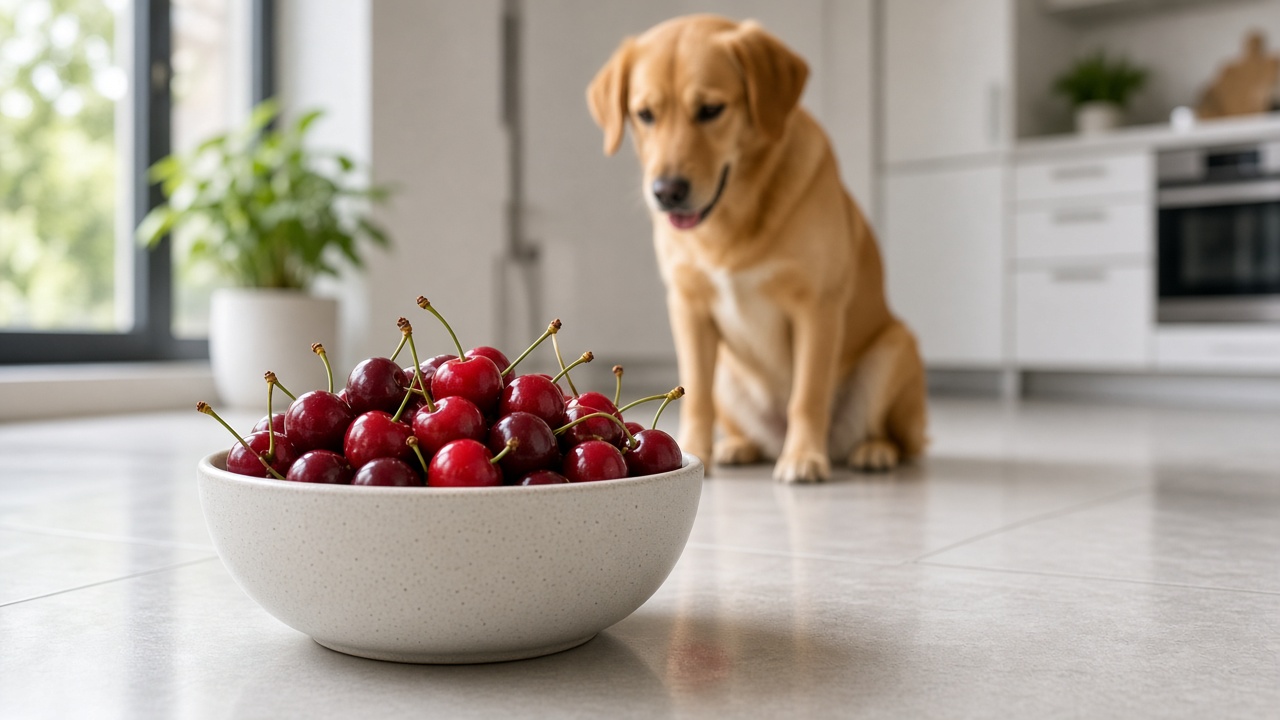
Quick answer: Skip whole cherries. Offer only a few pieces of plain, pitted flesh if you serve any. Pits, stems, and leaves can release cyanide and can block the gut.
Dogs can eat a few pieces of pitted cherry flesh; pits, stems, and leaves are toxic and can block the gut. This page is a research-desk brief on cherry parts, treat calories, and kitchen tools. We did not run feeding trials, crush pits in a lab, or examine any dog after a cherry meal.
Our research team analyzed toxin lists from the ASPCA and Pet Poison Helpline. We also compared published specs on pitting tools and bagged fruit. USDA FoodData Central lists sweet cherries at 63.0 kcal per 100 grams.
The selection rule we used
We used one rule for every product in this brief. A tool had to eject the stone and list capacity or dimensions on the maker page. A fruit bag had to list a single fruit ingredient and 0 grams of added sugars.
We left out maraschino cherries, pie filling, juice, yogurt blends, and dried cherries. We also left out any snack that lists xylitol. That cut is a filter, not a ranking.
We cover a dog that steals one whole cherry, and a person who wants to share pitted flesh. We do not treat backyard browse on wilted leaves as a snack plan. The ASPCA flags wilting stems, leaves, and seeds as a cyanide risk.
What is toxic, and what is only flesh
The ASPCA lists cherry as toxic to dogs, cats, and horses. The listed toxic principles are cyanogenic glycosides.
The ASPCA names stems, leaves, and seeds as the cyanide-bearing parts. Clinical signs include brick red mucous membranes, dilated pupils, difficulty breathing, panting, and shock.
Pet Poison Helpline places cherry trees and shrubs in the Prunus group. Those plants contain cyanogenic glycosides. All parts other than the ripe pulp around the seeds are treated as toxic.
The main concern is the pit, also called the seed. Pet Poison Helpline states that cyanide may be released if the pit is chewed and crushed. A whole pit that stays intact is not expected to poison.
Stomach upset and a gut blockage can still occur. Risk depends on the dog’s size and the number of pits.
Cherries bought for people usually hold less cyanide in the pits than wild fruit. Wild cherry, choke cherry, black cherry, and cherry laurel still sit on that toxin page. Do not treat a yard tree like a snack bowl.
A 2022 Agricultura study from the University of Maribor measured cyanide in 30 cherry-pit accessions. Values ran from 19.6 to 167 micrograms per gram. The median was 61.0 micrograms per gram.
That spread is why no honest desk can name a safe pit count. A hard pit can also lodge in a throat or a narrow gut.
The American Kennel Club says blockage signs may appear within 24 hours. Watch for vomiting, a drop in appetite, and straining. Small dogs face a tighter fit.
How much flesh fits a treat budget
Flesh is not a meal. The Association of American Feed Control Officials says treat products are not usually a complete and balanced diet. AAFCO Model Pet Food Regulations do not require treats to meet those nutrient rules.
The words “snack” or “treat” must appear on the front panel. Extra calories still count against the day’s food.
The World Small Animal Veterinary Association sets a hard calorie cap. Treats should stay under 10 percent of daily calories. WSAVA’s 2024 treat sheet lists 47 treat calories for a 10 kilogram dog.
USDA FoodData Central, SR Legacy item 171719, lists one sweet cherry at 8.2 grams. At 63.0 kcal per 100 grams, that fruit is about 5 calories of flesh. A 10 kilogram dog’s 47 calorie budget is about nine pitted cherries.
That is a ceiling, not a target. Count training treats in the same cap.
USDA also lists 12.82 grams of total sugars per 100 grams of raw sweet cherries. One 8.2 gram cherry holds about 1.1 grams of sugar. A cup without pits weighs 154 grams and holds about 20 grams of sugar.
Sugar is the quiet cost after the pit is gone. Dole Frozen Dark Sweet Cherries list 100 calories in a 1 cup, 140 gram serving. That cup exceeds the 47 calorie cap for a 10 kilogram dog.
It also exceeds the 64 calorie cap listed for a 15 kilogram dog. Cascadian Farm Organic Frozen Cherries list 80 calories per 1 cup serving. That is lower than Dole’s cup, and it still overshoots a small dog.
Our research team compared those two labels side by side. WSAVA lists 120 calories in 1 ounce of cheddar cheese.
If you already share cheese, count both foods in the same 10 percent cap.
How to pit and serve cherry flesh
Wash the fruit first. Pull every stem. Use a pitter or a small knife so the stone leaves the kitchen, not the bowl.
Check each piece in good light. A missed fragment is still a pit.
Dole’s frozen-cherry page sells the fruit as pitted. The same page warns that bags may still hold pits or pit fragments. Frozen and bagged is not the same as safe to pour.
Thaw only what you plan to use. Dole tells people to thaw a serving on a plate for about 30 minutes. A microwave defrost cycle of 1 minute is the other listed path.
Do not refreeze leftovers from that thaw. Serve slightly soft. A hard frozen lump can choke a small dog.
Skip fruit packed in syrup. Skip maraschino cherries. The American Kennel Club flags those as high-sugar preserves even when the pit is gone.
Stay inside the Three-Gate Cherry Rule. Gate one: pit, stem, and leaf are gone. Gate two: the flesh is plain, with no sugar, spice, or dairy mix.
Gate three: the calories fit under WSAVA’s 10 percent treat cap. Fail any gate and skip the serving. Do not blend whole cherries for a dog.
Crushing a pit is the step Pet Poison Helpline ties to cyanide release. A smoothie that hides fragments is a worse prep. Pit first, then mash if you need a softer texture.
Tools and bagged fruit we compared
The table below is an attribute grid, not a ranking. We pulled dimensions, capacities, and label facts from maker pages.
| Product | Maker-listed form | Pit handling | Capacity or serving | Added sugars on label | Care or storage |
|---|---|---|---|---|---|
| OXO Good Grips Cherry & Olive Pitter | Handheld die-cast zinc, 5.9 in × 3 in, SKU 11316200 | One fruit; Bing and Rainier cup | Single cherry or olive | Not a food | Dishwasher safe; locks closed |
| OXO Good Grips Quick-Release Multi Cherry Pitter | Counter tool, 7.6 in × 3.8 in × 13 in, SKU 11303300 | Fruit drops to a bowl; pit tray lifts out | 6 cherries per press; 75-pit tray | Not a food | Dishwasher safe; legs fold |
| Chef’n QuickPit Cherry Pitter | Handheld trigger, SKU 102-241-005 | Pit pops out over a bowl | One cherry or olive | Not a food | Top-rack dishwasher; BPA-free |
| Dole Frozen Dark Sweet Cherries, 32 oz | Bagged frozen fruit | Sold as pitted; fragments may remain | 1 cup (140 g); about 6 servings; 100 kcal | 0 g added sugars; 18 g total sugars | Keep frozen; thaw about 30 minutes |
| Cascadian Farm Organic Frozen Cherries, 32 oz | Bagged frozen fruit | Ingredient listed as organic cherries | 1 cup; 7 servings; 80 kcal | 0 g added sugars; 17 g total sugars | Keep frozen; USDA Organic |
OXO lists the single pitter at 5.9 by 3 inches, SKU 11316200. The multi pitter takes six cherries per press and a 75-pit tray. Chef’n lists the QuickPit as a no-blade, top-rack tool under SKU 102-241-005.
Dole’s 32 ounce bag has about six servings and 0 milligrams of sodium per cup. Cascadian Farm’s bag has 7 servings and 10 milligrams of sodium. Fiber and vitamin C do not cancel a pit fragment or an 80 to 100 calorie cup.
If a dog already ate a whole cherry
Count the cherries if you can. Note whether pits were chewed or swallowed whole, and note the dog’s weight. Those facts help a clinic or a poison line more than a guess.
Pet Poison Helpline rates cherry exposure as mild on its toxin page. Mild is not the same as ignore. The helpline still lists dilated pupils, hard breathing, bright red gums, shock, and death after a toxic dose.
Call if several pits were chewed, or if any of those signs appear. Do not wait if breathing already looks hard.
Pet Poison Helpline publishes a 24-hour line at 855-764-7661. An 89 dollar incident fee applies. The ASPCA Poison Control number is 888-426-4435.
One intact pit is a blockage watch more than a cyanide watch. Pet Poison Helpline says poisoning is not expected if the pit was not crushed.
The American Kennel Club still tells owners to monitor closely. Recheck over the next day for vomiting, constipation, and a closed appetite. Do not add oil, bread, or milk as a chaser, and throw the remaining bowl away.
Cherry flesh is not in the same class as grapes. The ASPCA people-foods list ties grapes and raisins to kidney damage. It names tartaric acid as the suspected agent.
If the stolen snack was a fruit cup that also held grapes, treat that as a grape problem first.
Safer fruit when you want a sweet bite
Cherry flesh is optional. It is not a nutrient the dog’s main food lacks. USDA FoodData Central lists 7.0 milligrams of vitamin C per 100 grams of raw sweet cherries.
A complete kibble already covers daily needs. Use fruit for a rare bite, not a daily bowl.
Sour red cherries are lighter on paper. USDA SR Legacy lists them at 50.0 kcal per 100 grams, with 8.49 grams of sugar. They still carry a pit, a stem, and leaves.
Bananas skip the stone-fruit problem. USDA FoodData Central lists raw bananas at 89.0 kcal per 100 grams. A thin slice is easier to portion than a cherry with a hidden stone.
WSAVA’s 10 kilogram dog still has only 47 treat calories. That budget can be banana, cherry flesh, or cheese, not all three in one afternoon. Skip sugar-free human desserts as a light swap.
The U.S. Food and Drug Administration warns that xylitol can drop a dog’s blood sugar within 10 to 60 minutes. The FDA also lists gum, mints, baked goods, and some nut butters as common sources. Keep cherries for rare, fully pitted pieces, and fence the backyard tree when leaves wilt.
FAQ
Can dogs eat cherries at all?
Yes, in a narrow sense. Pet Poison Helpline treats only the ripe pulp as non-toxic. Whole cherries travel with the dangerous parts.
How many pitted cherries can a dog have?
Use calories, not a folk count. USDA lists one sweet cherry at 8.2 grams, or about 5 calories of flesh. WSAVA gives a 10 kilogram dog 47 treat calories, about nine pitted cherries as the only extra.
What if my dog ate cherry pits?
Note how many pits, whether they were chewed, and the dog’s weight. Pet Poison Helpline says an intact pit is unlikely to release cyanide. Call a clinic or a poison line if several pits were crushed.
Are frozen cherries safer than fresh ones?
They can be easier to portion, and some bags are sold as pitted. Dole still warns that pits or fragments may remain. Serve a few inspected pieces, not a scoop.
Can puppies eat cherries?
Puppies have smaller throats and shorter guts. A pit that a large adult might pass can block a puppy. Use a tiny diced piece after a full pit check, and ask the puppy’s own clinic first.
Are cherry leaves or garden trees a problem?
Yes. The ASPCA lists stems, leaves, and seeds as cyanide sources, and flags wilting plant material. Pet Poison Helpline includes wild cherry, choke cherry, black cherry, and cherry laurel on the same toxin page.
Can I mix cherries with yogurt or baked treats?
Not as a shortcut. Mixes hide pit fragments and add sugar or dairy on top of fruit sugar. Keep cherry flesh plain, or skip it; the FDA’s xylitol warning covers sugar-free baked goods.