Quick answer: Yes, in a tiny taste. Offer ripe fresh fig flesh only, about one teaspoon for a medium dog. Skip dried figs, leaves, sap, and bakery cookies.
Ripe fruit is the only form that belongs in a bowl. A healthy dog can have one teaspoon of ripe fresh fig flesh, not dried figs or any fig-plant part. This research-desk page compares published fig data; we ran no trials, opened no bags, and logged no cases.
How we chose what to cover
Our selection rule is public. We cover ripe common-fig flesh, Ficus carica, plus currently sold dog treats or toppers whose maker pages name fig.
We leave out human fig cookies, fig jam, and fig syrup. We also leave out any product that lists grapes, raisins, xylitol, chocolate, or macadamia.
That filter decides every section below. If a form failed it, it is not in the table.
Fresh figs versus dried figs
Our research team analyzed USDA National Nutrient Database figures, not kitchen samples. The gap between fresh fruit and dried fruit is the whole story.
USDA Standard Reference data for raw figs list 74 kcal per 100 grams. Those tables also list 16.26 grams of sugar in the same 100 grams.
The same USDA raw-fig tables list 2.90 grams of dietary fiber and 79.11 grams of water.
USDA Standard Reference Release 28, entry 09094, covers dried Mission figs, uncooked. That entry lists 249 kcal and 47.92 grams of sugar per 100 grams.
The same dried-fig entry lists 9.8 grams of fiber and 30.05 grams of water. Potassium is 680 milligrams. Calcium is 162 milligrams.
Comparing those published specs, dried figs hold about 3.4 times the calories of raw figs by weight. Sugar rises about 2.9 times, from 16.26 grams to 47.92 grams.
USDA also lists one dried fig at 8.4 grams. That single piece carries 21 kcal and 4.03 grams of sugar.
A 149-gram USDA cup of dried figs holds 371 kcal and 71.40 grams of sugar. Fresh flesh is still sugar-dense. It is simply less concentrated than the dried form.
The Fresh-Flesh Rule and safe amounts
We call our working rule the Fresh-Flesh Rule. Only ripe, washed common-fig flesh counts as a possible treat.
One teaspoon is the starting cap for a medium adult dog. That is a taste, not a fruit cup.
The World Small Animal Veterinary Association published a November 2025 dog-treat guide. It says treats should stay under 10 percent of daily calories.
That budget includes training bits, table scraps, and fruit. WSAVA lists 14 kcal as the treat budget for a 2-kilogram dog.
USDA’s 21 kcal dried fig already overshoots that line. A teaspoon of fresh flesh is a far smaller energy hit, and it still counts inside the 10 percent cap.
AAFCO does not require snack or treat labels to meet complete-and-balanced profiles. AAFCO says those words must appear on the front panel, and the food should be given sparingly.
Skip fruit treats for dogs on a clinic-written diet unless that clinic agrees. Our desk does not rewrite medical feeding plans. Figs do not replace a complete food.
Fig plant parts that stay off the menu
Fruit flesh and the fig plant are different problems. Do not confuse a grocery fig with a yard tree.
ASPCA lists weeping fig, Ficus benjamina, as toxic to dogs, cats, and horses. The page also uses the name Indian rubber plant.
The listed toxic principles are ficin and the psoralen ficusin. ASPCA lists the signs as gastrointestinal and dermal irritation.
That listing is for the ornamental Ficus. It is not a grape-style toxin claim about ripe grocery fruit.
Related fig plants still carry irritant sap. Leaves, stems, bark, and unripe fruit stay out of reach.
If a dog chews leaves or stems, watch for drooling, vomiting, diarrhea, and red skin. ASPCA Animal Poison Control answers at 888-426-4435.
That line runs 24 hours a day, 365 days a year. A consultation fee may apply.
WSAVA’s toxic-food list names chocolate, macadamia nuts, onion-family plants, grapes, raisins, and xylitol. Common fig flesh is not on that list.
That absence is not a free pass for a pile of fruit. Figs remain a sugar-and-fiber problem.
Yard time near a fig tree is a coat-and-paw job. Sap on fur is a rinse-and-groom task, not a snack.
If sap mats a double coat, work it out with a proper brush. Our guide to deshedding double-coated dogs at home covers that coat work.
After garden time, check nails and paw pads. A dog nail grinder for thick nails is easier on dirty nails than a dull clipper.
How to offer a tiny fresh portion
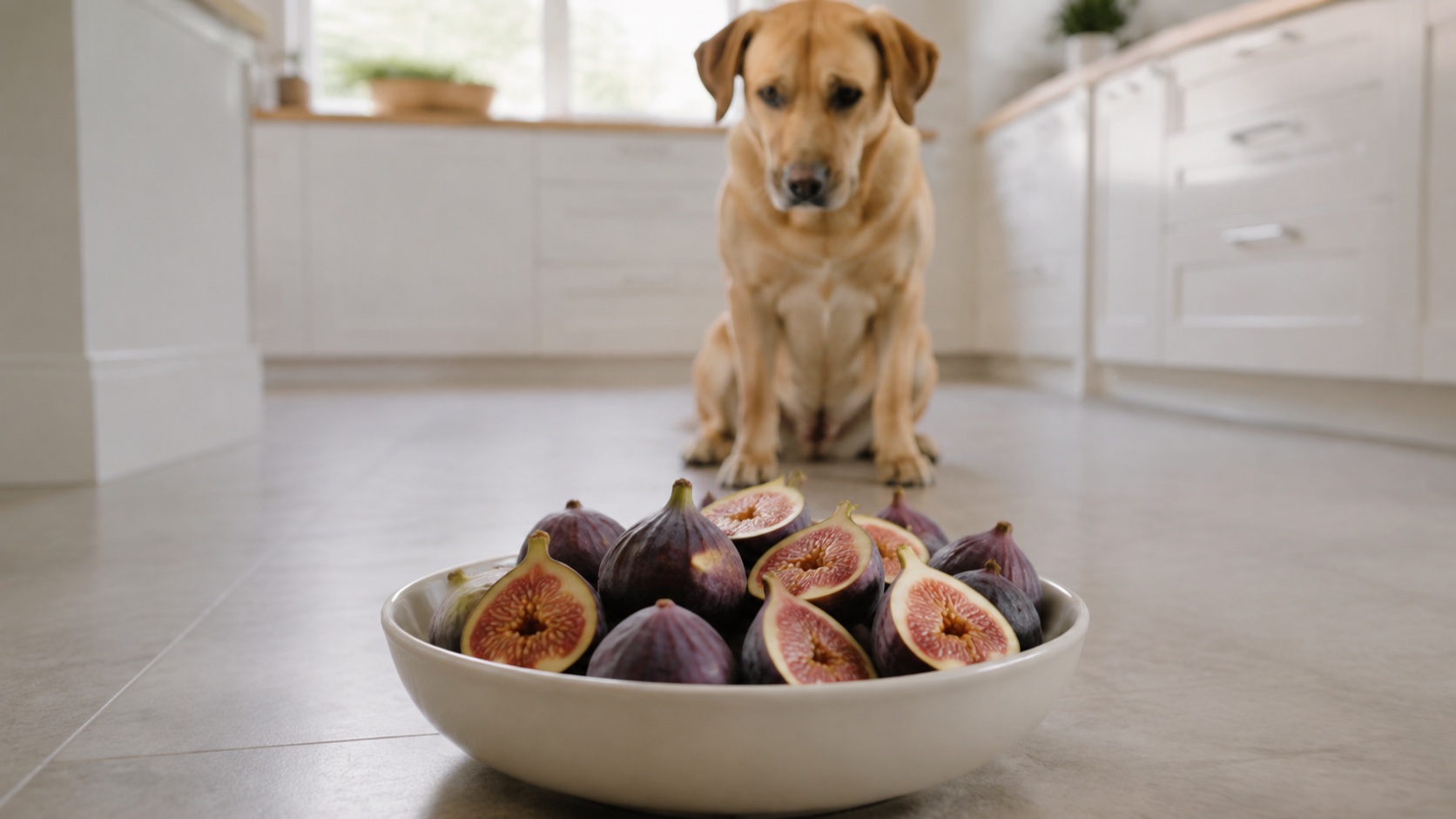
Buy ripe common figs, not green fruit. Wash the skin under running water.
Split the fig and scoop a teaspoon of the soft interior. Leave the stem and any leafy bits in the compost.
Offer the piece from your hand, not from a shared plate. Shared plates hide butter, pastry, and chocolate.
If your dog inhales food, skip the empty bowl toss. A slow feeder dog bowl for fast eaters slows the gulp.
Watch the next stool. Extra fiber plus sugar can loosen it within a day.
If vomiting, watery diarrhea, or lethargy shows up, stop fruit treats. Call your clinic or a poison-control line with the amount and the form.
Do not offer dried grocery figs as a natural chew. The USDA numbers above are why.
Do not offer human fig cookies. The U.S. Food and Drug Administration warns that xylitol in sugar-free baked goods can harm dogs.
FDA’s animal-health page says xylitol poisoning can start within 20 minutes. FDA also lists wood sugar, birch sugar, and birch bark extract as other names for that sweetener.
Labeled fig treats we compared
Some makers sell fig as a named dog treat or topper. Comparing published specs is the job here.
Loopypaws Fruity Crunchy-Fig is a freeze-dried topper. The Loopypaws page lists 100 percent natural figs, a 30-gram pouch, and a 24-month shelf life.
Listed energy is 1,000 kcal per kilogram. Crude protein is 3 percent minimum, and crude fiber is 5 percent maximum.
That energy figure makes a 30-gram pouch about 30 kcal if the whole pouch were fed. That is a sprinkle, not a meal.
dogged freeze dried fig topper is sold as 100 percent freeze-dried fig halves in a 45-gram bag. The dogged page says it is made in British Columbia at an FDA-registered facility.
Crude protein is 3 percent minimum. Crude fiber is 9 percent maximum, higher than the Loopypaws listing.
Ziggy Marley Figgy Bites Training Treats are baked bites made with fig and apricot. The Ziggy Marley page lists 30-plus treats and 4 calories in each treat.
Those treats are baked at Barkin’ Creek Kitchen in Austin, Texas. Thirty treats at 4 calories each would be 120 kcal if a whole bag went down at once.
bosch Fruitees Quail & Fig is a semi-moist adult training snack. The bosch Tiernahrung page lists 20 percent fresh quail, 4 percent dried figs, and 28 percent residual moisture.
The cup is 200 grams. Convertible energy is listed at 11.05 MJ per kilogram.
bosch feeding amounts are 15 grams a day for an 8.0-kilogram dog. They rise to 25 grams for a 15.0-kilogram dog and 55 grams for a 35.0-kilogram dog.
The page marks the food as supplementary feed for adult dogs from the 12th month.
| Product | Form | Fig listing | Package | Maker-listed analysis | Intended use |
|---|---|---|---|---|---|
| Loopypaws Fruity Crunchy-Fig | Freeze-dried topper | 100% natural figs | 30 g pouch | 1,000 kcal/kg; protein 3% min; fiber 5% max; moisture 3% max | Meal topper or snack |
| dogged freeze dried fig topper | Freeze-dried halves | 100% fig | 45 g bag | Protein 3% min; fat 1% min; fiber 9% max; moisture 5% max | Topper, treat, or training |
| Ziggy Marley Figgy Bites Training Treats | Baked bites | Fig and apricot | 30+ treats | 4 calories per treat | Training reward |
| bosch Fruitees Quail & Fig | Semi-moist flowers | Dried figs 4% | 200 g cup | 11.05 MJ/kg; moisture 28%; protein 17%; fat 4% | Adult training snack |
Freeze-dried toppers are still dried fruit. They are lighter than a grocery dried fig, not a free sugar pass.
A labeled treat still sits inside the WSAVA 10 percent cap. It still sits under the AAFCO sparingly rule.
If a bag lacks a calorie line, AAFCO already warns that many treats skip that number. WSAVA says to ask the maker when the label is silent.
When figs are the wrong snack
Skip figs if your dog has pancreatitis, diabetes, or hard-to-control weight. Sugar plus other table scraps is a poor mix.
Skip figs for puppies that still need every calorie from a growth diet. Skip any fig product that shares a kitchen with grapes or raisins.
Skip the tree. Leaves, latex, and bark are irritants, not fiber supplements.
If a dog raids a drying rack, treat it as a sugar binge. Count pieces, then call a clinic or ASPCA Animal Poison Control.
A large raid can mean vomiting, diarrhea, and fluid loss. Do not induce vomiting from a blog checklist.
Figs will not clean teeth or replace a walk. They are an optional taste for a dog that already eats a complete food.
FAQ
Can dogs eat dried figs at all?
Our desk says no as a household habit. USDA lists 47.92 grams of sugar in 100 grams of dried Mission figs.
One 8.4-gram fig already holds 21 kcal, above WSAVA’s 14 kcal treat budget for a 2-kilogram dog. If a dog already swallowed one piece, watch the gut and call a clinic if vomiting starts.
What should I do if my dog ate fig leaves or sap?
Rinse mouth and skin with plain water if you can do it safely. Do not scrub sap into the coat.
ASPCA lists ficin and ficusin as the irritants in weeping fig, with gut upset and red skin as signs. Call ASPCA Animal Poison Control at 888-426-4435 or your clinic with an amount estimate.
Are freeze-dried fig toppers safer than grocery dried figs?
They are a different process, not a different sugar story. Loopypaws lists 1,000 kcal per kilogram for Fruity Crunchy-Fig.
dogged lists a 9 percent maximum for crude fiber. Use them as a dusting, not a handful.
How often can I offer fresh fig?
Think rare, not weekly produce. One teaspoon on an occasional evening is the pattern our desk uses.
Stay inside WSAVA’s 10 percent treat cap when you add training bits the same day. If stool loosens, stop.
Can puppies have figs?
Our selection rule keeps growth diets out of the fruit experiment. Puppies need complete food, not sugar tests.
A stolen lick of ripe flesh is usually a watch-and-wait event. A handful is a clinic call.
Are bakery fig cookies all right if they have no chocolate?
No. Human cookies add fat, dough, and often extra sugar, and some sugar-free baked goods use xylitol.
FDA says xylitol poisoning can start within 20 minutes. Cookies fail our selection rule even when the box shows a fig drawing.
What if my dog ate several fresh figs?
Count what is missing and write down the time. Watch for vomiting, diarrhea, and low energy.
A multi-fig raid is a fiber-and-sugar overload, not a listed grape toxin. Call your clinic or ASPCA Animal Poison Control with the count, the dog’s weight, and whether leaves were involved.