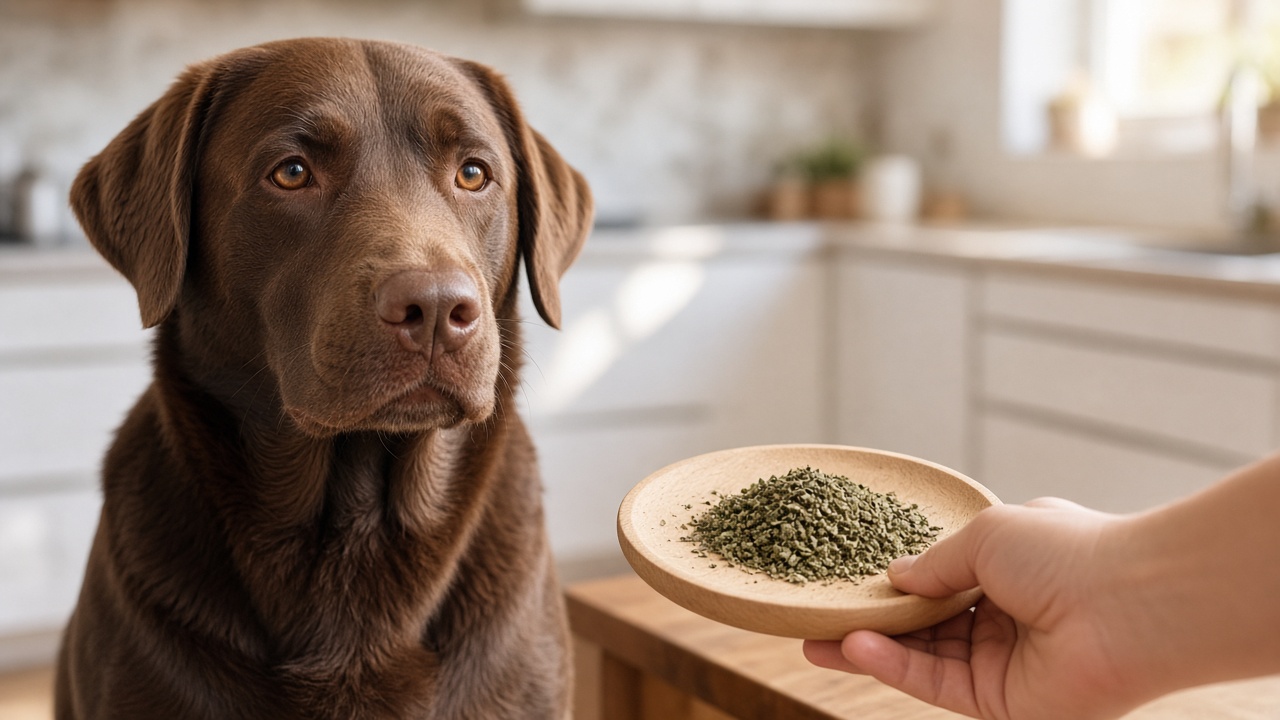
Quick answer: Catnip is not a dog high, and most dogs ignore it. Offer at most a pinch of dried leaf, never essential oil, and stop if your dog vomits.
In a 2021 Science Advances assay, all 8 dogs ignored nepetalactol, the iridoid that made 72% of 25 lab cats roll.
This page is a research-desk brief on published plant listings and maker specs. We did not run feeding trials, we did not dose household dogs, and we did not rank brands.
We used one selection rule, the Listed-Fill Rule. A SKU entered only if its maker page names catnip and lists a fill weight or spray volume. We left out human essential-oil bottles, garden seed packets, and stuffed toys with undisclosed fill.
What catnip does in a dog, according to a real dog assay
Catnip is Nepeta cataria, a mint-family herb. The ASPCA plant page names nepetalactone as the toxic principle in cats.
Cats often roll, rub, and then go quiet. That show is a felid pattern. It is not a general mammal pattern.
A 2021 Science Advances paper from Iwate University isolated the related iridoid nepetalactol from silver vine. The team put that compound on paper. They offered it to cats and to dogs.
Eighteen of 25 laboratory cats, or 72%, were positive responders to silver vine extract. Fifteen of those responders rubbed and rolled on paper dosed with 50 μg of nepetalactol.
The same paper tested 8 companion dogs, ages 1 to 12 years. The group included border collies, a Shih Tzu, a Maltese, and a mixed-breed dog.
All 8 dogs were uninterested. None showed the silver vine response.
That assay used the purified iridoid, not a grocery tin. It still answers the search. Dogs do not treat this chemistry as a party.
If your dog sniffs a tin and walks away, that is the expected outcome. Do not use catnip as a stand-in for a sedative.
In cats, Science Advances cites a typical bout of 5 to 15 minutes. A quiet period of one or more hours follows. No maker page we read claims that timeline for dogs.
Catit’s catnip page says about two-thirds of domestic cats respond. That line sits near the 72% lab-cat figure. It still describes cats.
What the ASPCA catnip page lists, and what it leaves out
The ASPCA Toxic and Non-toxic Plants page for catnip lists extra common names: catswort and catmint. The scientific name is Nepeta cataria. The family is Lamiaceae.
The toxicity line on that page reads “Toxic to Cats.” The listed clinical signs are vomiting and diarrhea. The same page says the herb makes some cats sedated and others stimulated.
Dogs are not named on that ASPCA plant page. That absence is a fact about the page. It is not a feeding license.
The ASPCA page tells readers to call ASPCA Poison Control at (888) 426-4435. Use that number if a pet may have ingested a problem substance. The page notes that a consultation fee may apply.
Our research team compared that listing with the maker pages below. None of those pages market the SKUs as canine drugs.
KONG, Yeowww!, SmartyKat, and Catit all label the products for cats.
AAFCO states on its Understanding Pet Food page that it does not regulate, test, approve, or certify pet food. These tins are sold as cat attractants, not as complete dog diets.
Do not treat a catnip tin as dog food. If you want a clinical ruling for a sick dog, that is clinic work.
When a swallow becomes a stomach problem
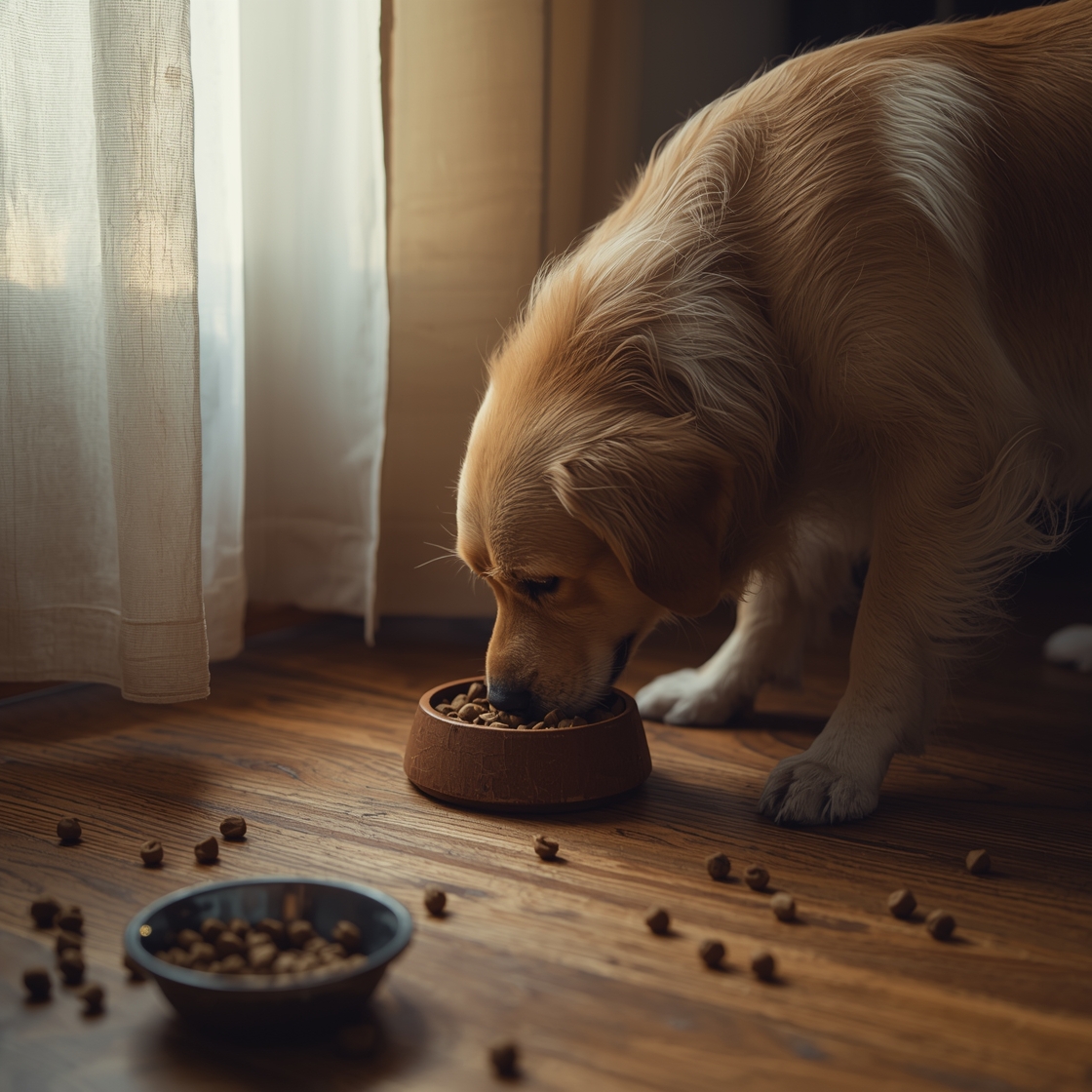
The risk people actually meet is volume, not a cartoon toxin. A dog that gulps a pile of dry plant can irritate the gut.
The ASPCA page already ties catnip to vomiting and diarrhea in cats. A dog that swallows a shredded toy’s worth of leaf can look just as messy. The stomach does not love a sudden wad of dry herb.
Watch for retching, loose stool, or a dog that stands over the water bowl.
If the vomit looks like whole leaf, read our note on why a dog throws up undigested food. Plant bits can come back up looking almost unchanged.
A second risk is not the herb. It is the toy. A dog that rips a cat sachet can swallow cloth, crinkle film, or stuffing.
KONG lists the Naturals Catnip tin as 97% catnip and 3% crinkle film. That film is there for cats. It is not a chew treat for a dog.
Stop the scene if your dog starts to dissect a cat toy. Pick up the scraps. A foreign body is a different emergency than a mint leaf.
Garden plants add unknowns we did not review here. We did not read pesticide labels for backyard patches. We also did not assay soil, fertilizer, or neighboring plants.
If your dog ate a labeled product, keep the bag. The ASPCA number above is the published hotline on the plant page.
Dried leaf, spray, and oil are not the same product
Form changes the dose you can dump by accident. Our research team compared published fills on four maker sites.
Dried SKUs on those pages run from 0.5 oz to 2 oz. SmartyKat lists both a 0.5 oz pouch and a 2 oz shaker. Yeowww! lists a 1 oz pouch.
KONG lists a 2 oz tin with a package weight of 0.14 lb. Catit lists dried bags at 0.5 oz (14 g), 1 oz (28 g), and 2 oz (56 g).
A pinch from a 0.5 oz pouch is a small scatter. The same careless shake from a 2 oz tin is more leaf. For a dog, less leaf is the safer habit.
Catit also lists a spray at 3 fl oz (90 ml). The Catit product page calls it a concentrated extract of pure Canadian catnip. Catit’s Q&A page says to hold the pump 8 to 10 inches from the object.
A spray on a toy is a scent layer. It is not a bowl of herb. Still, do not mist a dog’s face.
Do not soak bedding a puppy will mouth.
We did not include essential-oil bottles. Those products sit outside the Listed-Fill Rule. A concentrated oil is a different exposure class.
No maker page in our set publishes a canine oil dose.
Catit’s Q&A page says the products are not meant for a cat to ingest like a treat. A small swallow, Catit writes, will not be harmful for the cat. That line is a cat statement, not a dog feeding guide.
Yeowww! describes organically grown leaf and flower tops from U.S. farms, free of sticks and fillers. SmartyKat describes 100% certified organic herb grown on its own farms.
Those are maker claims about the crop. They are not proof that a dog should eat the jar.
The Listed-Fill Rule and four maker pages, side by side
We required a current maker page, not a reseller paraphrase. We compared published specs only. We did not open tins in a lab.
The table is an attribute grid. It is not a ranking.
| Product | Form | Maker-listed fill or volume | Maker-listed composition | Species on the maker page | Package |
|---|---|---|---|---|---|
| KONG Naturals Catnip | Dried flakes | 2 oz; 0.14 lb listed weight | 97% catnip, 3% crinkle film | Cat | Resealable tin |
| Yeowww! Catnip Pouch | Dried leaf and flower tops | 1 oz | Organically grown catnip; no sticks or fillers | Cat | Resealable pouch |
| SmartyKat USDA Certified Organic Catnip | Dried herb | 2 oz | 100% certified organic catnip | Cat | Resealable shaker |
| SmartyKat USDA Certified Organic Catnip pouch | Dried herb | 0.5 oz | 100% certified organic catnip | Cat | Resealable pouch |
| Catit Dried Catnip | Dried leaves and flowers | 0.5 oz / 1 oz / 2 oz (14 g / 28 g / 56 g) | 100% Canadian catnip leaves and flowers | Cat | Bags |
| Catit Catnip Spray | Liquid extract | 3 fl oz (90 ml) | Concentrated extract of pure catnip | Cat | Pump bottle |
KONG’s page calls the herb premium North American catnip, field-dried, in a resealable tin. The animal field on that page is Cat.
Yeowww! sells the 1 oz pouch as a cat refill. SmartyKat and Catit tell owners to put a pinch or spray on cat toys and scratchers.
None of those instructions name a dog dose. Our research team found no maker-published milligram-per-pound figure for dogs on these pages.
If you still want a household trial, borrow the cat pinch, not the cat jar. Crush a few flakes onto a mat. Do not pour a bowl.
Most dogs will sniff and leave. That matches the Science Advances dogs.
Sharing a home: toys, coats, and jobs catnip cannot do
Mixed homes create the usual mess. The cat loves the tin. The dog loves the toy that held the tin.
Keep loose herb in a closed pouch or tin. Yeowww!, SmartyKat, and KONG all describe resealable packs. A counter-surfing dog can empty a 2 oz tin in one gulp.
If your dog already shreds fabric, skip stuffed catnip mice. Offer the herb on a washable mat, then pick the mat up.
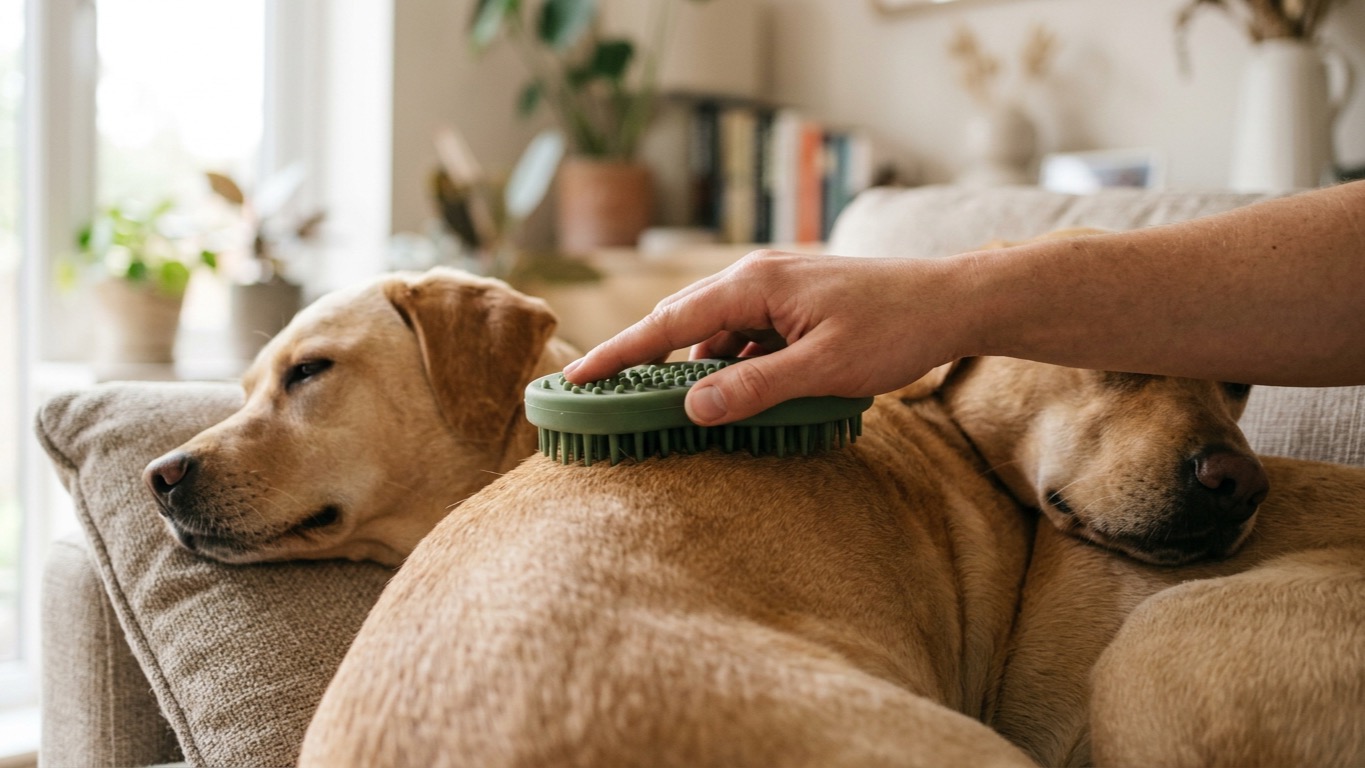
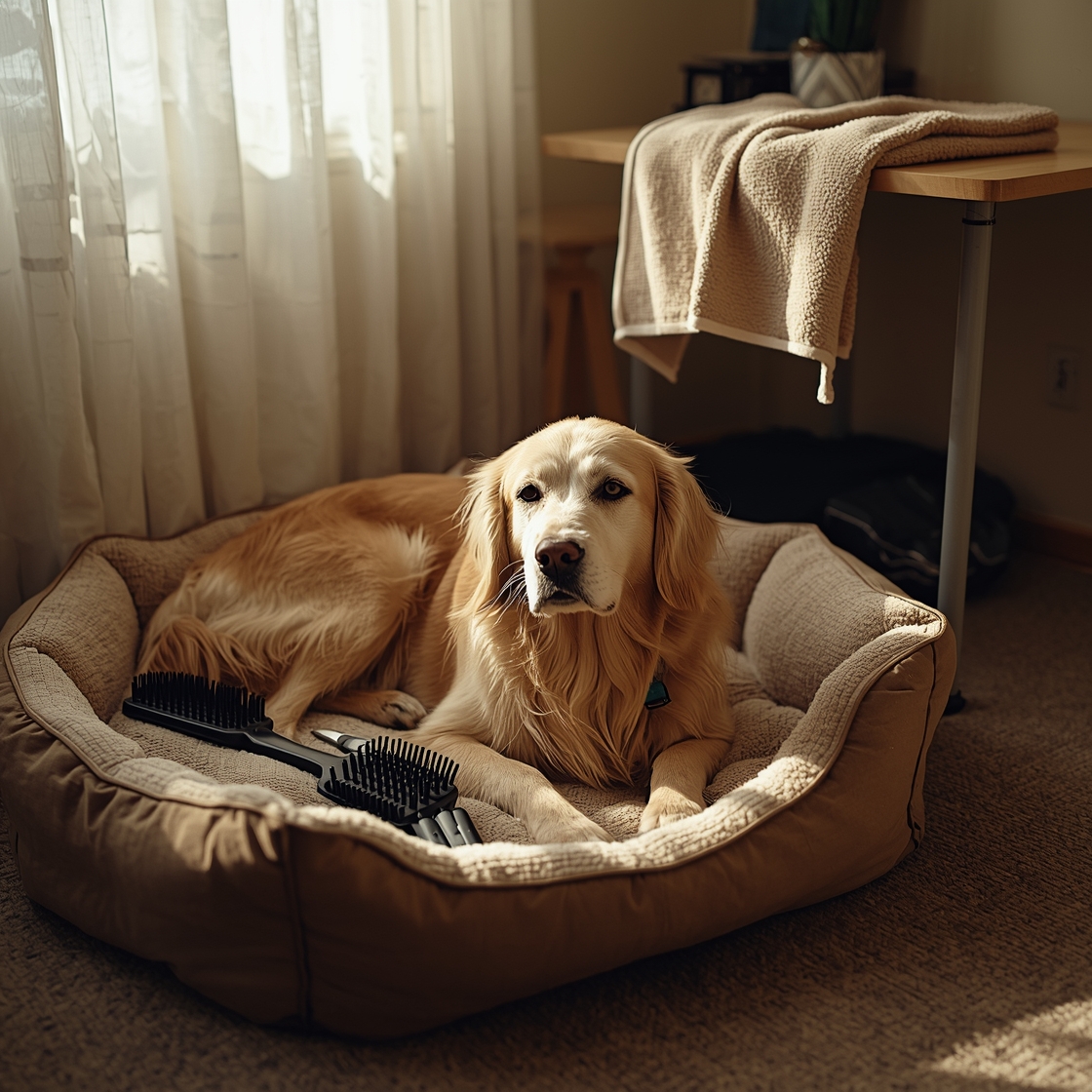
After a roll in a garden patch, leaf fragments cling to the coat. Brush them off before the dog licks them back down. A grooming brush made for sensitive skin is the right tool for that pass.
People also hope catnip will freeze a wiggly dog for home dental gadgets. The Science Advances assay gives you no reason to expect that.
If you still want a still mouth, look at handling skill, not a mint. Our note on an ultrasonic tooth cleaner for dogs is about the tool, not an herb.
Catnip will not replace a walk, a puzzle feeder, or fireworks night.
Science Advances notes that 13 of 21 Felidae species tested in earlier work responded to catnip. That fact explains the cat videos. It does not enlarge the dog claim.
The paper’s dog assay used 200 μg of nepetalactol on paper. The same 200 μg dose later raised β-endorphin in cats. The dogs still declined the scene.
That number is a research dose on paper, not a kitchen measuring-spoon chart. If nothing happens, put the tin back on the cat shelf.
FAQ
Can dogs eat catnip?
A few dried flakes are the exposure most mixed homes already have. The ASPCA plant page does not list dogs. It does list vomiting in cats.
A large pile can still upset a dog’s stomach. Do not free-feed the jar.
Does catnip calm dogs?
The 2021 Science Advances assay found 8 of 8 dogs uninterested in nepetalactol. That is the opposite of a reliable calm.
If your dog settles after a sniff, treat it as coincidence until you see it twice.
What if my dog ate a whole tin?
Remove the rest of the product. Note the brand and the listed fill. A 2 oz KONG or SmartyKat tin is a much larger swallow than a 0.5 oz pouch.
Call your clinic if your dog is retching, lethargic, or bloated. You can also call the ASPCA number on the plant page, (888) 426-4435.
Is catnip spray safer than dried leaf?
Spray avoids a pile of dry plant. Catit lists 3 fl oz (90 ml) of extract, which is easy to over-apply if you soak fabric.
Do not spray eyes, noses, or bowls. Dried leaf is the form you can see and limit by the pinch.
Can I use catnip to keep my dog off the couch?
No maker page we read sells these SKUs as dog repellents. Catit and SmartyKat describe the scent as an attractant for cats.
A dog that likes the smell may guard the spot you just sprayed.
Why does my dog ignore catnip when my cat does not?
Science Advances reported a 72% response rate in 25 lab cats. It reported a 0% silver vine response in 8 dogs.
The felid rolling pattern is the special case. Your dog is following the canine data.
Is garden catnip the same as a store tin?
The plant is the same species, Nepeta cataria. Store SKUs list dried weights and, on some pages, organic or North American or Canadian origin.
A garden plant can carry dirt, insects, or lawn chemicals we did not review. Keep outdoor chewing short and supervised.