Quick answer: Pet chinchillas come in one wild-type gray plus inherited mutations. The Mutation Chinchilla Breeders Association lists seven numbered color classes on its Genetics page. Color does not change diet or cage needs.
Domestic chinchillas appear in seven MCBA-listed color classes, not an unlimited palette of pet-store nicknames.
This page is a desk comparison of published color classes and currently sold coat-care specs.
Selection rule: We include only the seven color headings numbered on the Mutation Chinchilla Breeders Association Genetics page. We also include blends that those headings already name. We exclude fur-structure traits and any color that page does not list.
- Wild-type fur is pearl, bluish, or brownish gray with a yellowish-white belly.
- The MCBA Genetics page numbers seven color classes.
- That page says a homozygous white pair is lethal.
- Recessive colors need the same gene from both parents.
- Coat products below are compared on listed attributes, never on price.
The PetBench Seven-Class Count
In September 2026 our research team counted headings on one HTML page. That page is the Mutation Chinchilla Breeders Association Genetics page.
We counted seven numbered color classes. Under those headings we counted 35 lettered show categories.
That tally is a page count. It is not a herd census. It is not a coat measurement.
Those are fur-structure traits, not color classes on that page.
The PetBench Seven-Class Count is that heading tally. If the Association later adds an eighth numbered class, this claim is wrong.
Wild-type gray is still the baseline
Smithsonian’s National Zoo describes the long-tailed chinchilla, Chinchilla lanigera. That is the wild species behind most pet lines.
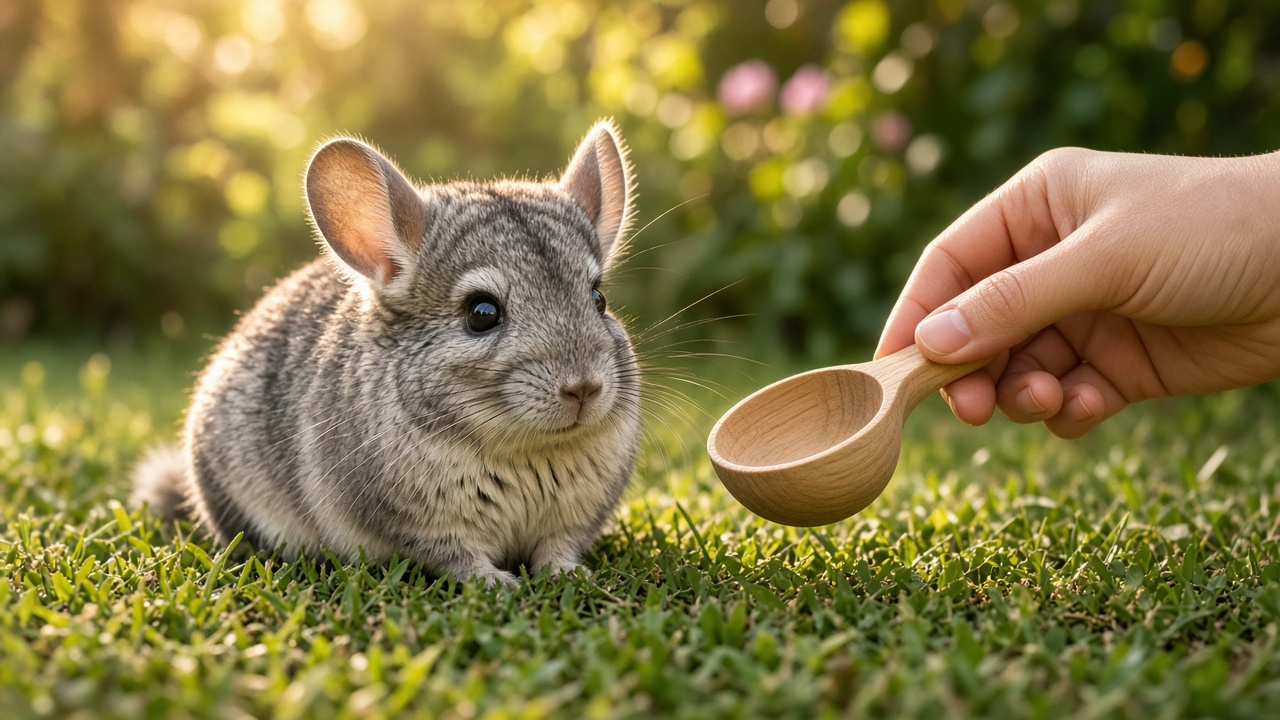
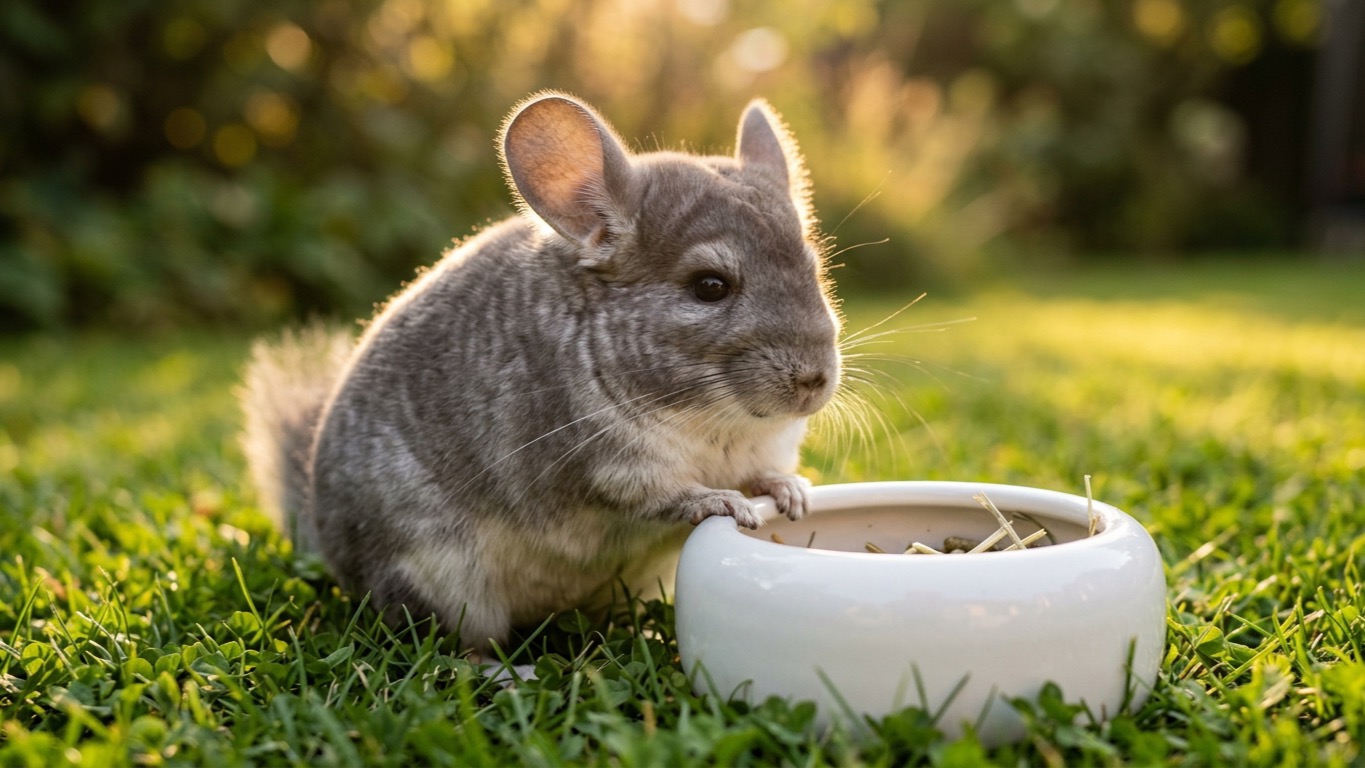
The Zoo says fur is usually pearl, bluish, or brownish gray. The belly is yellowish-white. Each hair usually has a black tip.
The Zoo also states that up to 60 hairs can grow from one follicle. That figure is the Zoo’s published fact.
Body length on that page is 9 to 14 inches (23 to 36 centimeters). The bushy tail is 3 to 6 inches (7 to 15 centimeters).
The Zoo lists female weight up to 1.76 pounds (800 grams). Males weigh about 1 pound (0.5 kilogram).
Wild animals live at 9,800 to 16,400 feet (3,000 to 5,000 meters) in northern Chile. Wild lifespan is about 10 years. Animals in human care can live over 20 years.
Those size numbers describe the wild-type animal. They do not sort pet mutations.
The Zoo notes that around 1900 Chile exported about 500,000 skins a year. Those trade figures do not expand the MCBA class list.
The seven MCBA color classes
The Mutation Chinchilla Breeders Association defines a mutation as a gene change that can be transmitted. In the fur trade, mutation means a color other than standard.
White
The Association says white cannot occur as a homozygous pair. Two of those dominant genes are lethal in the same animal.
Show whites on that page split into five groups. They include predominantly white, mosaic or broken pattern, and silver.
Silver on that page has color in the underfur and a bar. Mosaic is a broken white pattern, not a separate gene.
Sapphire
The Association lists this as a recessive mutation. It describes crystal-blue veiling, a white bar, and soft light-blue underfur.
Pink ears and a light tail are part of that description. Show sapphires split into light, medium, dark, extra dark, and wrap.
Violet
The Association describes a lavender or lavender-violet coat. It wants even veiling and a clear white belly.
Underfur is a lavender type. The bar is pale lavender. Show violets use the same five shade groups as sapphire, including wrap.
Beige
The Association calls beige completely dominant. It states there is no lethal factor. A homozygous beige can occur.
Homozygous beige fur is lighter and finer than heterozygous beige on that page. Eyes range from pale pink to ruby red.
Darker heterozygous beiges generally have darker eyes. Homozygous animals generally have lighter eyes.
Show beiges run from extra light through extra dark. Wraps in this class are called tans.
Naturalle
The Association also calls this the standard. It is a pearl-blue-gray coat in six shade steps.
The coat is agouti. That means each fiber has a tip, a bar, and underfur. Agouti animals are lighter on the underside.
Black
The Association describes a dominant cape over the head, neck, and back. The sides are gray. The belly is clear white.
Pet owners often call this Black Velvet or touch-of-velvet. The Association’s own heading is Black.
Show blacks split into light, medium, dark, and extra dark.
Ebony
The Association says ebonies range from every hair shiny black to an animal that looks almost standard.
Bellies are gray or black. There is no bar. Show ebonies split into light, medium, dark, and extra dark.
That wrap-around belly is a pattern change. It is not a new pigment name.
Dominant, recessive, and lethal-pair rules
The Association’s terminology is strict. If you cannot see a dominant gene, it is not there. Dominant colors have no hidden carriers.
An animal with one mutation gene is heterozygous. Two of the same gene make it homozygous. One of one color and one of another make a blend.
White is the lethal exception among the numbered classes. The Association says two of those dominant genes in one animal are lethal.
Breeders therefore never aim for a double white. Beige is the contrasting dominant. The Association says a homozygous beige can live.
Black is a dominant cape gene. It changes pattern more than it invents a new pigment.
Recessive genes work the opposite way. The Association says a recessive must sit in both parents to show.
Sapphire and violet are the two recessives numbered on that page. A standard-looking animal can still carry either gene.
The Association gives three breeding averages. A recessive mated to a standard produces all standard offspring. Those kits carry the recessive gene.
A standard carrier mated to a recessive produces, on average, 50 percent recessive kits and 50 percent standard carriers.
Two recessives mated together produce 100 percent of that mutation. Those percentages are the Association’s published averages. They are not litter counts from our desk.
Phenotype is what you see. Genotype is the gene pair. A recessive can hide for generations until it meets the same gene.
Several MCBA show groups use the word wrap. Wrap here means the body color continues onto the belly.
Ebony already has a gray or black belly and no bar. Beige wraps are listed as tans. Sapphire and violet each have a wrap show class.
A double dominant, on that page, carries two different dominant genes. A double recessive carries two different recessive genes.
Those blends are not extra numbered classes. They are combinations of the seven headings.
We also left out fur-structure mutations. Long-fiber or curly coats change texture. They do not add a new MCBA color heading.
If a seller uses a pet-store label, map it back to one of the seven classes. Mosaic maps to white. Tan maps to beige wrap.
Brown velvet maps to beige plus the black cape. If the label will not map, treat it as marketing.
Coat-care products compared by listed specs
Color does not rewrite the shopping list. Dark ebonies and pale whites still need the same dry dust and the same high-fiber pellets.
Our research team compared published specs on four maker pages.
The four products below are currently sold. Each maker page is listed after this article. The table has no price column and no rank column.
| Product | Maker | Form | Listed pack or size | Listed use or analysis |
|---|---|---|---|---|
| Oxbow Essentials Chinchilla Food | Oxbow Animal Health | Uniform pellet | 3 lb, 10 lb, and 25 lb bags | Crude protein min 18.00%; adult serve 1/8–1/4 cup |
| Oxbow POOF! Chinchilla Dust Bath | Oxbow Animal Health | Blue Beauty Dust | 1 inch depth in the bath house | 2–4 baths per week; remove after 3–5 minutes |
| Kaytee Chinchilla Dust | Kaytee | All-natural dusting powder | 2.5 lb; carton 4 in × 4.25 in × 6.75 in | Maker lists oil and moisture removal |
| Science Selective Chinchilla Food | Supreme Petfoods | Extruded nugget | 1.5 kg pack | Protein 16.0%; 30–40 g per day |
Oxbow Animal Health lists Essentials Chinchilla Food as a uniform pellet. The guaranteed analysis starts at 18.00 percent crude protein and 2.50 percent crude fat.
Crude fiber on that page is 18.00 percent minimum and 23.00 percent maximum. Vitamin A is listed at 10,000 IU per kilogram.
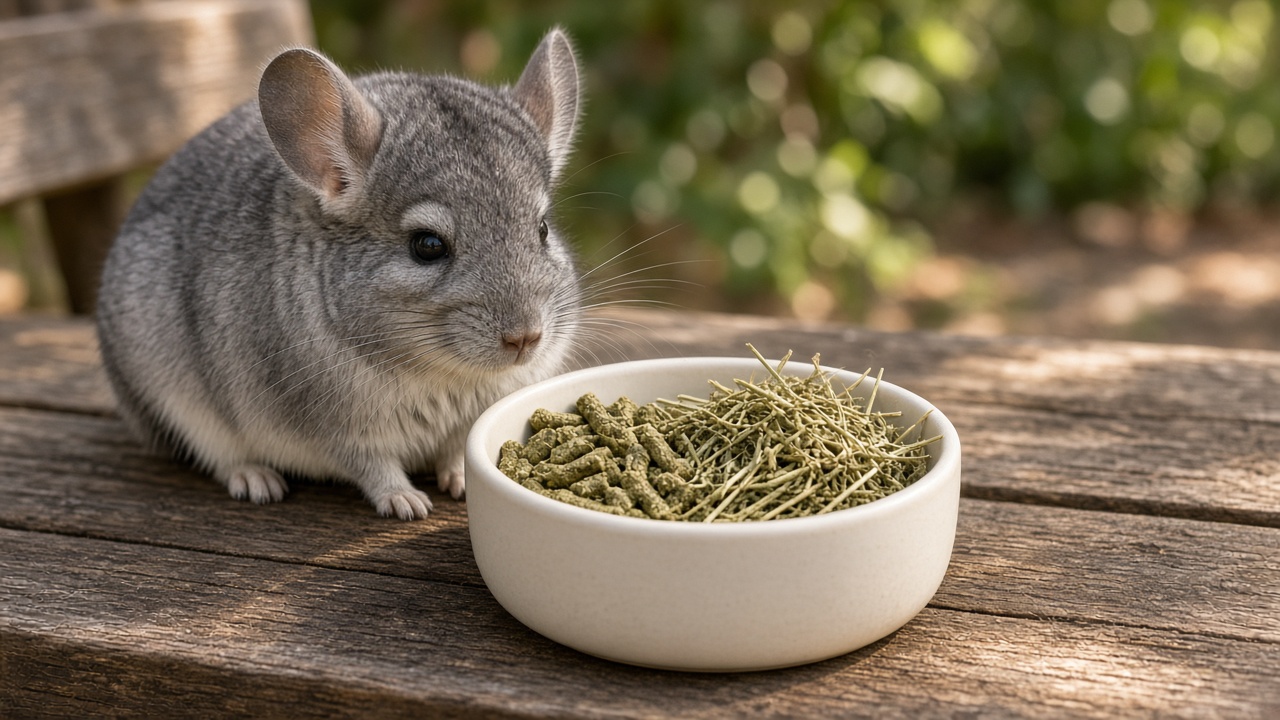
Adult feeding is 1/8 to 1/4 cup plus free-choice grass hay. The same serve applies to every coat color.
Oxbow POOF! Chinchilla Dust Bath lists one ingredient: Blue Beauty Dust. Use 1 inch of dust. Bathe two to four times per week and remove the house after three to five minutes.
Kaytee Chinchilla Dust is an all-natural dusting powder. The Kaytee page lists a 2.5 pound pack and a carton of 4 inches by 4.25 inches by 6.75 inches.
Supreme Petfoods sells Science Selective Chinchilla Food in a 1.5 kilogram pack. The maker lists protein at 16.0 percent, calcium at 0.8 percent, and 30 to 40 grams per day.
None of these four pages splits SKUs by mutation. A violet and a standard eat from the same analysis.
Color does not change daily care
A wrap ebony is not a different species. A mosaic white is not a different diet.
Smithsonian’s National Zoo still describes one body plan. The mutation list changes pigment and pattern, not that plan.
Keep dust dry. Keep pellets uniform. Keep hay in front of every color.
Pick one complete pellet. Do not mix color-themed treats as if they were a ration.
If a kit’s color is still shifting, wait. Beige eyes and velvet capes can read differently as the first adult coat comes in.
Use the seven MCBA classes when you talk to a seller. Ask for the class, not the pet-store adjective. Housing and food stay the same either way.
FAQ
What colors do pet chinchillas come in?
They come in wild-type gray plus the seven classes numbered by the Mutation Chinchilla Breeders Association. Those classes are white, sapphire, violet, beige, naturalle, black, and ebony. Blends such as tan or mosaic sit inside those headings.
Is the standard gray the same as naturalle?
Yes, on the Association’s Genetics page. Naturalle is the pearl-blue-gray standard with six show shades and an agouti fiber. Smithsonian’s National Zoo describes the wild coat as pearl, bluish, or brownish gray with a yellowish-white belly.
Are white chinchillas albino?
The Association does not list albino as a numbered class. White is a dominant mutation, and a homozygous white pair is lethal on that page. Visible whites are therefore heterozygous.
Can two gray parents produce a violet kit?
Only if both parents carry violet. The Association says a recessive must be present in both parents to show. A carrier paired with a violet produces, on average, 50 percent violet kits.
Do dark ebonies need different food than pale whites?
Maker pages do not split formulas by color. Oxbow Essentials Chinchilla Food lists one adult serve of 1/8 to 1/4 cup. Science Selective Chinchilla Food lists 30 to 40 grams per day.
How often should any color take a dust bath?
Oxbow’s POOF! page says two to four baths per week. Use 1 inch of dust and remove the bath house after three to five minutes. Kaytee Chinchilla Dust is a 2.5 pound powder sold for the same job.
How many chinchilla colors exist, exactly?
On the page we counted, there are seven numbered color classes and 35 lettered show categories. That is the PetBench Seven-Class Count. Pet-store nicknames do not increase that list.