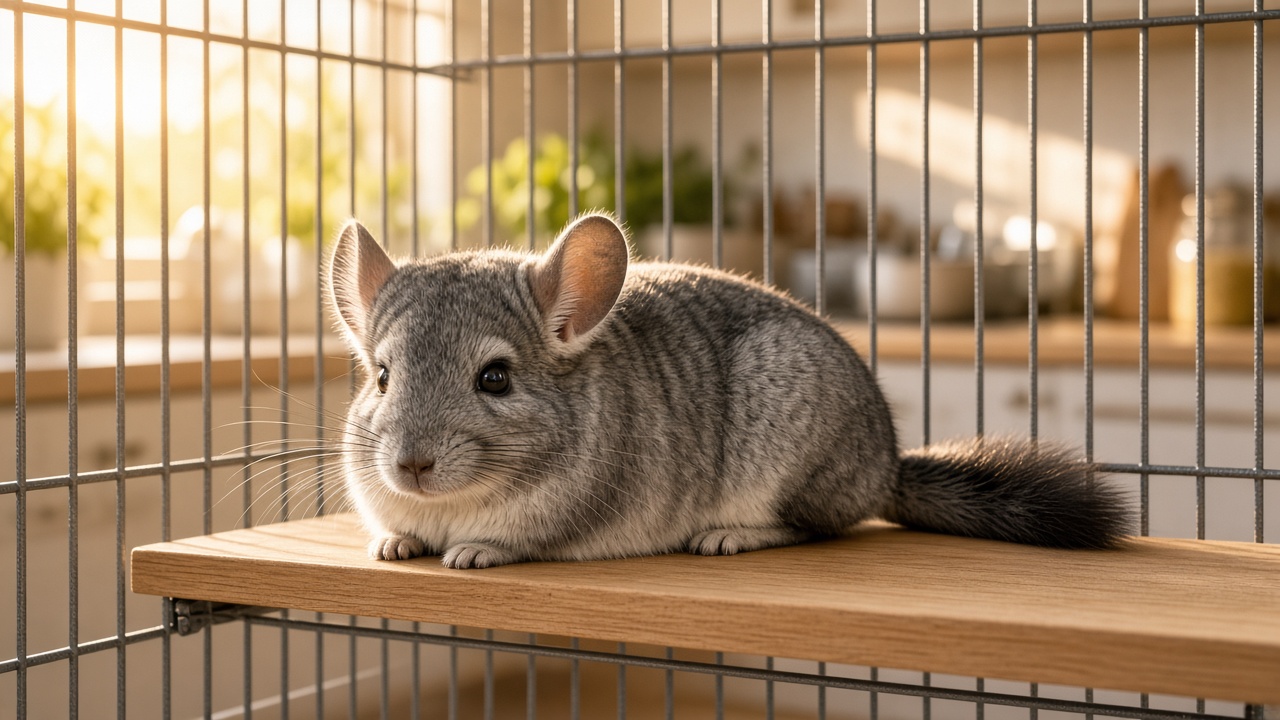
Quick answer: Buy a tall, multi-level wire cage with bars at or under ½ inch. MidWest’s Critter Nation Double Unit (Model 162) is the default home cage. Skip glass tanks and short hamster cubes.
A chinchilla cage must be multi-level wire, at least 3×2×3 feet, with bars no wider than ½ inch.
This page is a desk comparison of maker-listed cage specs. We did not house chinchillas in these units, run chew trials, or time weekly cleanings.
The Half-Inch / Three-Foot Rule
Our research team analyzed published specs, not animals in our office. A cage entered this article only if three things were true.
The maker still sells it. The listing shows exterior size and bar spacing. The unit is multi-level and at least 40 inches tall.
We left out aquariums, travel totes, and single-level cubes. We also left out any listing that hid bar spacing. That is the selection rule, not a ranked list.
VCA Animal Hospitals sets a hard floor for the species. One chinchilla needs a multi-level enclosure of at least 3 feet by 2 feet by 3 feet. A pair needs 3 feet by 2 feet by 5 feet.
Those numbers decide the table below. Brand slogans do not.
Top 7 Chinchilla cages
The picks below are the 7 chinchilla cages on sale right now, listed with what each suits best and an honest drawback. Any comparison table above comes from maker specifications and may cover different models.
1. Large Two Full Story Deluxe Double Unit Small Animal Critters Rolling
Best for: Owners wanting a rolling two-story
This large two-full-story deluxe double unit is a rolling stacked cage in the middle of this list. Maker copy for this form sells two stories and casters so you can roll it out to clean. Owners treat these kits as cheaper Critter Nation stand-ins and say assembly is the hard part.
Pros: Large two-story layout; Rolling stand included Cons: Unbranded mid-tier price
2. PawHut Metal Small Animal Cage
Best for: Shoppers trusting a named metal brand
PawHut’s metal small-animal cage is the named-brand pick under $100. The title does not promise a deluxe double unit, so it is a simpler metal habitat than the stacked kits around it. Owners buy the brand and the metal frame, then add their own ledges.
Pros: Named PawHut metal cage; Priced under one hundred Cons: Not a two-story unit
3. Deluxe Double Unit Two Full Story Small Animal Critter Home Rolling
Best for: First homes needing a double-unit kit
This deluxe double-unit two-full-story rolling home costs less than the large listing above it. The name is the same stacked form without the large tag. Owners who want a two-story start here and report the same generic-kit assembly slog.
Pros: Two-story rolling home; Cheaper than the large listing Cons: Generic kit, no brand
4. Critter Nation by MidWest Double Unit Small Animal Cage
Best for: Pairs upgrading to MidWest’s double unit
MidWest’s Critter Nation Double Unit is the premium cage on this list, and the one owners name when they upgrade. Maker pages sell the stacked double unit as a long-term small-animal habitat. The trade-off is price: it costs more than twice most of the rolling kits here.
Pros: Known MidWest double-unit; Premium long-term cage Cons: Highest price on this list
5. X-Large 31"x18.5"x53.5"H Deluxe Double Unit Small Animal Critter Cage
Best for: Jumpers needing the listed extra height
The title prints 31 by 18.5 by 53.5 inches, the only extra height listed in this roundup. That X-large deluxe double unit is the tall pick for a jumper. Owners like the listed size once it is standing; they complain about the instructions, not the height.
Pros: Listed 53.5-inch height; X-large double-unit footprint Cons: Pricier than smaller twins
6. 37-inch Metal Ferret Chinchilla Small Animals Hutch Rolling Cage
Best for: Small rooms needing a 37-inch hutch
This 37-inch metal rolling hutch is the cheapest cage here and the shortest one by name. It is sold for ferrets and chinchillas, so treat it as a compact hutch, not a tall two-story. Owners with tight floor plans use it, then add floor time because 37 inches leaves little jump room.
Pros: Lowest price here; Compact 37-inch rolling hutch Cons: Shortest cage in this roundup
7. Deluxe Sturdy Wrought Iron Two Tiers Small Animal Critters Rolling
Best for: Single chins on a two-tier budget
This deluxe wrought-iron cage is a two-tier roller, not a two-full-story double unit. At this price it is a starter frame for one chin. Owners say two tiers keep the cost down and the jump height down.
Pros: Wrought-iron two-tier frame; Budget rolling cage Cons: Only two tiers tall
Comparison: Chinchilla cages at a Glance
Want to browse every option? See the full range of chinchilla cages on Amazon →
What a chinchilla cage has to do
Chinchillas jump. They do not live like floor-bound rabbits. Height and ledges matter as much as footprint.
The Merck Veterinary Manual professional edition notes a lifespan up to 20 years. Plan for a steel frame you can keep.
Wire beats wood for the outer box. VCA Animal Hospitals prefers wire-mesh cages because chinchillas chew. That page also warns against galvanized wire; zinc is toxic if ingested.
Solid ledges beat open wire floors. VCA Animal Hospitals links wire floors to foot trauma, including sore hocks. Cover wire with untreated wood, fleece, or another solid, washable surface.
A cage is a bedroom, not a whole life. The Merck Veterinary Manual pet-owner edition asks for 2 hours of supervised out-of-cage exercise every day.
Current tall cages, compared by attributes
Our research team compared five maker-listed footprints against VCA Animal Hospitals’ 3-foot by 2-foot floor. Two of the five meet that floor.
The Critter Nation 162 measures 36 by 24 inches. The Ferret Nation 182 measures 36 by 25 inches.
Only two of the five list bar spacing at or under ½ inch. Those are the Critter Nation 162 at ½ inch horizontal and the Prevue Deluxe Critter Cage 484 at 7/16 inch.
Three of the five reach the 60-inch height VCA Animal Hospitals lists for a pair. Those are the Critter Nation 162, the Ferret Nation 182, and the Prevue 484.
Only the MidWest Critter Nation Double Unit (Model 162) meets both the 3-by-2-foot floor and the ½-inch bar cap. Anyone can repeat that count from the maker numbers below.
| Model | Maker-listed exterior size | Bar spacing | Levels and included platforms | Floor / tray notes |
|---|---|---|---|---|
| MidWest Critter Nation Double Unit (Model 162) | 36 in L × 24 in W × 63 in H | ½ in horizontal | Two stories; 2 shelves; 3 ramps | Removable plastic pans; stand with locking casters |
| MidWest Ferret Nation Double Unit (Model 182) | 36 in L × 25 in W × 63¼ in H | 1 in | Two stories; 2 shelves; 3 ramps | Removable plastic pans; stand with locking casters |
| Prevue Deluxe Critter Cage 484 | 37 in L × 23⅛ in W × 63⅜ in H | 7/16 in | Four levels; 5 shelves; 3 ramps; hammock | Removable grille and tray; stand with casters |
| Prevue Feisty Ferret Home 485 | 31 in L × 20 in W × 54 in H | ⅞ in | Four levels; 2 platforms; 3 ramps; hammock | Removable grille and tray; 41½ in H without stand |
| Kaytee My First Home Deluxe 2X2 Multi-Level Pet Home | 24 in × 24 in × 41.5 in | 1 in | Multi-level; 3 comfort shelves; slide; hammock | Deep plastic base; stand with caster wheels |
MidWest Homes for Pets lists the Critter Nation 162 at 36 by 24 by 63 inches. The same listing states ½-inch horizontal wire spacing. Full-width double doors and leak-proof pans are part of that design.
MidWest Homes for Pets sells the Ferret Nation 182 as the two-story sibling. Published size is 36 by 25 by 63¼ inches. Bar spacing is 1 inch, so it is a near miss, not a default.
Prevue Pet Products lists the Deluxe Critter Cage 484 at 37 by 23⅛ by 63⅜ inches. Wire spacing is 7/16 inch. Gauge is 7 and 12.
The 23⅛-inch width is ⅞ inch short of VCA Animal Hospitals’ 2-foot depth. Treat the 484 as the tight-bar backup, not a perfect floor match.
Prevue Pet Products lists the Feisty Ferret Home 485 at 31 by 20 by 54 inches. Wire spacing is ⅞ inch. Prevue itself points smaller animals to the 484 and its 7/16-inch spacing.
Kaytee lists the My First Home Deluxe 2X2 at 24 by 24 by 41.5 inches. Bar spacing is 1 inch. Weight is 23.25 pounds.
The 24-inch length misses VCA Animal Hospitals’ 3-foot floor by 12 inches. It is in the table to show a common miss, not as a home cage.
Bar spacing, floors, and chew points
Bar spacing is a pass-fail number. It is not a style choice.
Half-inch bars keep young feet from slipping through. The Merck Veterinary Manual professional edition warns that wide floor mesh causes hind-leg fractures in young chinchillas.
The Ferret Nation 182 and the Kaytee 2X2 both list 1-inch bars. That is double the ½-inch cap used here.
The Prevue 485 lists ⅞-inch spacing. Treat it as a short-term adult cage, not a kit cage.
Plastic platforms chew. Cover MidWest pans and Prevue shelves with wood or fleece. VCA Animal Hospitals asks for solid footing on at least part of the floor.
Do not leave a wire ramp bare. MidWest ships Happy Feet ramp covers on the Nation cages.
Room climate beats cage brand
A tall cage in a hot room is still a bad home. Place the cage before you pick a color.
The Merck Veterinary Manual pet-owner edition says chinchillas can get heat stroke above 80°F (27°C). It lists a preferred range of 50 to 60°F (10 to 16°C). Keep the room dry, cool, and out of direct sun.
The professional edition adds a second check. Add the Fahrenheit temperature to the humidity percentage. Treat any total over 150 as dangerous.
Its example is 85°F plus 65 percent humidity, which equals 150. VCA Animal Hospitals asks for humidity below 40 to 50 percent.
Wire sides vent heat. Glass tanks trap it. That is why tanks never entered this set.
Keep the cage off heaters and sunny windows. Night heat in a closed room still counts.
What belongs inside the cage
Empty height is not enrichment. Fit ledges, a hide, hay, and a wheel before the animal moves in.
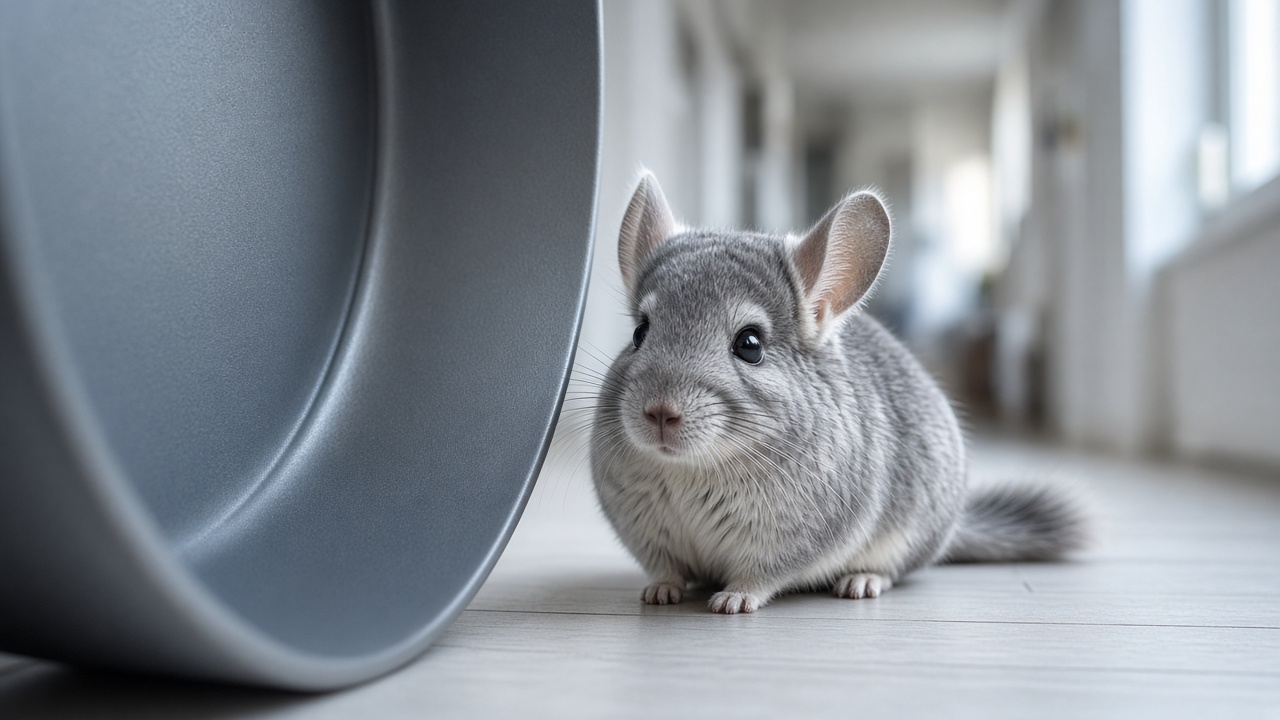
VCA Animal Hospitals calls a solid-floor wheel of 15 inches in diameter essential. Do not use a wire hamster wheel. Toes catch.
VCA Animal Hospitals sizes a dust box at least 6 by 6 by 9 inches. Put 1 to 2 inches of chinchilla dust in the bottom. Offer the bath for 10 to 15 minutes, then remove it.
The Merck Veterinary Manual pet-owner edition lists a 10-minute dust bath every day. The professional edition says 2 to 3 times a week, up to 15 minutes, with about 1 inch of dust. Do not leave the box in overnight.
Hides should be chew-safe. Both Merck’s professional edition and VCA Animal Hospitals size PVC hides at 4 to 5 inches in diameter.
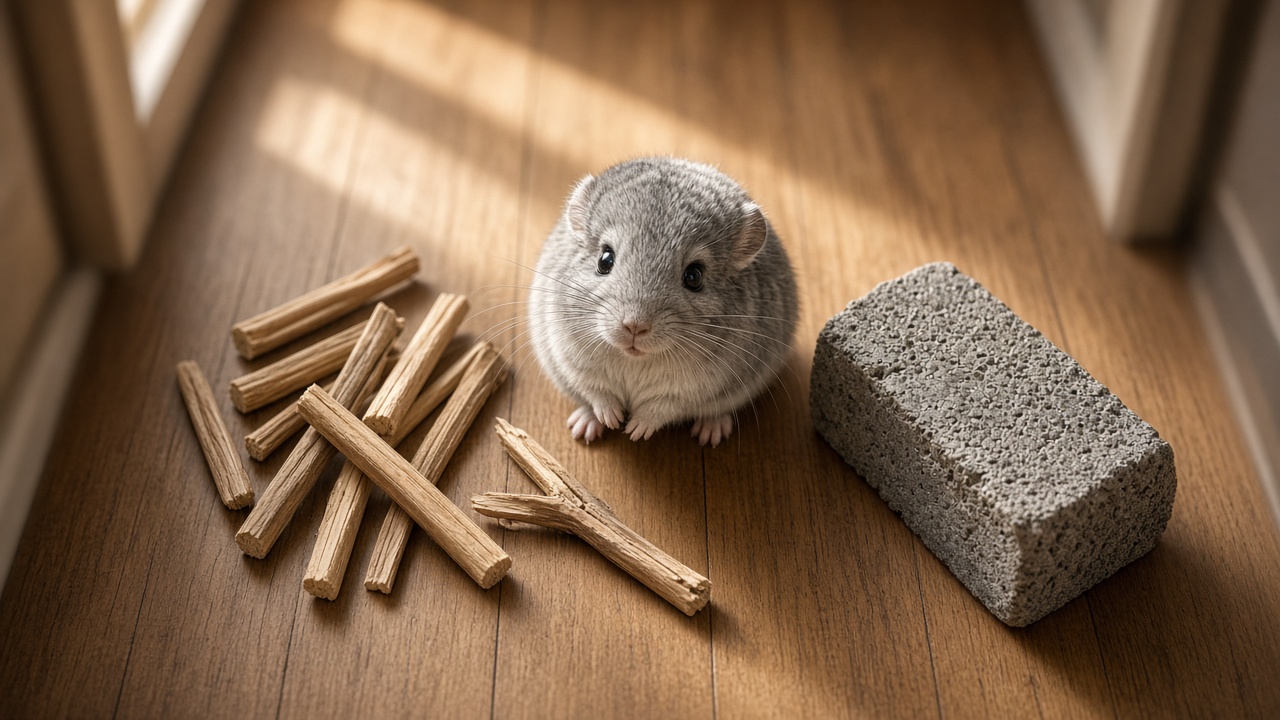
Hay must stay in the cage at all times. The Merck pet-owner edition ties dental disease to pellet-heavy diets. Wooden blocks help.
VCA Animal Hospitals rejects cedar and pine shavings. Use paper bedding or fleece liners. Spot-clean daily and replace weekly.
When another small-pet cage is the wrong buy
A best rabbit cage for indoor use is built for long floor runs. Rabbits hop. They do not need a 63-inch tower.
A rabbit condo that is wide and short will bore a chinchilla. Buy length for a rabbit. Buy height for a chin.
A best guinea pig cage also favors floor, not jump height. Guinea pigs are poor climbers. Do not stretch that habitat into a chin home.
Best cages for a Syrian hamster are smaller by design. A 24-inch cube fails VCA Animal Hospitals’ 3-foot length. Buy the tall cage first.
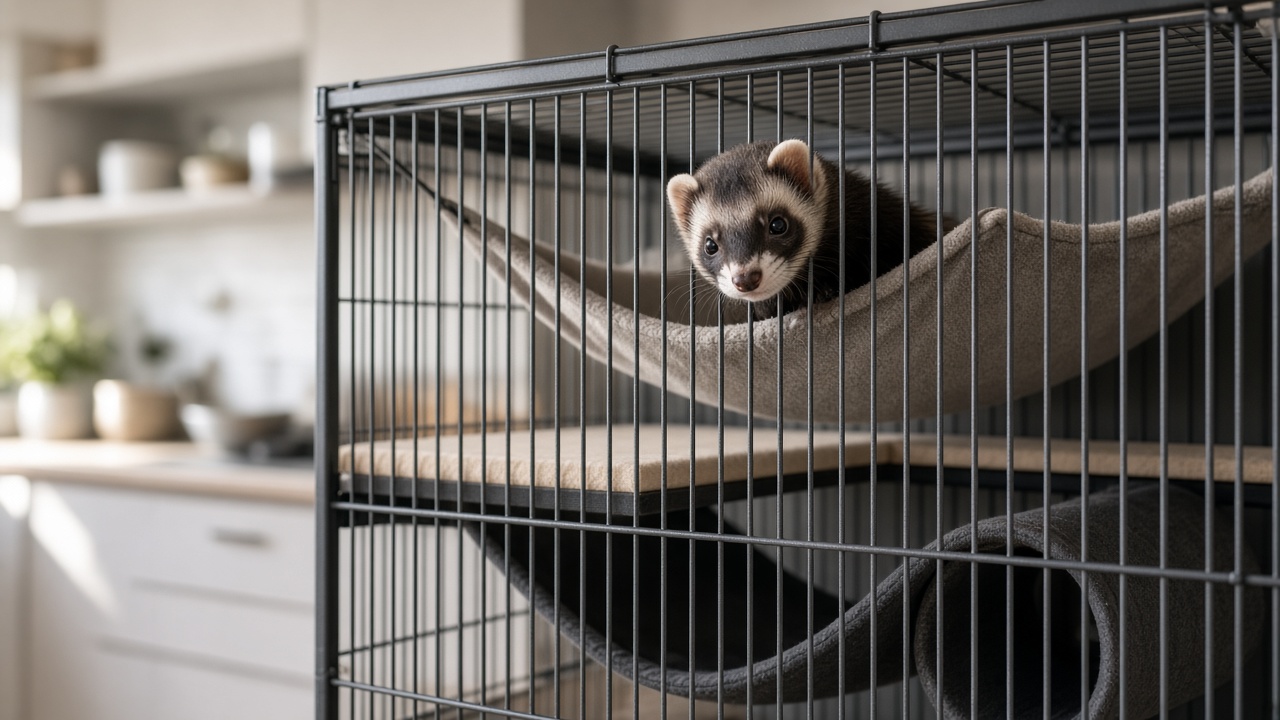
The Prevue 485 and the Ferret Nation 182 are ferret-first designs. Both list gaps wider than ½ inch.
If you already own a Ferret Nation 182, add ½-inch hardware cloth on the inside. That is a retrofit, not a reason to buy the 182 new.
The Critter Nation 162 is the only cage here that clears floor, bars, and pair height. The Prevue 484 is the tight-bar backup if you can accept a slightly shallow depth. Buy wood ledges and a 15-inch solid wheel on day one.
FAQ
How big should a chinchilla cage be?
- VCA Animal Hospitals sets 3 feet by 2 feet by 3 feet as the minimum for one chinchilla.
- A pair needs 3 feet by 2 feet by 5 feet, still on multiple levels.
- A 24-inch cube can look tall in a photo. It still fails the 3-foot floor.
What bar spacing is safe for a chinchilla?
- Use ½ inch or tighter on walls and floors.
- The Merck Veterinary Manual professional edition warns that wide floor mesh leads to hind-leg fractures in young animals.
- The Prevue 484 at 7/16 inch and the Critter Nation 162 at ½ inch are the two listings in our set that meet that cap.
Can I keep a chinchilla in a ferret cage?
- Only if bar spacing is ½ inch or less.
- MidWest’s Ferret Nation 182 lists 1-inch bars. Prevue’s Feisty Ferret Home 485 lists ⅞-inch bars.
- Those two fail our bar rule unless you add tighter mesh.
Do chinchillas need a wheel inside the cage?
- VCA Animal Hospitals calls a 15-inch solid-floor wheel essential.
- Skip wire hamster wheels. Toes catch in the rungs.
- Out-of-cage time still matters. The Merck Veterinary Manual pet-owner edition asks for 2 hours of supervised exercise daily.
Can two chinchillas share one cage?
- VCA Animal Hospitals says most owners keep one or two, often as a pair.
- The same page warns that fights can injure or kill. Introduce slowly, and watch the first meetings.
- Do not put a pair in a cage under 5 feet tall. That is the VCA pair height, not a preference.
Where should I put the cage in the house?
- Pick a cool, dry room first. Then measure the doorway.
- The Merck Veterinary Manual pet-owner edition flags heat stroke above 80°F (27°C) and prefers 50 to 60°F.
- Keep the cage off sunny glass and away from vents. Night heat in a closed room still counts.
What bedding should I put in a chinchilla cage?
- VCA Animal Hospitals names paper bedding or fleece liners.
- It rejects cedar and pine shavings as airway irritants.
- Spot-clean droppings daily. Empty and wash the whole cage at least weekly, as that page and the Merck pet-owner checklist both state.