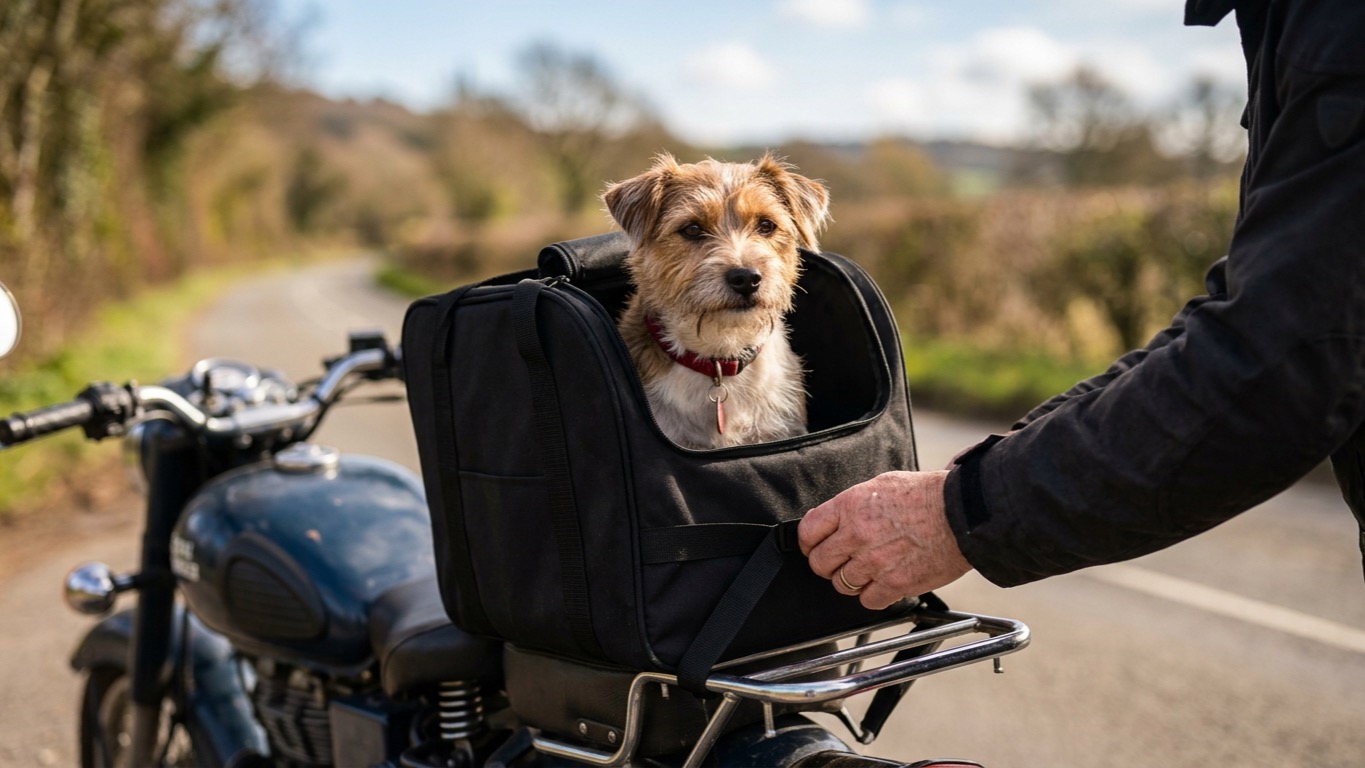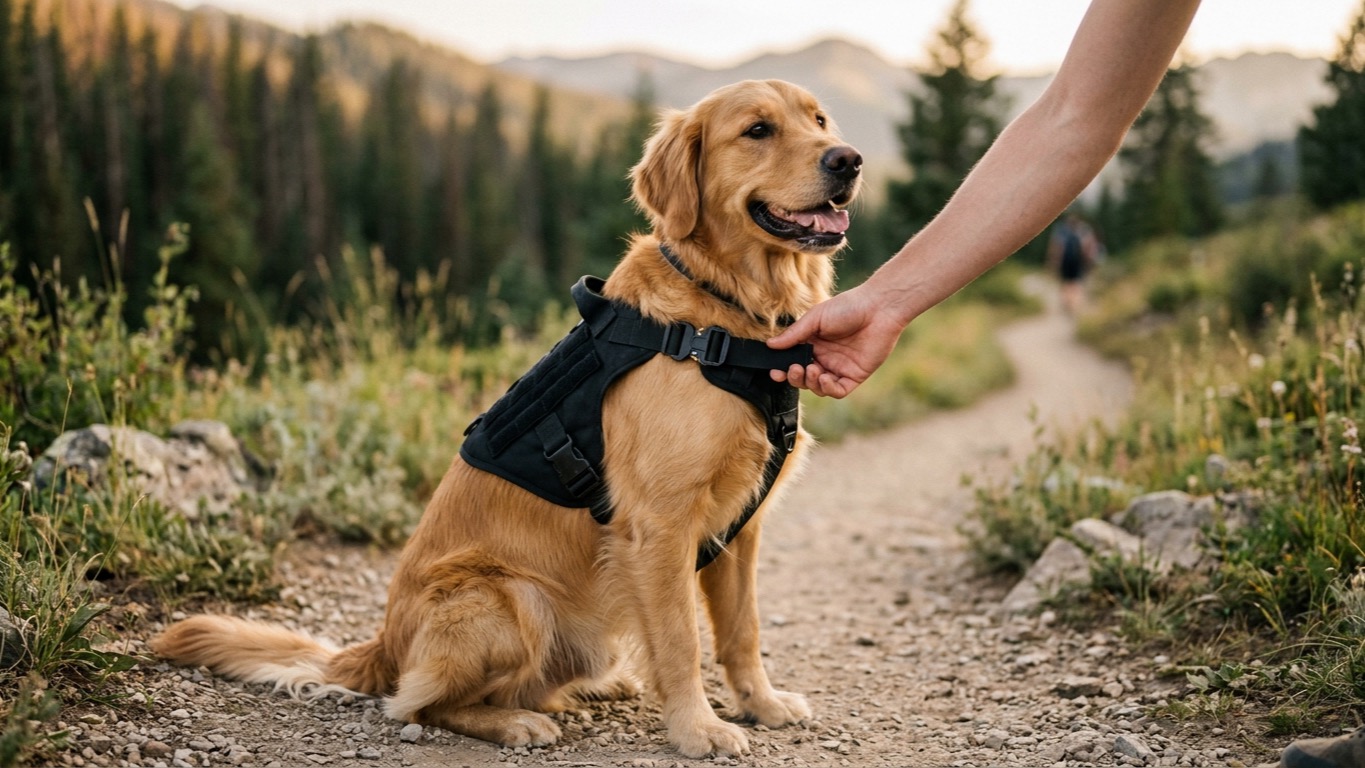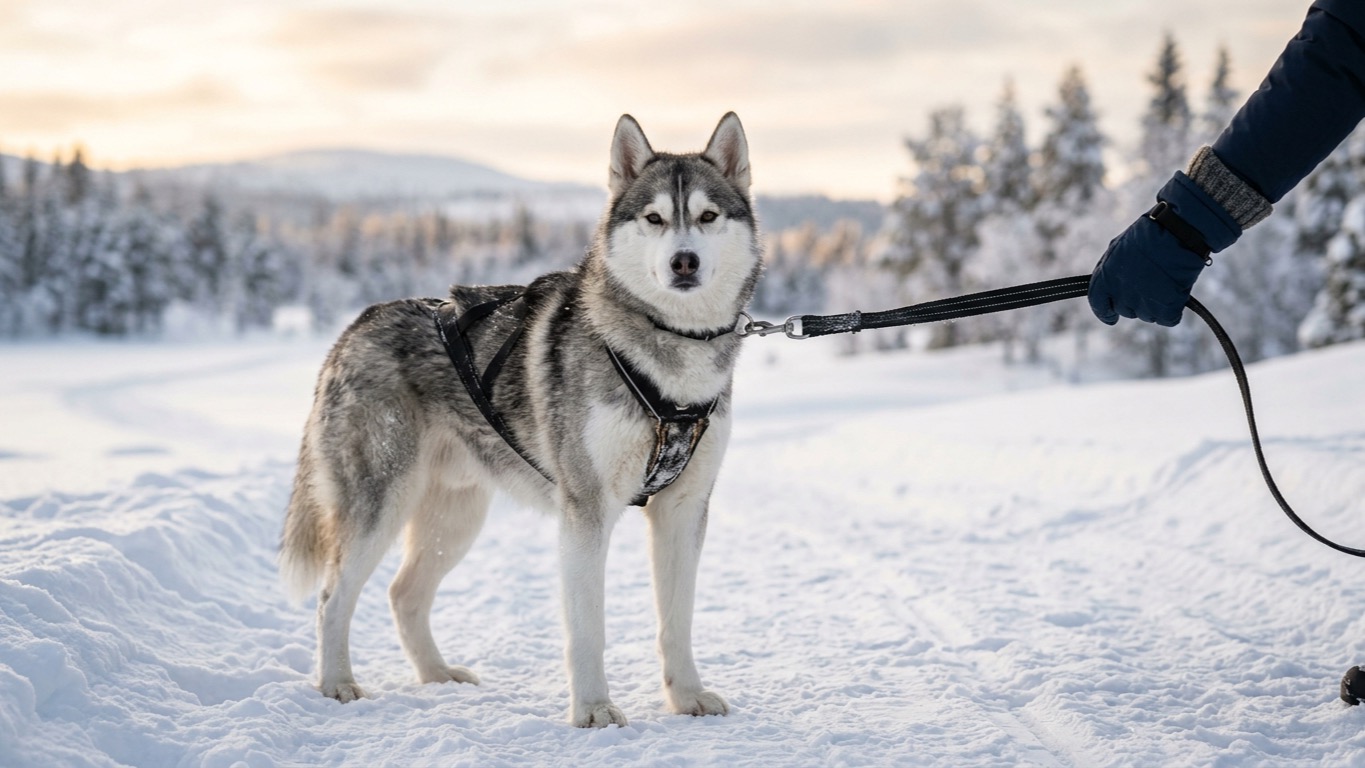
Essential hunting gear for dogs is four items, not a loadout: a compact first-aid pouch, one retrieving bumper matched to your terrain, a second bumper in a contrasting material, and a scent kit only if you actually train sheds. On the , the four SKUs listed on this page carry a median price of $39.50 and a total of roughly $119 for three priced items, which lands inside the $90–$140 starter band. First-aid and bumpers together account for the majority of that spend — the scent kit at $49.20 is the single most skippable item for anyone not shed hunting.
Our guides are reader-supported. This article may contain affiliate links. As an Amazon Associate we may earn a commission if you buy through links, at no extra cost to you.
The short version
If you are putting together hunting gear for dogs for a first season and want to stop reading here:
- Buy the first-aid pouch first. Paw cuts, thorns, and ticks are the injuries that actually end days afield. Dramatic injuries are rare; small ones are near-certain.
- Buy one bumper, not five. A single bumper you throw two hundred times builds more retrieve reliability than a shelf of dummies you never take out of the truck.
- Match the bumper to terrain before you match it to brand. Water needs float and high visibility. Brush needs abrasion resistance. Those are different products.
- Add scent tools last, and only for sheds. Scent training is a discipline, not an accessory, and over-scenting is a real way to blunt a young dog's drive.
That sequence costs roughly $120 for three items and covers upland, water, and recovery. The fourth item — a shed kit — is discipline-specific and belongs in the second season for most owners.
Why hunting gear for dogs is a safety problem before it is a performance problem
Most search results for hunting gear for dogs open with vests and MOLLE panels. That framing gets the priority backwards. Gear in this category exists to solve three problems in a strict order.
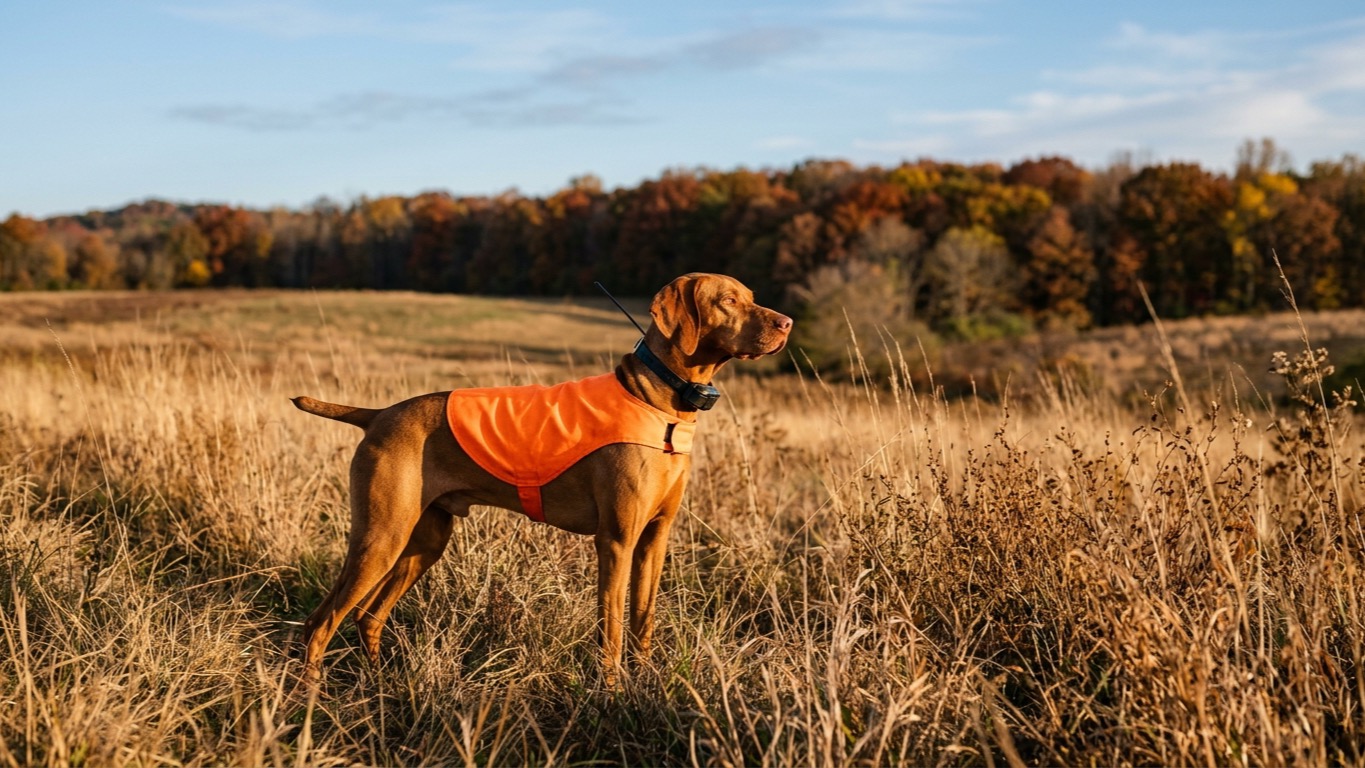
First, keep the dog findable and reachable. High-visibility color and reflective material are not aesthetic choices at dawn and dusk. A dark bumper in dim cover is a lost retrieve; a dark dog in dim cover is a bigger problem. Visibility is the cheapest safety feature you can buy and the one most often traded away for a tactical color scheme.
Second, build a retrieve without wrecking the mouth. This is where material choice does real work. A stiff, hard-shelled dummy teaches a dog to grip hard, which is fine for a seasoned animal and counterproductive for a young one still learning to hold. Owner reports consistently describe soft-mouthed dogs refusing to pick up stiff synthetic bumpers after gum irritation — and the standard response, more repetitions, makes it worse. The fix is material, not drilling.
Third, stop a small injury from ending the day. A thorn in a pad, a barbed-wire nick, an embedded tick. These are the things that happen. A pouch you can open with cold fingers, carried on your belt rather than in a crate three hundred yards away, is worth more than any other single item on the list.
Nothing on this page addresses ballistic protection, and we would treat any consumer listing that implies it with heavy skepticism.
How hunting gear listings compare on labels
The tables below are desk compilations built from the public listing fields of the four SKUs on this page plus recurring themes in owner reports. They are planning heuristics, not measured outputs from any test we ran.
Table 1 — Field kit cost bands
| Band | Typical spend | What it should contain | Skip this band if… |
|---|---|---|---|
| Starter | $90–$140 | First-aid pouch, one bumper, fitted harness already owned | You hunt water weekly and need float plus orange from day one |
| Working | $140–$220 | Add a second bumper in a contrasting material, add shed scent kit | Your dog is still collar-only — fix the harness before adding dummies |
| Hard-season | $220–$350 | Dual bumpers, spare wrap, brush-guard vest, backup light | The dog has not yet shown steady retrieve reliability |
Desk stat: The three priced SKUs on this page total about $118.69, with a median of $39.50. That places a complete four-item kit built from this page squarely in the starter band, with the DogBone shed kit at $49.20 as the largest single line item and the most discipline-specific purchase.
Table 2 — Terrain to gear priority
| Terrain | Non-negotiable | Worth adding | Failure mode in owner reports |
|---|---|---|---|
| Upland and briar | Abrasion-tough bumper, first-aid pouch | Brush-guard vest | Thin nylon covers shred in one or two weekends |
| Water and marsh | Floating bumper, hunter-orange visibility | Water-resistant pouch, towel | Non-floating dummies sink and are simply lost |
| Shed hunting | Scented dummy plus a scent plan | Soft-mouth canvas bumper | Over-scenting burns out drive within weeks |
| Low light | Reflective pouch, orange bumper | LED collar | Dark-colored gear turns every retrieve into a search |
The terrain row you actually hunt should determine the first bumper you buy. Owners who buy a general-purpose dummy and then discover they hunt water end up buying twice.
Table 3 — Training stage, load, and replacement thresholds
| Dog stage | Bumper mass preference | Session length | Replace the bumper when… |
|---|---|---|---|
| Young retriever, first season | Lighter canvas or soft poly | 8–12 short throws, stop while keen | Seam fray exceeds about 2 cm or filling escapes |
| Seasoned gun dog | Sand-weighted or heavy poly | 15–25 throws with recall between | Cover abrasion exposes the core material |
| Soft-mouthed dog | Canvas over stiff synthetic | Fewer hard throws, more hold work | Gum abrasion appears or the dog refuses to hold |
| Older dog | Lighter, shorter throws | 6–10 throws, watch recovery | Any grip change suggests dental discomfort |
Desk stat: Across the two bumper-class SKUs on this page — SportDOG canvas at $39.50 and the Carhartt retrieving bumper — the material split is canvas versus synthetic cover, which maps directly onto the soft-mouth versus hard-cover decision above. Running both is common practice: canvas for drills, synthetic for dirty cover.
Table 4 — First-aid pouch contents worth checking before you buy
| Item | Why it matters afield | Common gap in budget kits |
|---|---|---|
| Tick removal tool | Ticks are the most frequent find, not the most dramatic | Tweezers substituted for a proper hook |
| Self-adhering wrap | Holds a pad dressing through movement | Too narrow, or only one roll |
| Blunt-tip scissors | Cutting wrap and matted hair safely | Sharp-tip only, awkward with cold hands |
| Saline or irrigation | Flushing grit from a cut or an eye | Absent entirely |
| Gauze pads, multiple sizes | Pad lacerations bleed more than they look | One size, too few |
| Emergency contact card | Nearest clinic while you are stressed | Never included; write it yourself |
A pouch that lists a high piece count and none of the above is counting adhesive bandages. Read the contents list rather than the headline number.
How we assessed these four items
What we did was read the listing specifications for each SKU, record the stated construction and price, and cross-read owner reports for recurring, specific failure descriptions rather than star averages.
Three filters shaped the list. Function clarity — each item must solve one of the three problems above, and we cut anything whose only argument is appearance. Material honesty — listings that name the cover material and construction are more useful than listings that say "heavy duty," and we weighted accordingly. Replaceability — bumpers are consumables in hard cover, so a product priced as though it were a lifetime purchase needs to justify that.
Prices are listing cues recorded in August 2026 and they move. Verify before buying.
The four essential hunting gear for dogs picks
1. ARCA PET Dog First Aid Kit
Best for: the one item that should go in the truck before anything else.
This is the purchase we would argue hardest for. A compact pet-specific first-aid pouch at $29.50 covers the injuries that genuinely interrupt a day afield: a cut pad, a thorn, a tick, a scrape that needs flushing and covering before the ride home. The value of a pet-specific kit over a human one is mostly in the tick tools and the wrap sizing, plus a case layout you can navigate one-handed.
Two practical notes that matter more than the spec sheet. First, carry it on your belt or in your pack, not in the crate — a kit three hundred yards away is decoration. Second, open it at home before the season and actually look inside, because the piece count on any budget kit includes a lot of adhesive bandages that are close to useless on a dog. Add what is missing using the checklist in Table 4 above.
Pros
- Pet-specific contents, particularly tick tools and appropriately sized wrap
- Compact enough to carry on the body rather than leave in the vehicle
- Under $30, which makes it the highest-value line item on this page
Cons
- Headline piece counts on kits in this class are inflated by adhesive bandages
- Contents lists shift between production runs; confirm on the live listing
2. SportDOG Canvas Dummies
Best for: the primary training bumper, especially for young or soft-mouthed dogs.
Canvas is the material most trainers reach for first, and the reason is mouth feel rather than toughness. A canvas cover compresses under a dog's grip in a way that stiff synthetic does not, which makes it more forgiving for a young retriever still working out how much pressure to apply and considerably more comfortable for a dog that has already developed a soft mouth. At $39.50 this sits at the median of the page and is the item you will throw most.
The honest trade-off is abrasion. Canvas in heavy briar wears faster than a heavy synthetic cover, and a canvas dummy that lives in wet cover needs drying between sessions or it will sour. Owner reports describe seam fray as the usual end point rather than catastrophic failure, which is the better failure mode because you can see it coming. When fray exceeds roughly two centimetres or filling starts escaping, retire it — a bumper shedding its core is a foreign-body risk, not a badge of hard use.
Pros
- Canvas compresses under grip, which suits young and soft-mouthed dogs
- Fails gradually through visible seam fray rather than suddenly
- Established training-standard format that dogs read easily
Cons
- Wears faster than heavy synthetic in briar and thorn
- Needs drying between wet sessions or the cover sours
3. DogBone Shed Hunting Dog Training Kit
Best for: owners who specifically want to train antler recovery — and nobody else.
At $49.20 this is the largest single item on the page and the easiest one to skip. Shed hunting is a distinct discipline: the dog is searching for a static, scent-marked object in open country rather than marking a fall. A purpose-built kit gives you a dummy with the right shape and weight profile plus a scent plan, which is more useful than improvising with a regular bumper and a bottle.
The honest limitation is not the product, it is the training. Over-scenting is the most common way owners blunt a young dog's interest — saturate the object, run too many repetitions, and the dog stops working the scent cone and starts pattern-guessing. Treat the scent bottle as a consumable with a finite budget per session, not as something to be generous with. Also worth saying plainly: if you do not shed hunt, this is $49 that belongs in a second bumper and a spare roll of wrap.
Pros
- Purpose-shaped dummy for antler recovery rather than an improvised substitute
- Bundles the scent element rather than leaving you to source it separately
- The clearest single-discipline product on this page
Cons
- Entirely skippable unless you specifically train sheds
- Scent bottles are consumables, and over-scenting actively harms drive
4. Carhartt Pet Training Tool — Dog Retrieving Bumper
Best for: the second bumper, in a contrasting material to your first.
The argument for owning two bumpers is not redundancy, it is contrast. A dog that only ever retrieves one object learns that object rather than the job. Running a second bumper with a different cover material and a different feel keeps the retrieve generalized, and it gives you a dirty-cover option so your canvas dummy is not the one going into the marsh every weekend.
Carhartt's entry here is a straightforward retrieving bumper from a brand whose reputation is built on abrasion-resistant workwear fabric, which is the relevant property in briar. The listing does not carry a stable price cue, which is worth flagging: check the current price before assuming it slots neatly into the starter band. As with any bumper, the retirement rule is the same — when the cover abrades enough to expose the core, it stops being a training tool and starts being a chew hazard.
Pros
- Provides material contrast so the dog generalizes the retrieve
- Workwear-fabric heritage is the right property for abrasive cover
- Keeps your primary canvas bumper out of the worst conditions
Cons
- No stable listed price at time of desk review; verify before you plan around it
- A second bumper is a genuine luxury in a first season on a tight budget
Hunting gear for dogs compared at a glance
| Product | Job in the kit | Buy it if | Approx. price | Where to buy |
|---|---|---|---|---|
| ARCA PET Dog First Aid Kit | Injury response | Always — this is item one | $29.50 | Check price |
| SportDOG Canvas Dummies | Primary retrieve training | Young or soft-mouthed dog | $39.50 | Check price |
| DogBone Shed Hunting Kit | Antler recovery discipline | You actually shed hunt | $49.20 | Check price |
| Carhartt Retrieving Bumper | Second bumper, dirty cover | You are past the first season | See listing | Check price |
Browse the wider category: See hunting gear for dogs on Amazon →
Fit and rehearsal: the twenty-minute indoor check
Any harness or vest that goes into this kit should be rehearsed indoors before it goes into cover, and twenty minutes is enough to catch most problems.
Put the gear on the dog in a normal room and let the dog move naturally — walk, sit, lie down, shake, and turn tightly in both directions. You are looking for four things. Does anything ride into the armpit under load? Does the chest strap sit clear of the throat when the dog pulls forward? Does the top handle, if there is one, lift without pinching? And does the dog's shoulder extension change, which usually means a strap is crossing the shoulder blade rather than sitting behind it.
Take a photograph from directly above and directly from the side. Fit problems are much more obvious in a photograph than in the moment, and having a reference image makes it easier to tell whether a strap has crept during the season.
Two-finger clearance under any strap is the working rule. Tighter than that and you get chafe over distance; looser and the gear rotates. Keep the packaging until the return window closes, because a fit problem found in the first twenty minutes is a return, and the same problem found in week three is a wasted purchase.
Weather, storage, and the things that quietly destroy gear
Most hunting gear for dogs does not fail in the field. It fails in the truck, in the garage, and in the closed bag it was put away wet.
Wet storage is the main killer. Canvas and synthetic covers both hold moisture in the core long after the surface feels dry. A bumper sealed in a bag damp will sour and the cover will weaken. Dry everything fully before it goes into storage, and dry it in air rather than on a heater — direct heat stiffens synthetic covers and shrinks canvas.
UV is slower but real. Gear left on a dashboard through a summer degrades in ways that are hard to see until a seam gives. Store in a bag, in shade.
Grit is abrasive. Rinse, do not just wipe, anything that has been through sand or dry dirt. Grit worked into a cover accelerates abrasion from the inside.
Cold makes hardware brittle and fingers useless. Test every buckle and zipper with gloves on before the season. A pouch you cannot open with cold hands is a pouch that does not work when you need it.
Budget sequencing when money is tight
If your total budget is under $100, the sequence is unambiguous: first-aid pouch, then one bumper matched to your terrain, then stop. That is roughly $70 and it covers the two problems that actually cost you days.
At $150 add the second bumper in a contrasting material and a spare roll of self-adhering wrap. Spare wrap is disproportionately valuable because it is the item you use up.
At $250 the shed kit becomes reasonable if you shed hunt, and a brush-guard vest becomes reasonable if you work heavy briar. Neither belongs earlier in the sequence.
The general principle is that redundancy in the cheap safety items beats variety in the expensive training items. Two rolls of wrap and a spare light are worth more over a season than a third dummy.
How to read a hunting gear for dogs listing
Listings in this category lean hard on adjectives, and the useful information is usually in the specification block rather than the headline. Four habits make the difference.
Look for a number where an adjective sits. "Heavy duty" means nothing; a stated denier figure means something. "Floats" is a claim you can check against the described core material — closed-cell foam floats, sand weighting does not. If a bumper is sold for water work and the listing never says what the core is, treat the float claim as unverified.
Read the size block, not the size name. "Large" is not a standard. Bumper diameter and length determine whether a dog can carry the object comfortably, and a dummy too fat for a dog's jaw produces a poor hold that no amount of training corrects. The same applies to first-aid pouches, where "compact" ranges from belt-mountable to backpack-only.
Count the consumables. Scent bottles, wrap rolls, and gauze are the parts you use up. A kit that looks well priced against a competitor often has half the consumable volume, and the difference shows up in the second month rather than the first.
Treat piece counts and star averages as marketing. A 120-piece first-aid kit is usually a 30-piece kit plus ninety adhesive bandages. A 4.6-star average across thousands of reviews tells you the product arrives and functions; it tells you nothing about whether the cover survives briar. The specific, repeated complaints in the negative reviews are worth more than the average.
When to involve your veterinarian
Field first-aid is for temporary control of bleeding, protecting a pad until you get home, and removing a tick correctly. It is not diagnosis and it is not treatment.
Contact a licensed veterinarian for deep punctures, any wound that will not stop bleeding with pressure, eye injuries of any kind, lameness that persists past the ride home, suspected heat distress, collapse, repeated vomiting, or a swollen abdomen after a hard day. Heat illness in particular escalates faster than most owners expect and is not something to manage from a pouch.
Nothing on this page replaces veterinary care, and no product listed here has been reviewed by a clinician on our behalf.
Frequently asked questions about hunting gear for dogs
What is the minimum hunting gear for dogs for a first season?
A compact first-aid pouch, one bumper matched to the terrain you actually hunt, and a correctly fitted harness or collar you have already rehearsed indoors. That is roughly $70 of new spend. Scent kits, second bumpers, and vests are second-season purchases for almost everyone.
Does canvas or synthetic work better for hunting gear for dogs bumpers?
They solve different problems. Canvas compresses under grip and suits young dogs and soft mouths; heavy synthetic survives briar and long throws but can irritate gums on a sensitive dog. Owning one of each is common practice — canvas for structured drills, synthetic for dirty cover — which is exactly why the second bumper is a contrast purchase rather than a spare.
How often should hunting gear for dogs bumpers be replaced?
Retire a bumper when seam fray exceeds roughly two centimetres, when cover abrasion exposes the core, or when the dog starts pulling material free. A bumper shedding filling is an ingestion risk. In heavy cover, treat bumpers as seasonal consumables rather than durable goods.
Is a first-aid kit really part of hunting gear for dogs?
It is the first item, not an afterthought. Pad cuts, thorns, and ticks are common and dramatic injuries are rare, which means the kit earns its place almost every outing. A 30–40 piece pouch containing tick tools, self-adhering wrap, gauze in several sizes, and blunt-tip scissors is the practical default.
Can puppies use adult hunting gear for dogs?
Use lighter bumpers and shorter sessions — eight to twelve throws, stopping while the dog is still keen. Skip sand-weighted dummies and long water work until retrieve mechanics are clean. If you plan to increase intensity substantially, have a veterinarian confirm the dog's skeletal maturity first.
How do I stop over-scenting during shed training?
Treat the scent bottle as a metered consumable. Use the smallest amount that produces a working scent cone, run few repetitions, and end on a find. Dogs that stop working the cone and start pattern-guessing the field have almost always been over-scented, and the fix is fewer, cleaner reps rather than more.
Does hunter orange matter if my dog wears a collar light?
Both, and for different reasons. Orange works in daylight and dim conditions and never runs out of battery; a light works after dark and is visible at distance. The failure case for lights is entirely predictable — they die at the worst moment — so carrying a spare is worth more than upgrading the primary.
What hunting gear for dogs should I skip in year one?
Vests, MOLLE panels, and a third bumper. Buy the first-aid pouch and one terrain-matched bumper, rehearse the harness you already own, and stop. Year-one money spent on appearance gear is money not spent on wrap, a spare light, or a second season’s bumper when the first one frays.
How do I remove a tick in the field?
CDC and AVMA pages agree: use a tick hook or fine-tipped tweezers, pull steadily, and do not burn or smother the tick. Drop it in a sealed bag if you want identification later. Then check the rest of the dog. A pouch that lacks a hook is a pouch you will restock before opening day.
Visibility, ticks, and heat: the three field problems shopping lists skip
Most hunting gear for dogs roundups stop at bumpers. Three public-source problems end more days afield than a missing dummy.
Visibility. AKC retrieving and hunt-test materials treat a marked retrieve as a visibility problem as much as a training problem. Hunter orange on a bumper and a dog is not fashion. A dark object in dim cover becomes a search, and a search in last light is how dogs get separated. A collar light is a night tool; orange is a daylight and dusk tool that does not run out of battery. Carry both if you work past civil twilight.
Ticks. CDC and AVMA educational pages treat tick removal as a technique, not a vibe: fine-tipped tweezers or a purpose-built hook, steady pull, no burning, no petroleum jelly. That is why Table 4 flags a proper hook instead of a pair of kitchen tweezers. Embeded ticks are the most frequent find in owner reports, not the most dramatic. Check the dog before the truck ride home, especially ears, armpits, groin, and between toes.
Heat. AVMA heat-illness material is blunt: dogs cool poorly compared with humans, and a working dog in cover on a warm day can tip into distress faster than the handler’s own fatigue suggests. A first-aid pouch does not treat heat stroke. Shade, water, and a decision to stop are the controls. Collapse, thick saliva, or a dog that stops panting usefully is a clinic problem on the clock.
NAVHDA and similar working-dog communities treat session length as a welfare constraint. The training-stage table above (8–12 throws for a young dog, stop while keen) is that idea in household language. More repetitions after the dog has gone flat is how you teach a sloppy hold and a sour attitude in the same afternoon.
Sources and method
these hunting gear listings, August 2026. Specifications and prices are reprinted from public Amazon listing fields recorded in August 2026 and are listing cues that change without notice. Failure-mode descriptions are synthesized from recurring themes in publicly visible owner reports. We cite AKC retrieving/hunt-test visibility language, CDC/AVMA tick-removal technique, and AVMA heat-illness education because those documents are public and specific.
Verify price and contents on the live listing before purchase.